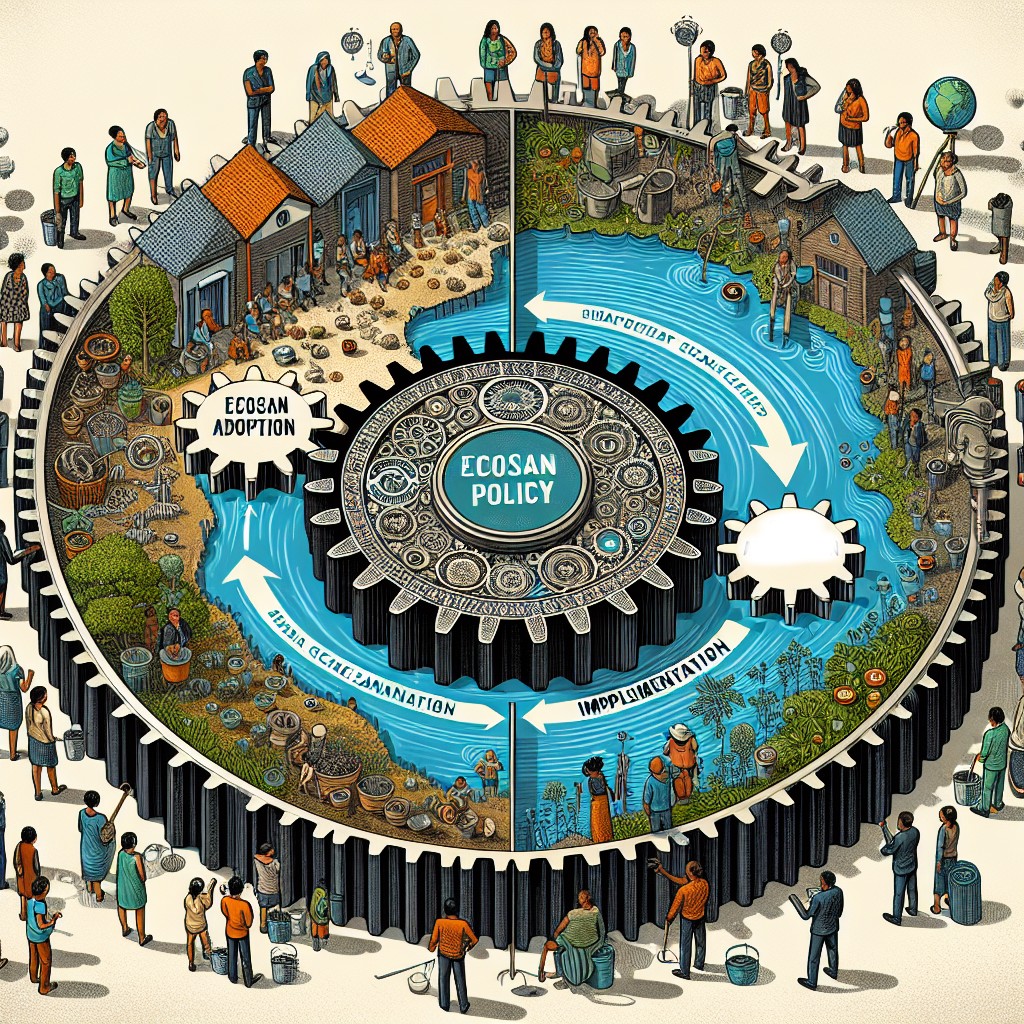
Ecological Sanitation (EcoSan) represents a transformative approach to waste management, founded on the principles of sustainability, hygiene, and resource recovery. Unlike conventional sanitation methods that often dispose of human waste in ways that can harm the environment, EcoSan views this waste as a valuable resource that, when properly treated, can be safely reused in agricultural systems. The global push for sustainable development and environmental conservation has made EcoSan increasingly relevant. However, its successful implementation requires more than just technical solutions; it demands well-thought-out legislation and policy frameworks that support its principles and address the challenges associated with it.
Historically, sanitation policies have often focused on the immediate removal of waste rather than its potential as a resource. This traditional approach largely overlooks the environmental impact of waste disposal and fails to promote a circular economy. With the rise of EcoSan, there is a need for legislation that not only facilitates but encourages the recycling of waste products back into productive uses. Moreover, effective EcoSan policies must integrate public health concerns, environmental protection, and socio-economic considerations. They should create a conducive environment for the adoption of innovative sanitation technologies and practices.
This article provides a comprehensive overview of the legislative and policy framework essential for the successful implementation of EcoSan initiatives. By understanding the legal landscape, stakeholders can better navigate the complexities of adopting EcoSan practices, ensuring they are both effective and compliant with existing regulations. We will explore existing legislations, the necessary components of a robust policy framework, and the role of various stakeholders in the successful rollout of EcoSan systems.
Existing Legislation Supporting EcoSan
Several countries have already adopted legislative measures that support the principles of EcoSan. These legislations serve as valuable examples of how policy can drive the adoption and success of ecological sanitation practices. For instance, Sweden has been a pioneer in promoting EcoSan through its national environmental and health regulations. The Swedish Environmental Code emphasizes the importance of recycling and nutrient recovery, which lays a legal foundation for the adoption of EcoSan systems.
In Germany, the Fertilizer Ordinance provides guidelines on the safe use of human waste as fertilizer, ensuring that nutrient recovery adheres to strict safety standards. Similarly, in the Philippines, the Clean Water Act includes provisions for the use of EcoSan systems to protect water resources by reducing fecal contamination. These legislative frameworks not only promote the use of EcoSan but also ensure that its implementation aligns with public health and environmental safety standards.
Legislation in support of EcoSan is not limited to developed nations. Uganda’s National Sanitation Guidelines incorporate EcoSan principles and advocate for the use of ecological sanitation in rural and urban planning. These guidelines aim to improve access to sanitation while safeguarding environmental resources. This integration of EcoSan into national policies demonstrates a growing recognition of its benefits and a commitment to sustainable development.
Components of Effective EcoSan Policy Frameworks
For EcoSan to succeed, policies must be comprehensive and well-structured. Effective EcoSan policies generally include several key components: a clear regulatory framework, financial incentives, public awareness programs, and robust monitoring and evaluation systems. These components work together to create an enabling environment for the proliferation of EcoSan practices.
A clear regulatory framework establishes the legal basis for EcoSan, detailing the standards and guidelines for its implementation. This includes safety requirements for the handling and treatment of human waste, standards for the use of recovered resources, and mechanisms for compliance and enforcement. By providing clarity and consistency, a strong regulatory framework helps mitigate risks and build public trust in EcoSan systems.
Financial incentives are equally crucial. Implementing EcoSan technologies can involve significant upfront costs, which can be a barrier for many potential adopters. To address this, policies can include subsidies, tax breaks, or grants for EcoSan projects. These incentives reduce the financial burden on households and communities, making EcoSan more accessible and attractive.
Public awareness programs are necessary to educate the public about the benefits of EcoSan and promote behavioral change. These programs can include information campaigns, workshops, and training sessions that highlight the environmental, economic, and health advantages of ecological sanitation. By increasing public understanding and acceptance, these programs encourage the adoption of EcoSan practices.

The Role of Stakeholders in EcoSan Implementation
Successful EcoSan implementation requires the involvement and collaboration of various stakeholders, including government agencies, non-governmental organizations (NGOs), private sector players, and local communities. Each stakeholder has a unique role to play in promoting and supporting EcoSan initiatives.
Government agencies are responsible for developing and enforcing legislation and policies that support EcoSan. This includes setting safety standards, providing financial incentives, and ensuring that EcoSan systems are integrated into broader sanitation and environmental strategies. By providing leadership and coordination, government agencies can drive the widespread adoption of EcoSan.
NGOs often serve as advocates and facilitators for EcoSan projects. They can provide technical expertise, help build community capacity, and raise awareness about the benefits of ecological sanitation. NGOs can also play a critical role in conducting research and pilot projects that demonstrate the viability and effectiveness of EcoSan systems.
Private sector involvement is essential for the development and commercialization of EcoSan technologies. Private companies can invest in research and development, bring innovative solutions to market, and provide the technical support needed to implement and maintain EcoSan systems. Their participation can help scale up EcoSan initiatives and drive innovation in the sector.
Challenges and Barriers to EcoSan Implementation
Despite the many benefits of EcoSan, its widespread adoption faces several challenges and barriers. One significant challenge is the lack of awareness and understanding of EcoSan principles among policymakers, practitioners, and the general public. This lack of knowledge can lead to resistance and misconceptions about the safety and effectiveness of EcoSan systems.
Financial constraints are another major barrier. The initial costs of implementing EcoSan technologies can be high, particularly in low-income communities. Without adequate financial support and incentives, the adoption of EcoSan can be limited. Access to financing and funding mechanisms is crucial to overcoming this barrier.
Technical and logistical challenges also play a role. Implementing EcoSan requires specific technical expertise and infrastructure, which may not be readily available in all areas. Ensuring that EcoSan systems are designed, installed, and maintained correctly is essential for their success. Providing training and capacity-building programs can help address these challenges.
Regulatory and policy barriers can also impede EcoSan adoption. In some cases, existing sanitation and environmental regulations may not accommodate or support EcoSan systems. Reviewing and updating these regulations to align with EcoSan principles is necessary to create an enabling policy environment.
Strategies for Overcoming Barriers
To overcome the barriers to EcoSan implementation, several strategies can be employed. First, comprehensive education and awareness campaigns are essential. These campaigns should target policymakers, sanitation practitioners, and the general public to increase understanding and acceptance of EcoSan. Providing accurate information about the benefits, safety, and feasibility of EcoSan systems can help dispel misconceptions and build support.
Financial strategies are also critical. Establishing funding mechanisms, such as grants, loans, and subsidies, can reduce the financial burden of implementing EcoSan technologies. Additionally, promoting public-private partnerships can leverage resources and expertise from multiple sectors to support EcoSan initiatives. Innovative financing models, such as community-based savings and credit schemes, can also help make EcoSan more affordable and accessible.
Building technical capacity is essential for the successful implementation of EcoSan. Training programs for engineers, technicians, and community members can ensure that EcoSan systems are designed, built, and maintained correctly. Providing ongoing technical support and guidance can also address any challenges that arise during implementation.
Policy and regulatory reform is necessary to create a supportive environment for EcoSan. Governments should review and update existing sanitation and environmental regulations to align with EcoSan principles. Establishing clear and consistent guidelines for the use of human waste as a resource, and setting safety standards, can facilitate EcoSan adoption. Additionally, creating platforms for multi-stakeholder collaboration can help coordinate efforts and ensure that policies and strategies are effectively implemented.
Conclusion
The successful implementation of EcoSan requires a well-thought-out legislative and policy framework that supports its principles and addresses the challenges associated with this sustainable approach to sanitation. Existing legislations from countries like Sweden, Germany, and Uganda provide valuable examples of how policy can drive EcoSan adoption. Effective EcoSan policies include clear regulatory frameworks, financial incentives, public awareness programs, and robust monitoring systems.
Collaboration among stakeholders, including government agencies, NGOs, the private sector, and local communities, is critical for the widespread adoption of EcoSan. Each stakeholder has a unique role in promoting and supporting EcoSan initiatives. However, several challenges, including lack of awareness, financial constraints, technical expertise, and regulatory barriers, need to be addressed.
By employing strategies such as comprehensive education campaigns, financial support mechanisms, capacity-building programs, and policy reform, these barriers can be overcome. Creating an enabling environment for EcoSan adoption not only promotes sustainable waste management but also contributes to broader goals of environmental protection, public health, and sustainable development.
As we move towards a greener and more sustainable future, it is crucial to leverage the principles of EcoSan in our sanitation policies and practices. By doing so, we can create resilient and sustainable communities that thrive in harmony with their natural environment.