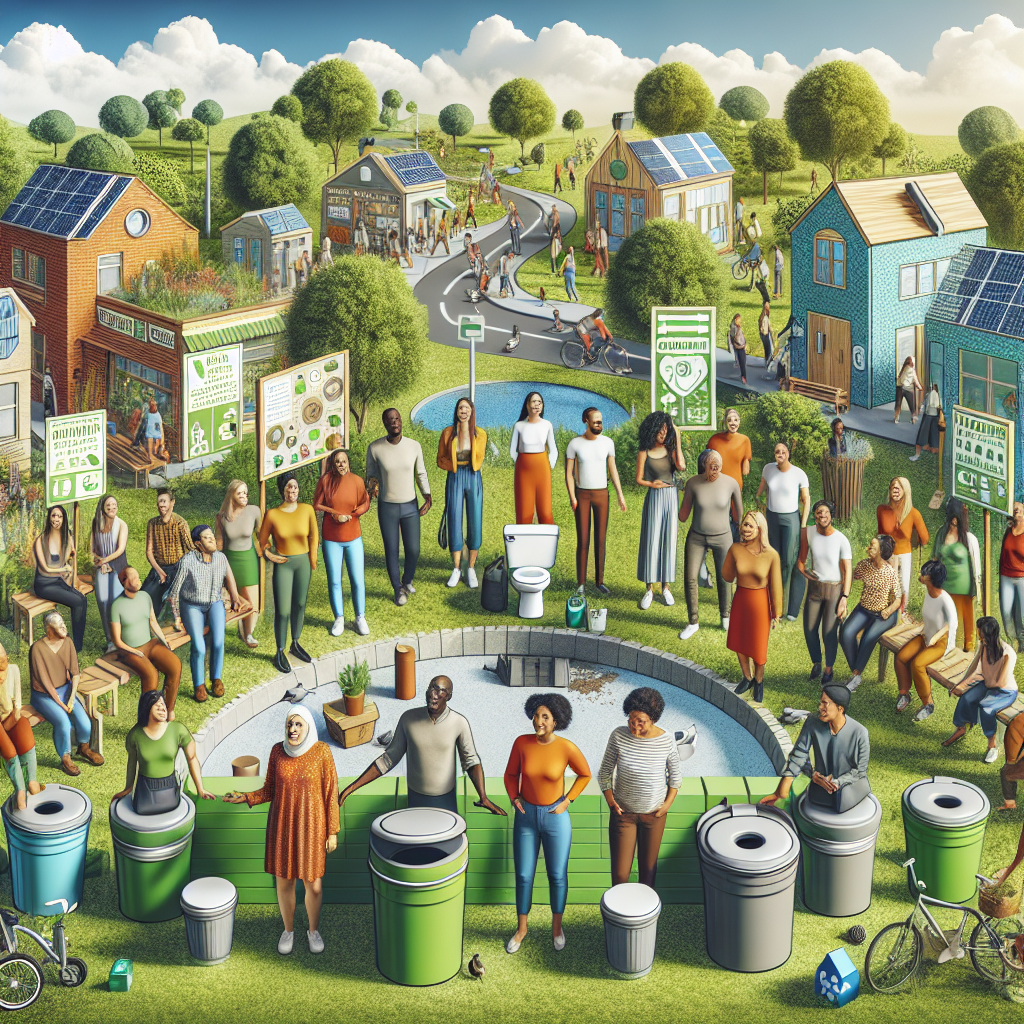
The intersection of sustainable architecture and sanitation is a rapidly growing area of focus in the pursuit of environmentally-friendly and resource-efficient building designs. As our global community becomes more conscious of the environmental impact of construction and habitation, green building certifications have evolved to reflect a comprehensive approach that includes not only energy efficiency and material sustainability but also innovative sanitation systems. One such groundbreaking integration gaining momentum is the combination of green building certifications with Ecological Sanitation, or EcoSan, systems. This fusion sets new benchmarks for sustainability by addressing not only the environmental impact of structures but also their waste management and water efficiency practices, promoting a healthier relationship between humans and the ecosystems they inhabit.
Green building certifications, such as LEED (Leadership in Energy and Environmental Design), BREEAM (Building Research Establishment Environmental Assessment Method), and others, provide a framework for assessing and certifying the sustainability performance of buildings. These certifications encourage innovation and adoption of sustainable practices, focusing on critical areas such as water efficiency, energy use, and material selection. However, as environmental challenges intensify, a greater emphasis on comprehensive waste management solutions is being recognized as pivotal. This is where EcoSan integration comes in, offering a solution that supports the safe reuse of human waste, reduces water usage, and minimizes pollution.
EcoSan represents a revolutionary approach to sanitation by treating waste as a resource. It contrasts with conventional systems that often overlook the potential of human waste as a tool for environmental conservation. EcoSan focuses on safeguarding human health while promoting the recovery and safe reuse of nutrients, organics, trace elements, water, and energy contained in wastewater and human excreta. Combining the principles of EcoSan with green building certifications presents a robust framework for future constructions and retrofits, ensuring they contribute positively to their environment. In this article, we delve into the significance of this integration, exploring how it enhances sustainability efforts, the methodologies involved, and the impact it can have on the future of our built environment.
The Importance of Green Building Certifications
Green building certifications are pivotal in the transition towards more sustainable construction practices. These certifications serve as a benchmark for measuring a building’s environmental impact and incentivize developers to embrace sustainable technologies. They address key factors such as energy consumption, environmental quality, and efficient resource use. By doing so, these certifications provide an avenue for reducing carbon footprints, decreasing utility costs, and fostering healthier living environments. They follow a comprehensive assessment that evaluates the entire lifecycle of a building, from design to demolition, highlighting areas of improvement and encouraging the integration of cutting-edge environmental solutions.
Understanding EcoSan Systems
EcoSan systems are revolutionary in their approach to treating human waste. These systems revolve around ecological principles that focus on transforming what is traditionally seen as waste into valuable resources. There are multiple configurations of EcoSan, ranging from composting toilets and urine-diverting toilets to anaerobic digesters. The primary aim is to protect environmental health while maximizing the social and economic benefits of waste conversion, including nutrient recovery for agriculture, reduction of pathogens, and conservation of water. Traditional systems often overlook the far-reaching impacts on ecological balance by not reusing treated waste productively. In contrast, EcoSan redefines waste management by offering a more holistic, sustainable approach.
The Synergy of Green Certifications and EcoSan
The integration of green building certifications and EcoSan systems leverages the strengths of both approaches to enhance the sustainability credentials of developments. This synergy recognizes human waste as a critical resource, thereby addressing a major environmental and sanitation challenge faced globally. By incorporating EcoSan into the green building rubric, projects can not only meet but exceed certification criteria in areas of water efficiency, energy use, and pollution prevention. EcoSan systems reduce reliance on potable water for flushing, minimize the consumption of non-renewable resources, and lower greenhouse gas emissions associated with waste handling processes.
Implementing EcoSan systems within green-certified buildings provides an innovative edge in sustainable design. It emphasizes a closed-loop philosophy where waste is cycled back into the environment safely, without harm. This is consistent with the objectives of various green building certifications that stress water and waste optimization. By being integrated into certification systems, EcoSan can drive more widespread adoption and refinement of sustainable sanitation solutions, aligning building practices with global sustainability goals.
Challenges and Solutions in Integration
Despite the clear benefits, integrating EcoSan into certified green buildings faces several challenges. These include regulatory hurdles, public perception issues, and technical limitations. In many jurisdictions, sanitary regulations are rigid, having been tailored to conventional sewage systems. These pose significant barriers to the deployment of innovative sanitation solutions like EcoSan. Additionally, public perception of human waste reuse remains largely unfavorable due to concerns over hygiene and health risks, despite the thorough treatment processes involved.
Overcoming these challenges requires a multi-faceted strategy. Regulatory frameworks need to evolve to accommodate and encourage innovative sanitation solutions by providing incentives, developing performance-based standards, and ensuring that new systems meet health benchmarks. Public education campaigns highlighting the safety and benefits of EcoSan are essential to changing perceptions and increasing acceptance. Technological advancements will play a significant role in overcoming technical limitations, as ongoing research and development improve system efficacy, cost, and ease of use. By addressing these challenges, the integration of EcoSan within green building certifications can achieve its full potential.
Real-World Applications and Case Studies
Several real-world applications illustrate the successful integration of EcoSan systems within green-certified projects. These case studies act as a blueprint for future developments seeking to incorporate sustainable sanitation solutions. For instance, the Bullitt Center in Seattle, often hailed as the “greenest commercial building in the world,” utilizes composting toilets as part of its ambitious strategy to eliminate waste sent to municipal treatment facilities. This approach aligns with the building’s Living Building Challenge certification, a rigorous standard that includes EcoSan principles.
Another example can be found at the headquarters of Google in Mountain View, California. The Googleplex uses graywater recycling and composting technologies to dramatically reduce water usage and waste, aligning with their LEED Platinum certification. These examples highlight how the marriage of EcoSan and green building certifications is both feasible and beneficial, pushing the boundaries of what sustainable development can achieve.
The Role of Stakeholders in Advancing Integration
The successful integration of EcoSan within green building certifications depends on the collaboration of diverse stakeholders, including architects, urban planners, regulations bodies, and building residents. Architects and designers play a pivotal role in conceptualizing solutions that seamlessly incorporate EcoSan into the broader context of green design. Urban planners and policymakers must advocate and implement regulations that support innovative systems and remove existing hurdles.
Building residents and managers are also crucial, as they directly interact with these systems. Their feedback and cooperation can lead to significant advancements in EcoSan efficiency and user acceptance. By fostering collaboration and ensuring that all stakeholders are aligned and informed, the advancement of EcoSan in green buildings can progress unhindered, thus achieving its intended environmental and social benefits.
Conclusion
The integration of EcoSan systems with green building certifications represents a paradigm shift in sustainable construction and urban habitat management. This progressive approach harmonizes modern environmental standards with traditional ecological principles, ensuring that our built environments contribute positively to natural ecosystems rather than depleting them. As buildings are major contributors to global resource consumption and waste production, their transformation through innovative techniques becomes imperative.
By merging EcoSan with established green certifications, a new blueprint emerges for the future of construction. This blueprint emphasizes resource recovery, water conservation, and pollution prevention, setting higher standards for environmental responsibility. As architects, urban planners, and policymakers continue to embrace and support these integrations, tangible environmental benefits will ensue, reducing our ecological footprint. Furthermore, widespread acceptance and implementation of such systems will unlock new economic opportunities in sanitation innovation and sustainable construction practices.
The fusion of green building certifications with EcoSan underscores a commitment to a sustainable future, demonstrating the power of innovative thinking and collaborative engagement in addressing pressing environmental challenges. As we look forward, this integration not only inspires a revolution in building practices but also offers a sustainable path toward living harmoniously with our planet. In pursuing this integration, we plant the seeds for a more resilient and self-sustaining urban future, equipped to tackle the challenges of time with grace and ingenuity.