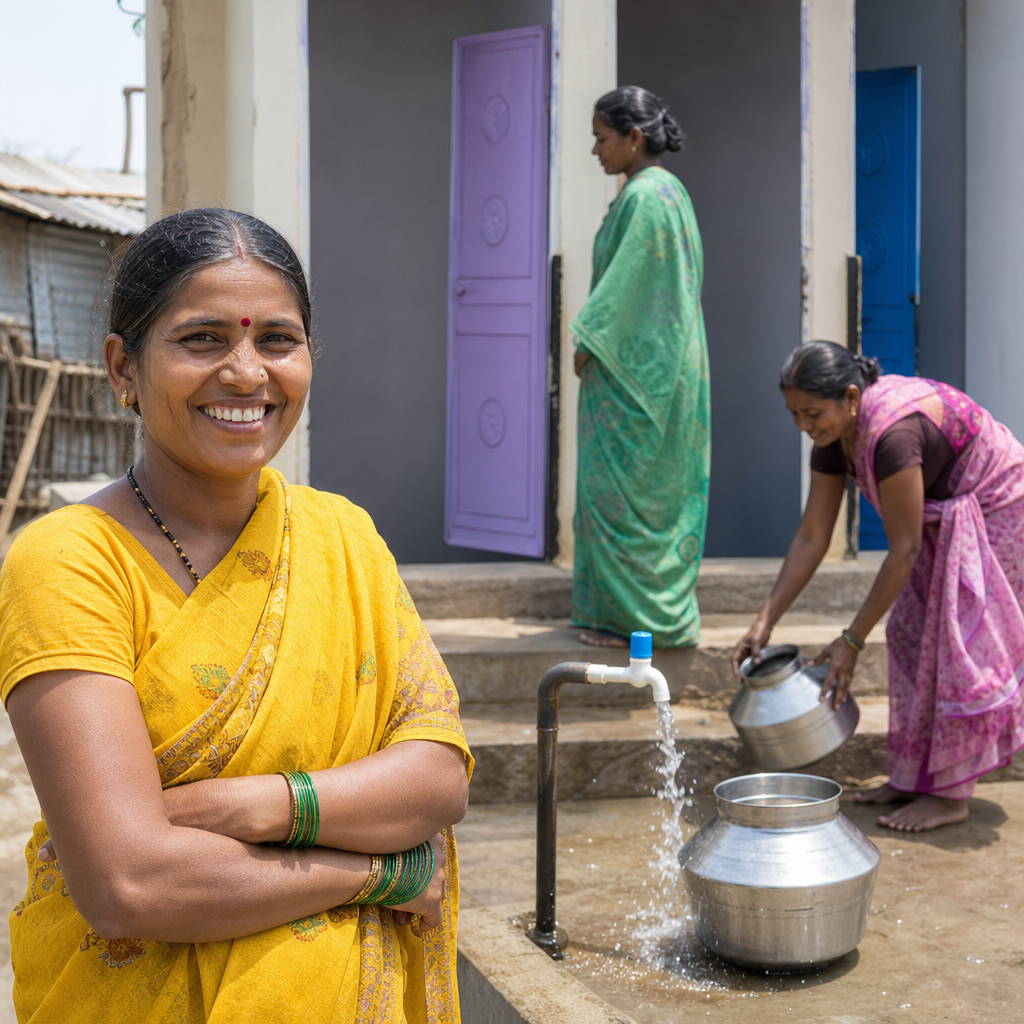
Inclusive economic growth through gender-responsive sanitation is not a slogan; it is a practical development strategy that improves productivity, protects health, expands market participation, and makes ecological sanitation systems financially sustainable over time. In this context, gender-responsive sanitation means sanitation planning, financing, design, operation, and governance that account for the different needs, risks, time burdens, safety concerns, and economic roles of women, men, girls, boys, and people with disabilities. Economic sustainability in EcoSan refers to the ability of ecological sanitation systems to recover costs, create value from nutrients and water, maintain service quality, and remain socially accepted without constant subsidy dependence. I have seen projects fail when toilets were built without considering menstruation management, caregiving patterns, or who actually empties, transports, and uses sanitized products. I have also seen the opposite: when sanitation reflects lived realities, adoption rises, maintenance improves, and local enterprises emerge around compost, urine diversion, container collection, and repair services. This matters because sanitation is not only a public health issue. It influences labor supply, school attendance, agricultural input costs, urban service markets, and household resilience. A hub article on Economic Sustainability in EcoSan must therefore connect gender inclusion with pricing, value chains, financing, operations, and policy, because those factors determine whether a sanitation model survives beyond the pilot stage.
Why gender-responsive sanitation strengthens EcoSan economics
Economic sustainability in EcoSan begins with demand that lasts. Households continue paying for a service or maintaining a system when it fits daily routines, reduces costs elsewhere, and preserves dignity. Gender-responsive sanitation improves exactly those outcomes. Women and girls often bear the highest hidden sanitation costs through unpaid care work, time spent finding safe facilities, lost school or market hours during menstruation, and health impacts from urinary retention or unsafe emptying conditions. Men may face different barriers, including reluctance to handle fecal reuse products or limited engagement in household sanitation decisions. When system design ignores these realities, usage drops and operating costs rise because facilities need more cleaning, repairs, and behavior change campaigns.
In practice, EcoSan economics improve when facilities include water access for washing where needed, privacy for menstrual hygiene, safe nighttime access, accessible cubicles, and clearly assigned maintenance roles. A urine-diverting dry toilet that is technically sound but impossible for elderly caregivers to clean will underperform financially. A container-based sanitation service that schedules pickup around market days and employs women in customer support often retains subscribers better because communication is stronger and service expectations are clearer. The World Bank has repeatedly linked poor sanitation to substantial national income losses through healthcare spending and reduced productivity. At the household level, those losses appear as missed workdays, medical expenses, and lower educational attainment. EcoSan can reverse part of that loss, but only if users trust and value the service enough to sustain it.
Another economic channel is labor participation. In peri-urban settlements where women run food stalls, tailoring shops, or home enterprises, access to safe, nearby sanitation increases working hours and customer confidence. I have observed market sanitation upgrades translate into visibly longer trading days for women vendors because they no longer leave early to find a usable toilet. That matters for EcoSan business models because public and shared facilities depend on reliable footfall and fee collection. Gender-responsive planning is therefore not a social add-on; it is demand assurance, risk reduction, and revenue protection.
Core cost drivers and revenue streams in EcoSan systems
EcoSan systems differ widely, yet most share the same economic structure: capital expenditure, operating expenditure, user engagement costs, and resource recovery revenue. Capital expenditure includes superstructure, slabs, urine diversion pedestals, storage vaults, ventilation, handwashing points, accessibility features, and site works. Operating expenditure covers cleaning, consumables, collection or emptying, transport, treatment, quality testing, staff wages, customer management, and periodic repairs. Too many business plans underestimate behavior support, which is costly but essential. If users mix urine and feces in a diversion system, the value chain weakens immediately because treatment needs increase and product quality declines.
Revenue can come from household subscriptions, pay-per-use fees, municipal contracts, cross-subsidies from commercial users, sale of compost or sanitized biosolids, sale of struvite or liquid fertilizers from urine, carbon finance linked to avoided methane in specific contexts, and avoided fertilizer purchases for farming households. The economics are strongest when planners treat resource recovery as supplemental rather than primary revenue during the early years. In most locations, nutrient product markets need cultivation, quality assurance, and buyer education before they become dependable cash flow. Overpromising compost sales is one of the fastest ways to undermine investor confidence.
| Economic component | Typical challenge | Gender-responsive solution | Economic effect |
|---|---|---|---|
| User fees | Irregular payments from low-income households | Flexible billing aligned with income cycles and women-led savings groups | Higher collection rates and lower churn |
| Operations | Poor cleaning and maintenance | Paid caretaking roles, clear task design, safer equipment | Better facility uptime and lower repair costs |
| Resource recovery | Weak demand for reuse products | Training women and men farmers separately on product use and safety | Broader customer base and repeat purchases |
| Emptying and transport | Unsafe, stigmatized labor | Protective gear, mechanized tools, fair wages, formal contracts | Lower turnover and more reliable service |
| Public facilities | Low usage by women and girls | Privacy, lighting, disposal bins, menstrual hygiene features | Higher footfall and stronger fee income |
Good financial modeling separates direct cash revenue from avoided costs. A school EcoSan block may never fully pay for itself through user fees, yet it can be economically justified through attendance gains, lower desludging expenses, and reduced water demand. Likewise, a farming cooperative using sanitized urine may value the product because it replaces part of imported mineral fertilizer costs, especially when global fertilizer prices spike. Economic sustainability is achieved through the whole system, not a single sales line.
Design choices that influence adoption, maintenance, and return on investment
Design determines economics more than many spreadsheets admit. Small errors in interface design create large lifecycle costs. For example, a urine-diverting pedestal with the wrong slope or outlet diameter often clogs, increasing maintenance visits and discouraging users. Vault access doors that are too narrow make safe emptying difficult, which raises labor time and exposure risk. Lack of handwashing stations can depress use and worsen disease outcomes, indirectly weakening household willingness to pay. In shared compounds, inadequate lighting and door locks reduce use by women at night, pushing people back to open defecation or unsafe alternatives and eroding the expected health and productivity benefits.
Gender-responsive design improves return on investment because it aligns hardware with actual use patterns. Toilets in schools need disposal systems for menstrual materials, washing space, hooks, shelves, and enough cubicles to avoid queue-related absenteeism. Public toilets in transport hubs should consider caregivers accompanying children and require accessible cubicles for people with mobility limitations. In agricultural reuse settings, storage and treatment areas should be located so that women farmers, who may have less access to transport equipment, can still collect products safely. These are not premium extras. They are determinants of utilization rates and therefore cost recovery.
I have learned to evaluate ROI in EcoSan using four lenses: engineering reliability, user acceptance, serviceability, and marketability of outputs. A system may look cheap at installation but become expensive when misuse, odor, difficult cleaning, and poor product quality drive abandonment. Conversely, a slightly higher upfront investment in better pedestals, durable doors, handwashing stations, and accessible layouts often lowers recurrent costs. International standards such as ISO 30500 for non-sewered sanitation systems and the Sanitation Safety Planning framework promoted by the World Health Organization are useful references because they push designers to consider performance, risk control, and operational reality together.
Financing models, enterprise structures, and market development
No single financing model works everywhere. Household-financed EcoSan suits communities with stable tenure and some savings capacity. Microfinance can help spread upfront costs, particularly when loan officers understand sanitation cash flows and when women have equal borrowing access. Results are mixed when collateral rules exclude women or when repayment schedules ignore seasonal income. Blended finance, combining grants for public-good features with commercial finance for service operations, is often more realistic for shared sanitation, schools, and low-income urban areas. Municipal output-based aid can reward verified service delivery rather than mere construction, which improves accountability.
Enterprise structure matters as much as capital source. Private operators can excel at collection logistics and customer service, especially in container-based sanitation. Cooperatives may work well where farmer groups can aggregate demand for sanitized compost or urine-derived fertilizers. Social enterprises often bridge early market development, but they still need disciplined unit economics. I advise operators to track customer acquisition cost, average revenue per user, route density, refill or collection frequency, downtime, and product rejection rates. Without those metrics, management cannot see where gender-responsive adjustments improve margins. For instance, adding female sales agents may raise payroll modestly while significantly improving conversion among women-headed households because trust increases.
Market development for reuse products requires quality assurance and honest messaging. Farmers buy outputs that are consistent, safe, and easy to apply. Naming the nutrient content, moisture level, recommended application rates, and storage conditions is more persuasive than generic claims about organic fertilizer. Demonstration plots are effective, particularly when they compare crop response against conventional fertilizer regimes. In several projects, separate training sessions for women farmers increased uptake because participants felt comfortable asking practical questions about handling, smell, labor, and crop suitability. That translated into repeat purchases, which is what turns a pilot into a market.
Governance, labor conditions, and metrics for long-term sustainability
Economic sustainability in EcoSan depends on governance that is clear about responsibility, safety, and performance. When ownership of cleaning, repairs, emptying, and monitoring is ambiguous, assets deteriorate fast. Gender-responsive governance means women participate in tariff discussions, sit on user committees, hold supervisory roles, and influence procurement specifications. It also means sanitation workers, who are often invisible in planning documents, receive protective equipment, vaccinations where appropriate, training, fair contracts, and routes to formal recognition. Unsafe labor is not low-cost labor; it creates absenteeism, turnover, reputational damage, and public health risk.
Metrics should extend beyond toilet counts. A serious EcoSan hub should track usage rates by gender and age, school attendance effects, average downtime, cleaning frequency, odor complaints, emptying safety incidents, cost per household served, revenue collection rate, nutrient product sales, and customer retention. Where possible, measure time saved for caregivers and traders because that is a real economic gain. In cities, route efficiency and transfer costs are decisive. In rural reuse systems, product quality and agronomic performance are decisive. Policy should support these metrics through local standards, licensing pathways for reuse products, and procurement rules that reward service quality.
Climate resilience also belongs in the economics discussion. Dry and low-water EcoSan options can reduce exposure to water scarcity and lower utility costs. However, they require disciplined operation and user support. Flood-prone areas need elevated or sealed designs to protect treatment processes and prevent contamination. Resilience planning becomes more effective when women’s and men’s different mobility, caregiving, and asset constraints are considered in emergency sanitation arrangements.
The central lesson is straightforward: inclusive economic growth through gender-responsive sanitation is achieved when EcoSan systems are designed as service ecosystems, not construction projects. Demand, finance, labor, governance, and reuse markets all improve when planners account for who uses the system, who maintains it, who pays, who benefits, and who bears risk. For this Economic Aspects hub, the main takeaway is that economic sustainability in EcoSan comes from lifecycle thinking. Build for reliable use, finance for continuity, manage for safety, and develop honest markets for recovered resources. If you are shaping a program, start by auditing your sanitation model through a gender and economics lens, then strengthen the weak links before scaling.
Frequently Asked Questions
1. What does gender-responsive sanitation mean in the context of inclusive economic growth?
Gender-responsive sanitation refers to sanitation systems, services, and policies that are intentionally designed around the different realities of women, men, girls, boys, older adults, and people with disabilities. In practical terms, it means sanitation planning does not assume that everyone uses facilities in the same way, faces the same risks, or carries the same unpaid labor burden. Instead, it takes into account issues such as privacy, menstrual health needs, caregiving responsibilities, exposure to violence, mobility limitations, work patterns, and access to income and decision-making. This approach is especially important because sanitation is not only a public health service; it also shapes productivity, education, time use, and participation in local markets.
From an economic growth perspective, gender-responsive sanitation helps remove barriers that prevent people from contributing fully to households, businesses, farms, schools, and community institutions. When women and girls spend less time finding safe toilets, managing water collection, coping with inadequate menstrual hygiene facilities, or caring for family members sickened by poor sanitation, they gain time and energy for education, paid work, entrepreneurship, and leadership. Men also benefit when sanitation systems reduce disease, improve working conditions, and lower household vulnerability. The result is a stronger labor force, reduced health costs, and better human capital outcomes.
This is why inclusive economic growth through gender-responsive sanitation is best understood as a practical investment strategy rather than a social add-on. It improves the effectiveness of sanitation spending by ensuring facilities are actually used, maintained, and trusted by the people they are meant to serve. It also supports the long-term viability of ecological sanitation systems by aligning design and governance with real household and community behaviors. When sanitation works for everyone, usage rises, service quality improves, and the economic returns become more reliable and sustainable over time.
2. How does gender-responsive sanitation improve productivity and household economic outcomes?
Gender-responsive sanitation improves productivity by reducing the hidden time and health costs that poor sanitation imposes on families and workers. In many communities, women and girls spend significant time walking to distant or unsafe facilities, waiting for access, cleaning inadequate toilets, managing sanitation-related caregiving, or missing work and school during menstruation because facilities do not provide privacy, water, disposal options, or washing space. These time losses are economically significant. When sanitation systems are designed with accessibility, safety, and dignity in mind, households recover hours that can be redirected toward farming, wage labor, study, small business activity, and care that is more productive and less crisis-driven.
Health gains are equally important. Poor sanitation contributes to diarrheal disease, intestinal infections, chronic undernutrition, and repeated illness that reduce worker strength, concentration, and attendance. Women often bear the greatest indirect burden because they care for sick children, older relatives, and other dependents, limiting their income-generating opportunities. By lowering disease incidence, gender-responsive sanitation can reduce absenteeism, cut out-of-pocket medical expenses, and improve school attendance, all of which support stronger household finances. Better sanitation can also protect pregnant women and reduce stress associated with unsafe sanitation access, with further benefits for maternal and family well-being.
At the community and enterprise level, the productivity effects compound. Markets, schools, farms, public institutions, and workplaces with safe and inclusive sanitation are better able to attract and retain workers, customers, and students. Women-owned businesses in particular benefit when sanitation access makes it easier to trade in public spaces, travel, or participate in value chains without facing avoidable hygiene and safety barriers. Over time, these improvements increase labor participation, strengthen local demand, and help households move from coping with sanitation-related risks to investing in more stable livelihoods.
3. Why is safety and dignity in sanitation such an important economic issue for women and girls?
Safety and dignity are often discussed as social concerns, but they are also directly linked to economic participation. When women and girls do not have access to private, secure, and nearby sanitation facilities, they may limit how much they eat or drink, delay using toilets, avoid traveling, skip school, or withdraw from market activities and public life. In some settings, fear of harassment, assault, or stigma during sanitation use is a daily reality. These risks affect when and where people work, whether girls stay in school, and how confidently women engage in trade, community leadership, or paid employment.
The economic consequences are substantial. A girl who misses school repeatedly due to inadequate toilets or poor menstrual hygiene support is more likely to experience learning loss and lower future earnings. A woman who avoids marketplace activity because sanitation is unsafe may lose customers, income, and business growth opportunities. Workers in factories, farms, construction sites, and service industries are less productive when sanitation is inaccessible, unsanitary, or humiliating to use. In this way, poor sanitation narrows people’s economic choices long before any official labor market statistics capture the damage.
Gender-responsive sanitation addresses these issues by prioritizing design features and governance practices that make safety and dignity non-negotiable. This can include locks, lighting, location planning, separate and well-maintained facilities where appropriate, menstrual hygiene support, pathways accessible at night, and complaint mechanisms that allow users to report problems. Just as important, women and girls need meaningful participation in planning and oversight so that facilities reflect lived realities rather than assumptions. When sanitation systems enable people to move, study, work, and participate without fear or shame, they strengthen both individual opportunity and the broader economy.
4. How can gender-responsive sanitation support the financial sustainability of ecological sanitation systems?
Ecological sanitation systems are most financially sustainable when they are consistently used, properly maintained, socially accepted, and connected to viable service models. Gender-responsive planning is critical to achieving all four. If sanitation systems overlook user preferences, caregiving roles, menstrual hygiene needs, safety concerns, or the labor demands placed on women, facilities may be underused, misused, or abandoned. That undermines cost recovery, reduces willingness to pay, and weakens the long-term economics of operation and maintenance. In contrast, when systems are tailored to actual daily practices, households and institutions are far more likely to adopt and sustain them.
This matters especially for ecological sanitation approaches that rely on source separation, composting, resource recovery, or decentralized management. These systems often require regular user engagement, proper handling, and local governance capacity. Women frequently play central roles in household sanitation management, yet they may be excluded from technical training, financial decisions, or producer networks connected to compost, biosolids, or reuse markets. A gender-responsive model closes those gaps by ensuring women and men have equitable access to information, finance, ownership opportunities, and paid roles across the sanitation value chain, from construction and pit emptying to treatment, sales, and reuse enterprises.
Financial sustainability also improves when sanitation investments produce broader economic value. Ecological sanitation can support agriculture through nutrient recovery, create jobs in maintenance and service delivery, and reduce environmental contamination that would otherwise impose costs on communities and local economies. But these returns depend on trust, proper design, and stable management. By incorporating gendered patterns of labor, decision-making, affordability, and use, sanitation providers can improve customer satisfaction, reduce system failure, and build stronger business cases for long-term investment. In short, gender responsiveness is not separate from financial sustainability; it is one of the conditions that makes sustainability possible.
5. What are the most effective strategies for governments and organizations to implement gender-responsive sanitation at scale?
Effective implementation starts with treating gender-responsive sanitation as a core infrastructure and economic policy issue rather than a narrow social program. Governments and organizations need to integrate gender considerations into every stage of the sanitation cycle: policy, budgeting, service design, procurement, construction, operations, monitoring, and governance. That begins with collecting and using disaggregated data to understand who lacks access, who bears time burdens, where safety risks are concentrated, and how sanitation barriers affect school attendance, labor participation, caregiving, and health spending. Without this evidence, programs may build facilities that meet technical standards while still failing the people most affected.
Inclusive planning is equally essential. Women, adolescent girls, caregivers, sanitation workers, persons with disabilities, and marginalized groups should be involved in decision-making from the outset, not consulted only after designs are finalized. Their input can shape location choices, design specifications, tariff structures, maintenance systems, and service delivery models that are more likely to succeed in practice. Financing mechanisms should also reflect affordability and equity realities, including targeted subsidies for vulnerable households, incentives for schools and workplaces to upgrade facilities, and support for women-led sanitation enterprises and workers across the sanitation economy.
At scale, strong institutions and accountability systems make the difference. Governments should set clear standards for safety, accessibility, menstrual hygiene management, worker protection, and user participation; organizations should train engineers, planners, health staff, and local authorities to apply those standards consistently. Monitoring should go beyond counting toilets and instead measure usage, maintenance quality, user satisfaction, school and workplace inclusion, time savings, and health and income outcomes. When sanitation is planned as an inclusive economic system rather than simply a construction target, it delivers stronger returns: healthier communities, more productive labor, greater market participation, and more resilient sanitation services over the long term.