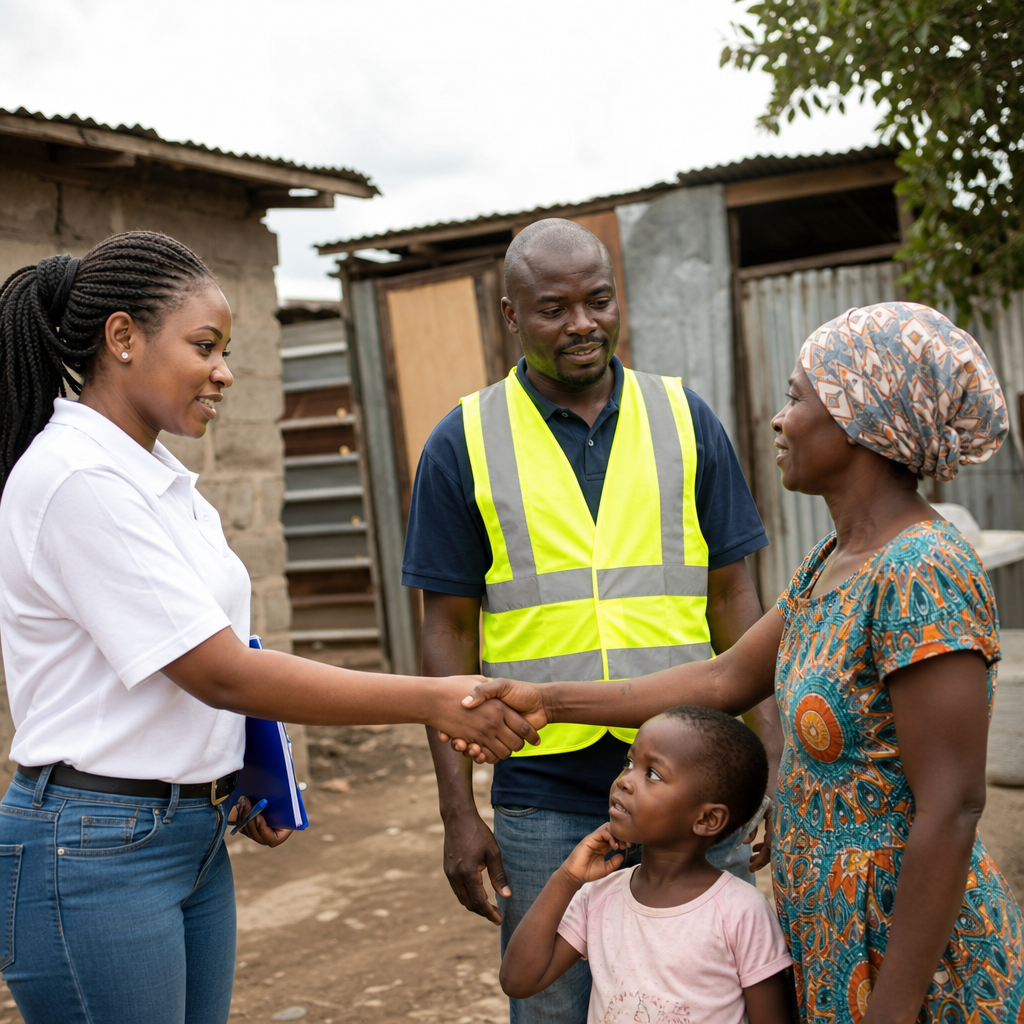
Partnerships for sanitation in vulnerable communities determine whether families gain reliable toilets, safe waste management, and protection from preventable disease. In practice, sanitation partnerships bring together governments, utilities, community groups, nongovernmental organizations, donors, researchers, and private companies to finance, build, maintain, and improve services that no single actor can deliver alone. Vulnerable communities include informal settlements, remote rural villages, refugee camps, climate exposed coastal areas, and low income urban neighborhoods where infrastructure gaps, insecure land tenure, and weak public budgets make conventional service models fail.
Sanitation is more than toilet construction. It includes containment, emptying, transport, treatment, reuse or disposal of human waste, along with hygiene behaviors, drainage interfaces, menstrual health support, and the institutions that keep systems functioning. Global initiatives and collaborations in sanitation matter because unsafe sanitation remains a major public health and development challenge. The World Health Organization and UNICEF Joint Monitoring Programme has repeatedly shown that billions still lack safely managed sanitation, with the burden concentrated in poorer and crisis affected settings. Where sanitation is absent, diarrheal disease, parasitic infection, stunting, school absenteeism, and water contamination rise, while women, girls, older adults, and people with disabilities face disproportionate risks to privacy, safety, and dignity.
I have worked on sanitation programs where the hardest problems were not engineering questions but partnership failures: unclear roles, donor driven timelines, maintenance plans detached from tariffs, and community engagement treated as a one off meeting. The most effective collaborations solved these issues early. They linked public health goals to realistic service chains, matched technical designs to flood risk and settlement density, and created accountability across actors from municipal departments to pit emptiers. This hub article explains how global sanitation collaborations work, which initiatives shape the field, what models succeed in vulnerable communities, and where future opportunities lie for stronger, more durable progress.
Why sanitation partnerships are essential in vulnerable communities
Sanitation systems are networked public services, so fragmented action almost always produces fragmented results. A charity may fund toilets, but if pits cannot be emptied safely, waste enters drains or waterways. A city utility may extend pipes, but if residents lack legal tenure or affordable connection fees, uptake remains low. A ministry may publish standards, but if local governments cannot enforce them or budget for operations, facilities deteriorate quickly. Partnerships are essential because sanitation depends on coordination across policy, finance, land management, behavior change, engineering, and long term service delivery.
Vulnerable communities magnify these coordination demands. In informal settlements, population density, narrow access lanes, and contested land rights often rule out standard sewer extensions. In rural areas, dispersed households increase transport costs for sludge management. In refugee camps, systems must be deployed rapidly yet maintained over months or years under shifting governance arrangements. Climate shocks add another layer: floodwater can inundate pits, drought can reduce handwashing water availability, and storm damage can interrupt collection routes. Effective partnerships align emergency and development actors, combine local knowledge with technical standards, and plan for both immediate access and sustained operation.
Strong sanitation partnerships also improve legitimacy. Communities are more likely to use and maintain services when they help define priorities, site facilities, and choose management models. Local entrepreneurs participate when contracts are fair and demand is predictable. Donors gain confidence when monitoring is transparent and outcomes can be verified. Governments retain ownership when projects strengthen municipal systems rather than bypass them. For this reason, the best collaborations treat sanitation as a public service ecosystem, not a one time hardware distribution exercise.
Global initiatives shaping sanitation collaboration
Several international initiatives have set the agenda for sanitation collaboration and provided common targets, funding channels, and technical guidance. The clearest global anchor is Sustainable Development Goal 6, especially target 6.2 on access to adequate and equitable sanitation and hygiene for all, with attention to women, girls, and people in vulnerable situations. SDG 6 shifted discussion from basic access alone toward safely managed sanitation, forcing partners to think beyond toilet coverage to the full service chain and equitable outcomes.
The WHO and UNICEF Joint Monitoring Programme remains the primary source for globally comparable sanitation data. Its service ladders have given governments and donors a shared language to measure progress from open defecation to basic, limited, and safely managed services. UN-Water has reinforced coordination across agencies, while Sanitation and Water for All has created a high level partnership platform linking finance ministers, sector ministers, civil society, utilities, and development partners around mutual accountability. In my experience, these platforms matter less for slogans than for standardizing expectations: countries increasingly need financing plans, bottleneck analyses, and policy commitments that connect national targets to implementation.
Development banks and bilateral agencies are equally influential. The World Bank, African Development Bank, Asian Development Bank, and regional facilities often fund urban sanitation infrastructure, citywide inclusive sanitation planning, and utility reform. UNICEF, WaterAid, the Gates Foundation, Plan International, and many national cooperation agencies have supported rural sanitation, behavior change, market development, school sanitation, and innovation pilots. The challenge is that funding streams can become siloed. The strongest country programs use these global initiatives to align planning, not to create parallel reporting burdens or disconnected demonstration projects.
Partnership models that work on the ground
There is no universal sanitation partnership model, but several patterns consistently perform well. First, government led coordination with defined local delivery roles is critical. National ministries set standards, budgeting rules, and regulatory frameworks; municipalities or districts plan services, oversee contracts, and monitor outcomes; utilities or specialized operators manage infrastructure where capacity exists. This public backbone reduces duplication and gives external partners a clear entry point.
Second, community based partnership models work when they move beyond consultation toward shared governance. In dense low income settlements, resident committees can help identify priority blocks, mediate land access, monitor cleanliness, and organize user payments for communal facilities. However, community management alone rarely sustains technically complex systems. I have seen communal toilets thrive only when communities were paired with professional emptying services, municipal oversight, and a maintenance budget that covered real costs rather than optimistic assumptions.
Third, market based collaboration expands options where public operators are weak. Small enterprises can provide pit emptying, container based sanitation, toilet construction, soap distribution, and fecal sludge transport. These businesses need training, licensing, safe equipment, disposal access, and demand stimulation. Without those supports, informal operators often undercut safer providers and dump waste illegally. Public private partnerships therefore work best when the public side regulates quality and creates viable service conditions.
| Partnership model | Best use case | Main strength | Key limitation |
|---|---|---|---|
| Government led municipal coordination | Citywide planning and regulation | Clear accountability and scale | Weak local capacity can slow delivery |
| Community and NGO collaboration | Informal settlements and rural villages | High local trust and participation | Maintenance often underfunded |
| Public private service partnership | Emptying, transport, treatment, reuse | Operational efficiency and innovation | Needs strong oversight and tariffs |
| Humanitarian development consortium | Displacement and fragile contexts | Rapid deployment with continuity planning | Governance transitions are difficult |
Fourth, humanitarian development collaboration is increasingly necessary. In protracted crises, agencies such as UNHCR, UNICEF, and international NGOs may establish emergency sanitation, but long term success depends on integrating those services with local authorities, host community infrastructure, and market actors. A camp isolated from municipal waste systems may function briefly, yet fail once emergency funding declines. Planning for transition from the start is a defining feature of mature partnerships.
What successful global collaborations actually do
Successful sanitation collaborations share a practical sequence. They begin with diagnosis, not procurement. Partners map the entire service chain, identify who is excluded, assess flood risk, groundwater conditions, tenure status, and household affordability, then choose technologies accordingly. Tools such as shit flow diagrams, citywide inclusive sanitation assessments, and sanitation safety planning are valuable because they make invisible failures visible. A neighborhood may appear served because toilets exist, while in reality most waste leaks untreated into drains.
They also combine infrastructure with behavior and service management. Community Led Total Sanitation helped many countries reduce open defecation, but its limitations are well documented where follow up, affordability support, or supply chains were weak. Stronger programs pair behavior change with trained masons, financing options, disability inclusive design, and verification systems. In urban areas, citywide inclusive sanitation has gained traction because it accepts a mix of sewers and non sewered solutions, then focuses on safe outcomes for the whole city rather than prestige infrastructure in wealthier districts.
Another hallmark is financial realism. Capital grants may be necessary for the poorest households, schools, clinics, and high risk settlements, but operations and maintenance cannot be ignored. Tariffs, transfers, and taxes must be balanced. Cross subsidies can help, yet they require governance discipline. Output based aid, microfinance for household toilets, blended finance for treatment plants, and performance based contracts for desludging all have roles when matched to context. The key question is simple: who pays for each step of the service chain over time, and is that answer credible?
Examples from vulnerable settings
Bangladesh offers important lessons in coordinated sanitation progress. National leadership, local government engagement, NGO mobilization, and social norm change campaigns helped drive major reductions in open defecation over the past two decades. Yet the next phase revealed the harder challenge: fecal sludge management in dense towns and flood prone areas. Partnerships involving municipalities, development agencies, and private emptiers have shown that progress depends on treatment capacity, regulated dumping points, and service scheduling, not only toilet access.
In India, the Swachh Bharat Mission demonstrated the power and limits of large scale government mobilization. It accelerated toilet construction and elevated sanitation politically, but independent assessments have highlighted uneven use, variable quality, and persistent service chain gaps in some regions. Where state governments, district administrations, women’s groups, and local entrepreneurs worked together on verification, behavior reinforcement, and pit emptying arrangements, outcomes were more durable. The lesson is not that mass campaigns fail, but that partnerships must extend beyond construction targets.
In East Africa, sanitation collaborations in informal settlements have increasingly focused on container based sanitation, shared facilities with professional maintenance, and fecal sludge enterprises serving areas inaccessible to vacuum trucks. In humanitarian settings such as Cox’s Bazar or parts of the Horn of Africa, agencies have learned that rapid latrine deployment must be accompanied by desludging logistics, groundwater protection, and community feedback systems, especially for women and people with disabilities. Across these examples, durable gains come from coordinated service delivery rather than isolated hardware projects.
Barriers, tradeoffs, and future opportunities
Despite progress, major barriers remain. Institutional fragmentation is the most common. Responsibility for sanitation may sit across ministries of water, health, housing, education, and local government, with no single actor empowered to lead. Data quality is another weakness. Household surveys can overstate service levels when they do not track safe containment and treatment. Political incentives often favor visible construction over less visible maintenance and sludge treatment. In vulnerable communities, these problems intersect with poverty, exclusion, and climate risk, making failure more likely unless partnerships are deliberately designed to address them.
There are also real tradeoffs. Shared sanitation may be the only feasible short term option in dense settlements, yet it can compromise privacy or safety if poorly managed. Sewer expansion can deliver high service quality, but costs and water requirements may make it unrealistic in low income or water scarce areas. Non sewered systems can be effective and inclusive, though only if regulation and treatment infrastructure exist. Good partnerships acknowledge these tradeoffs openly and choose the least risky pathway for public health, equity, and long term affordability.
The most promising opportunities lie in stronger municipal capacity, better digital monitoring, climate resilient design, and professionalized sanitation markets. Remote sensors, route optimization for desludging, and digital payment systems can improve efficiency, but only where basic governance exists. Nature based treatment, resource recovery, and circular economy models offer potential value from waste, though revenue rarely covers all costs. The biggest opportunity remains partnership quality itself: align incentives, define responsibilities, fund maintenance, and center excluded users in every decision.
Partnerships for sanitation in vulnerable communities succeed when they are structured around services, not slogans. Global initiatives provide targets, data standards, financing channels, and political momentum, but local collaboration determines whether households receive safe, reliable sanitation every day. The strongest partnerships share several traits: government ownership, community voice, realistic financing, whole service chain planning, and accountability that survives beyond pilot phases. They use the right mix of sewers, onsite systems, emptying services, treatment, and hygiene support for each context instead of forcing one model everywhere.
For anyone working in global challenges and opportunities, sanitation is a practical test of collaborative development. It reveals how health, gender equity, urban planning, climate adaptation, education, and public finance intersect in one essential service. It also shows why vulnerable communities need more than charitable installations. They need institutions and partnerships capable of sustaining safe sanitation under difficult conditions, from informal settlements to displacement crises. If you are building a program, funding a portfolio, or shaping policy, start with partnership design: map the service chain, assign roles clearly, and invest where long term public health gains are most likely.
Frequently Asked Questions
Why are partnerships so important for sanitation in vulnerable communities?
Partnerships are essential because sanitation challenges in vulnerable communities are rarely caused by a single issue, and they cannot usually be solved by one organization working alone. In informal settlements and remote rural villages, families may face a combination of limited infrastructure, insecure land tenure, weak public funding, difficult terrain, health risks, and limited access to technical support. A local government may have regulatory authority but lack the budget to extend services quickly. A utility may understand operations but not have the community trust needed to introduce new systems. Community groups may know local priorities and social dynamics but need financing, engineering, or long-term maintenance support. When these actors work together, they can combine their strengths to design solutions that are practical, affordable, and durable.
Strong sanitation partnerships also improve coordination across the full service chain, not just toilet construction. That means planning for containment, emptying, transport, treatment, reuse, and safe disposal of waste. Too many sanitation efforts fail because they focus only on installing toilets without considering what happens when pits fill up or systems break down. Partnerships help align public health goals, technical standards, environmental protection, and community needs so services remain functional over time. In vulnerable communities, this coordinated approach can reduce disease exposure, improve dignity and safety, especially for women and girls, and create a more reliable path toward universal access.
Who should be involved in a sanitation partnership, and what does each partner contribute?
Effective sanitation partnerships typically involve several groups, each playing a distinct role. Governments are central because they set policy, approve plans, regulate service quality, and often provide public funding or subsidies. Utilities or municipal service providers may manage water and sanitation systems, oversee operations, and ensure that service delivery meets technical and safety requirements. Community-based organizations and local leaders are equally important because they understand daily realities, cultural preferences, settlement patterns, and the barriers residents face in paying for or accessing sanitation services. Their participation helps ensure that solutions are accepted, used correctly, and maintained.
Nongovernmental organizations often contribute social mobilization, capacity building, hygiene promotion, and project management support. Donors and development finance institutions may provide grants, concessional finance, or blended funding that makes projects possible in low-income or high-risk areas. Researchers and academic institutions can support needs assessments, technology evaluation, monitoring, and evidence-based decision-making. Private companies may supply materials, construction services, desludging equipment, digital payment systems, treatment technologies, or long-term maintenance contracts. The most successful partnerships clearly define who is responsible for planning, financing, construction, operation, monitoring, and accountability. When roles are transparent and complementary, projects are less likely to stall and more likely to deliver lasting sanitation improvements.
What makes a sanitation partnership successful in informal settlements and remote rural villages?
Successful sanitation partnerships usually start with a realistic understanding of local conditions rather than a one-size-fits-all model. In informal settlements, challenges may include high population density, limited space, insecure land tenure, and difficult access for waste collection vehicles. In remote rural villages, barriers often include dispersed households, poor road access, seasonal flooding, and limited technical support. A strong partnership responds to these realities by selecting appropriate technologies and service models. That might mean shared sanitation facilities with clear maintenance agreements, container-based sanitation, decentralized treatment systems, improved pit latrines, septic solutions, or scheduled fecal sludge management depending on the context.
Another key factor is long-term commitment. Partnerships succeed when they plan beyond initial construction and include budgeting for maintenance, repairs, operator training, customer support, and performance monitoring. Community engagement is also critical. Residents need meaningful input into design, location, affordability, accessibility, and safety features, especially for children, older adults, and people with disabilities. Trust matters just as much as infrastructure. When communities understand how services will work, who will maintain them, and how complaints will be handled, adoption tends to be higher. Finally, successful partnerships use data to track coverage, functionality, service quality, and health outcomes so they can adjust quickly when problems emerge.
How are sanitation partnerships typically funded and sustained over time?
Funding for sanitation partnerships usually comes from a mix of sources rather than a single stream. Public funding from national or local governments is often needed because sanitation delivers broad public health and environmental benefits that markets alone may not support. Donor grants can help launch programs, finance infrastructure in underserved areas, or support innovation and capacity building. In some cases, development banks or social investors provide loans for treatment facilities, utility upgrades, or service expansion. Private sector participation can also reduce costs or improve efficiency through construction contracts, supply chains, desludging services, or technology platforms.
For long-term sustainability, however, the partnership must think beyond startup funding. Reliable sanitation services require recurring revenue for operation and maintenance, replacement parts, staff, monitoring, and safe waste treatment. This may come from user fees, municipal budgets, targeted subsidies for low-income households, cross-subsidies within a utility system, or performance-based financing. The most resilient partnerships are transparent about costs and realistic about what communities can afford. They do not assume that vulnerable households can carry the full financial burden. Instead, they create financing structures that protect access for the poorest families while still supporting service continuity. Over time, financial sustainability depends on balancing affordability, public support, efficient operations, and clear accountability for how funds are used.
What are the biggest risks or challenges in sanitation partnerships, and how can they be addressed?
One of the biggest risks is unclear responsibility. When multiple organizations are involved, projects can suffer if no one knows who owns the asset, who pays for maintenance, who responds to breakdowns, or who is accountable for public health outcomes. Another common challenge is designing systems that look good on paper but do not match local realities. Toilets may be installed without plans for emptying, treatment, or safe disposal. Facilities may be too expensive to maintain, unsafe for women and girls, inaccessible for people with disabilities, or poorly located for regular use. Political turnover, short donor timelines, weak data, and limited technical capacity can also undermine progress.
These risks can be reduced through careful partnership design. Clear agreements should define roles, budgets, timelines, service standards, and reporting obligations from the beginning. Community participation should be built into planning and oversight, not added as an afterthought. Technical choices should reflect local geography, settlement conditions, affordability, and the full sanitation value chain. Regular monitoring helps identify failures early, while grievance mechanisms give residents a way to raise concerns and improve accountability. Capacity building is equally important, especially for local operators, municipal staff, and community committees. In the strongest partnerships, success is measured not by how many toilets are built, but by whether people consistently have access to safe, functional, and dignified sanitation over the long term.