Global youth initiatives in sanitation advocacy are reshaping how communities, governments, schools, and international organizations address one of the world’s most persistent public health challenges. Sanitation refers to the safe management of human waste, hygiene services, drainage, and the systems that prevent people from coming into contact with pathogens. Advocacy, in this context, means organized efforts to influence policy, funding, behavior, and public awareness so sanitation becomes a priority rather than an afterthought. When young people lead that work, the field gains urgency, creativity, digital fluency, and stronger links to schools, neighborhoods, and climate-conscious civic action.
This topic matters because sanitation remains deeply unequal. According to joint monitoring by UNICEF and the World Health Organization, billions of people still lack safely managed sanitation, and hundreds of millions practice open defecation. Poor sanitation drives diarrheal disease, parasitic infections, undernutrition, school absenteeism, gender insecurity, and environmental contamination. I have worked with sanitation communication campaigns where the technical solution was clear but adoption stalled until local youth groups translated public health messages into language peers and parents trusted. That pattern appears globally: infrastructure alone does not solve sanitation problems. Sustainable progress usually happens when communities understand, demand, maintain, and defend the systems built for them.
As a hub article on global initiatives and collaborations in sanitation, this page explains how youth advocacy works across international networks, local partnerships, schools, social enterprises, and policy spaces. It also clarifies key terms searchers often ask about: what youth-led sanitation advocacy means, how global sanitation collaborations are funded, which organizations are most active, what approaches actually improve outcomes, and where the biggest gaps remain. The central point is straightforward: young advocates are not a symbolic add-on to sanitation work. They are often the connective tissue linking public health goals, community behavior change, digital campaigns, education systems, and accountability efforts across borders.
Why youth leadership has become central to global sanitation advocacy
Youth leadership matters in sanitation because the sector depends on long-term behavior change, public participation, and political pressure, not only engineering. A wastewater network, school toilet block, fecal sludge treatment plant, or handwashing campaign succeeds when people use services consistently, report breakdowns, budget for maintenance, and challenge unsafe norms. Young people are uniquely positioned to influence those decisions because they move between households, schools, online networks, and civic spaces. In practice, they often become the fastest route for turning sanitation from a private household issue into a visible public concern.
Another reason is demographics. In many low- and middle-income countries, young people make up a large share of the population. Where urbanization is accelerating, youth are also disproportionately affected by informal settlements, overloaded drainage, inadequate school sanitation, and unemployment in service delivery sectors. I have seen youth groups map overflowing pits, document inaccessible toilets, and present findings to municipal officials more effectively than outside consultants because they knew the geography, slang, and daily constraints of their neighborhoods. Their credibility comes from lived experience, which makes their advocacy harder to dismiss.
Youth-led sanitation advocacy also aligns with broader global agendas. Safe sanitation is integral to the Sustainable Development Goals, especially Goal 6 on clean water and sanitation, but it also affects health, education, gender equality, climate resilience, decent work, and sustainable cities. Because of that overlap, youth activists can build coalitions beyond the sanitation sector itself. A campaign about menstrual health in schools, for example, can connect sanitation infrastructure, waste management, health education, girls’ attendance, and dignity. This cross-sector reach is one reason youth initiatives increasingly attract donors, NGOs, universities, and city governments seeking scalable community engagement.
Major global initiatives and collaborations shaping the field
The modern sanitation landscape is highly collaborative. Large international actors such as UNICEF, the World Health Organization, the World Bank, WaterAid, WSUP, Plan International, UN-Habitat, and the Gates Foundation support programs, research, financing, and advocacy that often create entry points for youth participation. Some initiatives work through schools and child clubs, some through urban service partnerships, and others through global campaigns tied to World Toilet Day or national sanitation strategies. Youth involvement ranges from peer education to policy consultation to entrepreneurship in toilet maintenance, waste collection, and hygiene product distribution.
One of the most influential collaboration models is the multistakeholder platform. In these arrangements, government agencies, civil society groups, local utilities, researchers, and youth organizations coordinate around shared sanitation targets. This can include city sanitation plans, rural sanitation campaigns, school WASH standards, or fecal sludge management roadmaps. When these platforms function well, youth are not limited to awareness events. They sit on advisory groups, co-design outreach, collect community data, and monitor whether commitments are actually delivered. In countries that adopted nationwide sanitation drives, youth volunteers have often served as mobilizers, enumerators, and local watchdogs.
Global campaigns also matter because they amplify local voices. Events tied to World Toilet Day, Menstrual Hygiene Day, and youth climate summits have become practical advocacy windows for sanitation. I have watched small youth organizations gain national attention by using those moments to release community survey data, host school debates, or stage media visits to neglected facilities. International days alone do not solve sanitation gaps, but they help young advocates frame sanitation as a development issue, a human dignity issue, and a public finance issue all at once.
| Initiative type | Typical partners | How youth contribute | Main sanitation impact |
|---|---|---|---|
| School WASH programs | Education ministries, UNICEF, NGOs, school boards | Peer education, hygiene clubs, facility monitoring | Better attendance, safer toilets, stronger hygiene habits |
| Urban sanitation partnerships | Municipalities, utilities, WSUP, community groups | Settlement mapping, public feedback, digital reporting | Improved service design and accountability |
| National sanitation campaigns | Governments, health agencies, civil society networks | Community mobilization, surveys, advocacy events | Higher demand for toilets and behavior change |
| Social enterprise networks | Startups, donors, incubators, local cooperatives | Operations, marketing, repair services, waste reuse ideas | Job creation and service sustainability |
| Global awareness coalitions | UN bodies, media, foundations, youth alliances | Storytelling, campaigns, policy messaging | Greater political visibility and funding attention |
How youth advocacy works on the ground: schools, communities, and cities
Effective youth sanitation advocacy usually starts with practical, local problems. In schools, students push for separate toilets for girls and boys, working locks, menstrual waste bins, soap availability, disability access, and maintenance schedules. These are not minor operational details. They directly affect attendance, concentration, safety, and dignity. Across East Africa and South Asia, school WASH clubs have successfully used checklists and headteacher meetings to identify broken facilities and keep sanitation on school management agendas. The strongest programs pair infrastructure with budgeting and student oversight, because toilets deteriorate quickly when no one owns maintenance.
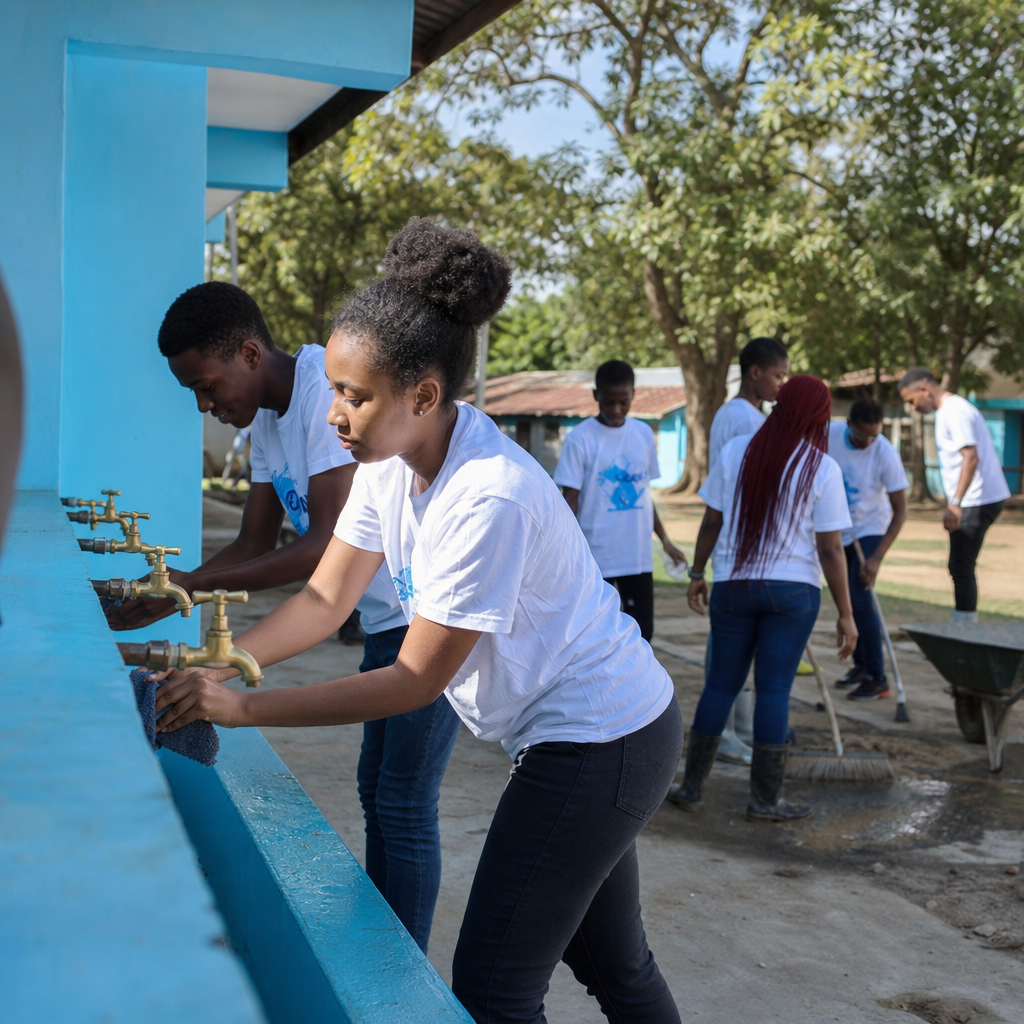
In communities, youth groups often bridge the gap between public health messages and household action. They organize clean-up drives, door-to-door education, street theater, radio discussions, and neighborhood mapping. In informal settlements, young residents are frequently the first to document overflowing drains, unsafe shared toilets, or fecal sludge dumping points with smartphones and geotagged photos. Those records can support municipal complaints, donor proposals, or local media coverage. The tactic works because sanitation failures are easy to ignore until they are visible, named, and linked to specific health risks.
At the city level, youth advocacy becomes more technical. Young leaders may participate in consultations on citywide inclusive sanitation, a planning approach that recognizes not every area can be served immediately by conventional sewers. Instead, cities need a mix of sewered and non-sewered solutions, safely managed across the full sanitation service chain: containment, emptying, transport, treatment, and disposal or reuse. Youth advocates who understand this chain can push for smarter policy, not just more toilet construction. That matters because a toilet that empties into an open drain is not a sanitation success; it merely relocates contamination.
Digital organizing, evidence gathering, and storytelling strategies
Much of the recent momentum in sanitation advocacy comes from how young people use digital tools. Social media platforms help campaigns move beyond one-off awareness posters into sustained public conversation. Short videos explaining why handwashing stations fail without water supply, photo essays on school toilet conditions, and interviews with waste workers can turn technical sanitation issues into stories that policymakers and donors can grasp quickly. The best youth campaigns avoid vague appeals. They pair human stories with measurable claims, such as the number of broken toilets in a district or the average distance girls walk to reach a safe latrine.
Data collection has also become more accessible. OpenStreetMap, KoboToolbox, Google Forms, ArcGIS StoryMaps, and simple WhatsApp reporting channels allow youth groups to gather evidence at low cost. In one municipal partnership model I have seen work well, youth volunteers used standardized forms to inspect public toilets and report cleanliness, accessibility, and fee transparency. Because the indicators were consistent, city officials could compare facilities and prioritize repairs. Evidence makes advocacy more persuasive. It shifts the message from “we need better sanitation” to “ward three has twelve schools with nonfunctional handwashing points and no maintenance budget.”
Storytelling remains essential because sanitation is both technical and social. Numbers explain scale, but stories explain consequences. A compelling sanitation narrative might follow a student missing class during menstruation, a desludging worker without protective equipment, or a family paying repeatedly for unsafe informal emptying services. When youth advocates connect those stories to standards, budgets, and feasible solutions, they increase the odds of policy response. Good advocacy therefore blends community testimony, public health framing, and operational detail. That combination is especially important when seeking media attention or engagement from international partners.
Funding, policy influence, and the role of cross-sector partnerships
Many people ask how youth sanitation initiatives are funded. The answer is usually a mix of small grants, NGO subcontracts, school budgets, municipal partnerships, philanthropy, and volunteer labor. Dedicated youth-led funding is still limited, which is a major constraint. Too many programs invite youth to participate without resourcing transport, data costs, training, safeguarding, or stipends. That approach undervalues the work and narrows participation to those who can afford unpaid activism. Strong collaborations budget for youth involvement as a real program component, not a ceremonial one.
Policy influence happens when advocacy aligns with decision cycles. Young sanitation leaders are most effective when they understand who controls standards, maintenance, and capital budgets. In some contexts that means education ministries and school boards; in others, local governments, public health departments, utilities, or national sanitation task forces. The practical lesson is that advocacy should target the institution capable of acting. Demanding more toilets from a school principal without district funding authority may produce sympathy but little change. Presenting evidence during annual planning or budget hearings is far more effective.
Cross-sector partnerships increase impact because sanitation intersects with health, climate, gender, and jobs. For example, a youth-led campaign around flood-prone toilets can involve urban planners, disaster risk teams, environmental agencies, and public health officials. A menstrual hygiene initiative may require sanitation engineers, teachers, waste handlers, and health educators. Social enterprises can add another layer by creating livelihoods in toilet maintenance, pit emptying logistics, composting, or circular sanitation products. The most durable global sanitation collaborations recognize this complexity. They do not isolate toilets from the systems that sustain them.
Persistent barriers and what stronger youth initiatives need next
Despite progress, youth sanitation advocacy faces recurring barriers. Tokenism is common: organizations showcase young voices in campaigns but exclude them from design, budgeting, and evaluation. Another challenge is technical literacy. Passion alone is not enough when the discussion turns to sludge treatment standards, service-chain regulation, school WASH indicators, or utility governance. Young advocates need training that respects their capacity to master complex material. In my experience, once youth leaders understand the operational side of sanitation, their recommendations become sharper and far more influential.
There are also structural problems that advocacy cannot solve by itself. Weak municipal finance, fragmented mandates, rapid urban growth, conflict, climate shocks, and poor maintenance systems can overwhelm even strong community engagement. Rural areas may struggle with affordability and supply chains for durable toilets. Urban settlements may face land tenure issues that complicate investment. In schools, facilities often break because no one budgets for cleaning staff, spare parts, water access, or menstrual waste disposal. Honest sanitation advocacy must acknowledge these constraints while still pressing for practical improvements.
What is needed next is deeper institutionalization of youth roles. That includes formal seats in local WASH coordination platforms, paid community monitoring contracts, youth-inclusive research partnerships, and leadership pipelines into municipal service agencies and sanitation enterprises. It also means better measurement. Programs should track not just event attendance, but outcomes such as repaired facilities, budget allocations, reduced absenteeism, safer emptying practices, or policy changes. If global sanitation collaborations want durable results, they must treat youth advocacy as infrastructure for accountability, adoption, and innovation, not simply outreach.
Global youth initiatives in sanitation advocacy matter because they turn sanitation from a hidden technical issue into a public priority that communities can see, discuss, and improve. Across schools, neighborhoods, cities, and international campaigns, young people are proving that advocacy works best when it combines lived experience, credible evidence, and practical knowledge of how sanitation systems function. They help institutions hear overlooked voices, identify failing services earlier, and design solutions people will actually use and maintain. For a sector that has often struggled with behavior change and accountability, that contribution is not optional; it is fundamental.
The key takeaway from this hub is that global initiatives and collaborations in sanitation succeed when youth are integrated across the full process: awareness, data collection, policy engagement, implementation, and monitoring. International organizations can provide standards and funding, governments can set policy, and engineers can build systems, but lasting sanitation progress depends on local ownership and continuous pressure for quality service. Youth advocates supply both. They connect sanitation to education, gender equity, health, climate resilience, and jobs in ways that make the issue harder to neglect and easier to act on.
If you are building, funding, or researching sanitation programs, start by asking where young people already organize and how they can hold real authority within the work. Use this page as your hub for exploring the wider sanitation collaboration landscape, then move from awareness to action by partnering with youth-led groups, supporting evidence-based advocacy, and designing sanitation initiatives that communities can sustain.
Frequently Asked Questions
1. What are global youth initiatives in sanitation advocacy, and why do they matter?
Global youth initiatives in sanitation advocacy are organized efforts led by young people to improve sanitation systems, promote hygiene, influence policy, and raise public awareness at local, national, and international levels. These initiatives can take many forms, including school-based campaigns, community education programs, social media movements, nonprofit coalitions, youth advisory boards, and partnerships with governments or international development organizations. At their core, they focus on making sure sanitation is treated as a public health priority rather than an afterthought. That includes safe toilet access, menstrual hygiene support, handwashing facilities, wastewater management, drainage systems, and broader efforts to reduce the spread of disease.
They matter because young people often experience the consequences of poor sanitation directly in schools, neighborhoods, and public spaces. They understand how inadequate facilities affect education, safety, dignity, and health, especially for girls, children with disabilities, and marginalized communities. Youth advocates also bring urgency, creativity, and moral clarity to the issue. They are skilled at mobilizing peers, using digital platforms to amplify overlooked problems, and connecting sanitation to larger global concerns such as climate resilience, gender equality, public health, and sustainable development.
In many countries, youth-led sanitation advocacy helps close the gap between policy promises and lived reality. Young advocates often collect local evidence, document unsafe conditions, organize community events, and push decision-makers to invest in practical improvements. Their participation strengthens accountability and helps ensure that sanitation solutions are not designed only from the top down. Instead, they become more responsive to the needs of the people who use them every day. This is one reason youth initiatives are increasingly recognized as essential to long-term sanitation progress worldwide.
2. How do young people influence sanitation policy and public awareness on a global scale?
Young people influence sanitation policy and public awareness by combining grassroots engagement with strategic advocacy. At the community level, they often begin by identifying local sanitation challenges such as broken school toilets, lack of handwashing stations, unsafe waste disposal, flooding caused by poor drainage, or stigma around menstrual hygiene. From there, they may conduct surveys, hold public discussions, create educational materials, or organize clean-up and awareness events. These local activities help generate evidence and build public support, which can then be used to engage school administrators, municipal officials, ministries, or development agencies.
On a broader scale, youth advocates use media, storytelling, and digital campaigns to frame sanitation as a human rights, health, and equity issue. Social media has become a particularly powerful tool because it allows young leaders to share firsthand experiences, highlight neglected communities, and connect with audiences across borders. International youth networks also participate in global forums, United Nations discussions, climate conferences, and public health dialogues where they call for more funding, stronger accountability, and inclusive sanitation planning. When youth representatives are invited into these spaces, they often broaden the conversation by emphasizing lived experience and long-term community impact.
Policy influence becomes especially effective when youth advocacy is informed by data and backed by partnerships. Many successful initiatives work with NGOs, researchers, educators, and public institutions to develop credible recommendations. For example, young advocates may help produce reports on school sanitation access, contribute to national action plans, or push for sanitation investments in underserved areas. Their influence comes not only from passion, but from their ability to translate everyday sanitation problems into policy demands that are specific, measurable, and difficult to ignore.
3. What kinds of sanitation issues do youth advocacy groups typically focus on?
Youth advocacy groups usually focus on the sanitation issues that most directly affect health, dignity, education, and community well-being. A major priority is access to safe, functional, and inclusive toilets in schools and public spaces. This includes concerns about cleanliness, privacy, lighting, water availability, and facilities that are accessible for people with disabilities. In many settings, young advocates also push for better menstrual hygiene support, including disposal systems, privacy, reliable water supply, and the reduction of stigma that keeps students from attending school confidently and consistently.
Another common area of focus is hygiene behavior and handwashing infrastructure. Youth initiatives frequently promote handwashing with soap, hygiene education, and disease prevention messaging in ways that resonate with children, teenagers, and families. They may also address wastewater treatment, fecal sludge management, drainage problems, and environmental contamination, especially in informal settlements or flood-prone communities where poor sanitation contributes to repeated illness outbreaks. By connecting sanitation to water quality and waste systems, youth advocates help communities understand that sanitation is not only about toilets, but about the full chain of safe waste management.
Many groups also highlight the social inequalities built into sanitation access. They advocate for solutions that serve rural populations, low-income neighborhoods, displaced communities, and groups that are often overlooked in infrastructure planning. Increasingly, youth leaders link sanitation with climate adaptation, noting that extreme weather can damage facilities, spread contamination, and worsen already fragile systems. This wider perspective makes youth advocacy especially valuable because it treats sanitation as a cross-cutting issue tied to education, public health, environmental protection, safety, and social justice.
4. What challenges do global youth sanitation advocates face, and how do they overcome them?
Youth sanitation advocates face several recurring challenges, even when their ideas are strong and their commitment is clear. One of the biggest barriers is limited access to funding, training, and decision-making spaces. Many youth-led groups operate with minimal resources, which can make it difficult to sustain campaigns, gather data, travel to meetings, or scale successful community projects. In some cases, adults and institutions may underestimate young people’s expertise or treat their participation as symbolic rather than substantive. This can limit their ability to shape actual policy outcomes.
Another challenge is the nature of sanitation itself. In many communities, sanitation remains a sensitive or stigmatized topic, which makes public discussion harder. Talking openly about toilets, waste, menstrual hygiene, or disease prevention can encounter cultural resistance, embarrassment, or misinformation. Youth advocates also work in contexts where sanitation failures are tied to larger structural problems such as poverty, weak governance, rapid urbanization, conflict, or climate vulnerability. That means even well-designed advocacy campaigns may move slowly because the underlying systems are complex and underfunded.
Young people overcome these challenges by building alliances, improving their technical knowledge, and grounding their advocacy in community realities. Partnerships with schools, health workers, civil society organizations, journalists, and local government can provide legitimacy and practical support. Training in public speaking, research, policy analysis, and digital communication helps youth leaders advocate more effectively. Many groups also succeed by using peer-to-peer education and storytelling to break stigma and make sanitation conversations more relatable. Perhaps most importantly, they stay focused on evidence and persistence. By documenting problems, proposing workable solutions, and maintaining public visibility over time, youth advocates can shift sanitation from a neglected issue to a recognized priority.
5. How can communities, schools, and organizations support youth-led sanitation advocacy?
Supporting youth-led sanitation advocacy begins with treating young people as genuine partners rather than temporary volunteers or campaign messengers. Communities, schools, and organizations can start by creating spaces where youth voices are heard in planning, budgeting, and evaluation processes related to sanitation and hygiene. This includes inviting youth representatives onto advisory committees, school health councils, municipal consultations, and nonprofit program teams. When young people are included early, they are better able to identify practical challenges and suggest solutions that adults may miss.
Material support is equally important. Youth initiatives become more effective when they have access to training, mentorship, small grants, research tools, and communication platforms. Schools can support sanitation advocacy by improving student leadership opportunities, integrating hygiene and public health education into learning, and ensuring that students can safely report sanitation concerns. Community leaders can help by legitimizing public discussion around sanitation, encouraging inclusive participation, and supporting campaigns that address stigma, especially around menstruation, disability access, and waste management practices.
Organizations and institutions can strengthen youth-led work by sharing data, opening policy channels, and committing to long-term collaboration rather than one-time engagement. That might involve helping youth groups measure impact, connect with technical experts, or participate in national and international advocacy networks. It also means responding to what young people raise with concrete action, whether that is repairing facilities, increasing sanitation budgets, improving maintenance systems, or adopting more inclusive standards. The most effective support combines respect, resources, and responsiveness. When that happens, youth advocacy does more than raise awareness; it helps drive lasting sanitation improvements that benefit entire communities.