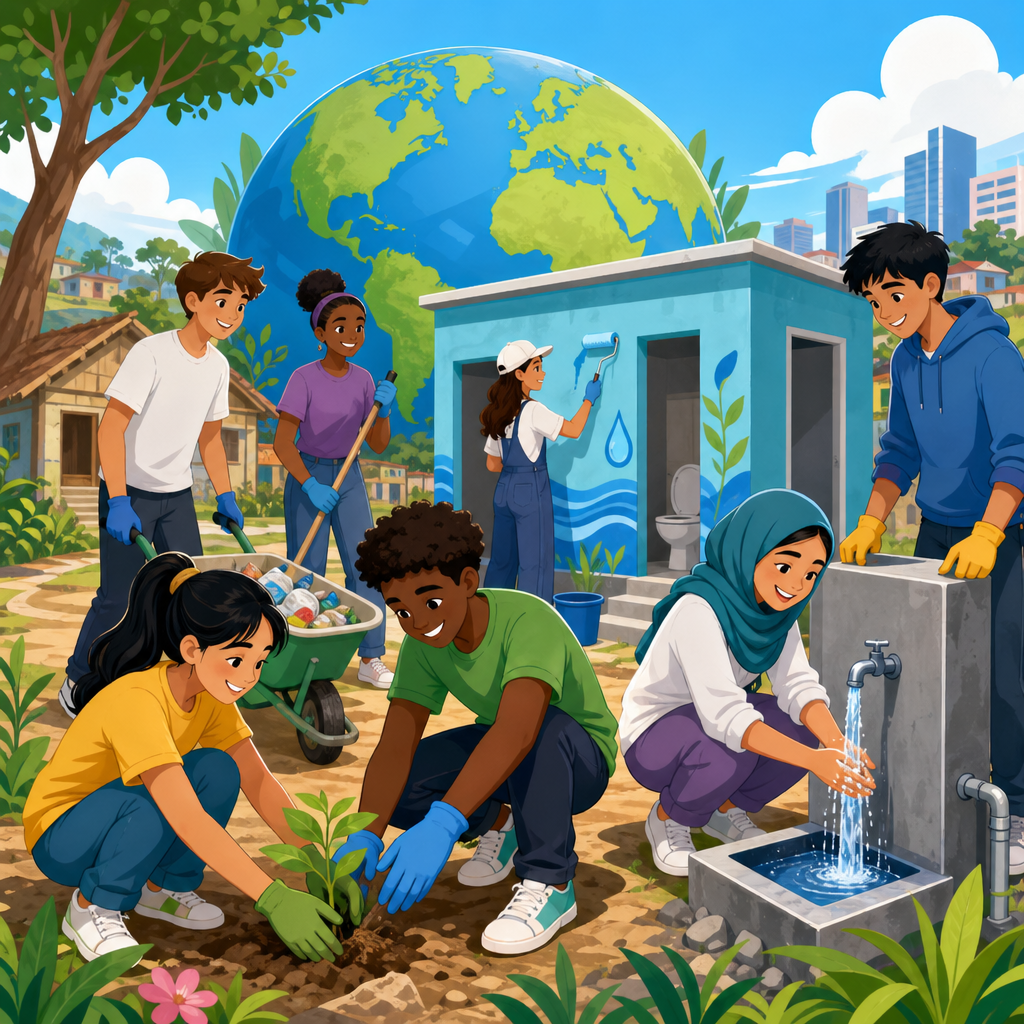
Promoting health and hygiene through EcoSan education starts with a simple idea: sanitation should protect people, conserve resources, and build long-term community resilience. EcoSan, short for ecological sanitation, refers to sanitation systems designed to safely contain, treat, and reuse human waste, usually as nutrients or soil amendments, instead of treating it only as something to discard. In practice, that often includes urine-diverting dry toilets, composting toilets, dehydrating vaults, greywater reuse, handwashing stations, and behavior-change programs that teach safe handling and hygiene. I have seen EcoSan projects succeed not because a toilet unit was installed, but because households understood why handwashing, vault management, menstrual hygiene, and nutrient reuse mattered together. Education is the difference between infrastructure that deteriorates and a system that becomes part of daily life.
This matters because poor sanitation still drives diarrheal disease, parasitic infection, school absenteeism, environmental contamination, and unsafe exposure for women, children, and sanitation workers. According to the World Health Organization and UNICEF Joint Monitoring Programme, safely managed sanitation remains out of reach for billions of people worldwide, especially in rural areas, informal settlements, flood-prone regions, and water-scarce communities. Conventional sewerage is valuable where feasible, but it is expensive, water-intensive, and often unrealistic in dispersed or low-income settings. EcoSan offers another pathway. It can reduce pathogen exposure, lower groundwater pollution, recover nutrients such as nitrogen and phosphorus, and create sanitation options in places where sewers and septic systems struggle. As a sub-pillar hub under case studies and success stories, this article maps the diverse EcoSan success stories that show what works, where it works, and why education remains the common thread.
What EcoSan education includes and why it changes health outcomes
EcoSan education is broader than toilet orientation. A strong program teaches the fecal-oral disease pathway, critical handwashing moments, toilet use and maintenance, separation of urine and feces where relevant, safe storage times for treated material, cleaning routines, menstrual hygiene management, child feces disposal, and household water handling. It also addresses cultural beliefs, odor concerns, privacy, convenience, and the economics of maintenance. In projects I have evaluated, the turning point usually comes when users understand the logic of the system: dry cover material controls moisture and flies, urine diversion reduces smell, resting periods reduce pathogen risk, and reuse only happens after proper treatment. Once people can explain these steps themselves, consistent use rises sharply.
Health gains depend on this knowledge. A urine-diverting dry toilet can be hygienic, but only if users add ash or sawdust correctly, keep rainwater out, and empty chambers with protective measures after adequate storage. Likewise, a handwashing station only improves outcomes when soap or ash is available and behavior is reinforced at routine moments, especially after toilet use and before food preparation. This is why the best case studies pair hardware with repeated demonstrations, school sessions, peer educators, and local champions. Education converts a technology into a health practice. It also helps programs avoid a common failure: assuming that one training session at installation is enough for years of correct use.
Diverse EcoSan success stories across rural, urban, school, and emergency contexts
EcoSan is not a single model, and the strongest hub for diverse EcoSan success stories must show that variety clearly. In rural East Africa, urine-diverting toilets have helped farming households reduce open defecation while producing sanitized compost-like material for trees and non-leafy crops. In parts of Uganda and Ethiopia, community-based sanitation initiatives combined latrine adoption with hygiene clubs and agricultural extension, making reuse more acceptable because farmers could see visible yield improvements. In South Asia, organizations working in water-scarce areas have used dry or low-water sanitation systems to cut pressure on scarce groundwater while teaching handwashing and safe feces management. In flood-prone Bangladesh, raised toilets and container-based approaches have been tested to keep waste out of standing water during monsoon periods.
Urban and peri-urban cases look different. Dense settlements often lack space for pits, sewer connections, or desludging access. Here, container-based sanitation and shared EcoSan blocks have shown promise when paired with frequent collection, caretaker training, user fees that match local ability to pay, and strong cleaning protocols. Schools are another major success arena. Where girls previously missed class because of poor toilet privacy or no menstrual hygiene facilities, upgraded ecological sanitation blocks with separate stalls, handwashing points, and hygiene education improved attendance and dignity. Emergency and displacement settings require yet another adaptation. Temporary dry sanitation systems can be deployed quickly where water infrastructure is damaged, but success depends on intensive user instruction, clear signage, and operations teams that manage collection and treatment safely.
| Context | Common EcoSan approach | Primary health and hygiene benefit | Education focus |
|---|---|---|---|
| Rural farming communities | Urine-diverting dry toilets, composting vaults | Reduced open defecation, safer nutrient recovery | Cover material use, storage time, agricultural reuse |
| Urban informal settlements | Container-based sanitation, shared managed blocks | Lower exposure in dense areas, safer waste handling | User rules, fee systems, cleaning routines, caretaker roles |
| Schools | Gender-separated toilet blocks with handwashing | Better attendance, hygiene habits, menstrual dignity | Handwashing, toilet etiquette, peer monitoring |
| Flood-prone or emergency settings | Raised dry toilets, temporary container systems | Less contamination of floodwater and surroundings | Rapid onboarding, signage, safe collection practices |
Lessons from community-led projects that sustained behavior change
The most durable EcoSan outcomes come from community ownership, not external enforcement. In Nepal, Malawi, Zimbabwe, and parts of Kenya, successful projects often used local masons, local artisans, village health teams, women’s groups, and farmer cooperatives rather than relying only on outside contractors. That matters because maintenance questions do not end after commissioning. Households need someone nearby who can repair a urine-diverting pedestal, explain why a chamber is too wet, or troubleshoot vent pipe issues. Community-led sanitation methods also help identify who may be left behind, including elderly residents, people with disabilities, renters, and child-headed households. A technically sound design that excludes these users will not deliver broad public health gains.
I have also found that language matters. Programs that describe EcoSan as resource recovery without first addressing fears about smell, insects, or handling waste usually move too quickly. Better programs start with disease prevention and dignity, then explain reuse as an added benefit. Demonstration plots are especially effective. When farmers see bananas, maize, or fruit trees responding well to treated nutrients, skepticism drops. But trust is built only when safety protocols are explicit. Reuse must never be presented casually. Credible projects reference World Health Organization guidance on sanitation safety planning and emphasize barriers such as storage time, restricted crop use where needed, hand protection, and post-handling hygiene. That balance between opportunity and caution is a hallmark of serious EcoSan education.
School and youth programs as multipliers for household hygiene
Schools repeatedly emerge in EcoSan success stories because they create intergenerational change. A well-run school sanitation program does more than provide toilets. It establishes routines, vocabulary, and accountability. Children learn when and how to wash hands, why urine and feces may be managed separately, how to keep facilities clean, and why open defecation contaminates play areas and water sources. When these lessons are reinforced through student health clubs, teacher supervision, and parent meetings, they travel back to households. In several programs across India, Rwanda, and Uganda, children became effective messengers, reminding adults to maintain handwashing supplies and use toilets properly.
For adolescent girls, the design and education package must explicitly address menstrual hygiene. Privacy, water access for washing where needed, covered bins or compatible reuse systems, and clear cleaning responsibilities are not optional extras. When these are absent, sanitation blocks remain underused even if the core toilet technology is sound. Schools that integrate menstrual health education, separate facilities, and student-led oversight report stronger uptake and lower vandalism. Youth engagement also improves system care. Students who understand why a dry toilet must stay dry are less likely to pour buckets of water into the chamber or dispose of plastics in ways that cause blockages. That practical knowledge protects infrastructure and preserves the intended health benefit.
How to measure success: health, adoption, environmental, and financial indicators
Not every positive EcoSan story is a true success story. Serious evaluation looks beyond installation counts. The most useful indicators fall into four groups. First are health and hygiene measures: reduced open defecation, increased handwashing with soap, fewer flies, cleaner toilet surfaces, safer child feces disposal, and lower reported diarrhea where data quality allows. Second are adoption measures: consistent use by all household members, correct diversion or cover-material practice, proper chamber resting times, and sustained functionality after one, three, and five years. Third are environmental indicators: reduced nutrient leakage, less groundwater contamination risk, lower water demand, and safe treatment outcomes. Fourth are financial and operational measures: lifecycle cost, repair frequency, supply chains for parts and cover material, affordability, and willingness to pay for emptying or collection.
These indicators reveal tradeoffs. A low-cost toilet that users abandon is not cheap in any meaningful sense. A school block that looks excellent at inauguration but lacks a cleaning budget will decline fast. A reuse-oriented system that produces unsafe material because storage guidance was ignored can damage trust in the entire approach. Good case studies therefore document both achievements and constraints. They explain whether a program used behavior observation, structured surveys, environmental sampling, school attendance records, or agricultural yield comparisons. They also state the time horizon. Many sanitation interventions look strong at six months and weaker at three years. The most credible EcoSan examples are those that remain functional, accepted, and hygienic after the novelty period ends.
Common barriers and the practical strategies that overcame them
Across diverse EcoSan success stories, barriers tend to repeat. Moisture control is a common technical challenge in humid climates or where users are accustomed to pour-flush systems. Programs address it through roof overhangs, better pedestals, clear visual instructions, and frequent follow-up visits. Social acceptance can also slow adoption, especially when reuse is unfamiliar or associated with stigma. Successful initiatives work with respected local leaders, demonstrate safe treatment steps, and allow households to start with non-food trees or ornamental plants before expanding agricultural use. Cost is another barrier. Even relatively affordable systems can be inaccessible without phased payment plans, revolving funds, subsidies targeted to vulnerable households, or shared-service models.
Operations and maintenance often decide the outcome. Shared facilities fail quickly without a named cleaner, payment mechanism, supervision, and consumables such as soap, ash, or dry cover material. Seasonal factors matter too. In flood zones, raised structures, sealed containers, and scheduled collections are essential. In arid areas, user education should emphasize how EcoSan preserves water compared with flush systems, because that benefit resonates immediately. Finally, policy alignment helps scale. Where local governments include ecological sanitation in approved standards, training curricula, and public health outreach, projects move from pilot status to service delivery. The lesson across cases is straightforward: barriers are manageable when programs treat sanitation as a service and learning process, not a one-time construction exercise.
Diverse EcoSan success stories show that promoting health and hygiene through EcoSan education is not about choosing one perfect toilet design. It is about matching sanitation systems to local conditions and then teaching people how to use, maintain, and trust those systems safely. Rural farming communities, urban informal settlements, schools, and emergency settings each need different models, but the same core principles apply: prevent exposure to pathogens, support daily hygiene habits, protect dignity, and manage waste as part of a larger public health system. The strongest case studies are the ones that combine practical engineering with repeated education, local leadership, and honest monitoring over time.
As a hub for this subtopic, this page points to the central insight behind the best EcoSan outcomes: behavior change and operational discipline are what turn sanitation infrastructure into measurable health protection. When users understand the system, when schools reinforce habits, when communities can repair and finance maintenance, and when safety rules for reuse are clear, EcoSan can deliver durable value. If you are building your own library of case studies and success stories, start by comparing contexts, training models, maintenance plans, and long-term results rather than focusing only on construction numbers. Use that evidence to choose the EcoSan education approach that fits your community and strengthens health, hygiene, and resilience.
Frequently Asked Questions
What is EcoSan, and how does it promote health and hygiene?
EcoSan, or ecological sanitation, is an approach to sanitation that focuses on safely managing human waste in ways that protect public health, reduce environmental contamination, and recover valuable resources. Instead of viewing waste only as something to flush away or dispose of, EcoSan systems are designed to contain, treat, and, where appropriate, reuse nutrients and organic matter safely. Common examples include urine-diverting dry toilets, composting toilets, and dehydrating vaults. These systems are especially useful in areas where water is limited, sewer infrastructure is unavailable, or conventional sanitation systems are too expensive or difficult to maintain.
From a health and hygiene standpoint, EcoSan education is essential because the safety of any sanitation system depends on how well people understand and use it. Education helps households and communities learn proper handwashing, toilet maintenance, waste separation, cleaning practices, and safe treatment timelines before reuse. When these practices are followed correctly, EcoSan can reduce exposure to harmful pathogens, prevent open defecation, lower the risk of groundwater contamination, and support cleaner living environments. In short, EcoSan promotes health and hygiene not only through the technology itself, but through the habits, knowledge, and community participation that make the system work effectively.
How are EcoSan toilets different from conventional sanitation systems?
EcoSan toilets differ from conventional sanitation systems in both purpose and design. Traditional sanitation often relies on flush toilets, septic tanks, or sewer networks that use large amounts of water to transport waste away from the household. In many cases, the goal is disposal rather than recovery. EcoSan systems, by contrast, are built around the idea of safe containment, treatment, and reuse. They frequently operate with little or no water, and many are designed to separate urine and feces so each can be managed more effectively. This can make them more practical in water-scarce regions, flood-prone areas, remote communities, or places where centralized wastewater infrastructure does not exist.
Another major difference is the educational component. Conventional systems often seem simple to users because the treatment happens out of sight, while EcoSan systems require active understanding and regular maintenance at the household or community level. Users may need to add dry cover material, keep chambers dry, rotate vaults, or follow specific treatment periods before any agricultural reuse. That is why EcoSan education is so important. It teaches not just how to use the toilet, but why each step matters for disease prevention, odor control, insect reduction, and safe sanitation overall. When communities understand these differences, EcoSan becomes more than a toilet option; it becomes a health-focused resource management system.
Is it safe to reuse treated waste from EcoSan systems in agriculture?
Yes, reuse can be safe, but only when treatment, storage, handling, and application are done properly according to established health guidelines. One of the core principles of EcoSan is that human waste contains nutrients such as nitrogen, phosphorus, and potassium that can be valuable for soil improvement and crop production. However, untreated waste can contain pathogens, including bacteria, viruses, and parasites, so safety depends on adequate treatment processes such as dehydration, composting, storage, and controlled handling. EcoSan education plays a critical role in helping users understand that reuse is never immediate and should only happen after the material has reached a condition considered safe for its intended use.
In practice, safe reuse includes clear instructions on treatment time, moisture control, protective equipment, hand hygiene, and which crops are most appropriate. For example, urine may be stored and diluted for use under specific recommendations, while composted or dehydrated fecal matter may be applied to soil in ways that minimize direct human contact. Communities also benefit from learning about local regulations, public health recommendations, and agricultural best practices before using any treated material. The key message is that EcoSan is not about careless reuse; it is about controlled, informed, and hygienic resource recovery that protects both people and the environment.
Why is education so important for the success of EcoSan programs?
Education is one of the most important factors in whether an EcoSan program succeeds or fails. Even the best-designed sanitation system can create problems if users do not understand how to operate and maintain it correctly. EcoSan often involves specific behaviors, such as separating urine from feces, adding ash or other dry material, keeping water out of dry systems, cleaning surfaces properly, and following storage or composting periods before emptying or reuse. Without training, people may misuse the system, causing odors, flies, contamination risks, or early rejection of the technology. With training, they are much more likely to use it confidently and consistently.
Good EcoSan education goes beyond technical instructions. It also addresses beliefs, habits, cultural concerns, and the practical realities of daily life. Effective programs explain the health benefits of proper sanitation, demonstrate handwashing and safe handling techniques, involve women and caregivers in decision-making, and encourage local ownership of the system. Schools, community leaders, health workers, and sanitation practitioners can all help reinforce these messages. When education is ongoing rather than one-time, communities are better able to troubleshoot issues, maintain facilities over the long term, and fully realize the hygiene, environmental, and agricultural benefits of EcoSan.
What are the main community benefits of promoting health and hygiene through EcoSan education?
Promoting health and hygiene through EcoSan education can deliver broad community benefits that go far beyond the toilet itself. First, it supports disease prevention by encouraging safe sanitation practices, reducing open defecation, and lowering the chances that waste will contaminate soil, water, or household environments. Cleaner surroundings can contribute to fewer sanitation-related illnesses and a better quality of life, especially for children, older adults, and people with limited access to healthcare. EcoSan education also improves hygiene awareness by connecting sanitation with handwashing, safe cleaning routines, and responsible waste handling, which strengthens overall public health behavior.
Second, EcoSan education can help communities build resilience and make better use of local resources. Because many EcoSan systems use little or no water, they can be especially beneficial in drought-prone or underserved areas. Treated outputs, when managed safely, may help improve soils and reduce dependence on costly external inputs in agriculture. At the same time, communities that understand the principles behind EcoSan are better prepared to maintain their systems, adapt them to local conditions, and support long-term sanitation improvements. In this way, EcoSan education creates a powerful link between hygiene, environmental protection, resource conservation, and community self-reliance.