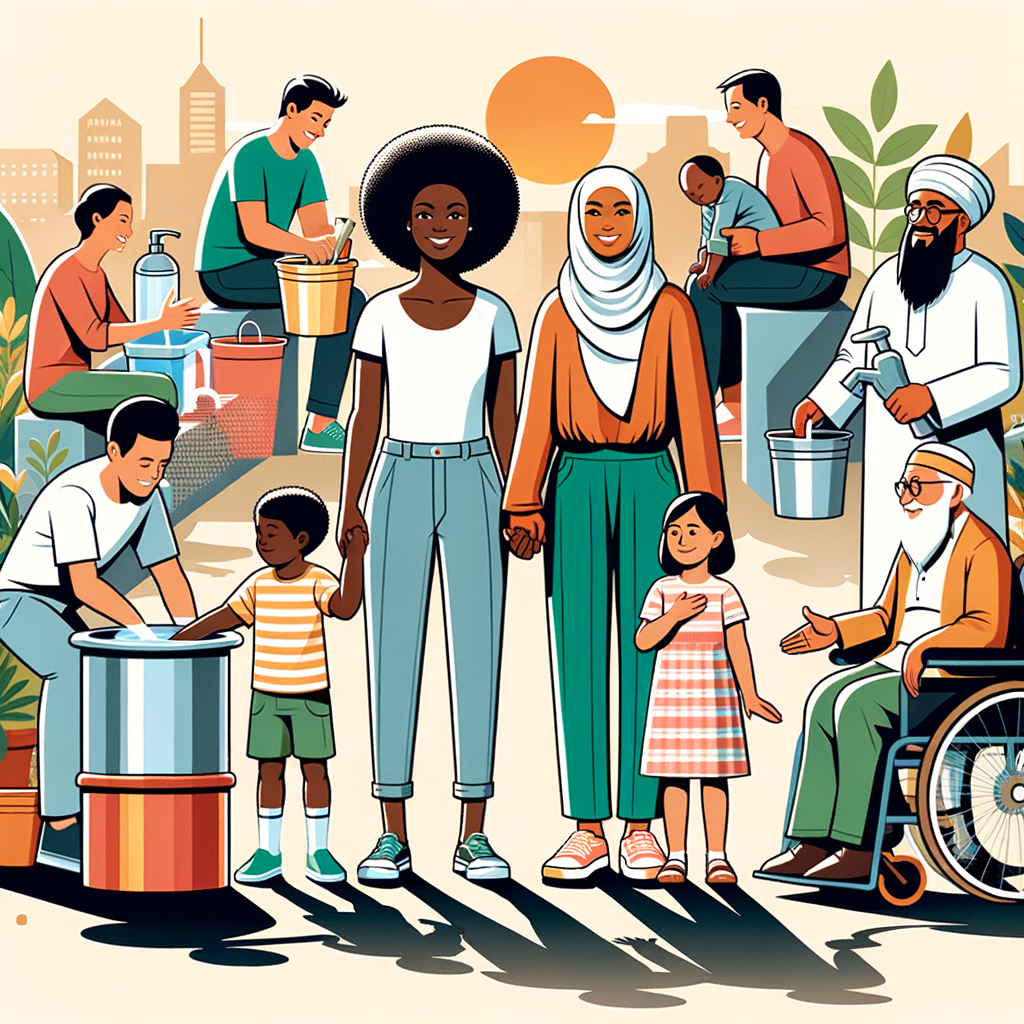
Worldwide, the need for sustainable sanitation has never been more pressing. Traditional sanitation systems like flush toilets and conventional sewage treatment plants can be hugely resource-intensive, gobbling up copious amounts of water, energy, and financial resources. Ecological sanitation (EcoSan) offers a compelling alternative. It emphasizes the safe reuse of nutrients, organic matter, energy, and water. EcoSan systems have the potential to alleviate many pressing environmental issues, from water scarcity to pollution management, while closing nutrient cycles through safe waste treatment and reuse practices.
Unfortunately, the implementation of EcoSan systems is fraught with challenges, including political resistance, financial constraints, and a lack of widespread public awareness and acceptance. This is where public-private partnerships (PPPs) can play a pivotal role. By pooling the resources, expertise, and networks of both the public and private sectors, PPPs provide a robust framework for overcoming the hurdles to EcoSan implementation.
Understanding Public-Private Partnerships (PPPs)
Public-Private Partnerships are collaborative agreements between government agencies and private sector companies, designed to undertake projects that otherwise might be unfeasible for either party alone. In the context of EcoSan, PPPs can involve local governments, private sanitation companies, non-governmental organizations (NGOs), and even local communities working together towards shared sanitation goals.
The public sector’s crucial role lies in creating an enabling environment for EcoSan projects through policy adjustments, regulatory frameworks, and providing initial funding or subsidies. Meanwhile, private entities bring technical expertise, innovation, and efficiency in project execution. NGOs and community-based organizations can offer grassroots-level insights, helping to tailor solutions that meet the specific needs and conditions of local populations.
The dynamics of PPPs can greatly enhance the success rate of EcoSan projects by ensuring that they are technologically sound, financially viable, socially acceptable, and environmentally beneficial.
Laying the Groundwork for EcoSan Implementation
Before delving into PPPs, it is important to lay a solid foundation for EcoSan implementation. This involves preliminary studies and pilot projects to understand the specific needs and challenges of the targeted area.
First, conducting thorough feasibility studies can assess the locale’s specific sanitation requirements, available resources, and socio-cultural dynamics. Identifying and addressing these variables early on ensures a more tailored and effective EcoSan system.
Furthermore, public engagement is essential. Informative and participatory workshops can raise awareness and gain community buy-in, ensuring that local stakeholders understand the benefits and potential challenges of EcoSan systems. Securing this societal acceptance can pave the way for smoother implementation and long-term sustainability of the project.
Finally, pilot projects serve as real-world experiments that can provide invaluable insights and data. They allow stakeholders to test different EcoSan technologies, learn from any mistakes, and refine their strategies accordingly. These projects act as a testing ground for the PPP model itself, clarifying each partner’s roles and responsibilities.

Financial Models and Investment Strategies
A significant barrier to EcoSan projects is financing. This is where innovative financial models and investment strategies come into play. PPPs can leverage multiple funding sources, such as government grants, private investments, international aid, and community contributions.
The private sector can offer capital investments and, in return, may earn revenue through service fees, waste-to-resource conversion, and byproducts like biogas or compost generated from the EcoSan systems. Performance-based contracts can also encourage efficiency and effectiveness, ensuring that private entities meet specific sanitation targets to qualify for payments.
Microfinance schemes and revolving funds can be employed to involve local communities financially. By providing small loans to families or communities for EcoSan infrastructure, a sense of ownership and responsibility is fostered, which is crucial for ongoing maintenance and sustainability.
Effectively marrying public funds with private investments results in a diversified and resilient financial strategy, critical for the long-term success of EcoSan projects.
Technological Innovations in EcoSan
The very essence of EcoSan is innovation. Technological advancements in sanitation are continually emerging, and the private sector can be a significant driver in this realm. From urine-diverting dry toilets to anaerobic digesters, the range of EcoSan technologies is vast and continually evolving.
Public-private partnerships can expedite the research, development, and deployment of these innovations. For instance, governments can fund academic and private research efforts to develop low-cost, high-efficiency EcoSan technologies. Once proven effective, private companies can take on the task of scaling up and commercializing these technologies, ensuring their widespread availability.
Moreover, digital tools and data analytics offer new frontiers for optimizing EcoSan systems. IoT-enabled sensors can monitor toilet usage and waste levels in real time, providing data to improve system efficiency and maintenance schedules.
By harnessing the complementing strengths of public policy support and private sector innovation, advanced EcoSan solutions can be made more accessible and impactful.
Capacity Building and Training
An often-overlooked aspect of EcoSan implementation is the need for capacity building and training. Introducing new sanitation technologies and systems requires skill development at multiple levels – from policymakers and engineers to local technicians and end-users.
Public-private partnerships can facilitate comprehensive training programs tailored to different stakeholders. Government agencies can set regulatory and educational frameworks, while private sector companies provide technical expertise and hands-on training modules.
At the community level, training local artisans and technicians ensures that the EcoSan systems can be built, operated, and maintained sustainably. Educational campaigns on hygiene and the benefits of EcoSan can change long-standing attitudes and behaviors, fostering an environment conducive to sanitation improvements.
These capacity-building measures ensure that the transition to EcoSan systems is smooth, sustainable, and beneficial across all societal layers.
Monitoring and Evaluation
The success of EcoSan projects relies heavily on continuous monitoring and evaluation (M&E). This process involves the systematic collection and analysis of data to assess the performance and impact of EcoSan initiatives.
In a PPP model, each partner plays a crucial role in M&E. Governments can set up oversight bodies to ensure compliance with standards and regulations. Private entities can utilize their technological know-how to develop and implement robust monitoring tools.
Community involvement in monitoring helps ensure that the systems meet local needs and can encourage timely identification and resolution of issues. Additionally, transparent and participatory evaluation processes build trust among stakeholders and can offer valuable lessons for future projects.
Effective M&E not only validates the success of the implemented strategies but also provides the opportunity for continuous improvement, ensuring that EcoSan projects remain relevant and effective over time.
Conclusion
Public-Private Partnerships offer a promising pathway to successfully implement and scale EcoSan systems. By combining the strengths of public institutions, private companies, and local communities, PPPs create a synergistic effect that overcomes the individual limitations of each sector.
From preliminary studies and financial models to technological innovation and capacity building, PPPs provide a comprehensive framework for addressing the multifaceted challenges of EcoSan projects. Thorough monitoring and evaluation ensure these projects not only reach their initial goals but remain sustainable and adaptable over time.
As the world faces mounting environmental challenges and a continuing struggle with inadequate sanitation, the collaborative approach of PPPs stands out as a potent tool to drive meaningful change. By prioritizing sustainability, efficiency, and community involvement, PPPs can pave the way for a future where sanitation is no longer a privilege, but a guarantee for all.