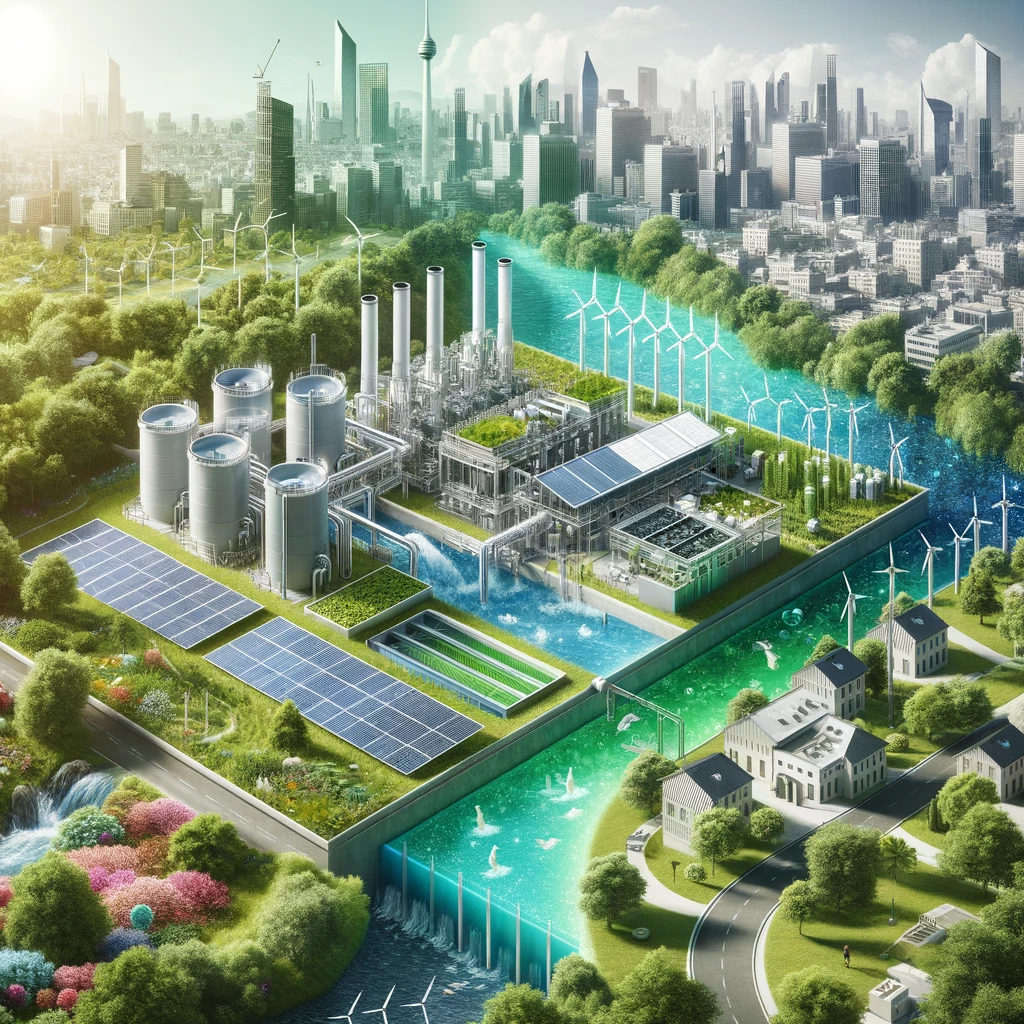
Solar-powered sanitation systems combine on-site waste treatment with photovoltaic energy, creating resilient sanitation infrastructure that works where grids are weak, diesel is expensive, and water is scarce. In practice, this means toilets, pumps, sensors, fans, disinfection units, and sludge-processing equipment can operate using electricity generated from sunlight, often with batteries or hybrid controls to maintain service after dark. For EcoSan, or ecological sanitation, the idea goes further than replacing one power source with another. It treats human waste as a resource stream, separates liquids and solids when useful, recovers nutrients, reduces pathogen risks, and minimizes environmental pollution. I have worked on sanitation planning projects where energy was the hidden constraint: pumps failed during outages, forced-ventilation toilets smelled because fans stopped, and desludging costs rose because treatment sites were too distant. Solar power changed the viability of those systems.
The topic matters because sanitation failures quickly become public health failures. The World Health Organization and UNICEF have repeatedly shown that inadequate sanitation drives diarrheal disease, environmental contamination, and lost productivity. Yet conventional sewerage is capital intensive, electricity hungry, and often unrealistic in dispersed settlements, camps, schools, parks, construction sites, and peri-urban neighborhoods. Solar-powered sanitation systems offer a practical middle path between unimproved facilities and full centralized networks. They support container-based sanitation, urine-diverting dry toilets, solar-assisted sludge drying, vacuum collection, membrane treatment, and disinfection technologies with lower operating emissions. They also align with climate adaptation goals by reducing dependence on fuel deliveries and vulnerable power grids. As a hub for exploring cutting-edge EcoSan technologies, this article maps the core system types, explains how they work, compares design choices, and highlights where each approach performs best.
What Solar-Powered Sanitation Systems Include
A solar-powered sanitation system is not a single product. It is an integrated service chain with three layers: user interface, treatment process, and energy system. The user interface may be a urine-diverting toilet, flush toilet, vacuum toilet, container unit, or public restroom block. The treatment process may involve dehydration, composting, anaerobic digestion, electrochemical disinfection, filtration, blackwater treatment, or fecal sludge drying. The energy system usually includes photovoltaic panels, a charge controller, battery storage, efficient DC or inverter-driven loads, and remote monitoring. In stronger designs, engineers size the solar array from actual daily energy demand rather than generic panel estimates. Ventilation fans might draw only 10 to 40 watts, but pumps, mixers, heaters, membrane blowers, and UV units can push demand much higher. Matching energy use to sanitation function is the first design rule.
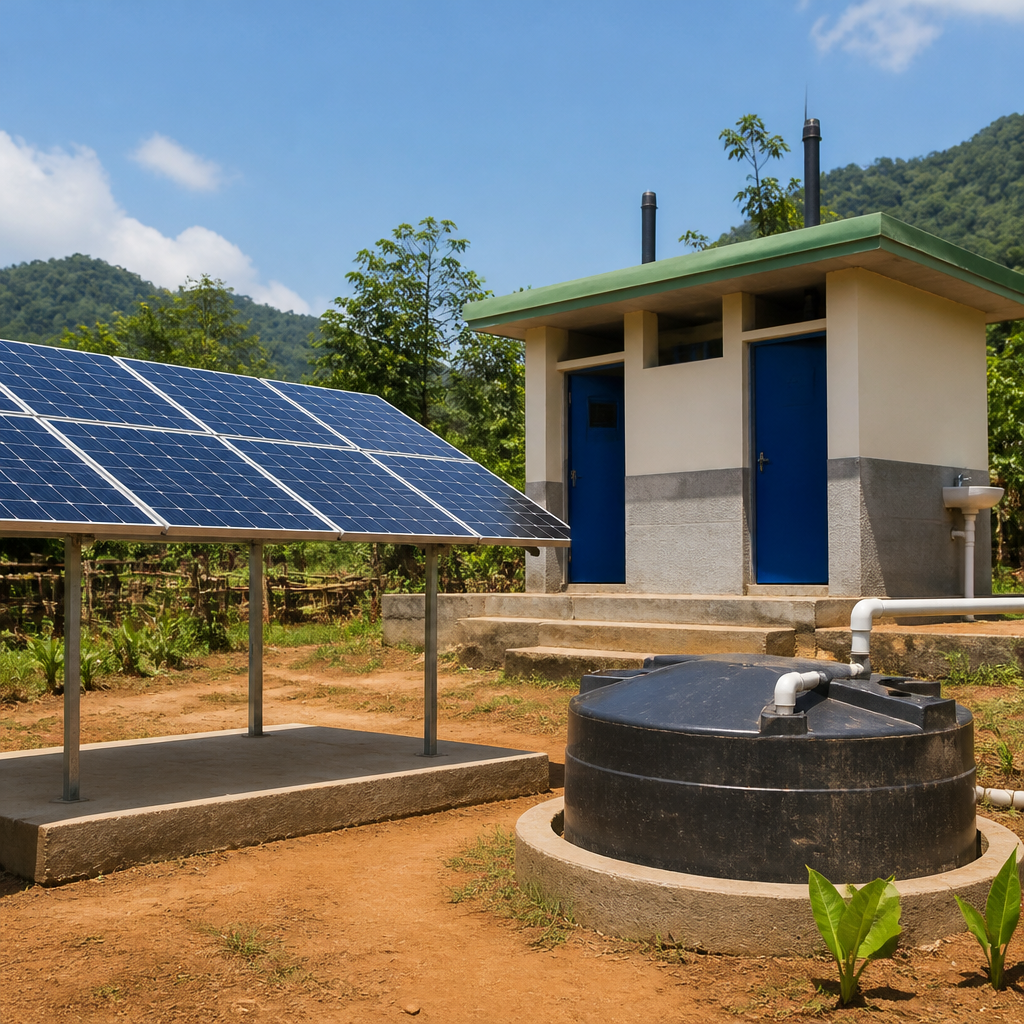
Within EcoSan applications, the most effective solar integration usually supports critical functions that determine hygiene and usability. Ventilation prevents odor and insect nuisance in dehydration toilets. Small pumps move greywater or treated effluent to drip irrigation. UV or ozone systems polish effluent for non-potable reuse. Sensors track tank levels, door counts, battery status, and ammonia or hydrogen sulfide conditions. In mobile or container-based units, solar can also power handwashing taps, lighting, occupancy indicators, and contactless flush controls. These features may seem secondary, but they strongly influence whether facilities stay clean and used. A toilet that smells bad or has no light is often abandoned, no matter how sustainable its treatment process looks on paper.
Core EcoSan Technologies Using Solar Energy
The first major category is solar-supported dry or low-water sanitation. Urine-diverting dry toilets separate urine and feces at the pedestal, reducing moisture, odor, and treatment complexity. Solar-powered fans improve airflow across vaults, accelerating drying and making the user experience far better than passive systems in humid climates. In schools and parks, I have seen this simple addition decide whether a dry toilet remains acceptable during peak use. Urine can be stored for pathogen die-off and diluted for agricultural use where regulations permit. Dried fecal matter may be further composted or co-processed, though safe reuse always depends on time, temperature, moisture control, and local standards.
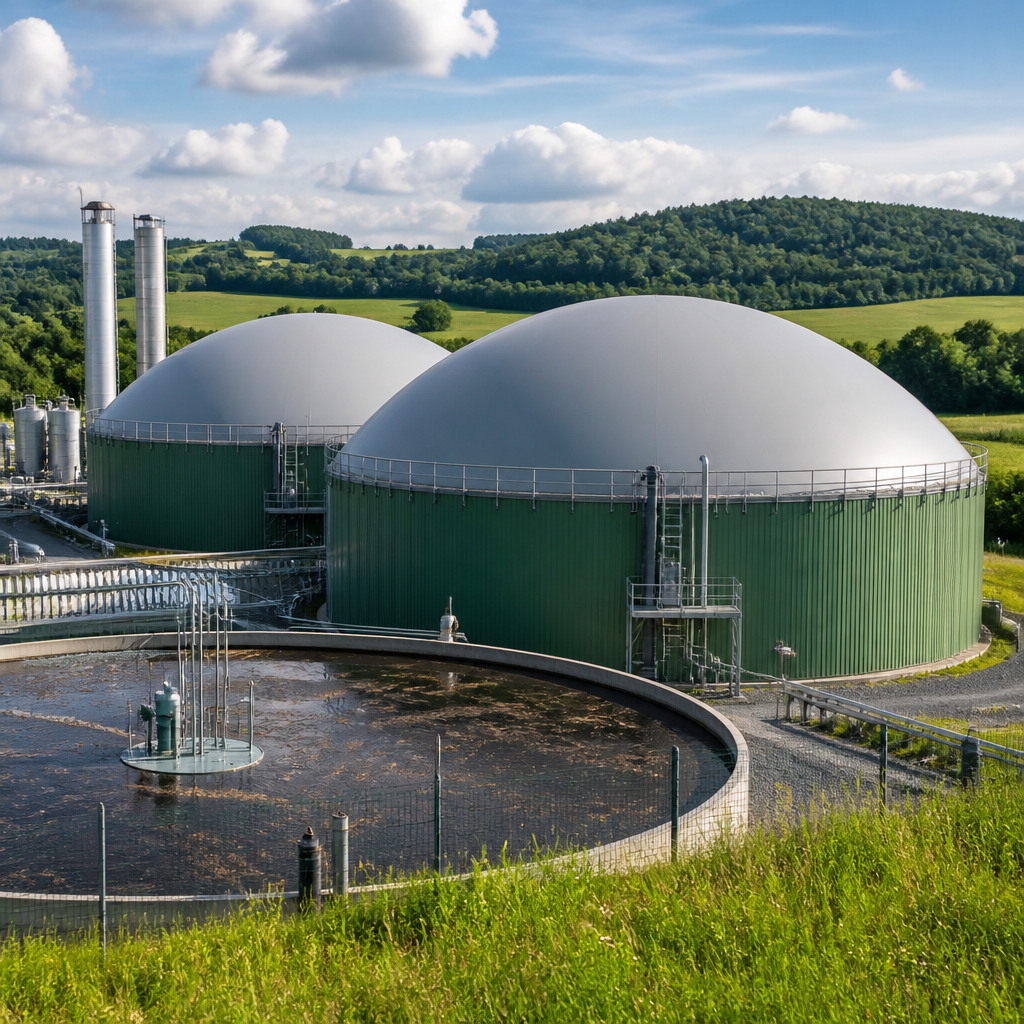
The second category is solar-powered blackwater treatment. These systems accept flush wastewater from toilets and sometimes sinks, then treat it on-site for discharge or reuse. Technologies include membrane bioreactors, moving bed biofilm reactors, anaerobic baffled reactors paired with polishing steps, and electrochlorination units that produce disinfectant from salt solutions. Public toilet manufacturers and engineering firms now combine rooftop panels with compact treatment skids to create self-contained restroom blocks for transport hubs, beaches, and markets. Some systems recycle water back to the flush tank, sharply reducing demand. The tradeoff is greater technical complexity: membranes foul, pumps need maintenance, and operators must monitor effluent quality consistently.
The third category is solar-assisted fecal sludge and biosolids treatment. Here, the goal is not powering the toilet cubicle itself but strengthening the downstream chain. Solar greenhouses, forced-air dryers, and thermal concentrators can reduce sludge volume, lower transport costs, and improve the economics of producing soil amendments or fuel briquettes after further processing. This is especially valuable in places relying on pit latrines and septic tanks, where untreated sludge disposal remains a major gap. Drying does not equal full sanitization, so designers often pair solar drying with composting, alkaline stabilization, pelletization, or thermal treatment. When done correctly, the result is a safer, lighter material that is easier to handle and more feasible to valorize.
How the Energy Architecture Is Designed
Good solar sanitation design starts with a load assessment. Engineers list every electrical component, its rated power, duty cycle, startup current, and criticality. A DC ventilation fan running twenty-four hours may consume less total energy than a short-cycle pump with poor efficiency. Battery autonomy is then set based on service expectations, local irradiance, seasonal variation, and tolerance for downtime. Lithium iron phosphate batteries are increasingly preferred over lead-acid because they offer deeper cycling, longer life, and better usable capacity, though upfront cost is higher. Charge controllers should support battery chemistry correctly, and enclosures must handle dust, heat, humidity, and tampering. In sanitation environments, corrosion resistance matters as much as electrical performance.
System controls are equally important. Smart controllers can prioritize health-critical loads first: ventilation, treatment circulation, and disinfection before lights or charging ports. Remote telemetry through GSM or LoRaWAN allows operators to see battery state of charge, tank levels, door openings, and fault alerts without constant site visits. That saves money and prevents silent failures. I recommend designing for maintenance from day one: hinged panel mounts for cleaning, lockable battery compartments, labeled wiring, standard spare parts, and bypass modes so toilets remain usable if one subsystem fails. Solar panels themselves are reliable, but sanitation systems fail at connectors, pumps, seals, neglected prefilters, and unclear ownership.
| System type | Typical solar-powered components | Best use case | Main limitation |
|---|---|---|---|
| Urine-diverting dry toilet | Vent fans, lights, occupancy sensors | Water-scarce schools, parks, remote sites | User training and vault management |
| Container-based sanitation unit | Lighting, handwashing pumps, telemetry | Dense informal areas, temporary settlements | Requires reliable collection service |
| On-site blackwater treatment kiosk | Pumps, blowers, UV, controls | Public toilets, transport hubs, campuses | Higher maintenance and operator skill |
| Solar sludge drying facility | Fans, mixers, monitoring equipment | Fecal sludge treatment plants | Needs downstream sanitization verification |
Performance, Health Protection, and Resource Recovery
The strongest argument for solar-powered sanitation is not energy savings alone. It is dependable health protection with lower lifecycle risk. A sanitation system succeeds when it interrupts pathogen transmission, manages odors, controls vectors, and safely handles residuals. Solar supports these outcomes by keeping essential processes running. Continuous ventilation lowers fly breeding and moisture buildup. Stable pumping prevents overflows. Reliable disinfection improves effluent consistency. Monitoring catches failures before they become exposure events. Standards still matter: treated water quality should be measured against applicable national discharge or reuse rules, and sludge products should be evaluated for helminth eggs, fecal coliforms, moisture, and stabilization indicators where required.
Resource recovery adds another layer of value. Urine contains most of the nitrogen and a large share of phosphorus excreted by households, while dried solids and treated sludge contain organic matter and nutrients. Not every project should pursue reuse, but many should at least preserve that option. Solar can make decentralized recovery practical by powering separation, drying, dosing, and data logging without grid extension. For example, a peri-urban toilet block may collect urine for local fertilizer blending while solar energy runs dosing pumps and security lighting. A market sanitation hub may treat blackwater and reuse it for flushing or landscape irrigation. The environmental gains are tangible: lower freshwater demand, fewer nutrient discharges, and reduced hauling volumes.
Where These Systems Work Best
Solar-powered sanitation performs best where conventional infrastructure is structurally weak, not just temporarily absent. Remote clinics, island communities, wildlife reserves, highway rest stops, refugee and disaster-response settings, mining camps, and expanding peri-urban settlements are strong candidates. These sites often face the same constraints: intermittent power, high fuel logistics costs, water stress, and limited sewer access. In these conditions, decentralized systems can outperform centralized aspirations that remain unfunded for years. Schools are another priority case because reliable toilets directly affect attendance, especially for girls. A ventilated, lighted, well-maintained EcoSan block with handwashing is a meaningful infrastructure upgrade, not a niche experiment.
Still, context decides success. In very dense urban neighborhoods, container-based sanitation linked to a professional collection service may be more realistic than dry vault systems. In flood-prone regions, raised units with sealed containment and solar-powered transfer pumps may be necessary. In cloudy climates, panel oversizing or hybrid backup becomes important. Cold weather reduces biological process rates, so designers may favor insulated vaults, longer retention times, or treatment methods less dependent on ambient temperature. Cultural acceptance is equally decisive. Users must understand how to use separation pedestals, what can be thrown into the system, and why maintenance rules matter. The most advanced toilet fails quickly when design ignores behavior.
Implementation Challenges and How to Solve Them
The biggest challenges are rarely technical in isolation. They are institutional: unclear ownership, weak maintenance budgets, missing spare-part plans, and no service chain for residuals. Capital grants often fund installation but not the operator training, consumables, monitoring, and scheduled component replacement that keep systems functional. To avoid this, procurement should specify service levels, not just equipment lists. Contracts should define uptime targets, cleaning frequency, water quality testing, battery replacement cycles, and response times for faults. Independent commissioning is also important. I have seen underperforming systems handed over without proper hydraulic testing, solar verification, or user training, almost guaranteeing later complaints.
Cost should be evaluated over the full lifecycle. Solar panels may reduce operating expenses, but batteries, pumps, and membranes have finite lives. Theft and vandalism risk can add cost unless mitigated by secure mounting and community oversight. Regulations can also lag innovation, particularly around reuse of treated urine, composted solids, or recycled flush water. The solution is not to avoid innovation but to document performance carefully, engage regulators early, and design conservatively. Start with simple, inspectable process trains where possible. Use modular upgrades rather than oversized complexity. Most importantly, pair technology with service management. Sanitation is never just a device; it is an ongoing public health operation.
Solar-powered sanitation systems show how renewable energy can make EcoSan practical, resilient, and scalable across difficult settings. The core lesson is straightforward: the best systems do not simply add panels to toilets. They integrate user-friendly interfaces, reliable treatment, right-sized energy storage, clear maintenance routines, and safe end-use or disposal pathways. When these pieces align, solar power supports ventilation, pumping, monitoring, lighting, and treatment functions that directly improve hygiene, usability, and environmental performance. It also strengthens decentralization by cutting dependence on fragile grids and expensive fuel while enabling nutrient recovery and water reuse where those outcomes make sense.
As a hub for exploring cutting-edge EcoSan technologies, this topic connects multiple specialized paths: urine diversion, container-based sanitation, blackwater recycling, solar sludge drying, remote monitoring, and resource recovery. Each deserves deeper technical treatment, but the decision framework is consistent. Start with local constraints, define the sanitation service level required, choose the simplest treatment train that can meet health and regulatory goals, and build the solar architecture around actual loads and operating conditions. If you are planning research, procurement, or policy in this area, map the full sanitation chain first and evaluate where solar power removes the most critical failure points. That is where renewable energy delivers its greatest sanitation benefit.
Frequently Asked Questions
What is a solar-powered sanitation system, and how does it work?
A solar-powered sanitation system is a sanitation setup that uses photovoltaic panels to generate electricity for essential treatment and facility operations. Instead of depending entirely on a utility grid or diesel generator, the system captures sunlight and converts it into usable power for components such as toilet lighting, ventilation fans, water pumps, control panels, sensors, disinfection units, and sludge-processing equipment. In many installations, the solar array is paired with batteries so the system can continue operating at night or during cloudy periods. Some designs also include hybrid controls, allowing solar power to work alongside grid electricity or backup generation when necessary.
In practical terms, this approach is especially valuable in places where power is unreliable, fuel is costly, or extending the electric grid is difficult. Solar electricity supports sanitation performance by keeping airflow moving, treatment cycles running, and monitoring systems active. In more advanced systems, controls can optimize when pumps operate, track tank levels, and manage energy demand to protect battery life. When combined with ecological sanitation principles, solar power can support treatment methods that recover nutrients, reduce water use, and handle waste close to where it is generated. The result is a more self-reliant sanitation solution that can improve service continuity, public health protection, and operating efficiency.
Why are solar-powered sanitation systems especially useful in off-grid or water-scarce areas?
These systems are particularly effective in off-grid and resource-constrained settings because they address several infrastructure challenges at once. First, they reduce dependence on unstable electricity networks and expensive fuel deliveries. In remote communities, construction sites, schools, health clinics, informal settlements, and disaster-response areas, access to dependable power can be one of the biggest barriers to sanitation service. Solar energy provides a local, renewable source of electricity that can keep core functions operating even when the wider energy system is weak or unavailable.
Second, solar-powered sanitation can be well suited to water-scarce environments because many system designs are compatible with low-flush, vacuum-assisted, urine-diverting, or dry sanitation approaches. Energy from solar panels can run pumps, fans, treatment reactors, and disinfection equipment without requiring the high water volumes associated with conventional sewered systems. This is important in arid regions or places where water must be hauled, stored, or used very carefully. By combining decentralized treatment with renewable energy, communities can reduce both water demand and energy vulnerability.
There is also a resilience advantage. In areas affected by outages, climate stress, or high operating costs, solar sanitation can maintain more consistent service, which is critical for hygiene, dignity, and disease prevention. Schools and clinics, for example, benefit when sanitation facilities remain functional after dark or during utility disruptions. Over time, lower fuel use and fewer generator hours can also reduce operating expenses and simplify logistics, making these systems more sustainable from both a financial and operational perspective.
What technologies are commonly included in a solar-powered sanitation system?
The exact technology package depends on the application, but most solar-powered sanitation systems include several core elements. On the energy side, there are photovoltaic panels, charge controllers, inverters where alternating current is needed, battery storage, and electrical protection components. These parts work together to capture solar energy, regulate charging, store power, and deliver electricity safely to sanitation equipment. Smart control systems are increasingly common, helping operators manage loads, monitor battery status, and prioritize critical functions when sunlight is limited.
On the sanitation side, the system may include toilets, pumps, blowers, ventilation fans, lighting, level sensors, automated valves, and treatment units tailored to the waste stream. For blackwater or mixed wastewater, treatment components can include settling tanks, anaerobic digesters, aerobic reactors, membrane systems, filtration modules, ultraviolet disinfection, chlorination, or electrochemical treatment. For fecal sludge management, solar electricity may support dewatering devices, mixers, dryers, or small-scale pasteurization and hygienization processes. In dry or container-based systems, power may be used mainly for ventilation, odor control, monitoring, and handling equipment rather than water movement.
In ecological sanitation, or EcoSan, the technology mix often goes a step further by emphasizing resource recovery. That can include urine diversion, composting, dehydration, nutrient capture, and treatment pathways designed to turn waste into usable soil amendments or other beneficial outputs where regulations and health safeguards allow. Solar power strengthens these systems by enabling controlled treatment conditions, consistent airflow, and better monitoring. In short, the technology is not just about adding solar panels to a toilet; it is about integrating energy generation, treatment, monitoring, and sometimes resource recovery into a coordinated sanitation infrastructure.
Are solar-powered sanitation systems reliable, and what maintenance do they require?
Yes, they can be very reliable when they are properly designed for the local climate, user demand, and maintenance capacity. Reliability depends on matching the solar array and battery storage to the system’s actual energy needs, including peak loads and nighttime operation. It also depends on choosing treatment equipment that fits the context. A well-designed installation will account for seasonal sunlight variation, user volume, future demand growth, and the consequences of downtime. Critical functions such as ventilation, pathogen reduction, and pumping should be prioritized in the energy design so they remain available even during periods of reduced solar generation.
Maintenance is still essential, but it is often more manageable and less fuel-dependent than conventional generator-based systems. Solar panels need periodic cleaning, especially in dusty environments, to maintain output. Batteries must be inspected and managed according to their chemistry and expected lifespan. Electrical connections, controllers, and inverters should be checked regularly for safe operation. On the sanitation side, tanks, filters, pumps, fans, and disinfection units all require routine inspection, cleaning, and occasional replacement of wear parts. Sensors and remote monitoring tools can make maintenance more proactive by alerting operators to issues before they become service failures.
The most successful projects typically include operator training, spare-parts planning, clear maintenance schedules, and realistic budgeting for long-term service. Reliability is not only a matter of technology quality; it is also a matter of governance and operations. When local technicians understand both the sanitation process and the solar power system, performance improves significantly. So while solar-powered sanitation is not maintenance-free, it can deliver strong reliability and lower operating risk when lifecycle management is built into the project from the beginning.
What are the main benefits and limitations of solar-powered sanitation systems?
The main benefits are resilience, lower dependence on fossil fuels, improved suitability for decentralized applications, and the ability to provide sanitation services in places where conventional infrastructure is difficult or uneconomical. Solar power can reduce operating costs tied to diesel fuel and help stabilize service in regions with frequent blackouts. It also supports cleaner, quieter operation and can lower emissions compared with generator-based alternatives. From a sanitation perspective, this matters because treatment processes often perform best when power is continuous and predictable. Reliable energy can improve odor control, user experience, disinfection performance, and treatment consistency.
Another major advantage is design flexibility. Solar-powered sanitation can be deployed for household compounds, institutions, public toilets, worker camps, remote tourism sites, emergency settings, and small communities. It aligns well with modern decentralized sanitation strategies, where treatment happens near the source rather than relying on large sewer networks. For EcoSan and other circular approaches, renewable electricity can help convert sanitation from a disposal challenge into a resource-management opportunity by supporting nutrient recovery, drying, composting support systems, or other controlled treatment processes.
That said, there are important limitations. Upfront capital costs can be higher because the project may require solar panels, batteries, control systems, and specialized treatment components. Performance is also sensitive to design quality; undersized solar arrays, poor battery management, or inappropriate treatment choices can lead to service interruptions. Space is needed for panels, and theft, shading, dust, and extreme weather must be considered. Regulatory approval can also be a factor, especially when treated outputs are intended for reuse. In short, solar-powered sanitation systems are highly promising, but they are not one-size-fits-all solutions. They work best when engineered around local conditions, supported by operator training, and evaluated based on full lifecycle performance rather than just initial installation cost.