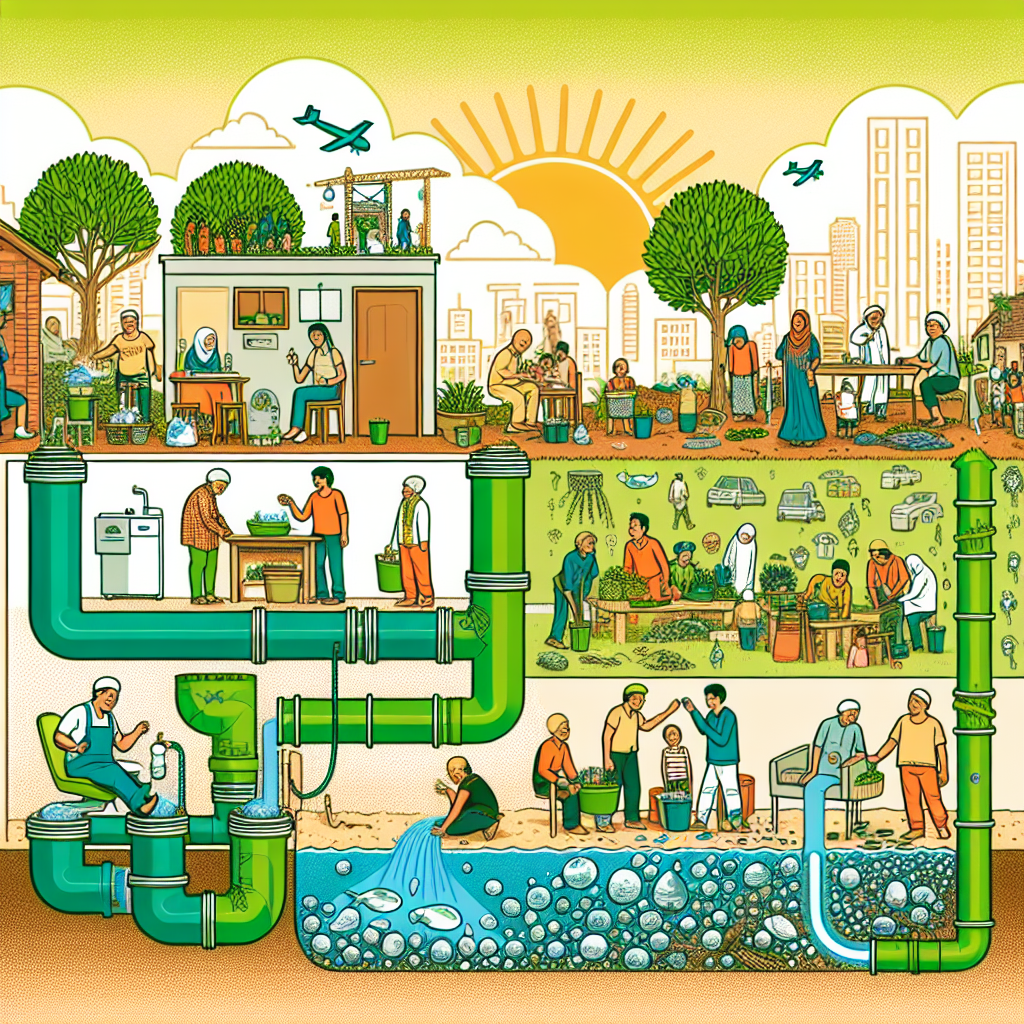
In recent years, the global community has faced an escalating crisis of water scarcity that affects millions of people worldwide. This scarcity not only jeopardizes human health and biodiversity but also limits economic growth and agricultural productivity. Amid these challenges, ecological sanitation (EcoSan) emerges as a transformative approach that rethinks traditional sanitation methods and water management strategies. By embracing EcoSan, societies can address the dual challenges of sanitation and water scarcity, ensuring a sustainable future for all.
Understanding Water Scarcity
Before delving deeper into how EcoSan can be a game-changer, it’s crucial to understand the concept of water scarcity. Water scarcity occurs when the demand for fresh water exceeds its available supply in a given area. It’s often a result of factors like climate change, population growth, and misuse of water resources. The consequences are severe – communities struggle to secure enough water for drinking, cooking, cleaning, and irrigation. The scarcity of water is felt most acutely in arid and semi-arid regions, but it is increasingly becoming a global issue that affects even those areas previously thought to have plentiful water supplies. For instance, major cities like Cape Town and São Paulo have faced significant water-related challenges in recent years, underscoring the urgent need for effective water management solutions worldwide.
The Role of EcoSan in Addressing Water Scarcity
Ecological sanitation offers a robust response to the challenges posed by water scarcity. EcoSan systems are designed to protect human health and the environment by safely recycling excreta and other organic materials into resources such as fertilized soil and reclaimed water. This shift not only reduces the strain on freshwater resources but also turns waste into a value-added component of agricultural and environmental systems.One of the core principles of EcoSan is the separation of waste at the source. This is critical because it prevents the contamination of water bodies and reduces the need for high volumes of water to transport waste. In traditional sanitation systems, large quantities of water are used to flush waste away, exacerbating issues of water scarcity. EcoSan systems, by contrast, use dry or minimal-flush toilets that significantly cut down on water usage.Moreover, the processed waste products, including compost and treated wastewater, can be used for agricultural purposes. This practice not only conserves water by reducing the need for fresh water for irrigation but also improves soil fertility. In areas where soil degradation and poor soil fertility are concerns, this can contribute to more sustainable agricultural practices, which are essential in the context of water scarcity.
Implementing EcoSan: Learning from Global Experiences
Various regions around the world have started to implement EcoSan systems with promising results. For example, in rural communities in Sweden, EcoSan has been integrated into local practices with systems designed to recycle nutrients and minimize water use. These communities have seen a decrease in water consumption and an improvement in local water quality.In developing countries, such as those in sub-Saharan Africa, the introduction of EcoSan has helped to combat the spread of diseases caused by inadequate sanitation while providing a dependable source of nutrients for agriculture in nutrient-poor soils. The benefits are manifold; improving health, boosting agricultural productivity, and ensuring water availability.
Moving Forward: Challenges and Opportunities
While the benefits of EcoSan are clear, its implementation often faces several barriers. These include cultural acceptance, the initial cost of setup, and lack of awareness about the potential benefits of such systems. Overcoming these obstacles requires focused education and engagement with local communities, effective policy-making that supports sustainable technologies, and innovative designs that can be adapted to various environmental and socio-economic contexts.As we move forward, the role of EcoSan in addressing water scarcity will likely become more prominent. With increasing environmental awareness and technological advancements, more communities might consider transitioning to EcoSan systems. This shift could represent a significant step forward in our global fight against water scarcity and could pave the way for a sustainable, water-wise future.In the next sections, we will explore the technical aspects of EcoSan systems, discuss their economic impacts, and share further insights from around the world, illustrating how different communities are adopting and adapting EcoSan practices to their local needs and challenges.

Global Experiences in EcoSan Implementation: Case Studies
Exploring the global implementation of EcoSan reveals a variety of approaches and outcomes, highlighting how different communities adapt this innovative system to their unique circumstances. From the arid plains of Africa to the bustling cities of Asia, EcoSan’s flexibility and efficiency have made significant strides in combating water scarcity across diverse landscapes.
Sweden’s Success Story
Sweden stands out as an exemplary model of EcoSan implementation. The country has incorporated these systems into both rural and urban settings, showing a broad potential for adaptation. In urban areas, newer developments integrate EcoSan into building designs from the outset, showcasing a commitment to sustainable urban planning. In rural Sweden, EcoSan systems support sustainable agriculture by providing a steady supply of nutrient-rich compost, which enhances soil fertility without the need for chemical fertilizers, thereby conserving water and improving crop yields.
Sub-Saharan Africa: Fostering Resilience and Health
In sub-Saharan Africa, EcoSan systems have been particularly effective in enhancing resilience to climate variability. Communities often face extended periods of drought, and traditional water-intensive sanitation systems are not feasible. Adopting EcoSan has allowed these areas to maintain hygienic conditions without exacerbating water scarcity. Additionally, the recycling of waste into compost has improved food security by boosting agricultural productivity on marginal lands.
Urban Adoption in India
India presents a unique case of urban EcoSan adoption, particularly in densely populated cities suffering from severe water shortages and sanitation issues. Several non-governmental organizations have piloted projects to demonstrate the benefits of EcoSan, reducing the strain on the already overloaded sewer systems. These projects also focus on community education and involvement, which is crucial for cultural acceptance and sustainable operation.
Barriers and Solutions in EcoSan Implementation
While the adoption of EcoSan has proven beneficial in numerous cases, several barriers can hinder its widespread implementation. Cultural norms and traditions regarding waste and sanitation can pose significant challenges. For instance, the reuse of human excreta as fertilizer, though scientifically safe and beneficial, often encounters social resistance due to prevailing perceptions and beliefs around cleanliness and hygiene.Financial constraints are another critical barrier. The initial setup cost for EcoSan systems can be higher than traditional sanitation systems, making it less attractive in resource-limited settings. However, long-term savings and environmental benefits—such as reduced water purification costs and decreased health-related expenses due to improved sanitation—can offset these initial costs.To overcome these barriers, a multifaceted approach is necessary. This approach includes engaging community leaders in advocacy, integrating EcoSan into broader water conservation and sanitation policies, and providing subsidies or financial incentives for early adopters.
Furthermore, ongoing research and adaptation of the technology to suit local conditions—such as climate, soil type, and cultural practices—are essential for optimizing the benefits of EcoSan.In the following sections, we continue to delve deeper into the economic impacts and technical configurations of EcoSan systems. These insights, accompanied by more global case studies, will further illustrate the transformative potential of EcoSan in securing a water-wise future for diverse communities around the world.
Enhancing EcoSan in Central America: Community Driven Solutions
Central America, with its diverse climates ranging from tropical rainforests to coastal plains, provides another compelling chapter in the EcoSan narrative. Countries like Honduras and Guatemala have begun to embrace these systems, primarily in rural and semi-urban areas, where traditional sanitation infrastructure is either inadequate or non-existent.In these regions, EcoSan has not only addressed basic sanitation needs but has also empowered communities. Local involvement in the design and maintenance of EcoSan systems ensures that they are well-adapted to the specific environmental and social context of each community. For instance, in Honduras, community-led workshops on the construction and operation of EcoSan facilities have fostered a sense of ownership and responsibility, ensuring the sustainability of the initiatives.Moreover, in areas where water contamination from agricultural runoff is a significant issue, EcoSan has offered a dual benefit. By converting human waste into safe, usable compost, these systems reduce the reliance on chemical fertilizers, which are a major contributor to water pollution. This has profound implications for preserving local freshwater ecosystems, which are vital not only for drinking water but also for the livelihoods dependent on fishing and agriculture.
Collaboration with local universities and international aid organizations has also been crucial in refining the EcoSan approach to better suit local needs. These partnerships help drive innovation, such as integrating rainwater harvesting with EcoSan units to further enhance water efficiency in these water-scarce regions.As Central America continues to develop and urbanize, the flexibility and scalability of EcoSan offer promising prospects for wider adoption, particularly in areas where conventional sewer systems are too costly or challenging to implement. The success stories from these communities could potentially model how merging traditional knowledge with modern technology can lead to sustainable development.
Conclusion
The journey of enhancing EcoSan in Central America is a testament to the potential of community-driven solutions in tackling environmental and public health challenges. As we have seen in Honduras and Guatemala, involving local communities in the design, implementation, and upkeep of EcoSan systems not only meets immediate sanitation needs but also fosters a sustainable and inclusive approach to environmental management.The adaptability of EcoSan systems to diverse ecological and social landscapes in Central America underscores their viability as a scalable solution for improving sanitation. This is particularly crucial in a region where water scarcity and contamination pose significant risks to public health and biodiversity. By turning waste into a resource, these systems not only mitigate the harmful impacts of chemical fertilizers on local water bodies but also contribute positively to agricultural productivity.
Furthermore, the collaborative efforts between communities, academia, and international partners enrich the EcoSan initiative, driving innovation and ensuring these systems are both culturally appropriate and technologically sound. The integration of supplementary technologies like rainwater harvesting further exemplifies how localized solutions can resonate with global sustainability goals.As more communities in Central America and beyond witness the benefits of EcoSan, it becomes increasingly clear that such initiatives are more than just about providing sanitation. They are about rethinking our relationship with the environment and empowering local populations to take charge of their ecological and health destinies. The continued success of these programs will hopefully inspire other regions to adopt similar sustainable practices, making EcoSan a cornerstone in the global movement towards sustainable development.