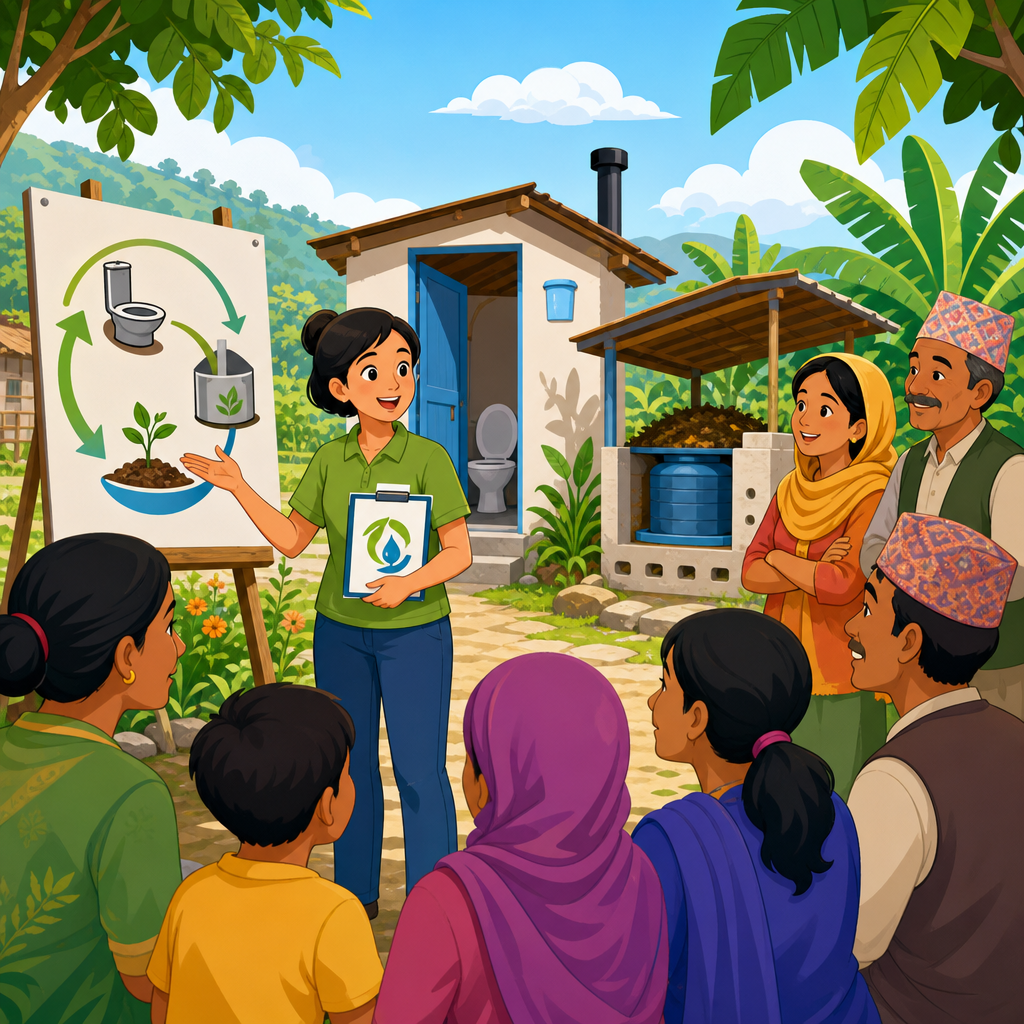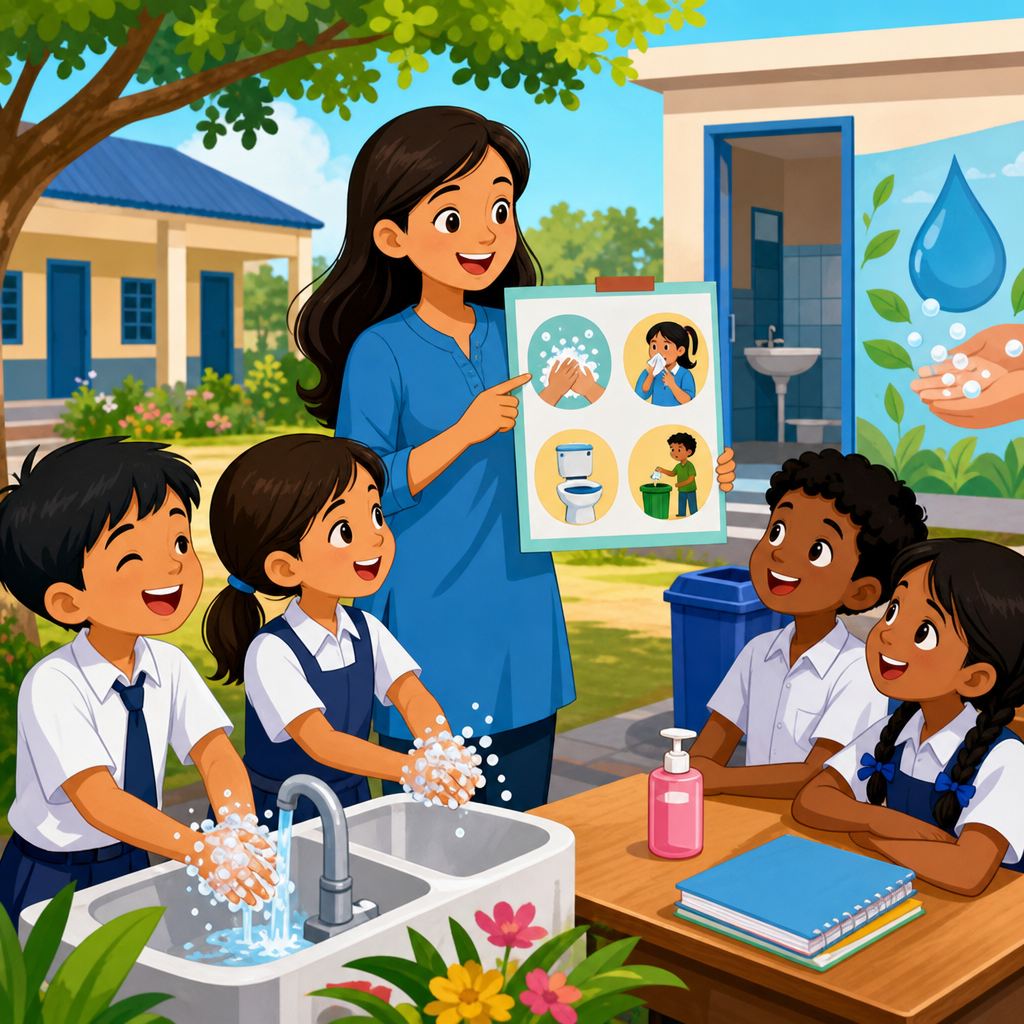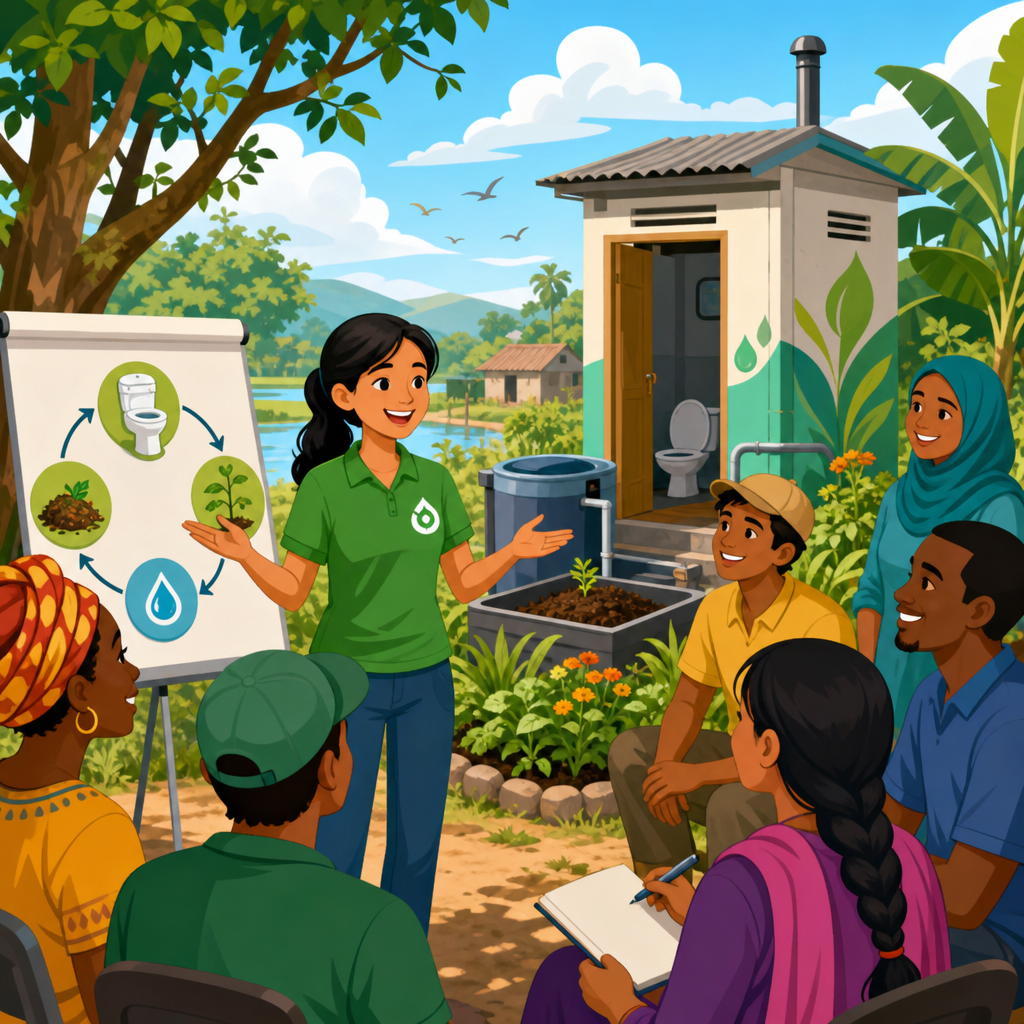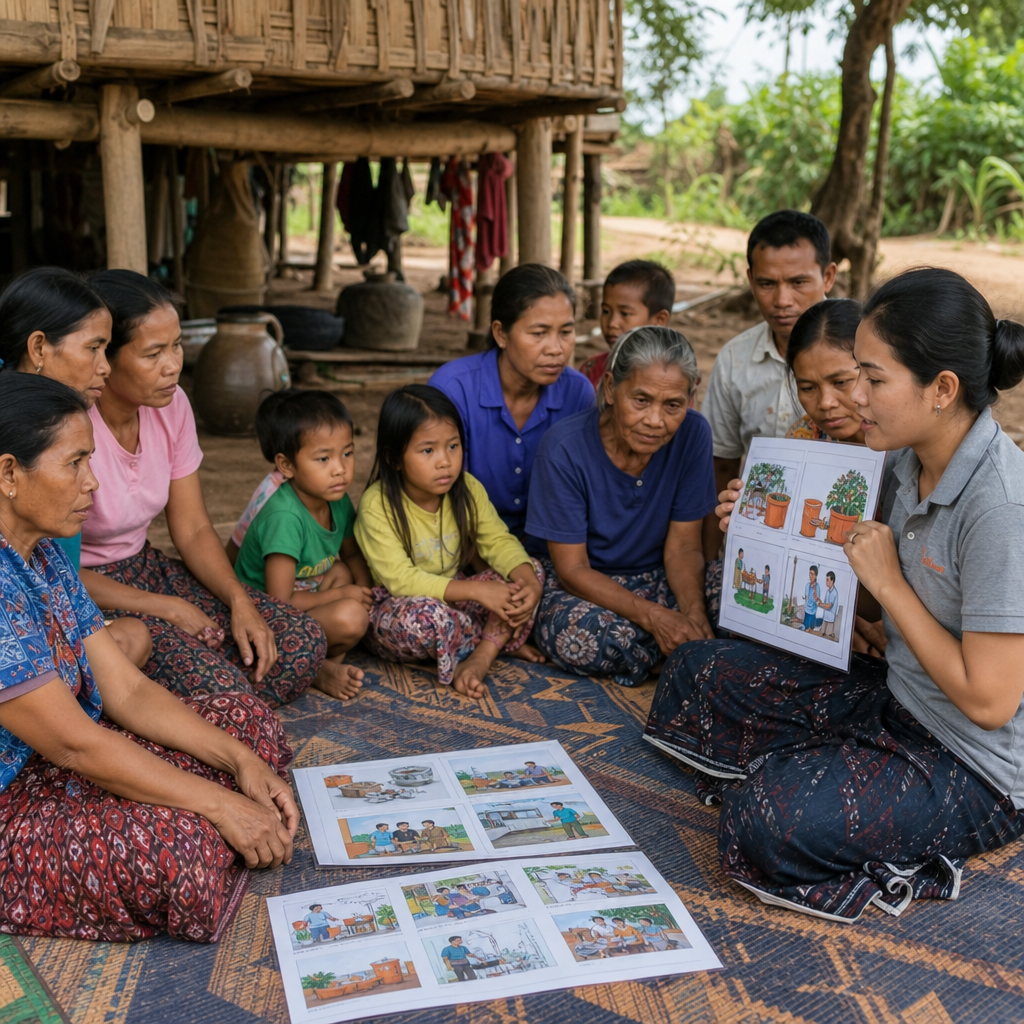
Developing sanitation learning materials for diverse groups starts with a simple reality: people do not adopt safer hygiene and sanitation behaviors because information exists, but because information makes sense in their language, context, and daily routines. In community engagement and education work, sanitation learning materials include posters, flipbooks, lesson plans, radio scripts, community theatre guides, school worksheets, demonstration cards, and digital messages designed to help people understand toilets, handwashing, fecal sludge management, menstrual health, water safety, and waste handling. Diverse groups means far more than age categories. It includes children, adolescents, adults, older people, people with disabilities, low-literacy communities, migrants, rural households, peri-urban tenants, faith groups, sanitation workers, teachers, and local leaders. Educating for change matters because sanitation is behavioral, social, technical, and political at the same time. I have seen technically correct materials fail because they ignored stigma, gender norms, cost barriers, and local vocabulary. Strong sanitation learning materials bridge knowledge and action. They explain risks clearly, show practical alternatives, respect cultural realities, and support communities to make decisions they can sustain. As a hub topic within community engagement and education, this article maps the full process: understanding audiences, setting learning goals, choosing formats, designing inclusive content, testing messages, training facilitators, measuring learning, and linking education to services and accountability.
Start with audience insight, not assumptions
The first step in developing sanitation learning materials is audience analysis. Before drafting a poster or curriculum, identify who needs to learn, what they already believe, what prevents change, and which channels they trust. In practice, this means combining household interviews, focus groups, school observation, clinic input, and informal conversations with frontline workers. A rural mother deciding whether to invest in a latrine slab has different questions from a sanitation worker handling pit emptying or a teacher leading school hygiene sessions. If you treat them as one audience, the material becomes too generic to be useful.
Good audience segmentation usually considers age, gender, literacy, disability, language, livelihood, settlement type, and decision-making power. It also considers behavioral stage. Some people have never considered the issue. Others know the benefits but lack money, land tenure, or social permission. For example, tenants in dense urban settlements may understand the importance of safe toilets but cannot alter shared facilities without landlord approval. Learning materials for them should include rights, reporting channels, and maintenance agreements, not only hygiene tips. For communities with multiple languages, translation must go beyond words. Terms such as contamination, disinfection, and sludge often require local analogies to become understandable.
Define clear learning objectives and behavior outcomes
Effective sanitation education materials are built around a small number of explicit learning objectives. These objectives should state what the audience will know, feel, and do after exposure. Vague aims such as raise awareness are weak. Better objectives include identify five critical moments for handwashing, explain why child feces require safe disposal, compare lined and unlined pits, or describe how to contact a licensed desludging service. In program design, I usually separate learning objectives from behavior outcomes. Learning is necessary, but behavior change depends on enabling conditions such as product availability, affordability, social support, and local regulation.
A useful way to structure sanitation content is by action pathway: awareness, risk recognition, practical skills, social norm reinforcement, and service uptake. A school handwashing poster may mainly support recall and cues to action. A training manual for masons needs procedural detail, dimensions, safety standards, and quality checks. Materials for local officials should include planning, budgeting, inclusive design requirements, and public health implications. The point is precision. When objectives are specific, content becomes shorter, more credible, and easier to evaluate. This is especially important in multilingual or low-literacy settings, where every message must earn its place.
Choose formats that match context and access
There is no universal best format for sanitation learning materials. The right choice depends on literacy, facilitator capacity, infrastructure, and how much behavior complexity the audience must absorb. Print can be durable and low cost, but only if the audience can read it or if a facilitator uses it interactively. Audio formats work well where phone access is common or where oral communication is stronger than text. Demonstration tools are powerful when the subject is procedural, such as tippy tap construction, chlorine solution preparation, or toilet cleaning routines. Digital content can expand reach, but it should never assume stable internet or smartphone ownership.
In field programs, I often combine formats around one core message set. A community meeting might use a flipchart, followed by household reminder cards, then short radio spots repeating the same language. Schools may need teacher guides plus student worksheets and visible cues near toilets. Clinics may require waiting-room videos or counseling cards for caregivers. The format decision should also reflect maintenance. Laminated visual aids survive longer in humid conditions. Radio scripts need regular rebroadcasting. Messaging apps require moderation and consent. A material that cannot be updated, distributed, or explained consistently will underperform even if the design looks polished.
Build inclusive content for diverse groups
Inclusive sanitation education means designing materials that people with different abilities, identities, and life situations can use safely and confidently. That begins with representation. Images should show women, men, children, older adults, and people with disabilities using sanitation facilities as active decision-makers, not passive recipients. Language should avoid shame. Instead of labeling communities dirty, explain contamination pathways and practical prevention. For low-literacy audiences, prioritize short sentences, familiar words, icons, and sequences of actions. For children, use concrete examples and routines. For adolescents, include privacy, dignity, menstruation, peer norms, and social media misinformation.
Accessibility matters at production stage, not as an afterthought. Printed text needs readable font size and contrast. Audio materials should be clear, paced well, and available in local languages. Videos benefit from subtitles and sign language where feasible. Training sessions should account for seating, mobility, and toilet access. I have seen excellent menstrual health materials fail because the session venue had no private washing facilities and no disposal option. Inclusion also means addressing occupational groups. Sanitation workers need materials on personal protective equipment, confined space hazards, legal protections, and emergency response. Their learning needs are specialized and should not be diluted into general hygiene messaging.
| Audience group | Primary sanitation concerns | Effective material formats | Key design considerations |
|---|---|---|---|
| Young children | Handwashing, toilet use, feces disposal | Picture cards, songs, classroom posters | Simple visuals, repetition, adult reinforcement |
| Adolescents | Privacy, menstruation, shared facilities | Peer guides, school sessions, short videos | Respectful tone, confidentiality, practical problem solving |
| Low-literacy adults | Latrine upkeep, water treatment, disease risk | Flipcharts, demonstrations, radio spots | Local language, icons, step-by-step instruction |
| People with disabilities | Access, safety, caregiver support | Adapted print, audio, home visits | Accessible formats, realistic facility examples |
| Sanitation workers | Pit emptying safety, PPE, sludge handling | Toolbox talks, manuals, job aids | Technical accuracy, hazard emphasis, legal context |
Use behavior change principles, not information dumping
Many sanitation materials fail because they assume knowledge alone will change behavior. In reality, people act when messages connect risk, motivation, feasibility, and social expectations. Good materials therefore answer practical questions directly: Why does this matter now? What exactly should I do? How much will it cost? Who can help me? What if I rent, have little space, or share facilities? Behavioral design often uses prompts, planning cues, social proof, commitment devices, and emotional framing. For example, a handwashing campaign may pair disease prevention with child care and household pride, then place cues near the water point and toilet.
Named behavior frameworks are useful behind the scenes because they force teams to check capability, opportunity, and motivation before finalizing content. If soap is scarce, messaging should include low-cost substitutes only where they are evidence-based and appropriate. If norms discourage women from speaking about menstruation or toilet safety, materials should create acceptable entry points, perhaps through mothers’ groups, school clubs, or faith leaders. Fear-based messages can gain attention, but overuse leads to avoidance or stigma. The better approach is honest risk explanation plus achievable actions. People need to see sanitation improvement as possible within their constraints, not as an ideal only wealthier households can reach.
Pretest, revise, and localize before scaling
Pretesting is the discipline that separates attractive materials from effective ones. Before large-scale printing or broadcast, test drafts with intended users and facilitators. Ask participants to explain the message in their own words, describe what action they think is expected, point out confusing images, and identify anything unrealistic or offensive. In one project, a toilet cleaning poster used a brush style unavailable locally, and households fixated on the tool instead of the routine. In another, a color choice associated with mourning undermined an otherwise strong child hygiene booklet. Small details matter because interpretation is local.
Localization also means aligning content with standards and services. If the material tells people to call desludging operators, make sure a licensed provider actually exists, pricing is broadly accurate, and contact details are current. If you promote disability-inclusive toilets, show designs feasible for local masons and household budgets. If your message recommends chlorination, specify dosage correctly and reflect national guidance or World Health Organization recommendations where relevant. Revision should be expected, not resisted. The strongest sanitation education teams run several rounds of testing, then document decisions so future materials remain consistent across districts, partners, and languages.
Equip facilitators and institutions to deliver consistently
Even the best sanitation learning materials depend on the people who use them. Teachers, community health workers, extension staff, religious leaders, peer educators, and local officials all need orientation on the purpose, sequence, and limits of each tool. A flipbook designed for dialogue can become a lecture aid if the facilitator is rushed or untrained. A school worksheet can reinforce stigma if teachers improvise jokes about dirtiness or poverty. Training should therefore cover both technical content and facilitation skills: asking open questions, handling sensitive topics, checking understanding, and responding when participants raise barriers beyond the lesson plan.
Institutional support matters just as much. Schools need time in the timetable, supplies for demonstrations, and functioning toilets if lessons are to feel credible. Health facilities need referral information for sanitation services and staff who know how to counsel caregivers briefly but accurately. Municipal teams need communication protocols so public messages match enforcement and service delivery. I have found that short facilitator guides with key messages, do-and-don’t notes, and troubleshooting prompts dramatically improve consistency. They also protect program quality when staff turnover is high, which is common in community education work.
Measure comprehension, behavior, and practical impact
Sanitation education should be evaluated beyond distribution counts. Printing ten thousand posters says little about learning or action. Better monitoring starts with exposure and comprehension: did the target audience see the material, understand it, and recall the intended actions? From there, assess behavioral indicators such as observed handwashing stations with soap and water, correct child feces disposal, toilet cleaning frequency, pit emptying safety practices, or use of menstrual waste bins where relevant. For institutional settings, measure functionality and maintenance, not just attendance at sessions.
Use mixed methods whenever possible. Surveys can quantify reach and recall, while observation and spot checks reveal whether routines changed. Focus groups explain why some messages worked and others did not. In schools, simple pre- and post-tests can show learning gains, but these should be paired with checks on soap availability and toilet cleanliness. For community campaigns, service data can add valuable evidence. An increase in calls to licensed desludging operators after a communication push is often a stronger signal than self-reported intention. Evaluation should feed directly into revision cycles. Learning materials are never finished; they improve through use, feedback, and changing local conditions.
Developing sanitation learning materials for diverse groups is ultimately about making public health guidance usable in real life. The strongest materials begin with audience insight, define precise objectives, choose formats people can access, and build inclusion into every decision. They rely on behavior principles rather than message overload, they are tested carefully before scale, and they are supported by trained facilitators and responsive institutions. Most important, they connect education with practical options such as affordable products, safe services, and clear accountability channels. When that connection is missing, communities may learn but still be unable to act. When it is present, sanitation education becomes a driver of safer homes, better schools, stronger worker protection, and healthier neighborhoods.
As the hub for educating for change within community engagement and education, this topic should guide every related article, toolkit, and campaign plan. Whether you are developing school hygiene content, materials for low-literacy households, sanitation worker job aids, or municipal outreach packs, the same rule applies: design for the people who will use the information, not for the team producing it. Review your current materials, test them with real users, and revise them until the message is clear, inclusive, and actionable. That is how sanitation education moves from awareness to lasting change.
Frequently Asked Questions
What does it mean to develop sanitation learning materials for diverse groups?
Developing sanitation learning materials for diverse groups means designing education tools that different audiences can easily understand, trust, and apply in daily life. In practice, this goes far beyond translating a poster or simplifying a leaflet. It involves understanding how people live, what language they use at home, which sanitation challenges they face, what beliefs shape their behavior, and what practical barriers prevent change. A school child, a market vendor, a person with low literacy, a caregiver of young children, and a community leader may all need sanitation information, but they will not all respond to the same format, tone, or examples.
Effective sanitation materials are audience-centered. They connect hygiene and sanitation practices to familiar routines such as cooking, childcare, school attendance, work, water collection, menstruation management, and cleaning shared spaces. They also account for culture, age, gender, disability, education level, and local infrastructure. For example, advice about handwashing, toilet use, fecal sludge management, or safe water storage must reflect what facilities people actually have access to. If a message assumes running water, private toilets, or regular waste collection where none exists, it quickly loses credibility. Good materials make safer practices feel realistic, relevant, and worth adopting.
In this field, “materials” can include posters, flipbooks, lesson plans, radio scripts, community theatre guides, demonstration cards, worksheets, SMS messages, social media posts, and training manuals. Each format serves a different purpose. Some are meant to raise awareness, some to teach step-by-step actions, and some to support discussion and problem-solving. The goal is not just to inform people that sanitation matters, but to create communication tools that help them understand what to do, why it matters, and how to do it within their own environment.
Why is audience adaptation so important in sanitation education?
Audience adaptation is essential because behavior change does not happen simply because information is available. People are far more likely to act when information feels understandable, respectful, and directly useful in their own lives. In sanitation education, that means messages must match the audience’s language, literacy level, social norms, daily routines, and material realities. If learning materials are too technical, too generic, or disconnected from local conditions, they may be ignored even when the underlying information is accurate.
Adaptation helps remove common communication barriers. For example, low-literacy communities may benefit more from images, demonstrations, and oral storytelling than from text-heavy materials. Children may learn better through games, songs, and illustrated worksheets, while community leaders may need data, facilitation guides, and discussion prompts that help them influence broader change. Materials for people with disabilities may require large print, audio formats, tactile elements, simplified layouts, or sign language support. When sanitation education is adapted thoughtfully, it becomes more inclusive and more effective.
Audience adaptation also improves trust. People are more receptive when examples reflect their homes, neighborhoods, schools, and shared challenges. A radio message using local expressions, familiar voices, and recognizable situations can have far more impact than a polished but distant campaign. Similarly, a poster showing the kinds of latrines, water containers, or handwashing setups people actually use will feel more believable than one based on ideal conditions. Trust is particularly important in sanitation work because behaviors are shaped by habit, privacy, dignity, and social expectations. Adapted materials show communities that the education effort understands their reality instead of speaking at them from outside it.
What are the most important steps in creating effective sanitation learning materials?
The strongest sanitation learning materials are usually built through a clear, practical development process. The first step is audience research. This means identifying who the materials are for and learning about their current sanitation knowledge, beliefs, behaviors, challenges, motivations, and preferred communication channels. Interviews, focus groups, observations, school visits, household visits, and discussions with local facilitators can all help reveal what people already know and what prevents safer action. Without this step, materials often end up too general to be useful.
The second step is defining the behavior goal. Every material should support a specific outcome, such as encouraging consistent handwashing with soap at critical times, promoting safe child feces disposal, improving toilet maintenance, reducing open defecation, or teaching menstrual hygiene management. When objectives are too broad, materials become cluttered and less memorable. A focused message makes it easier to choose the right words, visuals, examples, and calls to action.
Next comes format selection and content design. The format should match both the audience and the learning environment. A flipbook may work well for community health workers leading small group discussions. Radio spots may be better for reaching dispersed populations. School worksheets may be ideal for reinforcing sanitation habits among students. At this stage, developers should use clear language, simple structure, practical examples, and visuals that reflect local life. Instructions should be actionable and sequenced logically. Instead of saying “maintain hygiene standards,” materials should show concrete actions such as cleaning toilet surfaces regularly, storing water safely, washing hands after toilet use, and keeping children’s play areas free from fecal contamination.
Pilot testing is another critical step. Draft materials should be reviewed with representatives from the intended audience before full rollout. Testing helps identify confusing wording, culturally inappropriate images, unclear instructions, or unrealistic recommendations. It also shows whether people remember the key messages and whether they feel able to act on them. Revisions based on real feedback are often what make the difference between materials that merely look good and materials that actually support behavior change. Finally, implementation should be paired with facilitator training, monitoring, and periodic updates so the materials remain accurate, relevant, and effective over time.
What makes sanitation learning materials inclusive and accessible for different communities?
Inclusive and accessible sanitation learning materials are designed so that a wide range of people can engage with them meaningfully, regardless of literacy level, language, age, gender, disability, or social position. Inclusion begins with representation. People need to see themselves in the content. That means using examples, illustrations, voices, and scenarios that reflect the actual community, including women, men, children, older adults, people with disabilities, and people in different living situations. It also means avoiding assumptions that everyone has the same level of access to toilets, water, privacy, mobility, or decision-making power.
Accessibility depends heavily on format and delivery. Written materials should use plain language, readable fonts, strong contrast, and uncluttered layouts. Visual materials should rely on clear, culturally meaningful images rather than decorative graphics that confuse the message. Audio formats can help reach people with low literacy or limited access to printed materials. Facilitated demonstrations are valuable where people learn best by seeing and doing. In some settings, materials may need to be translated into multiple local languages or delivered through trusted intermediaries such as teachers, health workers, religious leaders, or community volunteers.
True inclusion also requires attention to sensitive sanitation issues that may affect groups differently. Women and girls may need information related to menstrual hygiene, privacy, safety, and school attendance. Caregivers may need guidance on infant and child feces disposal. People with disabilities may need practical advice tailored to mobility, grip strength, vision, hearing, or cognitive needs. Shared sanitation users may need messages that focus on maintenance and cooperation, while rural households may need different strategies than dense urban settlements. Inclusive materials do not treat the audience as one uniform group. Instead, they recognize different needs while still promoting common public health goals in a respectful and usable way.
How can organizations tell whether their sanitation learning materials are actually working?
Organizations can tell whether sanitation learning materials are working by measuring more than distribution numbers. Printing posters, broadcasting radio segments, or handing out lesson plans does not by itself show impact. The real question is whether the materials are understood, remembered, accepted, and linked to safer sanitation and hygiene practices. A useful evaluation process starts by defining what success looks like. This may include improved knowledge, stronger confidence in performing a behavior, better community discussion, increased facility use, cleaner toilets, more handwashing stations with soap and water, or reductions in risky practices such as open defecation or unsafe disposal of child feces.
One important method is formative and follow-up feedback from the intended users. Facilitators, teachers, community health workers, and audience members can report which parts of the materials are engaging, which are confusing, and which messages people repeat or act on. Short interviews, observation checklists, group discussions, and simple comprehension tests can reveal whether the materials are functioning as intended. For example, if people remember a slogan but cannot explain the action behind it, the material may be memorable but not educationally strong.
Behavior observation is especially important in sanitation work because stated knowledge does not always translate into practice. Where appropriate and ethical, organizations can observe whether handwashing stations are being used, whether toilets are cleaner, whether school sanitation routines have improved, or whether households are adopting promoted practices. Comparing results before and after implementation can help show change over time. It is also useful to assess whether different groups are benefiting equally; sometimes a material works well for one audience but leaves out others. The most effective organizations treat evaluation as a learning process. They gather evidence, adapt the materials, retrain facilitators if needed, and continue refining their approach so sanitation education remains relevant, inclusive, and behavior-focused.