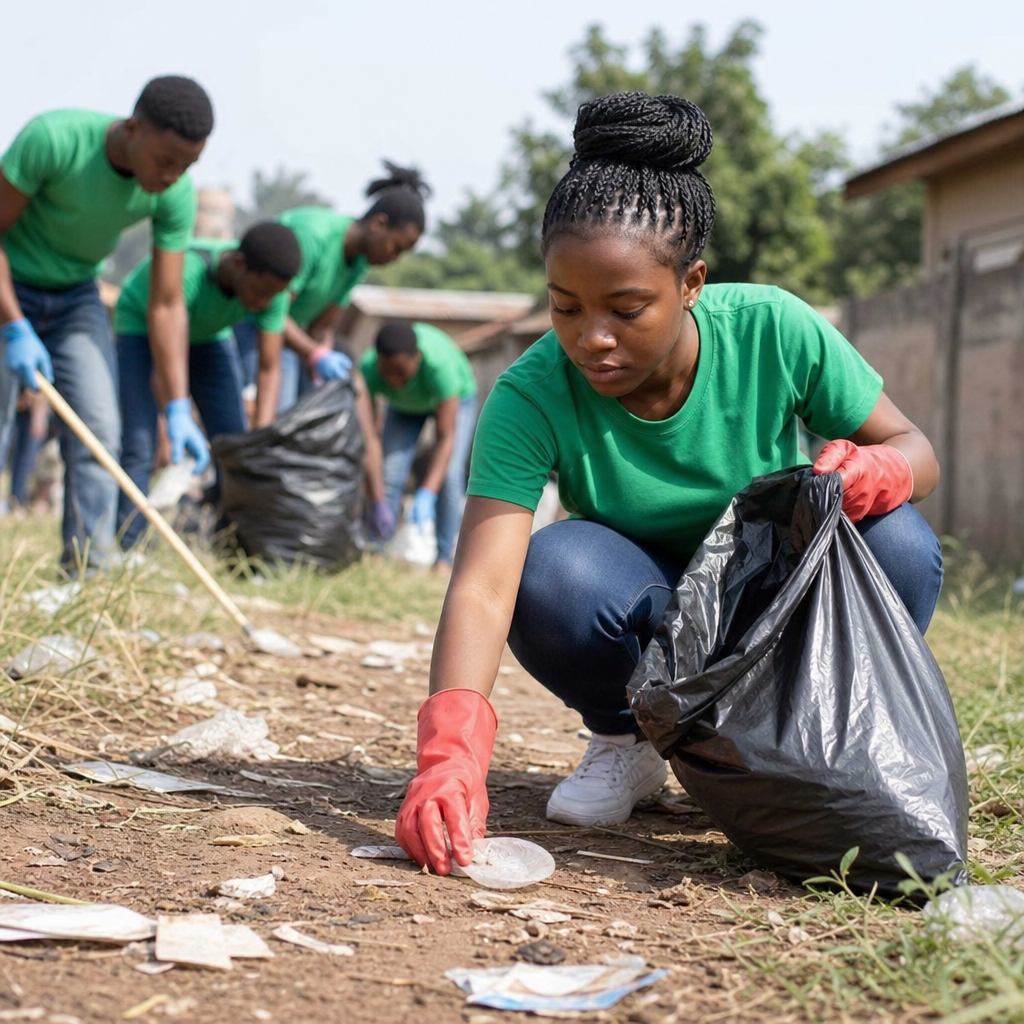
Universities play a decisive role in advancing sanitation knowledge because they combine research, teaching, community partnerships, and policy influence in one institution. In the sanitation field, knowledge includes technical understanding of water, wastewater, hygiene, fecal sludge management, and public health, but it also includes behavior change, governance, financing, equity, and communication. I have seen sanitation projects stall not because engineers lacked designs, but because communities were excluded, health messages were weak, or local operators were never trained to maintain systems. That is why educating for change matters. Universities are uniquely positioned to build the skilled workforce, evidence base, and civic trust needed to improve sanitation outcomes. As a hub topic within community engagement and education, this subject connects curriculum design, professional training, participatory research, student outreach, and lifelong learning. When universities teach sanitation well, they do more than produce graduates. They create informed citizens, support municipalities, help schools and clinics adopt safer practices, and translate science into action that prevents disease and protects dignity.
Sanitation knowledge is broader than many people assume. It covers toilets and sewers, but also hand hygiene, menstrual health, safe containment, treatment technologies, environmental monitoring, risk communication, and inclusive service delivery for women, children, older adults, and people with disabilities. It spans urban informal settlements, rural villages, refugee settings, campuses, and industrial zones. Global frameworks such as the Sustainable Development Goals, especially SDG 6 on clean water and sanitation, and guidance from the World Health Organization and UNICEF have made clear that progress depends on both infrastructure and education. Universities matter because they can connect microbiology labs with social science fieldwork, public health surveillance with design studios, and local extension work with national policy discussions. They can test what works, teach why it works, and help communities adapt solutions to real constraints such as cost, climate, culture, and governance. In practical terms, universities advance sanitation knowledge by producing credible evidence, training practitioners, and making learning accessible beyond the classroom.
Why sanitation education belongs at the center of university missions
Sanitation education belongs at the center of university missions because it touches health, environment, equity, and economic development at the same time. Poor sanitation contributes to diarrheal disease, parasitic infection, stunting, school absenteeism, and environmental contamination. The WHO has long documented the health burden linked to unsafe sanitation and hygiene, while UNICEF and the Joint Monitoring Programme have shown that safely managed sanitation remains out of reach for billions. Universities can respond in ways that single-purpose organizations usually cannot. A public health faculty can model disease transmission; civil engineers can compare sewered and non-sewered options; economists can analyze tariffs and affordability; education departments can build school hygiene curricula; and law or policy schools can study regulation and accountability.
From experience, the strongest university programs do not treat sanitation as a narrow utility issue. They frame it as a systems problem requiring interdisciplinary education. Students need to understand pathogen pathways, but also procurement, operator training, social norms, monitoring indicators, and ethical engagement. A university mission typically includes teaching, research, and service. Sanitation fits all three. Teaching develops professionals and informed community leaders. Research generates locally relevant evidence on technologies and behavior change. Service connects the campus to neighborhoods, municipalities, and civil society through outreach and technical assistance. This combination allows universities to sustain sanitation knowledge over decades instead of relying on short funding cycles. It also helps build local ownership, which is essential because sanitation systems fail when no one is responsible for operation, financing, or user engagement after installation.
How universities generate sanitation knowledge through research and evidence
Universities generate sanitation knowledge by asking practical questions, designing robust studies, and publishing results that practitioners can use. In sanitation, evidence must move beyond laboratory performance to include field conditions. A toilet design that works in a controlled pilot may fail where water is scarce, sludge emptying is irregular, or users have different preferences. Good university research therefore combines technical testing with implementation analysis. Researchers examine pathogen reduction, nutrient recovery, groundwater protection, odor control, lifecycle cost, and user acceptance. They use methods ranging from randomized evaluations of hygiene messaging to GIS mapping of service gaps, qualitative interviews with residents, and operational audits of treatment plants.
Specific examples illustrate the point. Research groups at institutions such as the London School of Hygiene & Tropical Medicine, Eawag’s academic partners, and universities working with the Sustainable Sanitation Alliance have contributed important evidence on community-led sanitation, fecal sludge management, and service-chain planning. Many universities also support wastewater surveillance, which gained visibility during the COVID-19 pandemic as campuses and cities monitored viral trends through sewage testing. That work showed students something powerful: sanitation infrastructure can function as a public health intelligence system. Other research areas include antimicrobial resistance in wastewater, climate resilience of sanitation systems during floods, and nutrient reuse through composting or biogas. When universities publish open-access findings, create field manuals, and train local agencies in data interpretation, research turns into usable sanitation knowledge rather than staying on a shelf.
Teaching future practitioners, leaders, and informed citizens
One of the most important roles of universities is preparing people to solve sanitation problems in real settings. This begins with formal degree programs in environmental engineering, public health, urban planning, microbiology, education, and development studies, but it should not end there. Strong sanitation education includes short courses, executive training, microcredentials, continuing professional development, and interdisciplinary modules available to students in other disciplines. Medical students should understand WASH-related disease prevention. Architecture students should learn inclusive toilet design. Business students should study utility finance and sanitation enterprises. Teacher trainees should learn hygiene education methods suitable for schools and community learning spaces.
I have found that the most effective sanitation courses teach the full service chain: capture, containment, emptying, transport, treatment, reuse or disposal. This framework prevents the common mistake of focusing only on toilet construction. Students should also learn to assess context. In dense urban areas, safely managed non-sewered sanitation may be more feasible than immediate sewer expansion. In flood-prone regions, latrine siting and containment standards matter greatly for groundwater protection. On campuses, students can audit restroom accessibility, handwashing compliance, or maintenance systems and then present recommendations to facilities teams. That kind of applied learning builds professional judgment. It also creates informed citizens who understand that sanitation is not merely a private household issue. It is a shared public good tied to environmental health, dignity, and social inclusion.
Community engagement turns knowledge into behavior change and public trust
Universities advance sanitation knowledge most effectively when they work with communities instead of speaking at them. Community engagement is not a public relations add-on; it is the mechanism that makes sanitation education credible and practical. Residents understand seasonal flooding patterns, local beliefs, safety concerns, landlord-tenant dynamics, and reasons why facilities are or are not used. University teams that listen first produce better interventions. Participatory action research, community workshops, service-learning, and extension programs allow universities to co-create knowledge with the people affected by sanitation challenges.
Behavior change is central here. Building a toilet does not guarantee use, maintenance, or handwashing. Universities can help design evidence-based communication using methods from health promotion and social marketing. They can test messages, identify trusted messengers, and measure changes in practice over time. They can also evaluate school-based programs where children influence household habits. In one common pattern, a university partners with a municipality and local schools to improve hand hygiene, menstrual health education, and restroom maintenance. Students collect baseline data, education specialists create lesson materials, engineers review facility design, and public health researchers track outcomes. The result is not just a cleaner facility. It is a locally validated model others can replicate. This is how educating for change becomes a practical strategy rather than a slogan.
What effective university sanitation programs include
Effective university sanitation programs share several features: interdisciplinary teaching, field-based learning, strong partnerships, and measurable outcomes. They also align educational content with the realities of municipal service delivery and community needs. The table below summarizes the elements that consistently produce stronger results.
| Program element | What it includes | Why it matters |
|---|---|---|
| Interdisciplinary curriculum | Engineering, public health, social science, policy, education | Sanitation problems rarely have a single technical answer |
| Field immersion | Community visits, utility placements, campus audits, operator interviews | Students learn operational realities and user perspectives |
| Partnerships | Municipalities, NGOs, schools, clinics, utilities, private desludging firms | Knowledge moves faster when institutions work across the service chain |
| Applied research | Pilot testing, monitoring, cost analysis, behavior studies | Evidence becomes actionable for local decisions |
| Inclusive design | Gender, disability access, child-friendly features, menstrual hygiene | Facilities are only successful when people can actually use them safely |
| Outcome tracking | Usage rates, maintenance quality, health indicators, training completion | Programs improve when universities measure what changes |
These elements are mutually reinforcing. Without field immersion, curriculum can become abstract. Without outcome tracking, outreach may look active but deliver little impact. Without partnerships, students may graduate with theory yet lack understanding of procurement rules, sludge logistics, or community facilitation. Universities that invest in all of these areas become trusted sources of sanitation knowledge for both professionals and the public.
Partnerships with government, industry, and civil society expand impact
Universities are most influential when they operate as conveners. Government agencies need evidence for regulations, budgeting, and service planning. Utilities need trained staff and operational research. Nonprofits need support with monitoring, training materials, and evaluation design. Private firms need product testing, market analysis, and workforce development. Universities can connect all of these actors. For example, an engineering department may help a city compare decentralized wastewater treatment with sewer expansion, while a public health team evaluates exposure risks and a business school analyzes financing scenarios. This integrated support is especially valuable in low-resource settings, where planning decisions must balance affordability with health protection.
Industry partnerships also matter. Manufacturers of toilets, treatment units, monitoring sensors, and hygiene products often need independent testing and usability feedback. Universities can provide this while maintaining academic standards. Civil society partnerships are equally important because community organizations often have stronger local trust than academic institutions. Working together improves outreach and helps ensure sanitation education is culturally appropriate. International networks add another layer. Collaboration with programs aligned to WHO guidelines, UNICEF WASH initiatives, and national public health institutes helps universities benchmark quality and adapt global good practice to local contexts. The best partnerships do not reduce universities to consultants. They preserve teaching and research value while ensuring that sanitation knowledge reaches the people making daily decisions about services, health, and infrastructure.
Barriers universities face and how strong programs address them
Universities do face barriers in advancing sanitation knowledge. Disciplinary silos are common, with engineering and public health departments working separately. Funding often favors short-term pilots rather than long-term education and follow-up. Faculty promotion systems may reward journal articles more than community engagement. Campuses themselves sometimes model poor practice, with inaccessible toilets, weak maintenance, or inadequate menstrual hygiene support. These gaps can undermine credibility. Students notice quickly when institutions teach sanitation principles that their own facilities do not reflect.
Strong programs address these barriers directly. They create cross-department teaching teams, community-engaged research incentives, and living-lab approaches that use the campus as a demonstration site. They involve facilities managers, student unions, and disability advocates in planning. They develop clear monitoring systems so outreach is not confused with impact. They also teach humility. Not every sanitation innovation is suitable everywhere, and universities must avoid imposing solutions without understanding power, culture, land tenure, and maintenance capacity. The most trusted institutions are transparent about tradeoffs. Sewer systems can deliver high service levels, but they require capital, energy, treatment capacity, and governance. Pit latrines may be affordable, but they create risks if siting, emptying, and sludge treatment are neglected. Educating for change means teaching these realities honestly, then helping communities and decision-makers choose workable options.
Universities will remain central to sanitation progress if they treat education as a public service that extends far beyond campus boundaries. They can produce graduates who understand the sanitation service chain, support communities with evidence-based outreach, and give governments the analysis needed for better policy. They can model inclusive facilities on their own campuses and use research to solve practical problems such as treatment performance, safe reuse, and operator training. Most importantly, they can turn sanitation knowledge into shared capability. That is the real promise of educating for change. It builds not only expertise, but also trust, participation, and long-term stewardship.
For readers exploring community engagement and education, this hub topic points to the core lesson: sanitation improves when learning is continuous, local, and action-oriented. Universities are one of the few institutions able to connect science, teaching, and community partnership at scale. If you are shaping a program, curriculum, or local initiative, start by asking how a university can contribute research, training, and convening power. Then build from that partnership toward measurable change.
Frequently Asked Questions
Why are universities uniquely important in advancing sanitation knowledge?
Universities are uniquely important because they bring together multiple functions that sanitation progress depends on: research, education, field engagement, and policy influence. In one institution, universities can investigate technical sanitation challenges, train future professionals, test new service models, and convene governments, utilities, NGOs, and communities around evidence-based solutions. This matters because sanitation is not only an engineering issue. It involves water quality, wastewater treatment, hygiene, fecal sludge management, urban planning, public health, governance, finance, communication, and social behavior. Universities are one of the few places equipped to examine all of those dimensions at the same time.
They also help bridge the common gap between theory and implementation. Many sanitation projects do not fail because there is no technical design; they fail because the social, political, financial, or institutional realities were not understood well enough. Universities can study why adoption rates vary, why maintenance systems break down, why tariffs become politically difficult, or why certain groups remain excluded from services. By combining laboratory science with social science and policy analysis, they generate knowledge that is more practical and more durable. Their role is especially valuable in building long-term national and local capacity, because they educate professionals who will later work in ministries, municipalities, utilities, research centers, and civil society organizations.
How do universities contribute to sanitation research beyond technical engineering?
While engineering remains central to sanitation, universities contribute far beyond technical design by expanding the definition of what counts as sanitation knowledge. They study not only treatment technologies and infrastructure systems, but also the human and institutional factors that determine whether those systems succeed. For example, university researchers may examine household behavior related to toilet use, hygiene practices, and willingness to pay for services. They may analyze how regulations affect service delivery, how financing models shape sustainability, or how communication strategies influence public trust and adoption. This broader research agenda is essential because sanitation systems operate within communities, institutions, and political economies, not in isolation.
Universities also produce interdisciplinary evidence that is often missing in project implementation. Public health departments can assess links between sanitation and disease outcomes. Social scientists can explore stigma, gender dynamics, and cultural norms that affect use and acceptance. Economists can evaluate cost recovery, subsidies, and investment incentives. Governance researchers can map institutional responsibilities and identify accountability gaps. Environmental scientists can measure impacts on groundwater, rivers, and soils. When these perspectives are combined, sanitation knowledge becomes more realistic and actionable. Instead of offering a narrow technical answer, universities can help practitioners understand what works, for whom, under what conditions, and why. That kind of nuanced evidence is what improves both project design and long-term service delivery.
What role do universities play in training the next generation of sanitation professionals?
Universities are foundational in preparing the next generation of sanitation professionals because they shape both technical competence and systems thinking. Through degree programs, professional training, fieldwork, and research supervision, they equip students with knowledge in sanitation engineering, water quality, wastewater management, hygiene promotion, fecal sludge management, epidemiology, urban planning, and environmental protection. Just as importantly, strong university programs help students understand that sanitation is a service system, not simply a construction project. Future professionals need to know how infrastructure interacts with regulation, budgeting, community engagement, behavior change, and institutional coordination.
Effective university training also creates adaptive leaders rather than narrow specialists. Students who are exposed to interdisciplinary learning are better prepared to work across sectors and communicate with diverse stakeholders, including communities, government officials, donors, and private operators. Universities can reinforce this by embedding field placements, applied research, design studios, and partnerships with municipalities or utilities into the curriculum. That kind of practical exposure helps students see real-world challenges such as informal settlements, service inequities, weak maintenance structures, and fragmented responsibilities. Over time, universities become talent pipelines for the sanitation sector, supplying skilled professionals who can design systems, evaluate policies, manage services, and lead innovation. In countries working to strengthen sanitation systems, that human capital function may be one of the most important contributions universities make.
How can universities work with communities and local institutions to improve sanitation outcomes?
Universities can improve sanitation outcomes significantly when they move beyond campus-based research and form meaningful partnerships with communities, municipalities, utilities, schools, health agencies, and civil society organizations. These partnerships allow universities to co-produce knowledge rather than simply study people from a distance. In practice, that can mean working with communities to identify barriers to toilet adoption, test hygiene messaging, monitor service quality, map sanitation access, or design fecal sludge management systems that reflect local realities. Because sanitation is deeply shaped by trust, habits, affordability, and social norms, solutions are usually stronger when the people affected are involved in defining the problem and evaluating options.
Universities also add value by serving as credible intermediaries. They can translate technical evidence into formats that local officials and residents can use, facilitate dialogue between stakeholders who may not otherwise collaborate, and help pilot interventions before they are scaled. For example, a university might partner with a city to study why containment systems are overflowing, or with a rural district to assess why hygiene campaigns have produced uneven results. By combining data collection, analysis, and community engagement, universities help local institutions make more informed decisions. They can also support monitoring and learning over time, which is crucial because sanitation improvements often depend on gradual institutional strengthening rather than one-time investments. When universities are engaged in this way, they become practical actors in sanitation progress, not just observers.
How do universities influence sanitation policy and long-term sector development?
Universities influence sanitation policy by producing evidence that policymakers can use to make better decisions and by helping frame sanitation as a multidimensional development issue. Their research can inform standards, service models, public investment priorities, urban planning strategies, environmental regulations, and public health interventions. Because universities often carry institutional credibility, their findings can shape debates around what approaches are effective, equitable, and financially sustainable. They can show, for instance, that infrastructure investments without behavior change support may underperform, or that ignoring informal settlements creates long-term public health and environmental costs. This type of evidence helps policymakers move beyond short-term construction targets toward stronger sanitation systems.
In the long term, universities support sector development by building the knowledge base and professional networks that sustain reform. They host conferences, publish research, advise ministries, participate in national task forces, and create spaces where technical experts, practitioners, and decision-makers can exchange ideas. They can also help standardize training, strengthen local research capacity, and ensure that sanitation policy is informed by local evidence rather than imported assumptions alone. This is particularly important in contexts where sanitation programs have stalled not because solutions are unknown, but because governance, financing, communication, or equity concerns were underestimated. Universities are well positioned to keep those wider issues visible. Their lasting contribution is not just generating information, but helping societies develop the expertise, institutions, and critical thinking needed to improve sanitation over time.