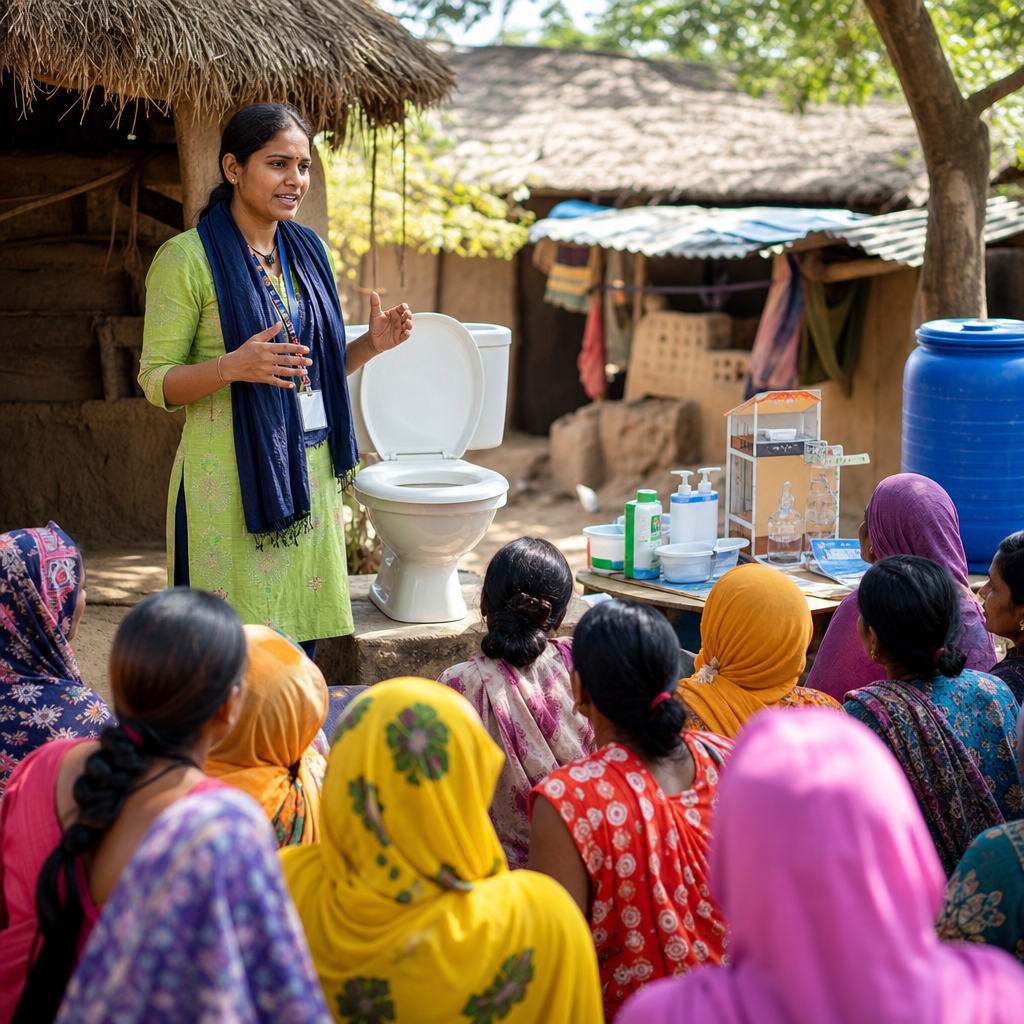
Promoting public participation in sanitation policy making is essential because sanitation systems only work well when the people who use, maintain, finance, and monitor them help shape the rules behind them. In practice, sanitation policy making includes decisions on toilets, fecal sludge management, sewer expansion, drainage, hygiene promotion, tariffs, subsidies, enforcement, and service standards. Public participation means residents, community groups, schools, informal workers, health professionals, and local businesses are involved in identifying problems, setting priorities, reviewing options, and holding institutions accountable. I have seen technically sound sanitation plans stall because they ignored daily realities such as women’s safety at night, landlords’ reluctance to invest, or pit emptiers’ lack of legal disposal points. When participation is built in early, policies become more practical, trusted, and durable.
This matters for health, equity, climate resilience, and public finance. Poor sanitation drives diarrheal disease, parasitic infections, environmental contamination, and lost school and work time. The World Health Organization has repeatedly shown that sanitation investments return broad social and economic benefits through reduced disease and higher productivity. Yet infrastructure alone does not solve exclusion. A city can build public toilets and still fail if locations are unsafe, fees are unaffordable, or facilities are inaccessible for older adults and people with disabilities. A village can promote latrines and still miss the poorest households if financing rules are unclear. Effective participation closes that gap by turning policy from a top-down document into a shared operating system for behavior, service delivery, and oversight.
As a hub under community engagement and education, this article explains how fostering participation and learning strengthens sanitation governance at every stage. It covers who should be involved, how to design inclusive engagement, which tools produce useful input, how to convert community feedback into enforceable policy, and how governments can measure whether participation actually improved outcomes. It also connects learning to participation: people contribute better when they understand sanitation risks, legal options, budget constraints, and tradeoffs. Public participation is not a town hall held once for compliance. It is a structured process of listening, explaining, co-designing, documenting decisions, and reporting back clearly enough that communities can see their fingerprints on final policy.
Why participation improves sanitation policy outcomes
Public participation improves sanitation policy outcomes because it reveals operational realities that planners and consultants often miss. In dense low-income settlements, for example, households may share toilets across compounds, making household-level standards unrealistic unless policy also addresses maintenance agreements, water access, and safe emptying schedules. In flood-prone neighborhoods, residents can identify where drains backflow, where septic tanks overflow, and which routes desludging trucks cannot reach during the rainy season. Those details change policy choices. Instead of prescribing a single technology, a better policy may allow context-based service levels, combine on-site and networked sanitation, and set phased compliance timelines. That is a concrete improvement in governance, not just better messaging.
Participation also raises legitimacy, which is critical when sanitation policies require behavior change, fee collection, inspections, or land-use restrictions. People are more likely to accept user charges or new containment rules if they understand what service level they are paying for and if they had a fair chance to challenge assumptions. I have watched tense meetings over desludging fees soften when officials showed route costs, treatment fees, and subsidy logic, then invited community representatives to review service standards. Transparent participation does not eliminate conflict, but it converts rumor into negotiable evidence. That matters in sanitation, where mistrust can quickly derail enforcement and lead to illegal dumping, nonpayment, or political backlash.
Another benefit is better targeting of vulnerable groups. Women, girls, sanitation workers, tenants, people with disabilities, migrants, and residents of informal settlements often experience sanitation differently from property owners or engineers. If policy design relies only on formal hearings, these groups are underrepresented. Inclusive participation surfaces concerns such as menstrual hygiene management, lighting near toilets, child-friendly facilities, wheelchair access, or protections for manual pit emptiers. Policies that address these issues produce measurable benefits: safer facilities, lower exposure to pathogens, and more reliable service adoption. Participation therefore supports both public health and social justice.
Who should participate and how to map stakeholders
Good sanitation participation starts with stakeholder mapping, not with an invitation list copied from previous projects. The relevant actors usually include municipal departments, utilities, public health agencies, school administrators, community health workers, neighborhood committees, women’s associations, youth groups, disability advocates, landlords, tenant unions, desludging operators, treatment plant managers, environmental regulators, faith leaders, market vendors, and local employers. In rural areas, traditional leaders, water user committees, extension workers, and local masons may be central. The point is to identify who experiences sanitation risks, who controls resources, who implements services, and who can block or enable change. Missing even one actor can distort policy. Excluding informal emptiers, for example, often leads to disposal rules that look strong on paper but are impossible to follow.
A useful approach is to categorize stakeholders by influence, exposure, and knowledge. Influence means decision-making power or ability to mobilize others. Exposure means who bears the heaviest sanitation burdens, such as families near contaminated drains or workers handling sludge. Knowledge means who understands daily operating conditions. These categories help balance participation so meetings are not dominated by officials or vocal elites. In my fieldwork, separate focus groups for women tenants, schoolgirls, and sanitation workers produced more actionable findings than mixed public forums alone, because participants felt safe discussing privacy, harassment, pricing abuse, and unsafe work practices.
Stakeholder mapping should also track barriers to participation. Common barriers include meeting times that exclude wage workers, documents written in technical language, inaccessible venues, low literacy, lack of childcare, fear of retaliation, and digital exclusion. Solving these barriers is part of policy design, not an optional courtesy. If you want representative input, provide translation, transport stipends when appropriate, disability access, and multiple channels for feedback. A sanitation policy developed with broad, balanced participation is far more resilient than one shaped by the easiest voices to gather.
Methods that foster participation and learning
The best participation methods combine education with structured decision-making. Residents need clear information on contamination pathways, service options, financing models, and legal responsibilities before they can weigh tradeoffs. Governments should use plain-language briefs, maps, service diagrams, and short presentations that explain the problem and what decisions are actually open for input. For example, a municipality might clarify that national effluent standards are fixed, but local decisions on toilet siting, desludging frequency, customer grievance systems, and subsidy targeting are still flexible. That clarity prevents consultation fatigue and builds trust.
Different methods suit different questions. Household surveys help quantify service gaps and willingness to pay, but they rarely capture nuanced concerns. Focus groups reveal why facilities are unused or unsafe. Community mapping identifies hotspots for open defecation, illegal dumping, and seasonal flooding. Participatory budgeting lets residents rank investments such as communal toilets, school facilities, or transfer stations. Public hearings are useful for transparency, yet they should not be the only channel because they favor confident speakers. Digital tools such as SMS polls, WhatsApp reporting groups, and online comment portals can widen reach, but only when paired with offline options.
| Method | Best use in sanitation policy | Main limitation |
|---|---|---|
| Household survey | Measure access, cost burden, satisfaction, and service gaps | Limited depth on sensitive issues |
| Focus group | Understand barriers affecting women, tenants, workers, or youth | Requires skilled facilitation to avoid dominance |
| Community mapping | Locate contamination points, unsafe routes, and underserved areas | Needs verification with technical data |
| Public hearing | Document transparency and test broad reactions to draft policy | Often excludes quieter or marginalized voices |
| Participatory budgeting | Set visible spending priorities and build ownership | Works only if budget envelopes are real |
Learning deepens when participation is iterative. A strong process often has four rounds: first, problem identification; second, option review; third, comment on a draft policy; fourth, reporting back on what changed and why. That final loop is where many institutions fail. If communities never hear how their input affected the result, future participation becomes symbolic. Report-back can be simple: summary posters in clinics and schools, radio segments, ward meetings, and public dashboards showing accepted, modified, and rejected recommendations with reasons. This is how sanitation education becomes civic learning rather than one-way outreach.
Turning community input into workable sanitation policy
Collecting feedback is easy compared with translating it into policy language that agencies can implement. The bridge between participation and law is a decision framework. Every major comment should be coded into categories such as service standard, infrastructure need, affordability, enforcement, occupational safety, land use, or communication. Policy teams can then test each proposal against legal mandates, budget limits, environmental rules, and operational feasibility. If residents request free desludging for all households, the fair response is not a vague promise. It is a documented analysis of cost, likely subsidy options, and targeting criteria, followed by a clear decision.
Some of the most effective sanitation policies use tiered approaches shaped by public input. A city may set minimum containment standards for all properties, stricter requirements for new developments, licensing rules for emptiers, and scheduled desludging in dense zones where household on-demand service has failed. Community feedback can refine exemptions, payment schedules, and customer complaint mechanisms. In rural sanitation, communities may support bylaws on toilet completion but insist on local masons, microfinance access, and disability-friendly designs. That combination turns policy into an implementable package instead of a list of obligations detached from capacity.
Drafting should be accompanied by institutional clarity. Residents need to know who is responsible for inspection, who manages fecal sludge treatment, who handles school sanitation, and where grievances go. Ambiguous mandates are one of the main reasons sanitation policy underperforms. I have seen local governments approve strong sanitation regulations but assign no budget line for enforcement or public education. Participation can prevent this if meetings explicitly review roles, timelines, and financing sources. A policy that names responsible agencies, service standards, penalties, subsidy criteria, and public reporting requirements is far more likely to survive political turnover.
Inclusion, accountability, and measurement
Inclusive sanitation policy making is judged by who benefits, not by how many meetings were held. Agencies should set participation indicators before consultation begins. Useful indicators include the share of participants from low-income areas, attendance by women and people with disabilities, number of sanitation workers engaged, response rates by ward, and the percentage of recommendations addressed in the final draft. Outcome indicators matter even more: reduction in complaints, increase in legal desludging, improved toilet access in schools, lower fecal contamination in drains, and higher satisfaction with services. Without this measurement, participation risks becoming performative.
Accountability mechanisms keep participation tied to results. Public comment registers, grievance redress systems, citizen report cards, and annual sanitation scorecards allow residents to track whether policy commitments translate into service delivery. Many cities now use open dashboards for service requests and desludging schedules. Where digital systems are weak, notice boards and radio updates still work. Independent civil society monitoring can add credibility, especially in politically contested settings. Standards from organizations such as UNICEF, WHO, and the World Bank’s citywide inclusive sanitation work provide practical benchmarks for equity, safety, and service-chain thinking.
There are tradeoffs. Participation takes time, can expose conflict, and may produce unrealistic demands. But the alternative is usually costlier: infrastructure that communities reject, weak compliance, and policies that fail during implementation. The most effective approach is disciplined participation—well-scoped questions, transparent constraints, representative engagement, and visible follow-through. For anyone working on community engagement and education, the lesson is clear: sanitation learning should not stop at hygiene messages. It should equip people to influence budgets, standards, monitoring, and enforcement. Start with a stakeholder map, choose methods that include the excluded, and publish what changed because the public spoke. That is how better sanitation policy gets made and sustained.
Frequently Asked Questions
Why is public participation important in sanitation policy making?
Public participation is important in sanitation policy making because sanitation systems are only effective when they reflect how people actually live, work, travel, and manage waste in their communities. Policies designed without meaningful input from residents often overlook practical realities such as shared toilets, informal housing patterns, affordability constraints, gender-specific needs, disability access, local flooding risks, and the role of informal service providers. When community members, schools, health professionals, neighborhood leaders, and sanitation workers are involved early, policy makers gain a clearer picture of service gaps, unsafe practices, and barriers to compliance that may not be visible in official reports alone.
Participation also improves legitimacy and trust. People are more likely to support sanitation regulations, pay service fees, report failures, and adopt hygiene practices when they understand how decisions were made and feel their concerns were taken seriously. This is especially important for policies involving tariffs, subsidies, enforcement, sewer connections, fecal sludge management, and service standards, where public acceptance directly affects implementation. In addition, inclusive participation helps ensure that sanitation policy protects public health, advances equity, and uses public resources more efficiently. In short, public participation does not slow sanitation policy down when done well; it makes policy more realistic, more fair, and more likely to succeed.
Who should be involved in sanitation policy discussions?
Sanitation policy discussions should include a wide range of stakeholders because sanitation affects nearly every part of daily life and public health. Residents must be at the center, including tenants, homeowners, people in informal settlements, rural households, women, older adults, youth, and people with disabilities. Their experiences reveal where services fail, which facilities are unsafe or inaccessible, and what kinds of payment systems or service models are realistic. Community-based organizations, religious groups, neighborhood committees, and school representatives are also important because they often understand local conditions in depth and can help communicate policy proposals in trusted ways.
Effective participation should also include those who work directly in the sanitation chain. This means utility staff, public health officials, environmental agencies, engineers, urban planners, teachers, waste collectors, pit emptiers, fecal sludge transporters, informal workers, and treatment plant operators. Civil society organizations and advocacy groups can help represent marginalized populations and monitor whether commitments are being met. Private sector providers, landlords, market managers, and local businesses should be included as well, since they influence infrastructure investment, service delivery, and sanitation behavior in commercial and residential areas. The strongest sanitation policies are usually built through structured dialogue among technical experts, public authorities, and the people most affected by the outcomes.
How can governments make public participation in sanitation policy meaningful rather than symbolic?
To make participation meaningful, governments need to move beyond one-time consultations and create clear, accessible, and transparent processes for public input. That begins with sharing understandable information before decisions are made, not after. Communities should receive plain-language explanations of the policy issue, the available options, the trade-offs involved, and the areas where public feedback can genuinely influence outcomes. Meetings should be scheduled at convenient times and locations, with translation, disability access, child-friendly considerations where possible, and multiple formats such as town halls, focus groups, mobile outreach, digital surveys, and ward-level forums. If only the most connected or vocal groups can participate, the process will not be representative.
Meaningful participation also requires feedback loops and accountability. People should be able to see how their input affected final decisions, which proposals were accepted, which were not, and why. Governments can support this by publishing consultation summaries, response documents, draft revisions, and implementation timelines. Dedicated advisory committees, participatory budgeting mechanisms, and citizen monitoring groups can help maintain engagement after policy adoption. It is also important to compensate or otherwise support participation by low-income communities and informal workers whose time and travel costs may otherwise exclude them. When governments treat public engagement as a continuous part of planning, budgeting, implementation, and monitoring, participation becomes a practical tool for better sanitation governance rather than a box-checking exercise.
What challenges can limit public participation in sanitation policy making?
Several challenges can weaken public participation in sanitation policy making, even when leaders say they support it. One common problem is unequal access to information. Technical sanitation documents may be difficult for non-specialists to understand, and communities may not hear about policy discussions until decisions are nearly final. Another challenge is social exclusion. Women, low-income households, informal settlement residents, sanitation workers, renters, and minority groups are often the most affected by poor sanitation but the least likely to be heard in formal decision-making spaces. In some settings, stigma around sanitation and waste work also discourages open discussion, especially about toilets, menstrual hygiene, fecal sludge, and unsafe manual handling practices.
Institutional barriers matter as well. Public agencies may lack the time, funding, or skills to run inclusive consultation processes, and political systems may prioritize speed or visible infrastructure over community engagement. In some cases, participation is invited but not taken seriously, leading to frustration and distrust. There may also be tension between short-term public preferences and long-term technical or environmental requirements, such as siting treatment facilities, setting tariffs that sustain service quality, or enforcing standards that require behavior change. Addressing these challenges requires more than inviting comments. It means building participation into the policy process from the start, using trusted local intermediaries, protecting space for marginalized voices, and developing mechanisms that balance community priorities with evidence, public health goals, and financial sustainability.
What are the benefits of strong public participation for sanitation outcomes and long-term policy success?
Strong public participation produces better sanitation outcomes because it helps policies align with real needs, local behaviors, and service delivery conditions. When residents and frontline stakeholders contribute to decisions about toilets, drainage, sewer expansion, fecal sludge management, hygiene promotion, tariffs, subsidies, and enforcement, policies are more likely to be practical and widely adopted. Participation can reveal where public toilets are most needed, why households are not connecting to sewers, what payment structures are affordable, which neighborhoods face repeated flooding, and where service quality is breaking down. This leads to more targeted investments, more effective regulations, and better coordination between agencies and communities.
The long-term benefits are just as important. Inclusive policy making builds public trust, which is essential for sustained sanitation improvements that require behavior change, fee collection, maintenance, and compliance over time. It can also reduce conflict by giving people a voice before controversial decisions are made. From a governance perspective, participation strengthens accountability because communities are better able to monitor service standards, report failures, and demand follow-through. It also supports equity by ensuring that the needs of underserved groups are considered in financing and service design, rather than treated as an afterthought. Ultimately, strong public participation helps create sanitation policies that are healthier, fairer, more resilient, and more durable because they are shaped not only by technical plans, but by the lived experience of the people those policies are meant to serve.