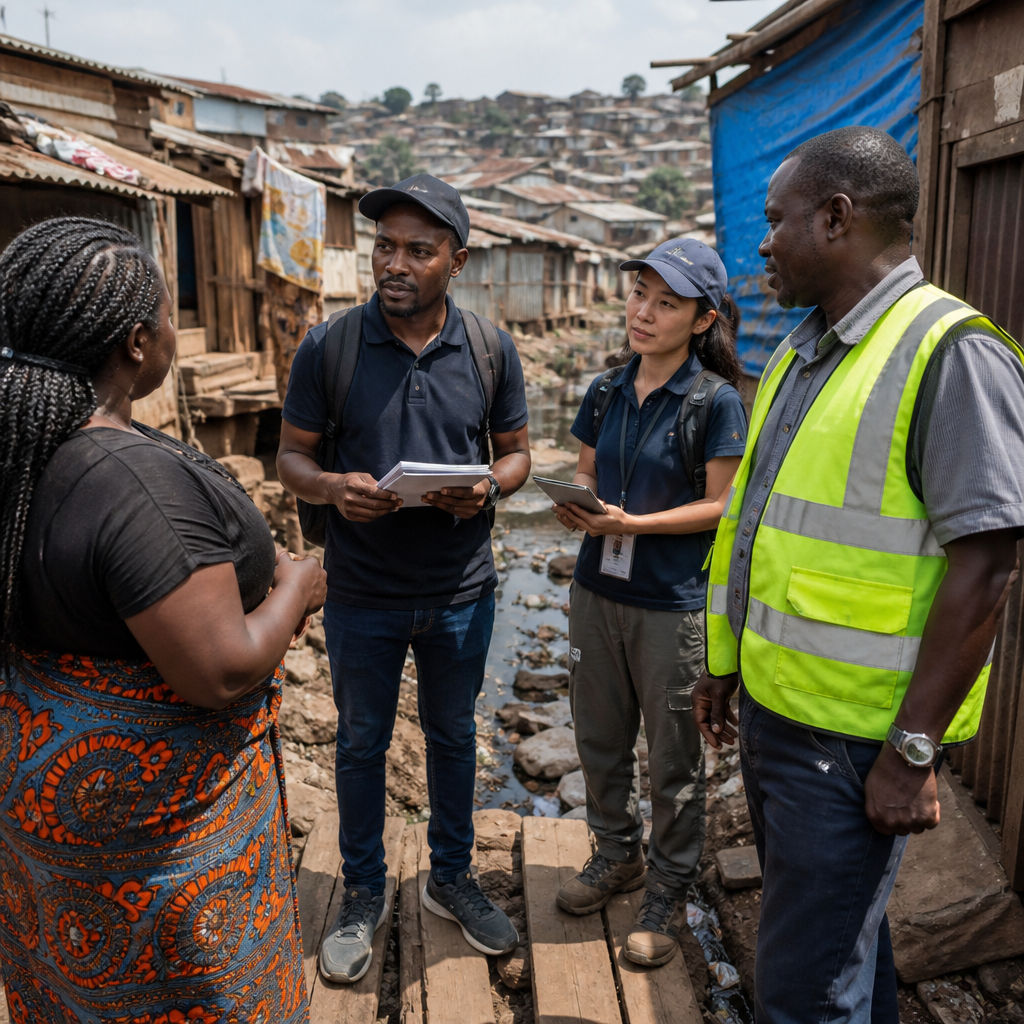
Ecological sanitation, often shortened to EcoSan, has moved from a niche technical concept to a strategic policy option within global sanitation debates. At its core, EcoSan treats human excreta and household wastewater not as waste to be discarded but as resources to be safely recovered, processed, and reused. In practice, that means sanitation systems designed to protect health while returning nutrients, organic matter, water, and sometimes energy to productive use. For policymakers, advocates, utilities, and development agencies, EcoSan matters because it sits at the intersection of public health, climate resilience, food security, circular economy policy, and urban service delivery.
When I have worked with sanitation planners and advocacy coalitions, the biggest misunderstanding has been the assumption that EcoSan is only about composting toilets in rural pilot projects. That is too narrow. The category includes urine-diverting dry toilets, container-based sanitation linked to off-site treatment, fecal sludge valorization into compost or fuel, blackwater source separation, and reuse frameworks for agriculture and landscaping. The unifying principle is resource-oriented sanitation with controlled risk management. This framing aligns closely with international guidance from the World Health Organization on sanitation safety planning and with the reuse principles promoted by UN agencies and the International Organization for Standardization.
The policy relevance is urgent. Billions of people still lack safely managed sanitation, and many sewer-centered strategies remain underfinanced, water-intensive, or technically unsuitable for dense informal settlements, water-scarce regions, flood-prone zones, and small secondary cities. At the same time, fertilizer markets are volatile, soils are degraded, and governments are under pressure to reduce emissions and build climate-adaptive infrastructure. EcoSan offers a way to respond to multiple policy objectives with one service logic: collect and treat excreta safely, recover value, reduce pollution, and strengthen local resilience. That does not make EcoSan universally superior to sewerage; it makes it a necessary option in the sanitation portfolio.
This article serves as a hub for global opportunities in sanitation by showing where EcoSan fits in the policy agenda, what advocates should emphasize, and which barriers must be handled honestly. It covers the international policy drivers, the strongest advocacy entry points, implementation models, financing opportunities, and the governance conditions that determine success. The core message is simple: EcoSan gains traction when it is presented not as an ideological alternative, but as a practical, standards-based response to service gaps and resource constraints.
Why EcoSan now belongs in mainstream global policy
EcoSan belongs in mainstream policy because the global sanitation conversation has changed. The older assumption that universal sewer expansion would solve urban sanitation has been challenged by cost, water demand, energy intensity, and the slow pace of network buildout in rapidly growing cities. The sector increasingly recognizes citywide inclusive sanitation, fecal sludge management, and non-sewered sanitation as legitimate public service pathways. Within that shift, EcoSan has become more relevant because it gives governments a structured way to connect sanitation investments with nutrient recovery, local agriculture, waste reduction, and climate adaptation.
The strongest policy hook is that EcoSan directly supports safe service delivery where conventional systems struggle. In flood-prone areas, sealed pits overflow and spread contamination. In water-scarce regions, flush systems can impose an unreasonable demand on limited supplies. In peri-urban settlements, sewer extension may take decades while households need immediate services. Resource-oriented systems can be deployed incrementally, often at lower capital cost, with treatment and reuse models adapted to local markets. Well-designed examples in South Africa, Uganda, Haiti, Sweden, and parts of India have shown that source separation and fecal sludge reuse can function when institutions define responsibilities clearly and monitor public health risks consistently.
EcoSan also maps well to broad government priorities beyond the sanitation ministry. Agriculture ministries care about phosphorus and nitrogen recovery. Climate ministries care about methane reduction, water efficiency, and resilient infrastructure. Urban development agencies care about affordable services for underserved neighborhoods. Public health agencies care about pathogen control and reduced environmental contamination. Effective advocacy succeeds when it uses this cross-sector value proposition. If EcoSan is framed only as a sanitation technology, it competes narrowly. If it is framed as infrastructure for circular resource management and inclusive service delivery, it attracts broader political support.
Policy windows advocates should target
Advocacy for EcoSan works best when tied to active policy windows rather than abstract awareness campaigns. The most important windows include national sanitation strategies, climate adaptation plans, nationally determined contributions under the Paris framework, circular economy roadmaps, fertilizer security discussions, drought planning, and urban upgrading programs. I have seen proposals stall when advocates approached sanitation departments alone; they moved faster when linked to cabinet-level priorities such as food system resilience or municipal climate finance.
At the global level, the most persuasive entry point remains the commitment to safely managed sanitation under Sustainable Development Goal 6. EcoSan can help close service gaps, especially where conventional sewerage is economically or physically unrealistic. Another strong opening comes from the SDG nexus across health, water, cities, responsible consumption, and climate action. Development banks and bilateral donors increasingly favor integrated programs that deliver co-benefits across sectors. EcoSan is particularly competitive in those funding environments because reuse creates measurable outcomes beyond toilet access.
Advocates should also pay attention to standard-setting and regulatory reform. Many countries still classify all excreta-derived products as waste, which blocks legitimate reuse markets even after treatment. Updating standards for treated urine, compost, biosolids, black soldier fly frass, or fuel briquettes can unlock investment. Here, the message must be disciplined: regulation should enable recovery only where treatment, testing, and traceability protect health and the environment. Credibility is won by emphasizing safeguards, not by downplaying risk.
Where EcoSan creates the strongest global opportunities
Global opportunities in sanitation are not evenly distributed. EcoSan has the strongest near-term potential in specific contexts where its advantages are structural rather than marginal. Water-stressed countries in the Middle East, North Africa, and parts of Southern Africa have a clear incentive to reduce flushing demand and recover nutrients. Flood-vulnerable delta cities and informal coastal settlements need sanitation systems that remain functional during inundation. Small cities across Sub-Saharan Africa and South Asia need affordable service chains that can scale before sewer networks arrive. Humanitarian and displacement settings also present opportunities for container-based and modular recovery systems where centralized infrastructure is absent.
There is also a major opportunity in agrifood policy. Global fertilizer prices spiked sharply after supply chain shocks and geopolitical disruption, exposing dependence on imported inputs. Human urine contains most of the nitrogen and a large share of the phosphorus and potassium excreted by households. With treatment and proper management, these nutrients can substitute for part of synthetic fertilizer demand. Farmers will not adopt reuse products because of ideals alone; they adopt when nutrient content is consistent, logistics are reliable, and regulations are clear. That is why successful EcoSan programs build market channels early rather than treating reuse as an afterthought.
Urban carbon policy creates another opening. Poorly managed pits, septic systems, and sludge disposal practices can generate methane and contaminate waterways. Recovery pathways such as composting, drying, co-composting with organic waste, and energy conversion can reduce uncontrolled emissions while producing usable outputs. The climate case must still be evidence-based, because the emissions profile depends on local conditions, transport, moisture content, and treatment performance. But where cities are already investing in organic waste diversion and decentralized treatment, EcoSan can strengthen the overall mitigation story.
| Opportunity area | Why it matters | Advocacy angle |
|---|---|---|
| Water scarcity | Reduces reliance on flush water and supports reuse planning | Position EcoSan as drought-resilient infrastructure |
| Food security | Recovers nitrogen, phosphorus, and organic matter for soils | Link sanitation budgets with fertilizer resilience |
| Informal urban growth | Provides non-sewered pathways for dense settlements | Frame EcoSan within inclusive citywide services |
| Climate adaptation | Improves service continuity in floods and fragile environments | Integrate into local adaptation and resilience plans |
| Circular economy | Turns excreta and organics into marketable products | Push for standards, procurement, and private investment |
What persuasive advocacy looks like in practice
Good EcoSan advocacy is specific, evidence-led, and institutionally literate. It does not begin by arguing that one toilet design should replace all others. It begins with a service problem, identifies the policy objective, and shows how a resource-oriented sanitation model can solve it. For example, in a secondary city with weak fecal sludge management and nearby agricultural demand, the case might center on reducing uncontrolled dumping while producing co-compost for peri-urban farmers. In a drought-prone district, the case might focus on source-separating systems that conserve water and create a regulated nutrient stream for tree crops.
Three messages consistently persuade decision-makers. First, EcoSan is a service chain, not a product. Containment, collection, transport, treatment, quality assurance, end-use, and monitoring all matter. Second, public health protection is non-negotiable. WHO sanitation safety planning provides a practical framework for identifying hazards and controls from toilet to reuse. Third, success depends on institutions and incentives as much as engineering. If no agency owns collection contracts, laboratory testing, tariff policy, or market development, the model will fail even if the hardware works.
Advocacy is strongest when backed by comparative cost and performance data. Governments need to know capital cost, operating cost, land requirements, user acceptance factors, and the revenue potential of recovered products. They also need realistic expectations. Resource recovery rarely covers all sanitation costs, especially in early stages. However, it can improve system economics, reduce disposal burdens, and create measurable external benefits. Honest advocates say this clearly. Overstating profitability is one of the fastest ways to lose policy credibility.
Implementation models and common barriers
Several implementation models are proving useful. One is municipal or utility-led non-sewered sanitation, where the public sector contracts containment, scheduled emptying, and treatment, then sells or distributes recovered products through licensed partners. Another is social enterprise-led container-based sanitation, often suited to dense settlements where pits are impractical. A third is hybrid management, combining household toilets, transfer logistics, fecal sludge treatment plants, and co-processing with solid organic waste. The right model depends on density, land, climate, labor markets, and state capacity.
Common barriers are well known and should be anticipated early. Social acceptance remains a challenge when users associate reuse with danger or stigma. That is why product quality, branding, and demonstration plots matter. Regulatory gaps often prevent safe products from entering formal markets. Municipal procurement rules may favor conventional infrastructure even where it performs poorly. Weak operation and maintenance can undermine user trust quickly, especially for urine diversion systems that require regular oversight. In my experience, projects succeed more often when they budget for behavior support, spare parts, operator training, and laboratory verification from day one.
Another barrier is fragmentation. Sanitation, agriculture, environment, water, and local government departments often work in silos. EcoSan spans all of them. A practical fix is to establish an interagency working group around a specific outcome, such as urban nutrient recovery or climate-resilient sanitation in informal settlements. Clear mandates beat broad memoranda. So do pilot programs with defined indicators: collection reliability, pathogen reduction, nutrient recovery, farmer uptake, and cost per household served.
How this hub connects the wider sanitation opportunity landscape
As a hub within global challenges and opportunities, this page should guide readers toward the broader sanitation opportunity landscape. EcoSan connects directly to financing for non-sewered sanitation, fecal sludge management reform, climate adaptation planning, nutrient circularity, water reuse, urban informal settlement upgrading, humanitarian sanitation, and agricultural input policy. Each of those areas deserves its own detailed treatment, but the strategic thread is consistent: sanitation systems create more policy value when they are assessed as public health infrastructure plus resource infrastructure.
For practitioners building a content or advocacy roadmap, the next questions are straightforward. Which countries have enabling reuse regulations? Which business models have reached operational scale? How should municipalities compare sewer expansion with decentralized alternatives? What quality standards govern treated excreta-derived products? How can carbon, resilience, or blended finance support projects? Those are the linked subtopics that naturally sit beneath this hub because they convert the central thesis into decision-ready analysis.
EcoSan deserves a stronger place in the global policy agenda because it answers a real governance problem: how to deliver safe sanitation under conditions of water stress, fiscal limits, climate pressure, and rapid urbanization. Its value is not theoretical. When designed around complete service chains, health safeguards, and credible end-use markets, it can expand access, reduce pollution, conserve water, and recover nutrients that would otherwise be lost. That combination makes EcoSan one of the clearest global opportunities in sanitation.
For advocates, the practical lesson is to lead with policy fit. Match EcoSan to national development priorities, city service gaps, agricultural demand, and climate commitments. Use recognized standards, document costs honestly, and show how institutions will manage risk from containment to reuse. If you are building a sanitation strategy, funding proposal, or policy campaign, treat this hub as the starting point, then map the subtopics that matter most in your context. The opportunity is real, but it becomes persuasive only when translated into evidence, regulation, and operational delivery.
Frequently Asked Questions
1. What is EcoSan, and why is it becoming more important in the global policy agenda?
Ecological sanitation, or EcoSan, is an approach to sanitation that views human excreta and household wastewater as resources that can be safely recovered, treated, and reused rather than simply disposed of. Instead of focusing only on waste removal, EcoSan systems are designed to protect public health while also recovering valuable outputs such as nutrients, organic matter, water, and in some cases energy. This makes EcoSan especially relevant in a world facing overlapping pressures related to water scarcity, soil degradation, food security, climate resilience, and the high costs of conventional sanitation infrastructure.
Its growing policy relevance comes from the fact that EcoSan aligns with several major international development priorities at once. It supports safe sanitation access, contributes to circular economy goals, reduces pollution of water bodies, and can help strengthen local agricultural systems through nutrient recycling. Policymakers are increasingly interested in solutions that deliver multiple benefits across sectors, and EcoSan fits that need well. Rather than being treated as a narrow technical niche, it is now being discussed as part of broader policy conversations around sustainable cities, resource recovery, climate adaptation, and resilient public services.
For advocates, this shift creates a major opportunity. EcoSan can be positioned not only as a sanitation option, but as a practical strategy that supports public health, environmental protection, and economic efficiency. That broader framing is one reason it is gaining traction in national planning discussions, donor agendas, and international forums focused on sustainable development.
2. How does EcoSan support broader global goals such as climate action, food security, and the circular economy?
EcoSan supports global goals by transforming sanitation from a linear system of use and disposal into a circular system of recovery and reuse. In conventional sanitation models, valuable nutrients and water are often lost, while treatment systems can consume large amounts of energy and infrastructure investment. EcoSan, by contrast, aims to capture and process those materials safely so they can return to productive use. This directly supports circular economy thinking by keeping resources in use for as long as possible and reducing dependence on virgin inputs such as synthetic fertilizers.
In terms of food security, EcoSan can help recover nutrients like nitrogen, phosphorus, and potassium that are essential for crop production. These nutrients are finite and increasingly expensive in many contexts. Where treatment and safety protocols are robust, recovered products can improve soil fertility, strengthen local agricultural productivity, and reduce pressure on imported agricultural inputs. This is particularly important in regions where farmers face degraded soils, rising fertilizer prices, or unreliable supply chains.
EcoSan also has strong links to climate action. Resource recovery can reduce greenhouse gas emissions associated with wastewater mismanagement, uncontrolled decomposition, and the manufacturing of synthetic fertilizers. In some systems, biogas generation adds an energy benefit as well. Additionally, decentralized EcoSan models can improve resilience in climate-vulnerable areas where centralized sewer networks are too costly, too fragile, or impractical to expand. By combining sanitation, resource efficiency, and resilience, EcoSan provides policymakers with a compelling example of how one intervention can advance multiple global commitments at the same time.
3. What are the main policy opportunities for advocates who want to advance EcoSan?
One of the biggest opportunities for EcoSan advocacy is to connect it to policy priorities that governments and institutions already care about. Advocacy is often most effective when EcoSan is not presented as a standalone idea, but as a solution that helps achieve targets in sanitation, health, water management, agriculture, climate adaptation, urban development, and resource recovery. This means advocates should look for entry points in national sanitation strategies, wastewater regulations, circular economy roadmaps, climate plans, and food system policies.
Another major opportunity lies in influencing standards and regulatory frameworks. Many countries still have policies designed around conventional sewered systems and end-of-pipe treatment, which can make it difficult for EcoSan models to gain formal recognition. Advocates can push for updated regulations that define safe reuse pathways, quality standards for recovered products, risk management protocols, and clear institutional roles. Without this enabling environment, even technically sound EcoSan projects may struggle to scale.
There is also an opportunity to shape financing and procurement discussions. Governments and donors increasingly want solutions that are cost-effective, scalable, and sustainable over the long term. Advocates can make a strong case for pilot programs, inclusion in public investment plans, and performance-based funding models that account for environmental and resource recovery benefits, not just toilet coverage or wastewater conveyance. In short, EcoSan advocacy works best when it bridges sectors, uses evidence strategically, and translates technical concepts into policy language that decision-makers can act on.
4. What challenges can limit EcoSan adoption in policy and practice, and how can advocates respond?
Despite its promise, EcoSan still faces several barriers that can slow adoption. One of the most common is perception. In many settings, human excreta are viewed only as waste and contamination risks, so the idea of reuse can trigger discomfort or resistance among the public, officials, and even technical professionals. This is not simply a communications problem; it is also a policy and trust issue. Decision-makers need assurance that EcoSan systems can be managed safely, consistently, and at scale.
Institutional fragmentation is another challenge. EcoSan sits at the intersection of sanitation, water, public health, agriculture, and environmental regulation, which means responsibility is often spread across multiple ministries and agencies. When no single institution owns the issue, progress can stall. In addition, outdated laws, weak standards for treated outputs, limited technical capacity, and insufficient monitoring systems can create uncertainty for both public authorities and private operators.
Advocates can respond by grounding their case in evidence, safety, and practical implementation. Demonstration projects with strong monitoring data are especially valuable because they show that EcoSan can work under real conditions. It also helps to frame EcoSan as a risk-managed system, not as an informal reuse practice. Clear messaging around treatment standards, pathogen reduction, operational accountability, and user education can build confidence. Finally, coalition-building is essential. When public health experts, farmers, urban planners, environmental agencies, and community organizations support a common agenda, EcoSan becomes much harder to dismiss as a fringe concept and much easier to integrate into mainstream policy discussions.
5. What makes an effective advocacy strategy for putting EcoSan higher on the global and national policy agenda?
An effective EcoSan advocacy strategy starts with message discipline and policy relevance. Different audiences respond to different benefits, so advocates should tailor their framing carefully. Health ministries may respond most strongly to disease prevention and safe waste management. Agriculture ministries may focus on nutrient recovery and soil health. Climate and environment agencies may be persuaded by resilience, pollution reduction, and circular economy outcomes. The strongest strategies do not rely on one universal message; they build a portfolio of arguments linked to the priorities of each stakeholder group.
Evidence is the second critical element. Policymakers rarely act on principle alone; they need data, case studies, and practical examples. Advocates should be ready to present comparative cost information, health safeguards, operational lessons, and measurable outcomes from successful EcoSan initiatives. It is especially helpful to show how EcoSan performs in contexts where conventional systems are financially or geographically difficult to implement. This moves the conversation from theory to policy feasibility.
Finally, effective advocacy depends on timing, partnerships, and persistence. EcoSan gains traction when it is inserted into real policy moments such as sanitation strategy revisions, climate plan updates, urban resilience initiatives, agricultural input reforms, or donor funding cycles. Building alliances with researchers, civil society groups, utilities, farmers’ organizations, and development partners can amplify credibility and reach. The overall goal is to position EcoSan not as a niche alternative for special cases, but as a legitimate policy option within the wider transition toward safer, more resilient, and more resource-efficient sanitation systems.