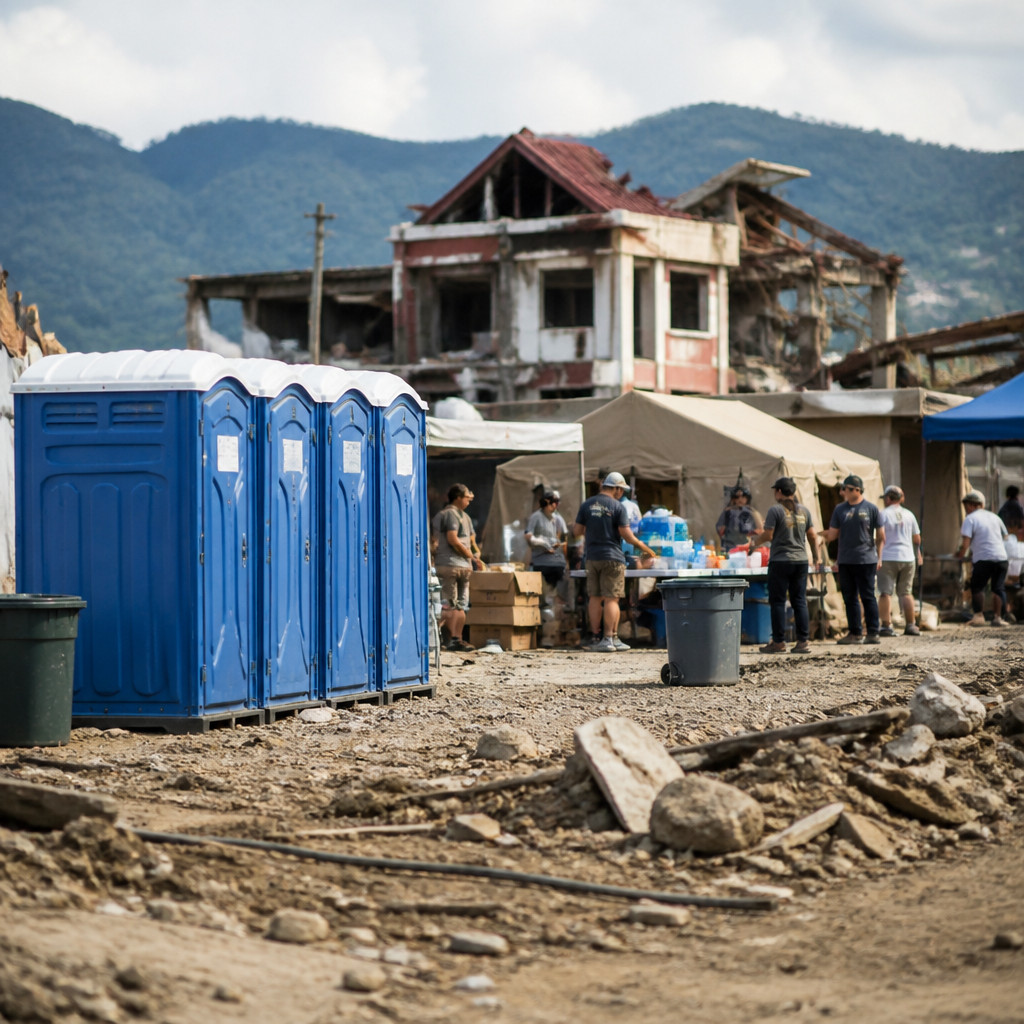
Advancements in stormwater management technologies are reshaping how cities, utilities, and researchers approach sanitation, public health, and water resilience. In practice, stormwater management technologies include the tools, engineered systems, monitoring platforms, and treatment methods used to control runoff quantity, improve water quality, and protect sanitation infrastructure during rainfall. Advancing research in sanitation sits at the center of this work because unmanaged runoff carries pathogens, nutrients, heavy metals, hydrocarbons, microplastics, and sediment into drains, sewers, rivers, and coastal waters. I have worked on projects where one intense storm overwhelmed aging combined sewers in under an hour, forcing utilities to choose between basement backups, treatment bypasses, and emergency pumping. That experience makes one point clear: stormwater is not only a drainage issue. It is a sanitation issue, an environmental compliance issue, and increasingly a climate adaptation issue.
The topic matters because rainfall patterns are changing, urban land is becoming more impervious, and regulators are demanding better water quality outcomes with tighter budgets. Traditional gray infrastructure such as pipes, culverts, detention vaults, and storage tunnels still matters, but it is no longer enough on its own. Modern stormwater innovation combines field sensors, hydrologic modeling, decentralized treatment, green infrastructure, smart controls, and material science. In sanitation research, these technologies help reduce combined sewer overflows, improve wastewater treatment performance, protect informal settlements from contaminated flooding, and support water reuse. This hub article explains the core technologies, the science behind them, and the research directions that are defining the next generation of stormwater management. It also provides a clear foundation for deeper articles on monitoring, treatment, urban design, and sanitation system resilience.
Why Stormwater Innovation Matters for Sanitation Research
Stormwater affects sanitation through several direct pathways. First, runoff can infiltrate sewer networks through cracked pipes, failed manholes, and illegal connections, increasing influent volumes at wastewater treatment plants. Second, in combined sewer systems, stormwater and sewage share the same pipes, so excess flow can trigger combined sewer overflows that discharge untreated waste. Third, flooding can spread fecal contamination from pit latrines, septic systems, and poorly contained sludge handling sites. Fourth, stormwater can wash pollutants into surface waters used for drinking water abstraction or recreational use, increasing treatment burden and public health risk.
Research has become more sophisticated because practitioners now measure stormwater not just in terms of peak flow, but also event mean concentration, first flush effects, pathogen load, nutrient mass balance, and recovery time after storms. The U.S. Environmental Protection Agency, the European Environment Agency, and the International Water Association have all emphasized integrated urban water management, where drainage and sanitation are planned together rather than in separate silos. In practical terms, that means a stormwater project is judged not only by whether it drains a street, but whether it reduces overflows, improves receiving water quality, and makes treatment plants more stable during wet weather.
Smart Monitoring and Real-Time Control Systems
One of the biggest advances in stormwater management technologies is the move from static infrastructure to monitored, adaptive systems. Low-power Internet of Things sensors now track rainfall, water level, flow rate, conductivity, turbidity, dissolved oxygen, and even surrogate indicators for contamination in near real time. Utilities place ultrasonic level sensors in manholes, pressure transducers in storage tanks, and rain gauges across catchments to build a live picture of system conditions. These data streams feed supervisory control and data acquisition platforms, digital dashboards, and hydraulic models such as EPA SWMM or InfoWorks ICM.
Real-time control uses that data to actively manage networks. Gates, weirs, pumps, and valves can be adjusted automatically to route flow toward available storage or treatment capacity before a bottleneck forms. I have seen this approach recover substantial capacity from existing assets without building a new tunnel, simply by changing the timing of releases between upstream detention and downstream conveyance. Cities including Cincinnati, South Bend, and Barcelona have used smart sewer and stormwater controls to reduce overflow frequency and improve operational efficiency. The research frontier now includes machine learning for rainfall prediction, anomaly detection for sensor drift, and decision support systems that optimize both flood prevention and water quality outcomes.
Green Infrastructure and Nature-Based Treatment
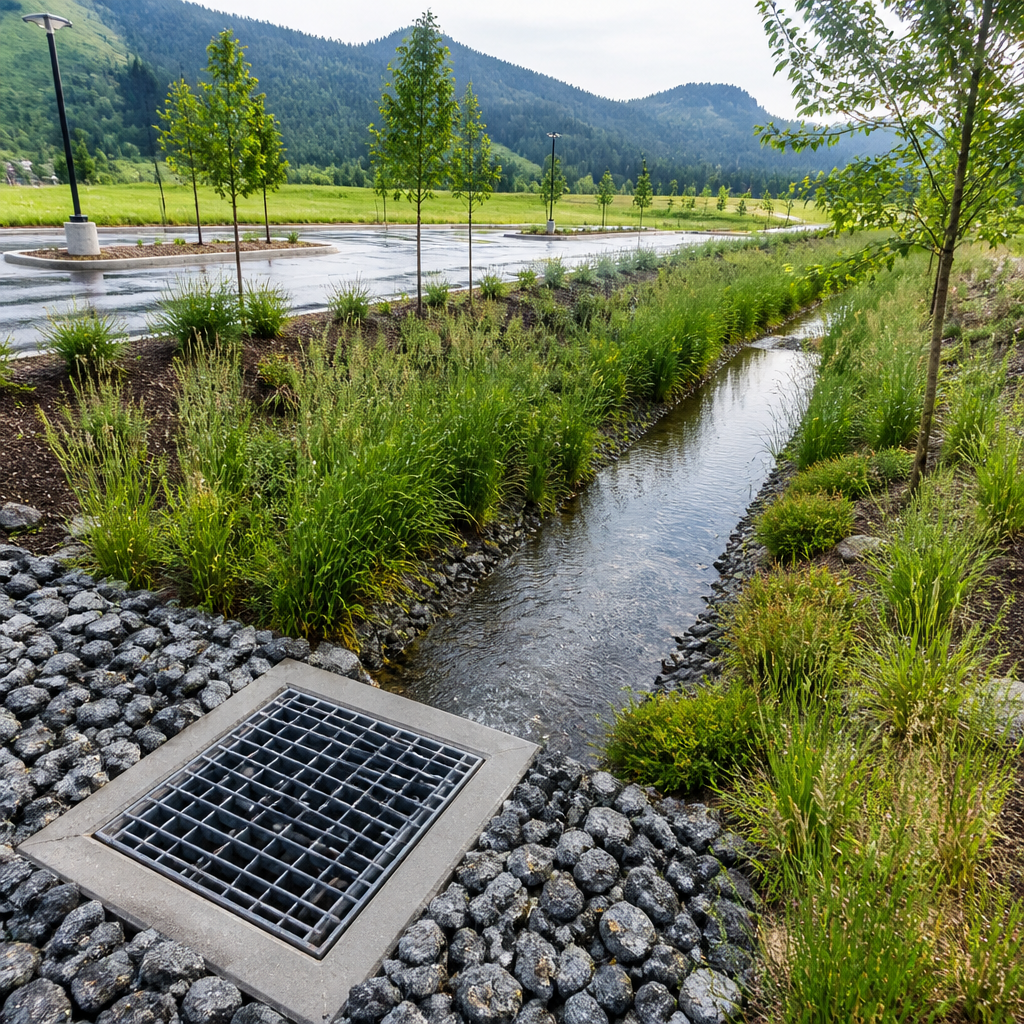
Green infrastructure has moved from pilot landscaping to mainstream stormwater engineering. Bioretention cells, bioswales, permeable pavements, green roofs, infiltration trenches, urban wetlands, and regenerative stormwater conveyance systems slow runoff, encourage infiltration, and filter pollutants close to where rain falls. For sanitation research, their value goes beyond flood mitigation. They reduce the hydraulic stress that causes sewer overflows, and they remove contaminants before those pollutants reach drains and receiving waters.
Bioretention media can capture suspended solids, phosphorus, zinc, copper, and some hydrocarbons through filtration, sorption, and plant uptake. Permeable pavement reduces runoff volume while also improving the timing of discharge, which matters in dense urban catchments where short, sharp hydrographs create downstream surges. Green roofs can reduce annual runoff while lowering roof temperatures and extending membrane life. Constructed wetlands provide additional retention and biological treatment, particularly for nutrients and fine particulates. The limitation is that performance depends on design, maintenance, local soils, and climate. A bioswale clogged with sediment or a bioretention cell with poor underdrain design will underperform quickly. That is why current research focuses on media composition, cold-weather function, long-term pollutant accumulation, and maintenance optimization.
Advanced Treatment for Urban Runoff Quality
Not all sites can infiltrate stormwater safely, and not all pollutants are well handled by standard green infrastructure. This has driven growth in advanced stormwater treatment technologies. Hydrodynamic separators remove grit and floatables through vortex action. High-rate media filters target finer particles and associated metals. Membrane systems, though more energy intensive, are increasingly studied for industrial stormwater and water reuse applications. Adsorptive media including activated carbon, biochar, zeolite, and iron-enhanced sand are being tested for nutrients, organic micropollutants, and dissolved metals.
Pathogen management is especially important where stormwater mixes with sewage or where floodwater affects sanitation systems. Researchers evaluate ultraviolet disinfection, electrochemical treatment, and decentralized package systems for contaminated wet-weather flows. In coastal cities, salinity spikes can complicate treatment chemistry and biological performance, so design has to consider local source waters. The best treatment train depends on pollutant profile, hydraulic variability, and maintenance capacity. In my experience, systems fail less often because of weak technology than because the selected technology did not match sediment load, cleaning frequency, or operator skill. Good stormwater treatment design starts with representative monitoring and realistic operations planning.
Modeling, Forecasting, and Digital Twins
Hydrologic and hydraulic modeling has become essential to advancing research in sanitation. EPA SWMM remains a foundational platform for urban runoff simulation, while MIKE Urban, HEC-HMS, HEC-RAS, and InfoWorks ICM support increasingly detailed analysis of catchments, drainage structures, rivers, and sewer interactions. Researchers use these tools to estimate peak discharge, overflow risk, pollutant buildup and washoff, infiltration and inflow, and the performance of proposed interventions under historic and future storms.
Digital twins are the next step. A digital twin combines a calibrated model with live sensor data, asset information, weather forecasts, and operational controls to represent a system in near real time. Instead of planning around average conditions, utilities can test what happens if a pump fails during a one-in-ten-year storm, if a wetland storage cell is offline for maintenance, or if a treatment plant reaches hydraulic limit two hours earlier than expected. This has major sanitation implications because it improves preparedness for overflow events and helps operators protect critical facilities. Strong models require strong data, however. Calibration, uncertainty analysis, and validation against observed events are nonnegotiable if a model is going to support capital decisions.
Core Technology Areas and Research Priorities
The current hub of stormwater and sanitation innovation can be organized into a few practical categories. Each one answers a specific operational question, and together they form the basis for subtopic research, pilot programs, and infrastructure investment. Teams that structure research this way tend to make better decisions because they connect field evidence with design standards, operations, and public health outcomes.
| Technology area | Main purpose | Sanitation benefit | Common tools or methods |
|---|---|---|---|
| Monitoring and sensing | Measure rainfall, depth, flow, and water quality | Early warning for overflows and contamination | IoT sensors, SCADA, telemetry, autosamplers |
| Source control | Reduce runoff near where it forms | Lower sewer loading and pollutant entry | Green roofs, permeable pavement, rain gardens |
| Treatment systems | Remove solids, nutrients, metals, and pathogens | Cleaner discharges and safer reuse options | Filters, separators, wetlands, UV, sorbent media |
| Modeling and analytics | Predict system behavior and optimize design | Better planning for wet-weather sanitation risks | SWMM, InfoWorks ICM, digital twins, AI forecasting |
| Asset management | Maintain performance over time | Fewer failures during storms | Inspection programs, condition scoring, CMMS |
Research priorities are shifting toward performance under extremes rather than average annual values alone. Utilities now ask how quickly a system recovers after a back-to-back storm sequence, whether sensors remain reliable during debris loading, and how treatment media behaves after years of metal accumulation. Another priority is equity. Flooding and sanitation failures often hit low-income neighborhoods hardest, especially where drainage is undersized or informal sanitation is common. Better technology is valuable only if it can be maintained affordably and deployed at the scale where risk is highest.
Materials Science, Decentralization, and Water Reuse
Materials science is quietly driving major gains in stormwater management technologies. New permeable concrete and asphalt mixes improve structural performance while maintaining infiltration. Geotextiles and geocellular storage systems enable modular underground detention in space-constrained sites. Reactive filter media are being engineered to target phosphorus, ammonia, or dissolved metals more selectively than conventional sand filters. Biochar, especially when modified chemically, has shown promise for adsorbing organic compounds and supporting microbial communities that enhance treatment.
Decentralized systems are also changing the sanitation research landscape. Instead of relying entirely on one large downstream facility, campuses, industrial parks, transport hubs, and housing developments increasingly manage runoff and partial treatment on site. That can include rainwater harvesting, localized polishing treatment, and controlled release systems that reduce burden on municipal sewers. In water-scarce regions, stormwater capture is now linked to nonpotable reuse for irrigation, toilet flushing, and industrial processes. The tradeoff is that decentralized assets require distributed maintenance and clear ownership. Without that governance layer, performance declines even when the engineering is sound.
Implementation Challenges, Standards, and What Comes Next
The future of stormwater innovation depends as much on implementation as on invention. Capital cost, land availability, fragmented jurisdiction, utility silos, and maintenance funding remain the main barriers. Codes and standards help reduce uncertainty. Many designers rely on manuals from agencies such as the EPA, CIRIA, state environmental departments, and local stormwater design guides. Water quality trading frameworks, total maximum daily load requirements, and municipal separate storm sewer permit conditions are also shaping investment decisions. The strongest programs connect research, pilots, and long-term monitoring so that lessons from one catchment improve the next one.
Looking ahead, the field is moving toward integrated sanitation resilience. Expect wider use of ensemble weather forecasting, edge computing for remote controls, low-cost microbial sensing, and catchment-scale optimization that coordinates stormwater, wastewater, and receiving water management together. The main takeaway is simple: advancements in stormwater management technologies are essential to advancing research in sanitation because they reduce contamination, protect infrastructure, and make urban water systems more adaptable under climate pressure. If you are building a research agenda or planning the next article in this hub, start with monitoring, treatment performance, and maintenance realities, then link every technology choice back to measurable sanitation outcomes.
Frequently Asked Questions
1. What are stormwater management technologies, and why are they becoming so important?
Stormwater management technologies are the systems, tools, and treatment approaches used to capture, move, monitor, store, and clean rainwater runoff before it overwhelms drainage networks or contaminates surrounding land and water bodies. These technologies range from traditional infrastructure such as detention basins, culverts, and underground pipes to newer solutions like permeable pavement, bioswales, green roofs, smart sensors, real-time control systems, and decentralized treatment units. Their purpose is not only to reduce flooding, but also to improve water quality, protect sanitation assets, and strengthen the resilience of communities facing more intense rainfall and rapid urbanization.
They are becoming more important because stormwater is no longer viewed as only a drainage issue. In many cities, unmanaged runoff carries sediment, nutrients, trash, pathogens, hydrocarbons, and other pollutants into rivers, lakes, and coastal waters. It can also overload combined or aging sewer systems, increasing the risk of backups, service interruptions, and public health hazards. As climate variability drives more frequent extreme weather events, conventional drainage systems are often insufficient on their own. Advances in stormwater management technologies help utilities and municipalities respond more precisely by combining engineered controls, nature-based solutions, and digital monitoring to manage both water quantity and water quality in a more adaptive way.
2. How are new stormwater technologies improving sanitation and public health outcomes?
Modern stormwater technologies are improving sanitation and public health by addressing one of the main pathways through which contaminants spread during and after rainfall events. When runoff flows across streets, industrial sites, informal waste disposal areas, and damaged sanitation infrastructure, it can pick up harmful microorganisms, chemical pollutants, and organic waste. If that runoff enters open drains, waterways, or overwhelmed sewer systems without treatment, it increases human exposure risks through direct contact, contaminated water supplies, and environmental degradation. New technologies help interrupt that chain.
For example, monitoring platforms equipped with flow meters, water quality sensors, and remote communications allow operators to detect surges, identify contamination hotspots, and respond faster during storms. Distributed treatment systems, sediment capture devices, filtration media, and retention-based designs can remove pollutants before runoff reaches receiving waters. Green infrastructure such as rain gardens and constructed wetlands can slow runoff, encourage infiltration, and support biological treatment processes. In areas with vulnerable sanitation networks, these systems also reduce pressure on pipes, pumping stations, and treatment facilities, lowering the chance of overflow events. The result is a more preventive public health strategy that combines drainage management with pathogen control, environmental protection, and stronger service reliability.
3. What role do smart monitoring and data-driven systems play in advanced stormwater management?
Smart monitoring and data-driven control are among the most significant developments in stormwater management because they shift systems from being mostly reactive to increasingly predictive and adaptive. Traditional networks often rely on fixed designs and periodic inspections, which can leave operators with limited visibility into how runoff behaves during actual storm events. Today, sensor networks can track rainfall intensity, water level, flow velocity, storage capacity, turbidity, conductivity, and even indicators of contamination in near real time. This information gives utilities and city managers a much clearer picture of system performance under changing conditions.
When paired with modeling software, geographic information systems, and automated controls, these data streams can support real-time decision-making. Gates, pumps, valves, and storage assets can be managed dynamically to reduce localized flooding, balance flows across the network, and prevent overloading at critical sanitation points. Predictive analytics can also help identify where maintenance is needed before failures occur, improving asset management and reducing costs over time. Beyond operations, data-driven systems support long-term planning by helping engineers understand which interventions deliver the greatest benefit for resilience, pollution reduction, and public health protection. In short, digital technologies are making stormwater systems more efficient, measurable, and responsive.
4. How do green infrastructure and nature-based solutions compare with conventional stormwater systems?
Green infrastructure and nature-based solutions differ from conventional stormwater systems in both function and philosophy, although the most effective strategies often combine both. Conventional systems are typically designed to move runoff away quickly through pipes, channels, and storage structures. These assets remain essential, especially in dense urban settings and during extreme rainfall, because they provide reliable conveyance and flood control capacity. However, conventional systems alone may do less to address water quality, groundwater recharge, urban heat, or ecosystem health unless they are paired with treatment and retention measures.
Nature-based approaches such as bioswales, permeable surfaces, green roofs, infiltration trenches, rainwater harvesting systems, and constructed wetlands aim to manage runoff closer to where it falls. They slow water down, reduce peak flows, promote infiltration, and remove pollutants through physical, chemical, and biological processes. These solutions can also provide co-benefits such as improved streetscapes, cooler urban microclimates, habitat creation, and reduced stress on downstream infrastructure. That said, they are not always a complete replacement for engineered drainage, particularly in constrained sites, low-infiltration soils, or areas with high contaminant loads. The strongest stormwater strategies usually integrate gray and green infrastructure so that cities can achieve flood protection, sanitation resilience, and environmental improvement at the same time.
5. What challenges still need to be addressed to advance stormwater management technologies further?
Despite major progress, several challenges still affect the wider adoption and performance of advanced stormwater management technologies. One of the biggest is financing. Many municipalities and utilities face budget limitations, aging infrastructure demands, and competing public service priorities, making it difficult to invest in new systems even when long-term benefits are clear. There are also technical and operational hurdles, including data integration across agencies, maintenance requirements for distributed green infrastructure, and the need to calibrate technologies for local climate, soil, land use, and sanitation conditions.
Another challenge is governance. Stormwater often sits at the intersection of drainage, sanitation, environmental protection, transportation, and land-use planning, which means responsibilities can be fragmented across multiple departments or institutions. Without coordination, even strong technologies may underperform. Equity is also an important issue. Flooding and poor drainage often affect lower-income communities most severely, so advancements must be deployed in ways that improve service access and public health outcomes where needs are greatest. Finally, research remains essential. As climate risks intensify and urban systems become more complex, the field needs better pathogen tracking, more resilient treatment materials, improved performance monitoring, and stronger evidence on what works under different real-world conditions. Continued innovation, supported by policy, funding, and cross-sector collaboration, will determine how effectively stormwater technologies can protect sanitation systems and build healthier, more resilient cities.