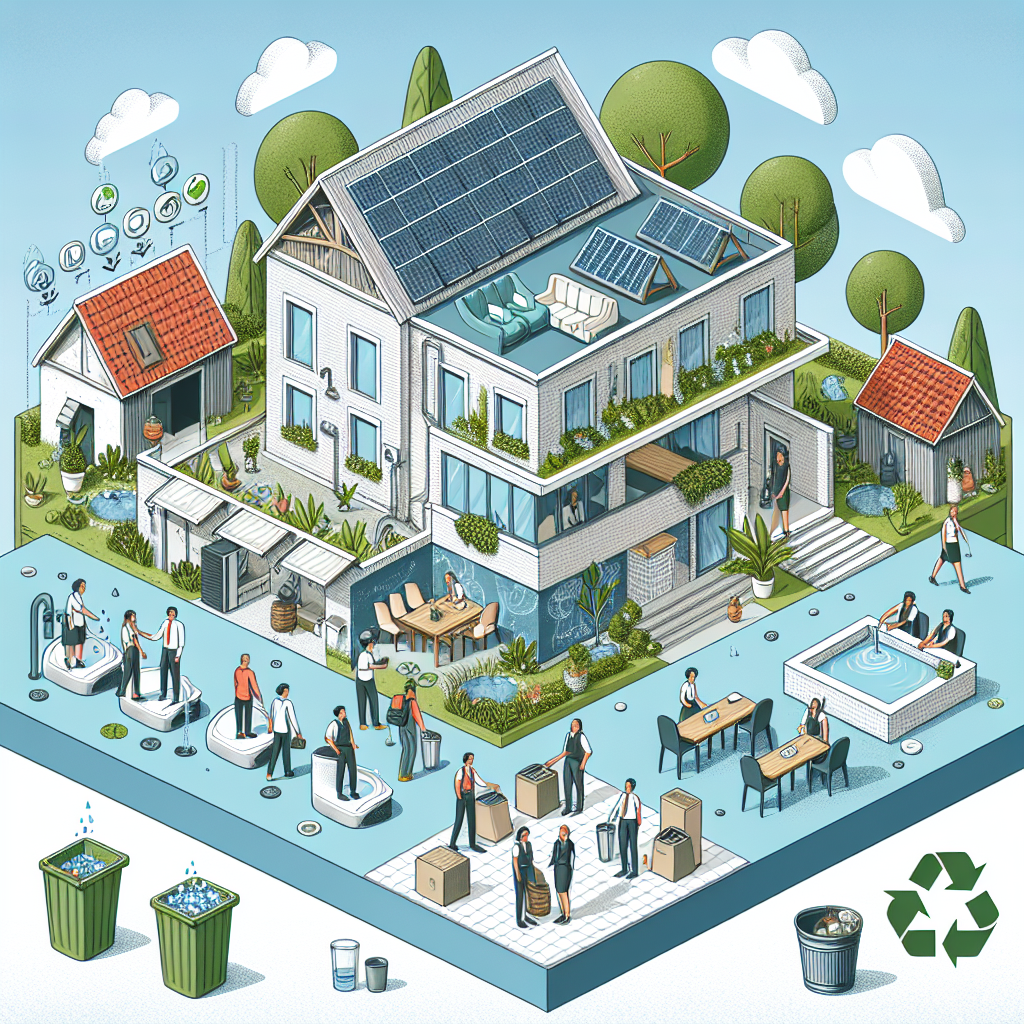
In our quest for sustainable living, finding innovative solutions to everyday problems is vital. One such problem that continues to challenge us is the effective management of human waste. Traditional sanitation systems often lead to environmental contamination, high resource usage, and health hazards. However, Ecological Sanitation, or EcoSan, offers a revolutionary approach to human waste management by transforming waste into valuable resources, thereby creating a sustainable loop.
Ecological Sanitation is based on the principles of closing the nutrient and water loops, minimizing pollution, and promoting cost-effective, safe, and sustainable sanitation practices. EcoSan does this by treating human excreta as a resource rather than waste. EcoSan aims to recover and reuse nutrients, organic matter, and water contained within human waste.
This article delves into the principles and concepts behind EcoSan, from understanding the fundamental theories to exploring practical implementations. By embracing EcoSan principles, communities can transition from traditional waste systems to more sustainable and beneficial sanitation methods. This shift not only addresses environmental concerns but also offers economic and health benefits by turning human waste into valuable resources.
Let’s explore further how EcoSan is not just a sanitation method but a holistic approach to sustainable living.
The Principles of Ecological Sanitation
EcoSan is grounded in several core principles that guide its application and effectiveness:
1. Resource Recovery
At the heart of EcoSan is the principle of resource recovery. Instead of viewing human waste as a nuisance, EcoSan treats it as a valuable resource rich in nutrients. These nutrients can be extracted and used in agriculture, reducing the demand for synthetic fertilizers and returning essential elements to the soil.
2. Pollution Prevention
EcoSan aims to minimise environmental pollution by treating and managing waste in ways that prevent contamination of water sources, soil, and the atmosphere. By capturing and processing waste on-site, EcoSan systems ensure that harmful pathogens and pollutants do not enter the ecosystem.
3. Health Protection
A critical aspect of EcoSan is protecting public health. Properly designed and managed EcoSan systems reduce the risk of pathogen transmission and prevent the spread of waterborne diseases, thus contributing to a healthier community.
4. Sustainability
EcoSan promotes sustainability by developing technologies and practices that are economically viable, socially acceptable, and environmentally friendly. This makes EcoSan an ideal choice for both urban and rural settings, especially in areas facing water scarcity and limited infrastructure.

EcoSan Techniques and Technologies
Implementing EcoSan principles requires a range of techniques and technologies tailored to the specific needs and conditions of a community. Here are some of the most widely used EcoSan technologies:
1. Urine Diversion Dehydration Toilets (UDDTs)
UDDTs separate urine and faeces at the source. Urine, which is nutrient-rich and pathogen-free, can be used as a fertiliser after minimal treatment. Faeces, on the other hand, are processed separately, often through dehydration or composting, to eliminate pathogens before use as a soil conditioner.
2. Composting Toilets
Composting toilets treat human waste through aerobic decomposition, turning it into fertile compost over time. These toilets are especially useful in areas without a sewer system, providing a sanitary solution that also enriches the soil.
3. Bio-Digestion Systems
Bio-digestion systems use anaerobic digestion to break down organic waste, producing biogas and nutrient-rich slurry. The biogas can be used for cooking or electricity, while the slurry serves as an excellent organic fertilizer.
4. Constructed Wetlands
Constructed wetlands are engineered systems that mimic natural wetlands to treat waste effluent. They use plants and microorganisms to filter and clean wastewater, ensuring that the water can be safely returned to the environment or reused.
Benefits of Implementing EcoSan Systems
The benefits of adopting EcoSan systems extend beyond mere waste management. Here are some significant advantages:
1. Environmental Protection
Reducing the contamination of water bodies and soil through effective waste treatment protects ecosystems and promotes biodiversity.
2. Resource Efficiency
By recovering nutrients and water from human waste, EcoSan systems reduce the need for synthetic fertilizers and freshwater resources, promoting more efficient resource use.
3. Economic Savings
Decreasing the dependency on external water and fertilizer sources can result in substantial cost savings for communities. Additionally, by producing biogas, communities can reduce energy costs.
4. Improved Public Health
Well-designed and managed EcoSan systems reduce the risk of waterborne diseases and pathogen transmission, resulting in a healthier community.
Case Studies: Successful EcoSan Implementations
Examining real-world examples can provide valuable insights into the practical applications of EcoSan principles.
1. Niger
In Niger, UDDTs have been successfully implemented in rural areas, providing a sustainable solution for sanitation. The diverted urine is used to improve crop yields, while the composted faeces enhance soil fertility.
2. India
Several villages in India have adopted bio-digestion systems that convert human waste into biogas and fertiliser. These systems have significantly improved sanitation, reduced reliance on chemical fertilizers, and provided clean energy for cooking and electricity.
3. Kenya
In urban slums of Kenya, composting toilets have become valuable not only for sanitation but also for generating income. Community groups manage these toilets, selling the compost produced to local farmers.
4. Germany
In Germany, constructed wetlands are widely used for wastewater treatment in rural areas. These systems efficiently treat household effluents, protecting local water bodies and providing opportunities for water reuse.
Challenges and Solutions in EcoSan Implementation
While EcoSan offers numerous benefits, its implementation is not without challenges.
1. Cultural Acceptance
One of the main challenges is the cultural perception of human waste. Addressing taboos and fostering acceptance through education and community engagement is crucial for successful EcoSan adoption.
2. Technical Expertise
Implementing EcoSan systems requires technical knowledge and expertise. Providing training and capacity building for local communities and stakeholders can address this barrier.
3. Financial Constraints
Initial costs for EcoSan systems can be high. However, demonstrating the long-term cost savings and seeking funding or subsidies from government and non-government organisations can help overcome financial barriers.
4. Maintenance and Management
Maintaining and managing EcoSan systems can be challenging, especially in resource-constrained settings. Developing robust maintenance plans and engaging local communities in system management can ensure sustainability.
Future Perspectives of EcoSan
The future of EcoSan looks promising as global awareness about sustainability and environmental protection continues to grow.
1. Technological Advancements
Innovations in sanitation technology, such as advanced composting toilets and more efficient bio-digestion systems, will make EcoSan even more accessible and effective.
2. Policy Support
Strong policy support from governments and international organisations can drive the widespread adoption of EcoSan principles by providing funding, technical assistance, and regulatory frameworks.
3. Integrated Water Management
Integrating EcoSan with broader water management strategies can optimise resource use and enhance overall sustainability.
4. Global Collaboration
Collaboration between communities, governments, and organisations worldwide can facilitate knowledge sharing, capacity building, and innovations in EcoSan practices.
Conclusion
EcoSan represents a paradigm shift in how we perceive and manage human waste. By viewing waste as a resource, EcoSan systems not only address sanitation challenges but also contribute to environmental protection, resource efficiency, economic savings, and improved public health. The principles of resource recovery, pollution prevention, health protection, and sustainability form the foundation of EcoSan, guiding its implementation and success.
Through various technologies such as UDDTs, composting toilets, bio-digestion systems, and constructed wetlands, EcoSan offers practical solutions for a wide range of contexts. The benefits of adopting EcoSan systems are evident in case studies from Niger, India, Kenya, and Germany, showcasing the transformative potential of ecological sanitation.
Despite the challenges in implementation, such as cultural acceptance, technical expertise, financial constraints, and maintenance, EcoSan’s future is bright. With ongoing technological advancements, policy support, integrated water management, and global collaboration, EcoSan can play a critical role in building more sustainable and resilient communities worldwide.
In closing, ecological sanitation is not merely a method of waste management but a holistic approach to creating a sustainable loop where waste is transformed into valuable resources. By embracing and promoting EcoSan principles, individuals and communities can make significant strides toward a greener, healthier, and more sustainable future.