Hygienic composting toilets are sanitation systems designed to contain, dehydrate, and biologically stabilize human waste so it can be handled more safely, with lower water use and fewer pollution risks than conventional flush toilets. In EcoSan, or ecological sanitation, the central goal is not only resource recovery but also protection of human health at every step, from toilet design to waste handling and final use or disposal. That health focus matters because poorly managed excreta spreads diarrheal disease, helminth infections, flies, odors, and groundwater contamination, while well-designed systems can sharply reduce those risks. I have worked with composting toilet installations in homes, camps, and community sites, and the pattern is consistent: systems stay hygienic when users understand moisture control, separation, ventilation, cleaning, and storage time. The phrase hygienic composting toilets therefore means more than a toilet that looks clean. It refers to a complete sanitation chain that limits pathogen exposure, supports reliable decomposition or drying, and makes maintenance practical for real people. This article serves as a health and safety hub for prioritizing health in EcoSan by explaining core design choices, day-to-day maintenance, operator protection, user education, and common failure points. If you are planning, upgrading, or troubleshooting a composting toilet, the most important principle is simple: sanitation performance depends on both engineering and behavior. Good design makes correct behavior easy, and good maintenance keeps the system protective over time.
Health Risks Hygienic Composting Toilets Must Control
The health case for hygienic composting toilets starts with understanding the hazards in fresh human excreta. Feces can contain bacteria such as pathogenic Escherichia coli, Salmonella, and Shigella; viruses such as norovirus, rotavirus, and hepatitis A; protozoa including Giardia and Cryptosporidium; and helminth eggs such as Ascaris, which are especially persistent. Urine is usually lower risk from an infectious disease perspective, but cross-contamination with feces is common, and stored urine can still create odor and handling concerns. A hygienic system must therefore interrupt all major transmission pathways: hands, flies, fluids, aerosols, soil contact, and water contamination.
In practice, the biggest failures I see are not dramatic engineering mistakes but small hygiene gaps repeated daily. A toilet chamber gets too wet because users add urine to a feces vault that was meant to stay dry. A vent pipe lacks enough draft, so odors attract flies. A family empties material too early because the chamber appears full, even though pathogen die-off is incomplete. Cleaning staff disinfect seats properly but then handle cover material and chamber lids with bare hands. Each of these gaps can undo the health benefits that motivate EcoSan in the first place.
Designers should think in layers of protection. First, the toilet must isolate excreta from users and living spaces. Second, it must create conditions that suppress vectors and support treatment, usually through dehydration, aerobic decomposition, storage, or a combination. Third, it must protect the person doing maintenance through safe access, durable surfaces, and simple workflows. Fourth, it must fit local climate, user habits, and maintenance capacity. A technically elegant composting toilet that no one can maintain is not hygienic in real use.
Design Principles That Make Composting Toilets Hygienic
Hygienic composting toilets depend on several nonnegotiable design principles. The first is source management. Many of the safest systems use urine diversion because excess liquid is the enemy of odor control, fly control, and efficient treatment in small chambers. When feces stay relatively dry and are covered with ash, sawdust, or other dry bulking material, the mass is easier to stabilize and less hospitable to vectors. Urine diversion also reduces leachate generation, which lowers the chance of contamination reaching soil or groundwater.
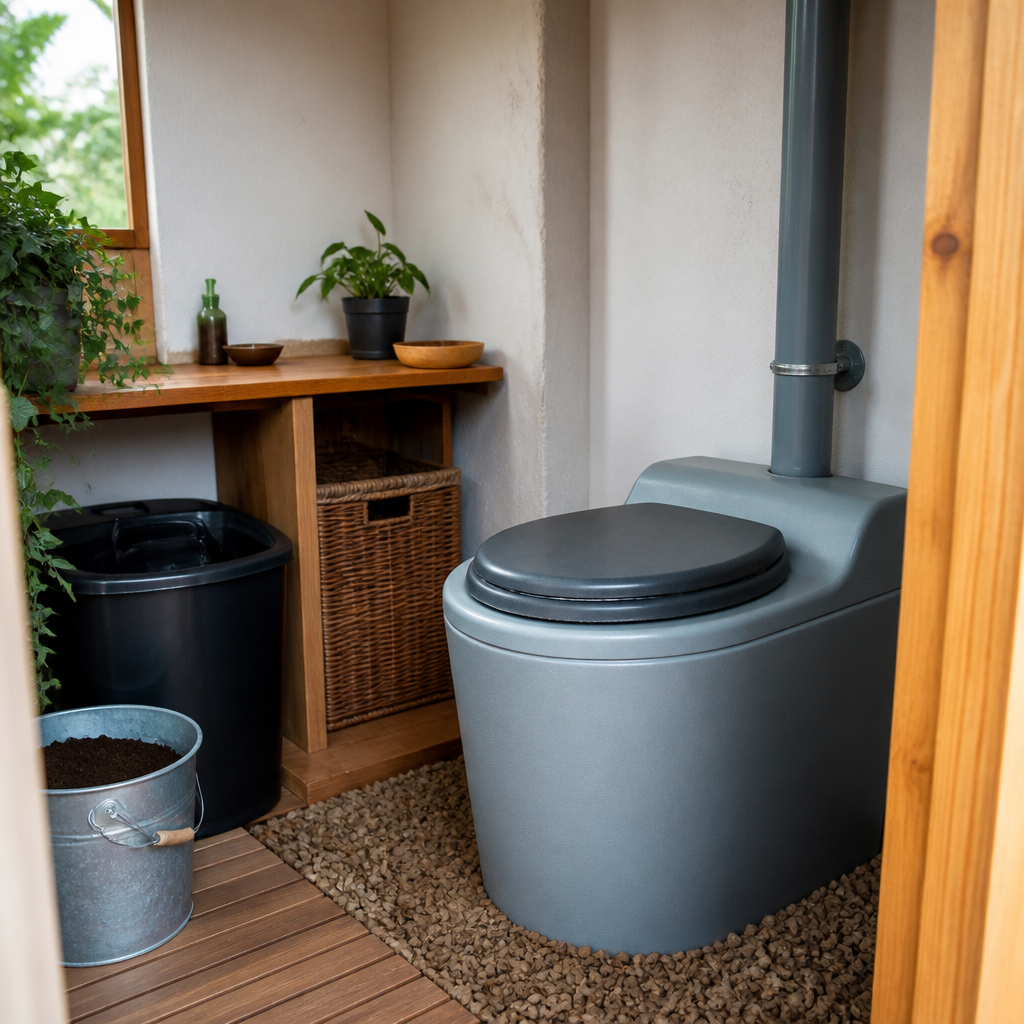
The second principle is controlled airflow. Ventilation should pull air from the user interface through the chamber and out above roof level. That air path reduces odors in the bathroom and discourages insects from entering or breeding in the chamber. A properly sized vertical vent, dark colored in cool climates to improve solar heating, often performs far better than improvised short vents with elbows. Fly screens on vent outlets are essential, but they must be cleaned because dust buildup reduces draft.
The third principle is durable separation between fresh and treated material. Batch systems with twin vaults are often easier to manage hygienically than single-vault systems because one chamber can rest while the other is active. That storage period matters. Pathogen reduction is driven by time, temperature, moisture reduction, pH, and microbial competition, but no small household unit should be assumed to produce instantly safe compost. Resting, monitoring, and conservative handling rules protect users when real conditions fall short of ideal compost temperatures.
The fourth principle is serviceability. Access hatches, removable containers, smooth cleanable surfaces, and washable urine pipes reduce the likelihood that maintenance will be skipped. A good design avoids sharp internal corners where material accumulates, includes lids that seal well, and provides enough space for safe stance and tool use during emptying. In schools, parks, and worksites, serviceability is often the decisive factor between a sanitary toilet and a neglected one.
| Design feature | Health purpose | Practical example |
|---|---|---|
| Urine diversion pedestal or squat pan | Reduces moisture, odor, and leachate | Separate urine line to sealed container or infiltration system designed to code |
| Vertical vent with fly screen | Controls odors and insects | 110 mm vent pipe extending above roof ridge for stronger draft |
| Twin vaults or rotating containers | Allows storage time for pathogen reduction | One chamber active while the other rests for several months |
| Dry cover material storage | Improves surface drying and reduces fly access | Bucket of sawdust or ash beside toilet with scoop |
| Sealed access hatch | Prevents contact and pest entry | Gasketed rear door opened only during service |
Moisture, Carbon Balance, and Pathogen Reduction
People often assume that any toilet marketed as composting will automatically produce safe compost. That is not correct. True thermophilic composting requires sustained elevated temperatures, adequate oxygen, and a balanced carbon-to-nitrogen ratio, conditions that many small household units do not consistently achieve. For that reason, many hygienic systems function partly through dehydration and storage rather than high-rate composting. The distinction matters because maintenance targets change: you may be managing dryness and resting time more than active hot composting.
Moisture control is the critical variable. If the pile is too wet, anaerobic conditions develop, causing strong ammonia or sewage-like odors and attracting flies. If it is too dry in a system intended for active composting, decomposition slows sharply. In urine-diverting dry toilets, the operational goal is usually a dry, friable mass with each deposit covered. In mixed-input composters, bulking agents such as wood shavings, shredded leaves, coir, or partially cured compost create pore space for oxygen movement. I have found that users comply better when the cover material is light, dry, and stored within arm’s reach; if it is damp or inconvenient, they underdose it.
Pathogen reduction depends on system type. Ascaris eggs are widely used as an indicator of hard-to-kill organisms because they survive longer than many bacteria and viruses. Storage recommendations therefore tend to be conservative. International sanitation guidance consistently emphasizes multiple barriers rather than a single assumed kill step: containment, storage time, restricted handling, gloves, handwashing, and careful end use. Where temperature data are unavailable, it is safer to treat chamber contents as potentially infectious until enough resting time has passed and the use pathway limits human exposure.
Cleaning, Inspection, and Safe Routine Maintenance
Daily hygiene in and around the toilet is as important as internal biological treatment. Seats, squat plates, door handles, handrails, and light switches are high-touch surfaces that need regular cleaning with detergent and, where appropriate, a disinfectant compatible with the material. Urine-diverting bowls require special attention because mineral scaling from struvite and calcium compounds can constrict pipes and trap odor. Mild acidic cleaning agents are commonly used to dissolve deposits, but operators should avoid mixing chemicals and should follow manufacturer guidance for plastics, seals, and metal fittings.
A simple inspection routine prevents most failures. Check that cover material is stocked and dry. Confirm that urine is flowing freely and not pooling under the pan. Inspect the vent for obstruction and verify that the fly screen is intact. Look for condensate, leakage, or staining around access hatches. If a fan-assisted vent is installed, verify power and airflow. In larger facilities, a maintenance log is worth the effort because it reveals recurring problems such as one stall producing repeated blockages or one chamber filling faster than expected.
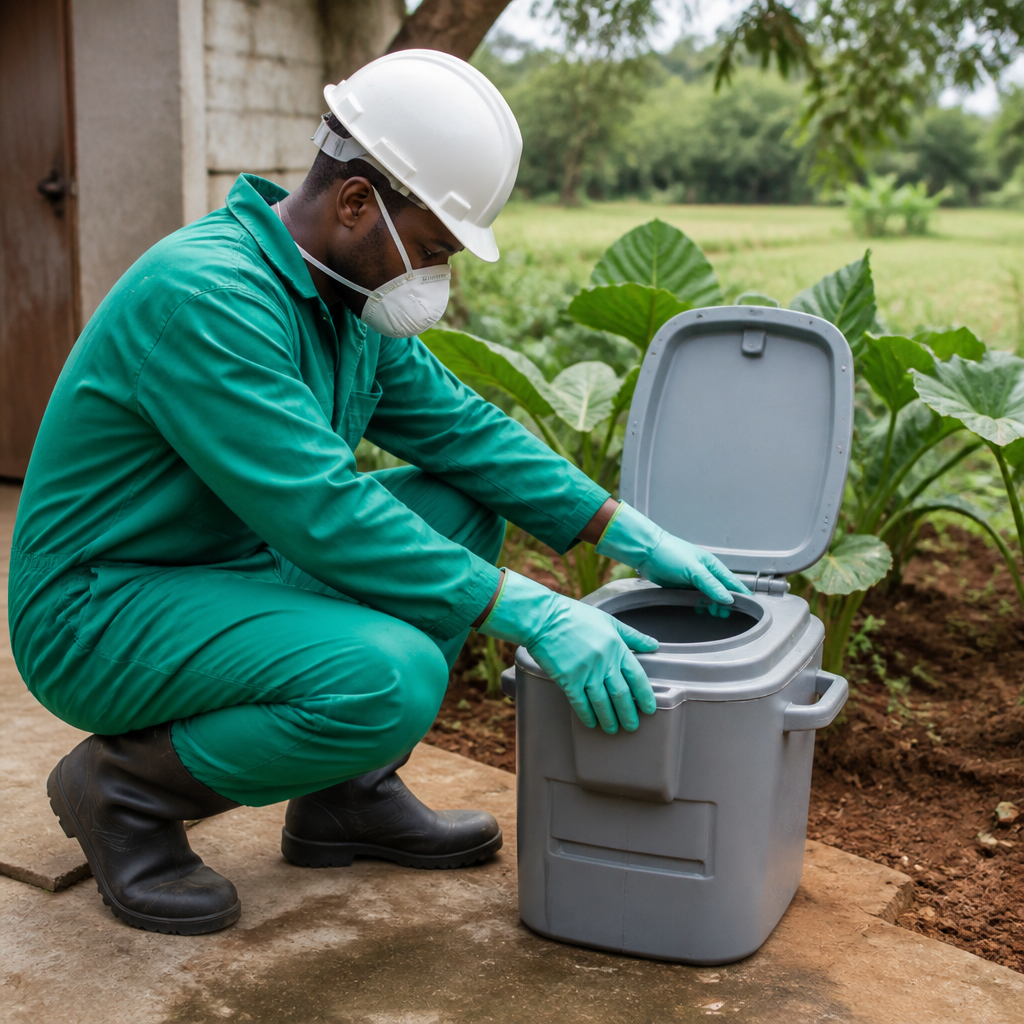
When emptying containers or vaults, personal protection should match the exposure risk. At minimum, use durable gloves, closed footwear, and handwashing with soap immediately after the task. In dusty conditions, especially when handling very dry material, respiratory protection and eye protection are sensible. Tools used for emptying should be dedicated to sanitation work and cleaned afterward. The work area should be organized so full containers move in one direction and cleaned equipment returns by another, reducing cross-contamination. These practical workflow details matter far more than marketing labels.
User Behavior, Accessibility, and Public Health Performance
The safest composting toilet can still fail if users do not understand how to use it. Clear instructions should explain what goes into the feces chamber, how much cover material to add, what not to flush or drop into the unit, and where to wash hands afterward. In public or shared settings, signage should use plain language and visuals, especially where literacy or multiple languages are factors. I have seen odor complaints disappear within a week after replacing vague instructions with one sign that simply showed: use toilet, add one scoop of dry cover, keep urine in the front section, wash hands.
Accessibility is also a health issue. If children, older adults, or people with limited mobility cannot use the toilet comfortably, they are more likely to misuse it or avoid it. Stable steps, handrails, adequate lighting, and seat heights matched to users improve sanitation outcomes. Menstrual hygiene management should be considered explicitly, with bins for menstrual materials where the toilet design cannot accept them. Shared facilities need cleaning schedules aligned with actual traffic, not ideal assumptions. A health-protective EcoSan system is one people can use correctly every day.
For households planning reuse of treated outputs, the most cautious approach is to apply materials only in ways that minimize contact and crop contamination, and to follow local regulations. Many programs restrict use on edible crops eaten raw and favor trees, ornamentals, or soil conditioning away from direct public contact. If there is uncertainty about treatment quality, do not rely on appearance alone. Dark, earthy-smelling material can still contain persistent pathogens. Conservative handling protects families and preserves confidence in ecological sanitation.
Common Failure Modes and How to Prevent Them
Most hygiene failures in composting toilets fall into a handful of predictable categories. Excess moisture is first. Prevent it with urine diversion, rain protection, drain checks, and consistent cover material. Second is inadequate ventilation, usually from undersized vents, blocked screens, or poorly placed terminations. Third is premature emptying, caused by undersized chambers or unrealistic service intervals. Fourth is user confusion, especially in guest or public settings. Fifth is neglect of urine pipes, leading to scale, odor, and overflow. None of these problems is mysterious, and each can be reduced through design, instructions, and routine checks.
Climate and context shape prevention strategies. In humid regions, drying is harder, so larger resting capacity, stronger ventilation, and better roof protection become more important. In cold climates, decomposition slows, and insulated superstructures or indoor units may be appropriate, but designers must still manage condensate and vent performance. In institutions, assign maintenance responsibility clearly; when everyone is responsible, no one is responsible. Finally, plan upstream and downstream. Toilet hygiene improves when handwashing stations are adjacent, water for cleaning is available, and the final storage or disposal area is secure. Review your current system against these health priorities, then upgrade the weakest link first.
Frequently Asked Questions
What makes a composting toilet hygienic, and how is it different from simply storing waste?
A hygienic composting toilet is designed to do much more than collect excreta in a chamber. Its purpose is to contain waste safely, reduce moisture, support biological stabilization, and prevent people, animals, insects, and water from coming into contact with pathogens. In practical terms, that means the toilet must separate users from fresh waste, keep the chamber protected from rain and flooding, provide good ventilation to reduce odors and moisture, and allow material to remain undisturbed long enough for dehydration and decomposition to lower health risks.
The difference between hygienic composting and simple storage is process control. A poorly designed vault or pit may only hold waste, leaving it wet, attractive to flies, and capable of contaminating soil or groundwater. A properly designed composting or dry toilet system aims to create conditions that make pathogens less likely to survive. Depending on the design, this may involve urine diversion, the regular addition of dry cover material such as ash, sawdust, or dry soil, airflow through a vent pipe, and alternating chambers so one side can rest while the contents stabilize.
True hygiene also depends on safe user behavior and maintenance. Even a well-built toilet can become unsafe if the chamber is overfilled, if liquids enter and create sludge, or if partially treated material is removed too soon. In EcoSan systems, health protection is the priority from start to finish: keeping hands away from fresh waste, minimizing odors and flies, using personal protection during emptying, and ensuring the final material is only handled or reused when treatment is complete. In other words, a hygienic composting toilet is a system, not just a structure.
How should a composting toilet be designed to reduce odors, flies, and disease risks?
The most important design principle is moisture control. Excess moisture slows drying, encourages odors, and allows pathogen survival. Many hygienic systems address this by separating urine from feces, diverting rainwater away from the toilet, preventing wash water from entering the treatment chamber, and using dry cover material after each use. A drier chamber is generally easier to manage, less attractive to flies, and more effective at biological stabilization.
Ventilation is another essential feature. A vent pipe helps move moist air and odors out of the chamber, especially when combined with a dark-colored pipe exposed to sunlight or a design that promotes natural airflow. The superstructure should also support cleanliness and comfort, with a washable floor, a secure slab or seat, and a layout that makes correct use intuitive. Lids on drop holes and urine-diverting pans can further reduce insect access and smell.
Containment and access matter just as much as comfort features. The chamber should be watertight enough to prevent leakage, raised or protected if flooding is possible, and built from durable materials that can be cleaned. Access doors for removing composted material should close tightly so insects and animals cannot enter. In areas with a high water table or heavy rains, above-ground or raised vault systems are often safer than pits because they lower the risk of contaminating groundwater. Good design also includes enough chamber volume or twin-vault capacity so waste can rest for an adequate treatment period before removal.
Finally, the toilet should be easy to maintain correctly. If a system is difficult to empty, hard to keep dry, or confusing to use, people are less likely to operate it hygienically. The best designs align sanitation engineering with everyday behavior: clear separation of liquids and solids where appropriate, easy addition of cover material, reliable airflow, safe access for maintenance, and clear instructions for users.
What routine maintenance is needed to keep a composting toilet sanitary and working properly?
Routine maintenance is what turns a good design into a safe sanitation system. At the user level, the first task is consistent use of cover material when the system requires it. Dry materials such as sawdust, ash, shredded leaves, rice husks, or dry soil can help absorb moisture, reduce odors, discourage flies, and create better conditions for decomposition. The correct material depends on the toilet design, but it should always be dry, readily available, and easy for users to add after each use.
Regular inspection is equally important. The toilet should be checked for excess moisture, insect activity, blocked urine pipes, damaged vent screens, leaks, and signs of overfilling. In urine-diverting systems, the urine channel and storage pathway need to remain free-flowing; if they clog, liquids may enter the solids chamber and quickly create odor and hygiene problems. Vent pipes should remain unobstructed, and fly screens should be intact so air can move while insects are excluded.
Cleaning must focus on user contact surfaces without disrupting the treatment process inside the chamber. Seats, slabs, door handles, and nearby floors should be cleaned regularly with appropriate household cleaning methods. However, large amounts of water should not be poured into a dry composting chamber unless the system is specifically designed for it. Keeping anal cleansing practices compatible with the toilet design is also crucial. If users rely on water cleansing, the system needs a safe way to manage that extra liquid without flooding the treatment chamber.
Maintenance also includes managing fill levels and treatment time. In twin-vault or alternating systems, one chamber is closed when full and left to rest while the second chamber is used. That resting period is critical for pathogen reduction. Operators should keep records or at least mark dates so they know when a chamber was sealed and when its contents may be safer to remove. Gloves, tools dedicated to the toilet, and handwashing facilities should always be part of the maintenance setup. Sanitary performance depends not only on what happens inside the chamber, but also on how safely people interact with the system.
When is composted toilet material safe to remove, and what precautions should be taken during handling?
Material should only be removed after it has had enough time and the right conditions to stabilize. The exact timing varies by climate, toilet design, moisture level, and whether urine is diverted, but the key point is that fresh or partially treated excreta should never be assumed safe. Hygienic removal depends on a treatment period long enough for dehydration, microbial activity, and natural die-off of pathogens to reduce health risks significantly. In many systems, this means allowing a sealed chamber to rest for months rather than days or weeks.
You can often identify better-treated material by its appearance and texture: it is usually drier, more soil-like, less recognizable as fecal matter, and lower in odor. Still, appearance alone is not a guarantee of safety. Some pathogens can survive longer than users expect, especially if the chamber stayed wet or cool. That is why conservative handling practices are essential even when the material looks well processed.
During removal, anyone handling the material should wear gloves and, where dust may be generated, a mask and appropriate clothing. Tools used for emptying should be kept separate from household food or water tools. Hands should be washed thoroughly with soap and safe water after the task, and work surfaces should be cleaned. Children should not be involved in waste handling, and animals should be kept away from the area.
The end use should match the level of treatment achieved and local health guidance. If there is any uncertainty about treatment completeness, the safest option is further storage, additional composting under managed conditions, or disposal in a way that limits human contact. In EcoSan, resource recovery is valuable, but it never overrides the primary goal of protecting health. Safe timing, protective equipment, careful handling, and informed final use are what make removal genuinely hygienic.
Can composting toilets be used safely in homes, schools, and rural settings, and what common mistakes should be avoided?
Yes, composting toilets can be used safely in a wide range of settings when the design matches the local environment and the users are trained in proper operation. In homes, they can reduce water use and work well in places without sewer connections. In schools and community facilities, they can provide reliable sanitation if there is a clear maintenance plan, responsible oversight, and enough capacity for the number of users. In rural settings, they can be especially effective where water is scarce or where protecting groundwater from poorly managed pits is a priority.
The biggest factor in success is not whether the technology is urban or rural, but whether the system is realistic for the users. A household system may be manageable with daily attention from the occupants, while a school toilet may require designated staff, posted instructions, secure supplies of cover material, and scheduled inspections. Larger or shared facilities often fail not because composting toilets are inherently unsafe, but because no one is clearly responsible for cleaning, monitoring moisture, fixing clogs, or rotating chambers.
Common mistakes include allowing water into a dry chamber, failing to provide enough cover material, ignoring urine diversion maintenance, removing material too early, and choosing a design that users do not understand. Another frequent problem is poor siting: placing a toilet where it can flood, where runoff enters the chamber, or where access for emptying is unsafe. Weak ventilation, missing fly screens, and broken access doors also undermine hygiene quickly. In shared settings, lack of user education can lead to trash, menstrual products, or unsuitable cleansing materials being placed in the chamber, which disrupts operation and makes maintenance difficult.
To avoid these problems, planners should start with local conditions: climate, soil, water