Innovative designs for dry toilets are reshaping sanitation by proving that safe waste management does not depend on flush water, sewer networks, or energy-intensive treatment plants. A dry toilet is any system that collects human excreta without using water for conveyance, then manages solids, liquids, or both through containment, composting, dehydration, separation, or thermal processing. EcoSan, short for ecological sanitation, goes further by treating human waste as a resource stream containing nutrients, organic matter, and in some cases recoverable energy. In practice, that means engineers, public health teams, architects, and communities design toilets not only to prevent disease, but also to recover phosphorus, nitrogen, carbon, and water where conditions allow.
This topic matters because conventional sanitation leaves major gaps. The World Health Organization and UNICEF Joint Monitoring Programme continue to report that billions of people lack safely managed sanitation, while water scarcity, failing septic systems, and overloaded sewers are becoming more visible in both low-income and high-income settings. I have worked with dry sanitation planning in rural schools, peri-urban housing, and off-grid visitor facilities, and the same lesson repeats: when the local context is understood, dry toilets can outperform flush systems on reliability, cost control, and environmental impact. When the context is ignored, even promising technologies fail through odor, poor maintenance, insect access, or user resistance.
As a hub for exploring cutting-edge EcoSan technologies, this article maps the field from fundamentals to advanced system design. It explains how modern dry toilets control pathogens, reduce smell, support nutrient recovery, and fit different climates, densities, and budgets. It also highlights practical design choices, from urine-diverting pedestals to container-based service models, that determine whether a concept becomes a durable sanitation solution.
What makes a dry toilet innovative today
Innovation in dry toilets is no longer about removing water alone; it is about integrating user-centered design, treatment science, and circular resource recovery into one sanitation system. Traditional pit latrines are technically dry, but most are not innovative because they offer limited pathogen control, poor emptying conditions, and little resource recovery. By contrast, modern EcoSan designs apply principles such as source separation, airflow management, modular containment, and controlled post-treatment. The result is a system that is cleaner to use, easier to maintain, and safer to manage downstream.
The most important shift has been from disposal thinking to systems thinking. Designers now examine the full sanitation chain: user interface, collection, storage, transport, treatment, reuse, and monitoring. A urine-diverting dry toilet, for example, works well only if the bowl geometry minimizes cross-contamination, the vault stays dry, the vent maintains negative pressure, and users understand how to add cover material when required. In my experience, the best-performing units are rarely the most complex. They are the ones where every component serves a clear operational purpose and every maintenance task has been simplified enough for consistent execution.
Digital monitoring is also entering the field. Larger institutional systems increasingly use moisture sensors, fill-level indicators, and maintenance logs linked to facility management software. These tools are especially useful in schools, parks, refugee settings, and construction sites, where sanitation failure quickly becomes a health and reputational issue. Innovation, then, is not a single toilet model. It is a disciplined approach to making dry sanitation dependable, dignified, and measurable.
Core EcoSan technologies and how they work
Several distinct technology families define the current EcoSan landscape. Urine-diverting dry toilets separate urine from feces at the source using a divided pan or pedestal. This reduces moisture in the solids chamber, lowers odor, and preserves urine as a nutrient-rich stream that can be stored and reused under local regulations. Dehydration toilets aim to dry feces through ventilation, desiccants, ash, lime, or dry cover materials, making storage safer and easier. Composting toilets encourage aerobic decomposition by balancing carbon-rich bulking material, oxygen, moisture, and temperature. Container-based sanitation collects waste in sealable cartridges or bins that are removed on a service schedule and treated off-site.
At the more advanced end, thermal sanitation systems use heat, pyrolysis, or combustion to reduce volume and destroy pathogens. Some research-grade units recover heat or produce char, though costs, power demands, emissions control, and maintenance can limit deployment. Membrane and electrochemical systems have also emerged in prototype or niche applications, especially where resource recovery and compact treatment are priorities. However, for most communities and off-grid buildings, the practical frontier is still improved separation, controlled drying, container logistics, and standardized treatment hubs.
Each technology has a different operating window. Composting needs careful moisture and aeration management. Dehydration performs well in hot, arid conditions but can struggle in humid climates without strong ventilation. Urine diversion often delivers the biggest performance gain for the lowest added complexity, which is why it appears in so many innovative designs. Container-based systems are particularly strong in dense urban settlements because they avoid unsafe pit emptying and can be integrated into professional collection services. Choosing among these approaches depends less on novelty than on climate, user behavior, maintenance capacity, land availability, and the intended reuse pathway.
Design features that improve hygiene, comfort, and performance
High-performing dry toilets depend on precise design details. The user interface must support natural posture, accurate aiming, easy cleaning, and intuitive separation of waste streams. A well-shaped urine-diverting pan uses surface geometry and smooth materials to move liquids quickly while keeping solids in the correct chamber. This reduces fouling and cleaning time. In family compounds and public facilities, lids and trap-like features can also reduce fly access without introducing water seals that undermine dry operation.
Ventilation is equally critical. A properly sized vent stack, dark-painted in sunny climates to increase thermal draft, can reduce odor inside the cubicle by pulling air through the vault and above the roofline. In some installations, I have seen fan-assisted vents solve chronic odor problems, but passive systems remain preferable where electricity is unreliable. Vault access doors need gaskets or tight tolerances to block insects and rain intrusion. Floor drainage around the toilet superstructure matters too, because external water entering the vault can collapse system performance within days.
Material selection affects lifespan and user acceptance. Fiberglass and high-density polyethylene are common in prefabricated units because they resist corrosion and are easy to clean. Concrete works well for vaults if cracks are controlled and surfaces are rendered smooth. Stainless steel is used in higher-end institutional systems for durability and washdown resistance in surrounding areas, even when the toilet itself remains waterless. Small ergonomic improvements, such as handholds, child seats, menstrual hygiene bins, lighting, and privacy latches, often determine whether a technically sound toilet is actually used consistently.
| Technology | Best-fit setting | Main advantage | Key limitation |
|---|---|---|---|
| Urine-diverting dry toilet | Homes, schools, eco-lodges | Low odor and nutrient recovery | Needs good user compliance |
| Composting toilet | Low-density off-grid sites | On-site stabilization potential | Moisture balance is difficult |
| Dehydration toilet | Dry climates, seasonal sites | Simple operation and reduced mass | Less effective in humidity |
| Container-based sanitation | Dense urban settlements | Safe collection without pits | Requires reliable service chain |
| Thermal treatment toilet | Specialized remote facilities | Strong pathogen reduction | Higher cost and maintenance |
Nutrient recovery and circular sanitation in practice
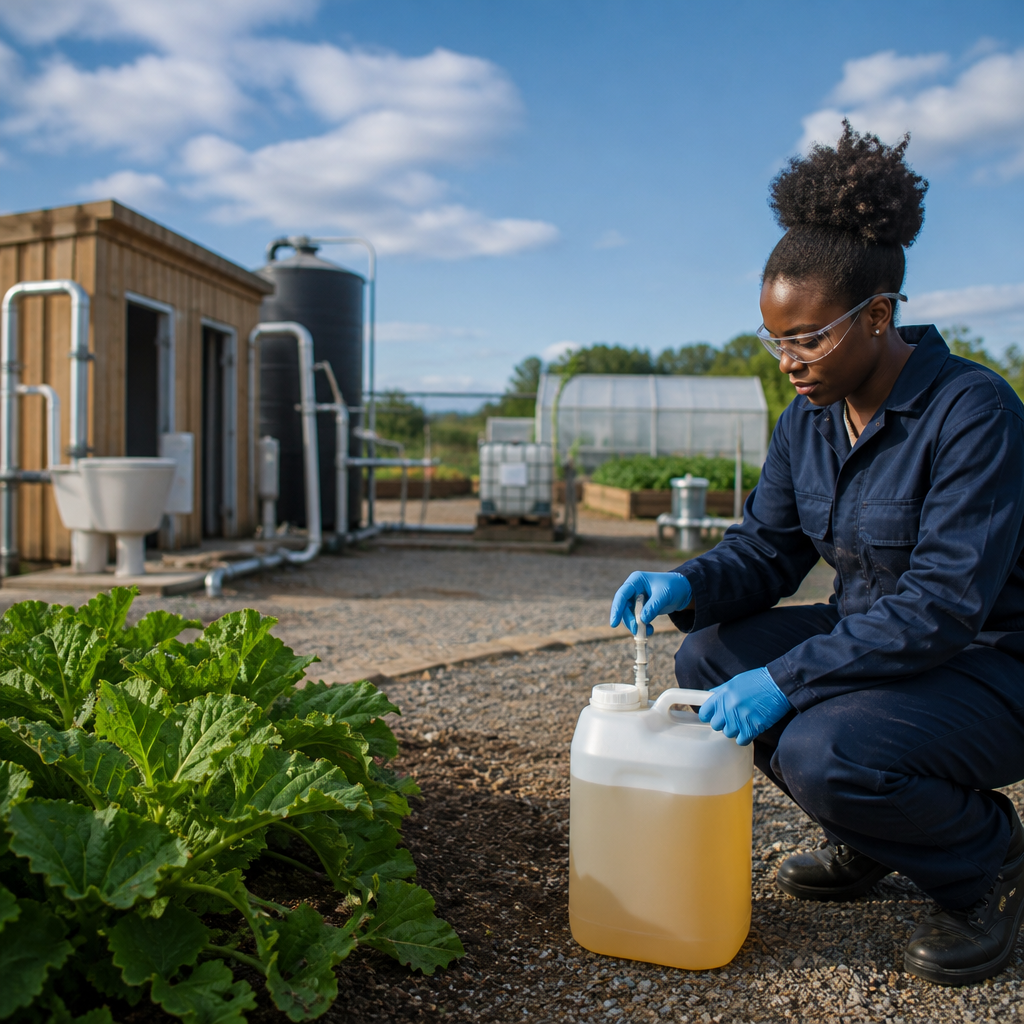
The strongest argument for EcoSan technologies is that they can close nutrient loops when managed correctly. Human urine typically contains most of the excreted nitrogen and a substantial share of phosphorus and potassium, which makes source-separated collection especially valuable. After storage for hygienic risk reduction, urine can be applied as fertilizer where regulations, crop type, and cultural acceptance permit. Fecal solids, once adequately treated through composting, dehydration, alkaline treatment, or thermal processes, can contribute organic matter or soil amendments, though pathogen standards must drive all reuse decisions.
In practical terms, nutrient recovery succeeds only when product quality is predictable. Farmers and landscapers need known nutrient concentrations, low contamination, manageable transport, and legal clarity. Struvite precipitation, a process that recovers magnesium ammonium phosphate from nutrient-rich streams, has attracted attention because it creates a more standardized fertilizer product and reduces scaling in pipes and tanks. Biochar and ash from thermal systems may also have agricultural uses, but feedstock contamination and application rates require careful assessment.
One lesson from field implementation is that reuse should not be forced into every project. In some locations, the most sustainable option is safe off-site treatment with limited or no direct reuse, especially where land access is scarce or public confidence is low. Circular sanitation is a benefit, not a shortcut around health protection. The sequence is always the same: protect users, protect workers, achieve verified treatment, then evaluate reuse markets.
Matching technologies to climate, density, and user behavior
No dry toilet design is universally best. Climate strongly affects moisture control, decomposition, insect pressure, and user comfort. In hot arid regions, dehydration and passive ventilation can perform exceptionally well with minimal mechanical assistance. In humid tropical areas, vault drying is harder, so urine diversion, larger vents, fly screens, and disciplined cover material use become more important. Cold climates create a different challenge: biological processes slow down, so storage volume, freeze resilience, and service access need greater attention.
Settlement density is equally decisive. Rural compounds may have enough space for twin-vault systems, compost curing zones, and household-level reuse. Informal urban settlements often do not. There, container-based sanitation can be transformative because sealed cartridges prevent groundwater pollution and eliminate dangerous manual pit emptying. Several service providers have shown that scheduled collection paired with centralized treatment can deliver cleaner outcomes than unmanaged onsite pits, provided customer service and route logistics are dependable.
User behavior often determines outcomes more than engineering calculations. If men stand where a design assumes sitting, urine diversion can fail. If cover material is unavailable, odor and flies increase. If cleaning staff are not trained on what should stay dry and what can be washed, the vault may receive too much liquid. For this reason, successful projects include behavior-informed signage, caretaker training, spare parts access, and early follow-up visits. The toilet should fit the user, not the other way around.
Operations, maintenance, and treatment standards
The biggest misconception about innovative dry toilets is that they are maintenance-free. In reality, they exchange continuous water use for structured operational tasks. Those tasks may include adding bulking material, inspecting vents, rotating containers, checking urine pipes for precipitate buildup, and moving stored material to secondary treatment. The advantage is not zero maintenance; it is maintenance that is planned, visible, and often cheaper than repairing septic failures or extending sewers into difficult terrain.
Standards matter because poor management can erase all design benefits. The International Organization for Standardization has published ISO 30500 for non-sewered sanitation systems, an important benchmark for safety and performance in advanced units. The World Health Organization sanitation safety planning approach also provides a rigorous framework for hazard identification across the service chain. In my work, using these frameworks early helps teams avoid a common mistake: focusing heavily on the toilet cabin while under-designing storage time, worker protection, and final treatment verification.
Monitoring should include fill levels, moisture conditions, user complaints, cleaning frequency, and treatment outcomes. Public and institutional deployments benefit from simple dashboards that flag recurring issues before they become failures. Odor complaints, for example, usually point to one of four causes: excess moisture, blocked airflow, contaminated urine diversion, or delayed emptying. When operators have a checklist and clear escalation path, most issues can be corrected quickly without major redesign.
The future of cutting-edge EcoSan technologies
The next generation of dry toilets will likely combine proven low-tech principles with smarter materials, sensors, and treatment modules. Better polymer surfaces can reduce fouling. Modular cartridges can simplify service exchange. Compact drying or sanitizing units may make resource recovery more consistent in dense urban settings. Researchers are also improving pathogen indicators, nutrient stabilization methods, and life-cycle assessment models, which will help decision-makers compare options on cost, emissions, water savings, and public health performance.
Just as important, financing and policy are evolving. Cities increasingly recognize non-sewered sanitation as permanent infrastructure rather than a temporary compromise. That shift supports service-based business models, performance procurement, and inclusion in building codes. For manufacturers, it creates pressure to standardize components and document outcomes. For communities, it means access to safer toilets that are designed around actual living conditions rather than assumptions copied from sewered districts.
Innovative designs for dry toilets succeed when they combine clear engineering with realistic operations and respect for user experience. The central insight of EcoSan is simple: sanitation systems should protect health while recovering value wherever practical. If you are planning a home installation, institutional upgrade, research project, or citywide sanitation strategy, start by mapping the full service chain, then match technology to climate, density, and maintenance capacity. That disciplined approach turns dry sanitation from a niche idea into resilient infrastructure.
Frequently Asked Questions
1. What makes modern dry toilet designs innovative compared to traditional pit latrines or basic composting toilets?
Modern dry toilet designs are innovative because they move far beyond the idea of simply storing waste in a hole or collecting it in a basic chamber. Today’s systems are engineered to improve hygiene, user comfort, odor control, maintenance efficiency, and resource recovery. Many innovative dry toilets separate urine and feces at the source, which helps reduce moisture, minimize smells, and make treatment easier. Others use dehydration, passive ventilation, container-based collection, rotating chambers, removable cartridges, or thermal treatment to manage waste more safely and effectively.
Another major difference is that modern designs are being developed around real-world constraints such as dense urban areas, off-grid settings, water scarcity, flood-prone regions, and places without sewer networks. Instead of assuming that sanitation requires flush water and centralized infrastructure, innovative dry toilets are designed to function independently while still meeting high performance standards. Some are compact enough for tiny homes and remote cabins, while others are modular and scalable for schools, public facilities, refugee settlements, and informal communities.
Design innovation also shows up in materials, usability, and service models. Manufacturers now use corrosion-resistant components, easy-clean surfaces, sealed containers, insect barriers, and ventilation pathways that improve the experience for users. In some systems, waste is collected in serviceable containers and transported for treatment elsewhere, making the toilet itself simpler and more practical in places where on-site processing is difficult. In short, innovation in dry toilets is not just about the toilet seat or chamber design; it is about rethinking the entire sanitation chain so that waste can be collected, handled, treated, and in some cases reused without depending on water-intensive or energy-intensive infrastructure.
2. How do dry toilets manage waste safely without using water?
Dry toilets manage waste safely by controlling separation, storage, treatment, and handling rather than relying on water to move waste away. In a flush toilet, water acts as the transport mechanism. In a dry toilet, that role is replaced by smart containment and treatment strategies. Depending on the design, the toilet may collect feces and urine together or separate them at the source. Source separation is especially important because urine contains most of the liquid volume, while feces contain most of the pathogens. Keeping these streams apart often makes the system cleaner, less odorous, and easier to maintain.
For solid waste, safety is achieved through methods such as dehydration, composting, desiccation, long-term storage, or high-temperature processing. Dehydration systems reduce moisture so pathogens cannot survive as easily. Composting systems encourage controlled biological breakdown under managed conditions. Some advanced dry toilets use heat, solar energy, or combustion-related processes to sanitize waste more rapidly. Container-based systems safely isolate excreta in sealed, removable units that can be collected and transported to a dedicated treatment site. The exact method varies, but the principle is the same: keep waste contained, reduce human contact, and ensure treatment before disposal or reuse.
Ventilation is another critical safety feature. Well-designed dry toilets use passive or mechanical airflow to remove moisture and odors, making the toilet more pleasant while also supporting drying or decomposition. Many designs also include urine drains, leachate controls, insect screens, access doors for maintenance, and surfaces that are easy to disinfect. Safe operation depends not only on the toilet unit itself but on the full management system behind it. When properly designed and maintained, dry toilets can provide highly effective sanitation without requiring sewer pipes, large volumes of water, or centralized treatment plants.
3. What is the difference between a dry toilet and an EcoSan system?
A dry toilet and an EcoSan system are related, but they are not exactly the same thing. A dry toilet is the physical sanitation technology that operates without flush water for conveyance. Its main function is to collect and manage human excreta without depending on a sewer connection or water-based transport. EcoSan, or ecological sanitation, is a broader approach that includes dry toilets but extends beyond the toilet itself. It treats human waste as a potential resource stream rather than viewing it only as something to discard.
In practical terms, EcoSan systems are designed to recover value from excreta after safe treatment. Urine may be collected separately and used, after appropriate management, as a nutrient-rich fertilizer source. Fecal matter may be composted, dehydrated, or otherwise treated so that nutrients and organic matter can potentially be returned to soil. The emphasis is on closing loops: protecting health while reducing pollution, conserving water, and recovering nutrients that would otherwise be lost through conventional wastewater disposal systems.
Not every dry toilet is an EcoSan system. Some dry toilets focus primarily on safe containment and disposal, especially in emergency, urban, or high-density settings where reuse is not realistic. Likewise, a system cannot be considered true ecological sanitation unless the treatment and reuse steps are handled responsibly and safely. The key distinction is that a dry toilet describes the technology category, while EcoSan describes a wider sanitation philosophy and management strategy. Innovative designs often bring these two ideas together by creating toilets that are easy to use, hygienic to maintain, and compatible with nutrient recovery or decentralized treatment goals.
4. Are dry toilets hygienic and suitable for homes, public spaces, and urban environments?
Yes, dry toilets can be highly hygienic and suitable for a wide range of environments when they are properly selected, installed, and maintained. The idea that dry toilets are only for rural or temporary use is outdated. Today’s designs are increasingly tailored for permanent homes, apartment retrofits, public institutions, parks, construction sites, transport hubs, disaster response settings, and dense urban neighborhoods. Their suitability depends on matching the technology to the context and making sure the downstream waste handling system is reliable.
In homes, dry toilets can work especially well in off-grid houses, cabins, tiny homes, and water-scarce regions. Models with urine diversion, good ventilation, and simple access for emptying can provide a clean and comfortable user experience. In public or shared settings, innovative designs often include robust materials, tamper-resistant components, larger storage capacity, and maintenance-friendly collection systems. Some urban sanitation programs use container-based dry toilets with scheduled collection services, which can be more practical than waiting for expensive sewer expansion in informal settlements or underserved districts.
Hygiene depends on several factors: effective separation of waste streams, odor and insect control, regular servicing, safe transport if waste is removed off-site, and proper treatment before reuse or disposal. A poorly maintained dry toilet can become unsanitary, just as a failing flush toilet or broken sewer connection can create health risks. But with strong design and management, dry toilets can meet high hygiene standards. In fact, in places where water supply is unreliable or wastewater treatment is inadequate, dry sanitation may reduce contamination risks by preventing untreated sewage from entering streets, groundwater, or nearby ecosystems.
5. What should be considered when choosing an innovative dry toilet design?
Choosing an innovative dry toilet design requires looking beyond appearance or upfront price and evaluating the entire sanitation process. The first consideration is context: where the toilet will be used, how many people will use it, whether the setting is rural or urban, what level of privacy and comfort is expected, and what local climate conditions exist. For example, dehydration systems may perform differently in humid regions than in arid ones, while container-based systems may be ideal in dense areas where on-site treatment is impractical.
You should also consider whether the system separates urine and feces, how odors are controlled, how ventilation works, and how waste is removed or treated. Some toilets require users to add cover material such as sawdust or ash, while others rely on engineered airflow, internal liners, or removable cartridges. Maintenance requirements matter a great deal. A design that performs well technically can still fail if it is too complicated to service, difficult to clean, or dependent on parts that are not locally available. Accessibility, durability, and user acceptance are just as important as treatment performance.
Another crucial factor is what happens after collection. Is waste treated on-site through composting or dehydration? Is it picked up by a service provider? Can nutrients be safely reused, or is the goal secure disposal? Regulations, land availability, local health guidance, and community perceptions all influence which design is most appropriate. The best innovative dry toilet is not simply the most advanced one; it is the one that delivers safe sanitation, fits local conditions, supports realistic maintenance practices, and aligns with long-term environmental and public health goals.