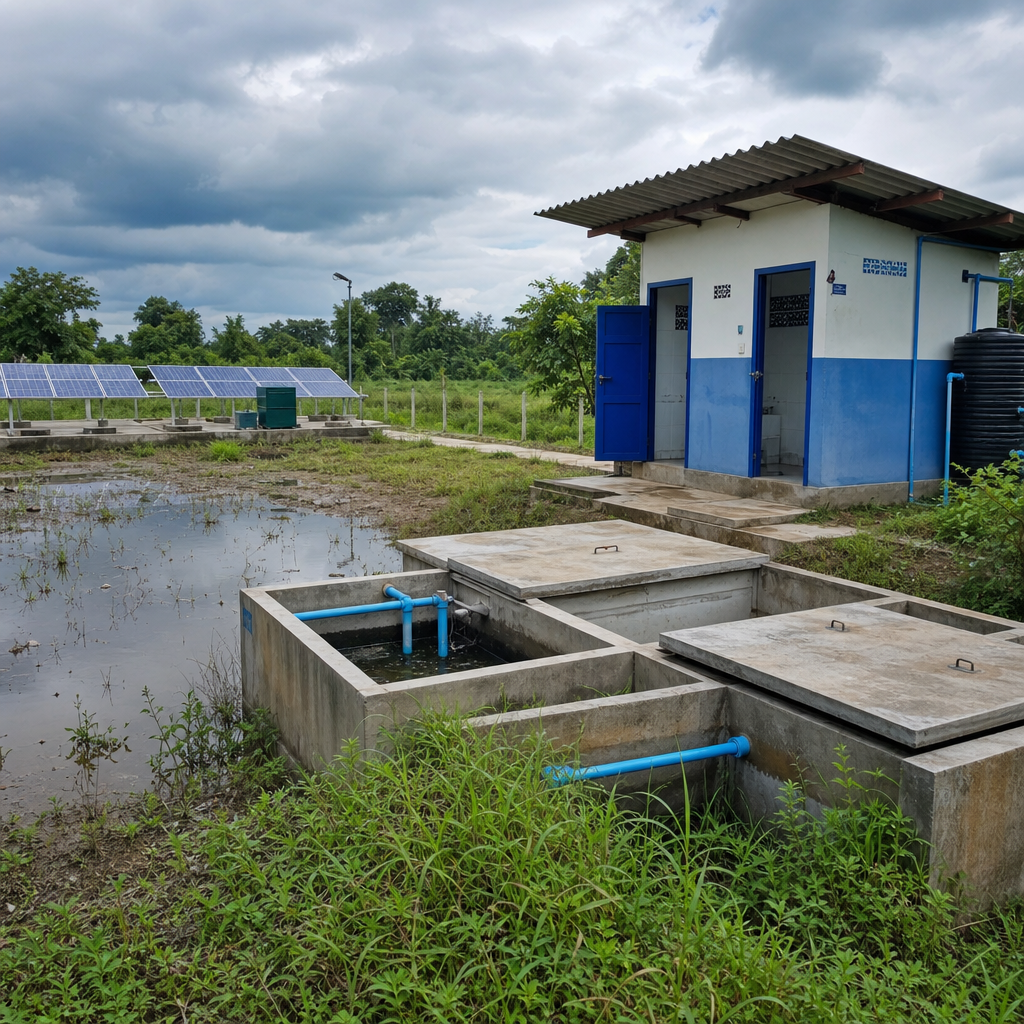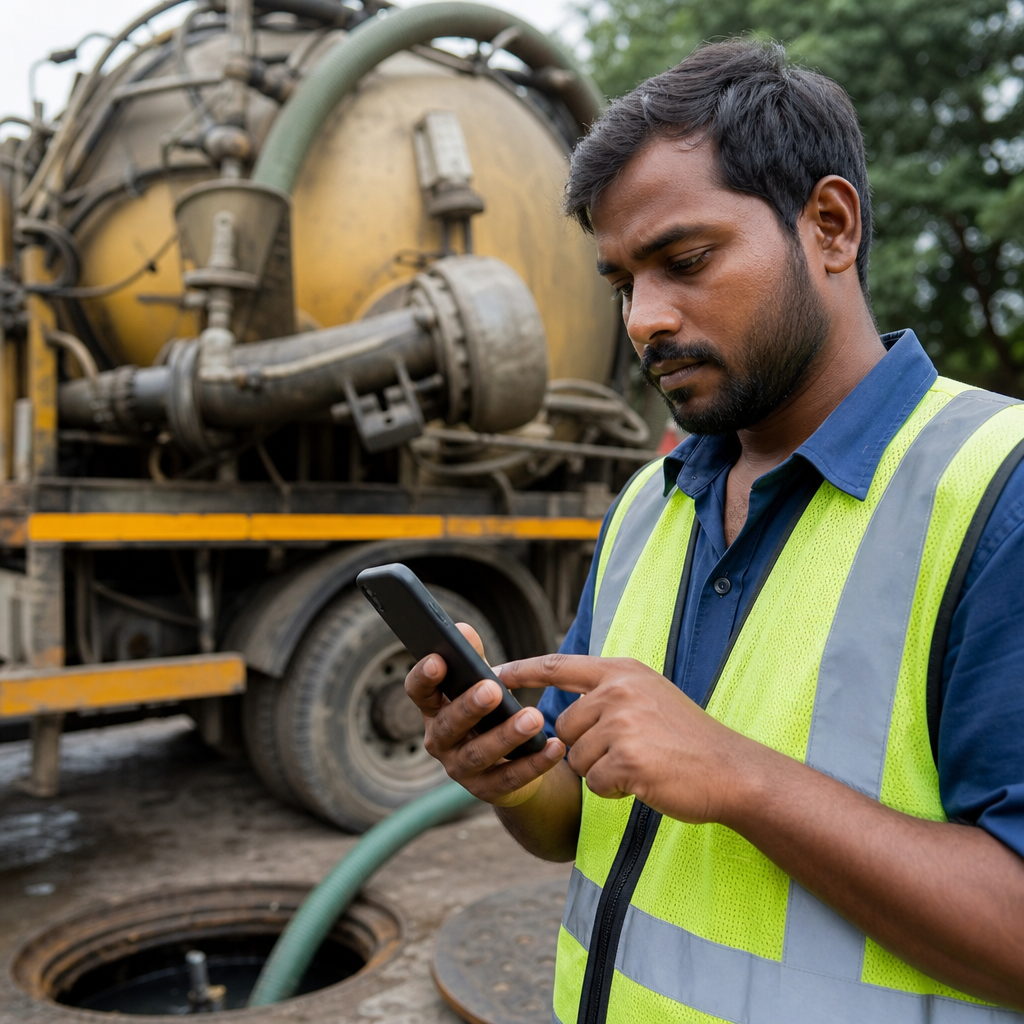
Leveraging digital technology for sanitation solutions is no longer a niche idea in international development; it is a practical response to one of the world’s most persistent public health and infrastructure gaps. Sanitation refers to the safe management of human waste across the full service chain, including toilet access, containment, emptying, transport, treatment, and reuse or disposal. Digital technology includes tools such as mobile data collection, Internet of Things sensors, geographic information systems, remote monitoring, digital payments, artificial intelligence, and cloud-based dashboards. When these tools are applied well, they help utilities, municipalities, nongovernmental organizations, and private operators make faster decisions, target scarce budgets, improve accountability, and reach underserved communities. This matters because sanitation is tightly linked to health, dignity, school attendance, environmental protection, urban productivity, and climate resilience. The World Health Organization and UNICEF Joint Monitoring Programme has repeatedly shown that billions of people still lack safely managed sanitation, with the burden falling most heavily on low-income households, informal settlements, rural communities, refugees, and people with disabilities. In my work reviewing sanitation programs, the strongest results have come from teams that treat digital systems not as gadgets, but as operational infrastructure that supports human service delivery.
As a hub topic under global challenges and opportunities, addressing global sanitation challenges requires a systems view. A toilet alone does not solve sanitation if pits overflow, sewers leak, fecal sludge is dumped untreated, or operators cannot track failures. Digital sanitation solutions help close those gaps by making invisible service-chain problems visible. A desludging operator can use route optimization to reduce fuel costs and illegal dumping. A utility can use sensor data to detect pump failures before neighborhoods flood. A city can combine satellite imagery, census layers, and household surveys to identify unserved settlements. A ministry can compare district performance through standardized dashboards instead of waiting months for paper reports. At the same time, the limits are real. Poor connectivity, weak procurement, fragmented data standards, and limited maintenance budgets can undermine promising pilots. The most useful question is not whether technology can help, but where it creates measurable value in sanitation outcomes, cost recovery, regulatory compliance, and equity. That is the lens this article uses.
The global sanitation challenge and where digital tools fit
Global sanitation challenges are operational, financial, and institutional at the same time. In dense cities, onsite sanitation systems such as pit latrines and septic tanks are common, yet emptying services are often informal and treatment capacity is inadequate. In rural areas, the challenge may be sustaining toilet use, monitoring open defecation slippage, and maintaining basic fecal sludge services across dispersed populations. Humanitarian settings add mobility, insecurity, and fast-changing demand. Digital technology fits best when it reduces uncertainty in these conditions. Mobile surveys using tools such as KoboToolbox, SurveyCTO, or Open Data Kit can capture household access, functionality, and user satisfaction far more quickly than paper forms. GIS platforms such as QGIS or ArcGIS can map toilets, transfer stations, drainage points, and treatment sites to reveal service deserts. Remote sensing can support flood-risk planning for sanitation assets, especially in coastal and riverine cities.
These tools answer practical questions decision-makers ask every day. Which neighborhoods have the highest risk of exposure to untreated waste? Where are septic tanks filling faster than expected? Which contractors meet service-level agreements? Which treatment plants are underused because transport routes are inefficient? Digital systems provide the evidence base to answer these questions consistently. They also improve coordination among actors who usually work in silos: public health departments, water utilities, planning offices, environmental regulators, community organizations, and private pit-emptying businesses. When the same core indicators are visible to all parties, disputes about priorities decline and resource allocation improves. This is especially important in sanitation because failures are often hidden underground or behind household walls until they become outbreaks, floods, odors, or political crises.
Data, mapping, and real-time monitoring across the sanitation service chain
The most mature use of digital technology in sanitation is data visibility across the service chain. Effective sanitation management starts with an asset register: what toilets, tanks, sewer lines, pumping stations, trucks, drains, and treatment units exist, where they are located, who owns them, and what condition they are in. Many cities still lack this baseline. Digital mapping changes that. Enumerators can geotag shared toilets in informal settlements, classify containment types, and record accessibility features. Utilities can create digital twins of wastewater networks, linking pipe age, diameter, break history, and flow data. Treatment plants can use supervisory control and data acquisition systems, or SCADA, to monitor pumps, blowers, chlorine dosing, power consumption, and effluent quality in near real time.
For onsite sanitation, the service chain is especially data-poor, so digital monitoring has outsized value. Sensors can track fill levels in public or institutional toilet pits, allowing scheduled rather than reactive emptying. GPS-enabled desludging trucks can verify whether waste reaches an authorized discharge point instead of being dumped into drains, wetlands, or vacant land. Barcode or QR code systems can tie a service request to a household, truck trip, tipping event, and payment record. In India, digital fecal sludge management platforms in some municipalities have supported complaint logging, desludging requests, and trip verification. In East Africa, operators have used mobile job dispatch and location data to improve response times and reduce deadhead travel. The lesson is simple: when managers can see flows, they can control quality, compliance, and cost.
| Digital tool | Primary sanitation use | Operational benefit | Common limitation |
|---|---|---|---|
| Mobile data collection | Household surveys, asset audits, inspection forms | Faster reporting and fewer transcription errors | Enumerator training quality varies |
| GIS mapping | Service gap analysis, routing, risk zoning | Better targeting of investments | Base maps may be outdated |
| IoT sensors | Tank fill levels, pump status, flow monitoring | Predictive maintenance and fewer overflows | Power and connectivity constraints |
| GPS fleet tracking | Desludging truck monitoring | Route efficiency and dumping compliance | Driver acceptance and device tampering |
| SCADA systems | Treatment plant operations | Real-time control and alarm management | Requires skilled maintenance staff |
| Digital payments | User fees, contractor payments, subsidies | Improved collection and audit trails | Excludes users without mobile money access |
Digital service delivery, financing, and accountability
Sanitation fails as often from weak service management as from missing infrastructure. Digital platforms improve service delivery by making requests, scheduling, billing, and quality control easier to manage. A resident can book pit emptying through a call center, app, SMS menu, or community kiosk. The request enters a dispatch system, the nearest compliant truck is assigned, and the job is time-stamped from pickup to discharge. That workflow creates accountability for operators and transparency for regulators. It also reduces the informal negotiation that often inflates prices for poor households. Where digital payments are common, utilities and small operators can collect fees through mobile money, reducing cash leakage and making demand patterns visible. For low-income households, targeted subsidies can be issued through vouchers or conditional rebates linked to verified services.
Financing sanitation is difficult because willingness and ability to pay vary, and many benefits are public rather than private. Digital tools do not solve this on their own, but they improve the economics. Better records help utilities model tariffs, estimate life-cycle costs, and defend capital requests. Performance dashboards can link payments to outputs, such as number of toilets functional, volume safely treated, or response time to faults. Results-based financing works far better when verification is digital and auditable. Regulators can inspect operator compliance remotely before visiting sites in person. Public disclosure also matters. When cities publish neighborhood-level sanitation coverage, overflow incidents, and treatment compliance, civil society can push for fairer investment. In my experience, the biggest governance gain from digitization is not speed; it is traceability. Once every service event leaves a timestamped record, excuses become weaker and management becomes sharper.
Planning for equity, climate resilience, and public health outcomes
The best sanitation technology strategies are designed around people at highest risk of exclusion. Digital planning can reveal inequity that aggregate statistics hide. A city may report high toilet coverage overall while informal settlements rely on unsafe shared facilities, women avoid night use because of security risks, or wheelchair users cannot access blocks built without ramps and turning space. Disaggregated data by gender, disability, tenancy status, school type, and settlement category helps planners prioritize investments that improve actual use, not just headline coverage. Hotspot analysis can combine disease surveillance, flood maps, groundwater depth, and population density to identify where containment failure is most dangerous. That supports preventive action before cholera, typhoid, or diarrheal outbreaks accelerate.
Climate pressure makes this even more urgent. Rising groundwater, heavier rainfall, and coastal flooding can inundate pits, septic systems, and treatment works. Digital elevation models, rainfall forecasting, and flood sensors help utilities adapt infrastructure design and emergency response. In Bangladesh and parts of Mozambique, flood-prone sanitation planning increasingly depends on geospatial risk layers. In Cape Town’s drought planning, digital monitoring of wastewater and reuse systems became integral to broader water security management. Public health surveillance is also changing. Wastewater-based epidemiology gained prominence during COVID-19, demonstrating that sewage monitoring can provide early warning of pathogens at community scale. The same principle supports surveillance for antimicrobial resistance and other health threats. For sanitation leaders, this means digital systems are not only operational tools; they are part of national resilience architecture spanning health, environment, and urban management.
Implementation challenges and what separates successful programs from failed pilots
Many sanitation technology pilots fail for predictable reasons. They start with a donor-funded app before defining the service problem, they collect more data than staff can use, or they ignore who will pay for maintenance after launch. Successful programs begin with workflow redesign. They map decisions that operators, inspectors, and managers actually make, then build simple digital tools around those decisions. They adopt interoperable data standards so household records, asset maps, billing systems, and treatment logs can connect over time. They budget for device replacement, connectivity, cybersecurity, calibration, and training from the start. They also assign ownership clearly. If no one is responsible for updating the asset register or reviewing dashboard alerts every week, the system decays quickly.
Capacity building is nonnegotiable. Field staff need practical training, not just software demonstrations. Managers need to trust data enough to act on it, and frontline workers need to see that digital reporting reduces friction instead of increasing surveillance without support. Privacy matters as well. Household sanitation records can reveal poverty, disability, migration status, and location, so data governance rules should define consent, access, retention, and anonymization. Procurement deserves equal attention. Municipalities should favor modular systems, open APIs where possible, and contracts that include support obligations and uptime expectations. The goal is sustainable digital public infrastructure for sanitation, not isolated dashboards. For organizations building this hub strategy, the priority is clear: evaluate technologies by whether they increase safely managed sanitation, strengthen operators, and protect vulnerable communities. Start with one service bottleneck, measure outcomes rigorously, and scale what proves durable.
Digital technology will not replace pipes, toilets, trucks, treatment plants, or trained sanitation workers. It will make those assets and people more effective when used with discipline. The central lesson across global sanitation challenges is that better information changes outcomes only when it is tied to action: a repaired pump, a dispatched truck, a funded upgrade, a targeted subsidy, or an avoided overflow. The strongest sanitation programs use digital systems to connect infrastructure, finance, regulation, and public health in one management loop. They know where services are failing, who is excluded, what it costs to improve performance, and how to verify results. That is why leveraging digital technology for sanitation solutions has become a core strategy for cities, utilities, and development agencies working on safe sanitation at scale.
As the hub for addressing global sanitation challenges, this topic should guide deeper exploration of fecal sludge management, smart wastewater treatment, sanitation financing, climate-resilient infrastructure, behavior change, and inclusive service design. Each subtopic becomes more effective when grounded in reliable data and accountable workflows. The opportunity is not to digitize for its own sake, but to build sanitation systems that are measurable, responsive, and equitable. If you are shaping policy, funding projects, or improving utility operations, audit your sanitation service chain, identify the decisions made with weak information, and deploy digital tools where they solve those gaps first. That is the fastest path to safer sanitation and stronger public health.
Frequently Asked Questions
1. What does it mean to use digital technology for sanitation solutions?
Using digital technology for sanitation solutions means applying software, connected devices, and data systems to improve how sanitation services are planned, delivered, monitored, and financed. Sanitation is not just about building toilets. It includes the entire service chain: access to toilets, safe containment of waste, collection and emptying, transportation, treatment, and safe reuse or disposal. Digital tools can support every step of that chain by making information more visible, operations more efficient, and decision-making more accurate.
In practice, this can include mobile data collection for household surveys, GIS mapping to identify underserved communities, IoT sensors that monitor fill levels or equipment performance, digital payment systems for user fees, and dashboards that help utilities or municipalities track service delivery in real time. For example, a sanitation operator may use GPS-enabled applications to optimize fecal sludge collection routes, while a city government may use digital maps to locate neighborhoods with high risk of overflow, poor drainage, or inadequate toilet coverage.
The value of digital sanitation solutions lies in turning fragmented, hard-to-track services into systems that can be measured and improved. Instead of relying only on occasional field reports or paper records, providers can gather continuous or near real-time data. That data can help reduce service delays, improve accountability, target investment, and protect public health. In short, digital technology helps sanitation systems move from reactive and informal management toward more proactive, reliable, and scalable service delivery.
2. Why is digital innovation becoming so important in the sanitation sector?
Digital innovation is becoming essential in sanitation because the sector has long struggled with limited visibility, weak coordination, and underinvestment. In many regions, sanitation services operate with incomplete records, informal emptying practices, and little ability to monitor whether waste is being safely managed after it leaves a household or toilet block. That makes it difficult for governments, utilities, and service providers to identify gaps, enforce standards, or plan infrastructure effectively.
Digital tools help solve these problems by creating better information flows. With mobile reporting, field teams can document toilet conditions, desludging needs, and treatment plant performance more quickly and accurately. With GIS platforms, decision-makers can visualize where service coverage is low, where environmental contamination risks are high, and where infrastructure investment will have the greatest impact. With connected sensors and remote monitoring, operators can detect failures earlier and respond before they become larger public health threats.
Another reason digital innovation matters is that sanitation systems are complex and highly localized. Urban informal settlements, rural communities, and rapidly growing secondary cities all face different challenges. Digital systems make it easier to tailor solutions to local realities while still maintaining standardized data for policy and funding decisions. They also support transparency, which is increasingly important to donors, regulators, and communities. When service data is visible and structured, performance can be measured, contracts can be better managed, and resources can be directed more fairly.
Most importantly, digital innovation can help sanitation providers do more with limited budgets. Better route planning lowers fuel and labor costs. Predictive maintenance reduces downtime. Digital records improve billing and revenue collection. Over time, these gains strengthen operational sustainability, which is one of the biggest barriers to expanding safe sanitation services at scale.
3. What kinds of digital technologies are commonly used in sanitation programs?
Several types of digital technologies are now used across sanitation programs, and each serves a different purpose. Mobile data collection tools are among the most common. These allow field workers to collect information on toilets, septic tanks, pit latrines, sludge accumulation, and community needs using smartphones or tablets. Compared with paper-based methods, mobile tools improve data accuracy, speed up reporting, and make it easier to aggregate information across large areas.
Geographic information systems, or GIS, are also widely used. GIS helps planners map sanitation infrastructure, treatment facilities, service routes, population density, flood-prone areas, and neighborhoods lacking access. This spatial perspective is extremely valuable because sanitation challenges are closely tied to geography, land use, settlement patterns, and environmental conditions. By layering different data sets, cities and development organizations can prioritize interventions and monitor whether services are reaching the people who need them most.
Internet of Things technologies, including smart sensors, are increasingly important as well. Sensors can be installed to monitor fill levels in containment systems, flow rates, pump performance, treatment processes, or equipment status. This allows operators to move from fixed schedules to demand-responsive services. For example, instead of emptying tanks on a calendar basis, a provider can respond when data shows a tank is nearing capacity, which can improve efficiency and reduce overflow risk.
Digital payment platforms are another key category. These can support household payments, operator transactions, subsidy delivery, and performance-based financing. In settings where informal cash handling creates leakage or weak accountability, mobile money and digital billing systems can improve transparency and strengthen the financial viability of sanitation services.
Finally, data dashboards and management platforms tie all of these technologies together. They allow municipalities, NGOs, utilities, and private operators to analyze trends, monitor key indicators, and make operational decisions. The most effective sanitation programs usually do not rely on a single tool. They combine multiple digital technologies into an integrated system that supports planning, implementation, oversight, and continuous improvement.
4. What are the biggest benefits and challenges of using digital tools in sanitation?
The benefits of digital tools in sanitation are significant. First, they improve visibility across the sanitation service chain. Many failures in sanitation happen because no one has a clear picture of what is happening after waste leaves the toilet. Digital systems help track whether containment is safe, whether emptying is happening on time, whether transport is compliant, and whether treatment facilities are functioning properly. This kind of end-to-end oversight is critical for protecting health and the environment.
Second, digital tools improve operational efficiency. Service providers can optimize routes, monitor staff performance, reduce paperwork, and respond faster to maintenance needs or service requests. They also support better planning by helping institutions identify demand patterns, infrastructure gaps, and high-risk zones. In resource-constrained environments, these efficiencies can translate into better service quality without proportionally increasing costs.
Third, digital technology can strengthen accountability and inclusion. When service data is digitized, it becomes easier to monitor commitments, compare performance, and identify communities that are being left behind. This is especially useful for governments and development partners working toward equitable sanitation access. Digital complaint systems, community reporting tools, and public dashboards can also give residents a stronger voice in how services are delivered.
At the same time, there are important challenges. One of the biggest is data quality. Poorly trained enumerators, inconsistent reporting, and weak system design can produce unreliable data, which undermines decision-making. Another challenge is infrastructure. Not all areas have reliable electricity, mobile coverage, internet access, or device availability. Digital systems that work well in one setting may be difficult to sustain in another.
Institutional capacity is another major issue. Technology alone does not improve sanitation unless organizations have the staff, workflows, and leadership needed to use the data effectively. There may also be concerns around privacy, cybersecurity, interoperability, and long-term maintenance costs. For this reason, the most successful digital sanitation initiatives are not technology-first. They are service-first. They begin with a clear operational problem, then select digital tools that fit local capacity, budget, and governance realities.
5. How can governments, NGOs, and service providers successfully implement digital sanitation solutions?
Successful implementation starts with a clear understanding of the sanitation problem being addressed. Organizations should avoid adopting digital tools simply because they are innovative or widely promoted. Instead, they should ask practical questions: What part of the sanitation chain is failing? What information is missing? Which decisions are currently delayed or poorly informed? What would better data or automation actually improve? A strong use case is the foundation of any effective digital strategy.
From there, implementation should focus on system design, not just tool selection. This means defining workflows, roles, data standards, reporting responsibilities, and how information will be used at different levels of the organization. For example, a municipal authority may need one type of dashboard for planning and regulation, while desludging operators may need a mobile app for dispatch and proof of service. The technology should reflect real operational needs and fit existing service models as much as possible.
Capacity building is equally important. Staff need training not only on how to use devices and software, but also on how to interpret data and act on it. Leadership buy-in matters because digital systems often require changes in routine, accountability, and coordination across departments or partners. Without institutional ownership, even well-designed platforms can become underused after pilot funding ends.
Organizations should also prioritize interoperability and scalability. Data systems should be able to connect with broader urban management, public health, or utility platforms where relevant. This reduces duplication and increases the long-term value of the information collected. It is also wise to start with a pilot, test assumptions, gather feedback, and refine the model before expanding. Pilots should be designed with scale in mind, including realistic budgeting for maintenance, software updates, technical support, and replacement of hardware over time.
Finally, successful digital sanitation implementation depends on trust and inclusion. Communities, frontline workers, and private operators should be engaged early so the system reflects user realities and earns local acceptance. Strong safeguards for data privacy and responsible use are essential