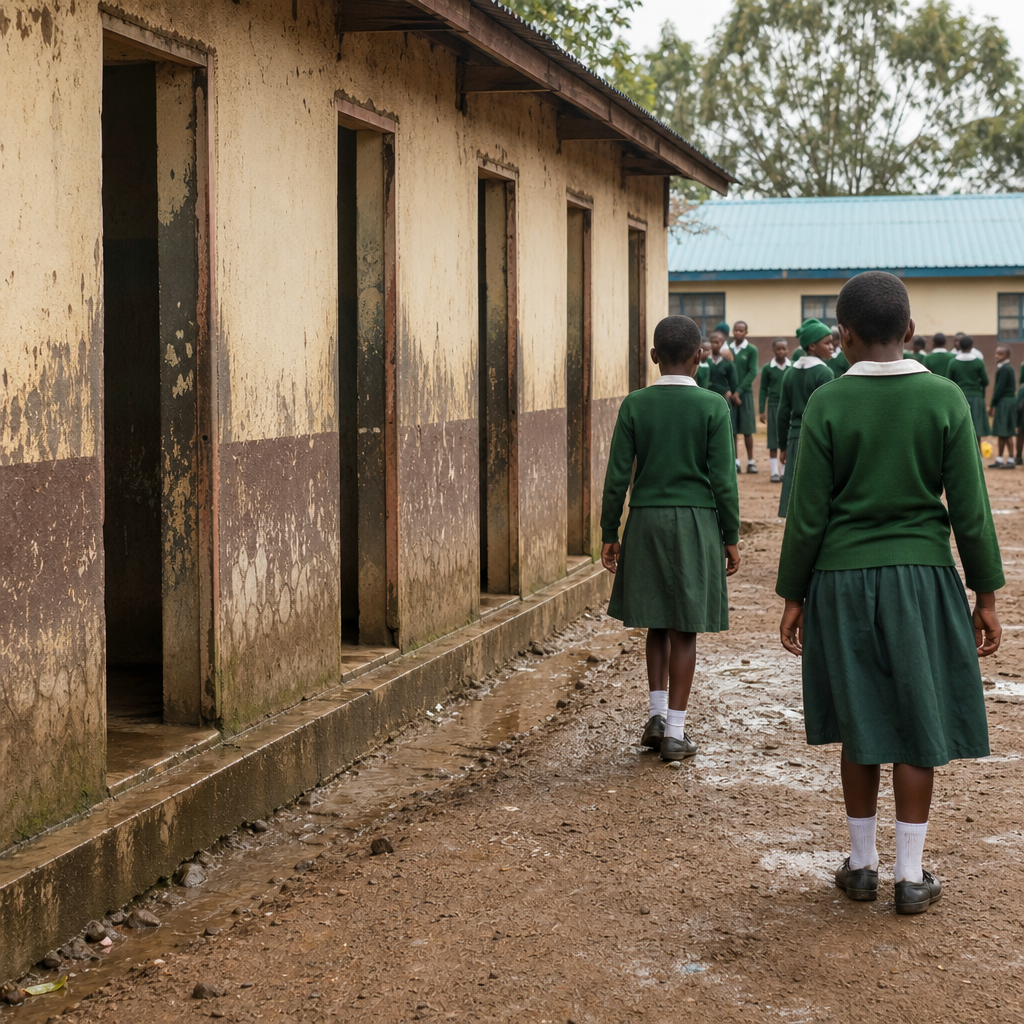
School sanitation shapes health, attendance, dignity, and learning outcomes for millions of children, yet it remains one of the most persistent barriers to safe education worldwide. In practical terms, sanitation in schools means reliable toilets, handwashing stations with soap and water, menstrual hygiene support, safe wastewater or fecal sludge management, cleaning systems, and inclusive facilities that children with disabilities can use independently. When any of those elements fail, the effects are immediate: students avoid drinking water, miss class, contract preventable disease, or leave school entirely. I have worked on education and public health content around water, sanitation, and hygiene programs, and one lesson is consistent across regions: sanitation is not a side issue in education policy; it is foundational infrastructure.
The scale of the challenge is global. UNICEF and the World Health Organization, through the Joint Monitoring Programme, have repeatedly shown that large numbers of schools still lack basic sanitation and hygiene services, especially in low-income countries and fragile settings. “Basic” is not an abstract label. It means improved sanitation facilities at the school that are usable, single-sex, and available when students need them. “Limited” service can mean toilets exist but are not usable. “No service” means no toilets at all, or only unimproved facilities. These distinctions matter because headline access numbers often hide whether facilities are clean, private, functional, and safe enough to use.
This matters because sanitation in schools sits at the intersection of several global priorities: child survival, girls’ education, disability inclusion, climate resilience, urban growth, and public finance. Poor sanitation contributes to diarrheal disease, parasitic infections, and environmental contamination. It also affects concentration, teacher retention, and family trust in the school system. For adolescent girls, the absence of private, clean toilets with water and disposal options can turn menstruation into a direct barrier to attendance. For children with mobility, visual, or cognitive impairments, inaccessible toilets can make school technically open but functionally unavailable. As a hub for addressing global sanitation challenges, this article maps the core problems, the main drivers, the solutions that work, and the policy choices countries, school systems, and development partners need to make next.
Why school sanitation remains a global development challenge
The sanitation gap in schools persists because it is not just an engineering problem. It is a governance, financing, operations, and social norms problem at the same time. Ministries of education may build classrooms but not budget for cleaning staff. Local governments may install toilets without planning for water supply, desludging, or spare parts. Donors may fund construction targets that look impressive in annual reports but do not track whether facilities remain usable two years later. In many places, responsibility is fragmented among education, water, health, and local government agencies, which creates predictable failures in maintenance and accountability.
Rapid urbanization and population growth make the challenge harder. In informal urban settlements, schools often sit on constrained plots without sewer connections, dependable water, or space for safely designed pit latrines. In rural areas, low enrollment density can increase unit costs, while seasonal flooding can damage latrines or contaminate shallow groundwater. Conflict and displacement add another layer: temporary learning spaces are commonly set up before adequate sanitation systems are in place. During disease outbreaks, including cholera or COVID-19, the consequences of weak handwashing and sanitation systems become even more visible, but emergency attention frequently fades before long-term upgrades happen.
Culture and behavior also influence outcomes. A technically sound toilet block will still fail if students perceive it as unsafe, dirty, or lacking privacy. In some schools, girls avoid facilities because doors do not lock or because disposal bins are missing. Younger children may not use latrines correctly without age-appropriate design and supervision. Boys may damage fixtures if no one reinforces shared ownership. These are not minor details; they determine whether infrastructure translates into real use. The strongest school sanitation programs therefore combine hardware, management systems, student engagement, and routine monitoring rather than treating toilets as a one-time construction output.
Health, education, and equity impacts
The direct health case for better sanitation is clear. Unsafe sanitation enables pathogen transmission through contaminated hands, surfaces, soil, and water. Diarrheal disease remains a major cause of illness among children globally, and schools can either reduce or amplify that burden. Properly managed toilets and handwashing with soap lower infection risks, while safe waste containment protects nearby water sources and the broader community. Intestinal worm infections are another concern where sanitation is weak, affecting nutrition, energy, and cognitive performance. From an education perspective, even short illness episodes lead to absenteeism, and repeated illness undermines learning continuity.
The education effects extend beyond disease prevention. Students are less able to concentrate when they are uncomfortable, dehydrated, or anxious about using the toilet. I have seen reporting from schools where children intentionally limit food and water intake to avoid unsanitary facilities during the school day. That behavior can reduce attention and participation, especially in hot climates. Teachers are affected too. Schools that cannot provide decent staff toilets struggle with morale and retention, particularly in remote postings. Parents notice these conditions and may pull children out, especially daughters, if they believe the school environment is unsafe or undignified.
Equity is where sanitation failures become most visible. Girls need privacy, water, soap, and menstrual materials support, not as an optional add-on but as a core service requirement. Children with disabilities need ramps, handrails, wider doors, transfer space, lower sinks, and clear pathways. Younger students need child-sized fixtures and supervision. Refugee and internally displaced children need facilities designed for overcrowding and rapid wear. When planners ignore these differences, the burden falls on those already least well served. Better sanitation therefore supports not only health and attendance but also gender equality, inclusion, and the right to education in practical daily terms.
What adequate school sanitation includes
Good school sanitation starts with service levels, not just structures. A functioning system includes separate toilets for girls and boys where appropriate, accessible cubicles, handwashing stations with soap and water, menstrual hygiene facilities, cleaning supplies, drainage, lighting where needed, and a plan for safely managing waste. The JMP service ladder is useful because it distinguishes whether sanitation is improved, usable, and sex-separated, while hygiene indicators track handwashing availability. Those definitions help governments move beyond inflated infrastructure counts toward a realistic picture of student experience.
Technology choices vary by context. Sewer-connected flush toilets can work well in dense urban settings with reliable utility service, but they fail quickly where water supply is intermittent or sewer networks are absent. Pit latrines remain common because they are cheaper and easier to build, yet they require careful siting, lining, ventilation, and plans for pit emptying. Pour-flush systems can be a middle option where some water is available. Container-based sanitation, urine-diverting dry toilets, or decentralized wastewater treatment may be appropriate in flood-prone zones, rocky terrain, or water-scarce areas. There is no universal best toilet type; the best option is the one the school can operate safely for years.
Operation and maintenance determine whether any design succeeds. Every school needs a cleaning schedule, designated responsibility, consumables budget, inspection checklist, and a way to report faults. In stronger systems, school management committees review sanitation monthly, student clubs reinforce norms, and local authorities track functionality as part of school quality assurance. The difference between a usable toilet and an abandoned one is often not the original design but the presence of management discipline. This is why sanitation experts stress life-cycle costing: construction is only the first cost, while cleaning, repairs, water, and waste emptying are recurring obligations.
| Component | What good practice looks like | Common failure point |
|---|---|---|
| Toilets | Private, clean, sex-separated where appropriate, accessible, functional locks | Broken doors, full pits, poor cleaning |
| Handwashing | Running water or filled stations with soap near toilets and eating areas | No soap, taps broken, irregular refilling |
| Menstrual hygiene support | Water, disposal bins, private changing space, emergency supplies | No bins, no privacy, stigma |
| Accessibility | Ramps, rails, wide doors, reachable fixtures, clear pathways | Facilities technically present but unusable for disabled students |
| Maintenance | Budget, staff roles, cleaning plan, repair reporting | No recurring funds after construction |
Regional realities and recurring barriers
Sub-Saharan Africa carries some of the most severe school sanitation deficits, especially in rural districts and fast-growing peri-urban areas. Water scarcity, constrained education budgets, and weak maintenance systems often combine with high pupil-to-toilet ratios. In South Asia, major progress has been made in school toilet construction, but functionality and handwashing quality still vary widely, and disposal systems for menstrual materials are uneven. In parts of Latin America, indigenous and remote communities face service gaps despite stronger urban coverage. Small island states must manage groundwater vulnerability, cyclones, and limited land. The Middle East and North Africa region faces acute pressure in conflict-affected and refugee-hosting areas.
Across regions, several barriers recur. First is underfunded maintenance. Capital budgets are politically visible; soap and janitor salaries are not. Second is unreliable water. A toilet without water for cleaning, flushing, or handwashing quickly becomes unusable. Third is weak data. Many education management information systems record whether a toilet exists, not whether it is clean, accessible, and functioning today. Fourth is the lack of fecal sludge management. Pits and septic tanks fill up, and when no safe emptying service is available, facilities are sealed, abandoned, or emptied unsafely into the environment.
Climate change is increasing pressure on all of these systems. Floods can inundate pits and spread contamination across school grounds. Drought can disable flush systems and make handwashing difficult. Heat can worsen odor and accelerate facility deterioration. Resilient school sanitation planning now requires elevation in flood zones, drought-tolerant designs, protected water storage, durable materials, and maintenance plans that account for more extreme weather. Countries that treat sanitation as part of school climate adaptation will protect both infrastructure investments and student health.
Strategies that work at scale
The most effective school sanitation strategies share a few traits. They define minimum service standards, fund recurrent costs, monitor usability, and integrate sanitation with health and education goals. India’s large school toilet expansion showed the value of political focus and clear targets, while also demonstrating that construction alone does not guarantee sustained use. Bangladesh has paired school WASH efforts with hygiene promotion and community engagement. In Kenya and Ethiopia, work on menstrual hygiene management and school WASH standards has helped shift attention from infrastructure counts to user needs. These examples differ, but the common lesson is that systems perform when policy, financing, and local management align.
At school level, practical measures matter. Put handwashing stations where behavior happens, especially outside toilets and near meal areas. Choose finishes that can be cleaned easily. Involve girls in facility design reviews before construction. Train head teachers to manage maintenance budgets and record faults. Contract pit emptying before pits are full, not after. Use simple dashboards that track soap availability, water supply, cleanliness, and pupil-to-toilet ratios. Where budgets are tight, prioritize usability upgrades to existing toilets before building new blocks that schools cannot maintain. These steps are less glamorous than ribbon-cutting, but they produce better outcomes.
Technology and policy should support accountability. Mobile inspections can feed district-level dashboards. Results-based financing can reward functionality rather than construction counts. Public standards should specify accessibility, privacy, and menstrual hygiene requirements. Partnerships with utilities, municipalities, and small sanitation enterprises can solve waste management bottlenecks. Most importantly, school sanitation should be embedded in national education sector plans, not treated as a temporary project. When it sits inside core planning, it is more likely to receive recurring funds, staff attention, and routine supervision.
How this hub guides action on global sanitation challenges
Addressing global sanitation challenges in schools requires a hub approach because the issue spans infrastructure, behavior, governance, gender, disability, climate, and finance. Decision-makers need linked guidance on technology choices, maintenance models, fecal sludge management, handwashing behavior, menstrual hygiene support, and monitoring systems. This page serves as that strategic overview: it identifies the main failure points, explains what adequate service really means, and points toward the interventions that consistently improve health, attendance, and dignity. For practitioners, the key shift is to evaluate sanitation as an ongoing service, not a completed construction activity.
The central takeaway is straightforward. Schools need sanitation systems that are usable every day, for every student, in the local conditions they actually face. That means context-appropriate designs, recurring budgets, reliable water, inclusive access, and data that measure function rather than promises. Countries that make those changes will not only reduce disease; they will strengthen educational participation, gender equity, and resilience across entire communities. If you are building a policy agenda, a school improvement plan, or a broader global challenges content strategy, start with the basics that last: safe toilets, soap, water, maintenance, and accountability.
Frequently Asked Questions
Why is sanitation in schools such a major global challenge?
Sanitation in schools is a global challenge because it affects multiple parts of a child’s education at the same time: health, attendance, safety, dignity, concentration, and long-term learning outcomes. In many countries, schools still lack basic toilets that are safe, private, functional, and separated where appropriate. Even when toilets exist, they may be broken, unclean, overcrowded, or disconnected from reliable water supplies. Handwashing stations may be missing or left without soap, and waste may not be managed safely once it leaves the toilet. These weaknesses create a chain reaction that increases the spread of disease, discourages regular attendance, and makes the school environment feel unsafe or humiliating for children.
The challenge is also persistent because school sanitation is not solved by building a few toilet blocks and walking away. It depends on ongoing funding, maintenance, cleaning, water access, training, monitoring, and accountability. Schools need systems for repair, waste removal, restocking soap, supporting menstrual hygiene, and ensuring that children with disabilities can use facilities independently. In many places, responsibilities are split across ministries, local authorities, school leaders, and communities, which can leave gaps in ownership and budget. As a result, sanitation remains one of the most practical yet overlooked barriers to quality education worldwide.
How does poor sanitation affect students’ health and learning?
Poor sanitation affects students first through health. When schools do not provide safe toilets, handwashing facilities, and proper waste management, children are more likely to be exposed to diarrheal disease, intestinal infections, and other preventable illnesses. Shared surfaces become contaminated more easily, and without soap and water, students cannot practice basic hygiene after using the toilet or before eating. Frequent sickness means more missed school days, lower energy, and reduced ability to participate fully in class. For younger children especially, repeated illness can have lasting effects on growth, attention, and overall development.
The impact on learning goes beyond infection. Students who avoid using school toilets because they are dirty, unsafe, or lack privacy may spend the school day distracted, uncomfortable, dehydrated, or anxious. That discomfort can reduce concentration and make it harder to engage in lessons. In schools where sanitation is poor, the emotional burden can also be significant. Children may fear embarrassment, teasing, or harassment around toilet use, which undermines their sense of security. Over time, these conditions contribute to absenteeism, lower academic performance, and weaker retention. In short, sanitation is not a side issue in education; it is part of the foundation that allows children to learn consistently and with dignity.
Why is menstrual hygiene support an essential part of school sanitation?
Menstrual hygiene support is essential because school sanitation is not truly functional if it does not meet the needs of girls and menstruating students. A school may have toilets on paper, but if those facilities lack privacy, water, soap, disposal bins, changing space, or access to menstrual products, many students will still struggle to attend and participate comfortably. Menstruation is a routine part of life, yet in many school settings it remains poorly supported or surrounded by silence and stigma. That gap can lead to anxiety, missed classes, early departure from school, and reduced confidence during the school day.
Effective support includes more than supplying products. It means having private and secure toilets with doors that lock, water for washing, soap, bins for safe disposal, and regular cleaning so facilities remain usable throughout the day. It also means creating an environment where accurate information is available and students are not shamed for managing their periods. Teachers and administrators play an important role in making sure menstrual hygiene is treated as a basic educational and public health need rather than a personal problem for students to solve alone. When schools plan for menstruation properly, they improve attendance, protect dignity, and remove a major barrier that disproportionately affects girls’ educational experience.
What makes a school sanitation system inclusive for children with disabilities?
An inclusive school sanitation system is one that children with disabilities can use safely, comfortably, and independently. This means accessibility must be built into the design from the start rather than treated as an afterthought. Inclusive facilities typically include features such as step-free access, ramps where needed, wide doorways, handrails, enough interior space for mobility devices, stable flooring, reachable locks and taps, and toilet designs that support different physical needs. Handwashing stations should also be accessible in height and layout, and paths to facilities should be safe in all weather conditions.
Inclusion also goes beyond physical design. Facilities must be consistently maintained so that accessibility features actually work. A ramp that is blocked, a handrail that is broken, or a toilet that is too dirty to use can exclude a child just as effectively as having no accessible toilet at all. Schools should also consider privacy, assistance needs, safety, and communication barriers, especially for children with visual, hearing, intellectual, or psychosocial disabilities. When sanitation is inclusive, it supports attendance, independence, confidence, and equal participation in school life. When it is not, children with disabilities face one more reason to miss school or be excluded from learning.
What are the most effective ways to improve sanitation in schools long term?
The most effective long-term improvements combine infrastructure with operations, behavior support, and accountability. Schools need toilets that are safe, durable, private, and appropriate for the number and age of students. They also need reliable handwashing stations with soap and water, systems for menstrual hygiene management, and safe wastewater or fecal sludge management so waste is handled properly beyond the toilet itself. But infrastructure alone is not enough. Facilities must be cleaned regularly, inspected, repaired quickly, and supplied consistently. Without budgets and staffing for maintenance, even well-built systems can fail in a short time.
Long-term success also depends on governance and community ownership. Education and sanitation authorities need clear roles, practical standards, and measurable indicators so they can track whether facilities are actually usable, not just whether they were built. Schools benefit from hygiene education that helps students understand handwashing, toilet use, and respect for shared spaces. Parents, teachers, local governments, and service providers all have a role in keeping systems functional. The strongest approaches treat school sanitation as a core part of educational quality and child well-being, with recurring funding, inclusive planning, and regular monitoring. That is how schools move from temporary fixes to lasting, safe, and dignified sanitation for every student.