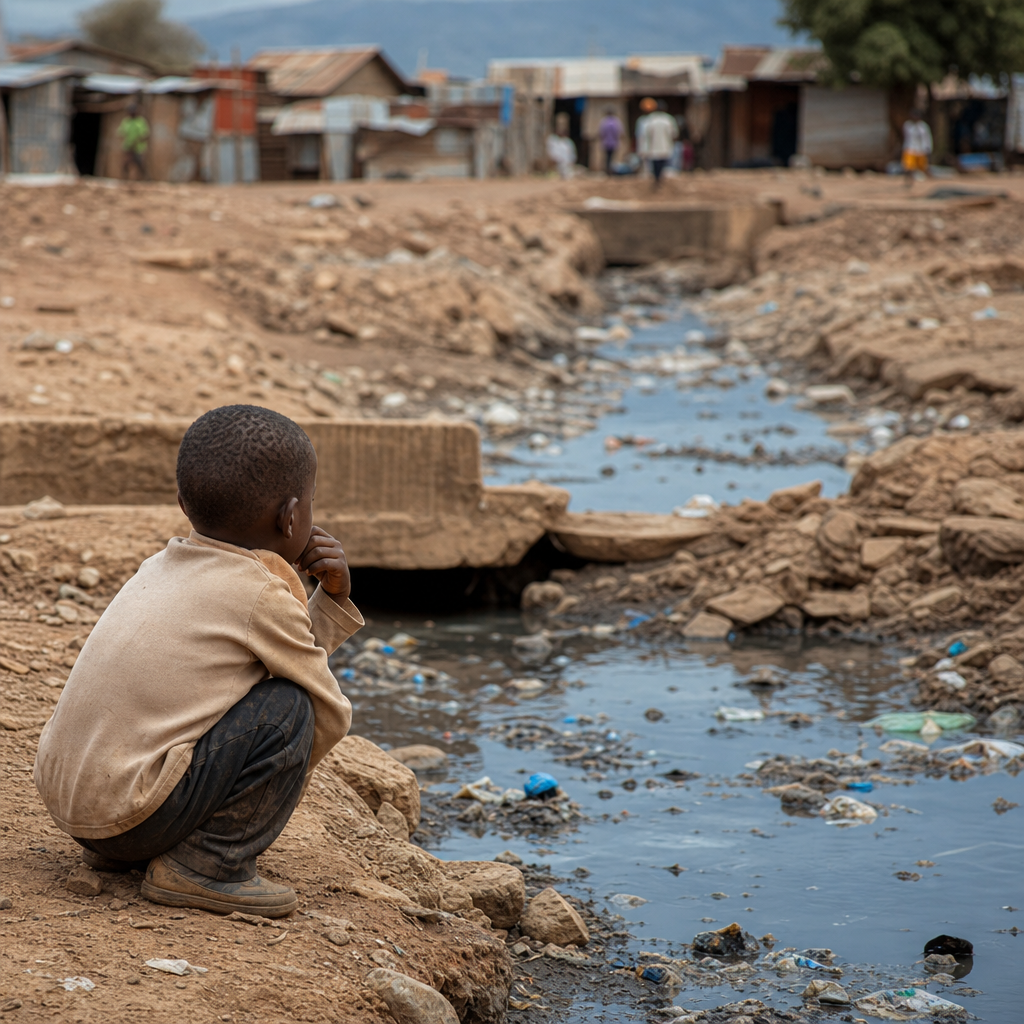
Funding and investment shape whether sanitation systems protect health or fail communities. In global development, sanitation includes toilets, fecal sludge management, sewerage, wastewater treatment, hygiene-supporting infrastructure, and the institutions that finance, regulate, and maintain those services. The central challenge is not proving sanitation matters; the evidence is overwhelming. Safely managed sanitation reduces diarrheal disease, supports child growth, protects groundwater, improves school attendance, strengthens dignity, and increases productivity. The challenge is mobilizing enough capital, directing it to the right service models, and sustaining operations after construction. I have seen projects launch with ribbon cuttings and donor publicity, only to stall because tariffs were unrealistic, spare parts were unavailable, or local governments lacked budget authority. That pattern explains why funding and investment remain at the heart of global sanitation challenges.
Sanitation financing is difficult because benefits are broad but revenue is often narrow. A wastewater plant can improve river quality for an entire region, but user fees alone rarely cover capital costs. Rural toilet programs can cut disease burdens and time loss, yet households may not afford upfront spending even when long-term gains are clear. Urban informal settlements face another barrier: residents need services, but unclear land tenure, fragmented providers, and political risk deter private investors. At the same time, climate pressures are increasing flood damage, drought stress, and infrastructure vulnerability, making underinvestment even more expensive. For any serious discussion of addressing global sanitation challenges, funding must be treated as a system issue involving public finance, household affordability, blended capital, governance, and measurable outcomes.
This hub article explains the key challenges in funding and investment for global sanitation and shows how decision-makers can respond. It covers why the financing gap persists, where public funding should lead, how private investment can contribute, what makes sanitation bankable, and why data, policy, and local capacity determine results. It also connects sanitation to health, climate resilience, gender equity, education, and economic development, because the sector does not succeed in isolation. If readers are building a deeper content map around addressing global sanitation challenges, this page provides the core framework: understand who pays, who benefits, what risks block capital, and which models turn spending into durable services rather than short-lived assets.
The global sanitation financing gap is structural, not temporary
The global sanitation financing gap persists because sanitation combines high social returns with uneven cash returns. According to the World Health Organization, every dollar invested in sanitation can generate multiple dollars in economic benefits through lower health costs, higher productivity, and reduced premature mortality. Yet those gains often accrue to health systems, employers, schools, and ecosystems rather than directly to the utility or operator collecting tariffs. That mismatch creates a classic public goods problem. In practical terms, the project that saves a ministry of health millions may still look financially weak to a lender reviewing repayment prospects.
Capital intensity worsens the problem. Sewer networks, pumping stations, treatment plants, decentralized treatment units, transfer stations, and sludge drying beds require long-term investment before revenues materialize. Many low- and middle-income countries also face high borrowing costs, currency volatility, and limited municipal creditworthiness. I have worked on sanitation planning exercises where technically sound projects were delayed for years because debt service in local currency became unpredictable once imported equipment was priced in dollars or euros. Even where grant funding covered construction, operating budgets remained fragile. Chemicals, electricity, desludging vehicles, laboratory testing, and skilled operators all require recurring expenditure.
Population growth and urbanization make the gap harder to close. Fast-growing cities in sub-Saharan Africa and South Asia often add residents faster than networked infrastructure can expand. Informal settlements may rely on shared toilets, pit latrines, or septic tanks, but fecal sludge collection and treatment are frequently missing. The result is not only open defecation or visible service gaps; it is unsafe containment and dumping, which means sanitation statistics can overstate real safety. Funding approaches that focus only on toilet construction miss the more expensive service chain beyond containment. That is why serious sanitation investment must cover the full chain: capture, emptying, transport, treatment, reuse or disposal, regulation, and behavior support.
Public finance remains the foundation of sanitation investment
Public finance is the backbone of sanitation because the sector delivers public health and environmental benefits that markets alone will not price adequately. National budgets, municipal transfers, development bank loans, and concessional grants remain essential, especially for trunk infrastructure, wastewater treatment, drainage-linked sanitation works, and services for low-income households. The strongest sanitation programs I have seen treat public spending not as a last resort but as the anchor that makes other capital possible. When governments define service standards, fund priority infrastructure, and ring-fence operating support for vulnerable areas, they reduce uncertainty and create investable pathways.
However, public spending often suffers from fragmentation. Responsibility for sanitation may sit across ministries of water, health, education, urban development, environment, and local government. That can produce duplicated programs, inconsistent standards, and capital projects without clear ownership for operations. Budget execution is another weakness. Countries may announce large sanitation commitments, but procurement bottlenecks, weak project preparation, and limited engineering capacity reduce actual disbursement. In one portfolio review I supported, cities had access to external funds but could not move projects because land acquisition, environmental approvals, and tariff decisions were unresolved. Money existed on paper; readiness did not.
Effective public finance also depends on subsidy design. Universal subsidies can be politically popular but inefficient if higher-income households capture most benefits. Smarter approaches target connection fees, output-based aid, social tariffs, school sanitation, public toilets in dense settlements, and support for fecal sludge treatment where private operators cannot recover full costs. Results-based financing has improved performance in some contexts by linking disbursement to verified outputs such as households served, sludge safely treated, or schools with functioning facilities. The lesson is simple: sanitation needs public money, but that money must be planned around service outcomes, not just construction totals.
Private investment can help, but only under realistic conditions
Private investment in sanitation is often discussed as a solution, yet it works best in defined segments rather than across the entire system. Investors can support toilet manufacturing, container-based sanitation, fecal sludge collection fleets, treatment technologies, utility service contracts, digital monitoring, and reuse businesses such as compost or energy recovery. What private capital usually cannot do alone is finance citywide sanitation where tariffs are low, political interference is high, and enforcement is weak. Pretending otherwise wastes time and undermines trust.
The right question is not whether private finance can replace public finance. It cannot. The right question is where commercial discipline, operational efficiency, and innovation can complement public investment. In Senegal, structured fecal sludge management reforms helped formalize parts of the service chain. In India, sanitation entrepreneurship has grown around toilet supply chains and desludging services, although quality and treatment remain uneven. In Kenya and South Africa, container-based and non-sewered sanitation models have shown promise in dense settlements where conventional sewers are too costly or impractical. These examples matter because they show sanitation markets exist, but only when revenue streams, regulation, and customer demand are clear enough to support them.
| Financing source | Best fit in sanitation | Main limitation |
|---|---|---|
| Public budgets and transfers | Universal service obligations, treatment plants, low-income subsidies | Competing fiscal priorities |
| Concessional loans and grants | Large infrastructure, reform programs, technical assistance | Slow preparation and donor conditions |
| Commercial debt | Utilities or operators with stable cash flow | High interest rates and credit risk |
| Impact investment | Innovative service models, sanitation enterprises | Scale remains limited |
| Household finance and microcredit | On-site toilets, septic upgrades, connections | Affordability constraints for poorest households |
Bankability depends on fundamentals. Investors look for predictable cash flow, enforceable contracts, competent operators, demand evidence, and credible regulation. Sanitation projects often fail these tests because revenues are mixed, customer willingness to pay is poorly studied, and municipalities cannot guarantee payments. Blended finance can narrow the gap by combining grants, guarantees, concessional debt, and private capital, but it is not magic. If the underlying service model is weak, blending merely delays recognition of failure. The most successful structures use public money to absorb risks the public sector is better positioned to bear, while leaving operators accountable for performance.
Affordability, inclusion, and the last-mile challenge
One of the hardest investment questions in global sanitation is how to reach poor households without creating systems that collapse financially. Affordability is not just a social concern; it is a design constraint. A sewer connection fee that looks modest to planners can represent weeks or months of income for a low-wage family. Even pit emptying fees can be unaffordable when payment is needed urgently after floods or blockages. As a result, households delay service, share unsafe facilities, or use informal providers who dump waste illegally because they are cheaper.
Addressing this challenge requires layered financing. Household contributions are important because they can strengthen ownership and demand, but they must be matched with targeted subsidies, microfinance, installment plans, or landlord obligations where tenants cannot invest directly. School sanitation, health facility sanitation, and sanitation access for people with disabilities require dedicated public funding because market provision alone routinely underdelivers. Women and girls are disproportionately affected when toilets lack privacy, water access, menstrual hygiene provisions, or safe nighttime access. That means sanitation investment is also an issue of safety and equal participation in education and work.
Last-mile service challenges are especially acute in informal settlements, remote rural areas, and climate-vulnerable regions. Conventional network expansion may be too expensive or physically impossible, while decentralized systems require strong maintenance and service chains. Non-sewered sanitation, simplified sewers, communal blocks with professional management, and scheduled desludging can all work, but only if institutional roles are clear. The key funding principle is fit-for-context investment. Standardized solutions pushed by procurement habits or donor preference often underperform because they ignore density, soil conditions, water availability, flood risk, and user behavior.
Governance, data, and project preparation determine whether money works
Sanitation does not fail only from lack of money. It fails because institutions cannot turn money into reliable service. Governance weaknesses appear in unclear mandates, poor tariff policy, weak enforcement of discharge rules, inadequate asset management, and political pressure to keep user charges unrealistically low. Utilities may prioritize water supply because it is easier to bill and more visible to customers, leaving sanitation underfunded inside the same organization. Municipalities may depend on intergovernmental transfers that arrive late or unpredictably, making maintenance the first budget line to be cut.
Data quality is another barrier. Many countries still lack accurate information on septic tank performance, sludge volumes, treatment capacity utilization, and service reliability. Household surveys may record access to a toilet, but not whether waste is safely managed. Without credible baseline data, governments cannot prioritize investments well, regulators cannot benchmark providers, and financiers cannot assess outcomes. Stronger monitoring frameworks such as the WHO/UNICEF Joint Monitoring Programme service ladders have improved international comparability, but project-level asset and service data remain uneven. Digital tools, GIS mapping, remote monitoring, and utility management systems can help, yet they require training and institutional follow-through.
Project preparation is the practical bridge between policy ambition and financing. Bankable sanitation programs need feasibility studies, demand analysis, land plans, environmental and social safeguards, lifecycle costing, procurement strategy, and operation models. Too often, countries seek capital before doing this groundwork. The result is delayed projects, cost overruns, or infrastructure with no viable operator. Preparation facilities from multilateral development banks can add significant value because they finance the less visible work that makes later investment possible. In sanitation, disciplined preparation is not bureaucracy for its own sake; it is what protects scarce capital from predictable failure.
What a stronger sanitation investment strategy looks like
A stronger sanitation investment strategy starts with recognizing sanitation as essential economic infrastructure, not a peripheral welfare program. Governments should build medium-term expenditure plans that cover the full sanitation service chain, including operations and asset renewal. Utilities and municipalities should adopt lifecycle costing rather than measuring success only by initial capital expenditure. Regulators should set realistic service standards and allow tariff frameworks that support maintenance while protecting poor households through targeted support. Development partners should coordinate around national systems instead of creating disconnected pilot projects that cannot scale.
Investment strategies also need diversified capital matched to specific functions. Grants are best reserved for public goods, low-income access, and early-stage innovation. Concessional debt fits long-life infrastructure when institutions can manage repayment. Commercial finance should be used where cash flows are demonstrably stable, such as mature utilities, service contracts, or sanitation enterprises with proven demand. Performance-based grants, guarantees, pooled municipal financing, and climate adaptation funds can all play useful roles when structured carefully. Because floods, sea-level rise, and water scarcity increasingly affect sanitation assets, climate finance should be integrated into sector planning, especially for resilient treatment systems and flood-proof containment.
Most importantly, leaders should invest in institutions, not just hardware. Training operators, strengthening procurement, improving utility accounting, formalizing desludging markets, and building independent oversight are less visible than opening a treatment plant, but they produce better long-term returns. Communities also need transparent engagement so systems reflect actual use patterns and affordability. Addressing global sanitation challenges ultimately means funding service reliability, safety, and inclusion over decades. Organizations working in this field should audit current financing gaps, prioritize high-impact service chains, and build investment plans that are technically sound, socially fair, and financially credible.
Frequently Asked Questions
Why is sanitation still underfunded globally even though its health and economic benefits are well established?
Sanitation remains underfunded because the sector sits at the intersection of public health, infrastructure, water management, urban planning, and local governance, which often means responsibility is fragmented across multiple ministries and agencies. When no single institution fully owns the sanitation agenda, funding decisions are delayed, diluted, or pushed behind more visible priorities such as roads, electricity, or hospital construction. Sanitation also suffers from a visibility problem: when systems work, the benefits are dispersed and preventive, including lower disease burdens, healthier children, cleaner waterways, and stronger productivity. Those gains are enormous, but they are harder for decision-makers to showcase politically than a new bridge or clinic.
Another major issue is that sanitation projects often require sustained, long-term investment rather than one-time capital spending. Toilets, sewer networks, fecal sludge collection, wastewater treatment, and regulatory oversight all need ongoing operations, maintenance, staffing, and enforcement. Many governments and funders are more comfortable financing construction than covering recurring service costs. In addition, poor households and informal settlements may be least able to pay user fees, so purely market-based models frequently fail to deliver equitable access. The result is a persistent financing gap in exactly the places where sanitation is most urgently needed.
There is also a data and planning challenge. In many countries, sanitation budgets are spread across local governments, utilities, health departments, schools, and emergency programs, making the total level of investment difficult to track. Without reliable costed plans, service-level data, and clear accountability, it is harder to build the case for larger and more predictable finance. In short, sanitation is not underfunded because it lacks value; it is underfunded because its benefits are public, its responsibilities are fragmented, and its service chains require stronger institutions as much as stronger budgets.
What are the biggest financing challenges facing sanitation systems in low- and middle-income countries?
The biggest financing challenges usually begin with affordability and scale. Safely managed sanitation is not just about building a toilet. It includes containment, emptying, transport, treatment, reuse or disposal, drainage interfaces, behavior-supporting infrastructure, and the institutions that regulate and maintain the entire chain. That complexity means costs are spread over multiple stages, and if one stage is underfunded, the whole system can break down. A community may have latrines, for example, but if there is no affordable sludge emptying service or treatment facility, waste still ends up polluting neighborhoods, rivers, and groundwater.
Limited public budgets are a central constraint. Many governments face competing demands from education, debt servicing, food systems, transport, and health emergencies. Within sanitation itself, rural areas, peri-urban settlements, and informal communities are often especially difficult to finance because service delivery is more dispersed, land tenure may be unclear, and conventional networked systems are expensive or impractical. Municipalities may also lack borrowing capacity, stable revenue streams, or the technical expertise needed to prepare bankable sanitation projects that attract development finance or private participation.
Revenue weakness is another major challenge. Tariffs and user fees often do not cover operating costs, let alone long-term capital replacement. In many contexts, raising tariffs is politically sensitive and socially difficult, especially where households already struggle with basic living costs. At the same time, subsidies are frequently poorly targeted, benefiting better-served areas rather than the lowest-income households. Add inflation, currency risk, procurement delays, weak asset management, and limited enforcement of environmental regulations, and sanitation providers can find themselves trapped in a cycle of deteriorating infrastructure and insufficient finance. The core financing challenge, then, is not just finding more money, but structuring funding so services remain affordable, resilient, and inclusive over time.
Can private investment solve the sanitation funding gap?
Private investment can play an important role in sanitation, but it is unlikely to solve the funding gap on its own. Sanitation generates strong public benefits, including disease prevention, environmental protection, and improved human capital, yet many of those benefits do not translate easily into direct cash flows for investors. That makes sanitation different from sectors where users can reliably pay for service at levels that support commercial returns. In low-income or underserved areas, the households with the greatest need are often the least able to bear the full cost of service, so public finance remains essential.
That said, private participation can be valuable in specific parts of the sanitation value chain. Companies may support toilet manufacturing, pit-emptying services, treatment operations, equipment supply, digital monitoring, utility management, or resource recovery models such as compost, biogas, or reclaimed water. Microfinance institutions can help households pay for improved toilets. Social enterprises can expand services in places where conventional utilities do not reach. Public-private partnerships may also improve efficiency when contracts are designed carefully and backed by capable regulation.
The key limitation is that private capital follows predictable revenue, clear risk allocation, and credible institutions. If tariffs are too low, contracts are weak, land issues are unresolved, or regulators cannot enforce standards, investors will either stay away or demand high returns that make projects unaffordable. For that reason, the most effective approach is usually blended finance: public and concessional funds absorb part of the risk or subsidize social outcomes, while private actors contribute operational expertise, innovation, and targeted capital. In practice, the strongest sanitation finance strategies do not ask whether government or private investors should lead in isolation; they combine public responsibility for universal service with selective private participation where incentives are realistic and well governed.
How do weak institutions and governance problems affect sanitation investment outcomes?
Weak institutions can undermine sanitation investment even when money is available. Sanitation systems depend on planning, regulation, procurement, maintenance, environmental oversight, utility performance, and local service delivery all functioning together. If these institutional pieces are weak, funding may be spent on assets that are poorly designed, badly located, difficult to maintain, or disconnected from the rest of the service chain. For example, a treatment plant may be built without reliable electricity, trained operators, or sludge transport arrangements, leaving a technically impressive facility underused or nonfunctional.
Governance problems also reduce investor and donor confidence. When responsibilities are unclear between national ministries, municipalities, utilities, and regulators, projects can stall for years. Weak procurement systems can lead to cost overruns, delays, and low-quality construction. Limited transparency in budgeting and reporting makes it difficult to know whether resources are reaching intended communities. Corruption or politically driven project selection may favor visible infrastructure over the less visible but equally important investments in maintenance, staffing, fecal sludge treatment, and monitoring. In these circumstances, even increased funding may fail to produce sustained public health gains.
Stronger governance improves outcomes in very practical ways. Clear mandates help agencies coordinate. Independent regulation can support fair tariffs and service standards. Better data systems allow governments to target underserved populations and measure whether sanitation is actually safely managed. Capacity building at municipal and utility levels helps translate finance into reliable services. Perhaps most importantly, accountability ensures that sanitation is treated as a long-term public service rather than a one-off construction exercise. Investment works best where institutions can plan beyond election cycles, enforce standards, and maintain systems year after year.
What funding strategies are most effective for expanding equitable and sustainable sanitation services?
The most effective funding strategies are usually mixed, long-term, and tailored to how sanitation services actually function. Public finance remains the foundation because sanitation delivers broad social and environmental returns that markets alone will underprovide. Governments need to fund core public goods such as regulation, citywide planning, treatment infrastructure, services for low-income communities, school and healthcare sanitation, and environmental monitoring. Concessional finance from development banks and donors can then help close capital gaps, especially for large infrastructure, institutional reform, and projects in fragile or low-income contexts.
At the same time, successful strategies pay close attention to service models and cost recovery. In dense urban areas, utilities may combine tariffs, taxes, and transfers to support sewerage and wastewater treatment. In areas using onsite sanitation, better results often come from financing the full fecal sludge management chain, including containment standards, scheduled desludging, transfer stations, treatment plants, and licensing for service providers. Targeted subsidies are critical for reaching poor households, but they should be designed carefully so they support access without weakening provider incentives or excluding informal settlements. Performance-based grants, output-based aid, and results-linked financing can also encourage providers to focus on verified service delivery rather than simple construction targets.
Equally important is investing in the systems behind the infrastructure. Costed national sanitation plans, stronger municipal finance, realistic tariff policies, credit enhancement, project preparation support, and robust monitoring all make funding more effective. Blended finance can help when used strategically, especially where some elements of the sanitation chain are commercially viable and others require subsidy. The best funding strategies recognize a simple truth: sustainable sanitation is not achieved by building isolated assets, but by financing inclusive service systems that can be operated, regulated, and maintained over the long term.