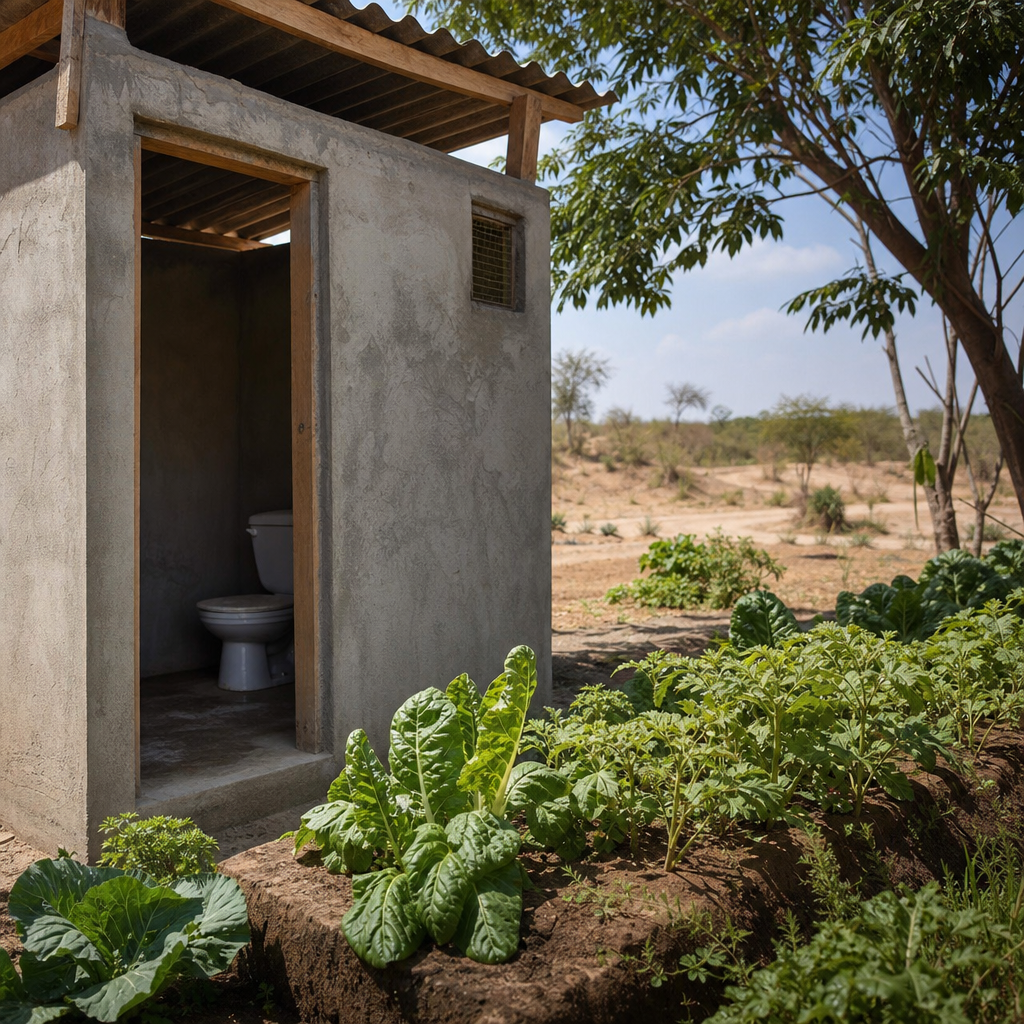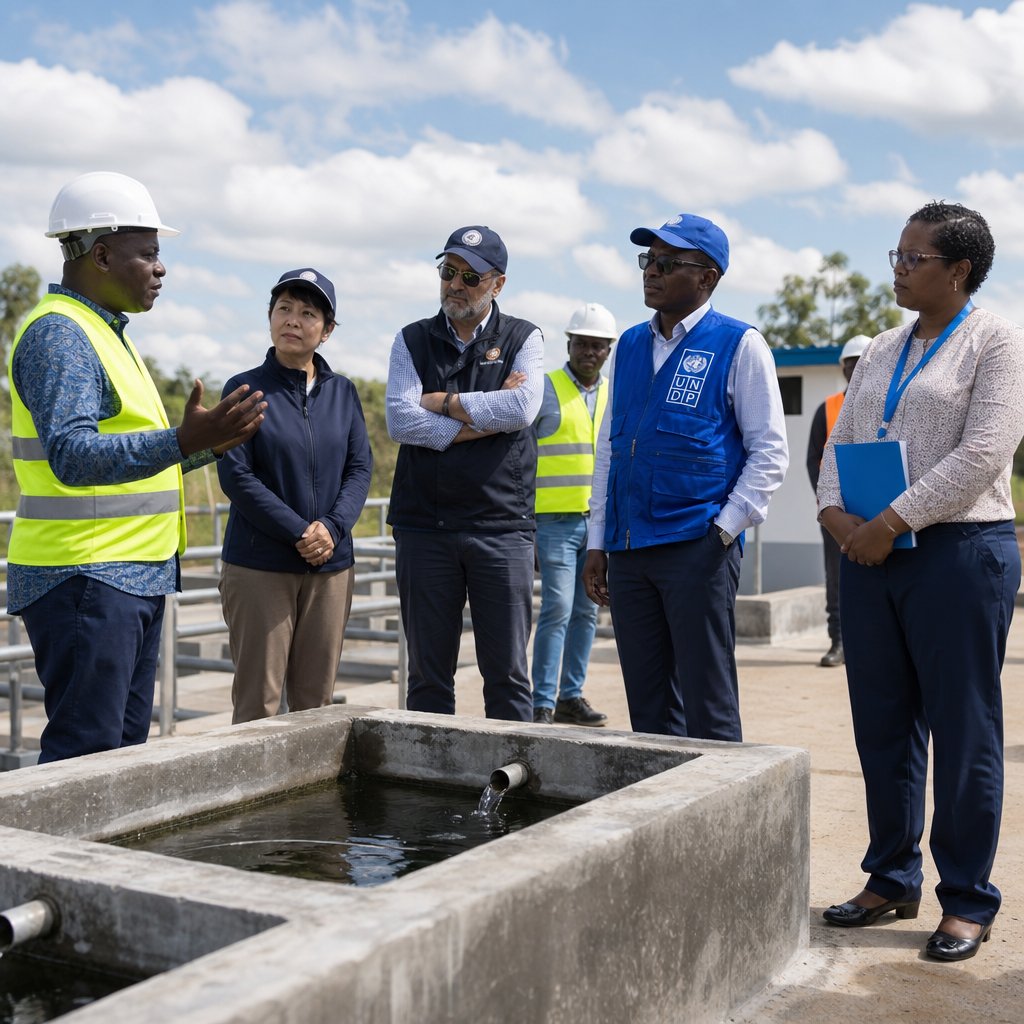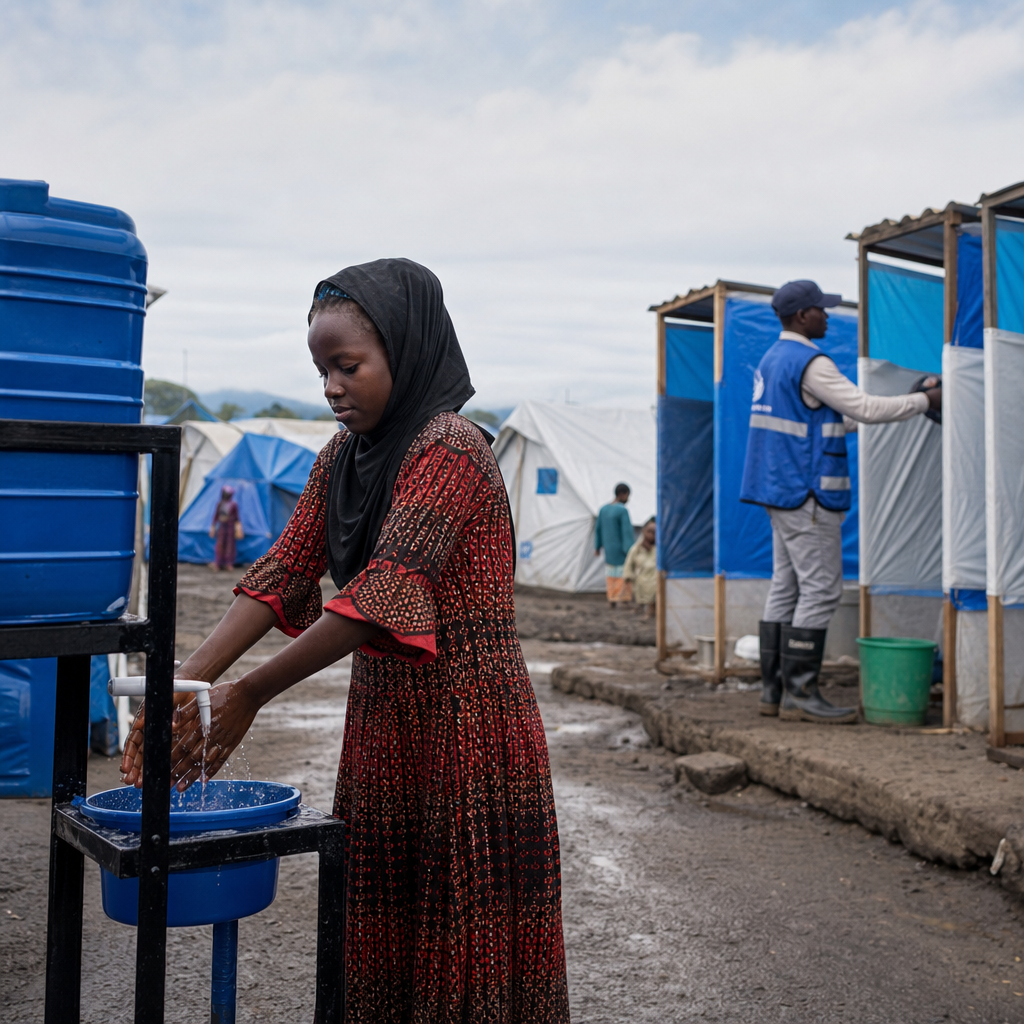
Sanitation in global humanitarian response efforts is the set of systems, services, and behaviors that safely manage human waste, wastewater, solid waste, drainage, cleaning, and hygiene in emergencies. In practice, it means much more than building latrines. It includes emergency toilets in displacement camps, sludge treatment near clinics, menstrual hygiene support for women and girls, handwashing stations at food distribution points, vector control, and the institutional coordination needed to keep disease from spreading when people are already under extreme stress. Across conflicts, disasters, and climate shocks, sanitation is one of the fastest ways to protect life, preserve dignity, and stabilize fragile public health conditions.
In humanitarian operations, sanitation is usually addressed alongside water supply and hygiene promotion because these functions are inseparable in the field. Practitioners often use the term WASH to describe this integrated work, but sanitation deserves distinct attention because it is frequently underfunded and operationally harder than water trucking or item distribution. A damaged sewer network, a flooded camp, a cholera outbreak, or a settlement built on rock each demands different technical solutions. I have seen sanitation plans fail not because teams lacked commitment, but because they treated toilets as a checklist item instead of a service chain that starts with access and ends with safe treatment or disposal.
This topic matters globally because humanitarian need is rising while sanitation gaps remain severe. According to the WHO and UNICEF Joint Monitoring Programme, billions of people still lack safely managed sanitation in nonemergency settings, and those baseline deficits become acute during displacement or disaster. In outbreaks of cholera, shigellosis, hepatitis E, and other fecal-oral diseases, sanitation breakdown is often a decisive risk factor. The people most affected are typically those with the least political power: refugees, internally displaced people, informal settlement residents, people with disabilities, older adults, and host communities sharing overstretched services. Effective humanitarian sanitation reduces mortality, lowers environmental contamination, improves school and clinic functioning, and supports protection outcomes by making facilities safer and more accessible.
As a hub for global initiatives and collaborations in sanitation, this article explains how major agencies, donors, governments, NGOs, and local responders organize their efforts; which standards guide action; where innovation is helping; and what persistent barriers still slow progress. It also points to the central lesson from field experience: sanitation works best when coordination, engineering, community engagement, public health surveillance, and long-term systems thinking are treated as one response, not separate projects.
How global humanitarian sanitation is organized
Global humanitarian sanitation is coordinated through a mix of international leadership, national authority, and local implementation. At the international level, the WASH Cluster, led globally by UNICEF, helps organize emergency water, sanitation, and hygiene responses across agencies. In refugee settings, UNHCR has a central operational role. WHO shapes public health guidance, including cholera control and infection prevention. OCHA supports interagency coordination, while major NGOs such as Oxfam, CARE, Save the Children, International Rescue Committee, Norwegian Refugee Council, and Médecins Sans Frontières deliver field programs directly or through local partners. The International Federation of Red Cross and Red Crescent Societies also plays a major role in disaster response and community-based sanitation support.
National governments remain the primary duty bearers even in crises, and the strongest responses align emergency measures with ministry systems, local utilities, municipal waste operators, and public health departments. That alignment is not always easy. In conflict zones or fractured states, authorities may be absent, contested, or under-resourced. Even then, humanitarian agencies need to work toward nationally accepted standards, permitting pathways, desludging arrangements, and environmental safeguards. The best collaboration models create a shared operational picture: who is constructing toilets, who is maintaining them, where fecal sludge is going, which communities are underserved, and how outbreak data affects sanitation priorities.
Funding is another organizing force. Humanitarian sanitation is financed through UN appeals, bilateral donors such as USAID and FCDO, pooled funds, development banks, philanthropic foundations, and increasingly climate-related mechanisms for resilience-linked infrastructure. Donor preferences shape what gets built. Capital works are often easier to fund than long-term operation and maintenance, yet service failure usually happens after handover: pits fill, cleaning stops, spare parts disappear, and treatment systems are not monitored. A mature sanitation response therefore includes budget lines for cleaning labor, fecal sludge management, fuel, consumables, repairs, and user feedback, not only construction.
Standards, principles, and what good sanitation looks like in emergencies
Good humanitarian sanitation follows established standards rather than improvised assumptions. The Sphere Handbook remains the best-known operational reference, setting expectations for access, safety, excreta containment, hygiene support, and accountability to affected populations. Technical teams also rely on WHO guidance, UNHCR emergency handbooks, and engineering resources such as the Compendium of Sanitation Systems and Technologies from Eawag. These references matter because sanitation decisions made in the first days of a response can create health risks for months. Facility placement, groundwater separation, pit lining, flood resilience, and sludge transport routes are not minor technicalities; they determine whether a settlement stays livable.
In plain terms, good sanitation in an emergency has six features. First, facilities are accessible quickly enough to stop open defecation and reduce exposure. Second, they are safe for women, children, older people, and people with disabilities, with lighting, privacy, locks, and appropriate distances from shelters. Third, they are acceptable to the community, reflecting cultural norms around anal cleansing, shared use, gender separation, and menstrual hygiene. Fourth, they are cleaned and maintained consistently. Fifth, waste is contained and moved through the full service chain without contaminating water sources or public space. Sixth, the system can adapt as a camp expands, floods, urbanizes, or transitions into a longer-term settlement.
One lesson from repeated cholera responses is that counting toilets alone is misleading. A camp may technically meet a latrine ratio while still facing contamination because pits overflow, handwashing facilities are empty, sludge is dumped untreated, or children’s feces are not managed safely. Strong programs monitor use, cleanliness, waiting time, lighting, desludging frequency, queue patterns, and environmental indicators alongside construction targets. They ask not just whether a toilet exists, but whether it is functional, used, safe, and linked to disposal or treatment that protects downstream communities.
Global initiatives and collaborations in sanitation
The most important global sanitation initiatives in humanitarian settings combine policy, financing, technical guidance, and operational collaboration. UNICEF and WHO jointly influence standards, monitoring, and national capacity through their global public health roles. UNHCR advances refugee sanitation planning, including camp layout, urban refugee support, and market-based service models. The Global WASH Cluster strengthens coordination tools, partner mapping, and surge support during major crises. The Joint Monitoring Programme provides the baseline data that agencies use to understand pre-crisis service gaps and inequalities. Sanitation and Water for All brings governments, donors, utilities, and civil society into a policy platform that helps connect emergency needs with longer-term sector reform.
Another influential collaboration is the Sustainable Sanitation Alliance, which curates technical knowledge across containment, treatment, reuse, and behavior change. In protracted crises, development actors such as the World Bank, regional development banks, and bilateral agencies become increasingly important because emergency trench latrines and short-term desludging contracts cannot sustain cities hosting hundreds of thousands of displaced people. The most effective initiatives bridge humanitarian and development finance, allowing agencies to move from temporary facilities to sewer rehabilitation, fecal sludge treatment plants, decentralized wastewater systems, and utility support.
Cholera control has become a defining example of focused collaboration. The Global Task Force on Cholera Control promotes multisector action built around surveillance, oral cholera vaccination, case management, and durable WASH improvements in hotspots. In countries such as Haiti, Yemen, the Democratic Republic of the Congo, and Mozambique, sanitation planning tied to cholera epidemiology has helped direct resources toward the communities facing recurring transmission. This is a practical model for humanitarian sanitation more broadly: combine disease data, infrastructure planning, community trust, and local government engagement instead of treating sanitation as a standalone engineering project.
| Initiative or actor | Primary sanitation role | Field value |
|---|---|---|
| UNICEF | Cluster leadership, supplies, government support | Speeds coordination and scale-up in sudden emergencies |
| UNHCR | Refugee settlement planning and service delivery | Links sanitation design to protection and camp management |
| WHO | Public health guidance and outbreak control | Connects sanitation priorities to disease risk |
| Global WASH Cluster | Partner coordination and operational tools | Reduces duplication and identifies service gaps |
| World Bank and development banks | Infrastructure and utility financing | Supports transition from temporary to durable systems |
| Local authorities and utilities | Permits, service continuity, waste management | Make solutions lawful, scalable, and sustainable |
Operational models: camps, cities, clinics, and schools
Sanitation in camps is the most visible humanitarian model, but urban response is now just as important. In a planned camp, agencies can allocate land, design toilet blocks, set desludging routes, and monitor usage systematically. Even there, conditions change fast. Soil instability, high water tables, rocky ground, insecurity, and seasonal flooding can make a standard pit latrine unusable. Raised latrines, urine-diverting options, septic tanks, container-based sanitation, or scheduled mechanized desludging may be more appropriate depending on the site. In Cox’s Bazar, Bangladesh, responders had to adapt sanitation repeatedly because dense settlements, monsoon rains, and landslide risks made conventional approaches unreliable.
Urban displacement is often harder. Families may be dispersed across rental units, unfinished buildings, informal settlements, or host community neighborhoods where sanitation was already inadequate. Humanitarian agencies then need different tools: support to landlords, vouchers for desludging, rehabilitation of communal toilets, utility partnerships, neighborhood drainage upgrades, and targeted support to municipal fecal sludge services. During crises in cities such as Aleppo, Khartoum, Port-au-Prince, and Goma, restoring networks and treatment capacity has often had greater public health value than building isolated emergency latrines.
Healthcare sanitation is another specialized domain. Clinics and field hospitals need reliable toilets, hand hygiene points, laundry management, wastewater handling, and cleaning protocols that reduce healthcare-associated infection. During Ebola responses in West Africa and the Democratic Republic of the Congo, sanitation design inside treatment centers was inseparable from infection prevention and control. Waste segregation, chlorine use, safe cleaning workflows, and staff movement patterns mattered as much as physical infrastructure. Schools and child-friendly spaces also require tailored sanitation because absenteeism rises when facilities are unsafe, dirty, or unusable for menstrual hygiene management.
Inclusion, accountability, and community ownership
Humanitarian sanitation succeeds when affected people shape it. Community engagement is not a soft add-on; it is a technical requirement because facility use depends on trust, perceived safety, and social norms. Women and girls frequently identify problems that engineers miss, including poor lighting, doors that do not lock, long distances at night, lack of disposal options for menstrual materials, and harassment risks near shared blocks. People with disabilities may face steps, narrow doors, high seats, slippery floors, or inaccessible handwashing points. Older adults may stop using facilities that require squatting or long walks. Children need age-appropriate options and safe disposal support from caregivers.
Accountability mechanisms help responders correct these issues early. Complaint desks, community committees, help lines, and routine user consultations can reveal whether toilets are avoided because of smell, fear, poor cleanliness, or cultural mismatch. In my experience, the fastest sanitation improvements often come from mundane adjustments: moving a handwashing station closer to the exit, hiring cleaners from within the community, changing the direction of a door for privacy, scheduling desludging outside peak use hours, or creating separate bathing and toilet flows to reduce congestion. These are not cosmetic changes. They directly influence uptake and therefore disease risk.
Ownership also matters for durability. Programs that train local masons, pit emptiers, cleaners, health volunteers, and water committees leave behind more capacity than programs centered only on external contractors. Where markets function, agencies increasingly use cash, vouchers, and service subsidies so households can choose sanitation improvements that fit their context. This approach can be more flexible and dignified than distributing identical hardware, though it requires market assessment, regulation, and safeguards for the poorest households.
Innovation, data, and the path from emergency relief to resilient systems
Innovation in humanitarian sanitation is most valuable when it solves operational bottlenecks, not when it adds novelty. Useful advances include digital mapping of facilities and desludging routes, remote sensors for tank levels, prefabricated accessible toilet units, safer sludge transfer equipment, solar lighting, modular treatment systems, and better fecal sludge characterization for planning. GIS platforms, Kobo-based monitoring, and satellite imagery are now common tools for tracking coverage and identifying expansion zones in large settlements. Data matters because sanitation demand changes quickly with population movement, rainfall, and disease alerts.
Still, technology is not a substitute for systems. Many pilot projects fail because spare parts are unavailable, operators are not trained, or procurement rules cannot support maintenance. The transition from emergency relief to resilient sanitation requires institutions, tariffs or subsidies, land agreements, environmental compliance, and long-term financing. That is why collaboration between humanitarian agencies and utilities is so important. In Uganda, Jordan, and parts of Ethiopia, responses that linked refugee or displacement services with district planning and utility operations generally performed better over time than parallel systems created outside public structures.
The central challenge ahead is scale with quality. Climate-related disasters are increasing flood risk, storm damage, salinity intrusion, and displacement pressures that undermine sanitation infrastructure. Conflict destroys treatment plants and empties skilled workforces. Urbanization concentrates need in neighborhoods with weak drainage and insecure tenure. Global humanitarian sanitation must therefore move beyond short-cycle construction targets toward service delivery models that are measurable, inclusive, and environmentally sound. For practitioners, donors, and policymakers, the takeaway is clear: invest in full sanitation chains, strengthen local institutions, and coordinate public health with engineering from day one. Organizations working under the Global Challenges and Opportunities hub should use this page as a starting point, then build deeper knowledge around financing, fecal sludge management, urban displacement, cholera control, and climate-resilient sanitation design.
Frequently Asked Questions
What does sanitation mean in global humanitarian response efforts?
In humanitarian settings, sanitation refers to the full set of systems, services, and everyday behaviors that safely manage human waste, wastewater, solid waste, drainage, cleaning, and hygiene during emergencies. It is much broader than simply installing latrines. Effective sanitation includes emergency toilets in refugee and displacement camps, bathing spaces, handwashing stations, fecal sludge collection and treatment, safe healthcare waste management, drainage to reduce flooding and stagnant water, pest and vector control, menstrual hygiene support, and the cleaning systems that keep shared facilities usable and dignified. It also includes the rules, staffing, supply chains, and coordination mechanisms needed to keep all of those services functioning under difficult conditions.
This broader understanding matters because sanitation failures can rapidly trigger disease outbreaks, undermine nutrition programs, create safety risks for women and children, and weaken the overall humanitarian response. If toilets are built but not emptied, if wastewater is left to pool, or if handwashing facilities lack soap and water, the public health benefits quickly disappear. In practice, strong sanitation programming connects engineering, public health, protection, gender inclusion, and community engagement. The goal is not only containment of waste, but the creation of safer living conditions that preserve health, dignity, and access for affected populations.
Why is sanitation so important during humanitarian emergencies?
Sanitation is one of the most immediate life-saving priorities in crises because emergencies often disrupt or destroy the systems that normally keep waste, wastewater, and garbage away from people. When populations are displaced by conflict, disaster, or disease outbreaks, many people may be living in overcrowded conditions with limited water, damaged infrastructure, and few safe places to wash or use the toilet. Under those circumstances, contamination spreads quickly. Poor sanitation can contribute to outbreaks of diarrheal disease, cholera, hepatitis E, typhoid, skin infections, and other illnesses that can become deadly, especially for children, older adults, pregnant women, and people with weakened immune systems.
Its importance goes beyond disease prevention. Safe sanitation supports dignity, privacy, and personal security. Women and girls may face harassment or violence when toilets are poorly lit, far away, or not separated by sex. People with disabilities, older adults, and caregivers of small children may be effectively excluded if facilities are inaccessible. In healthcare settings, weak sanitation can increase infection risks for patients and staff. In food distribution areas, schools, and communal shelters, a lack of handwashing and cleaning services can compromise every other aid effort. That is why sanitation is treated as a foundational part of humanitarian response: it protects health, supports protection outcomes, and helps stabilize the wider emergency environment.
What are the main components of an effective emergency sanitation response?
An effective emergency sanitation response combines infrastructure, operations, public health measures, and management. At the most visible level, it includes safe, accessible toilets and bathing facilities that are appropriate for the local context and population size. But those facilities are only the starting point. A complete response also requires systems for fecal sludge removal, transport, treatment, and final disposal so that waste does not simply shift from one unsafe location to another. Wastewater management, drainage channels, solid waste collection, cleaning plans, and disinfection protocols are also essential, particularly in dense camps, health centers, and reception sites.
Equally important are the service and coordination elements behind the infrastructure. Facilities must be maintained, cleaned, supplied with water, soap, lighting, locks, menstrual hygiene materials where appropriate, and adapted for children and people with disabilities. Response teams need trained operators, spare parts, fuel, desludging equipment, safe disposal sites, and monitoring systems to identify problems quickly. Hygiene promotion and community engagement help ensure that sanitation services are understood, accepted, and used correctly. Institutional coordination between humanitarian agencies, local authorities, health teams, camp managers, and community leaders is critical so that standards remain consistent and gaps are addressed early. In strong responses, sanitation is treated as an ongoing managed service, not as a one-time construction activity.
How do humanitarian organizations make sanitation services safe, dignified, and inclusive?
Humanitarian organizations improve safety, dignity, and inclusion by designing sanitation services around the real needs of the affected population rather than assuming one standard solution works for everyone. This starts with consultation. Women, girls, men, older people, people with disabilities, and marginalized groups often face different barriers to using sanitation facilities, so their input is essential. Facilities may need gender separation, interior locks, lighting, privacy screens, disposal options for menstrual materials, child-friendly features, ramps, handrails, wider doors, or proximity adjustments for people with mobility limitations. The location of toilets, bathing areas, and handwashing points can directly affect whether people feel safe using them, especially at night.
Dignity also depends on reliability and cleanliness. Even well-designed facilities can become unusable if they are dirty, overflowing, broken, or lack water and soap. That is why sanitation teams focus on operation and maintenance, not just installation. In many settings, menstrual hygiene support is a critical but sometimes overlooked element of inclusive sanitation, requiring both products and suitable private spaces for washing and disposal. Communication matters as well: communities need clear information about where facilities are, how they are maintained, and how to report problems. When humanitarian actors integrate protection, accessibility, gender considerations, and accountability into sanitation planning, services become not only safer and more respectful, but far more effective in protecting health.
What challenges make sanitation difficult to deliver in humanitarian crises?
Sanitation is difficult in emergencies because responders often must build and manage services quickly in unstable, crowded, and resource-constrained environments. The physical setting can be a major obstacle. Flooding, rocky ground, high water tables, cold climates, urban rubble, insecure land tenure, and limited available space can all make it hard to construct toilets, drainage, or treatment systems safely. In fast-moving displacement crises, population numbers may change daily, overwhelming existing facilities. In conflict zones, access restrictions, insecurity, damaged roads, and attacks on infrastructure can disrupt everything from desludging schedules to the delivery of cleaning supplies and spare parts.
Operational and institutional challenges are just as significant. Sanitation requires continuous management, funding, staffing, and coordination, but emergency responses are often fragmented across multiple agencies and authorities. There may be gaps between initial emergency installation and longer-term service provision, leading to poorly maintained facilities or unsafe waste disposal. Cultural practices, privacy concerns, and social norms can affect whether facilities are accepted and used. In healthcare and outbreak settings, sanitation standards must be even more rigorous, adding pressure to already stretched systems. These challenges are why successful humanitarian sanitation depends on both technical expertise and strong coordination. The most effective responses plan for the full sanitation chain from the beginning, adapt solutions to the local context, and invest in ongoing maintenance, community engagement, and institutional support rather than treating sanitation as a short-term construction task.