Green technology is reshaping sanitation from a narrow public health service into a broader system for resource recovery, climate resilience, and inclusive economic development. In sanitation, green technology refers to tools, infrastructure, and operating methods that reduce environmental harm while safely managing human waste, wastewater, stormwater, and related byproducts. That includes low-energy treatment processes, water reuse systems, nutrient recovery, fecal sludge management, nature-based treatment, digital monitoring, and circular business models that turn waste into fertilizer, biogas, reclaimed water, or industrial inputs. I have worked with sanitation planning teams that once measured success mainly by toilet counts and sewer length; today, the stronger projects track pathogen reduction, lifecycle cost, emissions, water savings, and value recovered from waste streams. That shift matters because sanitation failures still drive disease, environmental contamination, school absenteeism, and economic loss, especially in fast-growing cities and climate-stressed regions.
The global opportunity in sanitation is large because the baseline need remains enormous. Billions of people still lack safely managed sanitation, according to WHO and UNICEF Joint Monitoring Programme definitions, which emphasize not only access to toilets but also the safe containment, transport, treatment, and disposal or reuse of excreta. Traditional centralized sewer systems remain essential in many dense urban contexts, yet they are capital intensive, water dependent, and often too slow to reach informal settlements or small towns. Green technology expands the playbook. It supports decentralized treatment where sewers are impractical, lowers energy demand through anaerobic and passive processes, reduces freshwater withdrawals through reuse, and creates local revenue streams that improve operational sustainability. For governments, utilities, NGOs, and investors, sanitation is no longer just a compliance expense. It is infrastructure with measurable returns in health, productivity, resilience, and resource security.
As a hub for global opportunities in sanitation, this article explains where green technology delivers the most value, which models are gaining traction, and what decision-makers should evaluate before scaling them. It covers urban and rural needs, public and private roles, proven treatment options, financing pathways, digital tools, and the policy conditions that separate pilots from durable systems. If you are asking what green sanitation technology includes, where it works best, whether it is affordable, and how it can create jobs while improving public health, the sections below answer those questions directly.
Why Green Sanitation Technology Matters Globally
Sanitation affects health, water quality, gender equity, education, tourism, climate exposure, and labor productivity at the same time. Unsafe waste management spreads diarrheal disease, helminth infections, cholera, and other illnesses through water, soil, food, and surfaces. It also degrades rivers, coastal ecosystems, and groundwater that communities and industries depend on. Green technology matters because it addresses these linked problems with lower environmental cost than purely conventional systems. In practice, that means reducing untreated discharges, minimizing electricity use, lowering chemical dependence, and recovering materials that would otherwise become pollutants.
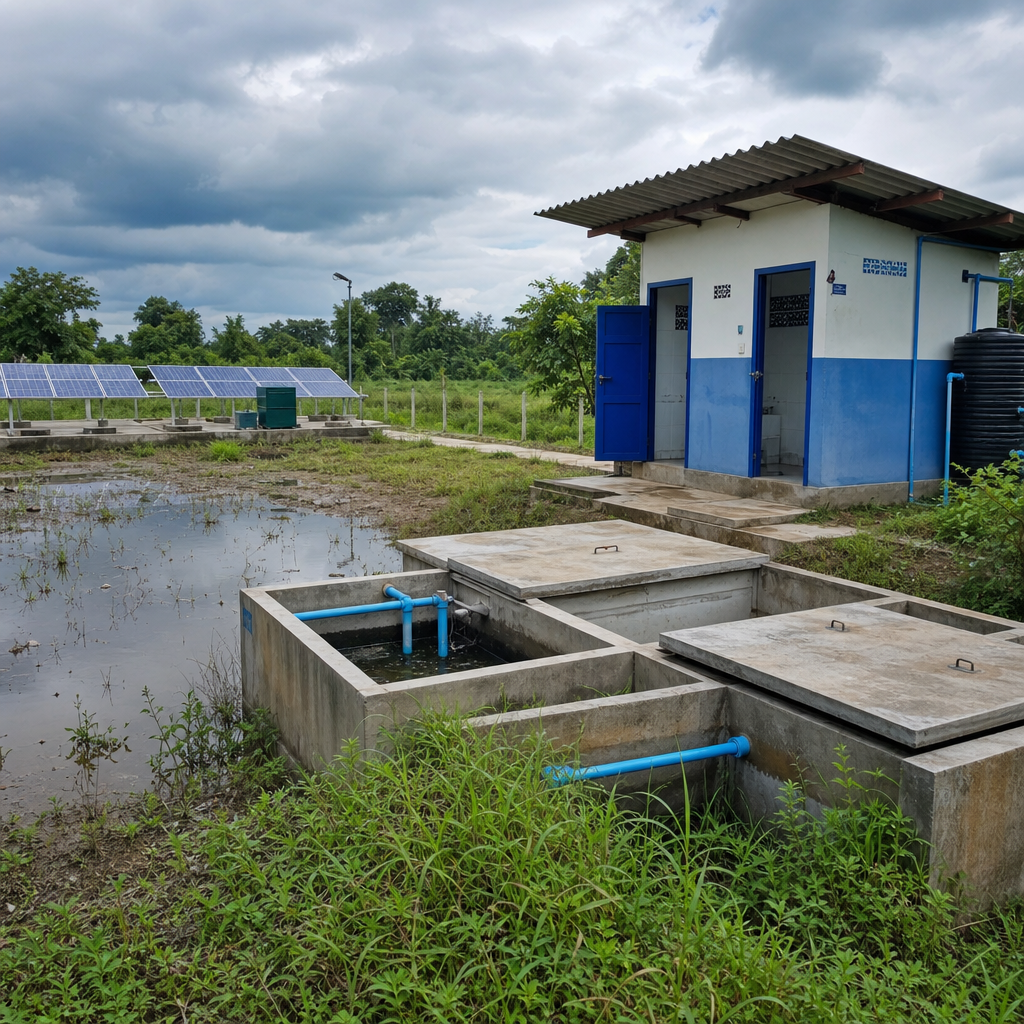
The strongest opportunity is not a single technology but a system redesign. In many cities across Africa, Asia, and Latin America, most households are not connected to sewers; they rely on pit latrines, septic tanks, or container-based solutions. The key global challenge is therefore citywide inclusive sanitation: safely serving every resident through a mix of sewered, non-sewered, and hybrid approaches. Green technology fits this model well because it can be modular, adaptable, and service oriented. For example, fecal sludge treatment plants can process waste from desludging trucks using drying beds, co-composting, planted gravel filters, or biodigesters. Those options often require less energy and less capital than extending conventional sewer networks everywhere.
Climate change raises the urgency. Flooding can overwhelm sewers and contaminate neighborhoods; drought makes water-flushing systems harder to sustain; heat increases odor and treatment stress. Nature-based and low-water sanitation systems provide resilience where centralized assets are vulnerable. In coastal areas, wastewater reuse can offset pressure on freshwater aquifers. In agricultural regions, recovered nutrients can reduce dependence on imported synthetic fertilizer, whose prices are volatile and whose production is energy intensive. The result is a sanitation strategy tied directly to climate adaptation and resource security.
Core Green Technologies Transforming Sanitation
Green sanitation technology spans containment, collection, treatment, reuse, and monitoring. At the household and community level, urine-diverting dry toilets, composting toilets, and container-based sanitation can reduce water use and enable nutrient recovery when supported by reliable service chains. For onsite systems such as septic tanks and pit latrines, improved emptying equipment, transfer stations, and scheduled desludging programs reduce illegal dumping and improve treatment reliability. These are not glamorous interventions, but they are among the highest-impact upgrades in places where most sanitation is onsite rather than sewered.
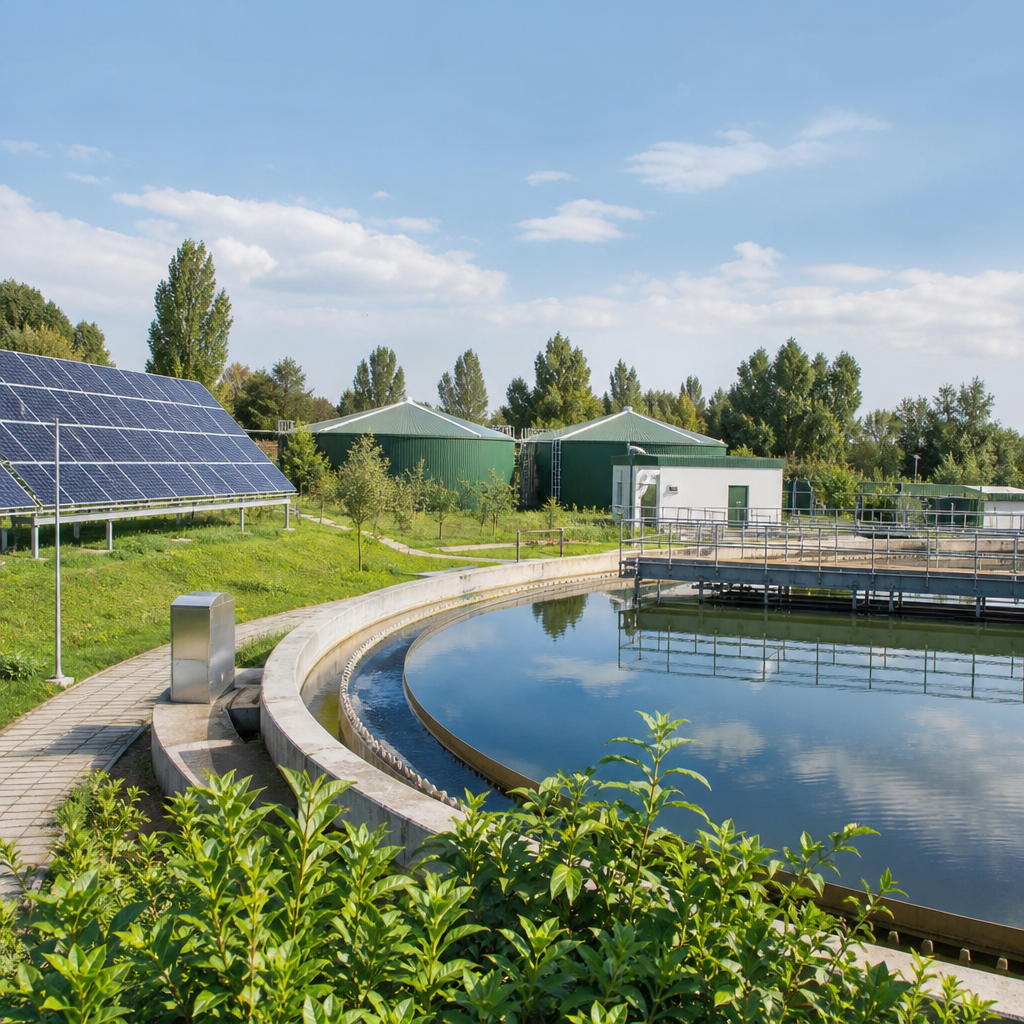
At the treatment stage, anaerobic digesters convert organic waste into biogas, which can be used for cooking, heat, or electricity generation. Constructed wetlands use gravel, plants, and microbial processes to polish wastewater with relatively low energy input. Waste stabilization ponds, when properly designed with sufficient land area and hydraulic retention time, remain effective for pathogen reduction in warm climates. Membrane bioreactors, sequencing batch reactors, and moving bed biofilm reactors offer high-quality effluent where space is limited, though they usually require stronger technical capacity and more dependable power. The right choice depends on influent characteristics, land cost, operator skill, effluent standards, and whether reuse is planned.
Resource recovery is where green technology stands out most clearly. Treated biosolids can be processed into soil conditioners when contaminants are controlled and regulations permit land application. Source-separated urine can be stabilized and used as fertilizer in some contexts. Black soldier fly larvae can help process certain organic waste streams, reducing volume while producing protein and frass, although strict feedstock control is necessary. Reclaimed wastewater can support irrigation, industrial cooling, toilet flushing, or groundwater recharge if treatment standards, monitoring, and public communication are robust. These applications turn sanitation into a circular economy sector rather than a linear disposal chain.
| Technology | Best-fit context | Main benefit | Key limitation |
|---|---|---|---|
| Constructed wetlands | Small towns, peri-urban sites, institutions | Low energy treatment and polishing | Requires land and maintenance of hydraulic flow |
| Anaerobic digesters | Markets, treatment plants, dense settlements | Biogas production and sludge stabilization | Performance drops with poor feedstock control |
| Container-based sanitation | Informal settlements, flood-prone areas | Fast deployment without sewer connection | Needs disciplined collection logistics |
| Wastewater reuse systems | Water-scarce cities and industry clusters | Reduces freshwater demand | Requires strong quality monitoring and public trust |
Urban, Rural, and Industrial Opportunities in Sanitation
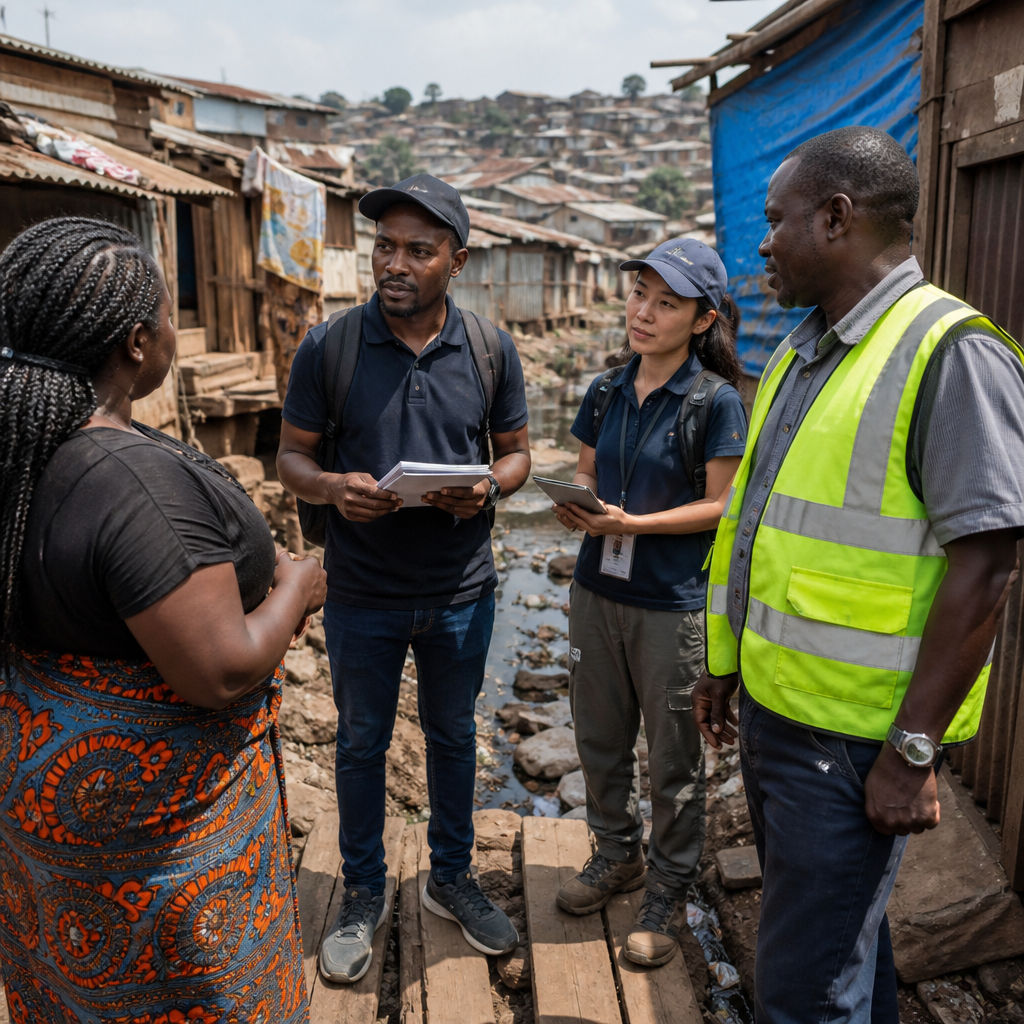
Cities present the largest immediate market for sanitation innovation because population density amplifies both risk and return. In dense informal settlements, laying full sewer networks may be physically difficult and financially unrealistic in the near term. Green approaches such as simplified sewers, decentralized treatment units, shared sanitation linked to scheduled servicing, and container-based models can close service gaps faster. I have seen municipal teams unlock progress when they stopped treating non-sewered areas as temporary exceptions and instead designed permanent service chains with licensed emptiers, transfer points, treatment plants, and digital customer records.
Small towns and rural areas need different solutions. Households are more dispersed, incomes are often lower, and utility staffing is limited. Here, robust onsite systems, fecal sludge management, and nature-based treatment usually outperform complex plants that need specialist operators. Rural schools and clinics benefit from water-efficient toilets, handwashing stations, urine diversion where appropriate, and treatment systems sized for intermittent use. The global opportunity is substantial because these facilities affect education outcomes, maternal health, and infection control, yet they are frequently underfunded.
Industry is another major sanitation opportunity that is often overlooked in public discussions. Food processing, textiles, pharmaceuticals, mining camps, hospitality sites, and commercial real estate all generate wastewater and sanitation demand. Green technology can help firms meet discharge standards, reduce water purchases, and strengthen environmental reporting. Breweries commonly use anaerobic treatment to cut organic load while generating energy. Hotels in water-stressed tourist regions increasingly reuse treated greywater for landscaping and flushing. Industrial and commercial adoption matters because it can build local operator skills, create supplier markets, and normalize water reuse technologies that later support municipal systems.
Financing, Policy, and Delivery Models That Scale
Most sanitation failures are not technology failures alone. They are failures of financing, regulation, asset management, and operations. Green technology scales when service delivery is designed from the start. That means defining who owns each asset, who collects tariffs or fees, how maintenance is funded, what performance indicators are tracked, and what happens when customers cannot pay full cost. In my experience, sanitation projects underperform when capital grants cover construction but no one secures the budget for desludging, spare parts, laboratory testing, and operator retention.
Several financing models can work. Utilities may fund sewer and treatment upgrades through blended finance that combines public budget, development finance, and commercial debt. Non-sewered sanitation often benefits from output-based aid, results-based contracts, or franchised service models where private operators empty and transport waste under municipal oversight. Carbon finance is not a universal answer, but methane avoidance and renewable energy generation can improve project economics in selected cases, especially for digesters and landfill-diversion schemes. Extended producer responsibility and green bonds can also support sanitation-linked infrastructure where stormwater, wastewater, and resource recovery are integrated.
Policy alignment is essential. Governments need clear standards for effluent quality, biosolids use, occupational safety, truck discharge points, and reuse applications. Without regulation, good operators are undercut by illegal dumping and poor-quality services. Without realistic standards, utilities inherit treatment targets they cannot monitor or afford to meet. The best frameworks set phased compliance pathways, recognize both sewered and non-sewered service chains, and assign accountability across ministries, regulators, and local governments. International guidance from organizations such as the World Bank, the International Water Association, and the International Organization for Standardization is useful, but local enforcement capacity determines whether policy changes behavior.
Digital Tools, Public Health Gains, and Practical Implementation
Digital technology is becoming a quiet force multiplier in sanitation. Utilities and service providers now use GIS asset mapping, remote sensors, route optimization, customer payment platforms, and laboratory data dashboards to improve reliability. For fecal sludge management, digital scheduling reduces missed empties and illegal disposal by linking households, truck operators, transfer stations, and treatment plants. Sensors can track dissolved oxygen, turbidity, pH, and flow in treatment systems, enabling faster response to process upsets. These tools are valuable not because they are new, but because sanitation operations have historically suffered from weak data and fragmented accountability.
The public health payoff from green sanitation is direct and measurable. Better containment and treatment reduce fecal contamination in drains, canals, and household environments. Safe reuse and disposal lower pathogen exposure for farmers, sanitation workers, and downstream communities. Where wastewater treatment improves, surface waters support safer recreation, fisheries, and irrigation. There are also major benefits for women and girls, who often bear the cost of unsafe, distant, or unreliable sanitation through time loss, safety concerns, and missed school days. Green technology does not replace the need for hygiene behavior and water supply, but it makes comprehensive health protection much more achievable.
Implementation should start with diagnosis, not equipment shopping. Cities and towns need a sanitation flow analysis: where waste is generated, how it moves, where it leaks into the environment, what standards apply, and which customers can support tariffs. Then comes technology selection, operator training, financing design, and monitoring. The principle is simple: choose the least complex system that can reliably meet the health and environmental objective. A hybrid citywide model is often best. Use sewers where density and topography justify them, deploy decentralized or onsite service chains elsewhere, recover resources where markets exist, and build data systems that show whether outcomes are improving. Green sanitation succeeds when infrastructure, operations, policy, and customer service are treated as one system.
The potential of green technology in sanitation is practical, not speculative. It offers a way to expand access faster, reduce pollution, conserve water, cut emissions, and recover value from waste in places where conventional approaches alone cannot keep pace. The global opportunities in sanitation are widest where leaders look beyond toilets and sewers to the full service chain, from containment and collection to treatment, reuse, and long-term operations. That systems view is what turns sanitation from an infrastructure gap into an economic and environmental opportunity.
The central lesson is that no single solution fits every place. Dense urban settlements may need container-based services, transfer stations, and modular treatment. Small towns may benefit more from septic management, drying beds, and wetlands. Industrial clusters may justify advanced reuse because water savings are immediate and measurable. What works across all settings is disciplined planning, realistic regulation, lifecycle financing, trained operators, and transparent performance data. When those conditions are in place, green technology consistently improves service reliability and expands the range of affordable sanitation options.
For policymakers, utilities, investors, and development partners, the next step is clear: evaluate sanitation as a resource system, not only a waste problem. Map current flows, identify the largest health and environmental losses, and prioritize technologies that match local capacity and market demand. If you are building a broader strategy on global challenges and opportunities, sanitation deserves a central place because it delivers public health protection, climate resilience, water security, and local jobs at the same time. Start with one service chain assessment, one realistic pilot linked to operations funding, and one commitment to scale what performs.
Frequently Asked Questions
1. What does green technology mean in sanitation?
In sanitation, green technology refers to systems, equipment, and operational approaches that manage human waste, wastewater, stormwater, and related byproducts in ways that reduce environmental damage while improving public health outcomes. Rather than treating sanitation as a simple disposal service, green sanitation technology views waste streams as part of a larger circular system. That means looking for opportunities to conserve water, cut energy use, recover nutrients, reduce pollution, and even generate useful byproducts such as biogas, compost, or reclaimed water.
Examples include low-energy wastewater treatment, urine diversion, nutrient recovery, fecal sludge treatment, decentralized sanitation systems, and nature-based solutions such as constructed wetlands. These approaches can help lower greenhouse gas emissions, protect rivers and groundwater, and make sanitation services more resilient in places facing drought, flooding, rapid urbanization, or weak centralized infrastructure. Green technology in sanitation is not just about using newer equipment; it is about redesigning sanitation systems so they are safer, more efficient, more inclusive, and better aligned with environmental sustainability.
2. How can green sanitation technology support resource recovery?
One of the most important shifts in modern sanitation is the move from waste disposal to resource recovery. Human waste and wastewater contain valuable materials, including water, organic matter, nitrogen, and phosphorus. Green sanitation technologies are designed to safely capture and process these materials so they can be reused instead of lost or released as pollutants.
For example, treated wastewater can be reused for agriculture, industrial processes, landscaping, or groundwater recharge, reducing pressure on scarce freshwater supplies. Nutrient recovery systems can extract nitrogen and phosphorus for use in fertilizers, helping agriculture while reducing dependence on synthetic inputs. Organic waste can be processed through anaerobic digestion to produce biogas, which can be used as a renewable energy source for cooking, heating, or electricity generation. In some cases, treated biosolids can also be converted into soil conditioners if they meet safety standards.
This resource recovery model offers both environmental and economic benefits. It can reduce treatment costs over time, create local business opportunities, improve the financial sustainability of sanitation services, and support more circular local economies. Just as importantly, it changes the way communities and utilities think about sanitation: not as a costly end-of-pipe burden, but as a system that can produce real value when designed and managed effectively.
3. Why is green technology important for climate resilience in sanitation?
Climate change is placing increasing stress on sanitation systems through more intense rainfall, flooding, drought, sea level rise, heat, and infrastructure disruption. Conventional sanitation systems, especially those that rely heavily on large centralized networks, can be vulnerable when climate conditions shift or when service areas expand faster than planned. Green technology helps address these risks by making sanitation systems more flexible, adaptive, and less resource-intensive.
For drought-prone regions, water-efficient toilets, dry sanitation systems, and water reuse technologies can reduce demand on limited water supplies. In flood-prone or coastal areas, decentralized treatment systems, elevated facilities, sealed containment, and nature-based stormwater management can reduce contamination risks during extreme weather events. Low-energy treatment methods also improve resilience where electricity supply is unreliable or expensive. In addition, systems that recover energy or nutrients can strengthen local self-sufficiency and reduce dependence on external inputs.
Green sanitation also contributes to climate mitigation. Better sludge management and wastewater treatment can reduce methane emissions, while energy-efficient operations can lower the carbon footprint of sanitation services. Nature-based solutions can offer co-benefits such as carbon sequestration, habitat support, and reduced urban heat impacts. Overall, green technology makes sanitation better suited to future environmental conditions while helping communities maintain safe, reliable service under growing climate pressure.
4. What are some examples of green technologies being used in sanitation today?
Green sanitation technology covers a wide range of solutions, from household-level systems to city-scale infrastructure. One common example is decentralized wastewater treatment, which allows neighborhoods, institutions, or smaller communities to treat wastewater locally rather than depending entirely on long sewer networks. These systems can reduce construction costs, energy use, and leakage risks while expanding service to underserved areas.
Another example is fecal sludge management technology, especially in places where onsite sanitation such as pit latrines and septic tanks is more common than sewered systems. Improved collection, transport, treatment, and end-use systems can prevent unsafe dumping and create opportunities for composting, fuel production, or nutrient recovery. Constructed wetlands and other nature-based treatment systems are also increasingly used because they can treat wastewater with relatively low energy demand while delivering landscape and biodiversity benefits.
Additional examples include water reuse systems, vacuum toilets, urine-diverting toilets, anaerobic digesters, membrane-based treatment in specialized settings, and digital monitoring tools that improve operational efficiency. Smart sensors and data systems can detect blockages, monitor treatment performance, reduce water losses, and support preventive maintenance. What ties these technologies together is not a single design style, but a common goal: improving sanitation outcomes while lowering environmental impact and creating more sustainable long-term service models.
5. What challenges affect the adoption of green technology in sanitation?
Although the potential is significant, adopting green sanitation technology is not always straightforward. One major challenge is financing. New systems may require upfront investment, and decision-makers may hesitate if the long-term savings or recovery benefits are not well understood. In many settings, sanitation is already underfunded, and innovative approaches can struggle to compete with familiar but less sustainable options.
Another challenge is institutional capacity. Green sanitation systems often require coordinated planning across water, health, environment, urban development, and agriculture sectors. Without clear regulation, performance standards, maintenance systems, and operator training, even promising technologies can underperform. Public acceptance can also matter, especially when projects involve water reuse, reuse of treated byproducts, or changes in sanitation behavior at household or community level.
Local context is critical as well. A technology that works well in one region may not fit another due to climate, density, land availability, cultural preferences, energy access, or service models. That is why successful implementation usually depends on strong planning, community engagement, realistic operation and maintenance strategies, and supportive policy frameworks. When these conditions are in place, green sanitation technology can scale effectively and deliver lasting public health, environmental, and economic benefits. The key is to match innovation with governance, funding, and local needs rather than assuming that technology alone will solve sanitation challenges.