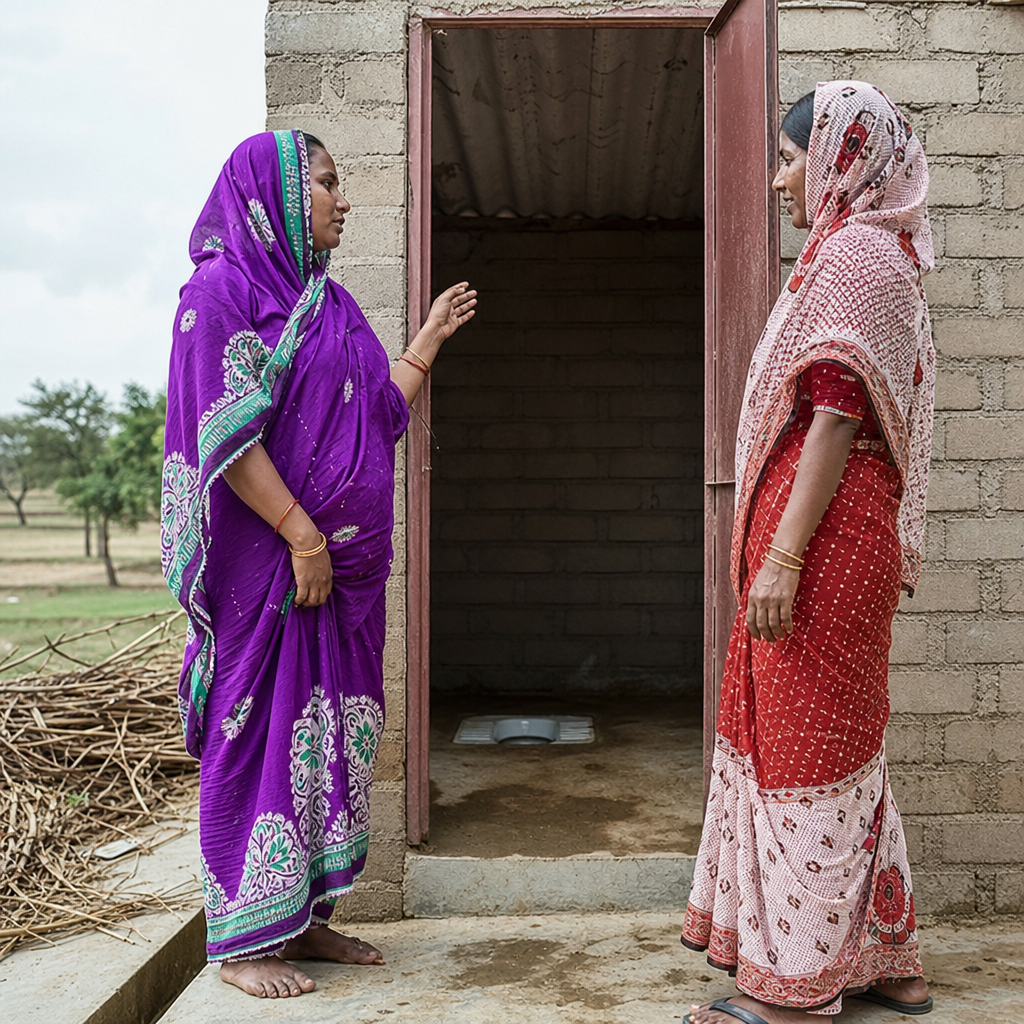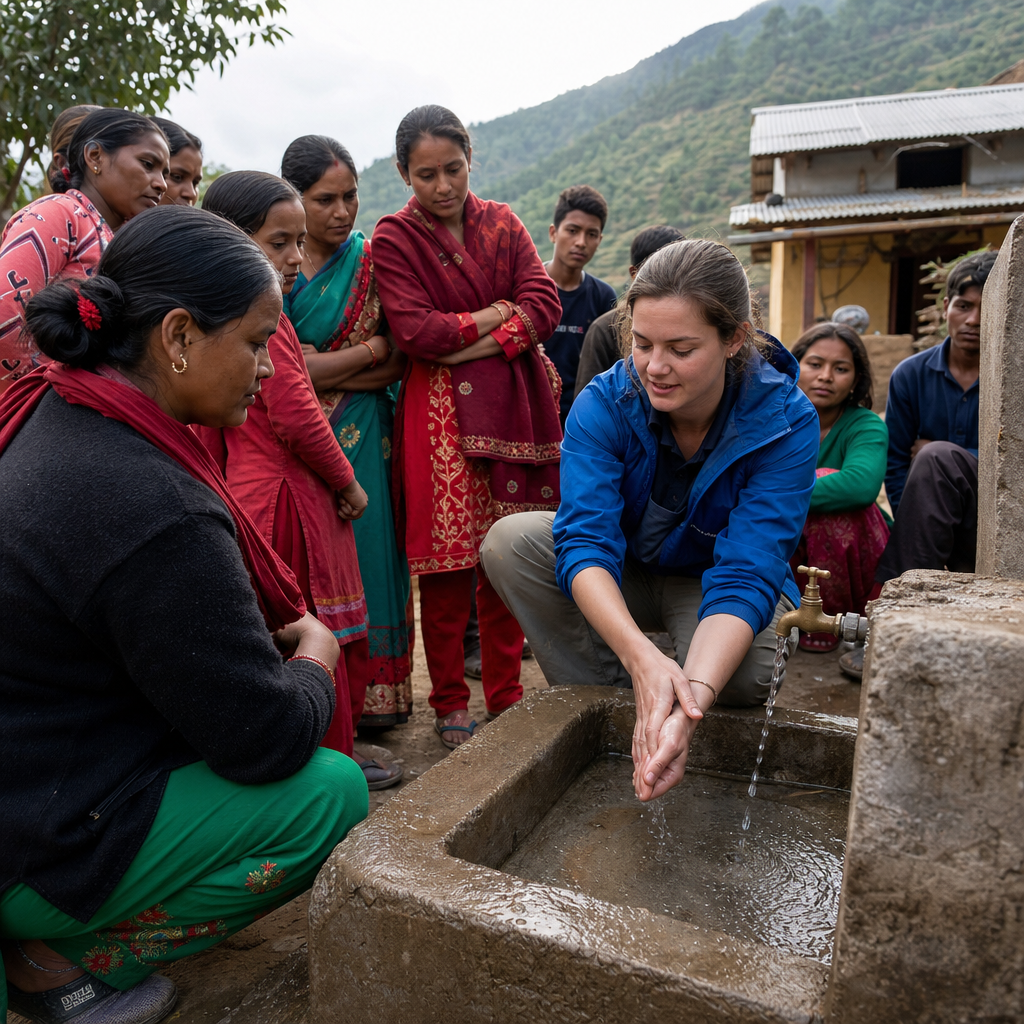
Sanitation is one of the clearest examples of a local service with global consequences. Toilets, sewerage, fecal sludge management, wastewater treatment, handwashing facilities, drainage, and hygiene behavior are delivered street by street, yet their effects extend far beyond municipal boundaries into public health, school attendance, workforce productivity, environmental quality, climate resilience, and economic growth. When people talk about global opportunities in sanitation, they mean the shared chances for cities, utilities, governments, manufacturers, researchers, investors, and community organizations to solve sanitation problems faster by learning, financing, standardizing, and innovating across borders. Leveraging global networks for sanitation solutions is therefore not a slogan. It is a practical strategy for moving proven approaches from one setting to another while adapting them to local realities.
I have worked on sanitation planning processes where the hardest problem was not identifying technical options; it was connecting the right actors early enough to avoid repeating mistakes already solved elsewhere. A city struggling with overflowing pits can save years by learning from operators in Dakar or Kampala. A ministry designing rural sanitation incentives can avoid weak monitoring systems by studying how India handled verification, how Indonesia used community approaches, or how Ethiopia aligned sanitation with health extension workers. Global networks matter because sanitation is still off track worldwide. The WHO and UNICEF Joint Monitoring Programme has repeatedly shown that billions of people still lack safely managed sanitation, and hundreds of millions practice open defecation or rely on unimproved facilities. That gap creates both a humanitarian imperative and a major field of opportunity.
This hub article explains how global opportunities in sanitation are created, where networks add the most value, and which themes deserve attention across policy, finance, technology, operations, and equity. It also serves as a guide to the broader subtopic by organizing the field into clear areas: knowledge exchange, city and utility cooperation, non-sewered sanitation, circular economy models, digital monitoring, climate adaptation, institutional reform, and inclusive service delivery. The core idea is simple. The most effective sanitation progress happens when local implementation is strengthened by international collaboration, shared standards, disciplined financing, and evidence from places that have already tested what works.
Why Global Networks Matter in Sanitation
Global sanitation networks connect organizations and practitioners that would otherwise work in isolation. These networks include multilateral institutions such as the World Bank, UNICEF, WHO, UN-Habitat, and development banks; practitioner communities such as the Sustainable Sanitation Alliance and the International Water Association; research groups; city alliances; private firms; and social enterprises. Their value comes from reducing fragmentation. Sanitation projects often fail because planning, behavior change, engineering, regulation, and financing are handled separately. Networks make it easier to integrate these pieces.
In practice, the biggest gain is speed. A mayor does not need to invent a fecal sludge management framework from scratch when operational templates, service standards, desludging business models, and tariff lessons already exist. I have seen project teams cut months from diagnostic work by using globally recognized tools such as shit flow diagrams, citywide inclusive sanitation assessments, sanitation safety planning, and service chain mapping. These methods provide a common language. That matters because sanitation is not only about building toilets. It is about whether waste is contained, emptied, transported, treated, and either safely disposed of or reused.
Networks also improve credibility with funders and regulators. When a utility aligns its expansion plan with established approaches used in multiple countries, lenders can assess risk more confidently. When a national government references ISO standards, WHO sanitation safety guidance, or utility benchmarking indicators, procurement and oversight become more consistent. This does not mean copying another country wholesale. It means borrowing the tested parts, understanding the assumptions behind them, and adapting them to local land tenure, water availability, topography, and institutional capacity.
Key Global Opportunities Across the Sanitation Value Chain
The largest opportunities in sanitation sit across the full service chain, not in isolated hardware investments. Containment remains critical, especially in rapidly growing low-income urban areas where septic tanks and pits are far more common than sewer connections. Global manufacturers and local masons can work together to improve design quality, prevent groundwater contamination, and standardize prefabricated components. Better containment is often the cheapest way to reduce exposure when sewer expansion is decades away.
Emptying and transport create another major opportunity. In many cities, informal pit emptiers do most of the work, often under unsafe conditions and with limited equipment. Networks can help formalize the sector through operator licensing, safety training, transfer station design, call-center dispatch systems, and financing for vacuum trucks or smaller mechanized emptying devices. Cities such as Dakar and Maputo have shown that improving the market for emptying can raise service quality without waiting for full sewer coverage.
Treatment and reuse are equally important. Wastewater treatment plants remain essential in dense urban areas, but decentralized and non-sewered treatment options are expanding quickly. Co-composting, black soldier fly treatment, biodigesters, constructed wetlands, and drying beds can all play a role when selected carefully. The opportunity is not just environmental compliance. Treated by-products can support agriculture, energy generation, and soil restoration if quality standards and market demand are real. Circular sanitation works best where resource recovery is planned from the start rather than added as an afterthought.
| Sanitation area | Global opportunity | Practical example |
|---|---|---|
| Containment | Standardized septic and pit designs adapted locally | Urban housing programs using approved tank drawings and inspections |
| Emptying | Professionalized desludging markets | Licensing operators, digital bookings, and worker safety requirements |
| Transport | Efficient transfer and discharge systems | Transfer stations that reduce illegal dumping and fuel costs |
| Treatment | Modular plants for fecal sludge and wastewater | Drying beds, co-treatment at wastewater plants, or biodigesters |
| Reuse | Resource recovery business models | Compost sales, biogas for institutions, or dried fuel products |
| Monitoring | Interoperable data systems | GIS asset mapping linked to service requests and compliance reports |
City Partnerships, Utility Learning, and Regional Platforms
One of the strongest levers for sanitation progress is direct cooperation between cities and utilities. Peer learning works because operational staff trust other operators who have faced similar constraints. A utility manager is more likely to adopt a preventive maintenance schedule, a sewer blockage response protocol, or a tariff communication strategy after hearing exactly how another utility implemented it. Regional water and sanitation associations in Africa, Asia, and Latin America have become effective channels for this practical exchange.
City-to-city collaboration is especially valuable for sanitation planning in secondary cities. These municipalities often grow too fast for central sewer systems to keep up, yet they are large enough to need regulated service chains. The citywide inclusive sanitation approach has gained traction because it starts with the whole population, includes both sewered and non-sewered solutions, and recognizes public, shared, and household services where appropriate. I have found that cities understand this framework quickly when they see examples from peers rather than only reading donor guidance.
Regional platforms also help with procurement and regulation. If several cities in a region define similar technical specifications for desludging equipment, public toilets, treatment units, or laboratory testing, suppliers gain confidence to invest and prices often become more competitive. Shared benchmarking can push performance upward as well. Utilities that report service coverage, nonrevenue water, treatment compliance, complaint resolution time, and cost recovery on a common basis can identify realistic targets instead of guessing. Sanitation needs the same culture of comparative performance that transformed parts of the drinking water sector.
Finance, Investment, and the Economics of Scale
Sanitation is often described as expensive, but the better statement is that poorly structured sanitation finance is expensive. Global networks open access to blended finance, climate funds, impact investors, municipal development facilities, and results-based aid. They also help local institutions present sanitation as an investable service rather than a welfare line item with unclear returns. The economic case is strong. Poor sanitation increases healthcare costs, reduces labor productivity, lowers tourism potential, contaminates water sources, and damages ecosystems. The World Bank has long documented that inadequate sanitation imposes large losses as a share of GDP in many countries.
Different parts of the sanitation chain require different financing mechanisms. Household toilets may need microfinance, targeted subsidies, or output-based support for the poorest. Sewer networks often require public capital and long repayment horizons. Fecal sludge emptying businesses may need working capital, asset leasing, or credit guarantees. Treatment plants can sometimes combine tariffs, tipping fees, land value capture, and revenue from reuse products. No single model fits every context. The opportunity lies in matching instruments to service realities.
Global investors increasingly ask for measurable outcomes. That creates an opening for sanitation programs that can show verified service delivery, safe disposal rates, school attendance gains, or reduced pathogen exposure. Standardized indicators matter here. A project that reports only toilet construction numbers is much less compelling than one that tracks the entire sanitation chain. Strong economics also depend on realistic operations and maintenance budgets. Many treatment facilities underperform not because the technology is wrong, but because electricity, spare parts, staffing, and sludge logistics were underestimated at design stage.
Technology Transfer Without Copy-and-Paste Mistakes
Technology transfer is useful only when institutions understand context. Too many sanitation failures come from importing equipment that cannot be maintained locally, treatment systems that assume reliable power where outages are common, or sewer models unsuited to settlement patterns and water use. Effective global sanitation collaboration does not promote a universal technology stack. It promotes a disciplined selection process.
That process starts with demand, density, soil conditions, flooding risk, water availability, road access, user preferences, and willingness to pay. It also examines who will own assets, who will regulate them, and who will pay for maintenance. For example, urine-diverting dry toilets can work well in water-scarce areas when users are trained and supply chains exist for parts and collection. Small-bore sewers can lower costs in some dense settlements. Container-based sanitation can fill service gaps in areas where conventional infrastructure is nearly impossible. Fecal sludge co-treatment at wastewater plants can make sense where spare treatment capacity exists. Each option has conditions for success, and global networks help practitioners understand those conditions before procurement begins.
Digital tools are another growing opportunity. Utilities now use GIS mapping, remote sensors, mobile payment systems, route optimization, and dashboard reporting to improve sanitation operations. However, software does not fix weak governance. The best digital sanitation systems solve a specific operational problem, such as missed desludging appointments, poor asset visibility, or weak incident reporting. They are built around workflows, not donor enthusiasm for apps.
Inclusion, Public Health, and Climate Resilience
Sanitation solutions are only successful when they reach everyone. Global opportunities in sanitation therefore depend on inclusive design and public health outcomes, not just infrastructure totals. Women and girls need privacy, menstrual hygiene support, lighting, and safe access. People with disabilities need toilets designed to universal access principles, including handrails, adequate turning space, stable surfaces, and reachable fixtures. Tenants, migrants, and residents of informal settlements need service models that work even when land tenure is unclear. Schools and healthcare facilities need standards that reflect actual use, cleaning routines, and water supply reliability.
Public health remains the central reason sanitation matters. Poor containment and untreated waste spread diarrheal disease, cholera, intestinal parasites, and environmental contamination. The strongest sanitation programs connect engineering with hygiene promotion, water quality surveillance, and local health systems. During outbreaks, the cities that respond best usually have preexisting coordination between utilities, public health teams, and community leaders. That coordination can be built through networked learning well before emergencies occur.
Climate change raises the stakes. Flooding can overwhelm sewers, inundate pits, and spread fecal contamination across neighborhoods. Drought can make pour-flush systems less viable and reduce treatment performance. Sea-level rise threatens coastal aquifers and low-lying sanitation infrastructure. Global collaboration helps cities adapt through flood-resilient containment, decentralized backup capacity, better drainage integration, emergency desludging plans, and updated design standards. Sanitation is not a side issue in climate resilience. It is one of the systems that determines whether communities remain safe during increasingly frequent shocks.
Building a Strong Sanitation Hub Strategy
As a hub topic under global challenges and opportunities, global opportunities in sanitation should guide readers toward the major decision areas they need to understand next. A strong sanitation hub connects policy, financing, urban service delivery, rural behavior change, non-sewered solutions, wastewater reuse, climate adaptation, and monitoring. It should also point readers toward deeper articles on fecal sludge management, school sanitation, utility reform, sanitation entrepreneurship, and public-private partnerships. That structure mirrors how practitioners actually work: broad strategy first, then targeted implementation detail.
The most valuable takeaway is that sanitation progress does not depend on one breakthrough invention. It depends on networks that move evidence, capital, standards, and operational lessons efficiently. Cities need peers. Utilities need benchmarks. Governments need regulatory models. Entrepreneurs need market access. Communities need services designed around daily reality, not engineering assumptions. When these connections are built well, sanitation improves faster and with fewer costly detours.
For organizations working in this space, the next step is practical. Map your sanitation challenges across the full service chain, identify which capabilities are missing internally, and then engage the global networks, regional platforms, and technical partners that can close those gaps. The opportunity is global, but success is always delivered locally. Start building those connections now.
Frequently Asked Questions
1. What does it mean to leverage global networks for sanitation solutions?
Leveraging global networks for sanitation solutions means using international partnerships, shared research, proven operating models, funding relationships, and cross-border technical expertise to improve sanitation services at the local level. Sanitation systems are built and managed in neighborhoods, schools, clinics, informal settlements, and cities, but the knowledge needed to design, finance, regulate, and maintain those systems often comes from a much wider ecosystem. That ecosystem includes development agencies, universities, utilities, engineering firms, non-governmental organizations, public health institutions, climate programs, social enterprises, and peer cities that have solved similar problems.
In practical terms, global networks help local decision-makers avoid reinventing the wheel. A municipality trying to improve fecal sludge management, for example, can learn from cities in other countries that have already tested collection routes, transfer station models, treatment technologies, licensing systems for private operators, and tariff structures for low-income communities. Instead of starting from scratch, local leaders can adapt what has worked elsewhere while avoiding costly mistakes. This accelerates implementation and often leads to better outcomes in affordability, service coverage, environmental protection, and long-term operations.
Global networks also matter because sanitation is deeply connected to issues that cross borders, including disease transmission, water pollution, antimicrobial resistance, climate vulnerability, migration pressures, and economic competitiveness. Poor sanitation in one place can contribute to broader regional and global risks, especially where waterways, food systems, trade routes, and population movement are involved. By participating in global networks, local governments and institutions gain access not only to ideas, but also to standards, monitoring tools, policy frameworks, financing pathways, and accountability mechanisms that help turn sanitation from a neglected service into a strategic development priority.
2. Why is sanitation considered a local service with global consequences?
Sanitation is local because it depends on highly specific, place-based delivery. Toilets must be accessible to households and public users. Sewerage systems must reflect street layouts, topography, density, and available water supply. Fecal sludge collection depends on road access, containment design, treatment capacity, and local business models. Drainage and wastewater systems must respond to local rainfall patterns, settlement growth, and maintenance practices. Hygiene behavior is shaped by culture, education, trust, and the day-to-day realities of schools, workplaces, and homes. In other words, sanitation succeeds or fails through local institutions, local budgets, local infrastructure, and local behavior.
At the same time, the consequences of sanitation gaps travel far beyond those local boundaries. Unsafe sanitation contributes to diarrheal disease, parasitic infections, stunting, school absenteeism, and maternal and newborn health risks. It pollutes rivers, lakes, and coastal ecosystems that may serve entire regions. It can undermine tourism, agricultural productivity, fisheries, and urban investment. In crowded or climate-stressed settings, weak sanitation systems can increase vulnerability to flooding, contaminate water sources, and intensify public health emergencies. The result is that a service delivered at the block or household level ends up affecting national development indicators and, in many cases, international public health and environmental outcomes.
This is why sanitation has become a major topic in global development, resilience, and sustainability conversations. Better sanitation improves workforce productivity, keeps children in school, reduces pressure on health systems, and supports cleaner urban growth. It also intersects with global goals around poverty reduction, gender equity, water security, and climate adaptation. The local pipe, pit, toilet, drain, or treatment plant may seem small in isolation, but collectively these systems shape human well-being and environmental health at a much larger scale. That is precisely why global networks have such a valuable role: they connect local action to shared global interests and resources.
3. How can cities, utilities, and organizations benefit from global collaboration in sanitation?
Cities, utilities, and organizations benefit from global collaboration by gaining faster access to tested solutions, stronger institutional capacity, and broader financial and political support. One of the greatest advantages is peer learning. A city facing rapid urbanization, informal settlement growth, or overloaded wastewater systems can learn directly from another city that has already navigated those issues. This can include practical guidance on non-sewered sanitation, public toilet management, treatment plant optimization, operator training, customer engagement, and regulation of private emptying services. Such exchanges save time and reduce risk because they are grounded in real operational experience rather than theory alone.
Global collaboration also strengthens planning and investment. International networks often provide decision-support tools, benchmarking frameworks, digital monitoring systems, and evidence on lifecycle costs. These resources help local institutions compare options more clearly and make stronger cases for investment. For example, a utility may use global data and standards to justify rehabilitation of aging sewer networks, while a local government may draw on international case studies to support a citywide inclusive sanitation strategy. Development finance institutions, philanthropic organizations, and climate funds are also more likely to engage when proposals are aligned with recognized frameworks and supported by credible evidence.
Another major benefit is innovation. Global networks expose sanitation actors to new business models, container-based systems, resource recovery approaches, low-energy treatment technologies, smart monitoring tools, and behavior-change methods that may not yet be common in their own market. Importantly, collaboration does not mean copying blindly. The most successful partnerships adapt lessons to local realities such as income levels, land availability, governance structures, and cultural preferences. When done well, global collaboration helps cities and organizations build more resilient, inclusive, and financially sustainable sanitation systems while still respecting local context and ownership.
4. What kinds of sanitation solutions can be shared through global networks?
Global networks can support the spread of solutions across the full sanitation service chain, from containment and access to collection, transport, treatment, reuse, and safe disposal. At the household and community level, this includes toilet design for dense urban areas, school sanitation facilities, handwashing infrastructure, menstrual hygiene accommodations, and approaches for reaching renters, informal settlements, and underserved populations. Cities can also share models for public toilets, communal systems, and service arrangements that improve safety, dignity, and accessibility for women, children, older adults, and people with disabilities.
Beyond the toilet itself, global networks are especially valuable for system-level improvements. These include fecal sludge management models, scheduled desludging programs, licensing and regulation of emptying operators, transfer stations, laboratory monitoring, wastewater treatment technologies, sewer rehabilitation strategies, stormwater and drainage integration, and occupational health protections for sanitation workers. Many places also learn from one another about institutional design, such as how responsibilities are divided among ministries, municipalities, utilities, regulators, and private providers. Governance lessons are often just as important as engineering lessons because weak coordination is a common reason sanitation systems underperform.
Global exchange also increasingly includes financing and circular economy solutions. Cities and organizations share ideas for tariffs, subsidies, blended finance, public-private partnerships, performance-based contracts, and climate-linked investment. Resource recovery models, such as biogas production, composting, nutrient recovery, and treated wastewater reuse, are also frequently discussed through international networks. In addition, behavior-change campaigns, community engagement strategies, and data collection methods can be transferred and adapted. The strongest sanitation solutions are usually not standalone technologies; they are combinations of infrastructure, service delivery, regulation, financing, workforce development, and public trust. Global networks help connect all of those pieces.
5. What should leaders keep in mind when adapting global sanitation ideas to local conditions?
Leaders should begin with the understanding that sanitation solutions are transferable, but never plug-and-play. A model that works well in one country or city may fail in another if local governance, land use, water availability, household income, social norms, or maintenance capacity are not taken seriously. The first priority is to understand the local sanitation landscape in detail: who is served and who is excluded, what infrastructure already exists, how waste actually moves through the environment, what people can afford, which institutions hold responsibility, and where the most serious public health and environmental risks are concentrated. Without that baseline, even globally celebrated solutions can become expensive mismatches.
Leaders also need to focus on long-term service delivery rather than short-term construction targets. Global networks can inspire investment in toilets, sewers, drains, or treatment plants, but infrastructure alone is not enough. Successful adaptation depends on operator training, maintenance funding, monitoring systems, enforcement, customer communication, and clear lines of accountability. It also requires attention to inclusion. The best sanitation strategies are designed for everyone, including low-income households, informal settlements, schools, healthcare facilities, and vulnerable groups that are often left out of conventional planning. If a sanitation model cannot reach people equitably or be maintained over time, it is not truly a solution.
Finally, leaders should treat global engagement as a two-way exchange rather than a one-way transfer of expertise. Local practitioners often generate innovations under difficult conditions, and those lessons can be just as valuable to the global community. By documenting results, participating in peer learning, and sharing both successes and failures, local institutions strengthen the entire sector. The most effective use of global networks is not simply importing ideas, but building local capacity to test, adapt, improve, and scale them responsibly. That approach produces sanitation systems that are not only technically sound, but institutionally durable, socially legitimate, and better aligned with broader goals in health, resilience, and economic development.