
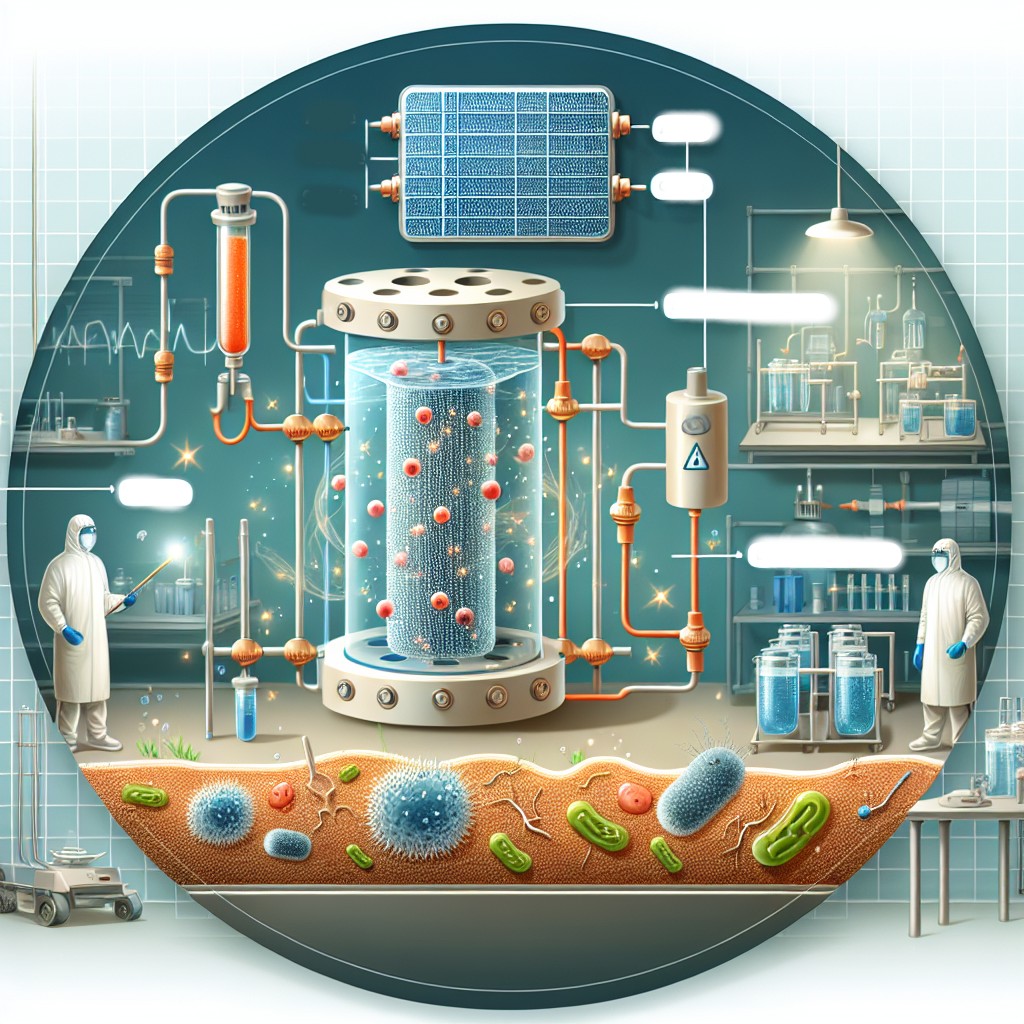
Eco-friendly, sustainable solutions have increasingly grown in importance in our modern society, particularly in the realm of sanitation. One such innovative method that holds promise is the use of Microbial Fuel Cells (MFCs) in ecological sanitation, often termed as EcoSan. Microbial Fuel Cells represent a breakthrough technology that converts chemical energy of organic compounds into electrical energy through the catalytic activity of microorganisms. In this article, we’ll delve into the practical applications, benefits, challenges, and future potential of MFCs in EcoSan systems.
Introduction
The world faces a mounting crisis in the realm of sanitation, with 4.2 billion people living without access to safely managed sanitation services. Traditional sanitation solutions often come with considerable environmental and economic drawbacks. It’s imperative that we explore and implement innovative, sustainable solutions that can not only address the sanitary needs of vast populations but also contribute positively to the ecosystem.
Microbial Fuel Cells in sanitation, or EcoSan, is such an innovation. At its core, EcoSan aims to safely transform human excreta into resources, minimizing adverse health impacts while recovering nutrients, energy, and water. One of its subsets, Microbial Fuel Cells, uses bacteria to break down organic matter in wastewater. During this process, the bacteria generate electrons which flow through a circuit, thus producing electricity. This process symbolically closes the loop on waste management by converting waste into a valuable resource.
This article discusses the fundamentals of EcoSan, the role of MFCs within these systems, their benefits and potential barriers to widespread implementation, and finally, the future directions of these technologies.
Understanding Microbial Fuel Cells (MFCs)
Microbial Fuel Cells have been meticulously researched for decades, evolving significantly over the years. The concept behind MFCs is derived from natural processes where microbes generate energy while decomposing organic materials. This biological process can be harnessed in a controlled environment to produce electricity.
An MFC typically comprises an anode and a cathode separated by a proton exchange membrane. The anode chamber houses microorganisms that consume substrates (organic matter in wastewater), breaking it down into smaller components during respiration. During this metabolic process, electrons are released and transferred to the anode. These electrons travel through an external circuit to the cathode, producing an electric current.
The effectiveness of MFCs is dependent on several factors, including the type of microorganism used, the nature of the organic matter, and the design of the fuel cell. Advanced configurations and innovation are continually enhancing the efficiency and functionality of these systems. With current advances, MFCs are starting to be considered as a viable part of integrated, decentralized wastewater treatment solutions.
Benefits of Using MFCs in EcoSan
The advantages of integrating MFCs into ecological sanitation are multifaceted and highly impactful. First and foremost, the electricity generated from MFCs can power remote areas lacking in conventional energy infrastructure. This makes EcoSan with MFCs especially beneficial for developing countries and rural zones.
Moreover, MFCs contribute to reducing greenhouse gas emissions. Traditional wastewater treatment processes often generate a significant amount of methane and carbon dioxide. By contrast, MFCs facilitate a cleaner process, substantially reducing these emissions.
Another significant benefit is the potential for robust resource recovery. During the MFC process, not only is energy captured, but valuable byproducts, such as water and nutrients, can be reclaimed and repurposed. This embodies the circular economy principles, transforming waste into sustainable resources that can be used in agricultural applications and beyond.
Finally, MFCs require less operational energy compared to conventional methods, reducing overall operational costs and making it a more economically viable solution for large-scale implementation.
Challenges to Implementation
Despite their promising potential, Microbial Fuel Cells face several challenges that need to be addressed to achieve widespread adoption. One major obstacle concerns the currently high costs associated with MFC technology, primarily due to the materials required for constructing the cells and the infrastructure to support them.
Additionally, while MFCs have demonstrated effectiveness in lab settings, scaling them up to handle large volumes of wastewater poses significant engineering challenges. Ensuring the reliability and consistent performance of MFCs in diverse environmental conditions remains a key area of development.
Microbial efficiency and energy output also vary based on the type and concentration of substrates available in the wastewater. This variability requires tailored solutions for different types of waste, increasing complexity and potentially the costs.
Moreover, public perception and awareness play a crucial role in the adoption of new sanitation technologies. There is a need for comprehensive education campaigns to inform communities and stakeholders about the benefits and functionality of MFCs to build trust and ensure acceptance.
Innovations and Future Directions
The future of Microbial Fuel Cells in EcoSan looks promising, supported by a wave of ongoing innovations and research. Emerging materials such as nanomaterials and conductive polymers are being tested to enhance the efficiency and durability of MFC components. Researchers are also exploring genetically engineered microorganisms designed to optimize electron transfer, thereby improving electricity generation.
Furthermore, novel MFC configurations, such as stacked designs and hybrid systems that integrate multiple biotechnology processes, are being developed to maximize energy recovery and waste treatment efficiency. These innovations could lead to the creation of highly adaptive and scalable solutions suitable for various environmental settings and waste volumes.
An exciting area of development is the integration of MFCs with other renewable energy technologies, such as solar panels and wind turbines. This hybrid approach can create a more resilient and sustainable energy system that leverages multiple sources of renewable energy to maintain consistent power generation.
Governments and international organizations are increasingly recognizing the potential of MFCs, leading to increased funding and policy support. These initiatives are vital for advancing research, developing pilot projects, and eventually scaling up effective MFC-based sanitation solutions to a broader audience.
Case Studies and Real-World Applications
Several pilot projects and case studies worldwide exemplify the practical applications of MFC technology in EcoSan. For instance, in rural communities in India and sub-Saharan Africa, MFCs are being used to treat wastewater while generating electricity, providing a dual solution for energy and sanitation needs.
In Europe, urban centers are exploring MFCs as part of modern sewage treatment plants. These integrations have shown significant promise in energy recovery and reducing the environmental footprint of wastewater treatment processes. Cities like Amsterdam have incorporated MFCs into their EcoSan programs, capturing both energy and valuable nutrients for reuse in local agriculture.
In academic settings, universities and research institutions continue to test and refine MFC designs in realistic settings. These pilot projects provide valuable data, enhance project designs, and improve the scalability of MFCs. They also serve as educational tools to train new generations of engineers and scientists in the potential of this technology.
The culmination of these real-world applications demonstrates the versatility and impact of MFCs when applied to various sanitation challenges, offering key insights and inspiring further adoption and investment.
Conclusion
Microbial Fuel Cells present an innovative, sustainable solution to the pressing issue of sanitation. Their capacity to generate electricity while treating wastewater highlights their potential to revolutionize the field of ecological sanitation, merging waste management with energy recovery.
Despite the challenges to widespread implementation, ongoing research, and continued innovation offer a hopeful outlook. As cost barriers lower and scalability issues are addressed, MFCs may become a cornerstone of modern sanitation systems, especially in areas where traditional infrastructure is lacking.
The engagement of governments, international bodies, and private sector investors will be crucial in advancing these technologies from pilot projects to widespread adoption. Public education and community involvement will also play a vital role in ensuring the acceptance and success of MFCs in EcoSan systems.
As we continue to seek environmentally friendly and sustainable solutions to global challenges, Microbial Fuel Cells in ecological sanitation stand out as a promising path forward. Through multidisciplinary collaboration and innovative thinking, we can harness this technology’s full potential, transforming sanitation from a global challenge into a sustainable opportunity.


