Technology has changed the economics of sanitation by making systems easier to finance, cheaper to operate, and more attractive to investors. In the context of EcoSan, or ecological sanitation, technology does not mean only hardware such as toilets, urine-diverting pedestals, biodigesters, and treatment units. It also includes digital monitoring, mobile payments, remote asset management, route optimization, nutrient recovery processes, and data tools that help municipalities, utilities, nonprofits, and private operators decide where money should go. When people ask how to make sanitation affordable at scale, the practical answer is that smart technology lowers lifecycle cost, improves revenue collection, reduces service failures, and turns waste streams into measurable assets.
I have worked on sanitation business cases where the capital cost of a toilet was the least important number in the model. The real drivers were emptying frequency, transport distance, sludge moisture content, downtime, collection efficiency, and whether recovered compost or biogas could be sold reliably. That is why financing and investing in EcoSan requires a broader view than grant funding for construction. A cost-effective sanitation system must perform over years, not just at installation. Investors, lenders, development agencies, and local governments all want evidence that a system can maintain service quality, recover part of its costs, and survive tariff pressure or subsidy changes.
This matters because sanitation is both a public health necessity and an infrastructure investment with unusually complex cash flows. Benefits such as lower disease burden, cleaner groundwater, safer neighborhoods, and reduced healthcare costs often accrue to society rather than directly to the operator. Meanwhile, the operator faces immediate expenses for construction, maintenance, labor, and compliance. Technology helps bridge that gap. It produces auditable data, enables targeted subsidies, supports performance-based contracts, and opens new revenue lines from fertilizer products, carbon benefits, or energy generation. For a hub article on financing and investing in EcoSan, the key question is simple: which technologies actually improve bankability, affordability, and long-term system resilience?
How technology changes the financial case for EcoSan
The financial case for ecological sanitation improves when technology reduces total cost of ownership rather than only upfront cost. A low-cost pit latrine can appear affordable on day one, yet become expensive when pit emptying is unsafe, transport is difficult, and contamination damages water supplies. By contrast, a urine-diverting dry toilet, container-based sanitation model, or decentralized treatment system may cost more to install but less to manage over its useful life if materials are durable, collection is efficient, and outputs are marketable. In project appraisal, that difference shows up in lifecycle costing, net present value, internal rate of return, and payback period.
Three technologies consistently improve cost-effectiveness. First, source separation technology increases resource recovery value. Urine diversion preserves nitrogen, phosphorus, and potassium that are harder to capture from mixed waste streams. Second, modular treatment technology lowers scaling risk. Instead of betting on one oversized plant, operators can add treatment capacity as customer numbers rise. Third, digital service management reduces leakage in the business model. Sensors, GPS-enabled trucks, mobile work orders, and digital billing create operational discipline that lenders understand. In my experience, once a sanitation operator can prove service frequency, customer retention, and output quality with data, conversations with funders become materially easier.
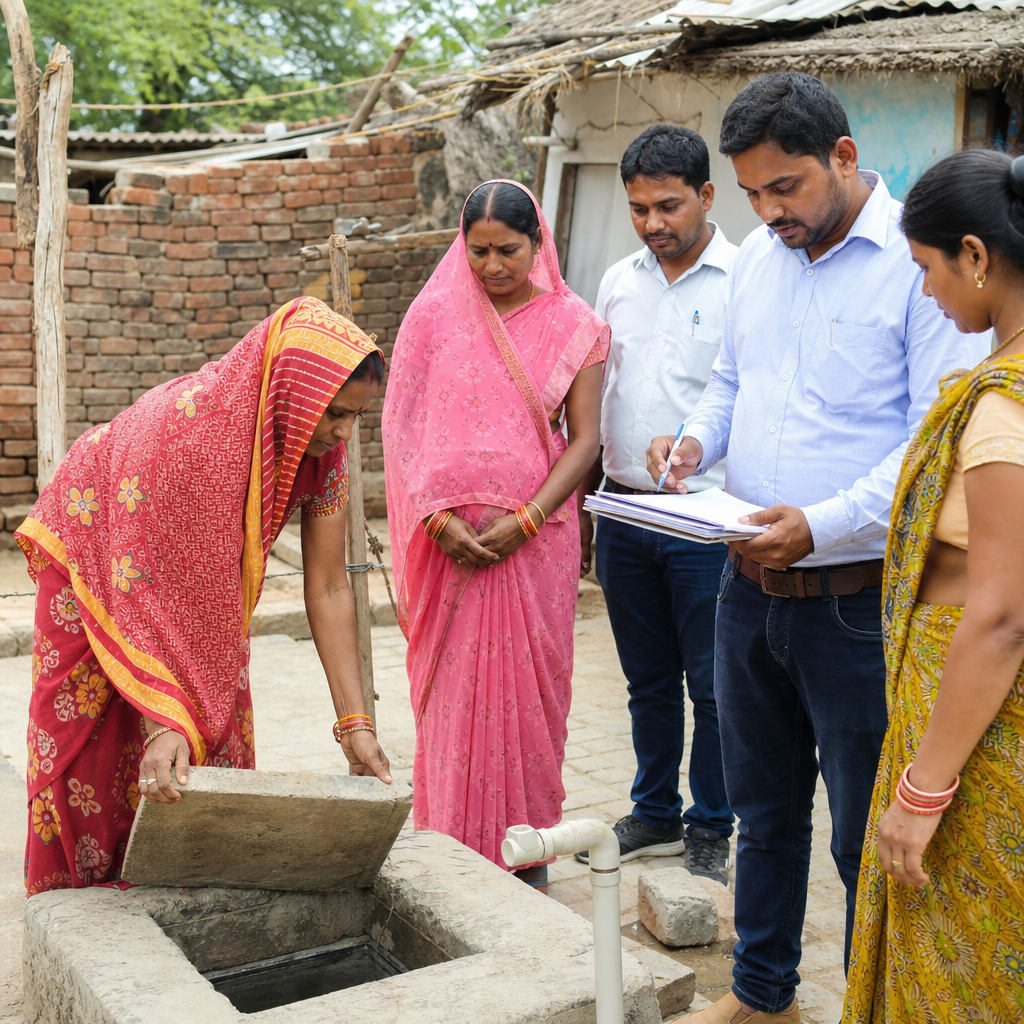
Technology also helps segment customers and align finance with willingness to pay. Dense informal settlements may support subscription-based container collection better than sewer expansion. Peri-urban communities may benefit from small biodigesters linked to user cooperatives. Schools and clinics may justify public or philanthropic capital because the social return is high even if direct revenue is modest. A single sanitation technology rarely fits all settings, so a strong EcoSan investment strategy matches technical design to urban form, groundwater conditions, income patterns, and local agricultural demand.
Funding models that work when technology supports accountability
EcoSan projects are funded through a mix of household spending, public budgets, concessional finance, commercial debt, philanthropy, climate funding, and private equity. Technology matters because each capital source has different evidence requirements. Grants often require outcome reporting. Municipal budgets need predictable operating costs. Lenders want repayment visibility. Equity investors want growth potential and defensible unit economics. The more transparent the system, the broader the pool of capital.
Results-based financing is one area where technology has had a major effect. Instead of paying only for construction, funders release money when verified outcomes are achieved, such as toilets installed and used, fecal sludge safely collected, or treatment units meeting discharge standards. Digital records, geotagged inspections, and sensor data reduce disputes about performance. Mobile payment platforms also support affordability by letting households pay in small increments instead of large lump sums. That improves collection rates and reduces arrears, which directly strengthens the operator’s cash flow.
Blended finance is especially relevant to EcoSan because sanitation creates both private and public value. Public money can absorb early risk, concessional capital can extend tenor, and commercial investors can finance mature revenue-generating components such as waste collection fleets or compost packaging lines. Carbon-linked finance is emerging where biodigesters or methane avoidance can be measured credibly, though verification costs must be weighed carefully. Technology is the enabler because monitoring systems make environmental claims more defensible and therefore more financeable.
| Financing approach | Best fit in EcoSan | Technology enabler | Main limitation |
|---|---|---|---|
| Household microfinance | Toilet purchase, upgrades, storage units | Mobile payments, digital credit scoring | Weak affordability in very low-income areas |
| Municipal capital budget | Public toilets, treatment hubs, school sanitation | Asset management software, compliance monitoring | Political budget cycles |
| Results-based grants | Service expansion and verified safe management | Geotagging, remote verification dashboards | High reporting burden |
| Concessional debt | Fleet, modular treatment, biodigesters | Operational data and lifecycle cost models | Needs reliable operator capacity |
| Equity investment | Scalable service businesses | Customer analytics, route optimization, CRM systems | Requires growth and margin visibility |
Digital systems that cut operating cost and improve revenue
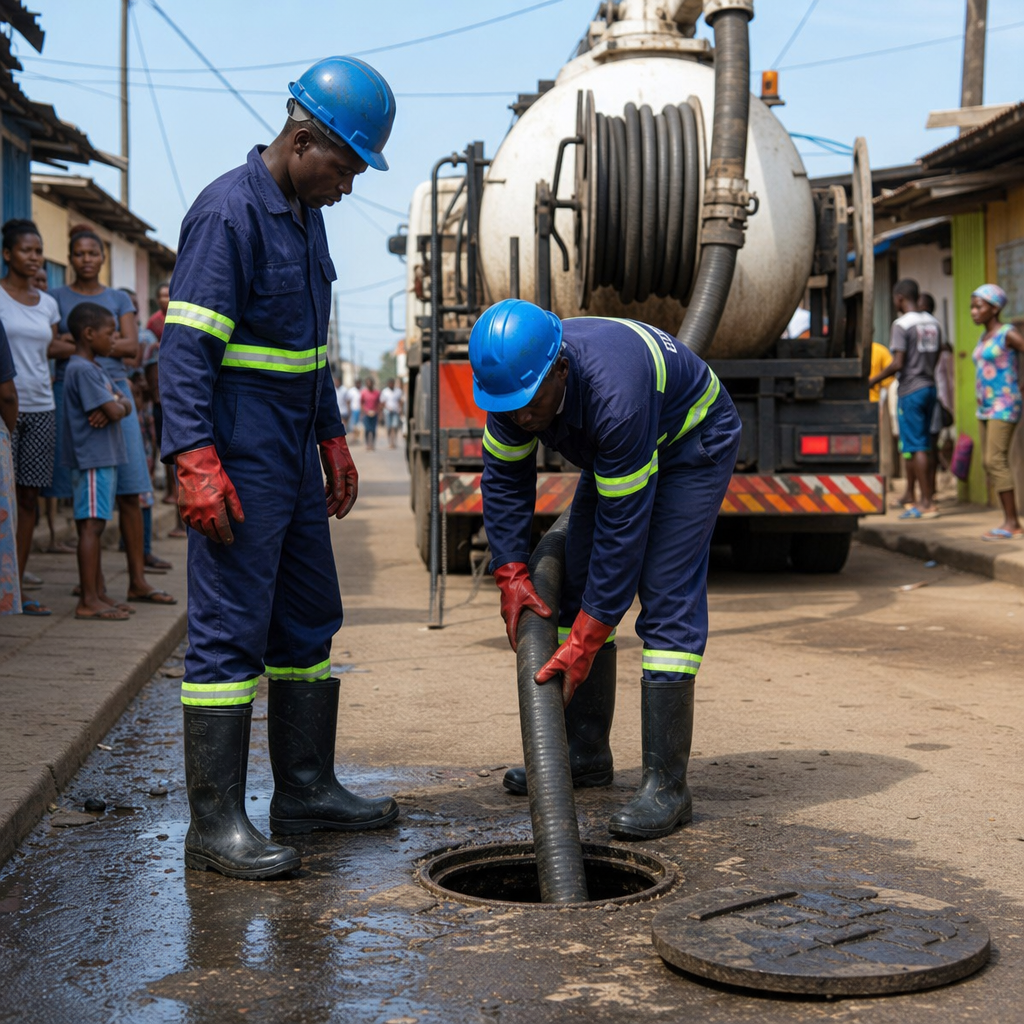
Operating expenditure is where many sanitation businesses fail, so digital tools deserve attention equal to treatment technology. Collection routes can account for a large share of recurring cost in container-based sanitation and fecal sludge management. GPS planning software reduces fuel use, shortens collection windows, and increases the number of households served per vehicle per day. Job-ticket systems reduce missed pickups, while customer apps and SMS reminders improve payment compliance. These are not cosmetic upgrades; they directly affect unit economics.
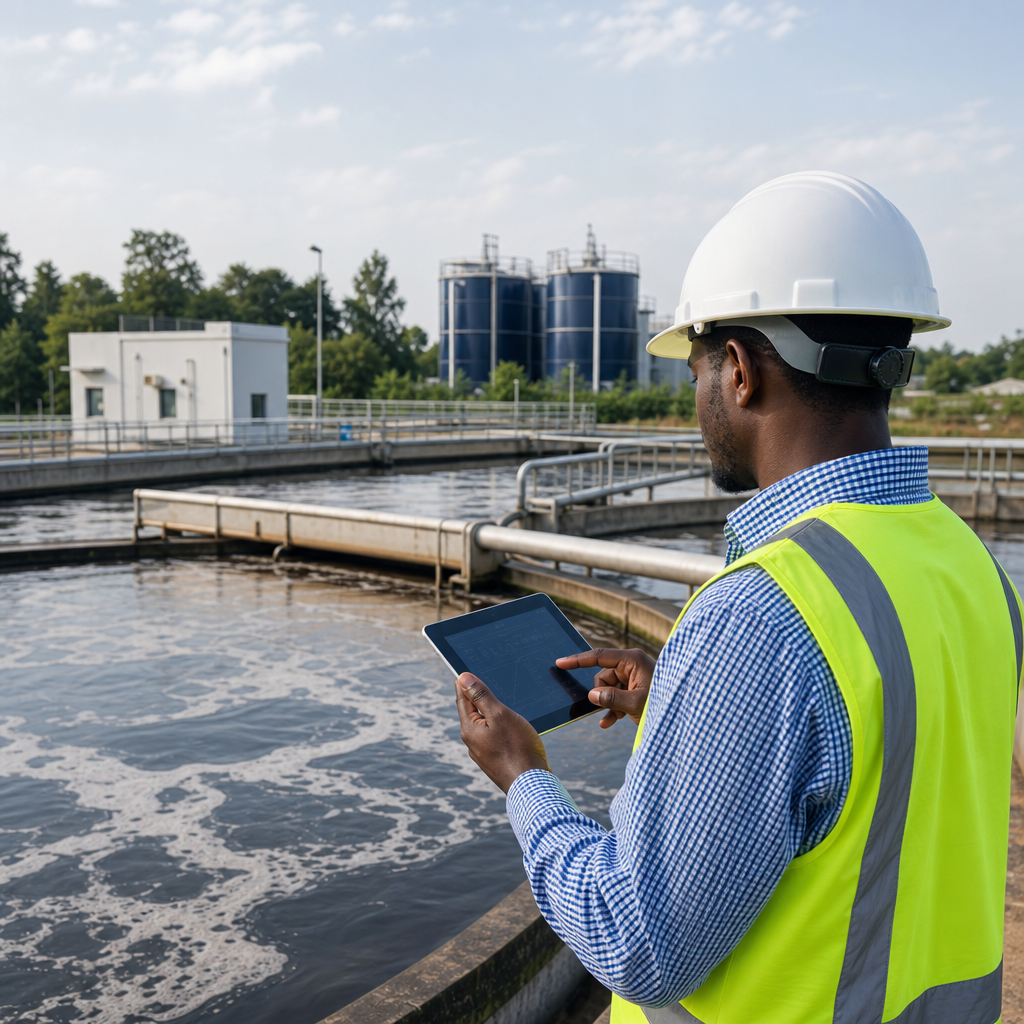
Remote monitoring is equally important for decentralized systems. Sensors for tank level, flow, pressure, temperature, or biogas output help operators shift from reactive maintenance to preventive maintenance. In one portfolio review I worked on, unscheduled site visits dropped sharply after simple monitoring alerts were introduced, because technicians no longer traveled just to confirm that a unit was functioning normally. Fewer emergency callouts meant lower labor cost and less downtime. For lenders, this matters because stable operations lower default risk.
Digital identity and billing tools also improve inclusion. Renters, informal workers, and households without formal banking access often struggle with conventional utility billing. Mobile wallets and agent networks make sanitation payments easier and more frequent. That is a major benefit in low-income markets, where daily or weekly cash flows are more realistic than monthly bills. Technology therefore supports cost-effective sanitation not only by reducing expense, but by matching revenue collection to real household behavior.
Resource recovery technologies and investor appeal
EcoSan becomes more investable when waste is treated as a resource stream with measurable outputs. The strongest examples are compost, dried biosolids, black soldier fly larvae feed inputs, biogas, electricity from anaerobic digestion, and recovered nutrients such as struvite. Not every market can support all of these products, and quality control is non-negotiable, but technology can convert sanitation from a pure cost center into a partial circular economy business.
Urine diversion systems are particularly significant because they preserve nutrient value before dilution and contamination occur. Properly managed urine can be sanitized and applied as fertilizer under locally applicable regulations and agronomic guidance. Struvite precipitation can recover phosphorus in forms that are easier to store and transport. For investors, this matters because nutrient recovery links sanitation to agriculture, a sector with clearer customer demand in many regions than waste disposal alone. I have seen projects become far more credible after mapping nearby farmers, crop cycles, fertilizer prices, and transport costs alongside treatment design.
Biogas systems can offset fuel purchases for institutions, markets, or food businesses, but financial success depends on feedstock consistency, digester sizing, and maintenance discipline. Small digesters are frequently oversold. They work best where organic inputs are steady and there is a committed operator. Composting systems are often simpler, yet they still require moisture control, contamination prevention, curing time, and product testing. Investors respond well to technologies that produce standardized outputs with documented pathogen reduction and clear end-user markets. That is why certification, laboratory testing, and traceability tools are not administrative extras; they are part of the investment case.
Risk, due diligence, and what funders examine first
When funding EcoSan, experienced investors do not start with the toilet model. They start with risk allocation. They examine demand risk, payment risk, regulatory risk, technology risk, operator capacity, land tenure, supply chain stability, and offtake risk for recovered products. Technology can reduce several of these risks, but it cannot erase weak governance or poor market fit. A sophisticated financing plan therefore combines technical diligence with commercial realism.
The first due diligence question is usually whether the service solves a real problem that people will pay to avoid or governments will pay to address. The second is whether the chosen technology has been proven in similar climatic, cultural, and density conditions. The third is whether data systems are strong enough to verify performance. Standards from the World Health Organization sanitation safety planning framework, ISO-aligned quality practices, and local environmental regulations all shape investor confidence. If a project cannot demonstrate pathogen reduction, safe handling procedures, and maintenance capability, low capital cost will not save it.
Another common issue is mismatch between asset life and financing tenor. Toilets, treatment units, and fleet assets depreciate differently. Good projects structure finance accordingly: short-term working capital for consumables, medium-term debt for vehicles and modular treatment, longer-tenor public or concessional capital for foundational infrastructure. Technology supports this structuring by producing asset-level performance data. That allows replacement planning, reserve setting, and better tariff design.
Building a strong EcoSan investment roadmap
A practical EcoSan investment roadmap begins with market diagnosis, not equipment selection. Measure sanitation gaps, housing density, groundwater vulnerability, agricultural demand, logistics constraints, and existing payment behavior. Then compare service models: household-owned systems, franchised operators, utility-led collection, container-based services, or institution-focused treatment hubs. Technology should be chosen for financial fit as much as engineering fit.
Next, build the business model around lifecycle cost and verified outcomes. Include capital expenditure, maintenance, labor, energy, consumables, collection frequency, replacement cycles, and product marketing costs. Stress-test the model for lower-than-expected collections, delayed subsidy payments, seasonal road access, and commodity price swings for compost or fertilizer substitutes. In every robust model I have built, the projects that survived stress testing were the ones with simple operations, strong data visibility, and realistic assumptions about customer behavior.
Finally, stage investment. Pilot first, standardize second, scale third. Use the pilot to validate treatment performance, collection efficiency, willingness to pay, and product acceptance. Document everything. Investors back learning curves when the operator can show disciplined iteration. For a sub-pillar on financing and investing in EcoSan, that is the central lesson: technology creates cost-effective sanitation when it improves measurable service outcomes, not when it adds complexity for its own sake.
The role of technology in cost-effective sanitation is therefore financial as much as technical. It lowers lifecycle costs, strengthens revenue collection, supports resource recovery, and gives funders evidence they can trust. For EcoSan, the best investments are not the flashiest systems, but the ones that align design, operations, and financing around real local conditions. When source separation, modular treatment, digital monitoring, and flexible payment systems are combined intelligently, sanitation becomes more affordable for users and more bankable for providers.
The main benefit is resilience. A technology-enabled EcoSan system can adapt to growth, maintain service quality, and recover value from waste rather than simply managing disposal. That resilience attracts municipalities, development partners, and private capital because it reduces uncertainty over time. It also protects households from the hidden costs of system failure, unsafe emptying, and environmental contamination.
If you are building an EcoSan program or evaluating sanitation investment, start with data, lifecycle cost, and market demand for recovered outputs. Then match the financing structure to the technology and service model. Done well, technology turns sanitation from a budget burden into an investable public service with durable economic returns.
Frequently Asked Questions
1. How does technology make sanitation more cost-effective?
Technology improves sanitation economics by lowering costs across the full service chain, not just at the toilet or treatment stage. In cost-effective sanitation, especially within EcoSan systems, technology can reduce capital risk, improve day-to-day operations, and create better visibility into performance. For example, digital monitoring tools can track fill levels, equipment uptime, treatment conditions, and maintenance needs in real time. That allows operators to prevent breakdowns, reduce unnecessary site visits, and deploy staff more efficiently. Mobile payment systems also make sanitation services easier to collect revenue from, which strengthens cash flow and reduces reliance on informal or inconsistent payments.
Beyond operations, technology helps sanitation providers make better planning and investment decisions. Route optimization software can lower fuel use, reduce vehicle wear, and shorten service times for collection and desludging teams. Remote asset management tools help municipalities, utilities, and service providers understand which assets are performing well and which ones need repair or replacement. Data platforms can also support demand forecasting, service mapping, tariff design, and budget planning. The result is a sanitation system that is not only cheaper to operate, but also easier to scale, finance, and manage over time. In other words, technology makes sanitation more cost-effective by turning a traditionally fragmented service into a more predictable, measurable, and investable one.
2. What kinds of technology are most important in ecological sanitation systems?
In ecological sanitation, the most important technologies go well beyond physical infrastructure. Hardware still matters, of course. Toilets, urine-diverting pedestals, biodigesters, decentralized treatment units, storage systems, and nutrient recovery equipment are all essential components. But EcoSan is most effective when these physical systems are supported by operational and digital technologies that make them practical and financially sustainable. For example, sensors can help monitor treatment conditions, storage levels, moisture, temperature, or equipment health. This kind of information allows operators to respond quickly, maintain treatment quality, and avoid preventable losses.
Equally important are technologies that improve service delivery and financial management. Mobile payments can help users pay in small, manageable increments, which can increase affordability while improving revenue collection for providers. GPS-enabled route planning can make waste collection and transport more efficient. Cloud-based dashboards can help local governments, nonprofits, and utilities monitor service coverage, compare performance across sites, and prioritize interventions. Nutrient recovery technologies are also central to EcoSan because they help transform waste into usable products such as compost, soil conditioners, or fertilizer inputs. When combined with data tools, these recovery processes can create measurable value streams that strengthen the business case for sanitation. The most important technologies in EcoSan, then, are the ones that connect safe sanitation, operational efficiency, and resource recovery into one coherent system.
3. Can digital tools really attract more investment into sanitation?
Yes, digital tools can play a major role in making sanitation more attractive to investors because they improve transparency, accountability, and confidence in performance. One of the long-standing challenges in sanitation finance has been limited data. Investors, lenders, and even public agencies often hesitate to fund sanitation projects when they cannot clearly see how assets perform, how revenue is collected, what operating costs look like, or whether systems will remain functional over time. Digital tools help solve that problem by generating reliable operational and financial data. They can show usage patterns, collection rates, maintenance histories, treatment outputs, customer payment behavior, and service coverage trends.
This visibility matters because investors are generally more willing to support projects that are measurable and manageable. If a sanitation provider can demonstrate stable revenues through mobile payment records, lower operating costs through route optimization, and high system uptime through remote monitoring, the project appears less risky. Data also supports stronger reporting, which is especially important for blended finance, impact investing, development finance, and public-private partnerships. In the EcoSan context, digital tools can additionally help quantify resource recovery outcomes, such as the volume of nutrients captured or organic waste converted into useful products. That creates a clearer path to diversified revenue and broader environmental value. While technology alone does not guarantee investment, it gives sanitation providers the evidence they need to make a much stronger financial case.
4. How do mobile payments and remote management improve sanitation services for users and providers?
Mobile payments and remote management improve sanitation by addressing two of the sector’s most persistent weaknesses: unreliable revenue collection and inefficient asset oversight. For users, mobile payments can make sanitation services simpler, more convenient, and more flexible. Instead of requiring cash payments at fixed times or locations, digital payment systems allow households and businesses to pay electronically, often in smaller amounts that better match their cash flow. This can be particularly helpful in low-income or informal settings where large one-time payments are difficult. Easier payment options can lead to more regular service use, fewer missed collections, and better continuity of sanitation operations.
For providers, the benefits are equally significant. Mobile payments create a clearer financial record, reduce leakage, lower collection costs, and improve the predictability of income. That makes it easier to plan staffing, fuel, maintenance, and expansion. Remote management adds another layer of efficiency by allowing operators to track assets without constantly being on site. A provider can monitor tank levels, equipment status, treatment conditions, and service requests from a central dashboard, which helps them respond faster and prioritize field work where it is actually needed. This reduces wasted trips, lowers operating expenses, and improves asset lifespan. Together, mobile payments and remote management help sanitation systems become more dependable, financially stable, and customer-friendly, which is essential for long-term cost-effectiveness and trust in the service.
5. What should municipalities, utilities, and nonprofits consider before adopting sanitation technology?
Before adopting sanitation technology, organizations should focus on fit, not just innovation. The best technology is not necessarily the most advanced option, but the one that matches local conditions, institutional capacity, user behavior, and long-term financial realities. Municipalities, utilities, and nonprofits need to ask practical questions: Can staff operate and maintain the system? Is there a clear source of funding for repairs, connectivity, replacement parts, and training? Will users accept and consistently use the service model? Does the technology solve a real operational problem, such as high transport costs, poor payment collection, weak monitoring, or inefficient treatment? These questions are especially important in EcoSan, where the system often depends on coordination across containment, collection, treatment, and resource recovery.
It is also essential to evaluate data governance, interoperability, and scalability. Digital monitoring and data tools are only valuable if the information they generate can be understood and used for decision-making. Organizations should think carefully about who owns the data, how it will be protected, and whether the platform can integrate with existing municipal or utility systems. Pilot projects should include clear performance indicators, cost tracking, and maintenance plans, rather than treating technology as a one-time installation. Training and stakeholder engagement are just as important as equipment procurement. When adoption is approached strategically, sanitation technology can strengthen service delivery, improve financial performance, and unlock long-term value. When it is adopted without operational planning, even promising tools can become underused or too expensive to sustain.