Innovative training approaches in rural sanitation are transforming how communities prevent disease, protect water sources, and build lasting public health habits. Rural sanitation refers to the systems, behaviors, and local services that safely manage human waste, wastewater, hand hygiene, and environmental cleanliness outside dense urban settings. Training in this context means far more than classroom instruction. It includes peer learning, practical demonstrations, community mapping, school programs, local leadership development, and the ongoing coaching that helps people adopt and maintain safer practices. I have seen technically sound sanitation projects fail because training was treated as a one-time event instead of a long-term behavior change process rooted in local realities.
This matters because sanitation outcomes depend on daily decisions made by households, teachers, health workers, masons, farmers, and local officials. A latrine built without user training may be misused, abandoned, or never emptied safely. Handwashing stations installed without reinforcement often sit empty within weeks. Drainage improvements can break down if communities do not understand operation and maintenance responsibilities. According to UNICEF and WHO monitoring, billions of people still lack safely managed sanitation, and rural populations are disproportionately affected by open defecation, contaminated groundwater, and weak service access. Training is the bridge between infrastructure and public health impact.
As a hub page within community engagement and education, this article explains how empowering communities through knowledge works in practice. It covers what effective rural sanitation training looks like, which delivery methods create durable change, how to adapt content for different audiences, and how to measure whether learning translates into safer behavior. It also highlights the limits of training alone. Knowledge must connect to affordability, social norms, supply chains, gender inclusion, and local governance. When those elements align, training becomes a practical tool for dignity, disease prevention, and community ownership rather than a short-lived awareness campaign.
Why knowledge-centered sanitation training works
Knowledge-centered sanitation training works because it addresses the real causes of unsafe sanitation behavior instead of assuming that people simply need instructions. In rural settings, barriers often include distance to water, seasonal flooding, low trust in outside programs, limited cash for materials, disability access needs, and entrenched beliefs about children’s feces, pit emptying, or shared responsibility. Effective training makes these barriers visible and solvable. Rather than delivering generic messages, facilitators help communities identify contamination pathways, map risk areas, compare sanitation options, and set collective targets that feel achievable.
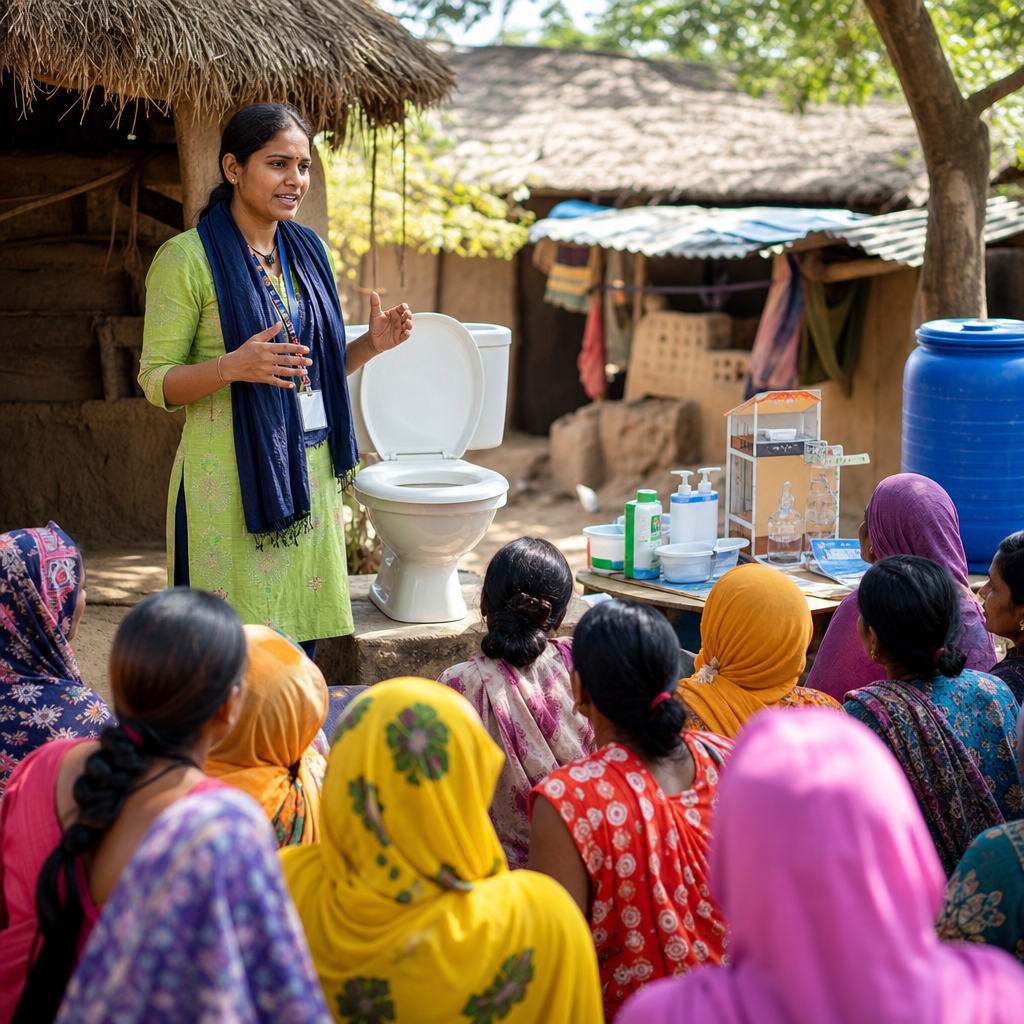
The strongest programs use adult learning principles. People retain information when they discuss, practice, teach others, and connect lessons to immediate problems. A demonstration on building a tippy tap near a cooking area usually outperforms a lecture on hand hygiene because it links knowledge to a visible daily routine. In one district program I supported, village health volunteers used colored powder and water to show how fecal contamination spreads from hands to food surfaces. Attendance was modest, but behavior recall three months later was much higher than after previous poster campaigns because families had seen the transmission process with their own eyes.
Knowledge also changes power dynamics. When women’s groups, school sanitation clubs, and local masons understand technical standards, they can question poor construction, demand budgets, and maintain services without waiting for external staff. This is especially important in rural areas where formal service coverage is thin. Training that explains vent pipe sizing, pit lining decisions, soak pit placement, menstrual hygiene needs, and safe child feces disposal turns community members into informed decision-makers. That shift from passive recipient to capable actor is the foundation of resilient sanitation systems and the reason education belongs at the center of rural sanitation planning.
Core training models that improve rural sanitation adoption
Several training models consistently produce better results than one-direction awareness sessions. Community-led facilitation remains influential because it helps residents analyze local sanitation conditions and commit to collective action. Participatory hygiene and sanitation transformation methods add structured activities on disease transmission, water handling, and household practices. Farmer field school techniques have also been adapted effectively, especially where wastewater reuse, composting, or fecal sludge management intersects with livelihoods. The common feature is participation. People are more likely to act on conclusions they helped generate than on instructions delivered from outside.
Peer-to-peer training is another high-performing approach. Households often trust neighbors who have solved similar problems with limited resources. Training respected local champions to demonstrate affordable latrine upgrades, pit slab maintenance, or handwashing station placement creates practical credibility. Schools can reinforce this model by training student hygiene ambassadors who bring messages home. In many villages, children become surprisingly effective messengers on soap use, toilet cleanliness, and water storage because they repeat routines daily and influence caregivers through persistence rather than authority.
Digital and blended models are expanding access where connectivity allows. Short mobile videos in local languages can show masons how to set slabs correctly or help health workers refresh counseling techniques before village visits. WhatsApp groups, interactive voice response systems, and tablet-based job aids are useful for supervisors and frontline staff, especially when travel is difficult in rainy seasons. Still, digital tools work best as reinforcement. In rural sanitation, trust is built face to face. The most effective programs combine live facilitation, household follow-up, and simple digital reminders rather than replacing human engagement.
| Training approach | Best use in rural sanitation | Main strength | Key limitation |
|---|---|---|---|
| Community-led facilitation | Ending open defecation, collective norm change | Builds ownership and shared accountability | Can weaken without follow-up coaching |
| Peer household demonstration | Latrine use, handwashing, child feces disposal | Highly practical and locally credible | Depends on strong local champions |
| School-based sanitation clubs | Habit formation and intergenerational learning | Creates daily repetition and home spillover | Needs teacher support and supplies |
| Mason and artisan training | Quality construction and maintenance | Improves service durability and safety | Limited impact if demand is weak |
| Mobile and blended learning | Refresher content for workers and builders | Low-cost scaling across remote areas | Access and literacy constraints remain |
Designing training for households, schools, and local service providers
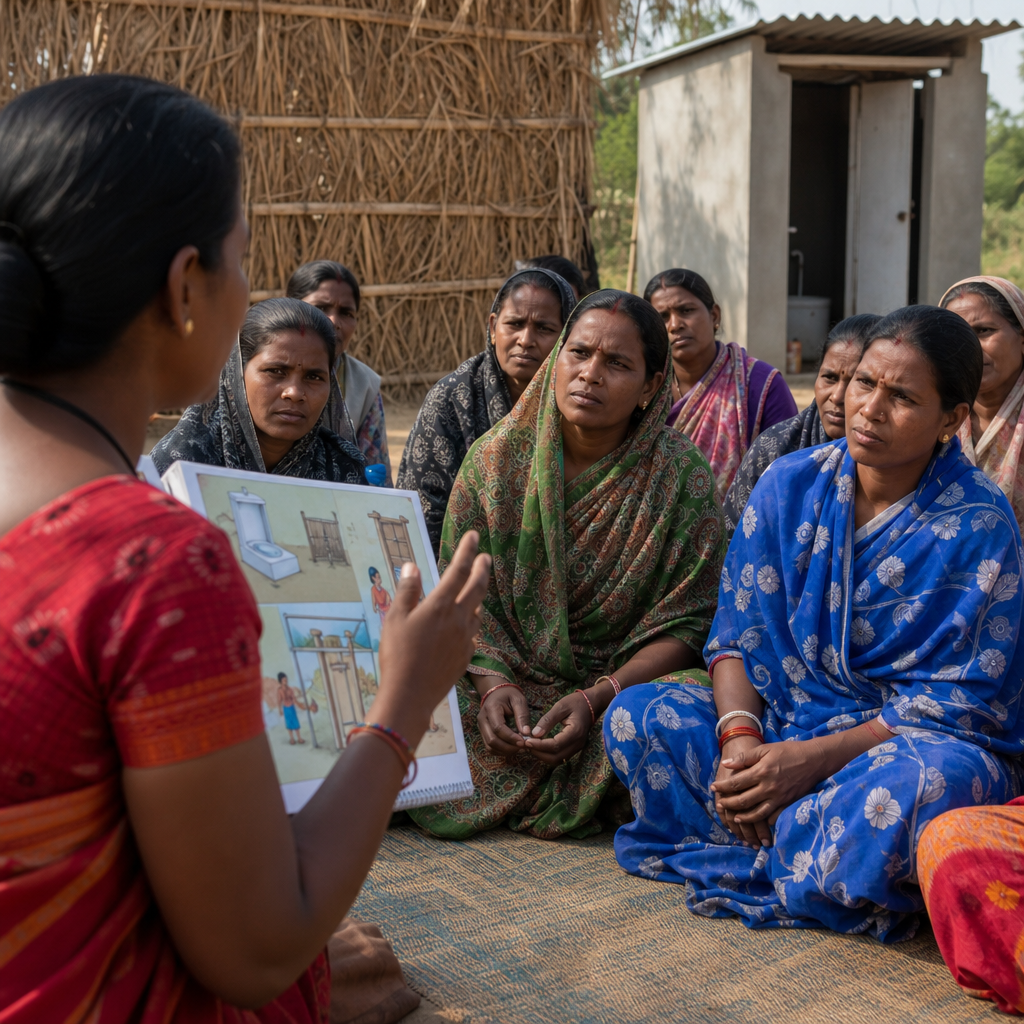
Rural sanitation training is most effective when it is audience-specific. Households need practical guidance on behaviors and affordable options, not engineering lectures. A strong household module covers why consistent toilet use matters, how to set up a handwashing station with soap or ash, how to manage children’s feces safely, and what to do when pits fill. It should also discuss cleaning routines, odor control, and privacy concerns because these often determine whether a facility is used by women, older adults, and children. Households respond well to visual aids, live demonstrations, and home visits that adapt advice to local materials.
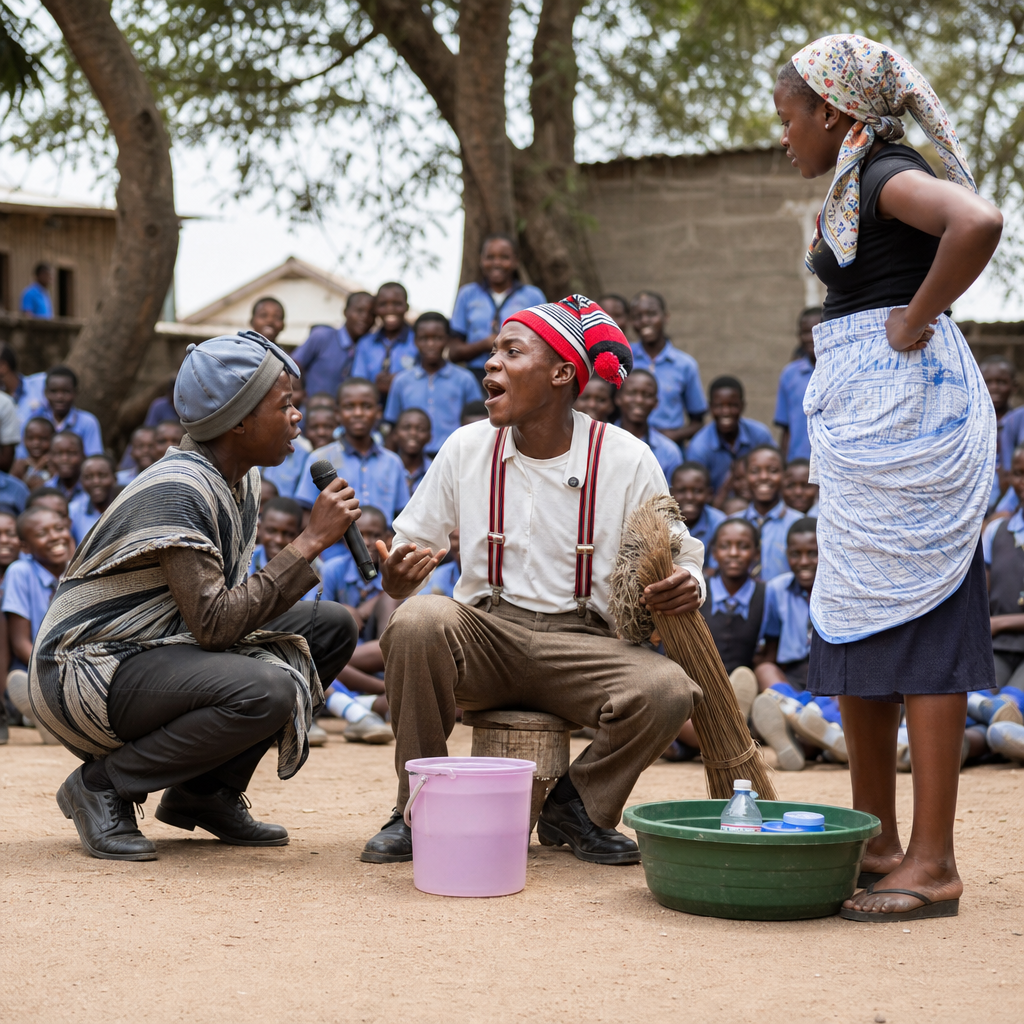
Schools require a different training design. Teachers need lesson plans that integrate sanitation into science, health, and daily routines instead of treating it as an occasional campaign topic. School caretakers need clear operation and maintenance guidance. Students benefit from age-appropriate activities such as hygiene songs, toilet cleaning rosters, handwashing drills, and menstrual health education for older pupils. Where I have seen schools succeed, they maintained simple monitoring boards showing soap availability, toilet cleanliness, and student club responsibilities. That visibility turned sanitation from an invisible maintenance issue into a shared school norm.
Local service providers need more technical depth. Masons should learn site assessment, groundwater protection distances, slab casting, ventilation basics, superstructure durability, and accessibility features such as handrails or wider doors. Community health workers need counseling skills, referral pathways, and data collection standards. Local officials need budgeting, procurement awareness, and mechanisms for monitoring underserved households. Training these groups together at selected points can be powerful because it aligns messages. When masons, health workers, and village leaders all explain the same sanitation standards, communities receive consistent guidance and confusion drops sharply.
Behavior change methods that move knowledge into daily practice
Sanitation training succeeds when it converts information into routine behavior. That requires more than awareness; it requires cues, repetition, social reinforcement, and practical problem-solving. One effective method is habit stacking, which links handwashing to an existing action such as leaving the toilet, serving food, or returning from fields. Another is public commitment. When households state a clear sanitation goal during a community meeting and neighbors can see progress, follow-through tends to improve. Recognition systems, whether village noticeboards or simple certificates, can reinforce desired behaviors without expensive incentives.
Emotional drivers matter as well. Health risk messaging is important, but disgust, dignity, privacy, convenience, and care for children often motivate faster action. Good facilitators use these drivers carefully and ethically. They avoid shaming individuals while making contamination risks concrete. For example, a transect walk that identifies open defecation sites can be effective if followed by collaborative planning rather than blame. Likewise, discussions on menstrual hygiene and disability access work best when they create safe space for practical adaptation instead of treating these needs as side issues.
Follow-up is where many programs falter. Initial training can raise intention, but behavior stabilizes through reinforcement. Household visits in the first month after a triggering event are especially valuable. Supervisors should check whether facilities are actually used, whether water and soap are available, and whether barriers have emerged. Seasonal adaptation is also essential. Practices often change during harvest periods, migration, flooding, or drought. Programs that plan refresher sessions around these cycles consistently outperform those that deliver training once and move on.
Inclusion, local leadership, and trust as the basis of lasting impact
Empowering communities through knowledge means everyone can participate in sanitation decisions, not only vocal leaders or able-bodied adults. Inclusive training starts with stakeholder mapping. Facilitators should identify who faces the greatest sanitation barriers: women and girls, people with disabilities, older adults, tenant households, remote hamlets, low-income families, and minority language groups. Training schedules, venues, and materials then need adjustment. Evening sessions may exclude caregivers. Printed manuals may be useless where literacy is low. A centrally located demonstration latrine may still be inaccessible to households on distant paths during the rainy season.
Local leadership determines whether training survives after project teams leave. The most reliable model I have worked with pairs formal authorities with informal influencers. Village chiefs or council members can legitimize action, but women’s savings groups, teachers, faith leaders, and natural leaders often sustain the daily pressure and encouragement that keeps sanitation improvements moving. Training should therefore include facilitation skills, conflict management, and basic monitoring for local committees, not just sanitation messages. Communities need people who can organize cleaning rosters, resolve disputes over shared toilets, and advocate for budget support when repairs are needed.
Trust is built through accuracy and honesty. If a low-cost latrine design is unsuitable in flood-prone soil, trainers should say so and explain safer alternatives. If subsidies are limited, that should be clear from the start. Overpromising damages adoption because households remember when advice fails. Credible trainers acknowledge tradeoffs between cost, durability, ease of emptying, and privacy. They also return with answers when they do not know something immediately. In rural sanitation, communities judge training quality less by polished materials than by whether the advice proves useful under real conditions.
Measuring results and connecting this hub to broader community education
Training quality should be measured by behavior and service outcomes, not attendance alone. Useful indicators include consistent latrine use by all family members, presence of a functioning handwashing station with soap or ash, safe disposal of child feces, toilet cleanliness, school absenteeism related to sanitation barriers, and the percentage of trained masons applying correct construction standards. Spot checks, structured observation, and short household interviews are more reliable than self-reported claims. Where possible, programs should compare baseline and follow-up data at regular intervals, ideally across different seasons.
This hub page connects the wider work of community engagement and education. Detailed companion articles can go deeper into school sanitation programs, behavior change communication, community-led facilitation, mason training, menstrual hygiene education, disability-inclusive design, monitoring frameworks, and rural fecal sludge management. Together, those topics show that empowering communities through knowledge is not a soft add-on to sanitation infrastructure. It is the operating system that helps people choose, use, maintain, finance, and improve services over time.
The key takeaway is simple: innovative training approaches in rural sanitation work when they are practical, participatory, inclusive, and sustained. Communities need knowledge they can apply immediately, trusted local leaders who reinforce action, and systems that link learning to real services and accountability. If you are building a community engagement and education strategy, start by mapping audiences, tailoring training to local barriers, and measuring what people do after learning, not just what they heard. That is how knowledge becomes healthier homes, safer schools, and lasting sanitation progress.
Frequently Asked Questions
What are innovative training approaches in rural sanitation, and why do they matter?
Innovative training approaches in rural sanitation are practical, community-centered methods used to improve sanitation behaviors, strengthen local services, and support healthier environments in villages and remote settlements. Instead of relying only on lectures or one-time awareness sessions, these approaches often combine hands-on demonstrations, peer learning, household visits, community mapping, school-based activities, local leadership engagement, and problem-solving exercises tailored to local conditions. The goal is not just to share information, but to help people apply it in daily life, whether that means building and maintaining safe toilets, improving handwashing habits, protecting wells and water points, or managing wastewater more safely.
They matter because rural sanitation challenges are rarely solved by infrastructure alone. A household may have access to a toilet, for example, but still face obstacles related to maintenance, water availability, convenience, cultural norms, affordability, or lack of confidence in proper use. Innovative training addresses these realities by meeting people where they are. It helps families understand health risks, identify practical solutions, and develop habits that last. It also builds local ownership, which is essential in rural areas where outside support may be limited and long-term success depends on community participation.
These approaches are especially important for disease prevention and water protection. Poor sanitation can contaminate soil, food, and drinking water sources, leading to diarrheal disease, parasitic infections, and broader public health risks. Effective training connects sanitation practices to visible local outcomes, such as cleaner surroundings, fewer illnesses, better school attendance, and safer water. When training is relevant, participatory, and continuous, it is much more likely to influence behavior and create lasting improvements than top-down instruction alone.
How is rural sanitation training different from traditional classroom-style health education?
Rural sanitation training is different because it focuses on action, context, and behavior change rather than information delivery alone. Traditional classroom-style health education often assumes that once people know the correct information, they will automatically change their behavior. In practice, sanitation decisions are shaped by many other factors, including social expectations, daily routines, household resources, seasonal water access, land conditions, gender roles, and community leadership. Rural sanitation training recognizes that knowledge is necessary, but not sufficient.
In many effective programs, training happens in the places where sanitation decisions are made and practiced. That can include homes, schools, village meeting spaces, farms, water points, and community pathways. Trainers may demonstrate proper handwashing with locally available materials, guide residents through mapping areas affected by open defecation or wastewater runoff, facilitate discussions on what prevents toilet use, or organize peer exchanges where one village learns from another. This makes training more concrete and immediately relevant. People are not only told what to do; they are shown how to do it and supported in overcoming real barriers.
Another major difference is participation. Traditional education models can be one-way, with an instructor speaking and the audience listening. Rural sanitation training tends to be more interactive. Communities may identify their own sanitation risks, analyze contamination pathways, compare low-cost solutions, and track progress together. This shared process often creates stronger commitment because people see the link between collective behavior and community wellbeing. It also encourages local adaptation. A sanitation strategy that works in one region may need to be adjusted in another based on soil type, flooding patterns, cultural practices, or available materials. Innovative training makes room for that flexibility.
What training methods are most effective for changing sanitation behavior in rural communities?
The most effective training methods are usually those that are practical, participatory, repeated over time, and rooted in local realities. Hands-on demonstrations are especially powerful because they turn abstract health messages into observable practices. For example, showing proper handwashing technique at a household or school handwashing station, demonstrating how to safely maintain a latrine, or explaining how wastewater should be diverted away from living spaces can help people understand both the process and the reason behind it. Practical learning builds confidence and reduces the gap between intention and action.
Peer learning is another highly effective method. People often trust neighbors, local volunteers, teachers, health workers, and respected community leaders more than external trainers. When local champions model good sanitation behaviors and share their experiences honestly, others are more likely to believe that change is possible and worthwhile. Peer-led discussions can also uncover local obstacles, such as privacy concerns, costs of repairs, or reluctance to change long-standing habits. Because these conversations happen within the social fabric of the community, they often lead to solutions that are more realistic and acceptable.
Community mapping and participatory analysis also work well because they make sanitation risks visible. When residents map defecation areas, drainage paths, water sources, and common gathering places, they can better see how contamination spreads. This kind of visual, collective exercise often creates a stronger sense of urgency than general warnings about disease. School programs are also important, especially when children become active participants in hygiene promotion and carry messages home. In addition, follow-up visits, small group coaching, and progress monitoring help reinforce new habits. The most effective training is rarely a single event. It is a process that combines awareness, practice, social support, and continued encouragement.
How do innovative sanitation training programs help protect water sources and improve public health?
Innovative sanitation training programs help protect water sources by teaching communities how human waste, wastewater, and poor hygiene practices contribute to contamination. In rural settings, drinking water may come from shallow wells, springs, boreholes, rivers, ponds, or rainwater systems that are vulnerable to pollution from nearby sanitation problems. Training helps people understand contamination pathways in practical terms. For example, it may show how runoff from open defecation sites reaches streams, how poorly placed latrines can affect groundwater, or how unwashed hands transfer pathogens to food and water containers. When people can clearly see these links, they are more likely to adopt safer practices.
These programs improve public health by promoting behaviors that interrupt disease transmission. Key topics often include consistent toilet use, safe disposal of child feces, proper handwashing with soap at critical times, cleaner household surroundings, and better management of wastewater and solid waste. Training may also address maintenance issues that are often overlooked but essential, such as keeping latrines usable, ensuring handwashing stations stay stocked, and preventing stagnant water near homes. These details matter because public health gains are strongest when sanitation practices are reliable and sustained, not occasional.
Just as importantly, innovative programs build local capacity to maintain progress. Rather than depending entirely on outside experts, communities learn how to monitor risks, educate others, and respond to emerging challenges such as flooding, seasonal water shortages, or damaged sanitation facilities. Local health workers, teachers, masons, women’s groups, youth leaders, and village committees may all play a role. This wider engagement strengthens accountability and makes sanitation part of everyday community life. Over time, that can lead to cleaner environments, fewer preventable illnesses, better child growth and school attendance, and stronger resilience in the face of public health threats.
What makes a rural sanitation training program sustainable over the long term?
A rural sanitation training program is sustainable when it creates lasting behavior change, strengthens local ownership, and fits the economic, environmental, and social conditions of the community. Sustainability starts with relevance. Training must be designed around the realities people face, including local beliefs, housing patterns, water access, literacy levels, weather conditions, and available construction materials. If a program promotes practices or technologies that are too costly, too complex, or poorly suited to the environment, adoption will likely fade. Long-term success depends on solutions that people can use, maintain, and pass on to others without constant outside intervention.
Another key factor is local leadership and participation. Programs are more durable when village leaders, teachers, health workers, community-based organizations, and households all have clear roles in promoting sanitation. Training should not be limited to a small group of external facilitators. Instead, it should build skills within the community so that local actors can continue education, support new households, monitor progress, and solve problems as they arise. This is particularly important in rural areas, where regular access to formal services may be limited. When communities feel that sanitation improvement is their own shared responsibility, the results are usually more stable.
Consistent follow-up also matters. Sustainable programs do not end after one workshop or campaign. They include reinforcement through home visits, refresher sessions, school engagement, community review meetings, and practical troubleshooting. Monitoring should focus not only on whether facilities exist, but also on whether they are used, maintained, and accessible to everyone, including children, older adults, and people with disabilities. Finally, sustainable programs connect sanitation to dignity, safety, convenience, and pride, not only disease prevention. When communities see sanitation as part of a better quality of life and a cleaner future for their children, they are much more likely to maintain improvements over time.