Using infographics and visual aids for sanitation education turns abstract health advice into practical actions people can see, remember, and repeat. In community programs, I have seen the difference between a text-heavy handout and a simple visual poster: one gets folded away, while the other stays on a clinic wall, in a school corridor, or beside a handwashing station where it continues teaching every day. Sanitation education includes the communication methods used to explain hygiene, safe water handling, waste disposal, toilet use, menstrual health, and disease prevention. Infographics combine concise text, icons, color, diagrams, and data into a structured format that makes complex information easier to understand quickly. Visual aids is the broader term, covering posters, flip charts, pictograms, demonstration boards, videos, murals, cue cards, maps, and illustrated teaching tools.
This matters because sanitation behavior is not shaped by information alone; it is shaped by comprehension, recall, trust, local relevance, and repeated exposure. Communities may face low literacy, multiple spoken languages, misinformation, weak infrastructure, or limited time for formal training. Visual communication helps bridge those barriers by showing what safe practice looks like in real settings. A well-designed image of a tippy tap, a color-coded waste segregation chart, or a step-by-step toilet cleaning poster can reduce confusion better than paragraphs of instructions. Good sanitation visuals also support frontline workers, teachers, and local leaders by giving them consistent messages to share. As the hub page for empowering communities through knowledge, this article explains how visual tools improve sanitation education, what types work best, how to design them well, where they fit in broader community engagement, and how organizations can measure whether these materials actually change understanding and behavior.
Why visual communication works in sanitation education
Visual aids work because sanitation decisions are often immediate and routine. People decide where to wash hands, how to store water, what to do with child feces, and whether to use a toilet many times each day. In my experience supporting hygiene promotion campaigns, the most effective materials are those that reduce decision friction. A poster showing the five critical times for handwashing can guide action at the exact moment it is needed. A diagram comparing clean and contaminated water storage helps households spot risks in their own containers. This is especially valuable where educational levels vary widely within the same neighborhood or village.
Public health research supports this approach. The World Health Organization and UNICEF consistently emphasize clear risk communication, behavior-focused messaging, and accessible formats in water, sanitation, and hygiene programs. The reason is straightforward: people absorb visual patterns faster than dense text, and memory improves when words and images reinforce each other. In sanitation education, that means an illustration of flies moving from feces to food can communicate disease transmission far more effectively than a technical explanation of fecal-oral pathways. Visuals also help normalize discussion of topics that may be sensitive, such as menstruation, toilet maintenance, or safe child stool disposal, because they provide a structured and respectful way to talk about them.
Core types of infographics and visual aids communities actually use
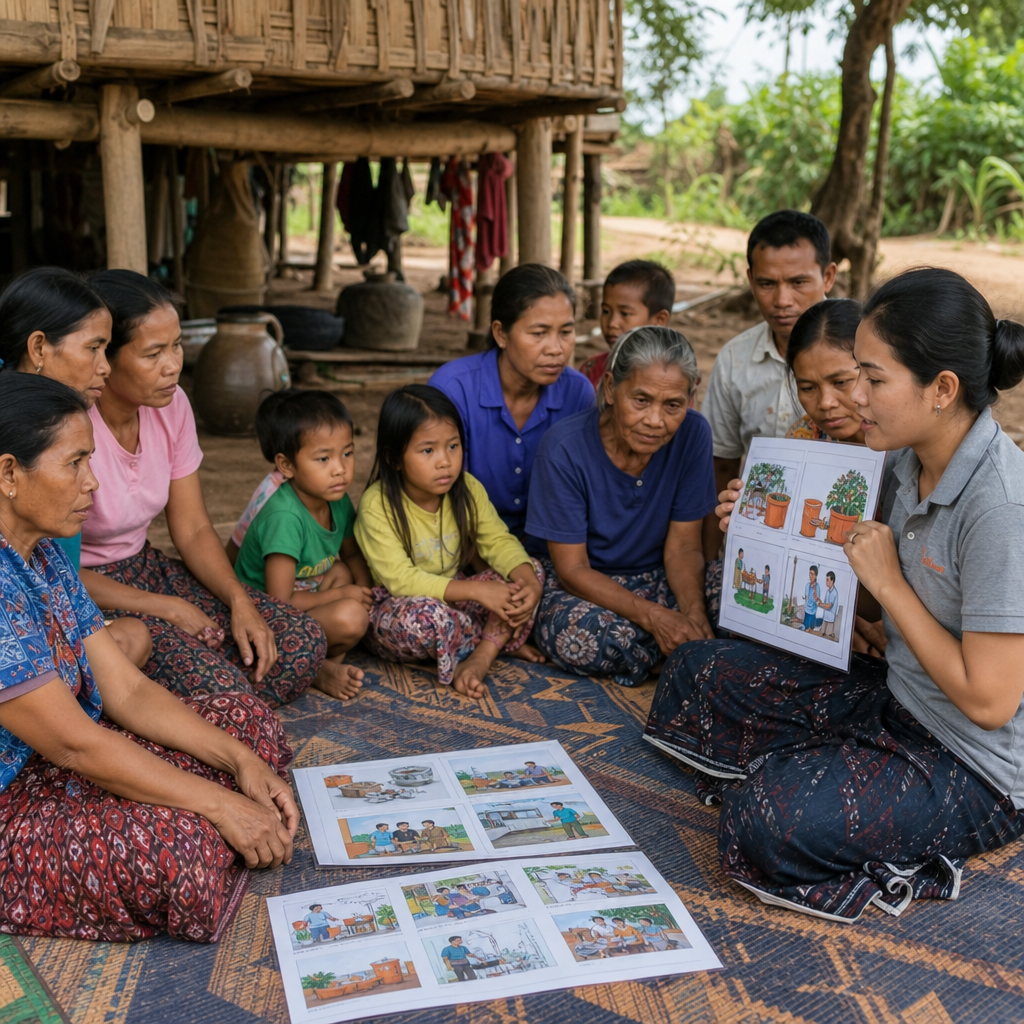
Not every visual format serves the same purpose. Infographics are especially useful when a program needs to combine facts, steps, and comparisons in one asset. For example, a one-page community sanitation infographic might show open defecation risks, proper latrine use, handwashing steps, and local helpline numbers. Posters are better for repetition in fixed locations such as schools, health posts, markets, and public toilets. Flip charts help community health workers lead discussions in small groups. Pictogram cards are ideal when language diversity is high, because they can prompt recognition even when reading ability is limited. Demonstration boards and painted murals work well in outdoor settings where materials must remain visible over time.
Schools, clinics, local governments, and nonprofits often get better results by matching the format to the behavior. If the goal is correct handwashing, a sequential visual placed above the sink is best. If the goal is household water treatment awareness, an infographic comparing boiling, chlorination, filtration, and safe storage may be more useful. If the goal is waste segregation, a color-coded bin chart should appear where waste is generated. Digital formats also matter. WhatsApp image cards, short subtitled videos, and social media carousels are now widely used by municipal health departments and NGOs because they can be reshared easily by teachers, youth groups, and community volunteers.
| Visual tool | Best use | Community example |
|---|---|---|
| Poster | Reinforcing one behavior in a fixed location | Handwashing steps above school taps |
| Infographic | Combining facts, steps, and comparisons | Household sanitation guide distributed by clinics |
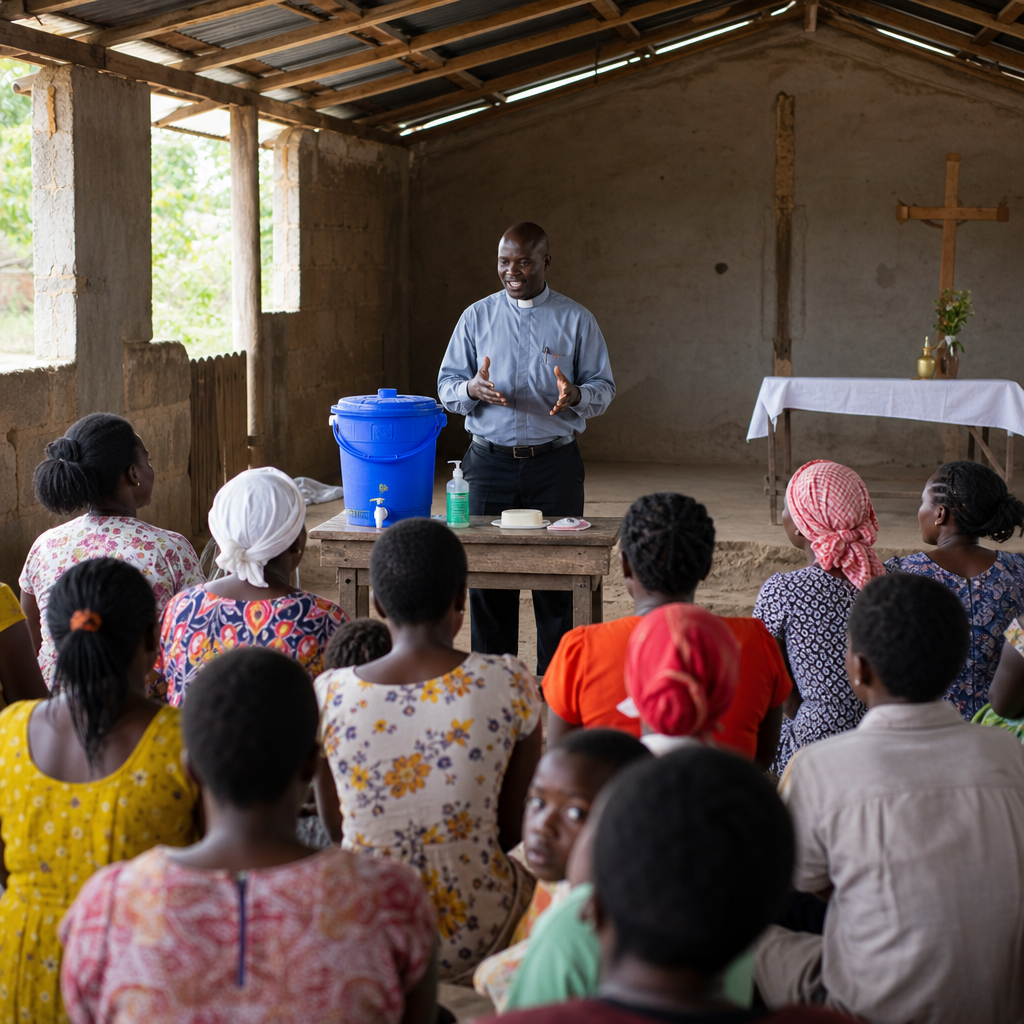
| Flip chart | Facilitated group teaching | Village hygiene session led by a health worker |
| Pictogram card | Low-literacy or multilingual communication | Safe water storage training in informal settlements |
| Mural or painted sign | Long-term public visibility | Waste disposal reminders near communal toilets |
Design principles that make sanitation visuals effective
Effective sanitation visuals are simple, specific, and locally recognizable. The first rule is one objective per asset. When teams try to put toilet use, menstrual hygiene, water treatment, drain maintenance, and vector control onto one crowded page, retention drops. A stronger approach is to separate topics and state the action clearly: wash hands with soap after toilet use, keep drinking water in a covered container, clean latrines daily, or dispose of waste in the correct bin. The second rule is visual hierarchy. The main message should be visible in three seconds. Use a strong headline, a central image, and no more than a few supporting points.
Third, use culturally accurate illustrations. I have seen excellent technical designs fail because the toilet type, water container, clothing, or household layout did not match local reality. If the community uses jerry cans, draw jerry cans. If many homes rely on shared latrines, show shared latrines. If left-to-right sequencing is unfamiliar, test another layout. Fourth, choose colors intentionally. Red can signal danger, green can suggest safe action, and blue often supports water messages, but color meaning is not universal. Contrast matters more than decoration, especially for aging eyes and low-light settings. Fifth, test readability at actual distance. A poster that looks clear on a laptop may be unreadable on a clinic wall from two meters away.
Language should be direct and free of jargon. Instead of saying “interrupt fecal-oral transmission,” say “wash hands with soap before eating and after using the toilet to stop germs spreading.” Numbers should be used carefully. A statistic such as “handwashing with soap reduces diarrhea risk significantly” can add authority, but only if the audience can connect it to a practical action. Sources also matter when materials are produced by institutions. Aligning content with guidance from WHO, UNICEF, national ministries of health, and accepted WASH program standards strengthens consistency and helps field staff answer questions confidently.
Key sanitation topics that benefit most from visual teaching
Some sanitation topics are particularly suited to infographics and visual aids because they involve sequences, comparisons, or hidden risks. Hand hygiene is the clearest example. People need to know when to wash, how long to wash, and which steps are often missed, such as thumbs, fingertips, and between fingers. Water safety is another strong fit because contamination is invisible. Visuals can show the difference between clean collection, unsafe transport, covered storage, separate dipping utensils, and regular container cleaning. Toilet use and maintenance also benefit from images, especially in schools and shared facilities, where cleaning schedules, flushing instructions, menstrual product disposal guidance, and reporting procedures must be understood quickly.
Waste management, drainage, and vector control are equally visual topics. Communities can understand waste segregation faster through color-coded charts than through verbal explanation alone. Diagrams showing how clogged drains create standing water and breeding sites for mosquitoes make environmental sanitation more concrete. Menstrual hygiene education also improves when visual tools explain disposal options, changing frequency, privacy needs, and facility requirements in a respectful way. For child health, illustrated guidance on safe disposal of infant and young child feces corrects the common but dangerous misconception that child stool is harmless. When images are paired with demonstrations, people are far more likely to remember both the reason and the method.
How visual aids strengthen community engagement and local ownership
Sanitation education works best when visuals are not imposed from outside but shaped with community input. This is where empowering communities through knowledge becomes practical rather than rhetorical. When residents help choose symbols, identify confusing practices, and review draft materials, the final product reflects local priorities and language. In one municipal hygiene project, community volunteers told us that a generic toilet cleaning poster missed the actual problem: users were not reporting broken locks and missing water containers. We redesigned the poster to include a reporting step, and facility upkeep improved because the message addressed a real barrier rather than an assumed one.
Visual tools also create shared reference points for discussion. A community map marking open dumping areas, water points, toilets, drains, and schools can support planning meetings and make sanitation inequities visible. Youth clubs can design murals that promote handwashing or proper waste disposal, increasing peer ownership. Teachers can use sanitation charts in science lessons, while religious leaders can reinforce hygiene messages during gatherings using the same imagery. This consistency matters. When households see aligned visuals in schools, clinics, markets, and public meetings, the message feels legitimate, familiar, and easier to act on. Visual materials therefore support not only education, but coordination across the local institutions that shape daily sanitation behavior.
Implementation, measurement, and common mistakes to avoid
Strong sanitation visuals are part of a system, not a stand-alone fix. Implementation starts with audience research: who needs the message, what behavior is targeted, what barriers exist, and where the visual will be seen. Then comes prototyping and field testing. I always recommend showing draft materials to a small sample of intended users and asking practical questions: What is happening in this image? What action should you take? What part is unclear? These quick checks reveal misunderstanding early. Distribution should follow behavior pathways. Put toilet care visuals in toilets, handwashing visuals near water points, and waste charts where sorting happens. Train facilitators to use the same materials during household visits, school sessions, and community meetings.
Measurement should be equally practical. Track reach, comprehension, recall, and behavior indicators. That may include poster visibility audits, short intercept surveys, observation checklists for handwashing stations, toilet cleanliness scores, or waste segregation accuracy. Digital campaigns can add shares, saves, and click-throughs, but offline observation remains essential. Common mistakes are predictable: too much text, generic stock icons, weak contrast, unrealistic settings, failure to translate, and no maintenance plan for damaged materials. Another mistake is treating visuals as decoration rather than instructional tools. The main benefit of this hub approach is that every sanitation education effort can link to deeper resources on school hygiene, community health worker training, menstrual health communication, water safety messaging, and behavior change evaluation. Use that structure to build a connected knowledge base, review your materials against real user needs, and create visual sanitation education that communities can understand, trust, and use every day.
Frequently Asked Questions
Why are infographics and visual aids so effective for sanitation education?
Infographics and visual aids work well in sanitation education because they turn important health guidance into something people can understand quickly and remember easily. Many sanitation topics, such as handwashing, safe water storage, toilet use, waste disposal, and disease prevention, involve repeated daily behaviors. When these behaviors are shown visually through icons, step-by-step illustrations, color coding, and simple diagrams, people can process the message faster than they can with dense blocks of text. This is especially valuable in busy community settings like clinics, schools, shared sanitation areas, and public gathering points where attention spans are short and messages need to be absorbed at a glance.
Visual materials also help bridge literacy, language, and age differences. A well-designed poster showing the correct moments to wash hands or the safe separation of drinking water from wastewater can communicate across different reading levels and language backgrounds. In real-world sanitation programs, that matters. A visual reminder placed near a handwashing station or latrine continues teaching every day without requiring an educator to be present. It reinforces consistency, which is one of the biggest challenges in hygiene behavior change. People are more likely to repeat a sanitation practice when they can clearly picture what to do, when to do it, and why it matters.
Another reason visuals are powerful is that they reduce abstraction. Telling someone that poor sanitation can spread disease is informative, but showing a simple chain of contamination from unwashed hands to food to illness makes the risk immediate and practical. That kind of clarity supports better decision-making and stronger recall. Effective sanitation education is not just about providing information; it is about helping people act on it. Infographics and visual aids make that action more likely by keeping messages visible, concrete, and easy to repeat.
What sanitation topics are best suited for infographics and visual communication?
Some of the strongest uses for infographics in sanitation education involve topics that follow a sequence, require routine habits, or benefit from visual comparison. Handwashing is one of the best examples. A poster can show each step clearly, including wetting hands, applying soap, scrubbing key areas, rinsing, and drying, while also highlighting critical moments such as after using the toilet, before eating, before preparing food, and after cleaning a child. Because this is a repetitive behavior, visual reinforcement is extremely effective.
Safe water handling is another ideal topic. Infographics can show where contamination happens, how to store clean water in covered containers, how to use separate utensils for drawing water, and why keeping storage areas clean matters. The same is true for toilet hygiene, menstrual hygiene management, waste segregation, drainage practices, and food hygiene. Visual formats are especially useful when the goal is to compare correct and incorrect behaviors. For example, showing a clean, covered waste bin next to open dumping gives people an immediate understanding of the preferred practice without requiring long explanation.
Visual communication is also valuable for explaining disease prevention links. A simple chart can connect unsafe sanitation behaviors to outcomes like diarrhea, cholera, parasitic infections, or school absenteeism. This helps communities understand that sanitation is not just about cleanliness or appearance; it is directly tied to health, safety, dignity, and attendance at work or school. In education programs, the best topics for infographics are usually those where people need to remember a process, recognize a hazard, or adopt a visible daily routine. If the message can be demonstrated, sequenced, compared, or repeated, it is likely a strong fit for visual communication.
How can you design sanitation infographics that are clear, culturally appropriate, and easy to act on?
Clear sanitation infographics start with a very focused message. Instead of trying to teach every hygiene concept on one poster, it is usually more effective to center each visual on one primary behavior, such as proper handwashing, safe toilet use, or clean water storage. A crowded design often weakens the message. Strong visuals use plain language, large readable text, simple icons, and an obvious flow from one point to the next. Numbered steps, arrows, and consistent symbols help viewers understand the action quickly. The best sanitation materials answer three practical questions: what should I do, when should I do it, and why does it matter?
Cultural appropriateness is equally important. Images should reflect the local environment, available facilities, and everyday routines of the people the material is meant to serve. If a community primarily uses shared taps, pit latrines, buckets, or handwashing stations made from local materials, the illustrations should show those realities. People are more likely to trust and follow guidance when they see themselves and their surroundings represented accurately. Clothing, household items, family roles, and sanitation settings should all feel familiar rather than imported or unrealistic. It is also wise to test visuals with community members before full distribution, because a symbol that seems obvious to a designer may be confusing, irrelevant, or even offensive in a different context.
Actionability is what turns a good design into an effective educational tool. That means the recommended behavior must be realistic and achievable. For instance, telling people to wash hands is less useful than visually showing where soap should be placed, when hands should be washed, and how long scrubbing should last. If the infographic encourages water treatment, it should show the actual method available locally rather than a theoretical one. Good sanitation visuals do not just inform; they guide. They should leave the viewer knowing exactly what to do next. When messages are specific, realistic, and locally grounded, visual aids become much more than decoration. They become daily prompts for healthier behavior.
Where should sanitation visual aids be placed for the greatest educational impact?
Placement is one of the most overlooked factors in sanitation education. Even a well-designed infographic loses value if it is posted where people rarely notice it or where it is disconnected from the behavior it promotes. The most effective locations are places where the message can influence action in real time. Handwashing visuals should be near sinks, taps, soap stations, and toilet exits. Safe water storage reminders belong near collection points, storage containers, or household water areas. Waste disposal signage works best next to bins, collection areas, and places where littering or dumping is common.
Schools, clinics, community centers, public toilets, marketplaces, and transport hubs are all strong locations because they combine foot traffic with repeated exposure. Repetition matters. A person may not absorb every detail the first time they see a poster, but regular visibility strengthens recall and normalizes the behavior. In schools, corridor walls, classroom sanitation corners, and wash areas can reinforce lessons taught by teachers. In health centers, waiting areas and treatment rooms can connect sanitation guidance to real health concerns. In community programs, placing visuals where families already gather often produces better results than distributing handouts that may be forgotten or discarded.
Good placement also considers durability and usability. Materials should be at eye level, protected from water damage when necessary, and readable from a practical distance. In shared spaces, it may help to use multiple smaller visuals rather than one oversized poster with too much information. Lighting, wall color contrast, and crowd movement all influence whether a visual gets noticed. The best rule is simple: place the message where the decision happens. When people see a sanitation reminder at the exact moment they can act on it, the educational impact is much stronger.
How can organizations measure whether infographics and visual aids are actually improving sanitation education outcomes?
To know whether visual aids are making a difference, organizations need to look beyond whether materials were printed and distributed. The real question is whether people understood the message, remembered it, and changed behavior because of it. A strong evaluation approach usually combines observation, feedback, and outcome tracking. For example, if a program introduces handwashing posters near sanitation stations, staff can observe whether soap use increases, whether handwashing steps are followed more consistently, and whether users can explain the key moments for washing hands. These simple checks often reveal more than distribution numbers alone.
Surveys, short interviews, and focus groups can also help measure effectiveness. Community members, students, caregivers, or health workers can be asked what they remember from a poster, which parts were clear or confusing, and whether the visuals influenced what they do at home or in shared spaces. If people can describe the message accurately without reading from the material, that is a strong sign the visual communication is working. Comparing knowledge and behavior before and after introducing infographics can provide even better insight. In some settings, organizations may also track practical indicators such as cleaner toilet areas, improved waste disposal habits, better water container hygiene, or reduced reports of preventable sanitation-related illness.
It is also important to treat evaluation as a process for improvement, not just reporting. If a poster is frequently ignored, misunderstood, or poorly placed, the solution may be to simplify the design, change the imagery, translate the wording, or move it closer to the action point. Visual sanitation education is most effective when materials are tested, revised, and adapted over time. Organizations that measure both comprehension and behavior are in the best position to create visual tools that do more than inform. They create tools that genuinely support healthier sanitation practices in everyday life.