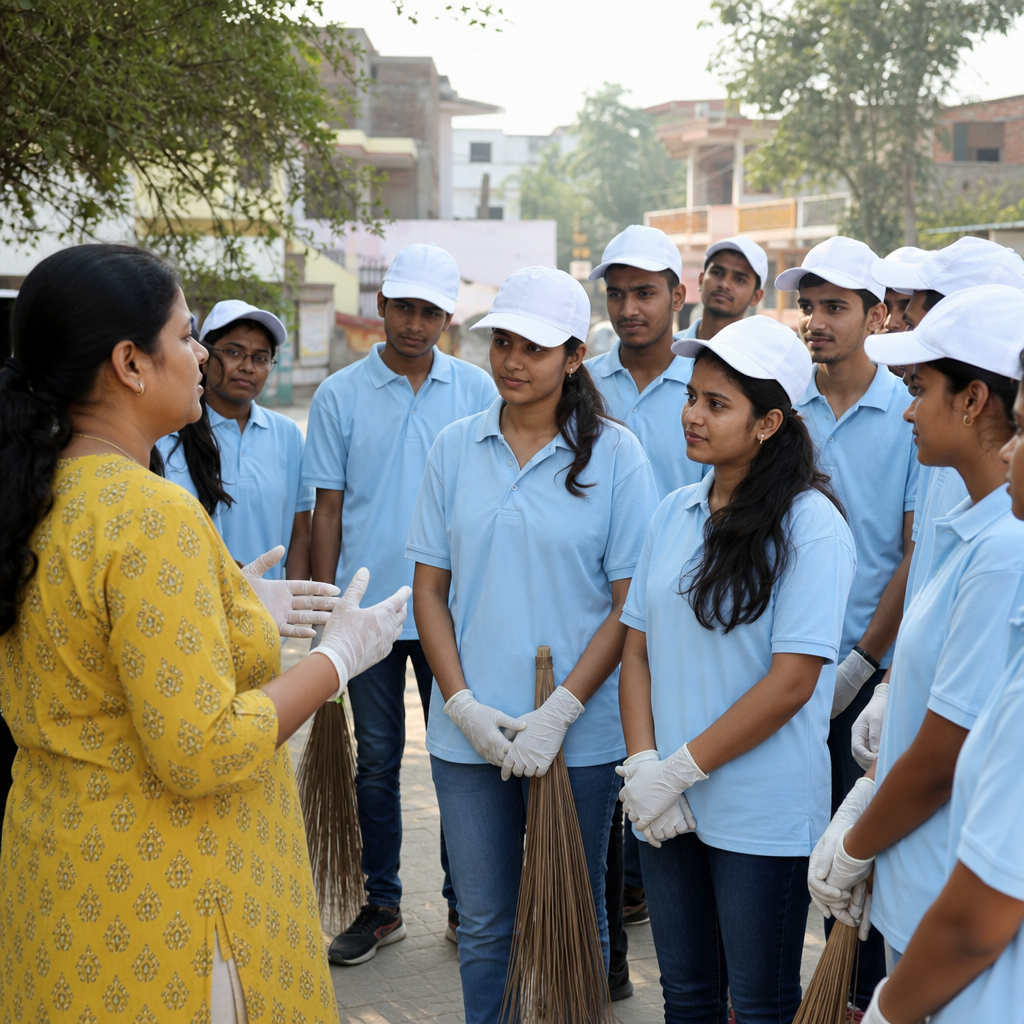
Community surveys and assessments for sanitation planning turn local knowledge into practical decisions about toilets, drainage, handwashing, fecal sludge management, and public health outreach. In sanitation work, a survey is a structured way to collect information from households, institutions, businesses, and service providers, while an assessment combines that information with observation, mapping, technical review, and risk analysis to guide action. I have used both in urban settlements, rural villages, schools, and peri-urban markets, and the pattern is consistent: projects succeed when planners understand how people actually live, not how outsiders assume they live. This matters because sanitation systems fail for social reasons as often as technical ones. A latrine block can be well designed yet unused if women feel unsafe at night, if pit emptying is unaffordable, or if water is too scarce for cleaning. Community engagement and education therefore are not side activities; they are the operating system for planning, implementation, and long-term use.
As a hub for fostering participation and learning, this topic connects several essential tasks. It covers how to ask the right questions, who must be included, how to interpret behavior without blaming communities, and how to turn findings into shared priorities. It also explains how surveys support public meetings, school programs, hygiene promotion, tariff discussions, maintenance planning, and accountability systems. The strongest sanitation plans answer basic questions directly: Who lacks safe access? What barriers exist? Which risks are immediate? Which solutions are affordable and acceptable? What will residents maintain after external funding ends? Good community surveys and assessments provide those answers with evidence. They identify service gaps, reveal inequalities between landlords and tenants or between formal and informal neighborhoods, and show whether the main constraint is infrastructure, management, finance, or trust. Done well, they create a baseline for monitoring progress and a learning process that helps residents, local government, and service operators make better decisions together.
Why community-based sanitation assessment is the foundation of effective planning
Sanitation planning starts with service realities, not engineering preferences. A community-based assessment establishes those realities by documenting current practices across the full sanitation service chain: containment, emptying, transport, treatment, reuse, or disposal. In practice, I look for both hardware and behavior. A household may report having a toilet, but observation often shows a broken slab, poor ventilation, no handwashing station, or unsafe discharge into a drain. Schools may have enough cubicles on paper but still fail students because doors do not lock, menstrual hygiene facilities are missing, or cleaning budgets are absent. Markets and bus stations often require separate review because public sanitation use patterns differ from household use patterns. These details matter because they change what should be funded first.
Community assessment also prevents expensive misalignment. For example, a sewer extension can underperform in low-income areas where plot layouts, connection fees, and water availability make on-plot containment more realistic in the medium term. Conversely, repeated latrine construction campaigns can fail in flood-prone settlements where raised toilets, simplified sewers, or container-based approaches are more appropriate. Recognized frameworks support this broader view. The World Health Organization sanitation safety planning approach emphasizes identifying hazardous events and exposure pathways. The Joint Monitoring Programme service ladder helps teams distinguish limited, basic, and safely managed sanitation. Shit Flow Diagrams, now widely used by utilities and cities, show where fecal waste is contained, emptied, transported, treated, or lost to the environment. Community surveys feed all of these tools with ground-truth data, making them useful rather than cosmetic.
What to ask, whom to include, and how to collect reliable data
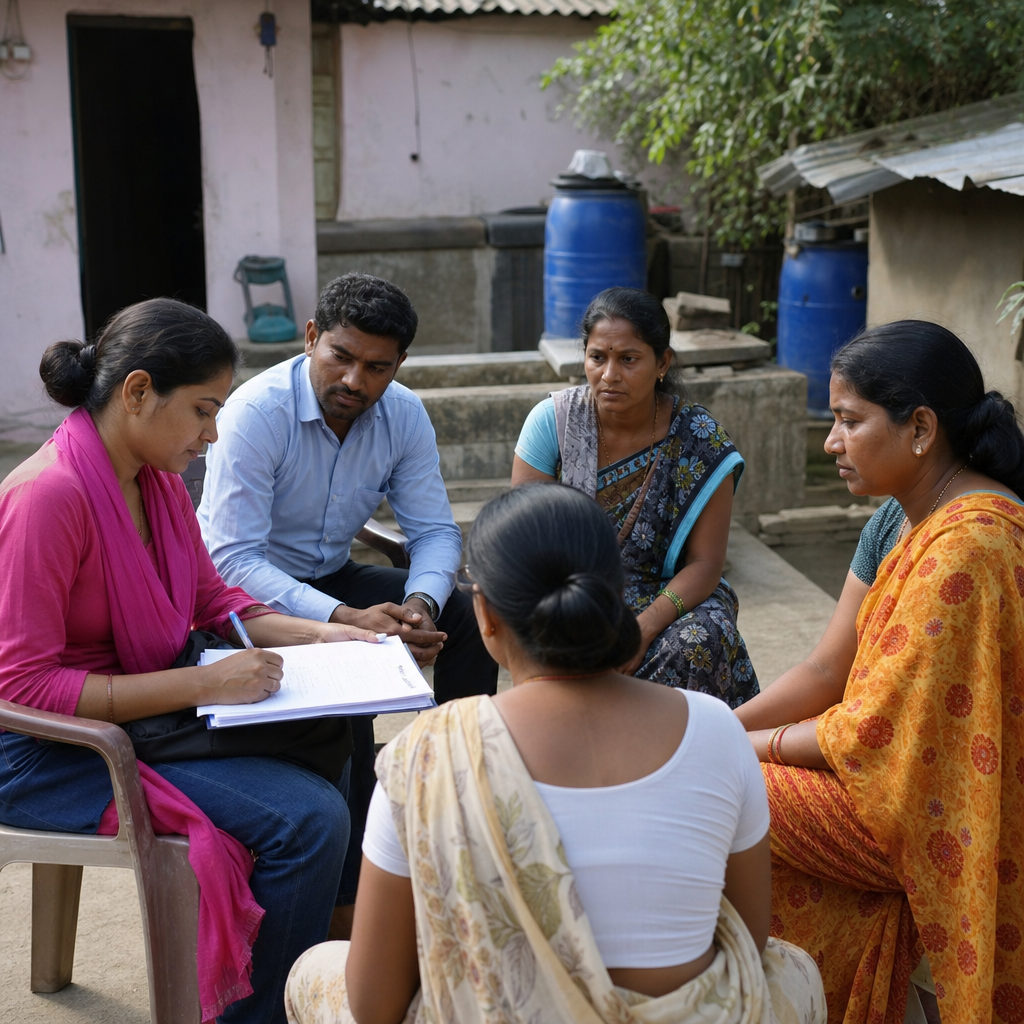
The best sanitation surveys mix quantitative and qualitative methods. Household questionnaires reveal coverage, facility type, sharing arrangements, costs, emptying frequency, and hygiene practices. Key informant interviews with teachers, health workers, desludging operators, landlords, masons, and local leaders explain why patterns exist. Focus groups surface social barriers that standard forms miss, especially around privacy, safety, disability access, and menstrual health. Transect walks and spot checks validate what people say against what planners can observe. In dense settlements, simple mapping with GPS-enabled phones or tools such as KoboToolbox, SurveyCTO, and QGIS can show clusters of overflow points, open drains, public toilets, and schools without accessible facilities.
Inclusion is not a box-ticking exercise. If a survey reaches only household heads during working hours, it may miss women, tenants, shift workers, adolescents, older adults, and people with disabilities. That creates bad planning. A useful sample deliberately includes renters and owners, formal and informal areas, institutions, businesses, and users of shared or public facilities. It should also identify groups that face different sanitation risks, such as residents in flood zones, people living near dumping sites, and households paying private emptiers. Questions should be concrete and time bound. Instead of asking whether a toilet is clean, ask who cleaned it last, how often it is cleaned, whether water and soap were available yesterday, and what happens when the pit fills. In my fieldwork, these practical questions consistently produce more reliable answers than broad opinion questions. Enumerator training is equally important. Teams need standard definitions, respectful interviewing skills, consent procedures, and protocols for observation so that one person’s “improved latrine” means the same thing as another’s.
Turning participation into learning, ownership, and better decisions
Participation is valuable only when it changes understanding and decisions. The most effective sanitation assessments create a learning loop: residents share information, planners analyze it, findings are returned in accessible language, and communities help set priorities. This is where fostering participation and learning becomes visible. Instead of treating residents as respondents, treat them as co-interpreters of evidence. After surveys, hold feedback sessions using maps, simple charts, and photos. Ask whether the findings match lived experience. In one settlement upgrading process I supported, survey data suggested toilet coverage was acceptable, but women’s discussion groups explained that many facilities were effectively unusable after dark because paths were unlit and locks were broken. The revised plan added lighting, lock replacement, and caretaker arrangements before any new construction, and usage improved because the solution matched actual constraints.
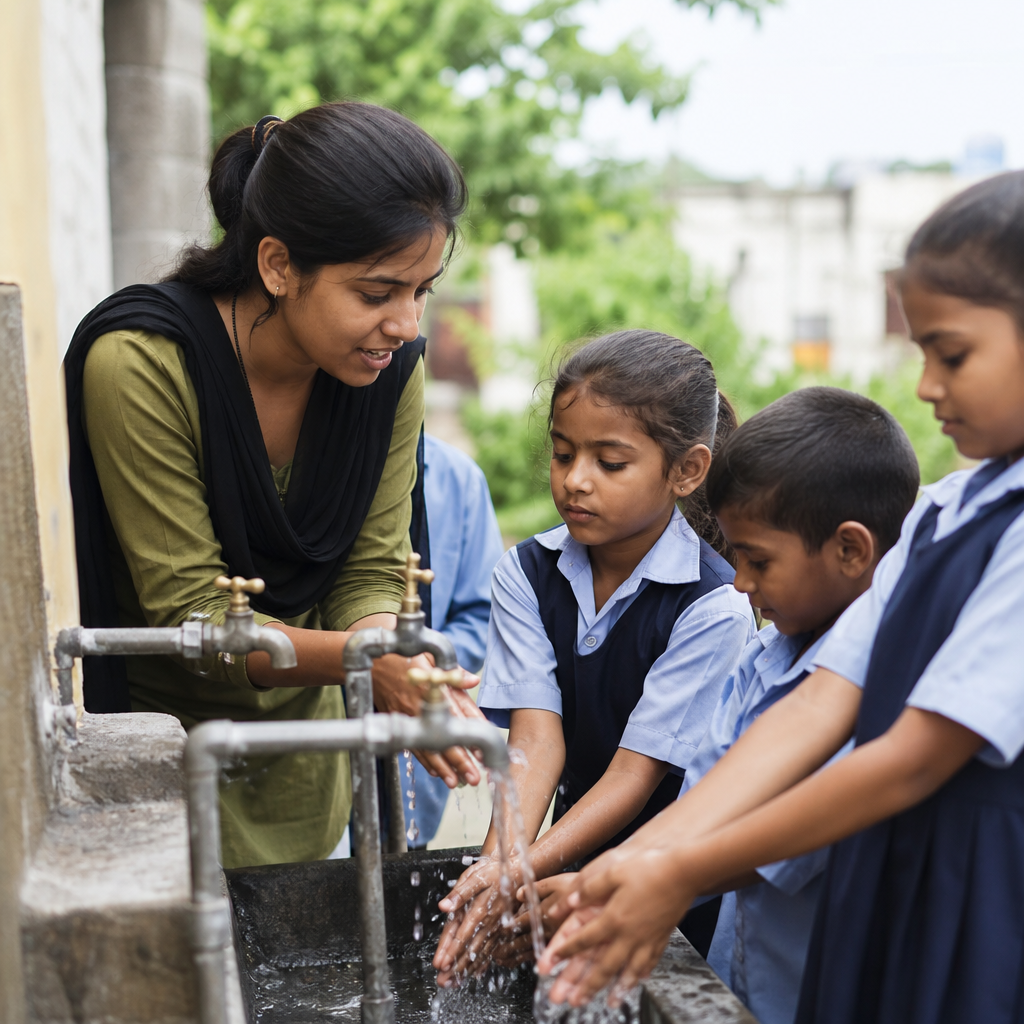
Educational value grows when assessment activities explain the sanitation system itself. Many people know the immediate problem, such as smell or overflow, but not the downstream pathway from pit to drain to river to illness risk. Community mapping and hazard discussions make that visible. Schools can contribute through student hygiene clubs, facility audits, and handwashing demonstrations that connect classroom learning to household behavior. Local artisans and emptiers can join sessions on safe design, pit lining, venting, scheduled desludging, and protective equipment. This shared learning reduces conflict because tradeoffs become clearer. Residents see why a cheaper toilet may fail in high water table areas, and local government sees why collection fees must reflect service costs if treatment is expected. Participation then becomes more than consultation; it becomes practical civic education that improves maintenance, reporting, and willingness to pay for reliable service.
From survey findings to sanitation priorities, budgets, and phased action
Assessment data should end in a ranked action plan, not a report that sits unread. I recommend translating findings into four decision categories: urgent public health risks, service access gaps, operational weaknesses, and behavior-change needs. Urgent risks include open discharge near water points, overflowing school toilets, and unmanaged fecal sludge from dense settlements. Access gaps include households without any private or shared facility, inaccessible school toilets, or public places with no handwashing. Operational weaknesses include unclear maintenance roles, unreliable emptying markets, poor tariff collection, and absent treatment capacity. Behavior-change needs may include child feces disposal, handwashing at critical times, toilet cleaning routines, and misconceptions about pit emptying safety. Once grouped this way, priorities can be matched to budgets and timelines.
| Assessment finding | Planning implication | Example response |
|---|---|---|
| High toilet coverage but frequent overflow | Containment exists, service chain is weak | License emptiers, create transfer points, expand treatment capacity |
| Low use by women and girls | Access is constrained by safety or design | Add lighting, locks, disposal bins, privacy screens, separate cubicles |
| Flood-prone plots with collapsing pits | Standard designs are unsuitable | Use raised toilets, sealed tanks, or simplified sewer alternatives |
| Schools have toilets but no cleaning budget | Management failure, not infrastructure shortage | Set recurrent budget, assign responsibilities, track supplies monthly |
Phasing is essential because sanitation systems are capital intensive and behavior change takes time. A sound plan often combines quick wins with medium-term investments. Quick wins might include repair of nonfunctional toilets, handwashing stations, desludging of full pits, and caretaker training. Medium-term actions may cover public toilet upgrades, treatment site improvements, or citywide fecal sludge service contracts. Long-term steps can include drainage rehabilitation, sewer expansion where viable, and institutional reform. Linking survey evidence to budget lines strengthens funding proposals and helps donors or municipal finance teams see why each investment was chosen. It also improves monitoring. If the baseline showed only 40 percent of schools had soap available on the day of visit, progress can be measured clearly after six or twelve months.
Common mistakes, ethical safeguards, and how to keep assessments credible
Poor sanitation assessments usually fail in predictable ways. One common error is collecting too much data and answering too few decisions. If every questionnaire runs for an hour, data quality drops and analysis becomes slow. Another mistake is relying entirely on self-reported use or cleanliness without observation. Courtesy bias is strong when sanitation is tied to dignity. Sampling errors are also common: teams may oversample easier-to-reach households and miss renters, informal workers, or remote hamlets. Timing matters as well. Surveys conducted only in the dry season may understate flooding, access problems, and disease exposure. In urban areas, assessments that ignore landlords, private emptiers, and local masons miss the actors who shape most day-to-day sanitation outcomes.
Credibility depends on ethics and transparency. People should know why data is being collected, how it will be used, and whether any personal information will be stored. Enumerators must avoid shaming households for conditions linked to poverty or insecure tenure. Sensitive topics, including menstrual hygiene, disability needs, and open defecation, require privacy and respectful language. For children, school-based data collection should follow safeguarding procedures and involve appropriate permissions. Validation is equally important. Triangulate household responses with observation, administrative records, health data, and service provider logs. Where possible, share preliminary findings back with communities and frontline staff to catch errors before finalizing plans. The result is not perfect certainty; sanitation planning rarely has that luxury. The goal is decision-grade evidence that is accurate enough, inclusive enough, and transparent enough to support fair action.
Community surveys and assessments for sanitation planning work best when they are treated as the starting point of an ongoing relationship, not a one-time data exercise. They reveal how infrastructure, behavior, affordability, governance, and safety interact in daily life. They also anchor the wider goals of community engagement and education by turning residents into contributors, learners, and accountability partners. When planners ask clear questions, include overlooked groups, validate what they hear, and return findings in usable form, sanitation investments become more targeted and more durable. The payoff is practical: better facility design, higher usage, safer waste management, stronger maintenance, and clearer budget priorities.
For organizations building a stronger approach to fostering participation and learning, this hub topic should guide every related article and field activity. Use it to connect survey design, public feedback, school engagement, hygiene education, monitoring, and service improvement into one coherent planning cycle. Start with a focused assessment, map the sanitation service chain, identify risks and barriers, and involve the community in interpreting what the evidence means. Then turn those findings into phased action with visible responsibilities and measurable indicators. If you are planning a sanitation program now, begin by reviewing your current data tools and asking a simple question: do they capture how people actually access, use, and maintain sanitation every day? If not, rebuild the process with the community at the center.
Frequently Asked Questions
What is the difference between a community survey and a sanitation assessment?
A community survey is a structured process for gathering information directly from people and organizations affected by sanitation conditions. It typically uses questionnaires, interviews, and standardized data collection tools to learn about household toilet access, handwashing facilities, drainage problems, desludging practices, affordability, service gaps, and behaviors related to hygiene and waste disposal. Surveys are especially useful because they create comparable data across many households, schools, clinics, businesses, and service providers. That makes it easier to identify patterns, quantify needs, and understand how common specific sanitation problems are within a settlement or service area.
A sanitation assessment goes a step further. It uses survey results but also includes field observation, mapping, technical inspection, institutional review, environmental risk analysis, and sometimes water quality or infrastructure checks. In practice, an assessment helps answer not just “what is happening,” but also “why is it happening,” “who is most affected,” and “what should be done first.” For example, a survey may show frequent toilet overflow in a neighborhood, while an assessment may reveal that the real drivers are poor drainage, inaccessible roads for desludging trucks, shallow groundwater, and unclear responsibilities between local authorities and private operators. Together, surveys and assessments convert local knowledge into practical sanitation planning decisions that are more realistic, equitable, and effective.
Why are community surveys and assessments so important for sanitation planning?
They are important because sanitation planning fails when it is based on assumptions instead of evidence. Communities are rarely uniform. Even within the same town or settlement, sanitation conditions can differ sharply by income level, housing type, land tenure, flood exposure, gender, disability, and access to services. A well-designed survey helps planners understand these differences at a level of detail that general statistics cannot provide. It can reveal where people rely on unimproved pits, where public toilets are overused, where handwashing stations exist but do not have soap or water, and where households are paying high prices for emptying or disposal. That kind of evidence is essential for choosing solutions that match local realities.
Assessments are equally important because they connect community data to technical and public health priorities. Sanitation is not only about toilets; it also involves containment, conveyance, treatment, reuse or disposal, drainage interaction, and human behavior. If planners only count toilets, they may overlook unsafe fecal sludge dumping, broken sewers, seasonal flooding, school sanitation gaps, or contamination pathways around markets and clinics. A good assessment helps identify health risks, system bottlenecks, environmental vulnerabilities, and service delivery weaknesses. It also improves prioritization by showing which problems are most urgent, which interventions are feasible, and where limited budgets can produce the greatest benefit. In short, surveys and assessments make sanitation planning more targeted, more accountable, and far more likely to improve public health.
What topics should be included in a sanitation survey for a community?
A strong sanitation survey should cover much more than whether a household has a toilet. At minimum, it should include the type and condition of sanitation facilities, whether they are shared or private, who uses them, and whether they are accessible for children, older adults, and people with disabilities. It should ask about handwashing facilities, the availability of water and soap, and everyday hygiene practices. It should also capture how toilets or pits are emptied, how often desludging happens, who provides the service, what it costs, and where the waste ultimately goes. In areas with on-site sanitation, these questions are crucial because safe containment without safe fecal sludge management still creates major public health risks.
Beyond household-level data, the survey should include institutions and the broader service environment. Schools, health centers, markets, transport hubs, and workplaces often have sanitation challenges that affect large numbers of people. Questions about drainage, flooding, wastewater discharge, solid waste blockages, and nuisance conditions such as odor or standing water are also valuable because sanitation systems are closely linked to the surrounding environment. It is also good practice to include questions on user satisfaction, safety at night, menstrual hygiene needs, affordability, willingness to pay for improved services, and barriers faced by renters or informal residents. When possible, this information should be paired with observations, GPS points, photos, and simple mapping so that responses can be verified and linked to specific locations. The most useful surveys are not the longest ones, but the ones carefully designed around the planning decisions they need to inform.
How do surveys and assessments improve sanitation decisions in urban, peri-urban, and rural areas?
Surveys and assessments improve decision-making by showing how sanitation needs differ across settlement types and by helping planners avoid one-size-fits-all solutions. In dense urban areas, they can reveal issues such as overloaded shared toilets, unsafe emptying, illegal dumping, blocked drains, limited space for upgrades, and neighborhoods that are difficult for service vehicles to access. In these settings, the right response may involve a mix of improved on-site containment, transfer stations, scheduled desludging, decentralized treatment, targeted public toilet improvements, and stronger service regulation. Without detailed local evidence, it is easy to invest in infrastructure that does not match actual settlement conditions or service patterns.
In peri-urban and rural areas, surveys and assessments often uncover different constraints, such as scattered housing, variable groundwater conditions, seasonal flooding, limited maintenance services, and lower household ability to pay for upgrades. They can also identify opportunities, including space for safer on-site systems, community-led maintenance arrangements, and behavior change strategies tailored to local practices. Importantly, assessments help planners compare technical suitability with social acceptance and affordability. A technology that works on paper may fail if households cannot maintain it, if emptying services do not exist, or if women and vulnerable groups find it unsafe or inconvenient. By grounding planning in evidence from users, infrastructure, service chains, and environmental risk, surveys and assessments support solutions that are practical, resilient, and more likely to be used consistently.
What makes a community sanitation survey or assessment reliable and useful?
Reliability starts with clear objectives. A survey or assessment should be designed around specific planning questions, such as where sanitation risks are highest, which facilities are failing, what service gaps exist, and what investments are most urgent. From there, quality depends on sound sampling, well-tested questionnaires, trained enumerators, consistent definitions, and careful supervision in the field. Questions should be simple, relevant, and specific enough to avoid vague answers. Direct observation is also important because reported behavior and actual conditions do not always match. For example, a household may report having handwashing access, but observation may show that the station lacks water or soap. Triangulating interview data with site visits, maps, service records, and technical inspection makes the findings much more dependable.
A useful assessment also pays close attention to inclusion, ethics, and local participation. It should deliberately capture the experiences of women, renters, informal settlers, people with disabilities, schools, health facilities, and others whose sanitation needs are often underrepresented. Community engagement matters not only because it improves data accuracy, but because it builds trust and increases the likelihood that recommendations will be accepted and acted on. Once data is collected, it should be analyzed in ways that support decisions: identifying risk hotspots, comparing neighborhoods, estimating service demand, and linking problems to feasible interventions. The final output should not be just a database or report on a shelf. It should translate evidence into clear priorities, action steps, responsibilities, and investment options. That is what turns a sanitation survey or assessment from a data exercise into a planning tool with real public health value.