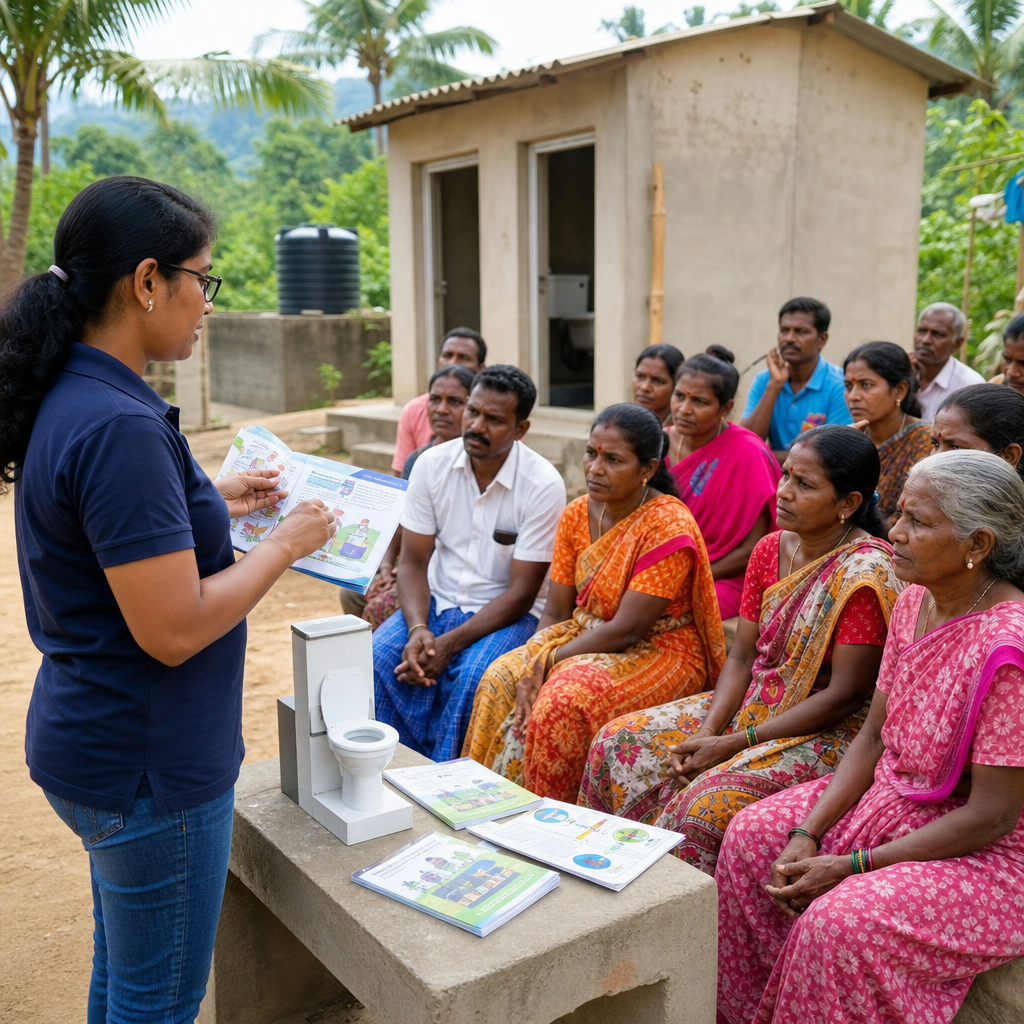
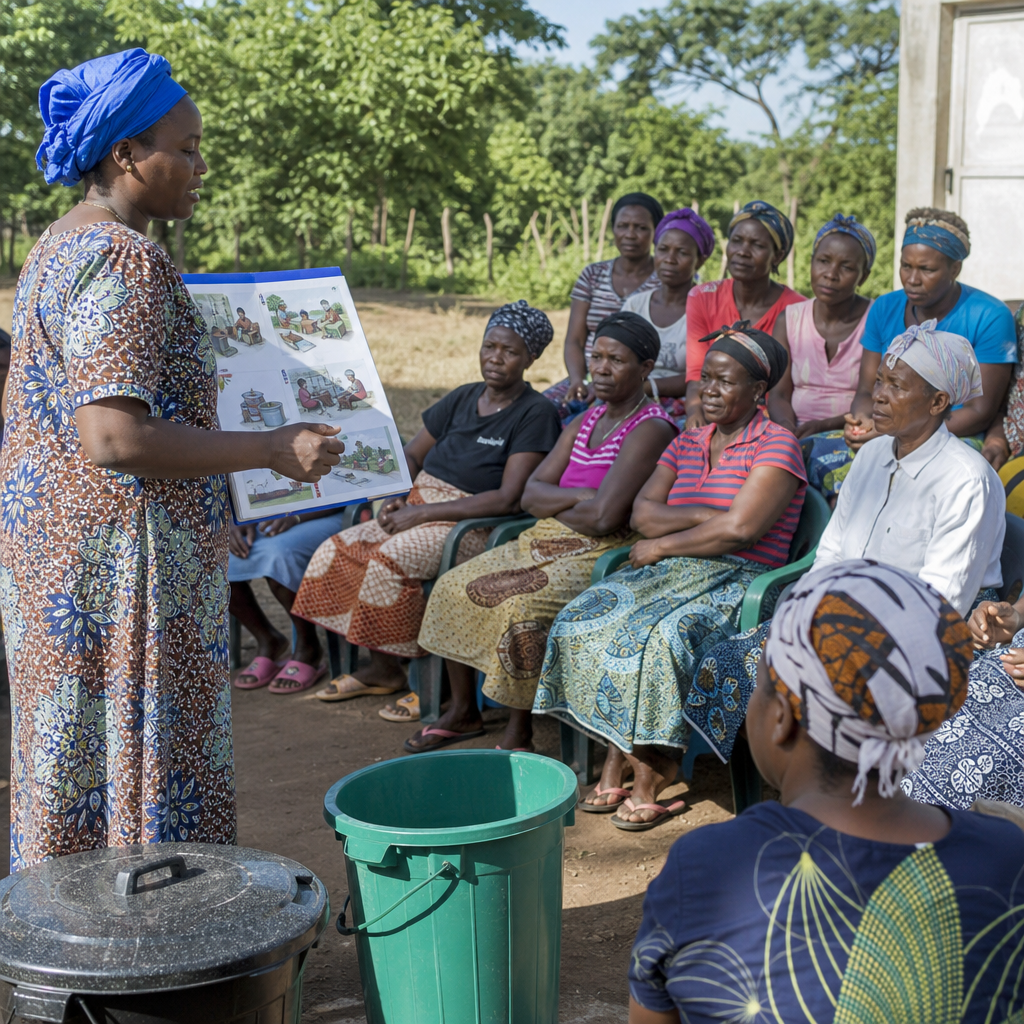
Overcoming misconceptions about EcoSan in communities starts with a clear explanation of what EcoSan is, what it is not, and why public understanding determines whether sanitation projects succeed or fail. EcoSan, short for ecological sanitation, is an approach that treats human waste as a resource to be safely managed, recovered, and reused rather than simply flushed away and forgotten. In practice, EcoSan systems often include urine-diverting dry toilets, composting toilets, dehydrating vaults, handwashing stations, and controlled reuse of sanitized nutrients in agriculture. I have worked on community sanitation outreach where the technical design was sound, funding was available, and local leaders initially agreed, yet adoption stalled because residents associated dry toilets with poverty, bad smells, disease, or complicated maintenance. Those reactions are common, and they are understandable. Sanitation habits are deeply personal, tied to dignity, gender roles, religion, convenience, and trust in institutions.
Building community awareness is therefore not a side activity; it is the central task that turns infrastructure into a functioning public health service. When awareness is weak, families may misuse vaults, reject reuse practices, or return to open defecation and unsafe pits. When awareness is strong, communities understand pathogen barriers, maintenance routines, water savings, and the economic value of nutrient recovery. This article serves as a hub for building community awareness around EcoSan. It explains the most persistent misconceptions, shows how to address them with practical education methods, and outlines the messages, partnerships, and evidence that help communities move from suspicion to informed acceptance. If a village committee, municipality, school, NGO, or social enterprise wants to improve EcoSan uptake, the first priority is not a brochure or a construction target. The first priority is a sustained awareness strategy grounded in local concerns, plain language, and visible proof that the system is clean, safe, and useful.
Why misconceptions about EcoSan persist
Misconceptions about EcoSan persist because sanitation is mostly invisible when it works well, so people judge new systems through assumptions rather than direct experience. In many communities, the benchmark for modern sanitation is the pour-flush or sewer-connected toilet. Anything dry is seen as temporary or inferior. I have heard residents say, “If it does not use water, it cannot be hygienic,” even in water-scarce areas where flush systems fail for months. That belief is not irrational; it reflects decades of public messaging equating water with cleanliness. EcoSan challenges that mental model by separating cleaning from flushing and by emphasizing containment, dehydration, composting, and treatment barriers. Unless that distinction is explained repeatedly, people assume dry systems are simply uncovered pits with a new name.
Another reason misconceptions persist is that poorly implemented projects damage trust for years. A single school toilet with broken urine diversion, no ash supply, and no cleaning rota can become the story everyone remembers. The lesson residents take away is not that maintenance failed; it is that EcoSan failed. This is why awareness must include honest discussion of operational requirements. EcoSan is effective when users know how to separate inputs, manage moisture, control odor, empty chambers safely, and respect storage times before reuse. It is less forgiving than a sewered system that hides errors downstream. Communities deserve that truth upfront. Awareness efforts that oversell convenience and hide tradeoffs create backlash. Awareness efforts that explain benefits and responsibilities together create realistic expectations and stronger long-term use.
The most common myths and the facts communities need
The fastest way to build community awareness is to answer the exact fears people voice in meetings, household visits, and school sessions. The table below summarizes the misconceptions that most often block EcoSan adoption and the response that should be communicated consistently across every outreach channel.
| Misconception | What people often mean | Evidence-based response |
|---|---|---|
| EcoSan toilets smell bad | Users fear indoor odor and dirty surroundings | Correct urine diversion, dry cover material such as ash or sawdust, ventilation, and routine cleaning prevent odor. Persistent smell usually signals excess moisture or poor maintenance, not an inherent design flaw. |
| Handling treated waste is always unsafe | Residents worry about disease transmission | Safety depends on treatment barriers, storage time, dehydration, composting conditions, and local guidance. WHO sanitation risk principles and national reuse guidelines support controlled, trained handling rather than casual contact. |
| EcoSan is only for poor or rural households | People associate dry sanitation with lack of progress | EcoSan is used in water-scarce urban settlements, schools, parks, emergency settings, and off-grid homes because it saves water and supports nutrient recovery where sewers are impractical or costly. |
| EcoSan is too complicated for families | Users fear constant technical work | Daily use is simple when training is practical: use the correct drop hole, add cover material if required, wash hands, and report maintenance issues. Complexity mainly sits in system management, not normal use. |
| Recovered nutrients are unacceptable for food crops | Cultural taboos and disgust drive rejection | Acceptance improves when communities see restricted-use protocols, tree crop pilots, nonfood crop demonstrations, and evidence that sanitized urine and compost can replace part of chemical fertilizer demand. |
These points matter because community awareness should not rely on abstract sustainability language. People want direct answers: Will it smell? Is it safe for children? Who empties it? What happens in the rainy season? Can tenants use it? What if someone uses water in the wrong chamber? The most effective educators answer each question with a concrete explanation and a local example. In one peri-urban project, resistance fell sharply after households visited a demonstration toilet that had been in use for over a year without odor. Seeing a clean slab, a covered ash container, and a simple cleaning checklist changed the discussion more than any poster could. Demonstration converts uncertainty into observation, and observation is one of the strongest tools in community awareness work.
How to build community awareness before construction begins
Awareness should begin before site selection, procurement, or labor mobilization. If the first time residents hear about EcoSan is when builders arrive, the project is already behind. Pre-construction awareness has four goals: identify concerns, map influencers, explain options, and agree on responsibilities. Start with formative listening rather than one-way teaching. Household interviews, women’s group discussions, school meetings, and sessions with landlords, religious leaders, and sanitation workers reveal what matters locally. In some places the key issue is smell. In others it is privacy, menstrual hygiene, anal cleansing practices, child use, or who handles emptying. Those insights shape both design and messaging.
Next, identify trusted messengers. In my experience, uptake improves when explanations come from multiple voices: a local health worker for disease prevention, a farmer for reuse value, a mason for construction quality, a teacher for child behavior, and an early adopter for day-to-day practicality. This prevents EcoSan from being seen as an external NGO idea. It becomes a community-managed system endorsed by familiar people. Pre-construction engagement should also include site demonstrations, mock-ups, and user walkthroughs. Let residents open access doors, see urine pipes, understand where cover material is stored, and ask uncomfortable questions. If there are limitations, state them clearly. For example, a small vault may require more frequent emptying in a large household. Candor builds trust faster than polished messaging.
Finally, set a shared management plan before construction starts. Awareness fails when education says “the community will maintain it” but no one knows who is responsible. Every project should define cleaning schedules, supply chains for ash or sawdust, repair contacts, user rules, child training, and monitoring routines. Communities are far more willing to accept EcoSan when they see that operation is organized rather than improvised.
Communication methods that change behavior, not just opinion
Building community awareness is not the same as distributing information. Many EcoSan campaigns overload residents with technical details but do not change use patterns. Effective communication combines repetition, demonstration, social proof, and feedback. Repetition matters because sanitation messages compete with daily routines formed over many years. A single training session is rarely enough. Households need reminders at move-in, after repairs, before rainy seasons, and when misuse appears. Demonstration matters because sanitation is sensory. People need to see that a toilet can be dry, clean, and odor-free. Social proof matters because individuals look to neighbors when deciding whether a new practice is respectable or risky. Feedback matters because communities lose confidence when reported issues are ignored.
For schools and public facilities, practical routines work better than lectures. Color-coded signs, separate handwashing instruction, prefect or caretaker oversight, and periodic user refreshers reduce misuse. For households, door-to-door visits and peer educators are especially effective because families can discuss taboos privately. Radio segments, community theater, and local-language call-in programs also work well where literacy is mixed. I have seen community drama outperform printed leaflets because actors can stage common mistakes, like adding too much water or failing to cover feces, then show the consequence and correction in memorable terms. The principle is simple: awareness grows when education mirrors real behavior instead of idealized behavior.
Message framing also matters. Health protection is usually the strongest entry point, but it should be paired with convenience, dignity, and resilience. In drought-prone areas, water savings can be decisive. In farming communities, fertilizer cost reduction may resonate. In dense informal settlements, safe containment and lower dependence on unreliable sewerage may be the winning argument. Awareness campaigns should use the benefits that local people already value, not only the benefits planners prefer.
Addressing culture, gender, and trust directly
Community awareness campaigns fail when they treat resistance as ignorance rather than as a response to legitimate social concerns. EcoSan touches powerful norms about impurity, privacy, labor, and status. In some communities, any discussion of reuse triggers disgust. In others, women worry that shared facilities will not be cleaned, adolescent girls worry about menstrual management, and older adults worry about squatting or stairs. These are not side issues. They are adoption issues. Awareness must therefore be culturally fluent and gender responsive from the start.
That means using local language carefully, avoiding technical jargon where simple words will do, and never dismissing taboo. It also means creating separate spaces for discussion when necessary. Women often raise concerns in smaller groups that they will not voice in mixed meetings. Sanitation workers and pit emptiers may identify practical handling risks that engineers overlook. Religious leaders can help interpret whether reuse practices conflict with local beliefs, and their endorsement can reduce suspicion quickly. Trust also grows when monitoring data are shared openly. If odor complaints decline, if water use falls, or if school attendance improves after better sanitation access, report those results back to the community. Transparency turns awareness into credibility.
Using pilots, evidence, and local champions to sustain acceptance
The strongest awareness strategy is a visible pilot that performs well over time. Pilots should be selected carefully, monitored closely, and used as training sites. A good pilot is not just a toilet block; it is a proof point for maintenance, user behavior, cleaning standards, and safe output management. Schools, health posts, market centers, and model households can all serve this role. What matters is reliability. A pilot with broken doors or missing supplies will magnify misconceptions. A pilot that stays clean through rainy seasons and heavy use becomes a persuasive local reference.
Local champions are equally important. Early adopters, caretakers, farmers using recovered nutrients under guidance, and respected committee members can explain EcoSan in practical language that outsiders cannot match. Their credibility comes from lived experience. Support them with refresher training, clear data, and opportunities to host learning visits. Pair anecdotal testimony with measured evidence where possible. For example, document reduced water hauling, lower fertilizer purchases, fewer overflow incidents than nearby pits, or improved functionality rates compared with neglected latrines. Communities do not need inflated promises. They need proof that the system works under conditions like their own.
Long-term acceptance also depends on continuous learning. Track complaints, inspect facilities, revise messages, and adapt designs. If urine diversion is confusing for young children, add child-friendly interfaces. If cover material runs out, fix supply logistics rather than blaming users. Awareness is not a launch event. It is an ongoing management function that links technical performance to public confidence.
What successful community awareness looks like in practice
Successful community awareness around EcoSan produces observable changes. Residents can explain how the toilet works in one or two sentences. Users know the basic rules without needing constant supervision. Caretakers have supplies and checklists. Community leaders can answer safety questions consistently. Households report fewer worries about smell and cleanliness because they have seen functioning examples. Farmers or gardeners understand whether, where, and under what restrictions recovered products may be used. Most importantly, facilities remain in use months after inauguration. Awareness has succeeded when behavior, maintenance, and trust reinforce one another.
For organizations building a subtopic hub on community engagement and education, this is the central lesson: awareness must be planned with the same discipline as engineering and financing. Misconceptions about EcoSan do not disappear through branding or technical correctness alone. They are overcome through respectful listening, direct answers, visible demonstrations, trusted local messengers, and honest follow-through. If you are developing EcoSan programs, start by mapping the misconceptions in your community, then build an education plan that addresses each one with evidence and lived examples. Communities adopt sanitation systems they understand, trust, and can manage. Make awareness the foundation, and the technology has a real chance to deliver its health, environmental, and social benefits.
Frequently Asked Questions
What is EcoSan, and how is it different from traditional sanitation systems?
EcoSan, or ecological sanitation, is an approach to sanitation that views human waste as a resource that can be safely managed, treated, and in some cases reused, rather than as something that must simply be flushed away. This is one of the most important points to understand when overcoming misconceptions about EcoSan in communities. Traditional sanitation systems are often designed to remove waste from sight as quickly as possible, usually through sewer networks, septic systems, or pit latrines. EcoSan systems, by contrast, are designed to separate, contain, and treat waste in ways that protect public health while also reducing water use, environmental pollution, and nutrient loss.
In practical terms, EcoSan may involve urine-diverting dry toilets, composting toilets, dehydrating vaults, and other systems that encourage safer handling and recovery of nutrients. That does not mean EcoSan is “unsafe,” “primitive,” or simply “using waste without treatment,” which are common misunderstandings. Properly managed EcoSan systems are built around hygiene, containment, and treatment. Their purpose is not to lower sanitation standards, but to rethink sanitation in a way that is more sustainable, especially in areas facing water scarcity, poor sewer access, high infrastructure costs, or agricultural nutrient needs.
The key difference is that traditional systems often focus on disposal, while EcoSan focuses on safe management and resource recovery. This distinction matters because when communities understand that EcoSan is a structured sanitation approach grounded in health protection and environmental responsibility, acceptance tends to improve significantly.
Is EcoSan safe, or does it create health risks for families and communities?
EcoSan can be very safe when it is correctly designed, used, and maintained. In fact, one of the biggest misconceptions is that EcoSan automatically exposes people to untreated waste. Well-managed EcoSan systems are specifically intended to reduce disease risks by ensuring that waste is contained, treated, and handled with care. Like any sanitation solution, safety depends on proper implementation. A poorly built septic tank, overflowing pit latrine, or broken sewer line can also create serious health risks. EcoSan should be judged by the same standard: quality of design, management, user behavior, and long-term maintenance.
Many EcoSan systems improve safety by separating urine and feces, reducing moisture, and creating conditions that support dehydration, composting, or other treatment processes. These measures help reduce pathogens over time. In addition, user training is essential. Communities need clear guidance on toilet use, cleaning routines, storage periods, and safe handling procedures. When these steps are followed, EcoSan systems can provide a hygienic sanitation option that protects households, workers, and the broader environment.
Public concern about safety is understandable, so it should never be dismissed. Instead, sanitation promoters should explain exactly how treatment works, what safeguards are in place, and what users are expected to do. Demonstrations, local examples, and transparent operation guidelines are especially effective. Trust grows when people can see that EcoSan is not based on guesswork, but on managed sanitation processes that prioritize health at every stage.
Does EcoSan mean people have to handle human waste directly?
Not necessarily, and this is one of the most common myths that discourages community acceptance. EcoSan does not mean people are expected to come into casual or unsafe contact with fresh human waste. Good EcoSan design aims to reduce direct handling, improve containment, and support treatment before any material is removed or reused. Depending on the technology used, waste may be stored in sealed or protected compartments, dehydrated over time, composted under controlled conditions, or otherwise managed to minimize exposure.
It is true that some EcoSan systems require more user awareness than conventional flush toilets. For example, users may need to follow instructions about separating urine, adding dry cover material, or waiting for a treatment period before emptying a chamber. However, this should not be confused with unsafe handling. Every sanitation system involves some form of waste management somewhere in the chain, whether by households, pit emptiers, utility workers, or treatment plant operators. EcoSan simply makes that management more visible and intentional.
Clear communication is essential here. Communities are more likely to reject EcoSan when they believe it shifts an unreasonable burden onto households. That is why projects should explain who will maintain the system, how often service is needed, what protective measures are used, and what training is provided. When people understand that EcoSan is a managed sanitation process, not uncontrolled exposure, fear and resistance often decrease.
Why do some communities resist EcoSan projects, and how can those misconceptions be addressed?
Resistance to EcoSan is often rooted less in the technology itself and more in perception, culture, communication gaps, and past project failures. Some people associate dry or urine-diverting toilets with poverty, backwardness, or inferior service compared with flush systems. Others may worry about smell, appearance, religious concerns, maintenance responsibilities, or the idea of reusing treated waste in agriculture. If these concerns are ignored, even technically sound projects can fail because sanitation adoption depends heavily on public understanding and social acceptance.
Addressing these misconceptions begins with respectful engagement. Communities need honest, practical explanations of what EcoSan is, what it is not, and why it may be suitable in their local context. For example, in areas with water shortages, high groundwater levels, flood risk, poor sewer access, or expensive pit emptying, EcoSan may offer major advantages. But those benefits must be explained in everyday terms. People want to know whether the toilet will smell, whether it is easy to clean, whether it is safe for children and older adults, and whether it will be reliable over time.
The most effective way to overcome misconceptions is through participation and evidence. Community members should be involved in planning, not just informed after decisions are made. Pilot units, exposure visits, user testimonials, and visible examples of successful systems can help replace rumors with experience. It also helps to discuss limitations openly. EcoSan is not a one-size-fits-all solution, and acknowledging that builds credibility. When promoters listen seriously to concerns and provide clear answers backed by local experience, acceptance improves and projects become more durable.
What are the main benefits of EcoSan for communities in the long term?
The long-term benefits of EcoSan can be significant when systems are matched to local conditions and supported with proper education and maintenance. One major advantage is water conservation. Many EcoSan systems use little or no water for flushing, which makes them especially valuable in water-scarce areas or places where water infrastructure is unreliable. They can also reduce pressure on sewer systems and help communities avoid the high costs associated with large-scale wastewater infrastructure.
EcoSan can also support environmental protection by reducing contamination of groundwater, surface water, and surrounding land. In places where poorly managed pit latrines or failing septic systems contribute to pollution, a well-run EcoSan system may offer a safer and more controlled alternative. Another important benefit is nutrient recovery. Human waste contains nutrients that, after proper treatment and in accordance with safety guidance, can potentially be returned to the soil. This creates opportunities for local agriculture and reinforces the idea of sanitation as part of a broader environmental cycle rather than a disposal problem alone.
Just as importantly, EcoSan can strengthen community resilience. It offers flexible sanitation options in settings where conventional sewer systems are impractical, unaffordable, or unsustainable. For rural settlements, peri-urban communities, flood-prone regions, and places with difficult ground conditions, EcoSan may provide a realistic path toward improved sanitation coverage. The long-term success, however, depends on more than technology. It requires community buy-in, consistent user education, supportive local leadership, and ongoing maintenance systems. When those elements are in place, EcoSan can deliver health, environmental, and economic benefits that extend far beyond the toilet itself.