Building local capacity for sustainable sanitation management starts with a simple truth: toilets, drains, sludge treatment plants, and hygiene campaigns only work over time when communities understand them, trust them, and have the skills to manage them. In practice, local capacity means the knowledge, leadership, technical ability, financing discipline, and institutional coordination needed to keep sanitation services safe, inclusive, and functional long after a project team leaves. Sustainable sanitation management covers the full chain, from user behavior and toilet access to collection, transport, treatment, reuse, regulation, and monitoring. As someone who has worked with municipalities, community groups, and school sanitation committees, I have seen the same pattern repeatedly: infrastructure delivered without local learning decays quickly, while modest systems backed by strong community education often outperform expensive assets.
This matters because sanitation is not only an engineering issue. It is a public health system, an environmental safeguard, a gender and dignity issue, and a local governance test. The World Health Organization and UNICEF Joint Monitoring Programme defines safely managed sanitation as improved facilities not shared with other households, where excreta are safely disposed in situ or transported and treated off-site. That definition highlights why knowledge is central. Households need to know how systems should be used. Operators need preventive maintenance routines. Local leaders need data for planning. Teachers and health workers need clear messages that change habits. When these pieces connect, communities reduce disease risk, protect groundwater, improve school attendance, and strengthen resilience during floods, droughts, and rapid urban growth.
As a hub page under community engagement and education, this article focuses on empowering communities through knowledge. It brings together the core ideas that support every related topic: behavior change, participatory planning, sanitation financing, operation and maintenance, fecal sludge management, inclusive design, climate resilience, monitoring, and partnerships. The goal is not to treat local people as passive beneficiaries. It is to build a capable local sanitation ecosystem where residents, frontline workers, civil society groups, utilities, and local government each understand their role and can act on reliable information. That shift from delivery to capability is what makes sanitation systems durable.
Why community knowledge is the foundation of sustainable sanitation
Community knowledge is the foundation because sanitation systems fail most often at the points where people interact with them daily. A pour-flush toilet clogs when households dispose of wipes, pads, or solid waste into the pan. A septic tank becomes a hazard when no one knows the desludging interval, access cover location, or warning signs of overflow. A communal toilet block deteriorates when user rules are unclear and cleaning responsibilities are not funded. In every one of these cases, the technical design may be sound, but the management system around it is weak.
Knowledge-building closes that gap. Effective sanitation education explains what the technology is, how it works, what routine care it requires, what not to do, who to contact when problems occur, and what costs should be expected over the asset life cycle. It also makes invisible risks visible. Many residents do not immediately connect standing wastewater, leaking pits, and informal dumping with diarrheal disease, helminth infection, malnutrition, or contamination of wells and surface water. When training translates these links into practical examples drawn from the neighborhood, behavior changes faster.
There is also a governance reason to prioritize knowledge. Local officials and service providers make better decisions when communities can articulate demand clearly. In settlements where residents understand the sanitation service chain, they ask sharper questions about emptying frequency, treatment standards, tariff structures, operator performance, and complaint handling. That improves accountability. It also reduces the common mismatch between what engineers specify and what users can maintain or afford.
Core elements of local capacity building
Building local capacity for sustainable sanitation management requires several capabilities at once. First is technical literacy. People do not need to become engineers, but they do need enough understanding to operate household or communal systems safely, identify faults early, and communicate clearly with service providers. Second is organizational capacity. Community-based organizations, water and sanitation committees, school management bodies, and neighborhood associations need defined roles, meeting routines, recordkeeping methods, and procedures for collecting fees or reporting failures.
Third is financial capacity. Sanitation fails when communities underestimate recurring costs. Households need to budget for cleaning supplies, minor repairs, pit emptying, or septic desludging. Committees need transparent bookkeeping and reserve funds. Local governments need realistic operational expenditure projections, not only capital budgets. Fourth is social capacity, which includes facilitation, conflict resolution, inclusion of women and marginalized groups, and the ability to sustain behavior change beyond a one-time campaign. Fifth is institutional capacity: clear mandates between municipalities, utilities, health departments, schools, private emptiers, and environmental regulators.
In my experience, the strongest programs treat these capacities as a package. A town may train masons to build lined pits correctly, but if there is no local schedule for desludging and no licensed discharge point, safe containment still breaks down. A city may install public toilets, but if attendants are not trained in cleaning protocols, stock control, customer feedback, and minor maintenance, user satisfaction collapses. Capacity building works when every link in the chain is addressed deliberately.
| Capacity area | What communities need to know | Practical example |
|---|---|---|
| Technical | How toilets, pits, septic tanks, and drains function; signs of failure; safe use rules | Households learn that grease, plastics, and menstrual products cause blockages and higher emptying costs |
| Organizational | Roles, meeting schedules, maintenance logs, complaint pathways | A school sanitation club tracks broken taps and reports issues weekly to the headteacher |
| Financial | User fees, reserve funds, desludging budgets, transparent accounting | A market toilet committee posts monthly income and cleaning expenses publicly |
| Social | Behavior change methods, inclusion, gender-sensitive engagement, local leadership | Women’s groups redesign toilet access hours to improve safety at night |
| Institutional | Service mandates, regulatory responsibilities, emergency contacts, data sharing | A municipality coordinates private emptiers with treatment plant operators and health inspectors |
How education changes behavior and service outcomes
Education works best when it is specific, repeated, and tied to immediate decisions. Generic messages such as “keep your environment clean” rarely change sanitation outcomes. Clear instructions do. For example, households respond better to messages like “desludge your septic tank every three to five years depending on size and occupancy” or “wash hands with soap after toilet use, before preparing food, and after cleaning a child.” The more concrete the behavior, the easier it is to adopt, monitor, and reinforce.
Different audiences need different formats. Schoolchildren benefit from routines, demonstrations, and peer leadership. Caregivers often respond to health-based messaging linked to child safety. Landlords need guidance on legal compliance, tenant communication, and maintenance responsibilities. Small-scale pit emptiers need occupational safety training, equipment standards, route planning, and discharge rules. Municipal decision-makers need dashboards, cost models, and service maps. A hub approach to community engagement recognizes these audience differences and avoids one-size-fits-all education.
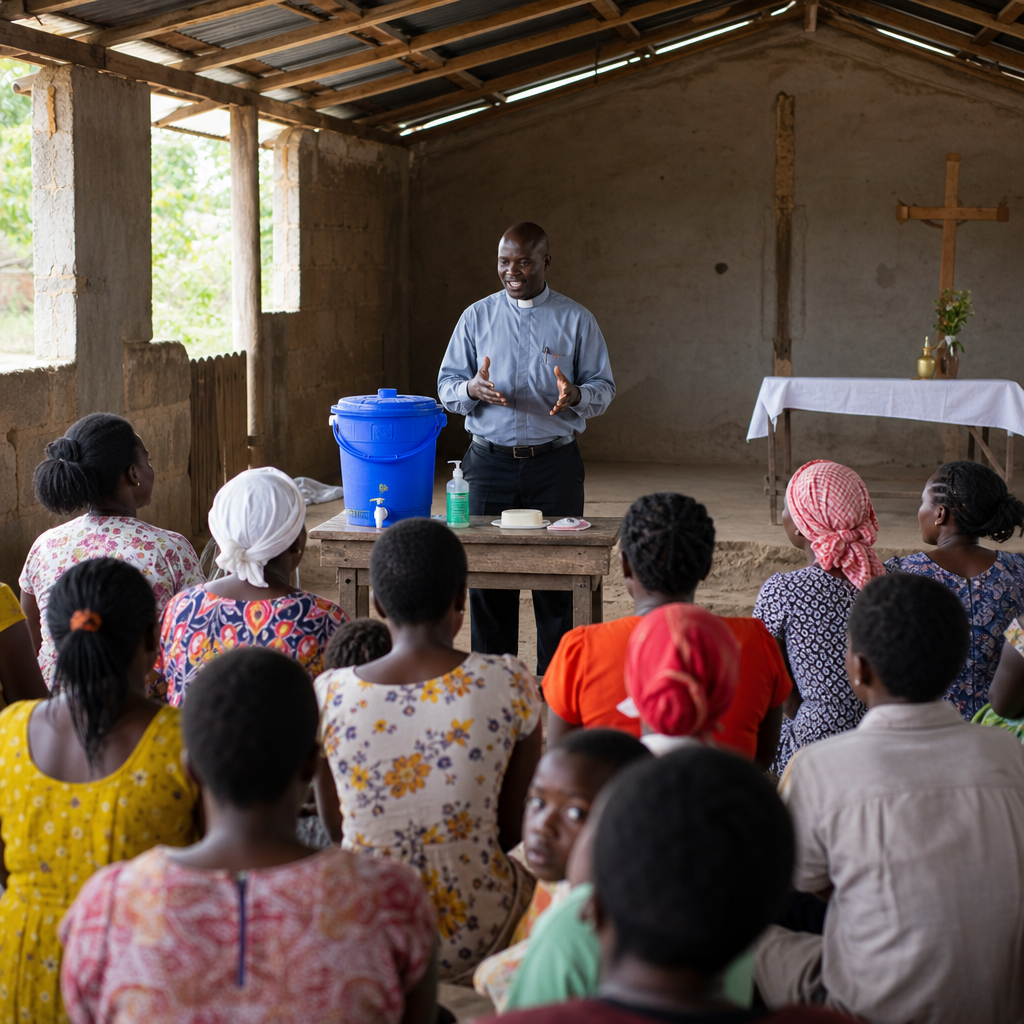
Behavior change also depends on trust. In neighborhoods where previous projects promised services and did not deliver, residents can be skeptical. I have found that practical demonstrations rebuild credibility faster than posters alone. Showing how a toilet seal prevents odors, how chlorine solutions are mixed correctly, or how to check a septic access point creates immediate understanding. When local champions, respected teachers, health volunteers, or trained artisans deliver the message, uptake improves further because the messenger is familiar and accountable.
Service outcomes improve when education is linked to feedback loops. Complaints should be logged, response times tracked, and common failure points turned into new training topics. If a communal toilet repeatedly runs out of soap, that is not just a supply issue; it is a management lesson about procurement, storage, and caretaker supervision. Learning from these small operational failures is one of the fastest ways to strengthen local capacity.
Participatory planning, inclusion, and local ownership
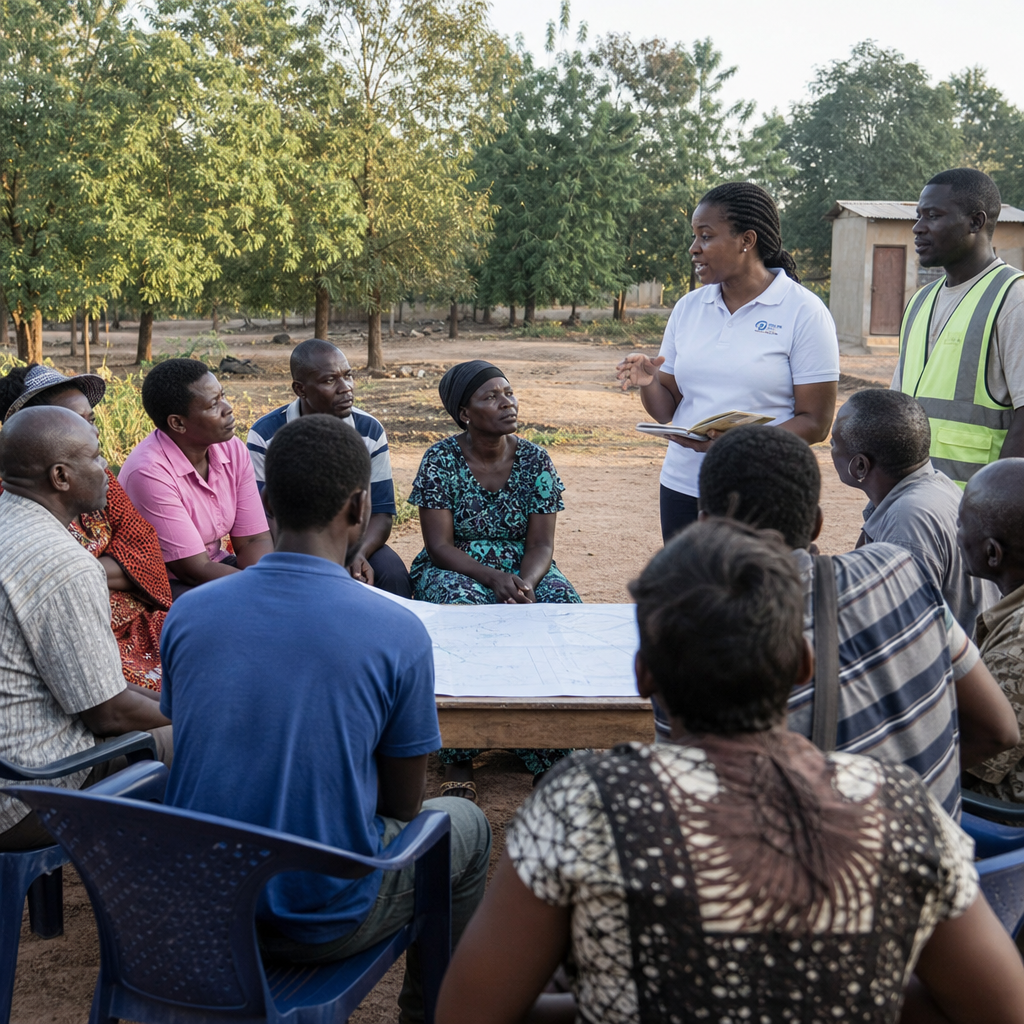
Participatory planning is not a box-ticking exercise. It is the process that aligns sanitation solutions with how people actually live, move, pay, and make decisions. Communities are more likely to maintain systems they helped design. That includes choosing toilet locations, agreeing user rules, identifying flood-prone zones, mapping underserved households, and setting acceptable tariff levels. In dense settlements, where space constraints, landlord-tenant dynamics, and informal tenure complicate infrastructure choices, this local knowledge is indispensable.
Inclusion is equally important. Sustainable sanitation management fails when it excludes the needs of women, girls, older adults, people with disabilities, low-income households, migrants, or informal workers. Accessible design features such as ramps, handrails, adequate door width, lighting, privacy screens, and menstrual hygiene facilities are not optional extras. They directly affect whether toilets are used safely and consistently. The same applies to service scheduling and fee systems. If desludging payments are due in a single lump sum, many low-income households delay service until a crisis occurs. Flexible payment models often achieve better health outcomes.
Ownership grows when communities hold visible authority over agreed actions. Good examples include sanitation committees with published member lists, scorecards for facility cleanliness, user charters for public toilets, and community review meetings with local government staff. Ownership does not mean governments withdraw. It means responsibilities are explicit and shared. Municipalities still regulate, finance public goods, and enforce standards, while communities contribute monitoring, local problem-solving, and day-to-day stewardship.
Strengthening the full sanitation service chain
One reason sanitation programs underperform is that they focus narrowly on toilet construction. Sustainable management requires attention to the entire service chain. Safe containment must be followed by safe emptying, transport, treatment, disposal, or productive reuse. If one link fails, public health protection fails. Communities therefore need education that goes beyond toilet use and addresses what happens after pits and tanks fill.
In urban and peri-urban areas, fecal sludge management is often the missing piece. Residents may assume sludge disappears after emptying, when in reality it can be dumped into drains, rivers, fields, or open land if regulation is weak. Local capacity building should explain the service chain clearly: containment, emptying, transport, treatment, and end use or disposal. It should also identify approved emptiers, legal discharge points, and complaint channels for illegal dumping. Cities such as Dakar and Lusaka have shown that structured emptying markets, treatment facilities, and clearer regulation can improve service reliability when paired with public communication.
In rural areas, the service chain may look different, but the principle is the same. Households need to understand pit siting, groundwater risks, flood exposure, and when pits should be safely covered or replaced. Masons need training on lining, venting, slab quality, and superstructure durability. Agricultural reuse, where permitted, requires strict handling guidance and adherence to health safeguards. Knowledge across the full chain prevents the common mistake of solving one visible problem while shifting risk elsewhere.
Financing, partnerships, and long-term monitoring
Local capacity becomes durable when it is backed by money, partnerships, and data. Financing matters because sanitation has recurring costs that communities cannot wish away. Cleaning materials, water, caretaker wages, spare parts, emptying services, monitoring visits, and treatment operations all require reliable funding. The most resilient local systems use a mix of household spending, user fees, municipal support, targeted subsidies for vulnerable groups, and, in some cases, cross-subsidies from other services. What matters most is transparency. People are more willing to pay when they understand what the fee covers and can see results.
Partnerships extend what communities can do alone. Health workers can reinforce hygiene behaviors. Schools can model maintenance routines for children and families. Local media can normalize safe sanitation practices. Nonprofits can support facilitation, while utilities and municipalities provide technical oversight and regulatory continuity. Private operators, especially masons, emptiers, janitorial contractors, and small treatment service providers, are often essential actors and should be trained rather than ignored. Where roles overlap, memorandum-based coordination and routine review meetings reduce confusion.
Monitoring turns effort into improvement. At minimum, communities and local governments should track functionality, cleanliness, handwashing availability, fill levels, emptying frequency, breakdown rates, user satisfaction, and safe sludge disposal. Digital tools such as mWater, KoboToolbox, and GIS dashboards can help, but paper logs still work when used consistently. The key is to review data regularly and act on it. Capacity building is not a workshop; it is a management habit.
Building local capacity for sustainable sanitation management is ultimately about creating communities that can keep services working, safe, and fair without constant external rescue. The most successful sanitation programs do not end with ribbon-cutting ceremonies. They leave behind trained people, clear responsibilities, realistic budgets, functioning partnerships, and routines for learning. When communities understand the sanitation chain and have the authority to manage their part of it, infrastructure lasts longer and health protection improves.
For a hub focused on empowering communities through knowledge, the central lesson is clear: education must be practical, inclusive, and tied to real service decisions. Technical literacy, behavior change, participatory planning, financial transparency, and full-chain thinking belong together. So do household awareness, school engagement, frontline worker training, municipal coordination, and ongoing monitoring. Each strengthens the others.
If you are shaping a sanitation program, start by mapping who needs to know what, who will teach it, how it will be reinforced, and how success will be measured. Build capacity at every link, not only at construction. That is how communities move from receiving sanitation projects to sustaining sanitation systems.
Frequently Asked Questions
What does building local capacity for sustainable sanitation management actually mean?
Building local capacity for sustainable sanitation management means equipping communities, service providers, local governments, and institutions with the knowledge, systems, and resources needed to operate sanitation services safely and consistently over the long term. It goes far beyond constructing toilets or installing treatment infrastructure. Real capacity includes technical skills for operation and maintenance, leadership to organize and supervise services, financial discipline to collect and manage funds, and governance structures that clarify who is responsible for each part of the sanitation chain. This includes containment, emptying, transport, treatment, reuse, disposal, behavior change, and public health monitoring.
In practical terms, local capacity is what keeps sanitation systems working after external funders, contractors, or project teams leave. A community may receive new latrines, drains, or sludge treatment facilities, but without trained operators, spare parts planning, routine inspections, and local accountability, those investments can quickly fail. Sustainable sanitation depends on people trusting the system, understanding why it matters, and having the confidence and authority to solve problems when they arise. That is why capacity building must be treated as a core part of sanitation management rather than an optional add-on.
Why is local capacity so important for the long-term success of sanitation projects?
Local capacity is essential because sanitation is not a one-time construction activity; it is an ongoing public service. Toilets need maintenance, drainage networks need cleaning, fecal sludge needs safe collection and treatment, and hygiene practices need reinforcement over time. When local actors lack the technical and institutional ability to manage these tasks, facilities often deteriorate, unsafe disposal increases, and public health risks return. In many cases, infrastructure failures are not caused by poor design alone but by weak local systems for maintenance, financing, oversight, and user engagement.
Strong local capacity also improves resilience and inclusion. Communities with trained personnel, active local leadership, and clear service arrangements are better able to respond to flooding, population growth, equipment breakdowns, and changing environmental conditions. They are also more likely to maintain services for women, children, older adults, people with disabilities, and underserved neighborhoods. Instead of depending on intermittent outside support, they can make informed decisions, prioritize repairs, mobilize local funding, and coordinate across health, water, education, and municipal departments. This is what turns sanitation from a short-lived project into a reliable system that protects dignity, public health, and the environment.
What are the most important components of local capacity in sanitation management?
The most important components of local capacity usually fall into five connected areas: technical skills, institutional strength, financial management, community engagement, and leadership. Technical capacity includes the ability to construct, inspect, operate, repair, empty, transport, treat, and safely dispose of sanitation waste. Institutional capacity means having clear roles, regulations, service standards, reporting processes, and coordination between actors such as local authorities, utilities, community groups, schools, health workers, and private operators. Without these foundations, even technically sound infrastructure can become neglected or mismanaged.
Financial capacity is equally critical. Sustainable sanitation requires realistic budgeting, tariff setting where appropriate, fee collection, bookkeeping, lifecycle cost planning, and transparent use of funds. Communities and local governments need to understand that sanitation systems have recurring costs, not just capital costs. Community engagement is another central component because users must understand how to use facilities properly, why desludging and maintenance matter, and how to participate in oversight. Finally, leadership ties everything together. Effective local champions can build trust, resolve conflicts, advocate for resources, and keep sanitation on the public agenda. When these components develop together, sanitation services are much more likely to remain safe, functional, and socially accepted over time.
How can communities and local governments strengthen local capacity for sustainable sanitation management?
Communities and local governments can strengthen capacity by combining training, system design, and long-term support rather than relying on one-off workshops. A strong approach starts with assessing current gaps: who manages toilets and drainage, who pays for maintenance, who monitors service quality, and what skills are missing. From there, targeted training can be provided for local operators, masons, desludging workers, health promoters, teachers, and municipal staff. Training should be practical and role-specific, covering topics such as preventive maintenance, occupational safety, hygiene promotion, recordkeeping, complaint handling, and basic financial management. Mentoring, refresher sessions, and peer learning between communities are often far more effective than short classroom instruction alone.
Local governments can reinforce this progress by creating clear policies, setting service standards, allocating budgets, and establishing monitoring systems that track performance over time. Communities can form sanitation committees or strengthen existing governance groups to oversee routine tasks, manage shared funds, and provide feedback on service problems. Partnerships with local enterprises can also help build a market for pit emptying, repair services, spare parts, and treatment operations. Just as importantly, local leaders should involve residents in planning and decision-making from the beginning. When people help shape sanitation solutions, they are more likely to trust them, use them correctly, and support the systems needed to keep them working. Sustainable capacity grows when technical know-how, local ownership, and institutional backing are built together.
What are the biggest challenges to building local capacity, and how can they be addressed?
Some of the biggest challenges include limited funding, unclear responsibilities, weak coordination between institutions, high staff turnover, and low public awareness about the full sanitation service chain. In many places, sanitation remains under-prioritized compared with more visible infrastructure sectors, which means training, maintenance, and monitoring are underfunded. There may also be social barriers such as stigma around fecal sludge management, resistance to behavior change, or exclusion of low-income and marginalized groups from planning and decision-making. Another common issue is that projects focus heavily on construction while underinvesting in the people and institutions responsible for keeping systems functional.
Addressing these challenges requires a deliberate and long-term strategy. Financing models should account for both capital and recurring costs, with transparent plans for maintenance, repairs, and service delivery. Roles and responsibilities must be clearly assigned so communities, municipalities, utilities, schools, and private providers understand their obligations. Capacity-building efforts should be continuous, not temporary, and should include succession planning to reduce the impact of staff turnover. Public education campaigns can help normalize sanitation management, improve hygiene behavior, and build support for user fees or local maintenance funds. Most importantly, programs should be designed around local realities rather than imported assumptions. When solutions match local skills, governance conditions, and cultural practices, capacity is far more likely to take root and sanitation systems are far more likely to last.