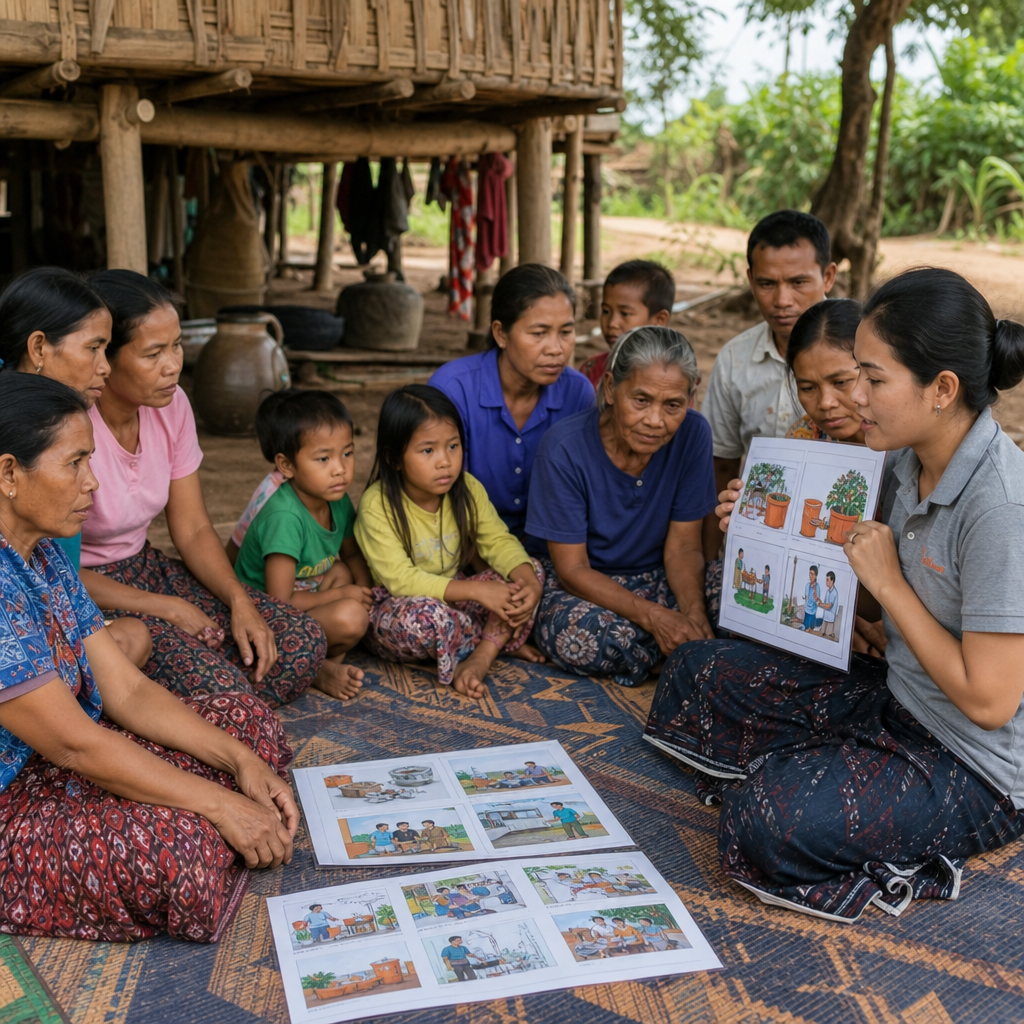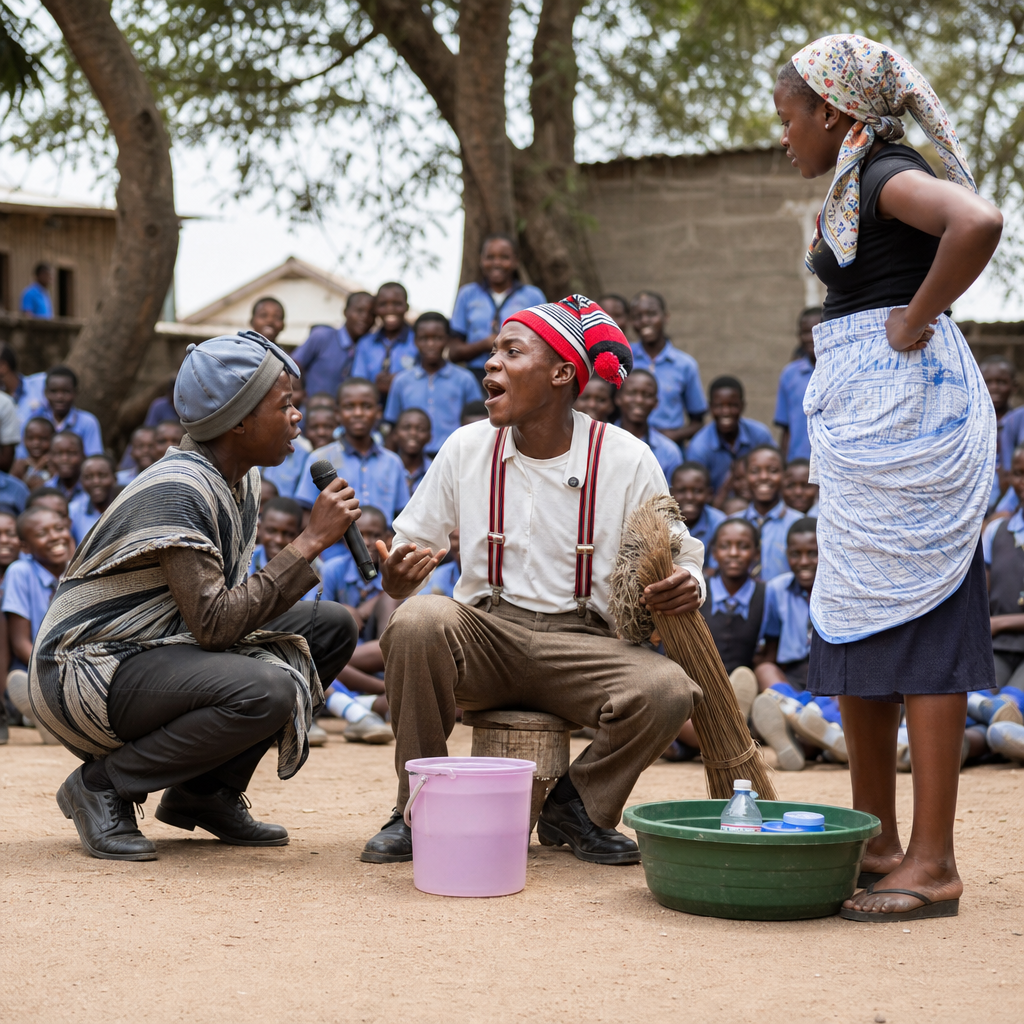
Using drama and role play for sanitation sensitization turns abstract public health advice into memorable action. In community engagement and education work, I have repeatedly seen people ignore posters yet respond immediately when a neighbor acts out a blocked drain, an overflowing pit latrine, or a child forgetting to wash hands before eating. Drama makes sanitation visible. Role play makes it personal. Together, they help communities understand not only what safe sanitation means, but why behavior change protects health, dignity, safety, livelihoods, and local environments.
Sanitation sensitization is the process of building awareness, motivation, and practical understanding around hygienic behaviors, safe waste disposal, toilet use, handwashing, menstrual hygiene, drainage maintenance, and community cleanliness. It goes beyond delivering information. Effective sensitization helps people connect knowledge to daily choices, local risks, and shared responsibility. Drama refers to structured performance, from short sketches to forum theatre and community storytelling. Role play is a participatory method where people act out real situations, such as persuading a landlord to repair a latrine or discussing who should clean a school toilet. These tools matter because sanitation problems are often social before they are technical. A toilet can be built and still remain unused if people fear smell, cost, stigma, darkness, or conflict.
This article serves as a hub for empowering communities through knowledge within community engagement and education. It explains how drama and role play support sanitation goals, where they work best, how to design sessions, what messages to prioritize, and how to measure results. It also connects this approach to broader learning topics, including behavior change communication, school sanitation, community-led planning, risk mapping, hygiene promotion, and inclusive participation. For practitioners, teachers, health promoters, civil society groups, and local governments, the core lesson is straightforward: when people rehearse healthier choices in realistic social situations, they are more likely to adopt them in real life.
Why Drama and Role Play Work in Sanitation Education
Drama and role play work because sanitation behavior is shaped by emotion, habit, identity, and social norms, not by facts alone. Public health guidance from organizations such as WHO and UNICEF consistently shows that hygiene and sanitation outcomes improve when communication is practical, repeated, and community based. A lecture can explain fecal-oral transmission, but a scene showing a vendor handling food after using an unclean toilet creates an immediate mental link between contamination and illness. People remember stories better than instructions because stories place information inside a cause-and-effect sequence.
In field programs, I have seen four mechanisms drive results. First, drama simplifies technical concepts. For example, a skit about flies landing on feces and then on uncovered food demonstrates contamination pathways without requiring scientific language. Second, role play allows safe practice. Participants can test how to ask for better waste management, challenge open defecation, or teach children handwashing without the risk of real confrontation. Third, performance creates social proof. When respected local figures join a play, sanitation behaviors become publicly acceptable. Fourth, participation reveals barriers that surveys often miss, including shame, fear of shared toilet misuse, cost of soap, gendered labor, or disability access.
This method is especially useful in low-literacy settings, multilingual communities, informal settlements, schools, markets, and rural villages where oral communication remains central. It is also adaptable. The same core message can be delivered through puppetry for children, street theatre for market crowds, radio drama for dispersed populations, and structured role play in women’s groups, youth clubs, or village health committees.
Core Sanitation Topics That Fit Performance-Based Learning
Not every sanitation message needs a performance, but several topics consistently benefit from dramatization because they involve everyday decisions and social negotiation. Handwashing with soap at critical times is one of the strongest examples. A role play can show when handwashing matters: after defecation, after cleaning a child, before preparing food, before eating, and before feeding a child. Toilet use and maintenance is another. Communities often know toilets are important, yet disputes over cleaning, repair costs, privacy, lighting, and water access reduce consistent use. A short sketch can expose these exact friction points and invite practical solutions.
Safe child feces disposal is frequently neglected in campaigns, despite high risk. Caregivers may assume children’s feces are harmless. Drama can correct this misconception more effectively than a poster by showing contamination spreading across a household compound. Menstrual hygiene management also benefits from sensitive role play, especially in schools, where girls may miss class because toilets lack privacy, bins, locks, water, or supportive norms. Solid waste management, wastewater disposal, drain clearing, and vector control fit well too, particularly in dense settlements where blocked drainage contributes to flooding and disease.
Because this page is a hub under community engagement and education, these topics should connect to related content areas: participatory hygiene education, school WASH clubs, household behavior change, sanitation marketing, community monitoring, and local leadership mobilization. Drama is not a replacement for these strategies. It is a bridge that helps communities absorb and act on them.
How to Design an Effective Sanitation Drama Session
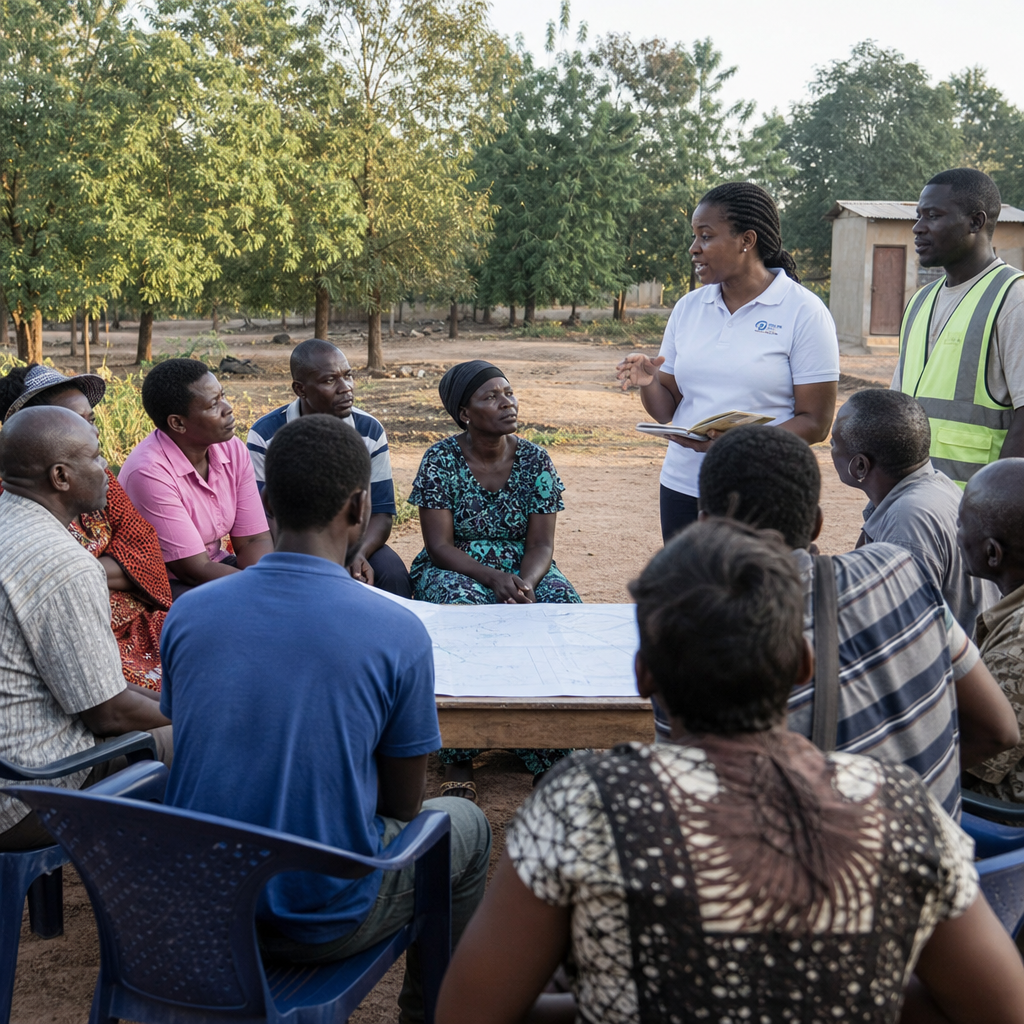
Effective sanitation drama starts with diagnosis, not scripts. Before developing scenes, identify the exact behavior to change, the audience segment, the local barriers, and the enabling factors. A market traders association needs different examples than a primary school. A flood-prone informal settlement needs different sanitation messages than a scattered rural village. I usually begin with short interviews, a transect walk, observation of toilets and handwashing stations, and discussions with frontline health workers, teachers, or natural leaders. This process prevents generic messaging.
Once the audience problem is clear, build the session around one to three specific outcomes. Good outcomes are observable: more consistent toilet use, cleaner shared facilities, increased handwashing at key times, safer child feces disposal, or stronger reporting of broken infrastructure. Then create a simple storyline with familiar characters: a parent, child, landlord, teacher, vendor, mason, health volunteer, or local leader. Use local language, local humor, and recognizable settings. Keep scenes short and realistic. Overly theatrical performances can entertain without teaching.
Every session should include discussion. Performance alone is not enough. After the play, a facilitator asks what people noticed, what behavior caused harm, what alternatives were possible, and what the community can do immediately. This reflection stage is where knowledge becomes commitment. In forum theatre, the audience can even stop the scene and replace a character to try a better response. That format is powerful for practicing negotiation and problem solving.
| Session Step | Purpose | Practical Example |
|---|---|---|
| Audience assessment | Identify real sanitation barriers | Observe whether shared toilets lack water, locks, or cleaning schedules |
| Message selection | Focus on one priority behavior | Handwashing after toilet use and before food preparation |
| Script development | Translate barriers into relatable scenes | A household debates paying for soap versus treating diarrhea |
| Performance | Capture attention and model consequences | Actors show how one unclean latrine affects many families |
| Facilitated discussion | Turn observation into learning | Audience lists actions for keeping toilets usable and safe |
| Commitment and follow-up | Support behavior adoption | Community sets a weekly drain clearing rota and review date |
Adapting Methods for Schools, Communities, and Institutions
Schools are ideal settings because children learn through imitation and repetition. A sanitation role play in a school can cover toilet etiquette, handwashing, menstrual hygiene, and peer accountability. WASH clubs can perform assemblies, classroom skits, or parent meeting demonstrations. The strongest school programs do not stop at awareness. They pair performances with visible infrastructure checks, soap monitoring, and student leadership roles. If the play teaches handwashing but the school has no water point, the lesson loses credibility.
In communities, street theatre works well in marketplaces, transport hubs, and village centers. Timing matters. Perform during periods of foot traffic, but keep sessions concise enough for working adults. In rural areas, integrating performances into existing gatherings, such as community meetings, religious events, or health outreach days, improves attendance. In urban settlements, tenant-landlord scenarios are often effective because sanitation responsibilities are fragmented. A role play can surface who pays for repairs, who cleans common spaces, and what standards should be enforced.
Institutions such as clinics, prisons, shelters, and workplaces require a different tone. Here, role play is often better for staff training than public performance. Cleaners, supervisors, health workers, and administrators can act through reporting lines, spill response, toilet cleaning standards, and user communication. This supports not just awareness, but service quality and accountability.
Inclusion, Cultural Sensitivity, and Ethical Practice
Sanitation communication can easily become shaming if handled poorly. Good facilitators avoid humiliating people for open defecation, dirty compounds, or poor facilities they cannot afford to improve. The goal is problem solving, not blame. That means scripts should criticize risky behaviors and weak systems, not specific individuals or social groups. It also means acknowledging structural limits. Telling people to wash hands with soap is incomplete if water access is intermittent or soap is unaffordable. In those cases, the discussion must include feasible solutions, local suppliers, subsidy pathways, or low-cost handwashing station designs such as tippy taps.
Inclusion is non-negotiable. Women, girls, older adults, people with disabilities, tenants, migrants, and sanitation workers experience sanitation differently. If drama excludes these perspectives, it teaches an incomplete reality. I have found it useful to test scripts with representatives of affected groups before public performance. This helps catch errors, stereotypes, inaccessible language, and missing issues such as mobility access, privacy at night, or menstrual waste disposal. Child participation also requires safeguards. Children should never be pushed into embarrassing roles or asked to disclose private hygiene experiences publicly.
Cultural fit matters as much as message accuracy. Humor can increase attention, but jokes about menstruation, disability, smell, or poverty can damage trust. Use familiar norms respectfully, and partner with local leaders who understand what a community will receive as constructive rather than insulting.
Measuring Whether Sanitation Sensitization Changes Behavior
A successful performance is not the one that gets applause; it is the one that changes behavior. Evaluation should therefore measure more than attendance. Start with simple indicators tied to the behavior objective. For handwashing, observe whether soap and water are present at designated stations and whether use increases at critical times. For toilet maintenance, assess cleanliness, odor, availability of water, lock function, lighting, and user satisfaction. For community cleanliness, monitor drain blockage, visible waste, or participation in clean-up schedules.
Useful methods include pre- and post-session quizzes, rapid interviews, structured observation, photo documentation, school attendance records for girls where menstrual hygiene is a focus, and facility checklists based on agreed standards. In larger programs, mobile data collection tools such as KoboToolbox, ODK, or CommCare help teams compare sites over time. Qualitative feedback is equally important. Ask what lines people remembered, what action they took at home, and what still prevents change. Often, drama exposes system failures that communication alone cannot solve, such as absent maintenance budgets or unsafe toilet design.
The best programs use performance as one part of an ongoing cycle: assess, engage, improve facilities, reinforce messages, monitor, and adapt. If you are building a knowledge hub on empowering communities through knowledge, that cycle is the central takeaway. Drama and role play are powerful because they transform sanitation from a hidden private issue into a shared public conversation. They help people see risk, practice solutions, and negotiate responsibilities in ways lectures rarely achieve. To strengthen community engagement and education, link performances to practical follow-up, local leadership, and measurable actions. Start with one realistic sanitation challenge, design a short participatory scenario around it, and use what the community says to guide the next intervention.
Frequently Asked Questions
1. Why are drama and role play effective tools for sanitation sensitization?
Drama and role play are effective because they turn sanitation from a set of instructions into something people can see, feel, and recognize in everyday life. Many communities have heard health messages before, but information alone does not always change behavior. When people watch a familiar scene acted out—such as a family dealing with a blocked drain, a caregiver reminding a child to wash hands, or neighbors discussing the dangers of open defecation—the message becomes concrete rather than abstract. It reflects real choices, real consequences, and real social pressures.
These methods also work because they are highly memorable. People may forget a poster or a lecture, but they often remember a short skit that made them laugh, surprised them, or showed a problem in a relatable way. Drama captures attention, while role play encourages participation. Instead of being passive listeners, audience members can step into a situation, practice responses, and think through what they would do differently. This creates a stronger emotional and practical connection to sanitation behaviors such as handwashing with soap, safe disposal of child feces, latrine use, and environmental cleanliness.
Another major advantage is that drama allows communities to discuss sensitive sanitation issues without feeling attacked or embarrassed. Poor hygiene, dirty surroundings, or unsafe toilet practices can be difficult to talk about directly. A fictional or semi-fictional performance creates a safe space for reflection. People can identify harmful practices in the story, discuss them openly, and consider solutions together. For sanitation sensitization, that combination of visibility, participation, emotion, and discussion makes drama and role play especially powerful.
2. What sanitation topics can be taught most effectively through drama and role play?
Drama and role play are especially useful for topics that involve daily habits, shared responsibilities, and visible consequences. Handwashing is one of the strongest examples. A short performance can show a child using the toilet and going straight to eat, followed by illness in the household, and then contrast that with proper handwashing at the right moments. This makes the health message immediate and easy to understand. Similar techniques work well for food hygiene, water handling, cleaning of latrines, and the proper disposal of children’s feces.
They are also highly effective for community sanitation issues that depend on collective action. Blocked drains, stagnant water, indiscriminate dumping of waste, and poor maintenance of shared toilets are not problems solved by one individual alone. Through role play, communities can act out what happens when everyone assumes sanitation is someone else’s job, and then compare it with a scenario where residents organize cleaning schedules, report problems early, and take ownership of shared spaces. That helps people see sanitation as both a personal and a public responsibility.
In addition, drama is well suited to explaining cause and effect. Topics such as diarrheal disease transmission, contamination around pit latrines, or the importance of keeping water sources separate from waste disposal can be difficult to communicate through words alone. A carefully designed skit can demonstrate how unsafe behaviors lead to sickness, missed work, school absence, and healthcare costs. It can also show the benefits of good practices—healthier children, cleaner compounds, reduced odors, dignity, and stronger community pride. The most effective topics are those where behavior, consequences, and solutions can be clearly acted out in a familiar social setting.
3. How can facilitators design a successful drama or role play session for sanitation education?
A successful session starts with understanding the local sanitation realities. Facilitators should first identify the most urgent problems in the community, such as low latrine use, poor handwashing habits, unsafe waste disposal, or neglected drainage systems. The best performances are grounded in situations people experience themselves. If the script feels imported, exaggerated, or disconnected from daily life, the audience is less likely to trust it. Simple, realistic scenarios using familiar language, local humor, and recognizable characters are usually more effective than overly formal presentations.
Facilitators should also keep the learning objective very clear. Each drama or role play should focus on a limited number of sanitation messages rather than trying to cover everything at once. For example, one activity may center on handwashing at critical times, while another focuses on maintaining a clean household latrine. The scenes should show both the problem and the better alternative. It is important not only to dramatize risky behavior, but also to model the desired action in a believable way. People need to see what good practice looks like and how it can be done within their own circumstances.
Equally important is what happens after the performance. The discussion that follows is often where real learning takes place. Facilitators should ask practical questions: What went wrong in the scene? Have you seen this happen here? What are the barriers to doing better? What can families, schools, landlords, or local leaders do next? This turns the activity from entertainment into behavior change communication. Strong sessions are interactive, respectful, and solution-oriented. They leave participants not just informed, but motivated and better prepared to act.
4. Can drama and role play change sanitation behavior, or do they mainly raise awareness?
Drama and role play can do both, but their strongest value lies in bridging the gap between awareness and action. Awareness alone is often not enough. Many people already know, in general terms, that sanitation matters. The challenge is translating that knowledge into consistent behavior in real-life settings shaped by habit, convenience, culture, and social norms. Drama helps by making consequences visible and by showing how everyday decisions affect health, dignity, and community well-being. It moves the conversation from “we know this” to “this is what happens when we do or do not act.”
Role play goes even further because it gives people the chance to rehearse behavior and social interaction. For example, a parent can practice reminding children to wash hands, tenants can act out how to organize cleaning of a shared latrine, or neighbors can rehearse how to address indiscriminate dumping without conflict. This matters because sanitation behavior is not only about knowledge; it is also about confidence, communication, and social reinforcement. When people practice responses in a safe environment, they are more likely to repeat them in real life.
That said, behavior change is most likely when drama and role play are part of a broader sensitization strategy. If communities are encouraged through performance but lack soap, water access, functioning toilets, or leadership support, change may be limited. The best results come when participatory education is combined with follow-up discussions, community action plans, visible local champions, and improvements in sanitation infrastructure. In that setting, drama does more than raise awareness—it helps normalize better sanitation practices and supports lasting change.
5. What are the best practices for making sanitation drama respectful, inclusive, and culturally appropriate?
Respect and cultural fit are essential. Sanitation is closely tied to dignity, privacy, gender roles, and long-standing beliefs, so poorly designed performances can easily shame people or create resistance. The most effective approach is to address behaviors and systems rather than ridicule individuals. A drama should not humiliate those who are poor, elderly, less educated, or living with inadequate facilities. Instead, it should highlight common challenges, shared responsibility, and realistic solutions. Audiences respond better when they feel invited into the conversation rather than judged by it.
Inclusiveness also means representing the people most affected by sanitation issues. Women, children, people with disabilities, tenants, informal settlement residents, and school communities may experience sanitation problems differently. A strong role play acknowledges those differences. For example, it may show the burden on women when household sanitation is poor, the risks children face when handwashing is neglected, or the barriers a person with limited mobility faces in accessing an unsafe latrine. This broadens understanding and helps communities design responses that work for everyone, not just the most visible group.
Finally, cultural appropriateness requires local participation in planning and delivery. Community members should help shape the stories, language, examples, and humor used in the performance. Facilitators should test messages beforehand to ensure they are understandable, non-offensive, and relevant. It is also wise to avoid sensationalism. Sanitation drama should be engaging, but not so exaggerated that the audience dismisses it as unrealistic. The best performances strike a balance: they are lively and memorable, yet grounded in real community experience. That combination builds trust, encourages discussion, and increases the likelihood that sanitation messages will be accepted and acted upon.