Engaging local businesses in EcoSan promotion is one of the most practical ways to turn sanitation from a donor-driven project into a durable community system. EcoSan, short for ecological sanitation, treats human waste as a resource that can be safely recovered, processed, and returned to productive use rather than simply flushed away or dumped. In community engagement work, I have seen that households may understand the health value of safe sanitation, yet behavior change accelerates when trusted businesses help explain, distribute, maintain, and normalize the solution. A hardware shop owner, mason, farmer cooperative, school canteen supplier, or market association leader often has more day-to-day influence than a poster campaign. That is why this topic sits at the center of empowering communities through knowledge: people adopt what they understand, can access locally, and hear reinforced by familiar voices.
For communities considering EcoSan systems, the core questions are usually straightforward. What problem does EcoSan solve? It reduces open defecation, groundwater contamination, nutrient loss, and the high cost of conventional sewer expansion. How does it work? Most models separate urine and feces, support dehydration or composting, and require safe handling protocols before any reuse. Why involve local businesses? Because they create supply chains, provide maintenance, offer financing options, and translate technical concepts into routine purchasing decisions. When a local enterprise stocks urine-diverting pans, rents sludge handling equipment, or trains installers, EcoSan stops being an abstract development concept and becomes a visible service economy. This article serves as the hub for the broader subtopic of empowering communities through knowledge, connecting sanitation literacy, behavior change, local enterprise development, school outreach, and farmer education into one strategy.
Knowledge empowerment in sanitation means more than distributing pamphlets. It includes practical understanding, decision-making confidence, and the ability to evaluate risks, costs, and benefits. In my experience, communities respond best when information is specific: the difference between composting and raw waste use, the moisture level needed for dehydration, the role of ash or cover material, the waiting periods recommended by the World Health Organization, and the business case for selling related products and services. Local businesses can carry that knowledge into everyday interactions, but only if engagement is structured carefully. Poorly trained vendors can spread myths, oversell unsafe reuse, or frame EcoSan as a cheap latrine rather than a managed sanitation approach. Strong promotion therefore depends on credible training, visible standards, and partnerships that combine public health messaging with commercial incentives.
Why local businesses are critical to EcoSan adoption
Local businesses matter because they solve the biggest gap between awareness and uptake: implementation. A family may attend a community meeting and agree that ecological sanitation is beneficial, yet still ask where to buy components, who can build the system, what it will cost, and who can repair it if the urine-diversion seat cracks or the vault fills incorrectly. Businesses answer these questions in operational terms. Masons can adapt designs to local materials. Agro-dealers can explain when treated outputs may be used on trees or non-leafy crops. Transport providers can move materials. Savings groups and microfinance agents can help spread upfront costs over time. In markets where public services are stretched, these actors become the delivery mechanism for sanitation knowledge and action.
They also shape trust. Community members often judge a technology by whether respected local enterprises are willing to put their reputation behind it. I have watched skepticism soften when a known builder demonstrates a dual-vault EcoSan toilet at his own workshop, or when a farmer supplier explains nutrient cycling using crops people recognize, such as maize, banana, or fodder grasses. This kind of social proof is powerful because it is embedded in existing relationships. It also helps correct the common misconception that EcoSan is only for rural pilot projects. In peri-urban areas, businesses can position it as a practical option where water is scarce, septic emptying is expensive, or dense settlements need alternatives to failing pit systems.
Business engagement also widens the message beyond sanitation alone. EcoSan intersects with public health, climate resilience, agriculture, water conservation, and local employment. A hardware retailer promoting vent pipes and urine-diverting pans is also supporting safer construction standards. A women-led cooperative producing cover material or soap can tie sanitation uptake to livelihood creation. A landscaping business using properly treated compost can demonstrate circular economy principles in public spaces. These examples matter because people rarely make decisions based on one benefit. They respond to a bundle of outcomes: convenience, status, savings, cleanliness, crop productivity, and reliability. Businesses are well placed to communicate that bundle repeatedly.
Building a knowledge-based engagement strategy
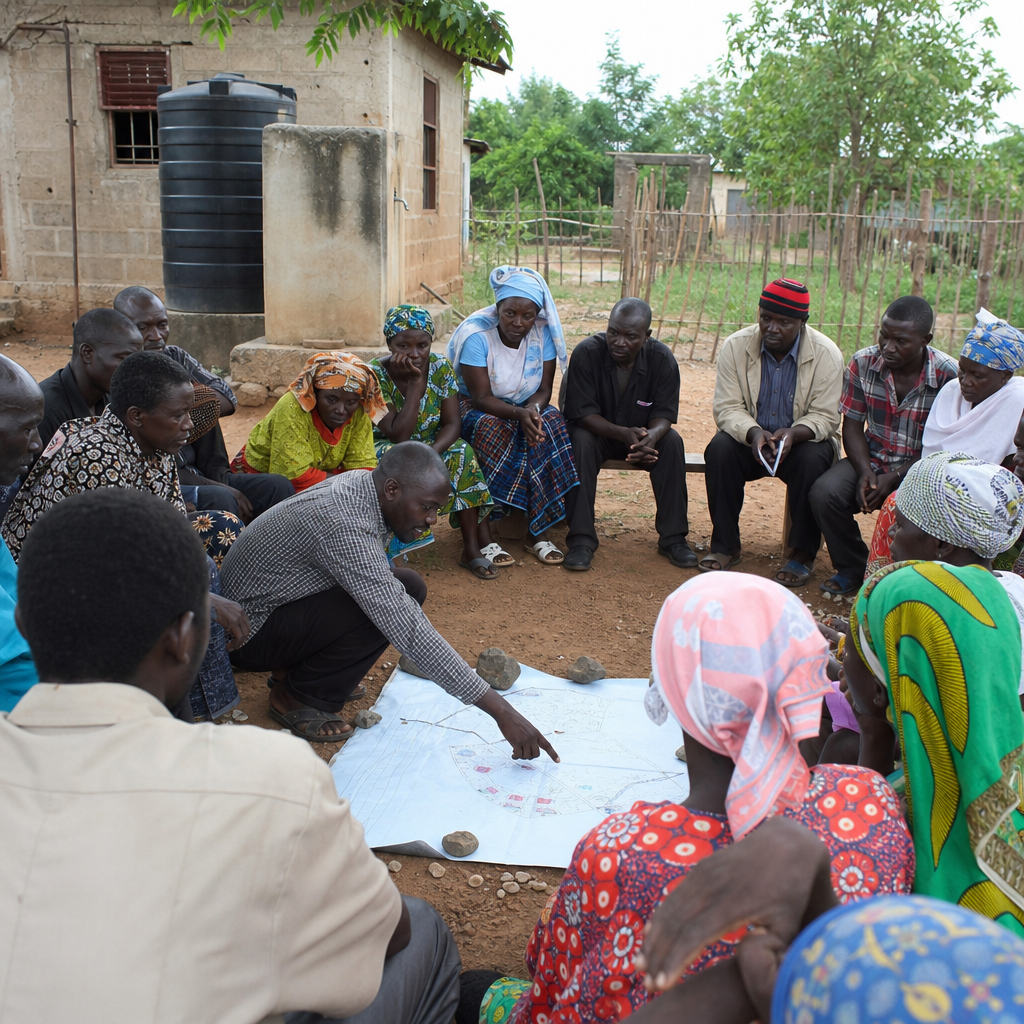
An effective strategy starts with segmentation. Not every business should carry the same message or play the same role. Construction suppliers need technical product knowledge. Masons need installation standards, slope requirements, airflow basics, vault sizing, and user training scripts. Agro-dealers need clear guidance on treatment barriers, pathogen reduction, crop restrictions, and storage periods. Small lenders need realistic payback timelines and customer profiles. Local radio sponsors and market vendors can reinforce simpler messages around safety, dignity, and service availability. When I map a community engagement plan, I classify actors by influence, technical capacity, and customer contact frequency. That makes training more targeted and more credible.
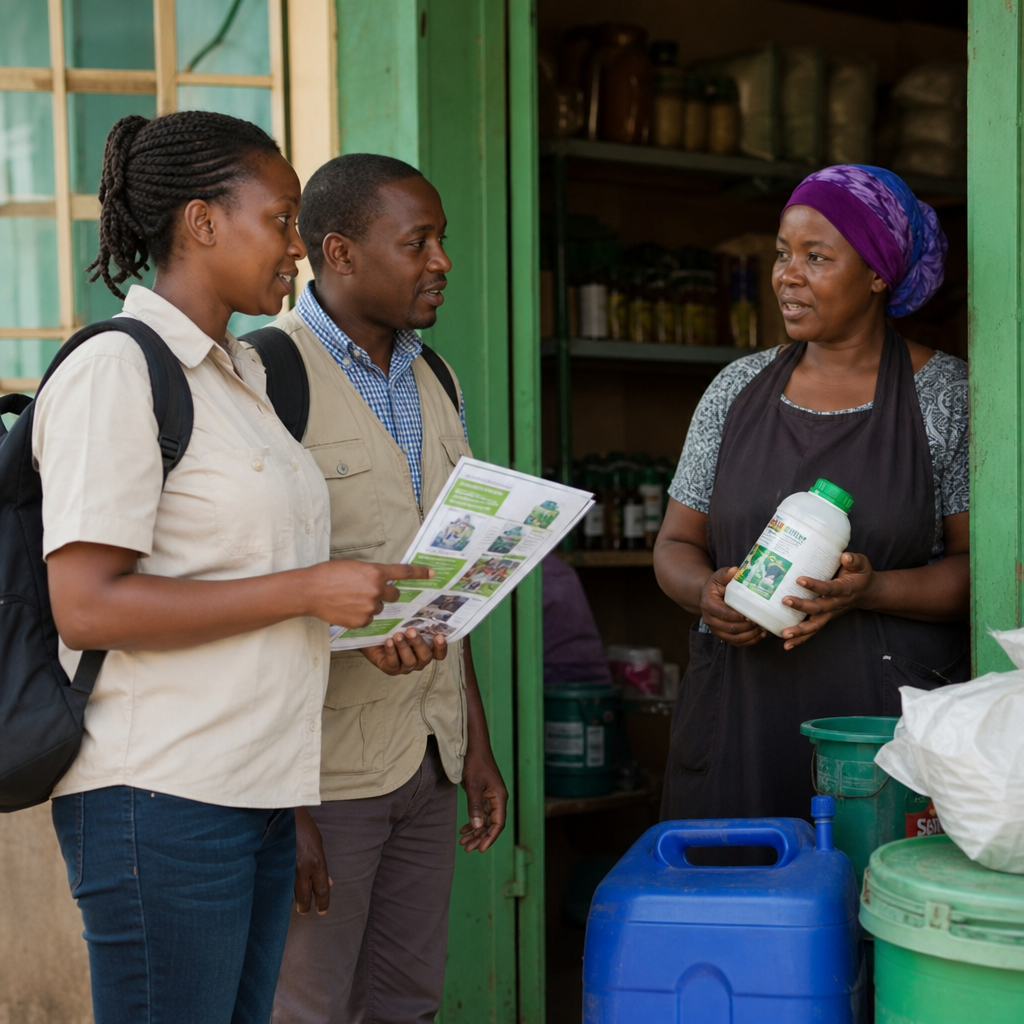
The next step is message discipline. Every participating business should be able to explain EcoSan in plain language: waste is separated, treated, and handled safely; moisture management matters; untreated material must never be applied directly to food crops; and routine maintenance is not optional. This is where many programs fail. They provide promotional slogans without operational detail. The result is confusion, misuse, and reputational damage. A better approach is to use short standard scripts, visual job aids, and demonstrations. For example, an installer can show the correct use of ash after defecation, explain why urine pipes must not be blocked, and leave behind a maintenance checklist. Consistency turns community education into habit formation.
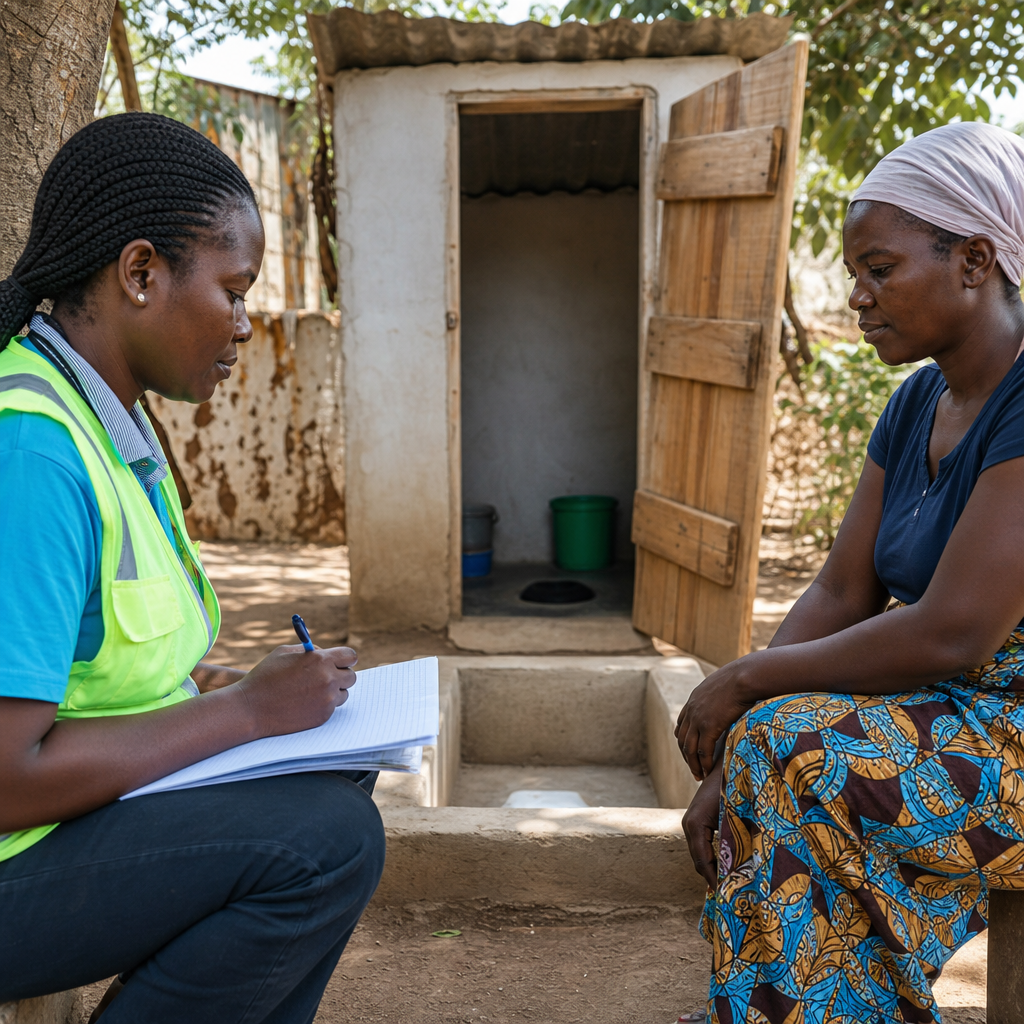
Knowledge-based engagement also requires proof. Demonstration toilets at schools, markets, health centers, and business premises perform better than meetings alone because they make invisible processes visible. People can inspect odor control, cleanliness, handwashing proximity, and the design of storage chambers. A local enterprise can host open days where residents compare a poorly ventilated pit latrine with a well-maintained EcoSan unit. Businesses can also collect user questions and feed them back into training. Over time, these interactions create a local knowledge network rather than a one-off campaign. That is the foundation of this sub-pillar hub: communities become stronger when education is continuous, practical, and distributed through institutions people already use.
Practical business roles, incentives, and partnership models
Local business engagement works best when roles are explicit and incentives are real. Hardware stores can stock specialized components, display installation diagrams, and refer trained builders. Masons and artisans can offer standardized construction packages with itemized pricing. Agro-input shops can educate farmers on the safe use of recovered nutrients where regulations and treatment standards allow. Waste service providers can handle collection logistics for container-based or shared systems. Community-based organizations can monitor usage and support household training. Local government environmental health officers should remain involved to oversee compliance, approve messaging, and protect public trust. This shared model prevents private actors from improvising beyond their competence.
Pricing strategy matters. If EcoSan promotion depends only on social good messaging, business participation fades quickly. Enterprises need margin structures that reward quality without making systems unaffordable. Bundled offers often work well: toilet pan, vent pipe, training visit, follow-up inspection, and maintenance materials sold as one package. Some programs negotiate supplier discounts for community groups or schools. Others link businesses to revolving funds or village savings and loan associations so households can finance construction over several months. In East Africa, sanitation marketing programs have shown that consumer finance and trained local artisans can increase uptake more effectively than subsidy-heavy models that distort the market.
| Business type | Primary EcoSan role | Knowledge needed | Example of community value |
|---|---|---|---|
| Hardware retailer | Supply components and refer installers | Product specifications, compatible parts, basic maintenance guidance | Households know where to buy approved materials locally |
| Mason or artisan | Construct and retrofit units | Design standards, vault sizing, ventilation, user instruction | Better build quality and fewer early failures |
| Agro-dealer | Advise on safe reuse where permitted | Treatment periods, crop restrictions, nutrient management | Farmers connect sanitation to soil fertility responsibly |
| Microfinance provider | Offer payment options | Household cash flow, sanitation loan terms, risk screening | More families can afford adoption without delay |
| Market association | Normalize messaging and host demos | Public health basics, service referral pathways | High-traffic outreach reaches daily users and vendors |
Partnership agreements should include training requirements, approved claims, referral pathways, and quality assurance checks. I recommend simple memorandums of understanding even for informal collaborations. They reduce confusion and create accountability. A business should know whether it is allowed to discuss agricultural reuse, who to contact for technical questions, and when a health officer must be consulted. This balance is important: community knowledge grows fastest when many actors participate, but trust collapses if no one owns standards.
Training, safeguards, and communication that communities trust
Training must go beyond product familiarization. Businesses need to understand pathogen risk, user behavior, inclusion, and after-sales support. The World Health Organization sanitation safety planning approach is useful here because it emphasizes risk identification across the entire chain, from toilet use to treatment and final reuse or disposal. A business promoting EcoSan should know the difference between dehydration and composting, why temperature and moisture affect pathogen reduction, and why local regulations may limit reuse even when treatment appears adequate. This level of detail protects both customers and enterprises from avoidable harm.
Communication should answer common objections directly. Does EcoSan smell? A correctly designed and maintained unit should have minimal odor because urine is diverted and vaults stay dry. Is it hard to use? It requires user orientation, especially around separation and cover material, but households usually adapt quickly when the design is clear. Is the end product safe? Only after proper treatment, storage, and handling according to recognized guidance. Can any crop use it? No. Restrictions depend on treatment quality, local law, and the crop type. Businesses that answer these questions honestly earn trust, while exaggerated promises create backlash that can set an entire program back.
Inclusive communication is equally important. Designs and messages must consider women, children, older adults, people with disabilities, tenants, and landlords. A stair-dependent superstructure or a confusing urine-diversion interface can exclude users quickly. Businesses should be trained to discuss accessibility features, privacy, menstrual hygiene management, handwashing placement, and child-friendly adaptations. They should also know when EcoSan is not the right fit. High-water-table areas, flood-prone plots, and households unlikely to maintain separation routines may need different solutions. Credible promotion includes saying no when conditions are unsuitable.
Measuring results and strengthening the hub of community knowledge
Engagement succeeds when it is measurable. Track how many businesses were trained, how many households were referred, the percentage of systems still functioning after six and twelve months, and the number of users who can correctly explain maintenance steps. Monitor complaints, odor issues, blocked pipes, misuse of untreated outputs, and follow-up visits completed. I also look at softer signals: Are schools requesting demonstrations? Are local leaders mentioning EcoSan in public meetings? Are farmers asking informed questions rather than reacting with disgust? These indicators show whether knowledge is spreading through the community ecosystem rather than staying inside a project office.
As the hub page for empowering communities through knowledge, this article points to a wider body of work: sanitation behavior change, school-based learning, women-led outreach, farmer training, youth participation, inclusive design, and local service entrepreneurship. In practice, these topics reinforce each other. A school demonstration can generate household demand. A trained mason network can support a market sanitation campaign. A women’s savings group can finance construction and host maintenance training. A farmer field day can clarify reuse restrictions and nutrient value. The most resilient sanitation progress comes from these linked learning pathways, with local businesses acting as everyday educators as much as vendors.
The central lesson is simple: EcoSan promotion becomes credible, scalable, and durable when local businesses are engaged as knowledge partners, not just sales channels. Communities need accurate information, visible standards, reliable products, and trusted people who can answer practical questions long after a launch event ends. If you are building a community engagement strategy, start by mapping local enterprises, defining their roles, training them to communicate safely, and measuring what happens after installation. Done well, this approach empowers communities through knowledge and turns sanitation improvement into a locally owned system worth sustaining.
Frequently Asked Questions
Why is engaging local businesses so important in EcoSan promotion?
Engaging local businesses is essential because it helps move EcoSan from a short-term awareness campaign into a functioning local system. Ecological sanitation works best when communities can access not only information, but also products, services, repairs, transport, and safe reuse pathways without depending entirely on outside funding. When masons, hardware stores, emptying providers, farmers, transporters, cooperatives, and small entrepreneurs participate, EcoSan becomes easier for households to adopt and maintain. Instead of being seen as a special project introduced by donors or NGOs, it starts to look like a practical part of local economic life.
Businesses also bring something community programs often struggle to sustain on their own: regular customer contact and an incentive to keep solutions working. A trained builder can recommend urine-diverting toilets correctly. A supplier can keep parts in stock. A compost buyer or agricultural input seller can help create confidence around reuse when products are processed safely and meet local standards. This commercial presence reinforces behavior change because people are more likely to invest in sanitation practices when they see trusted local actors standing behind them. In many communities, adoption speeds up when households believe EcoSan is not only healthier, but also useful, affordable, repairable, and socially accepted.
What types of local businesses can support EcoSan initiatives?
A wide range of businesses can play a role in EcoSan promotion, and the strongest programs usually involve several categories rather than just one. Construction-related businesses are often the first entry point. Local masons, contractors, carpenters, slab makers, and suppliers of pipes, containers, and toilet components can help households access properly designed systems. Their role is critical because poor construction can undermine user confidence and create health risks. Training these businesses in correct design, ventilation, separation, storage, and maintenance requirements is one of the most practical investments an EcoSan program can make.
Service businesses are equally important. These may include pit emptying operators, waste collectors, transport providers, treatment enterprises, and community-based sanitation service teams. In EcoSan systems, safe handling and processing matter as much as initial installation. Businesses that can provide collection, storage support, composting, dehydration management, or transport of treated material help close the loop in ways households may not be able to manage alone. This is especially important in denser settlements where space, time, and technical capacity are limited.
Agricultural businesses can also become valuable partners. Farmers, nurseries, agro-dealers, cooperatives, and buyers of soil amendments may help create demand for safely treated outputs where regulations allow and health safeguards are followed. Their involvement can make the resource-recovery side of EcoSan more visible and credible. In addition, financial actors such as savings groups, microfinance providers, local lenders, and mobile money agents can support payment plans or small loans that make sanitation upgrades affordable. Media businesses, printers, market vendors, and local advertisers can further amplify promotion by helping normalize EcoSan messages in everyday community spaces.
How can organizations build trust with local businesses when promoting EcoSan?
Trust is built when organizations approach businesses as long-term partners rather than temporary outreach channels. Many businesses are cautious about sanitation-related products because they worry about low demand, stigma, unclear regulations, and reputational risk. The best way to address that concern is with practical evidence and realistic collaboration. Organizations should clearly explain the local sanitation challenge, show where business opportunities exist, and be honest about what EcoSan can and cannot deliver in a given market. Overpromising demand is one of the fastest ways to lose credibility.
Training is another major trust-builder. Businesses are far more likely to participate when they receive hands-on technical guidance, customer education tools, safety protocols, and clear standards for installation and reuse. A mason who understands the design will feel more confident selling it. A service provider who knows proper handling procedures can protect workers and customers. A retailer with simple, accurate messaging can answer household concerns without spreading confusion. Demonstration sites, pilot customers, and peer learning visits are especially effective because they allow business owners to see the model functioning in real conditions.
It also helps to create shared visibility and accountability. Public recognition, certification, referral networks, co-branded campaigns, and inclusion in local government or NGO supplier lists can signal legitimacy. At the same time, organizations should listen carefully to business constraints. Issues like seasonal income, transport costs, low working capital, and inconsistent customer demand shape whether businesses can stay engaged. When programs respond to these realities with flexible support, phased rollout plans, and regular communication, trust deepens and partnerships are more likely to last.
What challenges do local businesses face in EcoSan promotion, and how can they be addressed?
One of the biggest challenges is stigma. Sanitation, especially anything involving the recovery and reuse of human waste, can trigger strong emotional, cultural, and social resistance. Businesses may worry that associating with EcoSan will damage their image or that customers will reject the idea outright. This challenge can be addressed through careful messaging that emphasizes safety, cleanliness, practicality, and economic value without oversimplifying the health requirements. Community demonstrations, testimonials from satisfied users, and visible endorsements from respected leaders can help reduce hesitation.
Another common barrier is weak or uncertain demand. Even when households understand the benefits of sanitation, they may not immediately choose EcoSan systems if upfront costs seem high or if they do not fully trust the technology. Businesses often hesitate to stock products or invest in services without confidence that customers will buy. Programs can respond by supporting market assessments, financing options, targeted promotional campaigns, and bundled service offers that reduce the burden on households. For example, payment plans, package pricing, or maintenance contracts can make adoption more manageable and less risky.
Technical quality is also a major concern. Poorly built or poorly managed EcoSan systems can fail quickly, creating odor, inconvenience, or safety problems that damage the reputation of the entire approach. Addressing this requires standards, training, supervision, and after-sales support. In addition, businesses may face regulatory uncertainty around treatment, transport, and reuse of sanitation-derived products. Clear guidance from local authorities, alignment with public health rules, and well-documented safety procedures are essential. The most successful EcoSan business ecosystems are those that treat quality assurance and public trust as seriously as sales.
How can local businesses help make EcoSan adoption sustainable over the long term?
Local businesses make EcoSan adoption sustainable by embedding it into everyday systems of supply, service, and value creation. Sustainability is not just about whether a toilet is built; it is about whether users can maintain it, access replacement parts, receive technical support, and benefit from safe waste processing over time. Businesses help ensure continuity because they operate beyond project cycles. If households know where to buy materials, who to call for repairs, how to access collection services, and where treated outputs can be used or sold safely, EcoSan becomes far more resilient.
Businesses also contribute to sustainability by reinforcing habits and expectations. A one-time awareness campaign may increase interest, but regular contact with market actors helps normalize proper sanitation behavior. Builders can recommend maintenance routines during installation. Suppliers can remind customers which materials to use. Service providers can schedule follow-up visits. Agricultural partners can demonstrate the benefits of approved reuse pathways where these are permitted and safely managed. Over time, this creates a local culture in which EcoSan is supported by practical know-how, not just theory.
Most importantly, business engagement creates incentives for continued performance. When local enterprises earn income from quality construction, maintenance, transport, treatment, or resource recovery, they have a reason to keep the system functioning and trusted. That does not mean profit alone should drive sanitation decisions; public health safeguards and equity remain essential. But when commercial incentives are aligned with community health goals, EcoSan is much more likely to survive after external project funding ends. That is the real strength of involving local businesses: they help turn sanitation promotion into a locally owned, service-based ecosystem rather than a temporary intervention.