Community success stories in achieving sanitation goals show a simple truth: lasting public health gains happen when residents understand the problem, trust the process, and help shape the solution. In sanitation, that means more than building toilets or installing drainage. It includes hygiene education, waste segregation, safe fecal sludge management, handwashing behavior, water point protection, and local accountability for operation and maintenance. I have seen projects fail when infrastructure arrived without training, and I have seen modest budgets deliver strong results when communities were organized around shared knowledge. That is why empowering communities through knowledge sits at the center of community engagement and education. For local governments, nonprofits, schools, and health workers, this hub topic matters because informed people adopt healthier practices faster, protect facilities longer, and demand better services more effectively. Knowledge turns sanitation from a one-time construction project into an ongoing community system. The strongest success stories do not begin with concrete. They begin with listening sessions, household mapping, school demonstrations, women’s groups, youth volunteers, and trusted local messengers translating technical guidance into daily habits. When communities know why sanitation matters, how disease spreads, what services exist, and who is responsible for upkeep, measurable progress follows.
Sanitation goals usually refer to reducing open defecation, increasing access to safely managed sanitation, improving hygiene practices, reducing contamination in homes and public spaces, and lowering disease burden. Global frameworks, including the sanitation targets under the Sustainable Development Goals, emphasize not only access but safe management across the service chain. In practice, communities often judge success more directly: cleaner streets, fewer diarrheal outbreaks, safer school toilets, less standing wastewater, and greater dignity for women, children, older adults, and people with disabilities. Education links these outcomes. It helps a family understand why a sealed pit reduces exposure, why handwashing after fecal contact matters, why menstrual hygiene facilities must be private and functional, and why illegal dumping harms the entire settlement. It also creates the conditions for collective action. A neighborhood that can read a sanitation map, interpret local illness data, and compare service options is far more likely to organize cleanups, monitor contractors, and advocate for municipal support. This article serves as a hub for that work by showing how knowledge empowers communities, what successful approaches look like, and how organizations can build education into every sanitation effort.
What empowering communities through knowledge means in sanitation
Empowering communities through knowledge means giving people practical, actionable understanding that improves sanitation decisions at household, school, market, and neighborhood level. It is not a one-off awareness talk. Effective sanitation education combines health literacy, technical guidance, civic participation, and behavior change support. Communities need to know how pathogens move through the environment, how facilities should be used and maintained, where services break down, and how to report problems. They also need opportunities to discuss barriers honestly. In many places where I have worked, residents already know sanitation matters; what they lack is clear information about affordable options, shared rules, and institutional responsibilities. Once those gaps are closed, progress accelerates.
This kind of empowerment works best when messages are locally grounded. A flood-prone settlement needs guidance on drainage maintenance and toilet siting. A dense urban informal area may need shared facility management rules and regular desludging schedules. A rural village may focus on ending open defecation through peer accountability and low-cost latrine upgrades. Schools need child-friendly hygiene instruction and routines for soap replenishment. Markets need vendor education on wastewater disposal and food safety. The principle stays constant: knowledge must connect directly to local behavior, local risks, and local systems. When that happens, education becomes infrastructure’s multiplier.
How communities turn information into measurable sanitation outcomes
The path from knowledge to results is clearer than many programs assume. First, communities identify risks using tools such as household surveys, transect walks, contamination mapping, or simple fecal exposure pathways. Second, residents and local leaders discuss the findings in plain language. Third, they agree on actions, responsibilities, and timelines. Fourth, progress is tracked with visible indicators. This structure makes sanitation goals understandable and shared. It also helps people see that sanitation is both personal and collective. One poorly maintained toilet, blocked drain, or overflowing pit can undermine an entire block.
Public health data supports this approach. According to the World Health Organization, unsafe sanitation contributes to diarrheal disease, intestinal worm infections, and environmental contamination that disproportionately affects children. UNICEF and WHO Joint Monitoring Programme reporting has repeatedly shown that sanitation outcomes depend not just on facility presence but service quality and use. Communities that monitor usage, cleanliness, and repairs tend to protect gains better than places where sanitation is treated as a contractor deliverable. In practical terms, households respond when they can see local evidence: clinic reports of diarrhea trends, school absenteeism linked to poor facilities, or maps showing contamination near water points.
| Community education approach | How it works | Typical sanitation outcome |
|---|---|---|
| Participatory mapping | Residents mark toilets, drains, dumping spots, flood zones, and water points | Clear priorities for cleanup, repairs, and facility placement |
| School hygiene clubs | Students learn handwashing, toilet care, and peer education routines | Cleaner school facilities and stronger behavior spillover to homes |
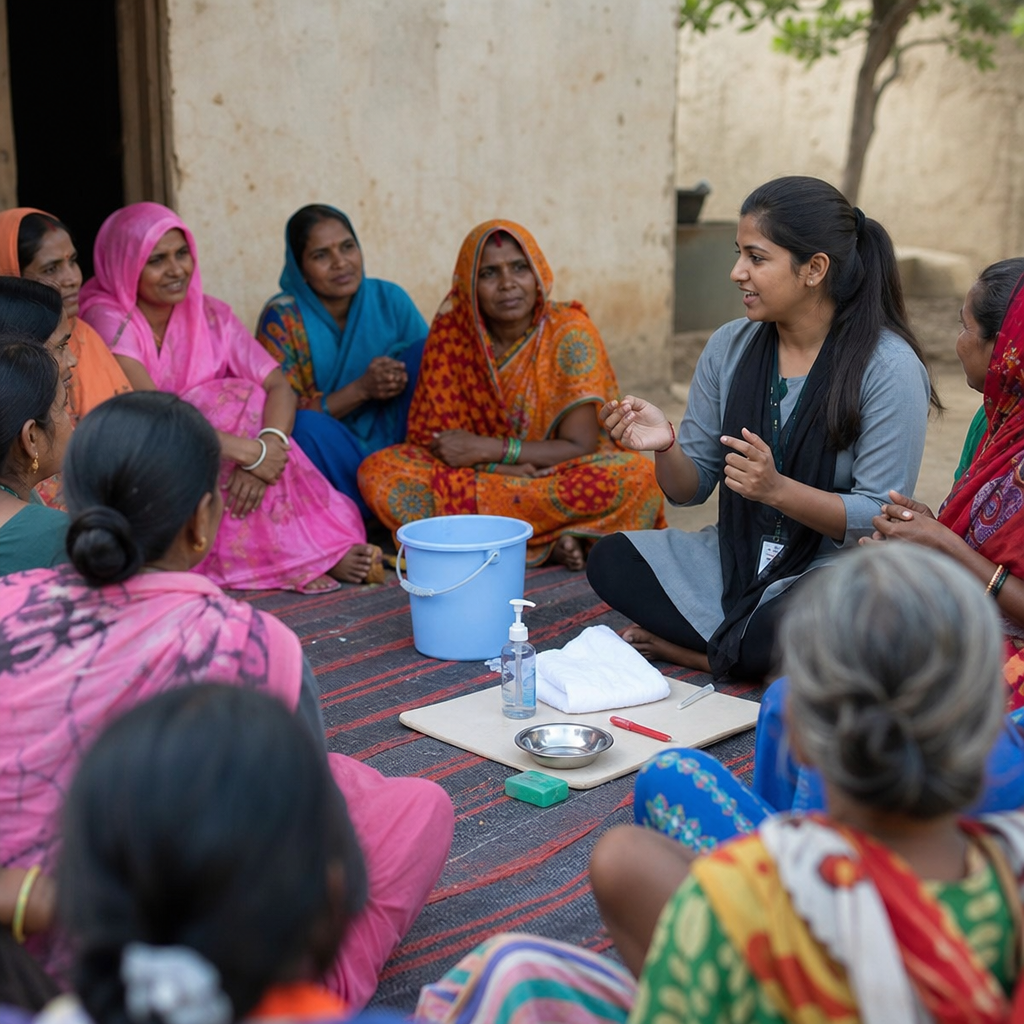
| Women-led discussion groups | Households discuss privacy, menstrual hygiene, child feces disposal, and safety | Better facility design and higher sustained use |
| Community scorecards | Residents rate service quality, desludging frequency, and cleanliness | More accountability from operators and local government |
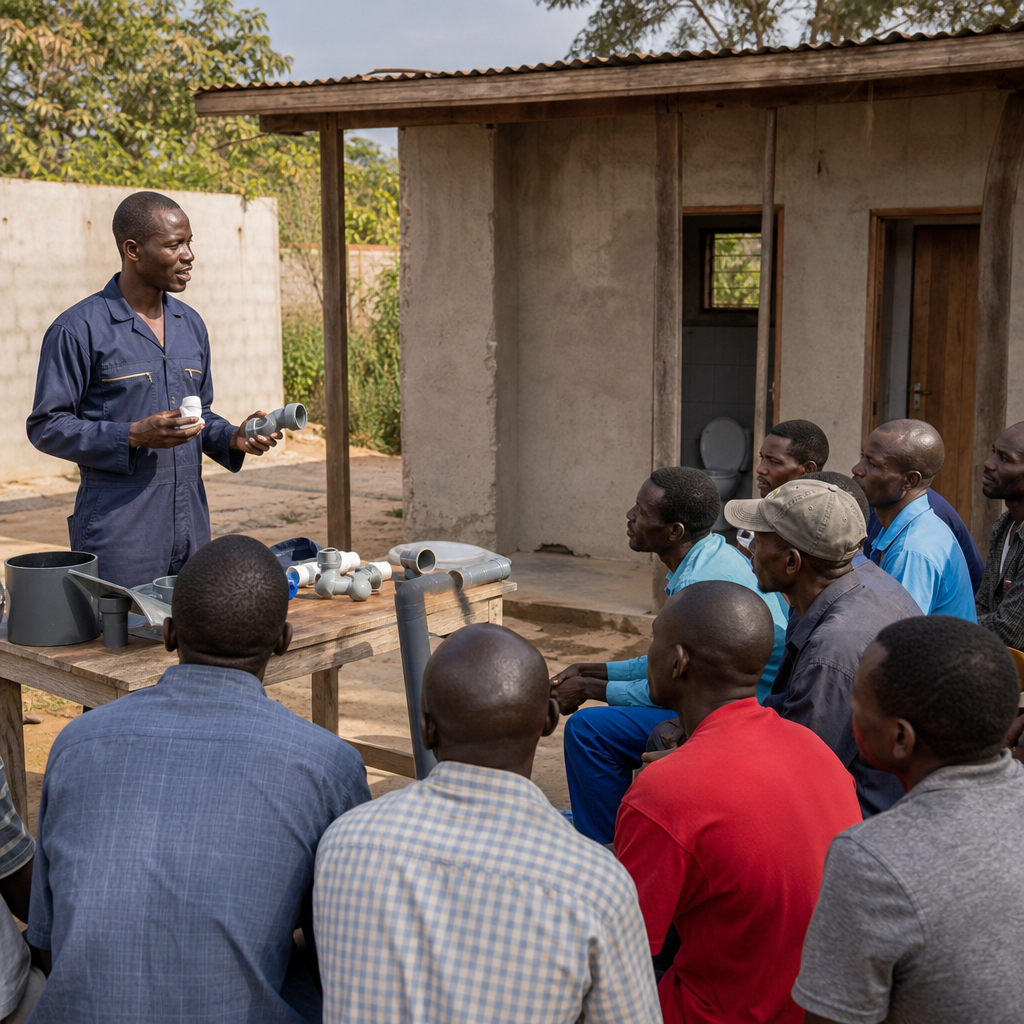
| Demonstration toilets | Builders and health staff show affordable designs and maintenance steps | Faster adoption of improved household sanitation options |
Community success stories and what they teach
Some of the most instructive sanitation success stories come from places that paired community mobilization with consistent education. In Bangladesh, community-led approaches to ending open defecation gained traction when facilitators helped villages analyze contamination pathways and set their own targets. The lesson was not that shame alone changes behavior, as early interpretations sometimes suggested. The durable gains came where follow-up, local leadership, women’s participation, and practical options for low-cost latrine improvement were present. Villages that understood maintenance and upgrading were more likely to sustain progress than villages pushed toward symbolic declarations.
In India, sanitation campaigns became more effective when communication moved beyond construction targets toward use, pit emptying, handwashing, and school engagement. Districts that involved teachers, accredited social health activists, self-help groups, and panchayat leaders often saw stronger ownership. One repeated pattern was that households adopted toilets faster when they could visit nearby examples, ask blunt questions about smell, cost, emptying, and water use, and hear answers from neighbors rather than distant officials. Peer credibility matters. In my experience, a respected local mason explaining vent pipe placement can sometimes achieve more than a polished mass media campaign.
African city neighborhoods offer equally important lessons. In parts of Kenya and Zambia, sanitation gains in informal settlements have depended on resident committees that manage shared toilets, collect small fees, supervise cleaning rosters, and coordinate with service providers for emptying. These are not glamorous interventions, but they solve the daily management problems that make facilities usable or unusable. The education component is essential: users learn what fees cover, caretakers learn safe cleaning practices, and committee members learn basic financial tracking. Where knowledge is transparent, conflict drops and compliance rises.
Latin American examples also show the value of neighborhood education tied to municipal systems. In peri-urban communities, household workshops on solid waste separation, drain maintenance, and safe child feces disposal have improved environmental cleanliness because residents could connect visible conditions to disease risk. Success usually came where municipal staff did not stop at awareness posters. They returned with schedules, complaint channels, and named contact points. Communities were empowered not only with facts but with pathways to action.
Core education strategies that build sanitation ownership
Several methods consistently strengthen community sanitation efforts. Participatory learning is one. People retain more when they inspect local conditions, compare options, and solve problems together. Social and behavior change communication is another. Good programs use repeated messages, demonstrations, reminders, and trusted influencers, not single events. Household counseling is especially valuable for issues that are private or sensitive, including child feces disposal, menstrual hygiene management, and support for elderly or disabled family members. School-based education matters because children normalize routines and carry them home. Public recognition can help too, but only when linked to meaningful standards such as cleanliness, functionality, and inclusivity.
Successful education strategies also respect incentives and constraints. Telling households to maintain toilets without addressing water scarcity, soap affordability, or pit emptying access rarely works. Communities need realistic options. That might mean tippy-tap handwashing stations where piped water is unreliable, savings groups for sanitation upgrades, or negotiated desludging services for dense areas where trucks struggle to enter. Knowledge empowers best when paired with feasible choices. Otherwise education becomes instruction without agency.
Language, timing, and messenger selection matter more than many planners expect. Technical terms should be translated into familiar examples. Sessions should happen when workers can attend. Faith leaders, teachers, health volunteers, local artisans, and neighborhood association heads often carry more influence than outside experts. In one settlement project, attendance doubled when meetings moved from daytime weekdays to early evenings and included women facilitators. The content did not change much; the accessibility did. Community education is operational work, not just messaging.
Inclusion, dignity, and trust as drivers of long-term success
Sanitation programs succeed longer when they include the people most affected by poor service. Women and girls often understand privacy, safety, menstrual hygiene, and nighttime access barriers in detail. People with disabilities can identify whether paths, doors, handrails, and seating are usable. Caregivers of young children know where handwashing breaks down in daily routines. Waste workers understand where service chains become unsafe. When these voices shape education and planning, solutions become more realistic and uptake improves.
Trust is equally important. Communities have often seen broken promises, abandoned facilities, or campaigns that valued declarations over maintenance. Education can repair trust if it is honest about tradeoffs. Shared toilets need management and cleaning funds. Pit latrines eventually require emptying or replacement. Sewer connections can be expensive and slow. Not every neighborhood can receive the same technology immediately. Clear communication about these realities builds credibility. In my fieldwork, communities responded best when planners admitted constraints, explained standards, and showed the next practical step rather than overselling a complete fix.
Dignity should stay central. Sanitation is often discussed only as disease prevention, but communities also care about comfort, smell, convenience, privacy, and social respect. These factors strongly influence use. A technically sound facility that feels unsafe or degrading will not perform as intended. Education should therefore address rights, expectations, and respectful maintenance norms alongside health impacts. That broader framing is often what turns compliance into ownership.
How organizations can build a strong community knowledge hub
As a hub topic under community engagement and education, empowering communities through knowledge should connect every sanitation article and program element. Start with foundational resources that answer core questions clearly: What is safe sanitation? How does contamination spread? Which household, shared, school, and public facility models fit different contexts? How are operation, maintenance, and fecal sludge management handled? What behaviors matter most for reducing disease risk? Then organize supporting content around life stages, settings, and roles, such as schools, health centers, landlords, tenants, market vendors, and local officials.
Next, create learning pathways rather than isolated materials. A resident may begin with a general guide to sanitation goals, move to a checklist for household hygiene improvement, then access a local reporting tool for broken drains or overflowing pits. A teacher may need lesson plans, student club activities, and maintenance checklists. A community committee may need templates for scorecards, budgets, and cleaning rosters. Linking these resources strengthens engagement and helps communities act on what they learn.
Measurement closes the loop. Track not only how many people attended trainings but what changed afterward: facility use, cleanliness scores, soap availability, repair completion times, desludging frequency, school attendance, and self-reported confidence in knowing whom to contact. Share results back with the community. Visible progress sustains motivation. If you are building this hub, make every article practical, evidence-based, and easy to navigate, then invite readers to apply one lesson locally this month.
Community success stories in achieving sanitation goals prove that informed communities are not passive beneficiaries of public health systems; they are co-creators of them. Knowledge helps residents identify risks, compare options, maintain facilities, challenge poor service, and sustain behavior change long after project teams leave. The most reliable pattern across rural villages, informal settlements, schools, and peri-urban neighborhoods is clear: sanitation improves when education is participatory, locally relevant, inclusive, and tied to real service pathways. Toilets, drains, handwashing stations, and waste systems matter, but they perform best when communities understand how and why to use, maintain, monitor, and improve them.
For anyone working in community engagement and education, the main benefit of this approach is durability. Knowledge reduces dependence on one-off campaigns because it builds local problem-solving capacity. It turns scattered messages into shared standards and isolated behavior changes into community norms. It also strengthens accountability, since residents who understand sanitation systems are better equipped to ask informed questions about budgets, repairs, emptying schedules, and service quality. That combination of ownership and oversight is what moves a sanitation program from temporary progress to resilient public health protection.
Use this hub as a starting point for deeper work on school hygiene, behavior change communication, inclusive facility design, community monitoring, and safe sanitation management. Pick one neighborhood, school, or community group, identify the most urgent knowledge gap, and address it with practical education that leads directly to action. That is how sanitation goals become community achievements.
Frequently Asked Questions
What makes a community sanitation project truly successful?
A truly successful community sanitation project goes far beyond the visible infrastructure. Toilets, drains, handwashing stations, and waste collection points matter, but they only produce lasting results when people understand why they are important, trust how the system works, and feel ownership over the outcome. The strongest community success stories usually share a few core elements: local participation from the beginning, practical hygiene education, clear responsibilities for maintenance, and systems that fit the daily realities of the people using them.
In practice, success means the community is not treated as a passive recipient of services. Residents help identify sanitation problems, discuss barriers openly, and participate in decisions about design, placement, access, and upkeep. This is especially important in areas where past projects failed because facilities were built without considering cultural habits, affordability, water availability, seasonal flooding, or who would maintain the system after installation.
Another key sign of success is behavior change. If people regularly wash hands with soap, separate waste correctly, protect water points, and use sanitation facilities consistently, the project is influencing public health in a meaningful way. Strong sanitation outcomes are also linked to accountability. Communities that assign maintenance committees, monitor cleanliness, collect small funds for repairs, and work with local governments or service providers tend to sustain progress longer. In short, real success happens when sanitation becomes part of community life, not just a one-time construction effort.
Why do some sanitation programs fail even when new facilities are built?
Many sanitation programs fail because they focus too narrowly on construction and not enough on long-term use, management, and community trust. Building toilets or drainage channels can create the appearance of progress, but if the facilities are poorly located, culturally unsuitable, difficult to maintain, or unsupported by education and local leadership, they often fall into disrepair or are underused. Infrastructure alone does not change behavior. People need to see the value of new systems, know how to use them properly, and believe that the effort is worth maintaining.
Another common reason for failure is the absence of community ownership. When outside organizations make decisions without listening to residents, the final solution may not reflect local priorities. For example, a latrine may be technically sound but inaccessible to elderly people, unsafe for women at night, or impossible to clean because no maintenance plan exists. Waste systems can also collapse if households are not taught segregation practices or if collection schedules are unreliable. In these cases, the system breaks down not because the idea was wrong, but because implementation ignored how communities actually function.
Programs also struggle when they overlook the full sanitation chain. Safe sanitation includes containment, transport, treatment, and disposal or reuse. If fecal sludge management is not planned, pits and tanks eventually overflow, creating health risks despite initial improvements. The same is true for water point protection and handwashing behavior. Communities achieve lasting sanitation goals when programs treat sanitation as an ongoing service supported by education, local governance, and realistic financing, rather than a one-time delivery of facilities.
How do communities create lasting behavior change around hygiene and sanitation?
Lasting behavior change happens when information is practical, repeated, locally trusted, and tied to everyday life. Communities do not change sanitation habits simply because they are told what is correct. Change becomes durable when residents understand the health consequences of poor sanitation, see the benefits of cleaner practices, and participate in shaping solutions that feel achievable. The most effective community success stories often combine public discussions, school-based learning, household visits, demonstration activities, and visible local leadership.
For example, handwashing behavior improves when soap and water are available at convenient locations, when families understand the connection between dirty hands and disease transmission, and when schools, clinics, and households reinforce the same message. Waste segregation improves when residents know exactly what belongs in each container, when collection systems are reliable, and when the rules are simple and consistent. Communities are more likely to sustain these habits when local champions, health workers, teachers, faith leaders, and neighborhood groups help normalize them over time.
Social accountability also plays a major role. When communities monitor sanitation conditions, celebrate improvements, and address problems collectively, behavior change becomes part of the local culture. This can include clean-up days, maintenance rosters, youth engagement, and regular meetings to review what is working. Importantly, successful efforts avoid blaming people. Instead, they remove barriers, build trust, and make healthy behavior easier to maintain. That is why the most compelling sanitation success stories are rarely about a single campaign. They are about consistent community-driven action that turns awareness into routine practice.
What role does local leadership play in achieving sanitation goals?
Local leadership is often the deciding factor between short-term improvement and lasting sanitation progress. Strong leaders help organize people, build trust, resolve conflicts, and keep sanitation on the community agenda after external support ends. These leaders may include elected officials, traditional authorities, women’s groups, school staff, health volunteers, religious figures, and informal neighborhood organizers. Their influence matters because sanitation depends on coordination, shared responsibility, and public confidence.
Effective local leadership helps translate broad sanitation goals into concrete actions. Leaders can mobilize residents for clean-up efforts, encourage household participation in waste segregation, support hygiene campaigns, and help establish rules for the use and maintenance of shared facilities. They also play an important role in ensuring inclusion. Good leaders ask whether facilities are safe for women and girls, accessible for people with disabilities, practical for children, and affordable for low-income households. This level of local awareness helps prevent gaps that often undermine sanitation programs.
Just as important, local leadership strengthens accountability. Communities are more likely to maintain gains when someone is responsible for tracking repairs, reporting service failures, coordinating desludging, protecting water points, and connecting residents with government agencies or service providers. In many community success stories, the breakthrough did not come from technology alone. It came from leaders who kept people engaged, made sanitation a shared priority, and created systems that residents trusted enough to support over the long term.
How can sanitation gains be sustained after a project officially ends?
Sustaining sanitation gains requires planning for what happens after the initial funding, training, or construction phase is over. The most resilient communities prepare for long-term operation and maintenance from the beginning. That includes deciding who cleans facilities, who pays for repairs, how waste is collected or safely treated, how fecal sludge is managed, and how hygiene education will continue. When these details are ignored, even well-designed projects can decline quickly once external partners leave.
One of the most effective strategies is to establish local systems that are simple, transparent, and affordable. Communities often sustain progress better when they create maintenance committees, household contribution schemes, reporting channels for breakdowns, and partnerships with local authorities or sanitation service providers. Training local technicians or caretakers can also make a major difference, especially in places where outside support is difficult to access. If handwashing stations break, drains clog, or latrines fill up, communities need a realistic plan for responding before the problem becomes a public health setback.
Ongoing education is equally important. New families move in, children grow up, and habits can weaken over time if messages are not reinforced. Schools, clinics, community meetings, and local campaigns help keep hygiene, water protection, and proper waste management visible. Monitoring also matters. Communities that regularly assess cleanliness, usage, repair needs, and environmental risks are better able to solve problems early. Ultimately, sanitation gains last when they are embedded in community routines, supported by local accountability, and treated as an essential public health service rather than a completed project.