Tailoring EcoSan messages for different audiences is the difference between a sanitation campaign that gets polite attention and one that changes daily behavior. In community engagement work, EcoSan refers to ecological sanitation: systems and practices that safely manage human waste as a resource, often through urine diversion, composting, dehydration, nutrient recovery, and water-saving toilet design. Building community awareness around EcoSan means more than explaining toilets. It means helping households, schools, farmers, landlords, health workers, and local officials understand how sanitation connects to health, dignity, water security, food production, operating costs, and environmental protection. I have seen technically sound EcoSan projects stall because the same leaflet was handed to every group. People act when the message matches their priorities, language, risks, and decision-making power. That is why tailored communication matters. A parent asks whether a toilet is safe for children. A farmer asks about nutrient value. A municipal engineer asks about maintenance protocols and capital expenditure. A religious leader may ask about purity, dignity, and community acceptance. This hub article explains how to build community awareness by shaping EcoSan messages for distinct audiences, choosing trusted messengers, addressing objections directly, and linking education to long-term adoption rather than one-time promotion.
Understand the audience before crafting the message
The first rule of effective EcoSan communication is simple: start with audience insight, not with the technology brochure. In practice, that means mapping who influences sanitation choices and what each group cares about most. A household decision may involve a tenant, a landlord, a grandmother, and a mason. A school toilet project may depend on the headteacher, parent committee, district education office, and student hygiene clubs. Before I design any awareness campaign, I identify the audience’s incentives, constraints, and baseline knowledge. Useful questions include: What sanitation problem do they already recognize? What do they fear? Who do they trust? What cost horizon matters to them: upfront price, monthly operation, or long-term savings? Which words are familiar, and which create resistance?
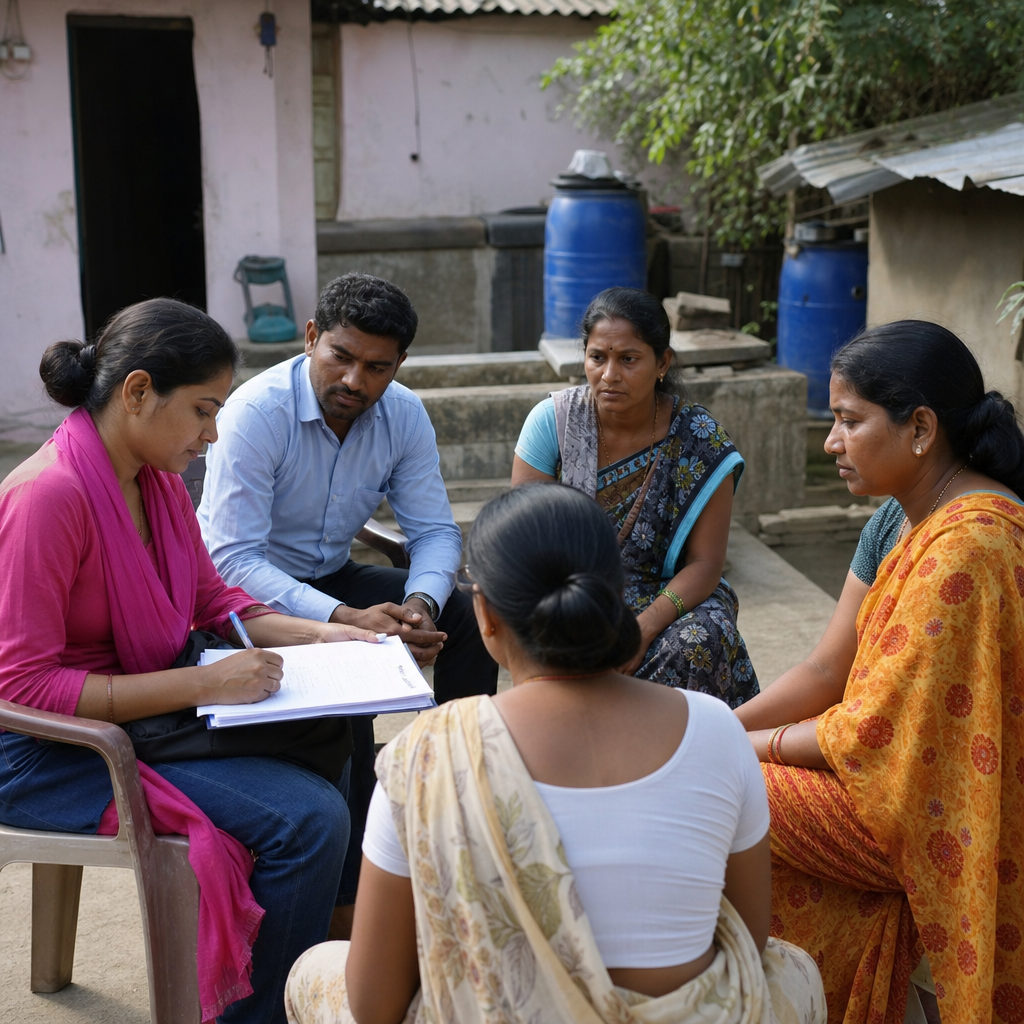
Several practical methods help. Focus group discussions reveal social norms and taboo language. Household surveys show willingness to pay and common misconceptions. Stakeholder mapping identifies gatekeepers and champions. Observation is essential because stated preferences and actual behavior often differ. For example, residents may say odor is the main issue, but site visits may show greater frustration with cleaning, access for elderly users, or nighttime safety. In peri-urban settlements, I often find that container emptying logistics and privacy matter more than nutrient reuse. In farming communities, the reverse can be true.
Segmentation should be deliberate. Common audience groups in EcoSan awareness work include households, tenants, landlords, school communities, farmers, community leaders, local government officials, masons and installers, public health workers, and media. Each audience needs a different combination of message, proof, and call to action. Awareness is not just about exposure. It is about relevance.
Match the EcoSan benefit to what each audience values
People rarely adopt EcoSan because it is innovative. They adopt it because it solves a pressing problem in terms they already value. The same system can be framed in multiple accurate ways. For low-income households in water-scarce areas, the strongest message may be water savings and reduced spending on pit emptying. For farmers, it may be nutrient recovery and soil improvement. For women and girls, it may be privacy, menstrual hygiene management, safety, and cleaner facilities. For local officials, it may be reduced pressure on sewer networks, lower groundwater contamination risk, and resilience in dense or flood-prone settlements.
Message matching works best when it is concrete. Saying “EcoSan is sustainable” is too abstract. Saying “urine-diverting dry toilets can operate with little or no flush water, which matters in communities facing seasonal shortages” is useful. Saying “properly treated excreta can return nutrients to soil” is stronger when paired with specifics: urine contains a substantial share of the nitrogen and potassium excreted by humans, while feces contains much of the phosphorus and organic matter; safe treatment and handling are non-negotiable. Farmers respond to evidence from local demonstration plots more than general claims. Parents respond to visible cleanliness, handwashing access, and child-safe design features such as smaller seats, stable slabs, and clear use instructions.
Different audiences also require different proof types. Engineers want specifications, maintenance schedules, and case studies. Community elders want examples from nearby settlements. Health staff want alignment with WHO sanitation and safe reuse guidance. Finance-minded decision makers want lifecycle cost comparisons, not just installation costs. Good awareness materials therefore combine narrative, visuals, local examples, and direct answers to practical questions.
Use plain language to address health, safety, and stigma
EcoSan awareness often succeeds or fails on how well communicators handle health concerns and social stigma. Many people hear “reuse” and immediately worry about disease. That concern is reasonable. The correct response is not to dismiss it, but to explain the treatment barriers clearly. Messages should state that untreated excreta is hazardous and that safe EcoSan systems depend on correct separation, storage, dehydration, composting, or other validated treatment steps, plus protective handling and application practices. The tone should be matter-of-fact, not defensive.
Plain language matters. Avoid jargon unless the audience needs technical detail. Instead of “pathogen die-off kinetics,” explain that germs reduce over time when material is stored and treated correctly under specified conditions. Instead of “nutrient loop closure,” explain that nutrients can be returned to soil rather than lost as pollution. In communities where sanitation is a taboo topic, trusted local wording is critical. I have had better results using locally accepted terms for cleanliness, family health, and soil fertility than insisting on textbook language.
Stigma also attaches to status. Some households assume dry or source-separating toilets are inferior to flush toilets. Awareness work should acknowledge the aspiration behind flush systems while explaining where EcoSan is the more practical and safer option: rocky ground, flood-prone sites, water-scarce areas, dense settlements where pits fill quickly, or places where sewer expansion is unrealistic. Demonstration toilets are powerful because they replace assumptions with direct experience. A clean, odor-controlled, well-maintained facility changes perception faster than any poster.
Choose the right messenger and channel for each group
Audiences do not only evaluate the message. They evaluate the messenger. In sanitation campaigns, credibility is often local and relational. Households may trust community health workers or respected neighbors more than external consultants. Farmers may trust agricultural extension officers and fellow farmers who have used treated products successfully. Schoolchildren respond strongly to peer educators, teachers, and visual routines. Local officials often need communication led by recognized technical experts backed by field data and budget implications.
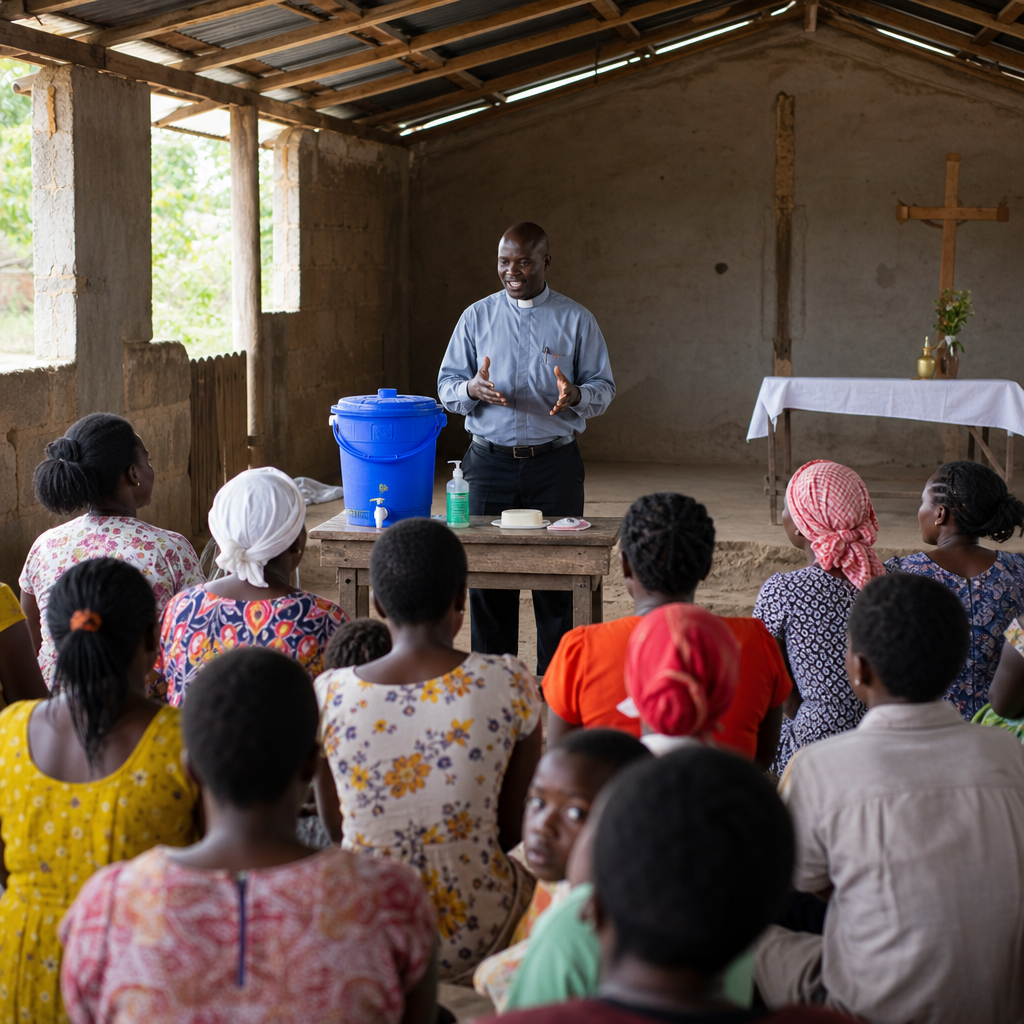
Channels should reflect actual media habits and access. Community meetings remain effective when they are structured around dialogue rather than one-way speeches. Radio is useful in rural areas, especially for repeated myth-busting and call-in formats. WhatsApp groups can support landlord associations, masons, or village committees, but only when messages are concise and visual. Schools benefit from assemblies, clubs, and handwashing demonstrations. Health facilities can display targeted materials for caregivers and pregnant women. Demonstration sites, open days, and exchange visits are among the strongest tools because they combine social proof with practical observation.
The best campaigns coordinate channels instead of relying on one. A launch meeting creates awareness, household visits answer personal objections, a demonstration site shows the technology in use, and follow-up messages reinforce correct operation. This is especially important for EcoSan because adoption depends on user behavior after installation. Communication must continue into the use and maintenance phase.
Build messages for key audience segments
A hub page on building community awareness should show how segmentation translates into action. The table below outlines practical message angles, common concerns, and effective proof points for major EcoSan audiences.
| Audience | Main priority | Best EcoSan message | Common concern | Best proof |
|---|---|---|---|---|
| Households | Health, convenience, cost | Cleaner, safer sanitation with lower water use and manageable upkeep | Odor, complexity, child use | Home visits, live demos, neighbor testimonials |
| Landlords | Asset value, compliance, maintenance cost | Durable toilets that reduce pit emptying pressure and tenant complaints | Upfront cost, misuse by tenants | Lifecycle cost examples, maintenance plans |
| Farmers | Soil fertility, yield stability | Safely treated outputs can supplement nutrients and organic matter | Crop safety, acceptance | Demonstration plots, extension guidance |
| Schools | Attendance, cleanliness, dignity | Reliable sanitation improves hygiene and supports girls’ participation | Cleaning burden, student misuse | Student clubs, janitor training, model facilities |
| Local officials | Public health, service coverage, budgets | EcoSan expands sanitation options where sewers or pits are constrained | Standards, monitoring, public reaction | Case studies, technical designs, cost data |
| Masons and installers | Work quality, demand generation | Correct construction builds reputation and repeat business | Design errors, limited training | Hands-on training, checklists, certification |
These segments are not fixed. In one settlement, women’s savings groups may be the most influential audience; in another, local masons are the true gatekeepers because households follow their recommendations. Awareness planning should therefore be revisited as the program learns what drives decisions locally.
Answer practical questions that determine adoption
Community awareness becomes credible when it answers the questions people actually ask. How much does the system cost to build? What maintenance is required each week? Can children use it safely? Does it smell? What happens during the rainy season? Who empties chambers or containers? Can tenants be trained easily? Is there a market or approved pathway for reuse products? What regulations apply?
Every EcoSan hub should provide direct, plain answers. Cost must be presented honestly, including superstructure, slab, ventilation, urine diversion components where relevant, handwashing, treatment or storage arrangements, and routine operation. A low installation price means little if spare parts are unavailable or cleaning is neglected. Maintenance guidance should include who does what, how often, and with which materials. Behavior-dependent systems need clear user instructions at the point of use, not buried in a manual.
Seasonal and site-specific questions are especially important. In flood-prone areas, messaging should explain elevation, drainage protection, and contamination prevention. In arid regions, the water-saving case should be quantified wherever possible. In schools, communication must cover supervision and cleaning responsibilities, because excellent designs fail when nobody owns maintenance. In rental housing, landlord messages should include tenant orientation procedures and simple signage.
When communicators avoid hard questions, rumors fill the gap. When they answer them directly and repeatedly, trust grows.
Connect awareness to participation, training, and feedback
Awareness alone does not build durable sanitation behavior. It must connect to participation. Communities should help shape site selection, user rules, cleaning plans, affordability mechanisms, and monitoring indicators. Participatory methods such as community mapping, problem ranking, and prototype review sessions help residents move from passive recipients to co-designers. That shift matters because sanitation systems interact with routines, gender roles, and space constraints inside homes and compounds.
Training is the bridge between awareness and correct use. Users need orientation on separation, cover material where applicable, cleaning methods, handwashing, and what not to put into the toilet. Caretakers and school janitors need maintenance schedules. Masons need construction details such as slope, vent placement, chamber access, and urine diversion alignment. Local officials need inspection criteria and service chain oversight. In my experience, one well-run hands-on training prevents more failures than months of generic promotion.
Feedback loops are equally important. Establish simple channels for users to report odor, blockage, confusion, or collection delays. That can be a community committee, a hotline, periodic household visits, or structured school inspections. Early complaints are valuable data. They reveal where messages were unclear, where hardware is flawed, or where assumptions about user behavior were unrealistic. Awareness should therefore be treated as an ongoing conversation, not a campaign burst.
Measure whether community awareness is working
Effective awareness strategies are measured by behavior and confidence, not just attendance. Useful indicators include recall of key safety messages, percentage of users who can describe correct operation, observed cleanliness, handwashing station functionality, consistency of use, number of maintenance issues resolved within a target timeframe, and willingness of non-users to consider adoption after exposure to demonstrations. For institutional settings, add indicators such as student satisfaction, caretaker compliance with cleaning schedules, and downtime of facilities.
Qualitative data matters alongside numbers. Short interviews can reveal whether people understand why urine and feces may be handled differently in a given system, whether fear of smell has changed after use, or whether landlords believe tenant training is manageable. Photo documentation and spot-check audits help verify claims. For agricultural reuse components, partner with extension services to track treatment compliance and field performance rather than relying on anecdotes.
The central lesson is straightforward. Building community awareness around EcoSan is not about pushing a single message harder. It is about tailoring the right message to the right audience, through the right messenger, with evidence that addresses real concerns. When households hear how EcoSan protects health and reduces daily pain points, when farmers see safe nutrient recovery demonstrated locally, when schools receive cleaning systems instead of slogans, and when officials get costed, standards-based options, adoption becomes far more likely. Use this hub as the starting point for every subtopic in community engagement and education: audience research, behavior change messaging, school outreach, landlord engagement, demonstration planning, myth-busting, and monitoring. If you are building community awareness now, begin by segmenting your audiences, identifying their top concerns, and rewriting your current EcoSan materials so each group sees its own priorities reflected clearly.
Frequently Asked Questions
Why is it important to tailor EcoSan messages for different audiences?
Tailoring EcoSan messages matters because people do not all make sanitation decisions for the same reasons. Ecological sanitation can involve urine diversion, composting, dehydration, nutrient recovery, and water-saving toilet design, but technical features alone rarely inspire action. A household deciding whether to adopt a new toilet system may care most about cost, convenience, odor control, and safety. A farmer may be interested in nutrient recovery and soil benefits. A school administrator may focus on hygiene, maintenance, and student attendance. Local leaders may be concerned with public health outcomes, community acceptance, and long-term sustainability. If one generic message is used for everyone, the campaign may sound informative but fail to feel relevant.
Effective EcoSan communication connects the same core idea to different priorities without changing the facts. That means emphasizing dignity and usability for families, water savings for drought-prone communities, reduced contamination for health workers, and resource efficiency for agricultural audiences. Tailoring also helps reduce resistance. People are more likely to reject unfamiliar sanitation practices when they feel they are being lectured or when the message ignores local habits, beliefs, and constraints. By speaking in terms that fit people’s daily lives, communicators build trust, answer real concerns, and make EcoSan feel practical rather than abstract. In short, tailored messaging is what turns awareness into understanding and understanding into behavior change.
Which audience segments should be prioritized when planning an EcoSan communication campaign?
The most effective EcoSan campaigns begin by identifying who influences sanitation decisions, who uses the systems, and who shapes public opinion. In most settings, priority audiences include households, landlords, community leaders, teachers, health workers, farmers, youth, and local government officials. Each of these groups interacts with sanitation differently. Households and toilet users need clear information on everyday use, cleanliness, safety, and maintenance. Landlords and property managers often need reassurance about durability, cost, tenant acceptance, and servicing requirements. Community and religious leaders can help normalize the concept and reduce stigma. Teachers and school administrators can introduce EcoSan ideas through hygiene education and school facilities. Health workers are essential for explaining disease prevention and correcting myths. Farmers may be key supporters when nutrient recovery is part of the system. Local officials influence approvals, funding, regulations, and long-term scale-up.
Prioritization should be based on the campaign’s specific goals. If the objective is household adoption, end users and decision-makers within the home should come first. If the objective is wider acceptance, trusted local influencers may be the most strategic starting point. If the challenge is policy support or financing, municipal stakeholders and institutional partners deserve greater attention. It is also important to consider audiences that are often overlooked, such as women, caretakers, people with disabilities, and sanitation workers, because they frequently have firsthand knowledge of what makes a system usable or unworkable. A strong audience map helps ensure that messages are not only heard, but reinforced by the people and institutions that shape community behavior.
How can EcoSan messages be adapted without losing scientific accuracy or creating confusion?
Adapting EcoSan messages does not mean changing the science. It means changing the language, emphasis, and examples so the information is easier for a specific audience to understand and trust. The core facts should remain consistent across all materials: EcoSan systems are designed to safely manage human waste, reduce environmental contamination, conserve water, and in many cases recover nutrients or other useful resources when handled properly. What changes is how those facts are presented. For a technical audience, it may be appropriate to discuss treatment processes, pathogen reduction, and system performance. For a general community audience, it is often better to focus on what the system does in everyday life: saves water, reduces smell when properly maintained, protects local water sources, and can provide usable soil nutrients under safe guidelines.
To avoid confusion, campaigns should develop a simple message framework with a few non-negotiable points, approved terminology, and clear answers to common concerns. Avoid jargon unless it is explained in plain terms. Use local examples, visuals, demonstrations, and comparisons to familiar practices. Be honest about what users must do for the system to work well, including maintenance responsibilities and safe handling procedures. Overpromising is one of the fastest ways to damage credibility. If a system requires training, regular emptying, or behavior adjustments, that should be stated clearly. Accuracy and clarity are strongest when messages are field-tested with real users before full rollout. If people misunderstand a phrase, react negatively to a term, or focus on the wrong benefit, the message can be refined while keeping the scientific substance intact.
What are the most common barriers to acceptance of EcoSan, and how should messaging address them?
Common barriers to EcoSan acceptance include stigma around human waste, fears about smell or hygiene, uncertainty about maintenance, concerns about cost, resistance to changing established habits, and mistrust of unfamiliar technology. In some communities, the idea of recovering nutrients from human waste may trigger strong emotional or cultural objections. In others, people may assume that water-saving systems are less clean, less modern, or harder to use. Some users worry that the toilets will be complicated, unattractive, or unsuitable for children, older adults, or guests. These concerns are not minor obstacles. They are often the real reasons adoption stalls, even when the technical case for EcoSan is strong.
Messaging should address these barriers directly, respectfully, and with evidence. Instead of dismissing concerns, acknowledge them and provide practical answers. Explain how odor is controlled, how waste is safely treated or contained, what routine maintenance involves, and what users can expect in daily operation. Testimonials from trusted local users can be especially powerful because they show that EcoSan works in real homes, schools, or farms. Demonstration sites also help people move from imagination to observation. Cost concerns should be met with transparent information about upfront expenses, savings on water or fertilizer where relevant, and expected maintenance costs over time. Cultural concerns require careful listening and local engagement, not generic persuasion. When people feel that their concerns have been heard and answered in familiar, respectful language, they are far more open to learning, trying, and eventually adopting EcoSan practices.
What communication methods work best for changing behavior around EcoSan in communities?
The best communication methods are usually layered, participatory, and repeated over time. Behavior change rarely happens because of one poster, one workshop, or one technical presentation. Communities respond best when they receive consistent messages through trusted channels and have opportunities to ask questions, see systems in action, and discuss how EcoSan fits their daily routines. Face-to-face communication is often the most effective starting point, especially for a topic as personal as sanitation. Community meetings, household visits, school sessions, small group discussions, and live demonstrations allow people to express doubts and receive direct answers. These formats also help facilitators notice whether the message is actually being understood.
Supporting methods can strengthen reach and retention. Visual materials such as diagrams, illustrated guides, and short videos are useful for explaining how EcoSan systems work and how to maintain them. Radio segments, local-language announcements, and social media can broaden awareness where appropriate, but they are most effective when paired with offline engagement. Peer advocates, early adopters, teachers, health promoters, and respected local leaders can reinforce messages in ways that feel credible and culturally grounded. It is also important to frame communication as an ongoing dialogue rather than a one-time campaign. Follow-up visits, user support, refresher training, and feedback channels help correct misuse, solve problems early, and build long-term confidence. The most successful EcoSan communication combines technical clarity with empathy, local relevance, and repeated human interaction.