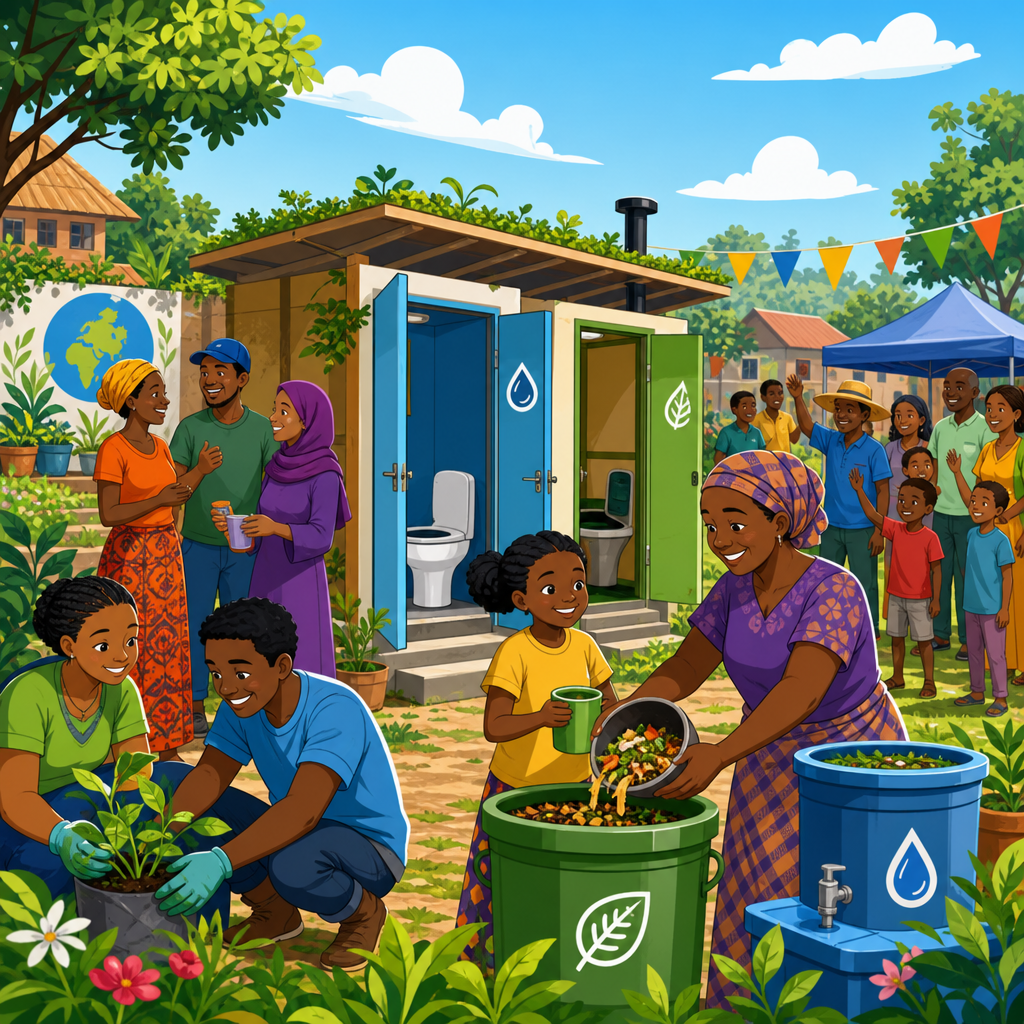
Leveraging local knowledge in EcoSan implementation is one of the most reliable ways to build community awareness, improve sanitation outcomes, and make ecological sanitation systems last. EcoSan, short for ecological sanitation, treats human waste as a resource that can be safely processed and returned to productive use, usually through composting, urine diversion, soil conditioning, or water-saving reuse models. Community awareness means more than basic promotion. It includes shared understanding of health risks, daily operation, maintenance responsibilities, cultural acceptance, and the practical value of EcoSan in homes, schools, farms, and public facilities. When local knowledge guides these conversations, projects move from externally introduced hardware to community-owned systems that fit real habits, climate, livelihoods, and beliefs.
I have seen the difference firsthand in sanitation programs where technically sound toilets failed because planners ignored local cleaning routines, land tenure, seasonal flooding, or taboos around handling composted excreta. I have also seen modest systems succeed because local masons adjusted pit lining to suit local soils, women’s groups redesigned privacy features, and farmers helped explain nutrient recovery in language neighbors trusted. That is why this topic matters so much within community engagement and education. Building community awareness is not a side activity after construction starts. It is the central process that shapes adoption, correct use, safety, and long-term maintenance. For organizations developing an EcoSan strategy, this hub page explains the main pillars of awareness-building and connects the practical issues every local campaign must address.
Why local knowledge is the foundation of EcoSan awareness
Local knowledge includes lived experience about water scarcity, farming systems, household decision-making, weather patterns, building materials, hygiene practices, and community leadership. In EcoSan implementation, that knowledge determines whether the technology fits the place. A urine-diverting dry toilet may perform well in arid regions with expensive water, but in flood-prone settlements the superstructure, vault height, and access path require local adaptation. A composting system may be technically acceptable on paper, yet fail if households lack dry cover material such as ash, sawdust, rice husk, or chopped leaves. Community awareness improves when education starts with what people already know and do, not with imported messaging.
The most effective awareness campaigns answer direct questions early. What problem does EcoSan solve? It reduces pathogen exposure from open defecation and failing pits, saves water compared with flush systems, and can recover nutrients for agriculture when managed correctly. Why is local knowledge important? Because communities already understand where toilets flood, who empties pits, when water runs short, which crops respond to soil amendments, and what privacy standards users expect. Programs that map these realities before design can tailor messages and facilities accordingly. This approach also builds trust. Residents are far more likely to participate when they see their knowledge reflected in site selection, training materials, user instructions, and maintenance plans.
Awareness rooted in local knowledge also reduces misinformation. In many communities, the idea of reusing treated excreta triggers understandable concerns about smell, disease, religion, or dignity. Those concerns must be addressed directly with evidence, demonstrations, and local voices. World Health Organization sanitation guidance, for example, emphasizes multiple barriers for safe reuse, including treatment, storage, application controls, and hand hygiene. Translating that guidance into plain terms works best when health workers, teachers, farmers, and respected leaders explain how the safeguards fit local routines. People do not adopt EcoSan because a brochure says it is sustainable. They adopt it when they understand exactly how it protects health and fits everyday life.
Core elements of building community awareness for EcoSan
Building community awareness is a structured process, not a single meeting. It starts with listening, then moves through co-design, demonstration, user education, feedback, and reinforcement. In practice, I group awareness work into several linked elements: baseline understanding, stakeholder mapping, message design, practical demonstration, behavior support, and long-term follow-up. Baseline work identifies what people know about sanitation risks, what they currently use, and what barriers they face. Stakeholder mapping shows who influences decisions, including women, landlords, school staff, religious leaders, farmers, health volunteers, and local masons. Message design turns technical information into useful explanations tailored to those groups.
Demonstration is essential because EcoSan is easier to understand when people can see and touch the system. A functioning pilot toilet, a cutaway model, or a small compost curing area can answer more questions than a long presentation. Behavior support includes practical instructions on using dry cover material, keeping urine and feces separate where required, washing hands, and knowing when treatment is complete. Follow-up matters because users often need clarification after the first weeks of operation. A strong hub program links awareness to training, maintenance support, school education, local supply chains, and monitoring, so knowledge does not fade after launch.
| Awareness element | What it answers for the community | Example in EcoSan practice |
|---|---|---|
| Baseline assessment | What are the current sanitation problems and beliefs? | Household surveys reveal flooding of pit latrines during rainy months |
| Stakeholder mapping | Who influences adoption and maintenance? | Women’s groups and school staff help shape privacy and cleaning plans |
| Demonstration | How does the system actually work? | A model urine-diverting toilet shows where ash is added and where urine flows |
| User training | What daily actions are required for safe operation? | Households practice adding dry cover and keeping wash water separate |
| Feedback loops | What needs adjustment after installation? | Steps are rebuilt after elders report unsafe access in wet weather |
| Reinforcement | How will correct use continue over time? | Health volunteers conduct quarterly visits and refresher sessions |
How to gather and apply local knowledge before implementation
Effective EcoSan awareness begins before construction with disciplined local inquiry. The best methods combine quantitative and qualitative tools. Household surveys provide comparable data on toilet access, water use, spending, and willingness to participate. Focus group discussions uncover concerns that surveys miss, such as menstrual hygiene needs, fears about child safety, or reluctance to handle stored compost. Transect walks reveal settlement layout, drainage paths, soil conditions, and distances to farms or waste handling areas. Seasonal calendars help teams understand when roads become impassable, when ash is plentiful, or when labor is unavailable because of planting and harvest. None of this is abstract. These details directly affect technology choice and awareness messaging.
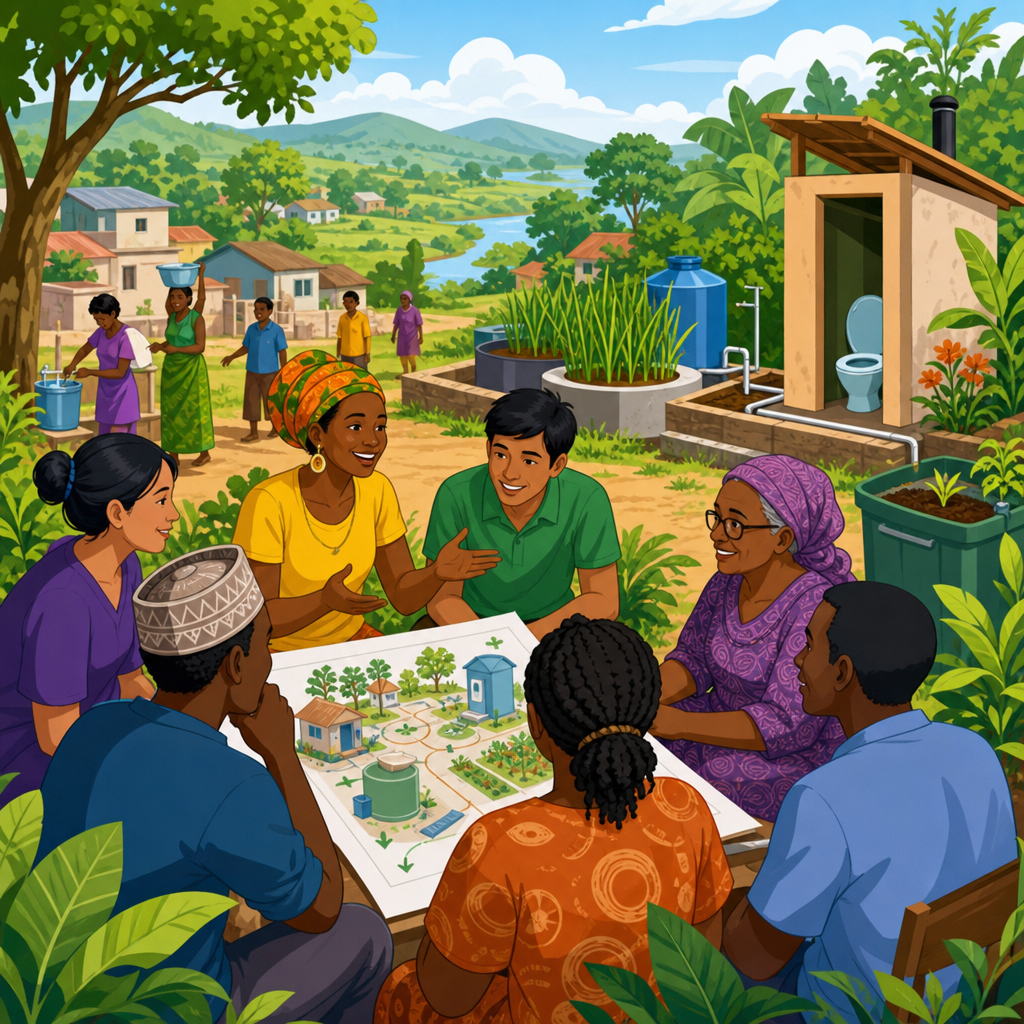
Participatory rural appraisal techniques are especially useful because they turn residents into analysts rather than respondents. Community mapping can identify areas of open defecation, unsafe dumping, and households with disabled members who need accessible designs. Ranking exercises can show whether people value odor control, water savings, fertilizer benefits, or privacy most. Key informant interviews with teachers, health workers, and local builders often reveal practical constraints early. In one project area with rocky ground, masons explained that conventional pit excavation was expensive and dangerous, which made above-ground EcoSan units easier to promote. In another, farmers emphasized that urine use would only be accepted if training specified dilution, application timing, and crop suitability. These insights should shape both design and education materials from day one.
Applying local knowledge means changing plans when evidence calls for it. If residents use water for anal cleansing, the system must account for that behavior instead of hoping people will stop. If cover material is scarce, the project should identify reliable alternatives or a distribution plan. If landlords control compound decisions, tenant awareness alone will not deliver adoption. Good implementation teams document findings in design briefs, communication plans, and operation protocols. They also validate conclusions publicly so the community can correct misunderstandings. This step prevents a common failure: outsiders collecting information but never showing how it informed the final EcoSan approach.
Trusted messengers, local institutions, and social learning
People usually accept sanitation change through trusted relationships, not technical arguments alone. That is why local institutions are central to building community awareness around EcoSan. Schools can teach hand hygiene, nutrient cycles, and toilet care in a way that reaches both children and parents. Health clinics can explain disease transmission and safe handling practices. Farmer groups can demonstrate how treated outputs affect soil structure or crop growth. Religious leaders can help address moral concerns, especially where purity, modesty, or burial traditions influence sanitation choices. Local government officials matter too because they connect household action to standards, permits, and long-term service support.
Social learning works best when communities see peers using EcoSan successfully. A demonstration site in a respected household, school, or cooperative often creates more momentum than a large launch event. Neighbors notice whether the toilet smells, whether it stays clean, and whether users remain satisfied months later. That visibility is powerful because it replaces rumor with observation. I have repeatedly found that early adopter households become the most effective educators when they are trained to explain both benefits and challenges honestly. Their credibility comes from experience. They can say, for example, that adding dry cover is easy once stored in a small container near the pedestal, or that children need extra guidance to use urine-diverting pans correctly.
Local masons, artisans, and sanitation entrepreneurs are another crucial audience. If they understand EcoSan principles, they can reinforce correct messages during construction and repairs. They can also adapt designs using familiar materials without compromising function. Training these actors creates durable local capacity and reduces dependence on external technicians. For a hub article on building community awareness, this is the key point: awareness is not only what users know; it is what the entire local support system understands and can teach consistently.
Designing messages that address health, culture, and value
Strong EcoSan communication is specific, direct, and balanced. Residents usually ask four questions: Is it safe? Is it acceptable? Is it affordable? Is it worth the effort? Each question needs a plain-language answer. Safety depends on proper separation, storage, composting or dehydration time, protective handling, and handwashing. Acceptability depends on privacy, odor control, ease of cleaning, and fit with cultural norms. Affordability includes upfront cost, maintenance cost, and savings on water or pit emptying. Value may come from convenience, resilience in water-scarce areas, reduced contamination, or nutrient recovery for agriculture. If messages avoid these concrete issues, awareness stays superficial.
Cultural sensitivity is essential, but it should not become an excuse for vague engagement. Some communities may reject direct discussion of excreta in mixed groups, so facilitators can use separate sessions by gender or age. Some may prefer to frame nutrient recovery around soil improvement rather than fertilizer from human waste. In schools, child-friendly language and visual cues matter more than technical terminology. In farming communities, demonstration plots can show the effect of treated urine or compost on maize, bananas, or vegetables, provided all safety protocols are followed. Evidence and respect must work together. Dismissing concerns as ignorance is a fast way to lose trust.
Message design should also acknowledge limits. EcoSan is not maintenance-free. It requires user discipline, routine cleaning, and safe output management. In dense urban areas with little storage space or no clear reuse pathway, some EcoSan models are harder to sustain. In high groundwater zones, raised designs may be preferable, but cost can rise. Honest communication improves adoption because households know what they are agreeing to. People do not need sales language. They need clear expectations, competent training, and proof that the system matches local realities.
From awareness to sustained practice: education, monitoring, and adaptation
The goal of community awareness is correct, sustained use, not short-term enthusiasm. That means education must continue after installation. Households need refresher training on cleaning routines, cover material use, chamber switching, vault emptying intervals, and safe transport or reuse of treated products. Schools need maintenance schedules and named staff responsibility. Public facilities need signage, consumable supplies, and inspection checklists. Monitoring should track both technical performance and user behavior. Simple indicators include cleanliness, presence of cover material, signs of urine diversion failure, handwashing station functionality, and user understanding of safe handling steps.
Adaptation is equally important. If a toilet is not being used by children, the pedestal height or instructions may need adjustment. If odors appear, ventilation, dryness, or user technique may be the issue. If families stop reusing outputs, the problem may be storage capacity, labor burden, or weak confidence in treatment. Regular review meetings with community representatives make these issues visible before systems fail. Over time, awareness becomes embedded in local norms when people can explain not just how to use EcoSan, but why each step matters for health, dignity, and environmental protection.
As the hub for Building Community Awareness within Community Engagement and Education, this article highlights a simple truth: EcoSan succeeds when communities recognize their own knowledge as part of the solution. Local experience improves design, trusted messengers strengthen understanding, and practical education turns interest into daily habit. The most durable projects do not separate technology from culture, farming, gender roles, governance, or maintenance. They weave them together. If you are planning or improving an EcoSan program, start by listening carefully, testing assumptions locally, and building awareness through real examples people can trust. That is how ecological sanitation becomes not just installed, but understood, accepted, and sustained.
Frequently Asked Questions
Why is local knowledge so important in EcoSan implementation?
Local knowledge is essential because EcoSan systems work best when they fit the environmental, cultural, and practical realities of the community using them. Ecological sanitation depends on daily habits, long-term maintenance, and trust in the idea that human waste can be safely managed and reused as a resource. Community members already understand local soil conditions, seasonal water availability, farming cycles, household routines, and social expectations around privacy, cleanliness, and sanitation use. That information can shape everything from toilet design and placement to compost handling, urine diversion practices, and reuse methods.
When local knowledge is included from the beginning, EcoSan projects are more likely to gain acceptance and deliver lasting results. Communities can identify what has worked in the past, what has failed, and which practices are realistic for women, men, children, elders, farmers, tenants, and school users. This helps prevent designs that look good on paper but are difficult to use or maintain in real life. It also improves communication because messages about hygiene, safety, composting, and nutrient reuse can be explained using local language, examples, and values. In short, local knowledge turns EcoSan from an imported concept into a practical community-owned solution.
How does leveraging local knowledge improve community awareness and participation?
Community awareness improves when people see EcoSan as something connected to their own lives rather than as a technical system imposed from outside. Local knowledge helps bridge that gap. Instead of relying only on top-down education campaigns, implementers can work with respected local voices such as community leaders, farmers, health workers, teachers, women’s groups, and artisans who understand how people make decisions and whom they trust. These local actors can explain why source separation, compost maturation, safe handling, and water-saving practices matter in ways that feel relevant and credible.
Participation also improves because people are more willing to engage when they are asked to contribute what they already know. Community mapping, household consultations, farmer discussions, and demonstration sites allow residents to influence system design, operation, and reuse plans. This creates a stronger sense of ownership and responsibility. People are far more likely to use EcoSan facilities correctly, report problems early, and support maintenance routines when they helped shape the process. Awareness in this context is not just about knowing that EcoSan exists; it is about understanding how it works, why it matters, and what role each household or institution plays in making it successful over time.
What kinds of local knowledge are most useful when designing and operating EcoSan systems?
Several types of local knowledge are especially valuable. Environmental knowledge is one of the most important. Communities often know which areas flood, which soils drain poorly, where groundwater is vulnerable, and how weather patterns affect storage, drying, and composting. This can influence the choice between urine-diverting dry toilets, composting toilets, container-based systems, or other EcoSan models. Agricultural knowledge is also highly useful because farmers understand crop cycles, soil fertility needs, and whether composted solids or diluted urine could realistically be used in local production systems.
Social and cultural knowledge matters just as much. Communities can identify beliefs related to purity, taboos, gender roles, privacy, child use, elder access, and acceptable handling of excreta-derived products. This helps avoid designs that may be technically sound but socially rejected. Practical household knowledge is another major asset. Residents know how much time they can realistically devote to maintenance, what cleaning materials are available, whether ash, sawdust, or dry cover material can be sourced locally, and what kind of user instructions will be easiest to follow. Even local construction knowledge is important, since builders and masons understand what materials are available, affordable, and durable in that setting. Taken together, these forms of knowledge help create EcoSan systems that are safer, more acceptable, easier to maintain, and more likely to remain in use.
How can project teams respectfully integrate local knowledge without compromising health and safety standards?
The key is to treat local knowledge and technical expertise as complementary, not competing. Project teams should begin by listening carefully through interviews, workshops, transect walks, focus groups, and pilot testing. They should ask how sanitation is currently managed, what concerns people have, what reuse opportunities exist, and what daily routines might affect operation and maintenance. At the same time, teams must clearly explain non-negotiable health protections such as safe storage periods, pathogen reduction requirements, proper compost handling, handwashing, and safe agricultural application practices.
Respectful integration means co-designing solutions that meet both community priorities and public health standards. For example, if a community prefers a certain toilet layout for privacy or gender separation, that preference can often be incorporated while still maintaining safe urine diversion and containment. If farmers are interested in reuse, technical guidance can help define when materials are mature enough to handle and how they should be applied to crops safely. Demonstration units, user training, visual instructions, and regular follow-up are especially effective because they allow communities to adapt practices while seeing clear evidence of what safe management looks like. The strongest EcoSan programs do not dismiss local beliefs, but they also do not leave safety to assumption. They build trust by combining community experience with evidence-based sanitation practice.
What are the long-term benefits of using local knowledge in EcoSan projects?
The long-term benefits are substantial. First, local knowledge improves system durability because communities are more likely to adopt designs they can afford, understand, repair, and maintain using locally available skills and materials. Second, it supports behavior change that lasts. EcoSan requires consistent user habits, including correct separation, addition of cover material where needed, cleaning, storage, and safe reuse. These habits are far more sustainable when they align with local routines and are reinforced by community norms rather than by short-term project supervision.
There are also broader social and environmental gains. Communities that help shape EcoSan systems often develop stronger awareness of resource recovery, soil fertility, water conservation, and public health. This can increase acceptance of composting, nutrient recycling, and circular sanitation approaches over time. In many cases, local knowledge also helps identify economic opportunities, such as reduced fertilizer costs, improved soil conditioning, or local enterprise around construction, maintenance, or treatment services. Most importantly, projects rooted in local understanding are more resilient. They can adapt to seasonal changes, household preferences, and evolving community needs without collapsing once external support ends. That is what makes leveraging local knowledge one of the most effective strategies for successful and lasting EcoSan implementation.