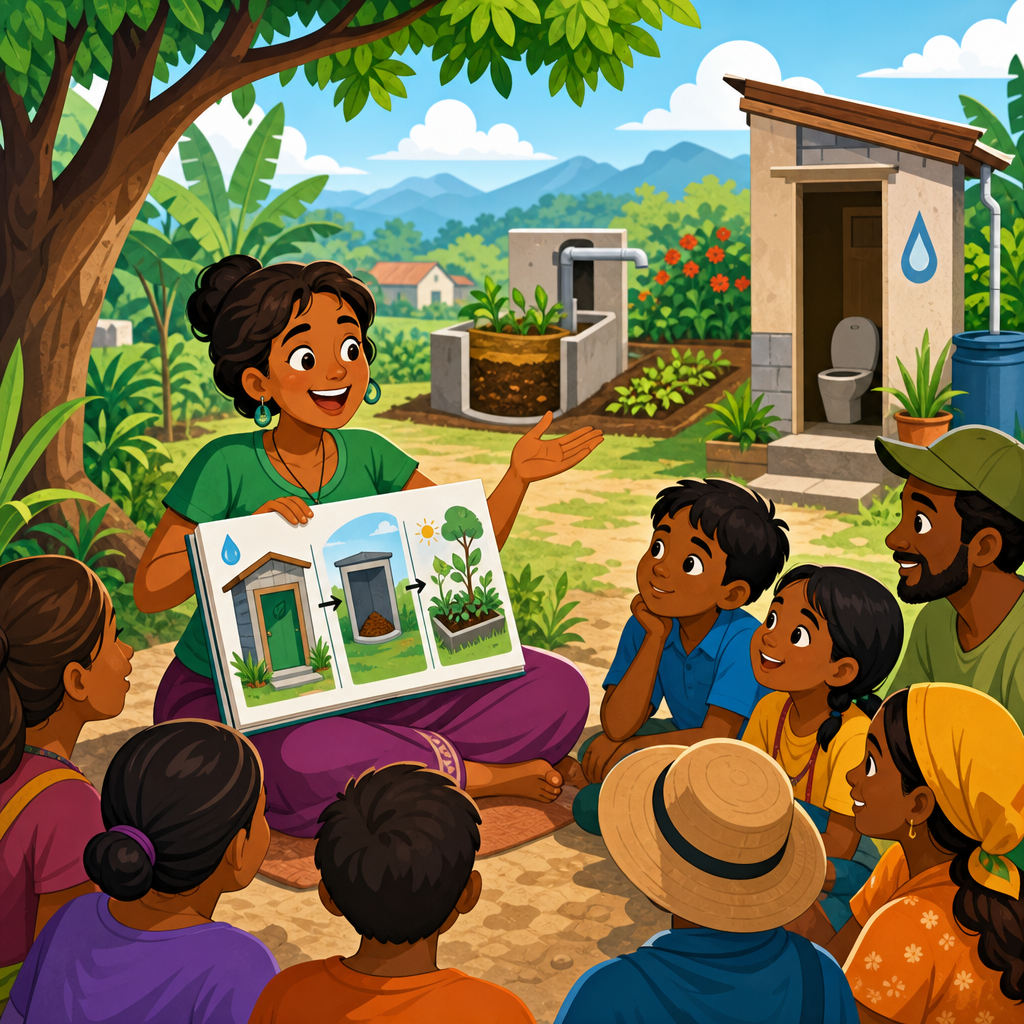
Community theatre and art for sanitation education turn public health messages into shared local experiences, making topics like handwashing, toilet use, waste disposal, and drainage maintenance easier to understand, remember, and discuss. In practice, this approach uses performances, murals, songs, storytelling, puppetry, posters, and participatory workshops to build community awareness around sanitation behaviors that reduce disease. I have seen technical sanitation campaigns fail when they relied only on leaflets or formal meetings, especially where literacy levels varied or residents distrusted outside messaging. By contrast, a market-square drama about blocked drains and child illness can hold attention, spark conversation, and motivate action within one afternoon. That is why this topic matters: sanitation is not only an infrastructure issue but also a communication and social norms issue. Toilets, safe fecal sludge management, menstrual hygiene support, household waste separation, and regular cleaning all depend on what people know, what they believe their neighbors do, and whether they feel capable of changing habits. Community engagement methods rooted in local culture help close the gap between information and behavior.
Building community awareness is the foundation of any sanitation education strategy because awareness shapes demand, participation, and accountability. When residents understand how diarrheal disease spreads through contaminated water, unwashed hands, open defecation, or poor solid waste handling, they are more likely to support practical solutions. Awareness also helps communities ask better questions: Who empties pits safely? Why are school toilets unusable? What happens to waste after collection? Which households are excluded? A strong hub article on this subject must connect creative outreach with measurable public health goals, community ownership, and long-term reinforcement. It should also recognize that awareness alone is not enough; messages must align with available services, affordable products, and trusted local leadership. The most effective sanitation education campaigns combine accurate health content, culturally resonant storytelling, repeated exposure, and clear calls to action. Community theatre and art do exactly that when they are designed with residents rather than delivered at them. This article explains how to build community awareness through creative sanitation education, which methods work best in different settings, how to plan campaigns, how to measure results, and how this hub links to broader community engagement and education efforts.
Why creative methods work for sanitation awareness
Creative methods work because they translate abstract health risks into visible, emotional, memorable stories. Many sanitation concepts are invisible: germs cannot be seen, contamination pathways are hard to trace, and unsafe disposal often happens away from the household. Theatre and art make those hidden links concrete. A skit can show a child playing near an open drain, a vendor handling food without washing hands, and a family member falling ill days later. A mural can illustrate the route from toilet to treatment site. A song can repeat the key moments when handwashing with soap matters: after toilet use, before food preparation, before eating, and after cleaning a child. These formats improve recall because they use rhythm, humor, conflict, and local language, not just instructions.
They also create social proof. In sanitation work, people often change behavior when they see peers discussing and practicing it. Community theatre gathers neighbors in one place and normalizes public conversation about subjects that may otherwise feel embarrassing, including open defecation, menstrual hygiene, toilet cleaning responsibilities, or child feces disposal. In one urban settlement campaign I supported, short street performances about drain blockage drew crowds that stayed for follow-up discussions with health volunteers and municipal staff. Residents who would never attend a formal workshop asked practical questions about waste collection schedules and reporting illegal dumping. The performance opened the door; the service conversation delivered the next step. That sequence is important. Awareness should lead to feasible action, not just temporary interest.
Another advantage is accessibility. Art reaches audiences across age groups and literacy levels. Children engage through puppets and games. Adolescents respond to spoken word, music, and peer-led performance. Adults often prefer examples tied to household costs, dignity, safety, and community pride. Older residents may connect with traditional storytelling or faith-linked messages about cleanliness and care for shared spaces. When these forms are localized, participation rises. Generic posters rarely compete with a play written around the neighborhood’s own blocked culvert, overflowing communal toilet, or missed waste collection point. Local relevance increases trust, and trust is central to building community awareness that lasts beyond a one-off event.
Core sanitation topics communities need to understand
Effective awareness campaigns cover the full sanitation chain, not only toilet use. Communities need clear, practical education on safe containment, transport, treatment, and disposal or reuse of waste, alongside hygiene and environmental cleanliness. The most common topics are hand hygiene, toilet maintenance, open defecation risks, child feces disposal, menstrual hygiene management, wastewater drainage, solid waste segregation, vector control, and safe water handling. If any link is ignored, health gains weaken. For example, a neighborhood can increase toilet use yet still face disease outbreaks if pits overflow, storm drains carry sewage, or household waste blocks water flow and creates mosquito breeding sites.
Messages should answer real questions directly. What is sanitation education trying to change? It aims to change knowledge, attitudes, perceived norms, and everyday practices. What should people do first? Usually the highest-impact actions are consistent toilet use, handwashing with soap at critical times, proper disposal of child feces, keeping water storage containers clean and covered, and preventing solid waste from entering drains. What about schools and public spaces? Awareness must include caretaking systems, not only user behavior. A school toilet without water, soap, privacy, or cleaning supplies will not stay usable because of awareness alone. Community awareness campaigns should therefore explain both household responsibilities and institutional duties.
It is also important to tailor content to context. Rural sanitation messaging may focus on ending open defecation, safe pit siting, and water source protection. Dense urban settlements may need emphasis on shared toilet management, scheduled desludging, drainage, and waste collection coordination. Flood-prone areas need education on protecting latrines, avoiding contaminated floodwater, and restoring hygiene services after storms. Communities with many tenants may require landlord engagement, while areas with schools and markets need facility-specific messaging. Building community awareness is strongest when sanitation education reflects the actual exposure pathways, service gaps, and governance structure people live with every day.
Planning a community theatre and art campaign
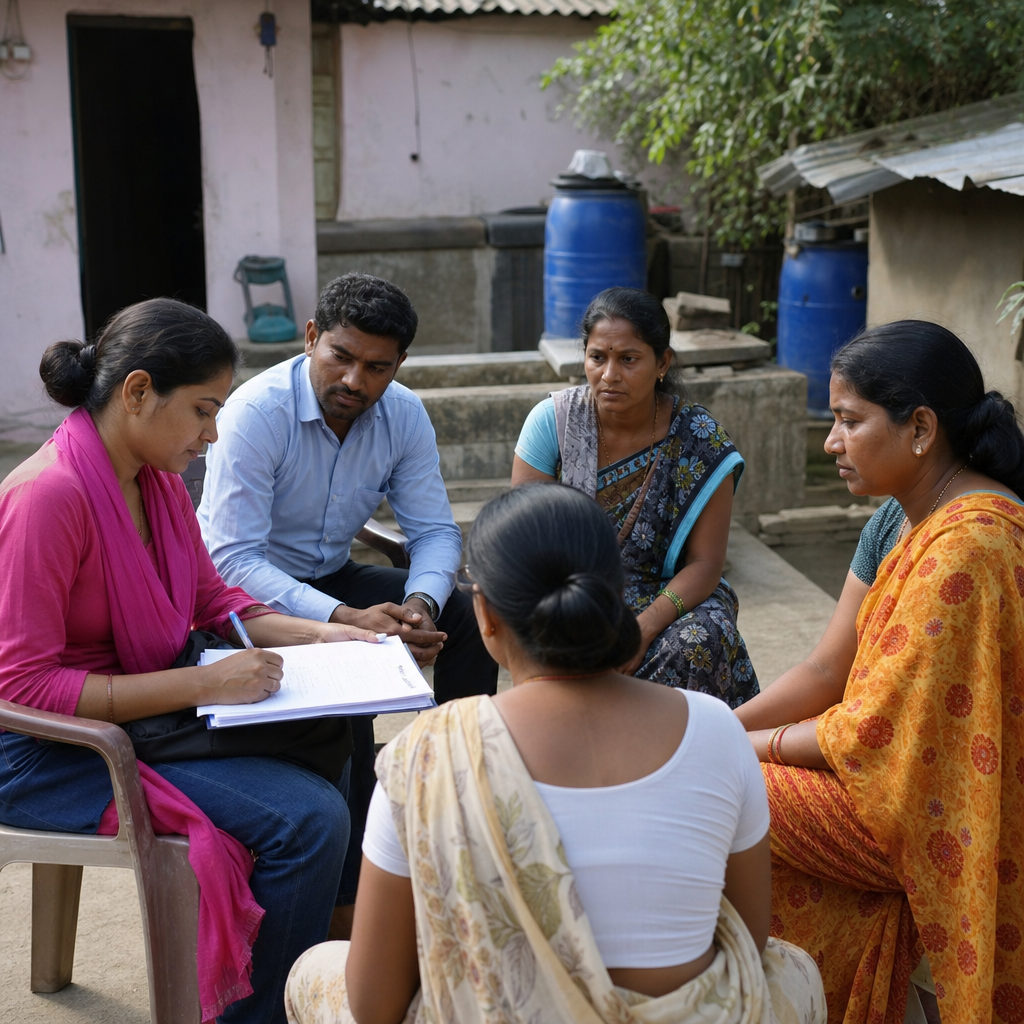
Good campaigns begin with listening. Before writing scripts or painting walls, gather information through transect walks, household interviews, focus groups, school visits, and discussions with sanitation workers, health staff, teachers, and local leaders. Map where people defecate, where waste accumulates, which toilets are functional, where flooding occurs, and which groups are underserved. I usually look for both technical barriers and communication barriers. Technical barriers include missing water connections, broken doors, lack of soap, or expensive pit emptying. Communication barriers include stigma, misinformation, fatalism, and confusion about who is responsible for what. Without this diagnosis, even well-produced performances can miss the real obstacle to behavior change.
Once priorities are clear, define the audience segments and desired actions. A single campaign may need different messages for caregivers, schoolchildren, market traders, landlords, youth groups, and municipal officers. Then choose the creative format that fits the setting. Street theatre works well in busy public areas. Murals and painted handwashing cues support constant reminders near toilets, schools, and water points. Music competitions can mobilize youth. Interactive exhibitions help in clinics or schools. The content should be brief, specific, and action oriented. Each piece needs one central message and one or two supporting behaviors, not ten competing instructions. Repetition across formats improves retention.
| Method | Best use | Strength | Limitation |
|---|---|---|---|
| Street theatre | Launching campaigns in markets, settlements, or village centers | High attention and strong emotional engagement | Short-lived unless followed by repeated activities |
| Murals | Schools, clinics, public toilets, and transport corridors | Continuous visibility and place-based reminders | Need maintenance and careful site permission |
| Puppetry | Primary schools and family events | Excellent for child-friendly sanitation messages | Less effective for technical service issues |
| Community song or radio drama | Wide geographic reach and repeated reinforcement | Good recall through repetition and local language | Limited visual demonstration of behaviors |
Partnerships make campaigns more credible. Work with community-based organizations, women’s groups, schools, youth clubs, health committees, religious leaders, waste picker associations, and local government sanitation units. Align messages with recognized guidance from bodies such as WHO and UNICEF, and with national sanitation policies where relevant. This protects accuracy and ensures residents are not encouraged to do something unrealistic or unsafe. For example, if a campaign urges regular pit emptying, it must also provide verified contacts for licensed operators or municipal service channels. Creative awareness is most effective when it points people toward real systems, real resources, and real accountability.
Design principles that build trust and participation
The most effective sanitation art is co-created, not imposed. Residents should help shape storylines, characters, language, and examples. Co-creation improves cultural fit and reduces the risk of shaming people for conditions they cannot control. In practice, that means testing scripts with community members before public performance, reviewing visual symbols for clarity, and asking whether the recommended actions are affordable and feasible. A handwashing mural beside a toilet without water will be dismissed. A drama that blames mothers while ignoring absent municipal collection will damage trust. Balanced messaging recognizes household agency while naming system responsibilities.
Respect matters, especially around sensitive issues. Menstrual hygiene, disability access, shared toilet etiquette, and child feces disposal can trigger embarrassment or exclusion if handled carelessly. Use plain language, avoid ridicule, and include underrepresented voices in both planning and performance. I have found that mixed-format sessions work best: a public performance to attract attention, followed by smaller facilitated discussions where women, people with disabilities, or sanitation workers can speak candidly. These sessions often surface barriers that broad events miss, such as the lack of lighting near toilets, unsafe routes at night, or the absence of disposal bins for menstrual materials.
Consistency is another design principle. Awareness rises through repeated exposure over time, ideally across multiple touchpoints. A single event may boost recall for a few days; sustained campaigns change norms. Reinforcement can come from school clubs, painted cues, local radio spots, household visits, public pledges, and follow-up performances tied to cleanup days or health weeks. The message architecture should remain consistent across all materials. If one channel says separate waste into organic and non-organic streams while another only says stop littering, the behavior request becomes diluted. Clear, repeated, realistic instructions outperform broad slogans every time.
Measuring whether awareness leads to action
Measurement should capture both learning and behavior. Start with simple baseline data: toilet usage patterns, handwashing station presence, soap availability, observed cleanliness, drain blockage points, school absenteeism linked to poor facilities, and reported diarrheal episodes if reliable health records exist. After campaign activities, track recall of key messages, intention to act, attendance, participation by demographic group, and uptake of specific practices. For community theatre, useful indicators include audience size, number of questions asked, referral follow-through, volunteer sign-ups, and repeat attendance. For murals, monitor whether people notice them, understand the message, and act differently near the site.
Do not rely only on self-reported behavior. People often say what they think organizers want to hear. Combine surveys with observation and service data. Are public toilets cleaner? Are more households installing handwashing stations? Has drain clearing improved before the rainy season? Are pit-emptying requests increasing through official channels instead of illegal dumping? In one program review, message recall was high, but actual handwashing improvement was modest because soap cost and intermittent water supply remained unresolved. That finding mattered. It showed the campaign was educationally effective but operationally incomplete. Awareness metrics should therefore be interpreted alongside infrastructure and service constraints.
Long-term evaluation also asks whether community awareness strengthens ownership. Are local groups continuing performances or cleanup events without external funding? Are schools integrating sanitation themes into assemblies or art projects? Are neighborhood leaders using murals and theatre during public meetings to explain waste rules or mobilize desludging days? Sustainable awareness is visible when creative tools become part of routine civic communication. That is the hub-level goal of building community awareness: not isolated events, but a local culture in which sanitation is discussable, understandable, and acted on collectively.
How this hub connects to wider community engagement and education
As a sub-pillar hub under community engagement and education, this page connects creative sanitation awareness to several related areas that deserve dedicated supporting articles. One cluster covers audience-specific engagement: children, adolescents, landlords, market traders, faith communities, and sanitation workers each need tailored communication. Another covers channels: school clubs, door-to-door outreach, radio, social media, murals, participatory mapping, and community scorecards. A third covers implementation topics such as behavior change planning, message testing, facilitator training, event logistics, safeguarding, inclusion, and monitoring. Linking these topics strengthens the overall sanitation education ecosystem because no single method reaches every person or solves every barrier.
Community theatre and art sit at the center of this hub because they bridge information, emotion, and action. They help residents recognize local sanitation problems, discuss them publicly, and connect them to practical solutions. They also create natural pathways to deeper engagement tools: household counseling after a performance, school sanitation clubs after a mural workshop, service directories distributed at events, or citizen feedback sessions with local government. If you are building community awareness, start with the issues residents already see and feel, use creative formats they trust, connect every message to a realistic action, and measure what changes. Done well, community theatre and art do more than educate. They help communities own sanitation improvement together, which is the condition most likely to sustain healthier behaviors over time. Use this hub as the starting point for a broader, better-coordinated community sanitation education strategy.
Frequently Asked Questions
1. How do community theatre and art improve sanitation education compared with standard public health campaigns?
Community theatre and art improve sanitation education by translating technical health information into familiar, memorable, and emotionally engaging experiences. Standard campaigns often rely on posters, lectures, or one-way messaging that explain what people should do without fully addressing how local habits, beliefs, language, humor, and social pressures influence behavior. In contrast, theatre, murals, songs, storytelling, puppetry, and participatory workshops invite people to see sanitation challenges reflected in their own daily lives. When a performance shows a family dealing with unsafe waste disposal, blocked drainage, or inconsistent handwashing, audiences can immediately recognize the problem, discuss it openly, and connect the message to practical action.
This approach also helps break down discomfort around sanitation topics. Many communities find it easier to talk about toilet use, menstrual hygiene, child feces disposal, wastewater, or open dumping when these issues are presented through characters, stories, and local cultural forms rather than through formal instruction alone. Art creates a shared social space where people can laugh, ask questions, challenge misinformation, and explore solutions without feeling judged. That makes the education process more participatory and less abstract.
Another major advantage is retention. People may forget a technical slogan, but they often remember a dramatic scene, a song chorus, a painted message on a neighborhood wall, or a puppet character that explains why handwashing with soap matters. Because the message is repeated through visuals, performance, and community discussion, it is more likely to stick. In many settings, community-based creative methods also build trust because the messengers are local performers, youth groups, teachers, artists, health volunteers, or residents themselves. That local ownership gives sanitation education greater credibility and helps turn awareness into lasting behavior change.
2. What sanitation topics can be taught effectively through community theatre and art?
Community theatre and art can be used to teach a wide range of sanitation topics, especially those that benefit from clear demonstrations, social discussion, and repeated reinforcement. Common subjects include proper handwashing with soap, consistent toilet use, safe disposal of child feces, household waste separation, prevention of open defecation, drainage maintenance, water storage hygiene, menstrual hygiene management, and keeping public spaces free of litter and stagnant wastewater. These methods are particularly useful for showing how poor sanitation contributes to diarrhea, cholera, typhoid, parasitic infections, and other preventable illnesses.
They are also effective for addressing the behaviors surrounding sanitation, not just the technical instructions. For example, a theatre performance can show why families delay building or repairing toilets, how children copy adult habits, or how neighborhood neglect of drains increases flooding and mosquito breeding. A mural can illustrate the journey of waste from home to street to water source, helping residents understand that unsafe disposal affects the whole community, not just one household. Songs and chants can reinforce simple routines such as washing hands after using the toilet and before preparing food. Storytelling and puppetry work especially well with children because they simplify the message while keeping attention high.
Importantly, creative sanitation education can also address barriers such as stigma, myths, cost concerns, disability access, gender roles, and community responsibility. A participatory workshop might ask residents to map areas with frequent dumping or overflowing drains and then brainstorm locally realistic solutions. In this way, art-based sanitation education does more than deliver instructions; it helps communities examine why unhealthy practices continue and what collective changes are needed to improve public health.
3. Why is local culture so important when using theatre and art for sanitation education?
Local culture is essential because sanitation behavior is shaped by more than knowledge alone. It is influenced by tradition, social norms, language, family dynamics, religious values, humor, taboos, gender expectations, and community leadership. If sanitation education ignores those realities, even well-funded campaigns can fail to connect. Community theatre and art are most effective when they are rooted in the audience’s own cultural references, communication styles, and everyday concerns. When people hear familiar expressions, see recognizable settings, and watch characters who behave like real members of their community, the message feels relevant rather than imposed.
Cultural relevance also improves trust. Audiences are more likely to listen when the message is delivered through respected local forms such as folk drama, community songs, oral storytelling, festival performances, youth dance, or neighborhood wall art. These formats signal that sanitation is not just an outside health agenda; it is a local issue that affects dignity, safety, children’s health, school attendance, and the cleanliness of shared spaces. This matters especially when discussing sensitive topics like toilet habits, waste handling, or menstrual hygiene, where outside messaging may be rejected if it feels insensitive or disconnected.
Using local culture does not mean simply decorating a campaign with traditional elements. It means designing the message in ways that align with local experience while still promoting evidence-based sanitation practices. That may involve translating technical terms into everyday language, using humor carefully, involving community leaders in script development, and ensuring that women, youth, people with disabilities, and marginalized groups are represented accurately. When culture is treated as a core part of the educational strategy, sanitation messages become easier to understand, easier to discuss, and much more likely to inspire action.
4. What makes a community theatre or art sanitation campaign successful?
A successful community theatre or art sanitation campaign combines strong public health content with genuine community participation. It is not enough to create a performance or mural with a general message about cleanliness. The campaign should begin with an understanding of local sanitation challenges, such as low toilet use, poor waste disposal, clogged drains, seasonal flooding, limited handwashing stations, or misconceptions about disease transmission. Effective campaigns identify the specific behaviors that need to change, the barriers people face, and the community groups that should be involved, including households, schools, vendors, youth clubs, local leaders, and health workers.
Success also depends on making the message practical and actionable. People need more than awareness; they need clear examples of what to do differently. A theatre piece should not just show the consequences of unsafe sanitation, but also model behaviors such as building and maintaining simple handwashing stations, keeping drains clear, using toilets consistently, disposing of waste in designated places, and organizing neighborhood clean-up efforts. Murals and posters should include direct visual cues that support everyday action. Participatory sessions should give residents space to ask questions, challenge myths, and develop realistic commitments.
Another key factor is follow-through. One performance may generate excitement, but sustained behavior change usually requires repetition and reinforcement. Successful campaigns connect creative activities with wider community systems such as school programs, local sanitation committees, health outreach, public announcements, and municipal services. They may also track results through attendance, community feedback, observed behavior changes, cleaner public spaces, improved toilet usage, or reduced dumping in problem areas. Most importantly, successful campaigns create a sense of shared ownership. When people see sanitation as a collective responsibility rather than a private or government-only issue, community theatre and art can become powerful drivers of long-term public health improvement.
5. How can communities start using theatre and art for sanitation education with limited resources?
Communities can begin using theatre and art for sanitation education without a large budget by focusing on local talent, simple materials, and clear public health goals. A strong starting point is to gather a small group of interested people such as teachers, youth leaders, health volunteers, artists, sanitation workers, parents, or members of existing community organizations. Together, they can identify the sanitation issues causing the most concern and choose a creative format that fits local skills and available spaces. A short drama in a schoolyard, a song performed at a market, a storytelling session during a community meeting, or a mural painted near a drainage hotspot can all be highly effective when the message is specific and relevant.
Low-cost campaigns work best when they rely on participation rather than expensive production. Scripts can be based on real local situations. Costumes and props can be borrowed or improvised. Posters can be hand-drawn. Murals can be painted with locally sourced materials if permitted. Puppetry can be made from cloth, paper, or recycled items. Workshops can invite residents to role-play sanitation problems and solutions. What matters most is not polish but clarity, credibility, and engagement. If the audience sees its own challenges reflected honestly, even a simple performance can have strong impact.
Communities should also look for partnerships. Schools, clinics, local government offices, religious institutions, women’s groups, and neighborhood associations may be willing to provide venues, volunteers, paint, sound equipment, or health information. Public health workers can help ensure that the educational content is accurate, while local artists can make it compelling and culturally appropriate. Starting small is often the smartest strategy. A pilot event in one neighborhood can generate lessons, build confidence, and attract support for future activities. Over time, even modest community-led efforts can create stronger awareness, more open discussion, and better sanitation habits across the wider area.