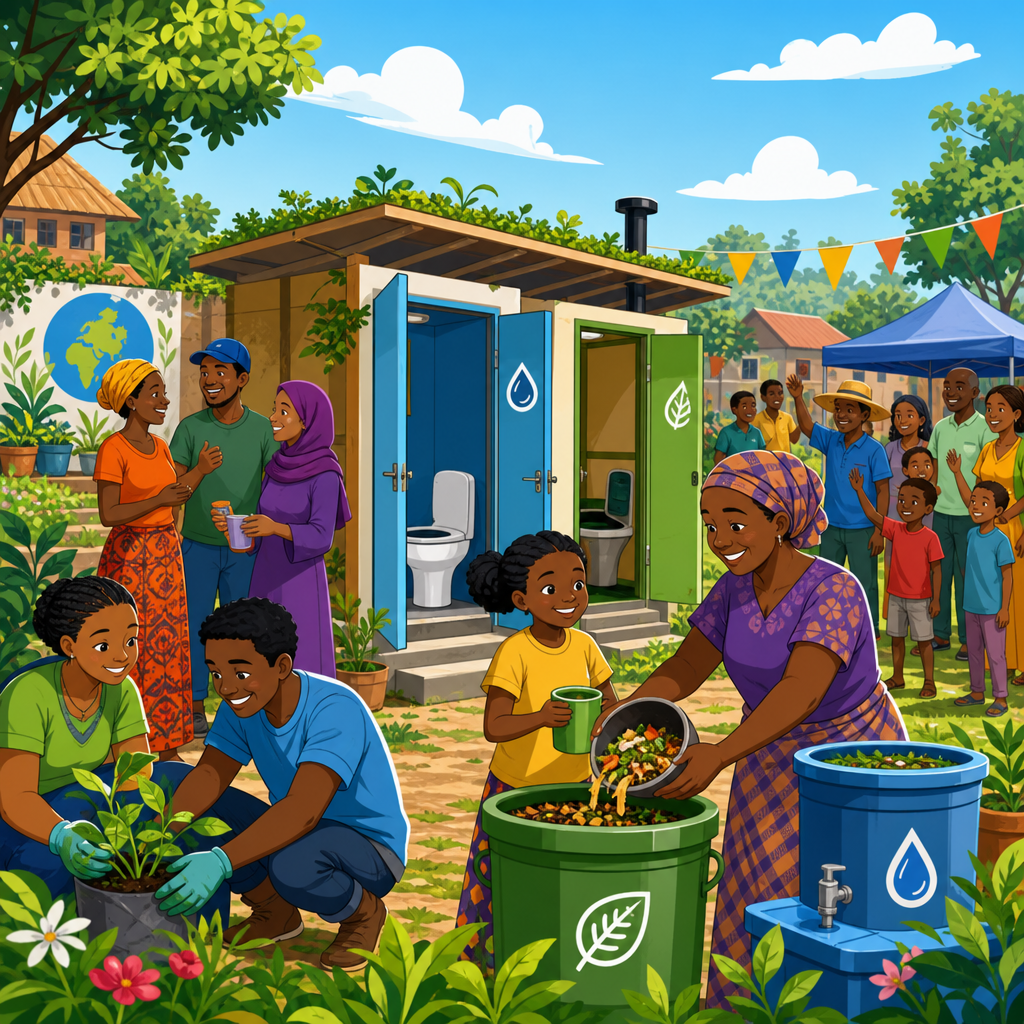
Innovative educational tools for EcoSan awareness help communities understand how ecological sanitation turns waste into resources, protects water, and supports public health. EcoSan, short for ecological sanitation, is an approach to managing human waste that treats nutrients and water as assets rather than disposal problems. In practice, that means using systems such as urine-diverting dry toilets, composting toilets, and safely managed reuse processes to recover nutrients, reduce contamination, and cut pressure on sewers and septic systems. For a community engagement and education strategy, this matters because technology adoption rarely fails on engineering alone; it fails when people do not trust the system, do not know how to use it, or do not see why it benefits their households.
When I have supported sanitation outreach projects, the pattern has been consistent: the most effective awareness campaigns translate technical concepts into daily realities. Residents want answers to practical questions. Will the toilet smell? Is it safe for children? What maintenance is required? Can composted material be used on crops? How much water will be saved? Educational tools work when they answer those questions clearly, repeatedly, and through formats suited to different audiences. A farmer may respond to crop-yield evidence, a school student to interactive demonstrations, a landlord to maintenance checklists, and a local official to cost and compliance data.
This hub article covers building community awareness for EcoSan comprehensively, with emphasis on the educational tools that move people from curiosity to informed participation. It defines the core communication challenge, explains which formats work best in neighborhoods, schools, and public campaigns, and shows how to measure whether awareness efforts are changing knowledge and behavior. As a sub-pillar within community engagement and education, it also frames the supporting articles that should branch from this page: school sanitation education, behavior change communication, participatory design, training for maintenance, and reuse safety messaging. Strong EcoSan awareness is not a poster campaign. It is a structured learning system that helps communities understand, accept, use, and sustain ecological sanitation over time.
Why community awareness determines EcoSan success
Community awareness determines whether EcoSan systems are used correctly, maintained consistently, and defended publicly when misconceptions arise. Ecological sanitation involves behaviors that may differ from flush toilet habits, including urine diversion, adding cover material, separating waste streams, or following storage intervals before reuse. If users receive only a construction handover and a manual, adoption usually weakens. By contrast, projects that invest in awareness before installation, during commissioning, and after the first months of use see better user satisfaction and lower rates of abandonment.
The reason is straightforward. Sanitation is intimate, social, and highly cultural. People evaluate toilets not only by function but by dignity, convenience, cleanliness, privacy, smell, and social status. In communities where flush systems are considered the benchmark of modernity, EcoSan can be wrongly perceived as a downgrade unless education addresses benefits in concrete terms. Those benefits are substantial: reduced water use, lower nutrient loss, resilience where sewers are unavailable, less groundwater pollution when systems are well designed, and opportunities for resource recovery. The World Health Organization sanitation safety planning approach and guidelines on safe reuse underscore that health protection depends on both infrastructure and informed user behavior.
Awareness work also creates space for dialogue about concerns that are legitimate. Poorly managed composting toilets can attract flies. Inadequate urine diversion can create odor. Unsafe reuse without treatment barriers is a health risk. Ignoring these tradeoffs damages trust. The better approach is to explain how design features, operating routines, and training reduce those risks. That honesty makes educational materials credible and gives local champions language they can use when neighbors ask hard questions.
Core messages every EcoSan awareness program should teach
An EcoSan awareness program should teach five core messages. First, ecological sanitation protects health when systems are used and maintained correctly. Second, it conserves water and can perform well where sewer connections are impractical or unreliable. Third, it recovers nutrients that would otherwise be wasted, supporting soil fertility and local agriculture. Fourth, safe reuse requires treatment, storage, and handling controls; resource recovery is never a shortcut around hygiene. Fifth, users have a direct role in system performance, so understanding daily operation matters as much as initial installation.
These messages need to be expressed in plain language. Instead of saying “pathogen die-off through alkaline treatment and desiccation,” a community educator might say, “The material must be stored long enough and kept under the right conditions so germs are reduced before any reuse.” Instead of leading with nutrient recovery theory, show the household impact: less dependence on water-intensive flushing, fewer pit-emptying problems in difficult soils, and a possible local fertilizer value where regulations and safety protocols allow reuse. Good messaging links technical mechanisms to household decisions.
Audience segmentation is essential. Homeowners need guidance on cost, maintenance, and reliability. Schools need age-appropriate content, handwashing integration, and teacher support. Farmers need evidence on nutrient content, crop suitability, and local rules. Municipal leaders need data on service coverage, lifecycle cost, environmental protection, and operations planning. One message does not fit all. A hub page like this should therefore connect readers to specialized guidance for each group while maintaining a common foundation of safety, usability, and environmental value.
Educational tools that build understanding and trust
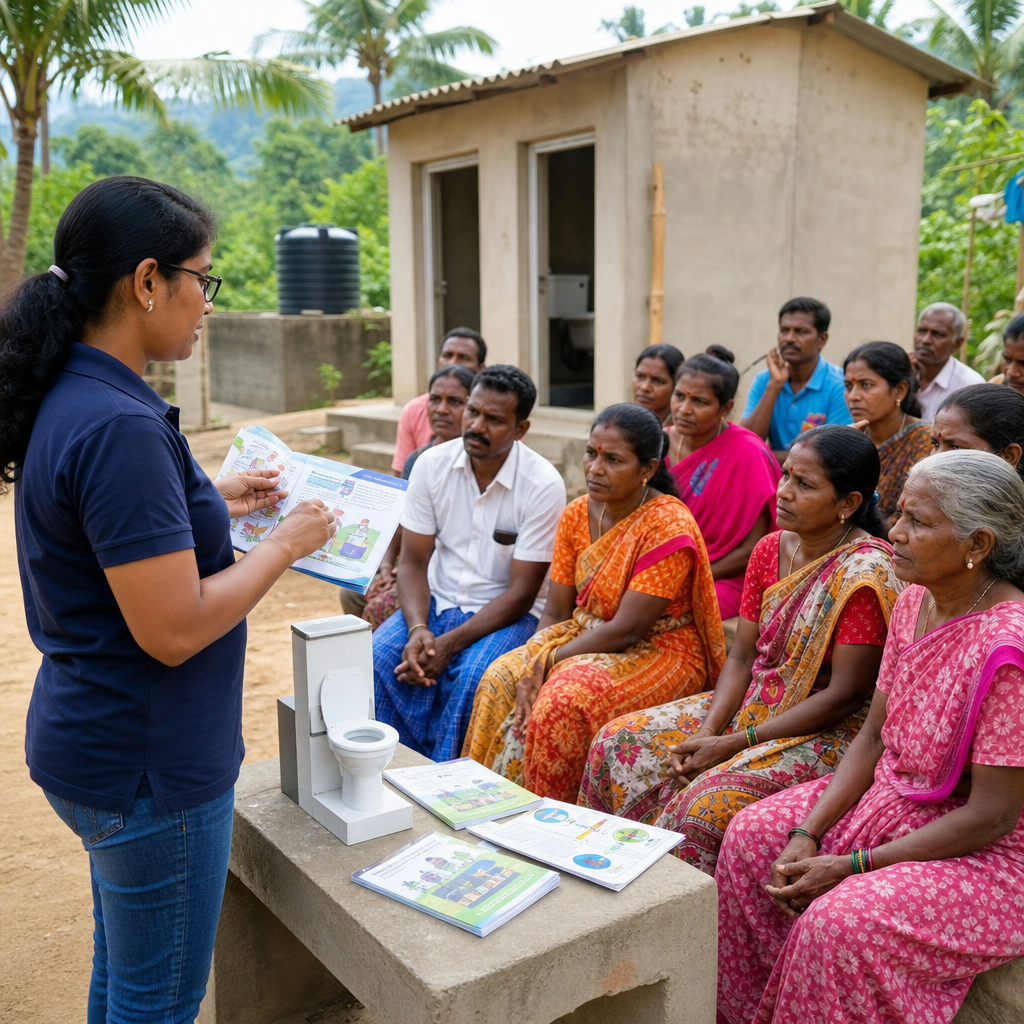
The strongest EcoSan awareness programs combine live demonstration, print materials, digital content, and peer learning. Demonstration toilets are especially powerful because they reduce uncertainty. When residents can see a clean, odor-controlled unit, inspect the urine-diversion pan, and ask maintenance questions face to face, skepticism drops quickly. In one peri-urban outreach effort I observed, visits to a functioning demonstration site generated more meaningful questions than weeks of leaflet distribution because people could connect the idea to an actual household routine.
Printed tools still matter. Illustrated user guides, wall charts, maintenance calendars, and pictorial troubleshooting sheets are useful where internet access is inconsistent or literacy levels vary. The best versions use local language, realistic images, and exact maintenance intervals rather than vague advice. For example, a visual checklist can show where to add dry cover material, how to keep urine channels clear, and when to contact a service provider. These tools become even more effective when every household receives the same branded materials during installation and follow-up visits.
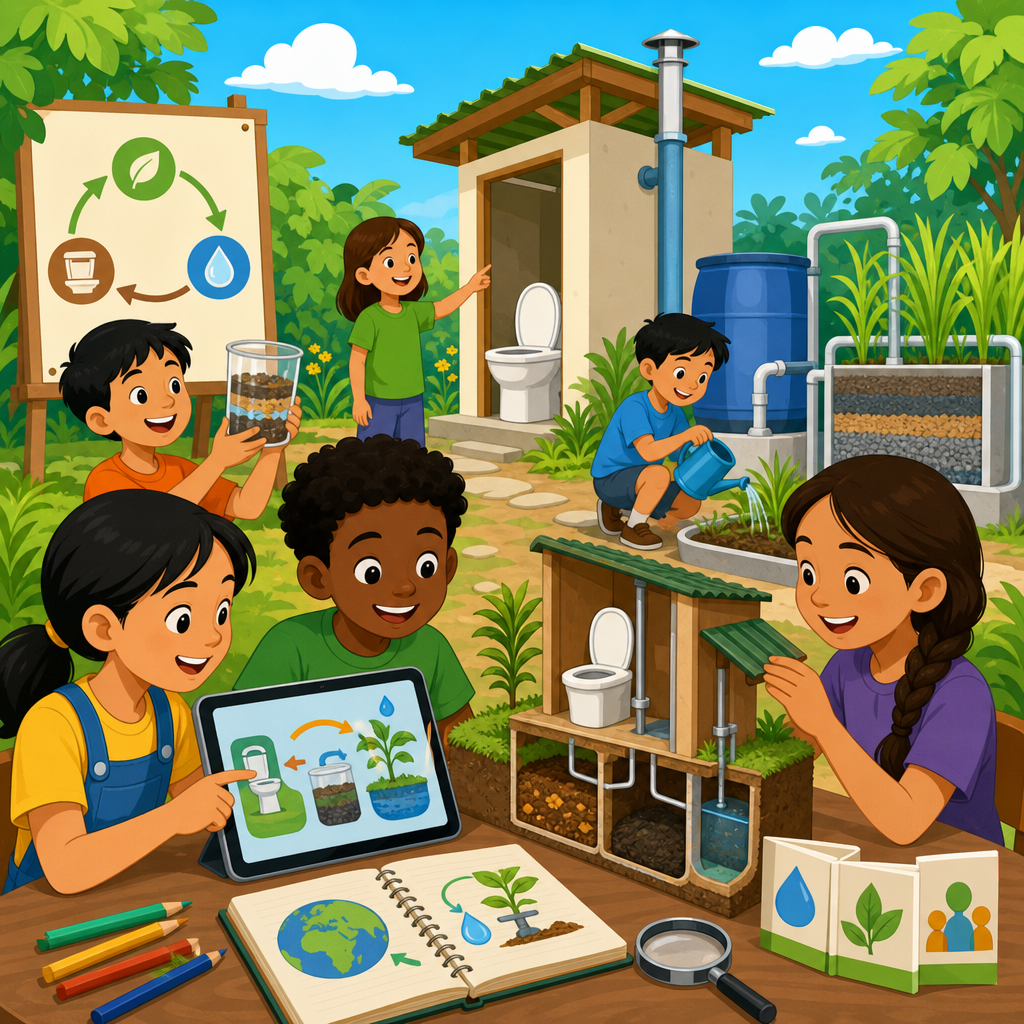
Digital tools broaden reach. Short videos, WhatsApp explainers, interactive quizzes, and voice-note reminders work well for reinforcing key behaviors after installation. Schools can use tablet-based games to teach nutrient cycles and water conservation. Community radio remains highly effective in many regions because it reaches people repeatedly and supports call-in formats where myths can be addressed publicly. Street theatre, market-day exhibitions, and religious or civic gatherings also work because they place EcoSan discussion inside trusted social spaces rather than limiting it to technical meetings.
| Educational tool | Best use case | Main advantage | Key limitation |
|---|---|---|---|
| Demonstration toilet | Pre-adoption community outreach | Builds trust through direct experience | Requires site upkeep and facilitation |
| Illustrated user guide | Household onboarding | Gives consistent operating instructions | Less effective without follow-up explanation |
| School activity kit | Student and teacher engagement | Creates long-term awareness through children | Needs curriculum alignment |
| Radio and loudspeaker spots | Mass awareness campaigns | Low-cost reach across wide areas | Limited depth without other tools |
| WhatsApp or SMS reminders | Post-installation behavior support | Reinforces routines over time | Depends on phone access and message design |
Using schools, community groups, and local leaders as awareness channels
Schools are one of the most effective channels for EcoSan awareness because they connect infrastructure, curriculum, and family influence. A well-run school program does more than explain toilets. It links sanitation to science, health, agriculture, and environmental stewardship. Students can learn nutrient cycles through simple experiments, compare water use across sanitation types, and practice maintenance observations in supervised settings. Children often bring these lessons home, prompting household discussion that formal public meetings never reach.
Community groups are equally important. Women’s savings groups, farmer cooperatives, youth clubs, tenant associations, and neighborhood committees already have trust networks and meeting routines. Integrating EcoSan awareness into those structures lowers outreach costs and increases participation. In several community campaigns, farmer groups became effective advocates only after field demonstrations showed how sanitized urine or composted outputs fit into broader soil fertility management rather than being promoted as stand-alone miracle inputs. People believe what they can compare in context.
Local leaders can either accelerate adoption or stall it. Traditional leaders, elected representatives, health workers, teachers, and religious figures help normalize sanitation practices when they publicly endorse them. Their role should not be symbolic only. They need briefing materials, site visits, and opportunities to ask technical questions privately before they speak publicly. I have seen projects struggle because leaders were invited to launch events but never trained on maintenance realities. Once minor odor issues emerged, they had no credible response. Effective programs prepare leaders to discuss both benefits and operating requirements accurately.
Designing materials that answer common concerns directly
People adopt EcoSan more readily when educational materials answer objections directly rather than circling around them. The most common concerns are smell, insects, cost, safety, convenience, and social acceptance. Every awareness toolkit should include short, plain-language responses to each. For smell, explain that properly functioning urine diversion, ventilation, dryness, and regular cleaning control odor. For insects, show how lids, dry cover material, screened vents, and timely chamber management reduce attraction. For cost, distinguish upfront construction cost from lifecycle cost, including water savings, pit-emptying avoidance, and longer-term maintenance.
Safety requires the clearest treatment. Communities should be told that untreated excreta can transmit disease and that reuse is only appropriate when established treatment and handling barriers are followed. This means explaining storage times, protective equipment, handwashing, restricted crop use where relevant, and compliance with local regulations. The educational goal is not to frighten people, but to replace vague assumptions with specific controls. A household that understands why rules exist is far more likely to follow them than one that receives only warnings.
Convenience and dignity also deserve attention. Users need clear instructions on how children, older adults, guests, and people with disabilities can use the system comfortably. In practice, that may mean child-friendly seats, handrails, better lighting, menstrual hygiene provisions, and clear cleaning routines. Awareness materials should show inclusive design features in photographs and diagrams. Communities are quick to reject sanitation options that appear to work only for ideal users. Demonstrating usability for varied households is one of the most persuasive forms of education available.
Measuring whether awareness efforts are working
EcoSan awareness should be measured with the same discipline used for infrastructure performance. Counting attendees at a workshop is not enough. Better indicators include knowledge retention, correct use rates, maintenance adherence, odor complaints, user satisfaction, and willingness to recommend the system to others. A simple baseline and follow-up survey can reveal whether people understand safe handling rules, know whom to call for repairs, and feel confident using the system daily. Spot checks by trained field staff often uncover gaps that self-reported surveys miss.
Useful evaluation methods include pre- and post-training quizzes, household observation checklists, school lesson assessments, call-log analysis, and focus groups segmented by age and gender. If a campaign uses digital tools, track video completion, message open rates, and repeat questions in chat groups. For public campaigns, monitor whether myths decline over time. For example, if early meetings are dominated by concerns that EcoSan inevitably smells, but later sessions shift toward maintenance scheduling and reuse options, awareness is maturing from abstract doubt to practical engagement.
This hub page should guide readers toward a continuous improvement mindset. Awareness materials are not fixed assets; they need updating as projects scale, user feedback accumulates, and regulations evolve. If households repeatedly misunderstand urine diversion, redesign the graphic. If school teachers skip the sanitation module because it is too technical, simplify the lesson plan. If community radio brings strong reach but weak comprehension, pair it with in-person demonstrations. The best awareness strategy is iterative, evidence-based, and rooted in how people actually learn in the places where EcoSan is being introduced.
Innovative educational tools for EcoSan awareness are most effective when they make ecological sanitation visible, practical, and trustworthy. Communities need more than slogans about sustainability. They need demonstration sites, clear user guides, school programs, leader engagement, digital reinforcement, and honest explanations of both benefits and responsibilities. Building community awareness means meeting people where they are, answering the questions they already have, and showing how EcoSan can support health, water security, and resource recovery when it is used correctly.
As the hub for building community awareness under community engagement and education, this page establishes the foundation for deeper guidance on behavior change communication, school outreach, participatory planning, maintenance training, and safe reuse messaging. The central lesson is simple: awareness is not a side activity added after construction. It is the operating environment that determines whether EcoSan systems gain acceptance and deliver results. If you are planning or improving an EcoSan initiative, start by auditing your current educational tools, identify the questions your community still cannot answer, and build your next outreach phase around those real information gaps.
Frequently Asked Questions
1. What is EcoSan, and why do educational tools matter for building awareness?
EcoSan, or ecological sanitation, is an approach to sanitation that views human waste not simply as something to discard, but as a potential resource that can be safely managed, treated, and reused. Instead of relying only on conventional systems that flush waste away, EcoSan emphasizes nutrient recovery, water protection, reduced contamination, and stronger links between sanitation, agriculture, and public health. Common examples include urine-diverting dry toilets, composting toilets, and treatment methods that allow nutrients and organic matter to be returned to the soil under safe conditions.
Educational tools are essential because EcoSan introduces ideas that may be unfamiliar to many households, schools, planners, and community leaders. People often need clear explanations of how the systems work, why source separation matters, what safe reuse means, and how EcoSan can protect groundwater and reduce disease risks. Innovative learning tools make these concepts easier to understand by turning technical information into practical, visual, and culturally relevant lessons. When communities can see how waste becomes a resource, they are more likely to support behavior change, proper operation, and long-term adoption.
Effective awareness tools also help address common concerns, including odor, hygiene, maintenance, cost, and social acceptance. By combining science-based information with relatable examples, educational programs can build trust and improve decision-making. In that sense, EcoSan awareness is not just about teaching sanitation technology; it is about helping people understand a broader system that connects health, water security, farming, and environmental stewardship.
2. What types of innovative educational tools are most effective for teaching EcoSan concepts?
A wide range of educational tools can be effective, especially when they are adapted to local literacy levels, language preferences, and sanitation needs. Visual tools are often among the strongest options. Illustrated posters, flip charts, infographics, and step-by-step diagrams can explain how urine-diverting toilets separate waste streams, how composting works, and why treatment periods are necessary before reuse. These tools are especially helpful in community meetings, schools, and health outreach settings because they simplify complex information without oversimplifying the science.
Interactive tools are also highly effective. Demonstration models, hands-on workshops, school sanitation clubs, and community pilot sites allow people to observe EcoSan systems in action. When learners can physically inspect a toilet design, ask questions about maintenance, or compare treated compost with untreated waste, the learning becomes far more memorable. Role-playing activities, games, and problem-solving exercises can also help participants understand daily use, household responsibilities, and safe handling practices.
Digital tools have become increasingly valuable as well. Short videos, animated explainers, mobile learning modules, WhatsApp information campaigns, and community radio paired with digital storytelling can expand access to EcoSan education. These tools are particularly useful for reinforcing messages over time rather than relying on a single training session. In many cases, the most effective strategy is a blended one: combine printed materials, real-world demonstrations, and digital communication so audiences receive practical, repeated, and easy-to-understand guidance.
The best tools do more than provide facts. They answer real concerns, reflect local cultural norms, and show the direct benefits of EcoSan, such as safer sanitation, lower water use, improved soil fertility, and reduced environmental pollution. Educational tools work best when they help people move from awareness to confidence and then from confidence to action.
3. How do educational tools help communities understand the health and environmental benefits of EcoSan?
Educational tools play a major role in making the health and environmental value of EcoSan visible. Many sanitation risks are not immediately obvious. People may not see how poorly managed waste can contaminate soil, surface water, groundwater, or food systems, and they may not realize how quickly pathogens can spread in areas with inadequate sanitation. Good educational materials bridge that gap by showing the pathways of contamination and explaining how EcoSan interrupts them through containment, separation, treatment, and safe reuse.
For example, diagrams and demonstrations can show how urine-diverting systems reduce moisture in fecal matter, making treatment and handling more manageable. Training materials can explain why proper storage times, composting conditions, and protective practices are critical for reducing pathogens. This helps communities understand that EcoSan is not simply about reuse; it is about safe reuse based on hygiene standards and risk reduction. When public health messaging is integrated into sanitation education, people are more likely to follow correct procedures and avoid shortcuts that could undermine safety.
On the environmental side, educational tools can clearly explain how EcoSan reduces pressure on water resources by minimizing flushing and lowering wastewater volumes. They can also show how recovering nutrients such as nitrogen and phosphorus supports soil health and decreases dependence on synthetic fertilizers. This is especially valuable in farming communities, where the connection between sanitation and agriculture can become a practical, locally relevant benefit rather than an abstract concept.
When communities understand these links, EcoSan becomes easier to see as a protective and regenerative system. Instead of viewing sanitation only as waste removal, people begin to recognize it as part of a larger cycle involving water conservation, pollution prevention, and healthier living conditions. That shift in understanding is exactly what effective educational tools are designed to support.
4. What should be included in an EcoSan awareness program to make it practical and trustworthy?
An effective EcoSan awareness program should include both technical education and community-centered communication. At a minimum, it should explain what EcoSan is, how specific systems function, what users are expected to do, and how safety is maintained at every stage. This means covering topics such as toilet design, source separation, cleaning routines, storage and treatment timelines, pathogen risk reduction, protective equipment, child-friendly use, and safe end-use practices. The more practical and specific the instruction, the more confidence people will have in using the system correctly.
Trustworthiness also depends on transparency. Communities should be given clear information about benefits, limitations, maintenance needs, and costs. Awareness programs should not present EcoSan as a one-size-fits-all solution. Instead, they should explain where it works well, what conditions support success, and what management responsibilities come with it. Including health workers, sanitation specialists, local leaders, teachers, and experienced users can strengthen credibility and help answer concerns from multiple perspectives.
Demonstration and feedback are equally important. People are much more likely to trust EcoSan when they can visit a functioning site, hear testimonies from users, and ask practical questions about odors, privacy, upkeep, and agricultural reuse. Programs should also include follow-up support, because awareness alone is rarely enough. Refresher sessions, printed instructions, troubleshooting guidance, and community monitoring can help ensure that learning continues after installation or training.
Finally, a practical EcoSan awareness program should be culturally sensitive and inclusive. Messaging should be tailored for households, schools, landlords, farmers, women, men, and youth, recognizing that each group may interact with sanitation differently. When education is respectful, evidence-based, and closely tied to local realities, it becomes much more effective at building long-term trust and responsible use.
5. How can schools and community organizations use innovative tools to promote long-term EcoSan adoption?
Schools and community organizations are especially well positioned to turn EcoSan awareness into lasting change because they can reinforce learning over time and connect sanitation messages to everyday habits. In schools, EcoSan can be introduced through science lessons, health education, environmental clubs, school gardens, and practical demonstrations. Students can learn how nutrients cycle through ecosystems, how sanitation affects disease prevention, and how treated organic matter can support soil improvement. When children understand these ideas early, they often carry the knowledge home and influence household attitudes.
Community organizations can build on this by organizing workshops, demonstration days, household training visits, and peer learning groups. Interactive tools such as model toilets, illustrated maintenance guides, field demonstrations, and local-language videos can make EcoSan easier to understand across different age groups and literacy levels. Community radio, local theater, and storytelling can also be powerful in places where formal printed materials are less effective. These approaches help normalize EcoSan by making it visible, discussable, and relevant to local priorities such as water scarcity, farming productivity, and neighborhood cleanliness.
Long-term adoption depends on consistency and support. One-time awareness campaigns may spark interest, but sustained behavior change usually requires repeated engagement. Schools can include regular sanitation activities and teacher training, while community groups can create user networks where people share experiences, solve maintenance issues, and exchange practical tips. Recognition programs, local champions, and community-led monitoring can further strengthen ownership and accountability.
Most importantly, innovative educational tools should help people feel capable, not overwhelmed. When schools and organizations present EcoSan as understandable, useful, and manageable, they reduce resistance and encourage confidence. Over time, this creates the social acceptance and practical knowledge needed for EcoSan systems to be used safely, maintained properly, and valued as part of a healthier and more sustainable community.