Sanitation clubs give communities a practical way to engage young people in ecological sanitation, turning abstract lessons about waste, health, and sustainability into visible daily action. In this context, ecological sanitation, often shortened to EcoSan, means sanitation systems and behaviors that safely contain human waste, reduce contamination, and recover nutrients or water wherever possible. A sanitation club is usually a school-based or community-based group that organizes peer education, demonstrations, clean-up campaigns, handwashing promotion, toilet maintenance, and local advocacy. I have worked with youth groups that started with a simple school hygiene roster and grew into trusted community messengers, influencing parents, local leaders, and even small businesses. That progression matters because building community awareness is rarely achieved through posters alone. It happens when people see neighbors adopting better practices, asking informed questions, and linking sanitation to dignity, safety, food production, and environmental protection.
This hub article explains how sanitation clubs build community awareness, why youth participation is effective, and how EcoSan activities can be structured for lasting results. It also serves as a gateway to related work under community engagement and education, including school outreach, behavior change communication, parent engagement, demonstration sites, and local monitoring. Sanitation affects public health, school attendance, groundwater quality, and household economics. Poorly managed waste spreads diarrheal disease, intestinal parasites, and environmental contamination, while poorly maintained toilets discourage use, especially for girls and children with disabilities. By contrast, youth-led EcoSan activities can normalize safe toilet use, improve hand hygiene, support menstrual health conversations, and create local understanding of composting, urine diversion, sludge safety, and resource recovery. When a community understands not just what to do but why it works, awareness becomes ownership, and ownership is what keeps sanitation systems functioning after projects end.
Why sanitation clubs are effective for building community awareness
Sanitation clubs work because they combine peer influence, routine practice, and public visibility. Young people are often more open to new ideas than adults, and they carry those ideas home quickly. In schools, clubs can integrate sanitation messages into assemblies, science lessons, school gardens, drama, sports events, and parent meetings. In neighborhoods, they can support household visits, clean-up days, and market campaigns. From experience, the strongest clubs do not act like one-off volunteer teams; they function like micro-institutions with roles, calendars, and measurable responsibilities.
Community awareness grows faster when messages are attached to concrete activities. For example, a club that maps school handwashing stations, checks soap availability, and reports repairs creates a visible service everyone understands. A club that demonstrates how a urine-diverting dry toilet works can answer common concerns about smell, flies, and maintenance in real time. This direct demonstration is especially important for EcoSan, because many families are unfamiliar with concepts such as source separation, pathogen die-off periods, or compost use restrictions. Awareness improves when youth explain these ideas in plain language and connect them to local needs such as fertilizer costs, water scarcity, or seasonal flooding.
Another reason sanitation clubs succeed is social proof. People are more likely to change behavior when they see respected students, teachers, religious leaders, and parents supporting the same standard. Clubs can reinforce this through visible norms: clean toilet scoreboards, handwashing pledges, debate competitions, and public recognition for model households. These methods align with established behavior change principles used by programs in school WASH, community-led sanitation, and public health communication. They move sanitation from a private embarrassment to a shared community responsibility.
Core EcoSan activities youth clubs can lead
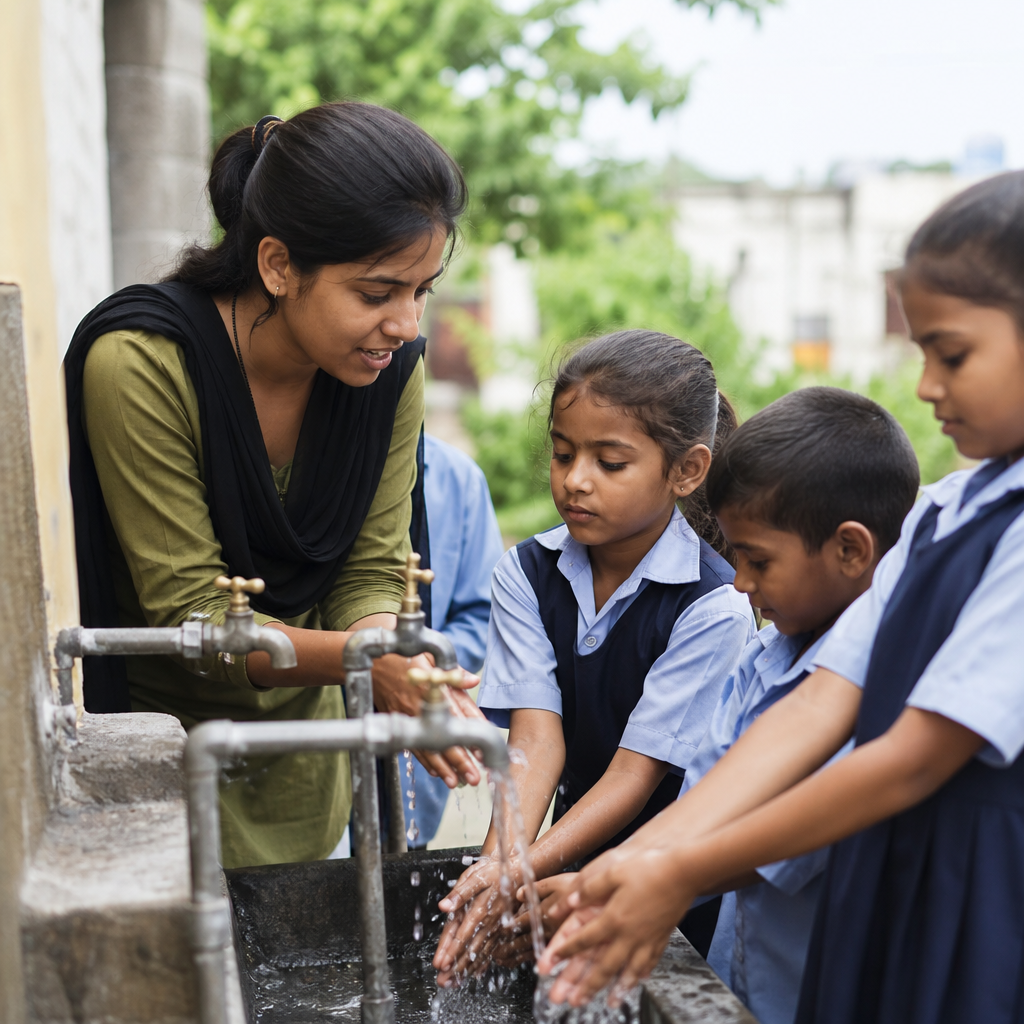
The most effective sanitation clubs mix education with operations. Educational work includes peer sessions on fecal-oral transmission, handwashing at critical times, safe water storage, menstrual health, and the purpose of EcoSan technologies. Operational work includes cleaning schedules, monitoring toilet usability, refilling ash or cover material in dry systems, reporting leaks, and maintaining gardens linked to compost or treated urine use where regulations permit. When clubs do both, they build credibility. People trust messengers who also help solve practical problems.
Typical youth-led EcoSan activities include toilet inspections, hygiene campaigns, drama performances, mural painting, school garden demonstrations, and household awareness visits. In one program I supported, club members used a simple red, yellow, green checklist for privacy, cleanliness, water, soap, lighting, and accessibility. That checklist reduced vague complaints and gave school management clear maintenance priorities. Another group created a demonstration bed comparing crops grown with standard compost and crops grown with treated ecological sanitation compost under supervision. The visual result sparked informed discussions about safety protocols, nutrient recovery, and what treatment steps must never be skipped.
Awareness is strongest when every activity answers a specific community question. How do dry toilets avoid odor? Why must urine and feces be handled differently? What personal protective equipment is needed? Who empties the vaults, and how often? What treatment period makes reuse safer? Clubs should prepare concise answers, then repeat them across events, noticeboards, and home visits. Repetition matters because sanitation behavior changes slowly, and people usually need to hear the same principle in several settings before acting on it.
How to structure a sanitation club for long-term impact
A durable sanitation club needs governance, adult support, and clear links to community institutions. Start with a constitution or terms of reference that defines membership, leadership roles, meeting frequency, safeguarding rules, and annual objectives. Include representation by age, gender, and disability status so the club reflects the whole user community. Assign practical roles such as hygiene monitor, toilet maintenance liaison, garden coordinator, communications lead, and data recorder. Clubs fail when responsibility is vague and success depends on one charismatic student.
Teacher patrons, community health workers, and local artisans are valuable mentors because EcoSan combines behavior change with technical management. Teachers can integrate club work into science and civic education. Health workers can explain disease transmission and safe handling standards. Masons or sanitation entrepreneurs can show how ventilation, vault sizing, slope, drainage, and urine diversion components affect performance. This is where awareness becomes literacy: young people learn not just slogans, but how systems function and why some fail.
Set a simple annual plan with monthly actions, seasonal campaigns, and measurable indicators. Indicators might include percentage of functional toilets, soap availability rate, attendance at parent sessions, number of household outreach visits, or school garden yields from approved soil amendments. Publicly tracking these indicators reinforces accountability and creates internal linking opportunities across the broader community engagement topic, from monitoring tools to parent mobilization and school sanitation management. Strong hub content should help readers see these connections, and sanitation clubs are often the practical thread tying them together.
Activities that build community awareness beyond the school gate
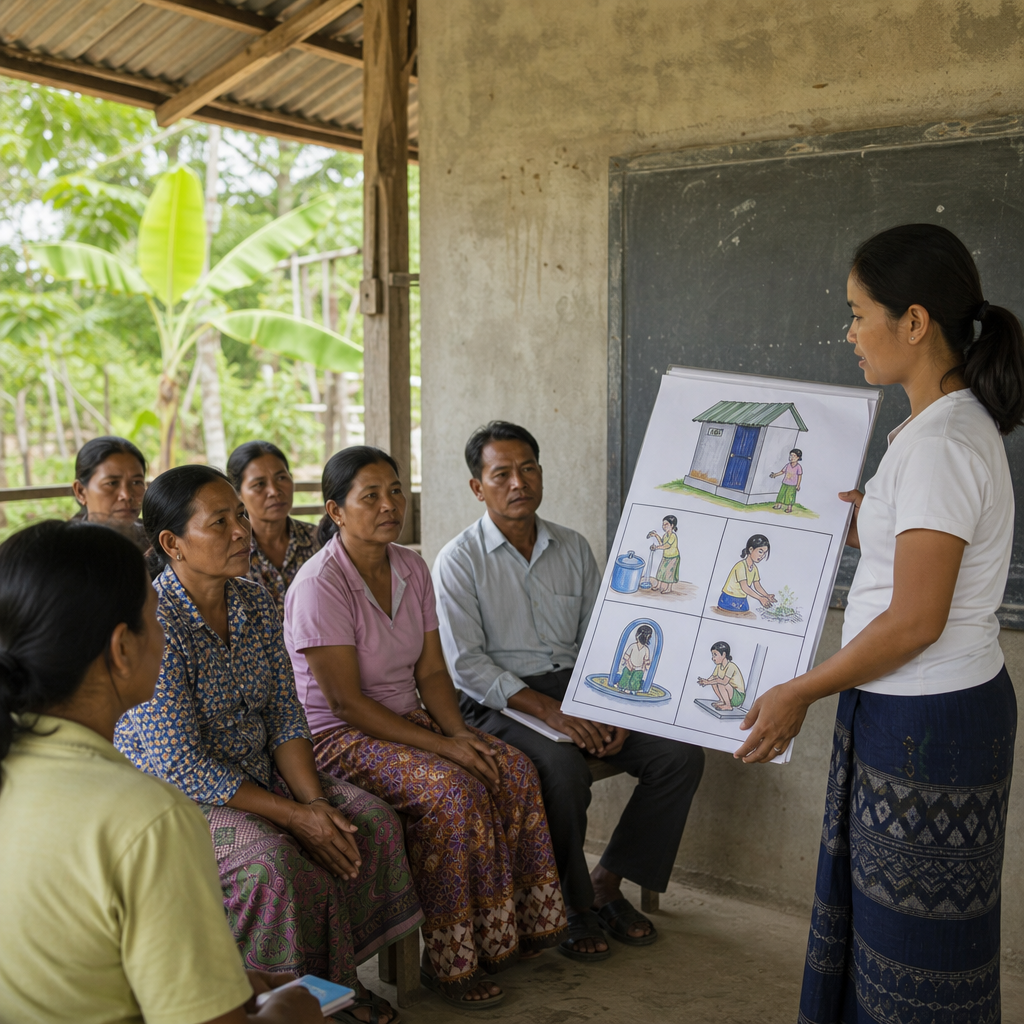
School-based clubs have the greatest impact when they extend outward intentionally. Parents and neighbors need to see sanitation not as a school compliance issue but as a community wellbeing issue. Effective outreach starts with familiar entry points: parent-teacher meetings, market days, worship gatherings, youth sports, and village clean-up events. Club members can use these moments to demonstrate tippy taps, explain toilet cleaning routines, or show how cover material is used in dry systems to reduce odor and moisture. These activities work because they are specific, low cost, and easy to copy at home.
Household visits are powerful when they are respectful and structured. Youth should never be sent to shame families. Instead, they can use a short observation form and a positive script: ask what type of toilet is used, whether handwashing materials are available, what barriers the family faces, and what support would help. In several communities, this approach surfaced practical constraints that awareness campaigns had missed, such as lack of container lids, broken doors, inaccessible latrine paths for older adults, or uncertainty about pit emptying options. Awareness improved once the conversation shifted from blame to problem solving.
Demonstration sites are another high-value strategy. A well-maintained EcoSan toilet at a school, clinic, or community center can answer skepticism better than any brochure. Visitors can inspect ventilation, cleanliness, privacy features, menstrual waste arrangements, and nearby handwashing facilities. If resource recovery is part of the model, demonstration gardens should include clear safety messaging: treatment timelines, crop restrictions where applicable, storage protocols, and personal protection during handling. Community trust rises when demonstrations are transparent about both benefits and limits.
Message design: what youth should teach, and how
Sanitation education fails when it is technically correct but socially tone-deaf. Youth clubs need messages that are accurate, brief, and adapted to local beliefs, languages, and concerns. Start with the basics every audience asks: what EcoSan is, how it protects health, what users must do daily, what maintenance is required, and what happens to waste after collection or storage. Then tailor by audience. Parents may care most about child illness, smell, and maintenance labor. Farmers may focus on nutrient recovery. Adolescent girls may prioritize privacy, safety, and menstrual hygiene management. Local leaders may want evidence of cost, durability, and public acceptance.
Good message design uses plain words, not engineering jargon. Say “separating urine from feces reduces moisture and smell” before introducing terms like urine diversion. Explain pathogen reduction using time, dryness, heat, and safe storage rather than abstract microbiology alone. Use stories and local examples. If a repaired school toilet increased use because girls felt safer, say so. If a garden plot performed better after properly treated inputs were applied according to guidance, document the result carefully and share it responsibly.
| Audience | Main concern | Best message angle | Effective activity |
|---|---|---|---|
| Parents | Child health and cost | Clean toilets and handwashing reduce illness and missed school days | Parent meeting with maintenance checklist |
| Students | Usability and dignity | Safe, private toilets make school easier and more comfortable | Peer demonstrations and club patrols |
| Farmers | Soil fertility | Only properly treated EcoSan products can be reused safely and effectively | Supervised garden demonstration |
| Local leaders | Public acceptance | Visible management systems prevent breakdown and build trust | Site visit with performance data |
Delivery matters as much as content. Short talks, question boxes, role-play, songs, and before-and-after visuals help messages stick. However, youth should be trained to avoid overclaiming. EcoSan is not a shortcut that removes all risk. It requires correct use, routine maintenance, and adherence to local public health guidance. Honest communication builds credibility.
Measuring awareness and behavior change
Community awareness should be measured, not assumed. The most useful approach combines knowledge indicators, behavior indicators, and service indicators. Knowledge indicators include whether people can explain critical handwashing times, identify how their sanitation system works, or describe safe handling steps. Behavior indicators include observed handwashing materials, toilet cleanliness, correct use of cover material, or consistent separation in urine-diverting systems. Service indicators include functionality, cleaning frequency, emptying schedules, and repair response time.
In practice, I recommend a simple baseline and quarterly review. Use short surveys, observation checklists, and focus groups with students, parents, and custodians. Compare what people say with what they do. A school may report universal handwashing awareness while soap remains absent at half the stations. That gap is the real management issue. Likewise, a community may support EcoSan in principle but misunderstand safe reuse timelines, which creates a risk that education must address immediately.
Useful tools include KoboToolbox or ODK for mobile data collection, school WASH monitoring forms from UNICEF-aligned programs, and functionality audits based on usability criteria such as accessibility, privacy, availability, and cleanliness. The point is not to create burdensome paperwork. It is to generate enough evidence to improve decisions, recognize progress, and correct weak spots before systems fail. When youth help gather and present this data, they become credible advocates rather than symbolic participants.
Common barriers and how strong clubs respond
Sanitation clubs face predictable barriers: stigma around discussing feces, inconsistent teacher support, lack of cleaning supplies, vandalism, weak maintenance budgets, and confusion about technical procedures. EcoSan adds additional challenges, including misconceptions about smell, fear of reuse, and improper operation of urine-diverting or dehydrating systems. These barriers do not mean the model is flawed. They mean club activities must be backed by management systems and realistic support.
The best response to stigma is normalization through repetition and respectful language. The best response to supply gaps is procurement planning and assigned responsibility. The best response to technical confusion is hands-on training with standard operating procedures posted near the facility. If schools rotate student leaders each year, induction is essential so knowledge does not disappear. If caretakers are not trained, club enthusiasm will not keep a toilet functional for long.
Equity must also be addressed directly. Awareness efforts are incomplete if toilets are inaccessible to children with disabilities, unsafe for girls, or unusable during menstruation. Clubs should advocate for locks, lighting, water access, disposal options where appropriate, and pathways that remain passable during rain. Community awareness becomes meaningful when it includes all users, not just the easiest majority to reach.
Conclusion: turning awareness into community ownership
Sanitation clubs are one of the most practical ways to build community awareness around EcoSan because they connect learning, daily practice, and public accountability. Young people can explain how sanitation protects health, demonstrate how facilities should be used and maintained, and carry those standards into homes and neighborhoods. When clubs are well structured, they do more than run campaigns. They create visible routines, trusted messages, and local data that make sanitation improvement easier to sustain.
As the hub for building community awareness under community engagement and education, this topic connects naturally to school outreach, household behavior change, demonstration facilities, monitoring systems, menstrual health support, and local leadership engagement. The central lesson is simple: awareness grows when people can see, question, and practice sanitation in everyday life. EcoSan especially benefits from this approach because acceptance depends on understanding how the system works, what users must do, and what safeguards matter most.
If you are developing a sanitation program, start with a club structure that gives youth real responsibility, strong mentoring, and measurable goals. Then link club activities to parents, leaders, and demonstration sites so awareness spreads beyond the school. Communities do not adopt better sanitation because they are told to. They adopt it when informed, organized people make good practice visible, practical, and shared.
Frequently Asked Questions
What are sanitation clubs, and how do they help youth participate in EcoSan activities?
Sanitation clubs are organized groups, often based in schools or community centers, that involve young people in practical sanitation, hygiene, and environmental learning. In the context of ecological sanitation, or EcoSan, these clubs help translate broad ideas about public health, safe waste management, and sustainability into everyday habits and visible community action. Rather than teaching sanitation only as theory, sanitation clubs create structured opportunities for youth to learn by doing through peer education, demonstrations, awareness campaigns, clean-up activities, and support for improved toilet and handwashing practices.
What makes sanitation clubs especially effective is that they position young people as active participants instead of passive recipients of information. Members can help identify local sanitation problems, discuss why unsafe waste disposal affects health and water quality, and promote solutions that safely contain human waste while reducing contamination. In EcoSan-focused programs, youth may also learn how some systems can support nutrient recovery, water conservation, or safer reuse practices when managed correctly. This combination of knowledge, leadership, and practical involvement helps young people build confidence while influencing their peers, families, and the wider community.
Why is engaging youth important in ecological sanitation programs?
Engaging youth is important because young people are often powerful drivers of long-term behavior change. Habits related to hygiene, toilet use, waste handling, and environmental care are easier to strengthen when introduced early and reinforced through group participation. Youth also tend to share what they learn with siblings, parents, and neighbors, which means sanitation messages can spread beyond a classroom or club meeting. In many communities, sanitation challenges are not solved by infrastructure alone; they also require social acceptance, daily maintenance, and consistent safe behavior. Youth involvement helps build that culture over time.
From an EcoSan perspective, youth engagement also supports a more informed understanding of the connection between sanitation, health, agriculture, and the environment. Ecological sanitation is not just about toilets. It is about preventing disease, reducing pollution, protecting water sources, and, where appropriate, recovering useful resources such as nutrients or water in a safe and responsible way. When young people understand these links, they are better prepared to support sustainable sanitation practices in their homes and communities. Their enthusiasm, creativity, and ability to mobilize peers can make awareness campaigns more relatable, practical, and effective.
What kinds of activities do sanitation clubs usually organize?
Sanitation clubs typically organize a mix of educational, practical, and community outreach activities. Educational efforts often include peer-to-peer learning sessions on hygiene, disease prevention, toilet use, menstrual hygiene awareness, environmental protection, and the principles of EcoSan. Practical activities may involve handwashing demonstrations, school sanitation inspections, toilet cleaning schedules, composting or waste separation lessons, and the creation of posters, songs, debates, or drama performances that make sanitation messages easier to remember. These activities help youth connect technical sanitation concepts to real-life actions they can see and repeat.
Community-facing activities are also common and especially valuable. Clubs may lead awareness events, support community clean-up days, visit households to share basic hygiene messages, or participate in campaigns that encourage safe sanitation behaviors. In areas where EcoSan systems are being introduced, members might help explain how the systems work, why waste must be handled safely, and how proper use and maintenance protect health and the environment. The most successful sanitation clubs usually combine education with regular action, because repeated participation helps club members develop responsibility, teamwork, and a stronger sense of ownership over local sanitation improvements.
How do sanitation clubs support health, environmental protection, and sustainability?
Sanitation clubs support health by helping communities understand and practice safer sanitation behaviors that reduce exposure to harmful pathogens. When young people promote proper toilet use, handwashing with soap, safer waste handling, and cleaner shared spaces, they contribute to lowering the risk of diarrheal disease and other sanitation-related illnesses. These clubs also reinforce the idea that sanitation is everyone’s responsibility, not just the responsibility of households, schools, or local authorities. That shared responsibility is essential for keeping facilities functional and maintaining safer environments over time.
They also contribute to environmental protection and sustainability by linking sanitation to broader ecological outcomes. Poorly managed human waste can contaminate soil, water sources, and living spaces, but EcoSan approaches aim to contain waste safely and reduce this contamination. In some settings, they also create opportunities to recover nutrients or conserve water, depending on the sanitation system being used. Sanitation clubs help youth understand these environmental benefits in a practical way. By encouraging responsible behavior, supporting maintenance routines, and promoting awareness of resource recovery where appropriate, the clubs strengthen community understanding that sanitation is not only a health issue but also a key part of sustainable development.
What makes a sanitation club successful and sustainable over time?
A successful sanitation club usually has clear goals, active youth participation, and strong support from adults such as teachers, community leaders, health workers, or local facilitators. Clubs are more likely to remain active when members understand their purpose, meet regularly, and take part in visible activities that produce real results. Leadership opportunities for students or youth members are especially important because they build ownership and encourage continuity. When members can see cleaner facilities, better hygiene practices, or greater community awareness as a result of their work, motivation tends to stay high.
Long-term sustainability also depends on practical support and local relevance. Clubs need simple materials, consistent guidance, and activities that match the sanitation challenges of their own community. It helps when EcoSan messages are presented in a way that is technically accurate but easy to understand, especially when discussing safe containment of waste, contamination risks, and possible reuse or recovery approaches. Recognition from schools or community institutions can strengthen participation, and regular collaboration with families and local stakeholders helps sanitation messages move beyond the club itself. In the end, a sanitation club lasts when it is not treated as a one-time project, but as an ongoing part of youth development, public health education, and community improvement.