Youth involvement in EcoSan projects is one of the most practical ways to build community awareness, strengthen public health knowledge, and turn sanitation education into visible local action. EcoSan, short for ecological sanitation, refers to sanitation systems that treat human waste as a resource rather than only as a disposal problem. In practice, that can include urine-diverting dry toilets, composting toilets, safe nutrient recovery, greywater reuse, and community hygiene systems designed to protect soil, water, and health at the same time. When young people help lead these efforts, communities do more than install toilets or run awareness campaigns. They create long-term habits, local leadership, and social acceptance around safer sanitation.
I have seen this pattern repeatedly in community engagement work: adults may approve a sanitation project in principle, but youth groups often determine whether the message actually spreads. Students, youth clubs, sports groups, and young volunteers move information quickly through schools, homes, social media, faith gatherings, and neighborhood events. They ask direct questions, challenge stigma, and make technical ideas easier to understand. That matters because sanitation is never just an engineering issue. It is tied to behavior change, cultural norms, environmental protection, menstrual health, food systems, and trust in local institutions.
This hub article focuses on building community awareness through youth involvement in EcoSan projects. It explains what youth participation looks like, why it works, which activities deliver measurable results, and how communities can organize safe, credible programs. It also serves as the central page for the wider Community Engagement and Education topic, connecting awareness building to school outreach, peer learning, household adoption, local leadership, and environmental stewardship. If a community wants EcoSan systems to be used correctly and accepted over time, youth engagement is not an optional extra. It is a core strategy.
Why young people are central to EcoSan awareness
Young people are effective messengers because they sit at the intersection of education, family influence, and future leadership. In many communities, school-age children and young adults are the first to encounter structured information about hygiene, waste separation, handwashing, climate resilience, and nutrient cycles. Once they understand how an EcoSan system works, they often explain it at home in simpler terms than technical staff do. A teenager who can show a parent why urine diversion reduces smell and improves compost quality can be more persuasive than a printed leaflet.
There is also a demographic reason to prioritize youth involvement. Many low-income and fast-growing communities have large youth populations, so awareness strategies that ignore them miss a major share of the audience. UNESCO and UNICEF have long emphasized the role of schools in water, sanitation, and hygiene education because schools create repeat exposure to messages and routines. In EcoSan projects, that repeat exposure is critical. Users need to remember operational details such as adding cover material, separating waste streams, maintaining ventilation, cleaning surfaces correctly, and handling compost only after adequate treatment time. Awareness is not a one-time message; it is a sequence of reinforced behaviors.
Youth participation also improves social acceptance. Ecological sanitation can face resistance when people associate resource recovery with taboo, dirt, or unsafe handling. Young advocates help normalize the conversation. They use local language, humor, demonstrations, debates, murals, school assemblies, and digital storytelling to turn a sensitive topic into a civic issue that people can discuss openly. When awareness rises, misuse falls. That directly affects system performance, odor control, maintenance costs, and health outcomes.
What building community awareness actually involves
Building community awareness in EcoSan projects means more than informing people that a toilet exists. It involves helping residents understand why the system was chosen, how it works, what benefits it provides, what responsibilities users have, and what safety measures are non-negotiable. A strong awareness program answers practical questions early: Why separate urine and feces? What cover materials should be used? How long should compost mature? Who empties containers? How are pathogens controlled? What happens if users add water where it should stay dry? If those questions go unanswered, adoption weakens quickly.
As the hub page for this subtopic, this article frames community awareness as a set of connected workstreams. The first is public understanding: simple, repeated explanations of environmental and health benefits. The second is behavior change: turning information into daily practice. The third is visibility: making successful EcoSan use visible through demonstrations, peer examples, and local champions. The fourth is feedback: giving residents a way to raise concerns about odor, maintenance, privacy, gender access, or safety. The fifth is trust: showing that the project follows recognized sanitation guidance from organizations such as the World Health Organization and adapts responsibly to local conditions.
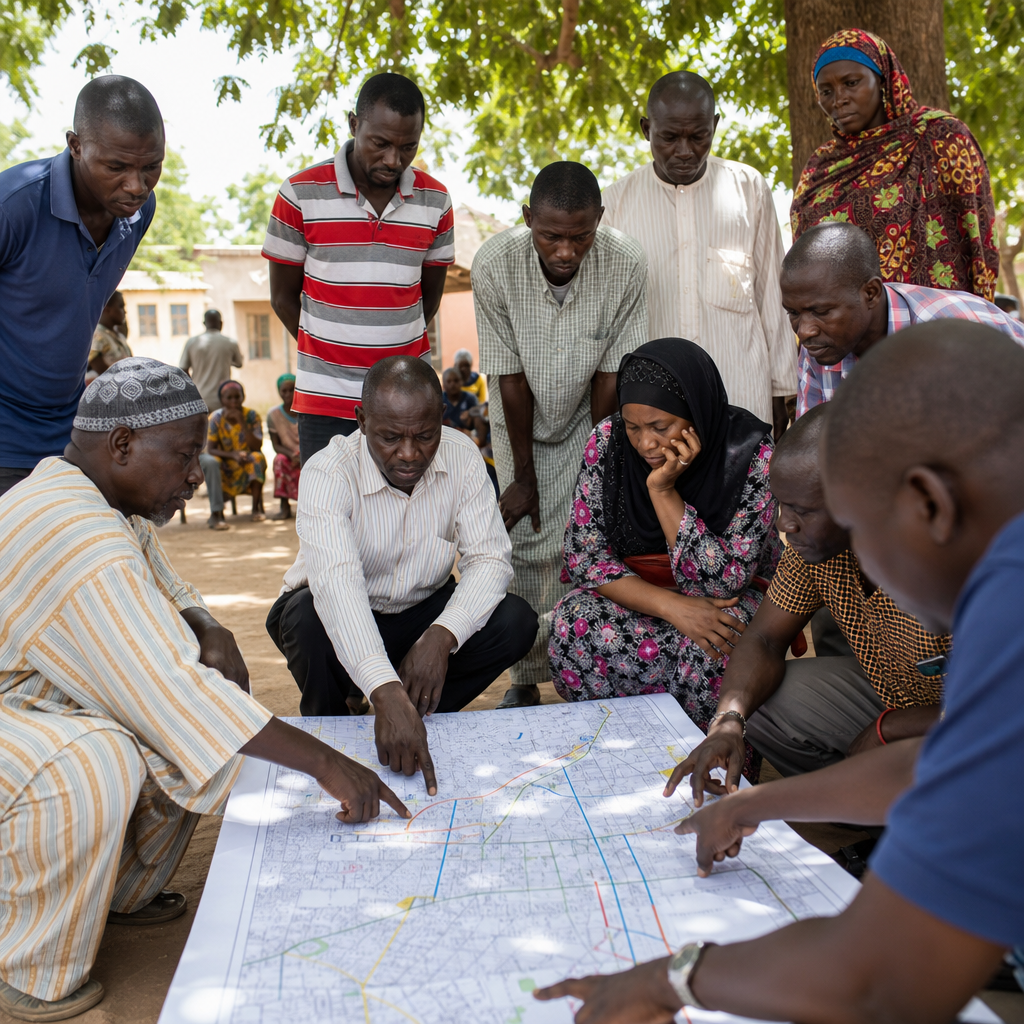
Youth can contribute in every one of these workstreams. They can map households, conduct baseline surveys, support participatory workshops, document misconceptions, and help design messages that are understandable to their own age groups and to elders. In well-run programs, youth are not token volunteers assigned to poster-making. They are trained communicators, monitors, and co-designers of outreach.
High-impact roles youth can play in EcoSan projects
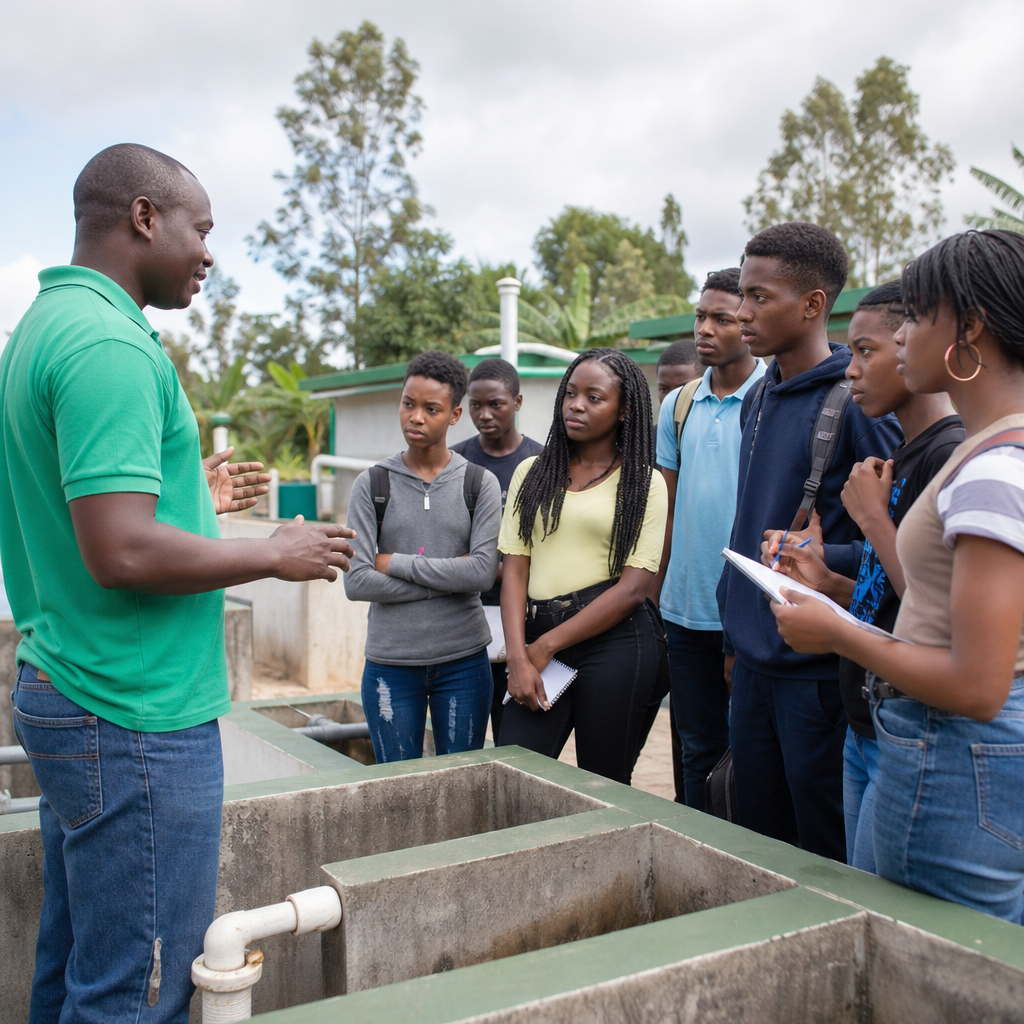
The most successful youth involvement in EcoSan projects assigns clear roles with training, supervision, and measurable tasks. Based on field practice, several roles consistently produce results. Peer educators run school talks and community discussions on hygiene, nutrient recovery, and toilet use. Demonstration site assistants guide visitors through operating steps and answer common questions. Youth survey teams collect household feedback, often using KoBoToolbox or Open Data Kit for mobile data collection. Creative outreach teams produce murals, theater sketches, radio segments, and short videos in local dialects. Maintenance support teams help monitor cleanliness, signage, handwashing stations, and availability of cover material.
Another valuable role is youth-led translation between technical and community language. Engineers may talk about dehydration, pathogen die-off, and nutrient loops. Residents may ask whether the toilet smells, whether crops will be safe, or whether women and girls will have privacy. Youth facilitators who understand both sides can bridge the gap. This is especially useful during pilot phases, when small misunderstandings can damage confidence.
| Youth role | Main task | Awareness benefit | Example |
|---|---|---|---|
| Peer educator | Lead school and neighborhood sessions | Improves message reach and recall | Students explain cover material use after assemblies |
| Survey volunteer | Collect household questions and usage data | Identifies barriers early | Youth map odor complaints by block |
| Demo guide | Show correct toilet operation | Reduces misuse | Visitors practice urine diversion steps at a model site |
| Media creator | Develop posters, audio, and social content | Makes sanitation less taboo | Youth radio club airs weekly hygiene interviews |
| Local ambassador | Represent the project at meetings | Builds trust across generations | Youth leaders present school results to village committees |
These roles work best when expectations are specific. A youth team should know whether success means reaching fifty households, increasing handwashing station use, reducing incorrect waste mixing, or raising attendance at demonstration events. Awareness grows faster when activities are planned like operations, not treated as informal volunteering.
How schools and informal learning spaces drive adoption
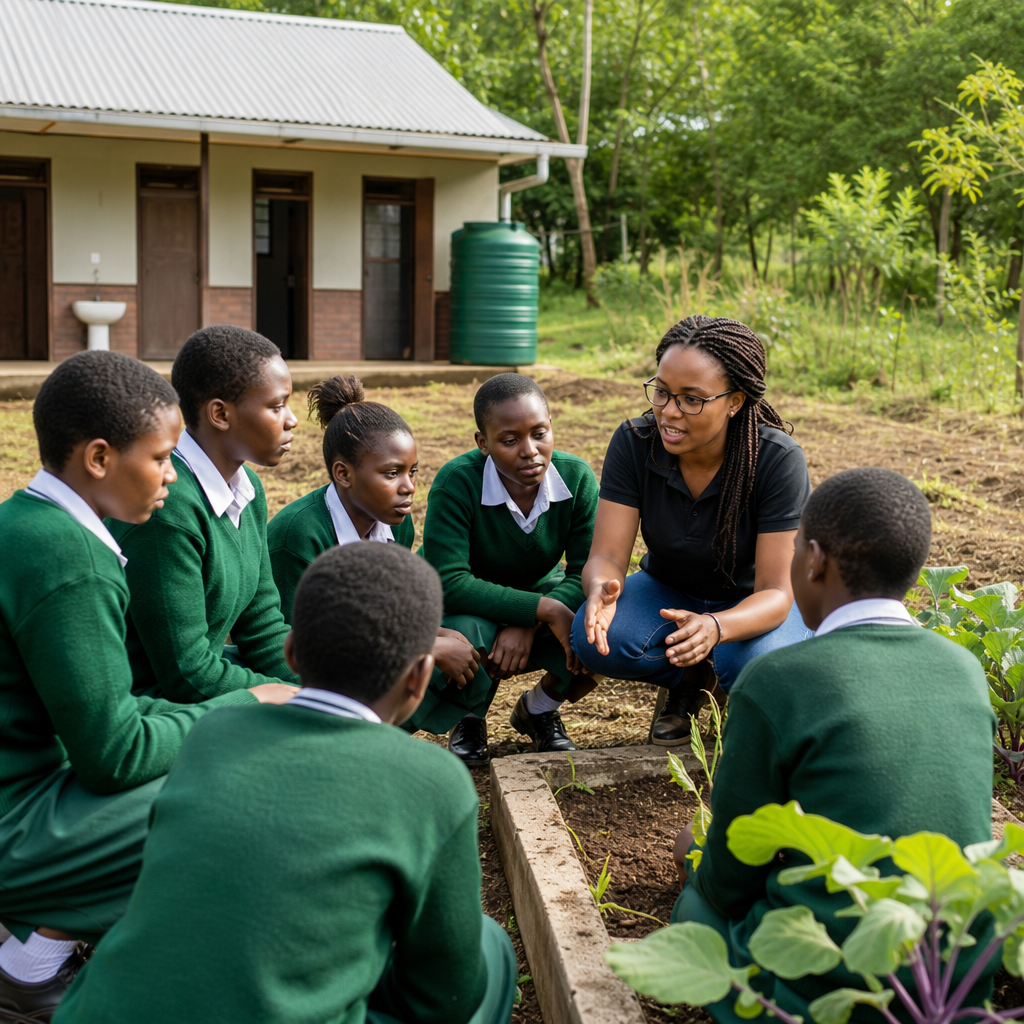
Schools are often the strongest starting point for EcoSan awareness because they combine infrastructure, routines, and social networks. A school with a functioning EcoSan demonstration unit can become a community learning site, especially when teachers integrate sanitation topics into science, health, geography, or environmental clubs. Students observe the system, ask questions, track maintenance needs, and discuss what nutrient recovery means for gardening or tree planting. The learning becomes concrete rather than abstract.
But school-based awareness works only when the facilities are well maintained. I have seen projects lose credibility because demonstration toilets were locked, dirty, or missing soap and cover material. That sends the message that ecological sanitation is complicated or unreliable. By contrast, a clean, clearly labeled, well-managed unit becomes persuasive evidence. Signage should explain each step plainly. Handwashing stations should be nearby. Teachers and youth leaders should be able to answer predictable questions without improvising. If compost or treated outputs are used, the safety protocol must be explained carefully and consistently.
Informal learning spaces matter just as much. Youth clubs, sports programs, scout groups, faith-based youth fellowships, maker spaces, and community gardens can host EcoSan awareness activities outside school hours. These venues often reach young people who are not consistently in school and create room for practical demonstrations. A community garden linked to an EcoSan education program, for example, can show nutrient cycling in a way residents understand immediately. The key is never to overstate safety or skip treatment standards. Awareness depends on honesty. Communities trust programs that explain both benefits and limits.
Communication methods that make sanitation understandable
Sanitation messages fail when they are too technical, too moralizing, or too vague. Youth-led communication works when it is direct, visual, repeated, and tied to everyday concerns. The strongest messages answer immediate questions: Will this smell? Is it safe for children? What should I add after use? Who cleans it? Why does keeping urine separate matter? What happens if rainwater gets in? Short, factual answers outperform slogans.
Different channels suit different audiences. Community theater can address taboo and embarrassment in ways formal speeches cannot. School debates can challenge myths publicly. Door-to-door visits allow for private questions about menstruation, privacy, disability access, and household cleaning. WhatsApp groups and short-form video can spread reminders quickly in urban and peri-urban areas. Local radio remains powerful in rural communities, especially when youth interview health workers, farmers, and project operators. Printed materials still matter, but they work best as reinforcement rather than as the primary method.
Plain language is essential. Instead of saying “fecal sludge valorization,” explain that treated waste can be converted into safer, useful products only after proper processing. Instead of saying “dehydration pathway,” explain that some toilets must stay dry so harmful organisms die off more effectively over time. Clear language does not reduce technical accuracy; it increases it by lowering misunderstanding.
Safety, credibility, and the limits of youth participation
Youth involvement in EcoSan projects should expand awareness, not shift unsafe or inappropriate responsibilities onto young people. This distinction is critical. Young volunteers can support education, observation, recordkeeping, and supervised demonstrations. They should not be asked to handle untreated waste, enter confined spaces, or perform emptying tasks without full training, adult oversight, protective equipment, and legal compliance. Sanitation projects lose legitimacy quickly when enthusiasm replaces risk management.
Credibility depends on following established public health principles. The World Health Organization’s sanitation and wastewater guidance emphasizes barriers to pathogen transmission, safe treatment, and context-specific risk reduction. In practical terms, that means every awareness program should explain what is safe, what is not safe, and why. If treated outputs are discussed for agriculture, the project must communicate storage periods, crop restrictions where relevant, hand hygiene, and handling procedures. If local regulations do not permit certain reuse applications, the outreach should say so clearly.
It is also important to recognize participation limits. Some youth have limited time due to work, caregiving, or school pressure. Others may face mobility constraints, social restrictions, or discomfort discussing sanitation publicly. Inclusive planning means offering multiple forms of involvement: media production, data entry, event support, peer teaching, art, translation, and monitoring. Good awareness programs respect young people’s time and compensate substantial work where budgets allow.
Measuring whether awareness is turning into community change
Awareness is only valuable if it changes understanding, behavior, and system performance. The best EcoSan projects track this through simple indicators before, during, and after outreach. Useful measures include attendance at awareness sessions, household recall of key operating steps, correct use of cover material, cleanliness scores, handwashing station functionality, reduction in misuse incidents, number of community questions resolved, and willingness to recommend the system to others. For school-centered projects, teachers can also track lesson participation and student ability to explain how the system protects health and the environment.
Mixed methods work best. Quantitative data show scale, while qualitative feedback reveals why people remain hesitant. A survey may show that most households know an EcoSan toilet should stay dry, but focus groups may reveal that people are unsure how to help small children use it correctly. That insight changes the outreach plan. In one project model, youth volunteers conducted monthly spot checks and short interviews, then shared findings with school staff, local government, and sanitation committees. Because the data were local and current, adjustments happened quickly.
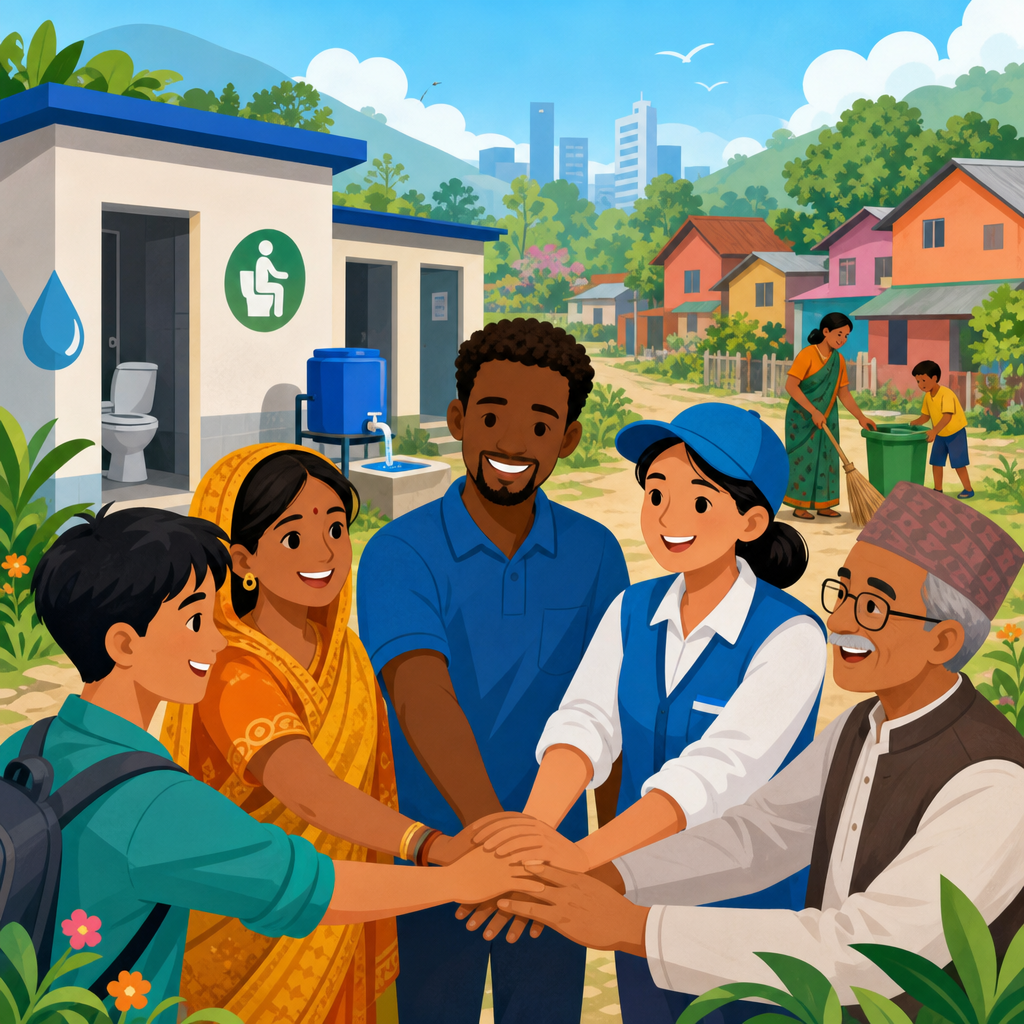
As a hub for building community awareness, this page points toward the broader lesson: communication should be treated as an operational component of EcoSan, not a side activity. Youth teams can help communities move from awareness to acceptance, from acceptance to correct use, and from correct use to lasting ownership. The payoff is not only better sanitation infrastructure. It is stronger public understanding, lower stigma, and a generation of local leaders who see ecological sanitation as a shared community responsibility. If you are planning EcoSan outreach, start by giving young people structured roles, proper training, and a visible place in the work.
Frequently Asked Questions
Why is youth involvement important in EcoSan projects?
Youth involvement is important in EcoSan projects because young people often act as both learners and community messengers. When they understand how ecological sanitation works, they can help translate technical ideas into everyday habits that families, schools, and neighborhoods can adopt. EcoSan is not only about installing toilets or managing waste differently; it is about changing how communities think about sanitation, hygiene, water use, and nutrient recovery. Young people are especially effective in this role because they are active in schools, social groups, digital spaces, and local volunteer networks, which gives them multiple ways to spread practical knowledge.
In many communities, youth participation also helps turn sanitation from a purely infrastructure issue into a shared social effort. Students and youth groups can support awareness campaigns, assist with hygiene education, monitor the cleanliness and usability of facilities, and encourage responsible maintenance practices. Their involvement can make EcoSan projects more visible, more accepted, and more sustainable over time. When youth are trained well, they become future community leaders who already understand the links between sanitation, environmental protection, agriculture, and public health. That long-term value is one of the strongest reasons to include them from the beginning.
What roles can young people play in ecological sanitation initiatives?
Young people can play a wide range of meaningful roles in ecological sanitation initiatives, and their contribution can go far beyond basic volunteering. They can participate in community education by helping explain how systems such as urine-diverting dry toilets, composting toilets, and greywater reuse systems function. They can support local demonstrations, school clubs, sanitation campaigns, and peer-to-peer discussions that make EcoSan concepts easier to understand. In school settings, youth can also help integrate practical sanitation lessons into environmental education, agriculture projects, and health activities.
They can also contribute to project implementation and monitoring. For example, youth groups may help map sanitation challenges in a neighborhood, gather feedback from residents, observe whether facilities are being used properly, and identify where more training is needed. In some projects, older youth with technical interest can assist in maintenance routines, compost handling awareness, safe nutrient recovery education, water-saving practices, and small-scale system upkeep under proper supervision. They may also support communication efforts by creating posters, short videos, social media content, or local events that encourage behavior change. The most effective EcoSan projects treat youth not as symbolic participants, but as active partners with defined responsibilities, training, and leadership opportunities.
How does EcoSan education benefit young people and their communities?
EcoSan education benefits young people by giving them practical knowledge that connects science, health, and environmental responsibility. Instead of seeing sanitation as a hidden or uncomfortable topic, they learn that it has direct links to disease prevention, water conservation, soil improvement, and cleaner public spaces. This kind of learning builds confidence because it shows youth that they can solve real local problems through informed action. It also develops useful skills such as observation, communication, teamwork, community organizing, and problem-solving.
For communities, the benefits are equally significant. When youth understand proper hygiene, waste separation, toilet use, composting principles, and safe handling practices, they help reinforce healthier habits within households and schools. This can lead to better facility use, reduced contamination, stronger maintenance culture, and greater acceptance of sustainable sanitation systems. Communities also benefit from the energy and creativity young people bring to awareness campaigns and local innovation. In the long run, EcoSan education supports stronger public health outcomes and a more informed population that understands sanitation as part of environmental stewardship and community resilience, not just a matter of waste disposal.
What challenges can affect youth participation in EcoSan projects?
Several challenges can affect youth participation in EcoSan projects, and recognizing them early is essential for long-term success. One common challenge is social stigma. Discussions about toilets, human waste, and sanitation are still considered uncomfortable or inappropriate in some communities, which can discourage open participation. Young people may also face resistance from adults who do not immediately see sanitation as an area where youth can contribute meaningfully. In addition, if EcoSan is introduced with too much technical language and too little practical demonstration, youth may lose interest or feel unqualified to participate.
There are also structural barriers. Limited training, lack of mentorship, insufficient school involvement, inadequate materials, and poor follow-up can all reduce participation. In some cases, projects invite youth at the awareness stage but fail to include them in decision-making, implementation, or evaluation. That kind of token involvement often leads to weak engagement. Safety and health concerns must also be managed carefully, especially when projects involve compost handling or nutrient recovery education. The best way to address these challenges is through clear training, age-appropriate responsibilities, adult support, ongoing supervision, and a project design that values youth input as a real asset. When young people are respected, prepared, and trusted, participation becomes much more consistent and impactful.
How can communities encourage stronger youth leadership in EcoSan projects?
Communities can encourage stronger youth leadership in EcoSan projects by moving beyond simple participation and creating structured opportunities for ownership. This starts with education that is practical, locally relevant, and connected to visible outcomes. Young people are more likely to engage when they can see how EcoSan improves school sanitation, community cleanliness, garden productivity, water management, or public health. Training should explain not only what EcoSan is, but why it matters and how youth can contribute safely and effectively. Providing clear roles, such as hygiene ambassadors, peer educators, monitoring volunteers, or school sanitation club leaders, helps transform interest into action.
Leadership also grows when youth are included in planning, feedback, and problem-solving. Communities should invite them to help identify sanitation needs, design awareness activities, and evaluate what is working. Support from teachers, local health workers, community leaders, and project coordinators is especially important because it gives youth guidance and legitimacy. Recognition matters as well. Certificates, public appreciation, local showcases, and opportunities to mentor younger students can strengthen commitment and pride. Most importantly, strong youth leadership in EcoSan depends on trust. When communities treat young people as capable contributors to sanitation solutions, they help build a generation that sees environmental health, resource recovery, and community wellbeing as shared responsibilities.