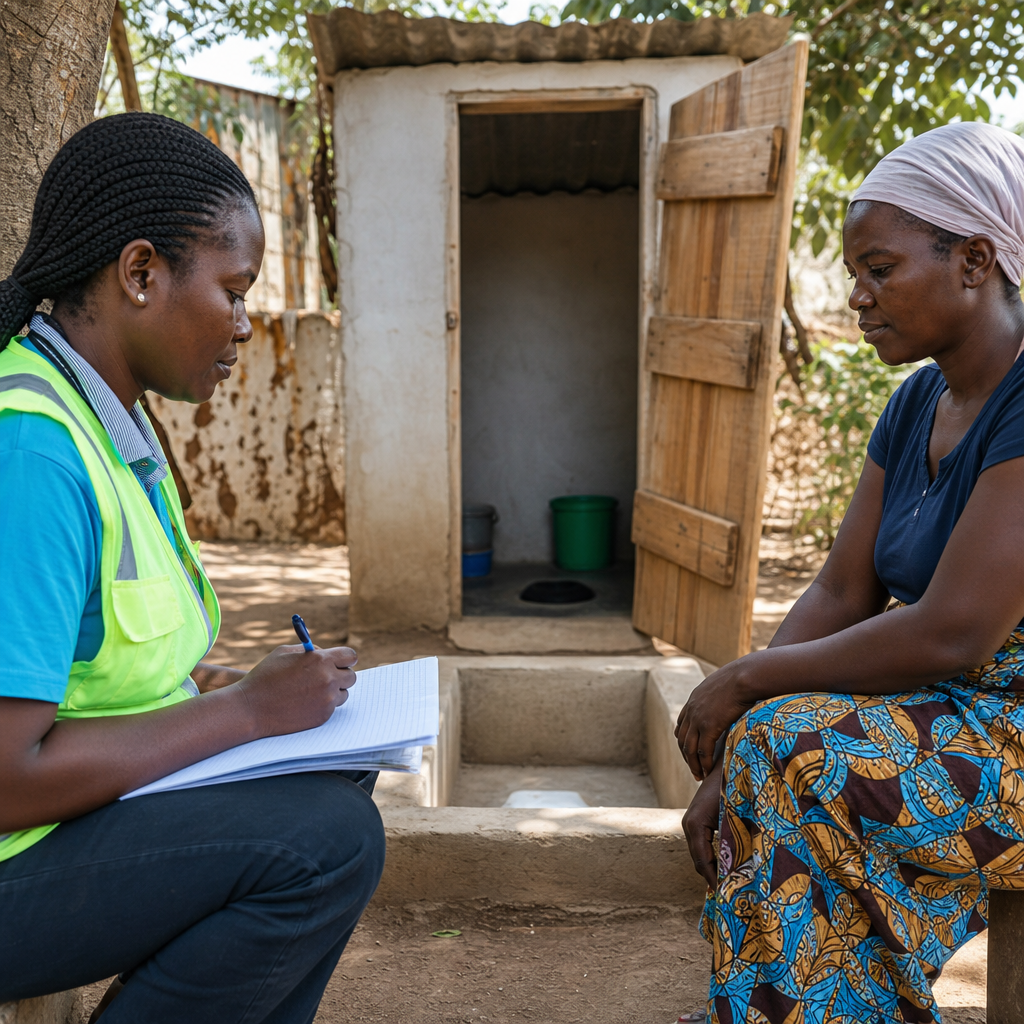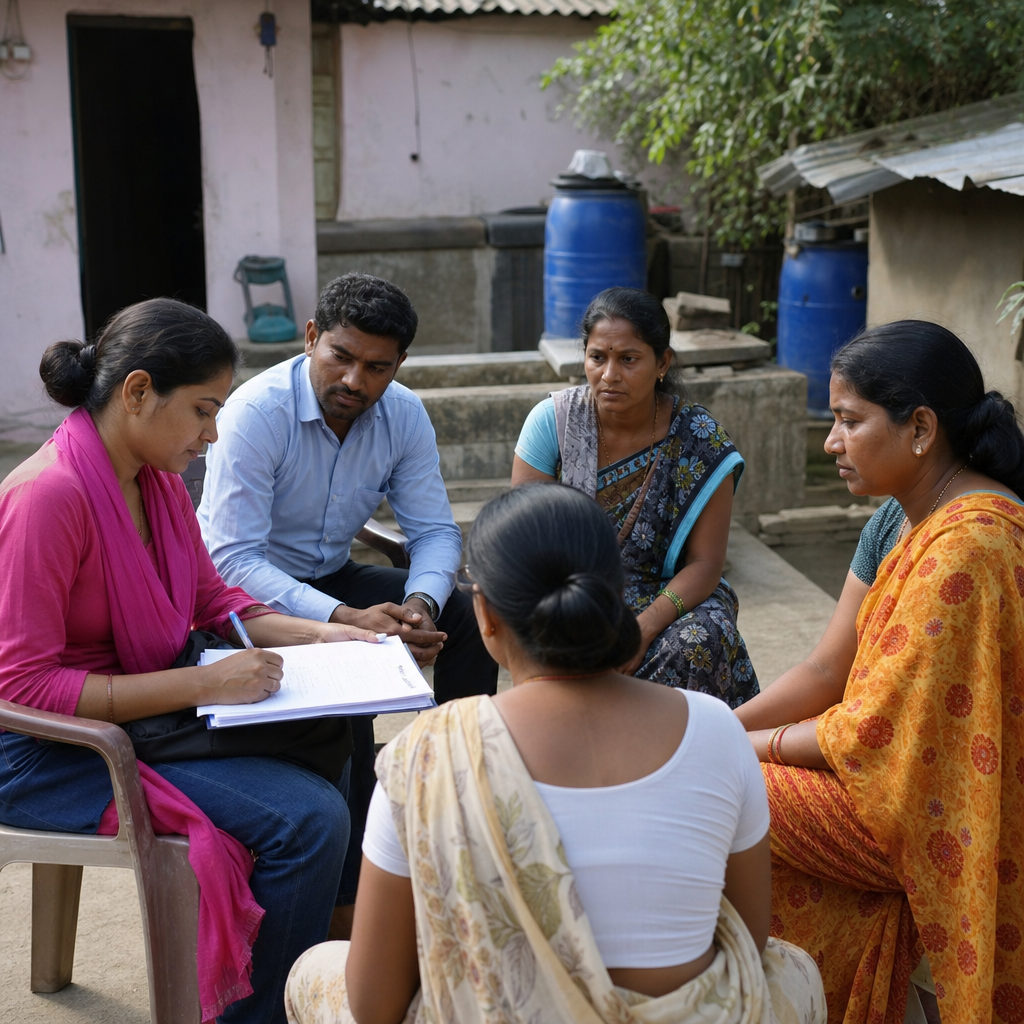
Developing community-centered EcoSan policies starts with one practical truth: sanitation systems only work when the people expected to use, maintain, and trust them help shape the rules behind them. Ecological sanitation, often shortened to EcoSan, refers to sanitation approaches that safely recover nutrients, conserve water where possible, reduce pollution, and treat human waste as a resource rather than a disposal problem. In my work with local planning teams, the strongest EcoSan programs were never defined only by toilets, treatment units, or composting designs. They were defined by whether residents understood the purpose, saw the health benefits, and believed the policy reflected their daily realities. That is why building community awareness is not a side task under community engagement and education; it is the foundation for durable adoption, safer operation, and long-term policy legitimacy.
Community-centered policy means sanitation decisions are informed by the people most affected, especially households, landlords, caretakers, school staff, health workers, waste handlers, and neighborhood leaders. Awareness in this context is more than public messaging. It includes sanitation literacy, risk communication, cultural fit, affordability, gender-sensitive design, and clarity about responsibilities across the service chain. The policy challenge is to turn technical sanitation goals into understandable local action without losing rigor. Done well, awareness-building improves uptake, reduces misuse, and helps municipalities meet public health, environmental, and climate objectives. It also strengthens every supporting article in this subtopic, from stakeholder mapping and school outreach to behavior change campaigns and feedback systems, because all of those depend on residents knowing what EcoSan is, why it matters, and how they can participate.
Define EcoSan in locally meaningful terms
The first requirement for building community awareness is to define EcoSan in plain language that matches local concerns. Many policy documents lead with nutrient recovery, closed-loop systems, source separation, or fecal sludge valorization. Those are accurate terms, but they do not move most audiences. Residents usually want direct answers: Will this toilet smell? Is it safe for children? What does it cost? Who empties it? What happens during rain? Can compost or urine-derived fertilizer actually be used on farms? A community-centered EcoSan policy should answer those questions before it asks for behavior change. In practice, that means translating technical objectives into public value statements such as cleaner drains, lower groundwater contamination risk, safer school sanitation, reduced open defecation, and more reliable service in water-scarce areas.
It also means distinguishing between different EcoSan models. Urine-diverting dry toilets, container-based sanitation, composting toilets, and systems linked to co-composting or resource recovery facilities have different user requirements and maintenance risks. A policy that treats them as one category confuses users and weakens trust. The World Health Organization sanitation safety planning approach is useful here because it emphasizes identifying hazards across the full chain, then communicating controls clearly. When communities understand not just the technology but the safety measures, acceptance improves. I have seen resistance soften when officials stopped promoting “innovative toilets” in the abstract and instead explained the exact handling process, storage times, operator protections, and end-use standards for agricultural application.
Map audiences and tailor awareness strategies
Building community awareness fails when policymakers talk to “the public” as if it were a single audience. EcoSan policies need segmented communication because each group interacts with sanitation differently. Households need user instructions and cost clarity. Farmers need confidence in pathogen reduction, nutrient value, and application guidance. School administrators need maintenance protocols and child-friendly hygiene education. Informal settlement residents may need assurance on tenure sensitivity and service continuity. Religious leaders may need respectful discussion of purity norms and reuse concerns. Waste workers need occupational safety provisions, equipment standards, and dignified formal recognition. Tailoring is not cosmetic; it is what makes communication usable.
A practical policy process begins with stakeholder mapping, then links each audience to concerns, influence, preferred channels, and required behavior. This is where community awareness becomes the hub of the broader community engagement and education portfolio. Public meetings, door-to-door outreach, radio segments, demonstration sites, women’s group discussions, school clubs, and mobile messaging all serve different functions. The right mix depends on literacy levels, language diversity, internet access, and trust in local institutions. In one municipal rollout, neighborhood health volunteers outperformed posters because residents already relied on them for immunization and hygiene advice. In another, radio call-in programs worked better than workshops because agricultural households could listen during work and hear real questions answered by engineers and health officers.
| Audience | Main concern | Best awareness method | Policy implication |
|---|---|---|---|
| Households | Cost, smell, ease of use | Demonstrations, home visits | Clear user guidance and tariff transparency |
| Farmers | Safety and crop suitability | Field trials, extension services | Reuse standards and training requirements |
| Schools | Maintenance and hygiene habits | Teacher toolkits, student clubs | Budget lines for caretaking and supplies |
| Waste workers | Safety, status, equipment | Hands-on training, certification | PPE, contracts, labor protections |
| Community leaders | Public acceptance and fairness | Briefings, forums, site visits | Participatory oversight and grievance channels |
Use participatory design to turn awareness into ownership
Community awareness becomes durable when residents can influence policy choices, not just receive information after decisions are made. Participatory design is the bridge from communication to ownership. In EcoSan policy, that includes co-design workshops on toilet siting, emptying schedules, privacy features, menstrual hygiene accommodations, handwashing access, and reuse pathways. It also includes discussing what communities do not want. In dense areas, households may reject onsite compost handling but support container-based systems with offsite treatment. In farming zones, residents may accept reuse if extension officers provide application protocols and if local bylaws specify treatment requirements. Participation surfaces these conditions early, when policy can still adapt.
Good participation is structured. I recommend using focus groups separated where needed by gender, age, or livelihood, because mixed meetings often hide critical concerns. Women may raise privacy, safety at night, and water access. Tenants may worry about landlords shifting costs without improving service. Disabled users may identify access barriers invisible to planners. Youth often understand social media channels better than officials and can improve campaign design. When policy teams document these findings and show which recommendations were adopted, awareness campaigns gain credibility. People are far more likely to trust EcoSan policies when they can point to visible changes that came from local input.
Build trust through health, safety, and standards
Trust is the decisive factor in community awareness around EcoSan, especially where reuse is involved. People will accept difficult maintenance routines sooner than they will accept uncertainty about disease risk. Policy therefore needs a strong public explanation of health safeguards, not vague assurances. Named standards matter. WHO guidance on safe use of wastewater, excreta, and greywater, sanitation safety planning, and hazard control provides a credible frame. National public health regulations, agricultural extension protocols, and environmental quality standards should be cited in municipal materials and public forums. This is not about overwhelming communities with regulation. It is about proving that reuse and resource recovery are governed by enforceable controls.
Officials should explain treatment barriers clearly: source separation, sealed storage, time-temperature conditions, moisture control, co-composting parameters, restricted crop use where relevant, and operator protection measures such as gloves, boots, vaccination, and hand hygiene. Demonstration sites are especially powerful because they turn abstract safety claims into visible practice. I have watched skeptical community leaders change position after touring a managed reuse facility with clear signage, routine testing, and clean end products. The opposite is also true: one poorly managed demonstration can damage awareness efforts for years. Policy should therefore require operator training, inspection schedules, incident reporting, and transparent communication if failures occur.
Make awareness practical: costs, service models, and daily use
Community awareness is often reduced to educational slogans, yet the questions that determine adoption are operational. How much will the system cost at installation and over time? Is there a monthly service fee? Who supplies bulking material for dry systems? Who is responsible for pit replacement, container collection, or vault emptying? What happens if a unit breaks? If policies do not answer these questions directly, residents interpret EcoSan as experimental and risky. Strong policy explains service models in household terms. It distinguishes between capital subsidies, ongoing tariffs, public financing for schools or clinics, and any targeted support for low-income households.
Awareness materials should include step-by-step user instructions with local illustrations, especially where literacy levels vary. They should show how to separate urine if required, what not to put into the system, how often maintenance is needed, and whom to call for support. Policies should also require response-time standards for service providers. In one city pilot, trust increased after the municipality published a hotline and committed to collection within a fixed number of days. That simple operational promise mattered more than promotional messaging. Building community awareness therefore means making policy tangible: residents need to know what they will do, what government will do, and what service reliability looks like in normal and emergency conditions.
Connect awareness to schools, local leaders, and social norms
For a sub-pillar hub under community engagement and education, schools and trusted local institutions deserve special focus because they multiply awareness across households. School sanitation programs can normalize good EcoSan practices early, but only when infrastructure, curriculum, and maintenance align. Teachers need practical lesson plans on hygiene, water cycles, nutrients, and safe sanitation behavior. Caretakers need clear cleaning procedures and budgeted supplies. Students need age-appropriate explanations, not technical overload. When schools operate visibly clean EcoSan facilities, they become demonstration sites for parents and community groups.
Local leaders are equally influential. Ward representatives, elders, faith leaders, farmers’ cooperatives, and community health committees can either accelerate acceptance or stall it. Policy should formally involve them in advisory roles, launch events, monitoring visits, and grievance review. Social norms around excreta, purity, land use, and privacy vary widely, so awareness cannot rely on generic messaging. In one farming district, acceptance improved only after respected growers tested treated products on non-leafy crops and shared results through cooperative meetings. In another settlement, women’s savings groups were the most effective communicators because they linked sanitation decisions to household budgeting and child health. Community-centered EcoSan policy succeeds when it uses existing trust networks rather than trying to replace them.
Measure awareness and adapt policy over time
Awareness-building should be treated as a measurable policy function, not a one-time campaign. The key indicators are not just attendance at meetings or number of pamphlets distributed. Better indicators include correct understanding of system use, willingness to adopt, actual consistent use, maintenance compliance, hotline usage, school hygiene behavior, perception of safety, and satisfaction with service response. Baseline and follow-up surveys, focus groups, and complaint analysis help identify where understanding breaks down. If households know the health message but still misuse systems, the issue may be design complexity, supply gaps, or landlord incentives rather than awareness alone.
Digital tools can help, but only if they match local capacity. Simple SMS reminders, QR-linked maintenance guides, and dashboard reporting from service providers can improve accountability. However, paper logs, community notice boards, and monthly in-person reviews are often more reliable in low-connectivity settings. Policy should require periodic review with public reporting so residents can see whether awareness efforts are improving outcomes. This closes the loop between education and governance. It also strengthens the broader subtopic hub: stakeholder engagement, behavior change, school outreach, feedback systems, and communications planning all perform better when awareness data shows which messages, messengers, and service commitments actually work.
Developing community-centered EcoSan policies is ultimately about aligning sanitation goals with how people live, decide, and build trust. Building community awareness is the hub of that work because it connects technical design, public health, education, service delivery, and local legitimacy. The strongest policies define EcoSan in plain language, tailor outreach to different audiences, involve residents in design decisions, explain safety standards clearly, answer daily operational questions, and use schools and trusted leaders to reinforce adoption. They also measure understanding and adapt when reality differs from the plan.
If you are shaping an EcoSan program under a community engagement and education strategy, start by auditing what your community actually knows, fears, and needs to decide. Then build policy around those answers. Awareness is not an accessory to sanitation reform. It is the mechanism that turns infrastructure into lasting public value, and it should guide every related article, toolkit, and local action in this subtopic hub.
Frequently Asked Questions
What does “community-centered” actually mean in EcoSan policy development?
Community-centered EcoSan policy development means the people who will live with the system every day are involved in shaping how it works, how it is maintained, and what standards govern it. In practical terms, this goes far beyond holding a single public meeting or asking for feedback after decisions have already been made. It means residents, local leaders, sanitation workers, health officials, farmers, women’s groups, school representatives, landlords, and other affected users help identify sanitation problems, define priorities, test solutions, and review policies before they are finalized. This approach matters because ecological sanitation systems depend heavily on correct use, ongoing maintenance, social acceptance, and trust in resource recovery practices. A technically sound system can still fail if people see it as unsafe, unfamiliar, expensive, inconvenient, or culturally inappropriate.
A community-centered approach also recognizes that sanitation needs are not identical across households or neighborhoods. Water availability, soil conditions, housing density, gendered safety concerns, disability access, cultural attitudes toward handling waste-derived products, and local farming practices all influence what kind of EcoSan framework is realistic. Good policy responds to those realities instead of forcing a one-size-fits-all model. For example, a policy may need different design requirements for dense urban settlements than for peri-urban farming communities, or different maintenance obligations for household-managed systems versus shared facilities. The most durable EcoSan policies are usually the ones built through local dialogue, pilot projects, and feedback loops that let decision-makers revise standards as they learn what works in real conditions.
Why is public participation so important for successful ecological sanitation programs?
Public participation is essential because EcoSan systems are not only infrastructure projects; they are behavior-based public health systems. People must understand how to use toilets correctly, separate waste streams where required, support collection schedules, trust treatment methods, and in some cases accept the reuse of treated outputs such as compost or urine-derived fertilizers. If policy is written without public participation, it often overlooks everyday realities that determine whether a system is actually used as intended. Residents may reject facilities that feel unsafe, difficult to clean, unsuitable for children or elders, or inconsistent with cultural norms around privacy and cleanliness. Participation helps uncover these issues early, when policy can still be adapted.
Meaningful participation also improves accountability and long-term maintenance. When communities understand why specific rules exist and have helped shape them, they are more likely to support user fees, maintenance routines, reporting systems, and local oversight mechanisms. This is especially important in EcoSan, where treatment and reuse standards must be clear, trusted, and consistently followed to protect health and the environment. Public participation can also reveal who is typically excluded from sanitation decision-making, such as renters, informal settlement residents, waste workers, women, or people with disabilities. Including those voices leads to policies that are more equitable and practical. In short, participation is not an optional engagement exercise; it is one of the main reasons community-centered EcoSan programs remain functional, accepted, and safe over time.
What should policymakers include in an effective community-centered EcoSan policy?
An effective community-centered EcoSan policy should include both technical standards and social implementation measures. At a minimum, it should clearly define which EcoSan technologies are approved, where they are suitable, what health and environmental safeguards apply, and who is responsible for operation, maintenance, monitoring, and enforcement. Policies should address containment, storage, treatment, transport, pathogen reduction, safe handling procedures, and rules for the reuse or disposal of end products. They should also account for site-specific conditions such as groundwater vulnerability, flood risk, available space, water scarcity, and local agricultural demand for recovered nutrients. Without this level of clarity, EcoSan programs often struggle with inconsistent quality, public skepticism, and uneven compliance.
Just as important, the policy should establish how communities will participate in planning and review. That includes consultation requirements, local representation in decision-making, grievance and feedback channels, public education strategies, and practical support for households or institutions expected to adopt EcoSan systems. Strong policies also include affordability mechanisms, such as subsidies for low-income households, financing options for construction, and budget commitments for training and inspection. Equity should be explicit, not assumed. Policymakers should consider access for women, children, older adults, persons with disabilities, tenants, and underserved settlements. Finally, a good EcoSan policy includes measurable indicators for performance, health protection, environmental outcomes, and user satisfaction. That allows local governments to evaluate whether the system is delivering on its goals and to revise the policy as conditions change.
How can EcoSan policies balance environmental goals with public health and local acceptance?
The most effective EcoSan policies do not treat environmental performance, public health, and community acceptance as competing goals. They treat them as interdependent. Nutrient recovery, water conservation, and pollution reduction only matter if sanitation systems are also safe, understandable, and acceptable to the people who use them. That means policy must set rigorous treatment and handling standards while also making the system practical in daily life. For example, if reuse is part of the policy, officials need clear rules for treatment time, pathogen reduction targets, storage conditions, transport methods, protective equipment, and approved end uses. Communities are far more likely to support ecological sanitation when safety requirements are transparent and consistently enforced.
Local acceptance grows when policy is built around demonstration, communication, and adaptation rather than assumption. Pilot projects can help communities see how a proposed system works before it is scaled. Training sessions, school outreach, farmer engagement, and public health messaging can address misconceptions and explain why certain practices are required. Policymakers should also be willing to modify designs or implementation strategies if residents identify barriers such as odor concerns, cleaning difficulty, privacy issues, or discomfort with reuse practices. In many places, acceptance improves when the policy allows phased adoption, different approved technology options, and clear evidence that the recovered products are safe and useful. The right balance comes from combining strict health safeguards with respectful community engagement and realistic implementation planning.
What are the biggest mistakes to avoid when developing community-centered EcoSan policies?
One of the biggest mistakes is focusing almost entirely on technology while underestimating governance, behavior, and maintenance. EcoSan systems are often introduced with strong environmental promises, but policies fail when they do not clearly assign responsibilities for cleaning, collection, treatment oversight, repairs, financing, and inspection. Another common mistake is assuming community support instead of building it. If residents are not involved early, policymakers may choose designs that do not fit local routines, cultural expectations, land constraints, or household economics. Policies also fail when they rely on technical language that communities cannot easily understand, or when they skip education and training for users, operators, and local officials.
Another serious error is ignoring equity. A policy may look successful on paper while excluding low-income families, renters, informal communities, or people with mobility limitations. Requiring households to shoulder construction or maintenance costs without support can undermine adoption and create uneven service quality. It is also risky to promote nutrient reuse without robust health safeguards, monitoring systems, and public communication. If a single failure damages trust, the entire program can suffer. Finally, policymakers should avoid treating the first version of the policy as final. Community-centered EcoSan policy works best as an iterative process: test, learn, revise, and improve. Programs that include ongoing feedback, performance tracking, and local problem-solving are much more likely to remain trusted and effective in the long term.