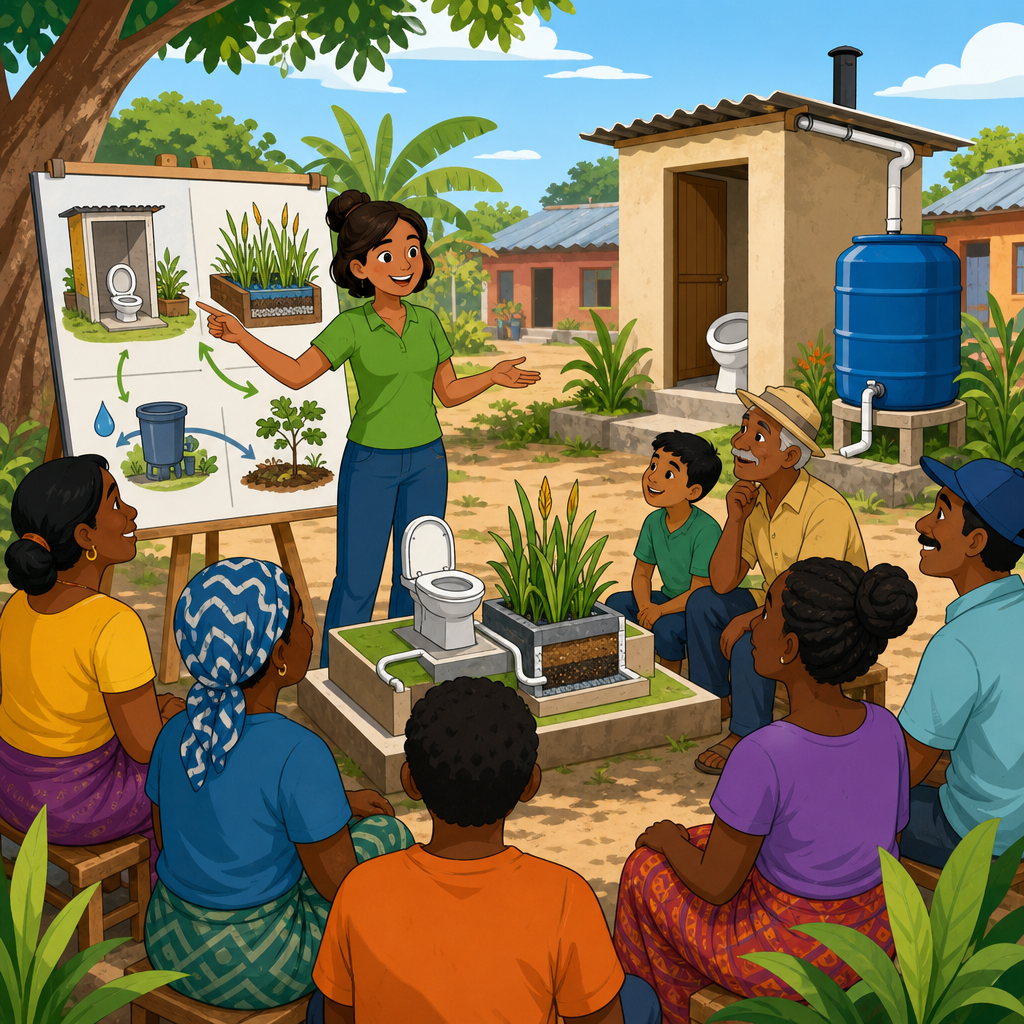
Local NGO roles in sanitation education are practical, visible, and often decisive because behavior change rarely happens through infrastructure alone. Sanitation education means the organized process of helping people understand hygiene, waste management, toilet use, menstrual health, safe water handling, and disease prevention in ways that fit local culture and daily routines. In community work, I have seen the same pattern repeatedly: a new toilet block or drainage upgrade can improve conditions only when families know why practices matter, trust the messenger, and have the confidence to adopt new habits. Local nongovernmental organizations are uniquely positioned to build that trust because they work close to residents, schools, health workers, landlords, religious leaders, and municipal officials.
This matters because poor sanitation remains a major public health and development challenge. The World Health Organization and UNICEF Joint Monitoring Programme has repeatedly shown that inadequate sanitation and hygiene contribute to diarrheal disease, parasitic infection, undernutrition, lost school days, and reduced productivity. The burden is not distributed evenly. Informal settlements, remote rural communities, and low-income households often face the highest exposure to open defecation, unsafe sludge disposal, broken drainage, and poor handwashing access. Government systems set policy and fund services, but local NGOs often connect policy to everyday behavior. They translate technical guidance into community conversations, organize demonstrations, identify barriers, and sustain momentum long after a campaign launch.
As a hub article on building community awareness, this page explains how local NGOs design sanitation education, who they partner with, what methods work best, how impact is measured, and where limitations must be managed honestly. It also points readers toward linked topics such as school-based hygiene promotion, community-led behavior change, risk communication during outbreaks, and inclusive sanitation outreach. If the core question is how communities move from awareness to safer sanitation practices, local NGOs are usually the bridge.
Why Local NGOs Are Central to Building Community Awareness
Local NGOs succeed in sanitation education because they understand context at street level. They know which neighborhoods flood first, which landlords neglect shared toilets, which languages are spoken in the market, and which community figures can convene people quickly. That local intelligence is not a soft advantage; it determines whether a sanitation message is adopted or ignored. A generic poster that says “wash hands” is far less effective than a tailored session showing when handwashing matters most after toilet use, before feeding a child, before preparing food, and after handling waste, especially when residents can discuss the actual constraints they face, such as intermittent water supply or expensive soap.
Another reason local NGOs matter is continuity. Public health messaging often intensifies during cholera spikes, typhoid outbreaks, or flooding events, then fades. Community organizations can maintain a regular cadence of engagement through household visits, parent meetings, youth clubs, and women’s groups. In one settlement program I supported, attendance at sanitation meetings increased only after the NGO shifted from one-off lectures to recurring block-level discussions facilitated by respected local volunteers. Residents were more willing to ask direct questions about latrine maintenance, child feces disposal, and septic tank emptying because the forum felt familiar rather than official.
Local NGOs also serve as intermediaries. They can relay household concerns to municipalities, utilities, school administrators, and health departments. If residents report that shared toilets are unsafe for girls at night or that pits overflow during rains, an NGO can document the issue, aggregate evidence, and advocate for service improvements. Awareness is strongest when it is linked to action. Communities stop engaging if education campaigns ask them to change behavior while ignoring structural failures that make safe sanitation difficult.
Core Sanitation Education Functions Local NGOs Perform
Local NGOs typically operate across five core functions: assessment, message design, community mobilization, practical training, and referral or advocacy. Assessment comes first. Effective organizations map existing sanitation behaviors, access points, seasonal risks, and misinformation patterns. They use tools such as household surveys, focus group discussions, transect walks, KAP studies, and participatory rural appraisal. This baseline prevents common mistakes, including teaching concepts people already know while overlooking barriers they cannot solve alone.
Message design is the next function. NGOs adapt technical guidance from ministries of health, UNICEF, WHO, or national sanitation strategies into language that resonates locally. For example, explaining fecal-oral transmission through the F-diagram can be powerful, but only if facilitators relate it to shared toilets, uncovered food, dirty containers, and children playing near drains. I have found that communities respond best when education connects disease pathways to everyday scenes they recognize immediately.
Community mobilization turns information into participation. Local NGOs organize neighborhood meetings, door-to-door outreach, school clubs, clean-up campaigns, radio call-in segments, and demonstrations at markets or worship centers. Practical training then reinforces the message. This can include handwashing station setup, chlorine solution preparation where appropriate, toilet cleaning protocols, menstrual hygiene sessions, safe water storage, and fecal sludge management basics. Finally, referral and advocacy close the loop by connecting households to desludging services, disability-inclusive facility upgrades, social protection programs, or municipal complaint channels.
| NGO function | What it includes | Community result |
|---|---|---|
| Assessment | Surveys, mapping, focus groups, risk analysis | Messages address actual barriers |
| Message design | Local language materials, culturally relevant examples | Higher comprehension and trust |
| Mobilization | Home visits, meetings, school sessions, radio outreach | Broader awareness and participation |
| Practical training | Handwashing, toilet maintenance, safe storage, hygiene routines | Behavior change becomes actionable |
| Referral and advocacy | Links to services, repairs, subsidies, local government | Awareness is matched by support |
Methods That Work in Community Sanitation Education
The most effective sanitation education methods are interactive, repeated, and tied to visible problems. Household visits remain one of the strongest tools because they allow facilitators to identify specific risks, such as unsealed water containers, missing handwashing soap, or unsafe child feces disposal. They also create room for private discussion about stigma, menstruation, disability access, or fear of using shared toilets at night. Group meetings are valuable too, especially when they use demonstration rather than lecture. Showing how contamination spreads from hands to food or from open drains to standing water makes risk concrete.
Schools are another high-impact setting. Local NGOs often train teachers, establish hygiene clubs, and support student-led campaigns that carry messages back home. This approach works especially well when facilities are usable. A school cannot credibly promote handwashing if taps are broken, toilets are locked, or girls lack privacy during menstruation. In practice, the best NGO school programs combine education with accountability checks on water points, toilet cleanliness, soap availability, and disability access.
Community-led triggering methods can also be effective when applied ethically. Approaches derived from Community-Led Total Sanitation aim to provoke collective action around open defecation and environmental contamination. Used well, they can create urgency and local ownership. Used poorly, they can shame vulnerable households or overstate what behavior change can achieve without infrastructure support. Strong NGOs know the difference. They focus on dignity, shared responsibility, and practical solutions rather than humiliation. They also segment messages. Renters, market vendors, adolescent girls, waste workers, and elders do not face the same sanitation constraints, so they should not receive identical education.
Partnerships With Schools, Clinics, Utilities, and Local Government
Sanitation education is more durable when local NGOs work through institutions people already use. Schools provide access to children, parents, and teachers. Clinics connect sanitation messages to maternal health, childhood diarrhea treatment, nutrition counseling, and vaccination visits. Utilities and public works departments matter because drainage, water reliability, and fecal sludge management shape whether households can follow hygiene advice consistently. Local governments matter most of all because they control regulations, budgets, inspections, and long-term service delivery.
In effective programs, NGOs do not substitute for these actors; they align them. A clinic can identify recurring diarrhea hotspots. An NGO can investigate household practices and barriers in those blocks. The municipality can then target drain clearing, latrine inspection, or waste collection. This kind of coordination prevents the common failure of isolated health messaging. I have seen neighborhoods receive hygiene leaflets while broken sewer lines remained unrepaired for months. Residents understandably concluded that education campaigns were symbolic. Credibility returned only when the NGO documented the hazard, public health staff confirmed the risk, and local authorities responded visibly.
Partnerships also improve data quality. NGOs often collect granular information that governments lack, while ministries and utilities hold broader service and disease data. Combined, those sources help target interventions better. Recognized tools such as WASH FIT for facilities, UNICEF communication guidance, and routine KAP surveys give organizations shared frameworks and comparable indicators. Good collaboration is not merely a funding arrangement; it is an operating model for community awareness that links communication, services, and accountability.
Inclusion, Trust, and Cultural Relevance
Building community awareness in sanitation is not just about delivering more information. It is about making information believable, usable, and fair. Local NGOs are often strongest when they address who gets left out. Women and girls may need private conversations on menstrual hygiene and toilet safety. People with disabilities may face steps, narrow doors, or inaccessible handwashing points. Tenants in informal housing may be blamed for sanitation conditions they do not control. Waste handlers and pit emptiers may know more about practical risks than anyone else, yet still be excluded from planning discussions.
Cultural relevance matters just as much. Messages that contradict local norms without explanation rarely work. The better approach is to start with existing values such as child protection, household pride, cleanliness before prayer, or respect for neighbors, then connect those values to sanitation practices. Trust grows when NGOs recruit facilitators from the community, use local languages accurately, and admit uncertainty where it exists. For example, if water shortages make daily toilet cleaning unrealistic, facilitators should discuss realistic minimum standards and alternatives instead of insisting on ideal practices people cannot sustain.
Trust is also built through consistency. Communities notice when an NGO returns, follows up, and reports back. They also notice when surveys are conducted and nothing changes. Local organizations that explain what they can influence, what requires government action, and what households can do immediately are more credible than groups promising rapid transformation. In sanitation education, credibility is often the difference between polite attendance and actual behavior change.
Measuring Impact and Avoiding Common Pitfalls
Measuring sanitation education requires more than counting sessions or posters distributed. Local NGOs should track outputs, outcomes, and enabling conditions. Outputs include households visited, schools reached, volunteers trained, or community meetings held. Outcomes include observed handwashing station use, consistent toilet use, reduced open defecation, safer child feces disposal, improved menstrual hygiene support, or better cleaning routines in shared facilities. Enabling conditions include water availability, soap access, desludging services, drainage functionality, and toilet safety. Without those supporting factors, behavior indicators can stall even when awareness is high.
Useful methods include baseline and endline surveys, spot checks, structured observation, community scorecards, facility audits, and disease trend review in partnership with health authorities. Digital tools such as KoboToolbox, CommCare, and GIS mapping can make local evidence faster to collect and easier to visualize. Still, organizations should interpret data carefully. Self-reported hygiene behavior is often overstated. Seasonal changes can distort results. Short project cycles may show awareness gains before sustained behavior change is visible. Strong NGOs therefore combine quantitative data with qualitative feedback to understand why progress is uneven.
Common pitfalls are predictable. One is treating sanitation education as a campaign instead of a process. Another is focusing only on knowledge while ignoring cost, gender, disability, tenancy, or service reliability. A third is using shame-based tactics that may produce temporary compliance but weaken trust. The final pitfall is fragmentation: separate actors promoting overlapping messages without coordination. The best local NGO programs avoid these traps by planning for reinforcement, service linkages, and community ownership from the start.
Local NGO roles in sanitation education are most valuable when they turn awareness into practical, lasting change. They assess local realities, translate technical guidance into plain language, mobilize trusted messengers, and connect households to the institutions that can solve structural problems. That combination makes them central to building community awareness, especially in places where sanitation risks are shaped by poverty, density, weak services, or social exclusion.
For readers exploring the wider Community Engagement and Education topic, this hub should frame the rest of the subtopic clearly. School hygiene promotion, participatory behavior change, outbreak communication, inclusion in WASH outreach, and monitoring methods all connect back to the same principle: people adopt safer sanitation practices when information is credible, relevant, repeated, and backed by workable options. Education succeeds when it respects local knowledge and addresses real constraints rather than assuming awareness alone is enough.
If you are planning a sanitation initiative, start by mapping the local NGOs already trusted by the community, then design awareness efforts with them instead of around them. That step will improve message quality, participation, accountability, and long-term results.
Frequently Asked Questions
What role do local NGOs play in sanitation education beyond building toilets or improving infrastructure?
Local NGOs play a much broader role than simply supporting construction projects. In sanitation education, their real value often lies in helping communities understand why facilities matter, how to use them correctly, and how to maintain healthier habits over time. A new toilet block, handwashing station, drainage line, or waste collection point can improve physical conditions, but infrastructure alone rarely changes daily behavior. Local NGOs bridge that gap by turning a one-time project into an ongoing learning process rooted in community life.
They do this by organizing workshops, household visits, school sessions, community meetings, demonstrations, and peer education programs that explain hygiene, toilet use, menstrual health, safe water storage, waste disposal, and disease prevention in practical, familiar language. Because they work close to the community, local NGOs can adapt messages to local customs, beliefs, literacy levels, and routines. That matters greatly. People are more likely to adopt sanitation practices when the information is not abstract or imposed from outside, but instead explained through examples that match daily realities such as caring for children, fetching water, managing household waste, or preventing illness during rainy seasons.
Local NGOs also help identify barriers that are often invisible to outside agencies. These can include shame around discussing toilets, taboos related to menstruation, lack of water for cleaning, unsafe facilities for women and girls, misconceptions about disease transmission, or the simple fact that families do not yet see sanitation as urgent compared with other daily pressures. By listening first and responding with locally relevant education, NGOs make sanitation programs more realistic and more effective. In many cases, their most important contribution is not the facility itself, but the trust, repetition, and community engagement that make healthier sanitation behavior possible and sustainable.
Why is sanitation education so important if a community already has improved toilets or water systems?
Sanitation education is essential because access does not automatically lead to correct or consistent use. A community may receive new toilets, cleaner water points, or upgraded drainage systems, yet still struggle with open defecation, poor handwashing, unsafe water storage, improper waste disposal, or unhygienic maintenance practices. This happens because sanitation is not only about physical infrastructure; it is about behavior, understanding, social norms, and routine. Without education, even well-designed systems may be underused, misused, or quickly fall into disrepair.
For example, a household may have a toilet but still fail to clean it regularly, teach children how to use it safely, manage fecal waste properly, or wash hands with soap after use. Similarly, clean water at the source can become contaminated if it is transported or stored in dirty containers. In schools, toilets may exist but remain inaccessible or unacceptable to girls if menstrual health is ignored. In public areas, waste bins may be installed but not used correctly if people do not understand sorting, disposal schedules, or the health risks associated with unmanaged waste. These are education and behavior challenges as much as infrastructure challenges.
Local NGOs often emphasize sanitation education because they understand that long-term public health depends on habits as much as hardware. Education helps communities connect sanitation practices to outcomes they can see and value: fewer cases of diarrhea, reduced disease transmission, safer environments for children, greater dignity for women, improved school attendance, and cleaner shared spaces. It also builds ownership. When people understand the purpose of sanitation measures and feel capable of maintaining them, they are more likely to protect community investments. In that sense, sanitation education is what turns infrastructure from a temporary improvement into a lasting health benefit.
How do local NGOs make sanitation education effective in different cultural and community settings?
Local NGOs make sanitation education effective by tailoring it to the specific social, cultural, and economic context of each community rather than relying on generic public health messaging. Sanitation is deeply shaped by local beliefs, gender roles, household structures, daily labor patterns, language, religion, and long-standing habits. A message that works in one setting may fail completely in another if it ignores local realities. Because local NGOs are often embedded in the areas they serve, they are well positioned to design education strategies that people recognize as relevant rather than external or judgmental.
This usually begins with listening. Effective NGOs assess what people already know, what they believe causes illness, who makes household decisions, which groups are excluded from discussions, and what practical obstacles prevent healthier sanitation behavior. They may find, for instance, that women know the importance of hygiene but lack privacy or water access, that men control spending on household improvements, that children are key messengers in behavior change, or that community leaders need to publicly endorse new practices before they gain acceptance. With that understanding, NGOs can adjust both the content and delivery of sanitation education.
Methods often include demonstrations instead of lectures, visual materials for low-literacy audiences, school clubs, youth ambassadors, mother’s groups, faith-based outreach, community theater, door-to-door visits, and small-group discussions where sensitive topics such as menstruation or toilet stigma can be addressed respectfully. They may also use local terms, familiar examples, and seasonal timing that aligns with farming cycles, disease outbreaks, or water scarcity periods. This community-sensitive approach improves trust and retention. People are much more likely to change behavior when they feel respected, when information fits their lived experience, and when sanitation education is presented as a practical tool for family well-being rather than a top-down instruction campaign.
What sanitation topics do local NGOs usually cover in community education programs?
Local NGOs typically cover a wide range of sanitation topics because healthy sanitation behavior depends on several connected practices, not just one. Toilet use is important, but it is only part of the picture. Most strong sanitation education programs address handwashing with soap, safe disposal of human waste, household and community waste management, drainage and standing water risks, safe water collection and storage, food hygiene, menstrual health management, child feces disposal, cleaning routines, and disease prevention. The goal is to help people understand how these behaviors work together to protect health.
In practical terms, NGOs often teach when and how to wash hands effectively, how to keep toilets clean and usable, why child feces must be disposed of safely, how to store drinking water in covered containers, and how poor drainage or unmanaged waste contributes to contamination and mosquito breeding. Many also address menstrual health in a serious and respectful way by discussing hygiene materials, privacy, disposal options, and the need for safe and dignified facilities for girls and women. In schools, programs may include student hygiene clubs, handwashing demonstrations, and sanitation monitoring led by teachers or peer leaders. In households, NGOs may focus on behavior routines, such as cleaning schedules, soap placement, and safer water handling practices.
Another important area is disease prevention. Local NGOs often explain the link between sanitation and illnesses such as diarrhea, cholera, intestinal infections, skin conditions, and other waterborne or hygiene-related diseases. Good programs avoid fear-based messaging and instead show how simple daily changes can reduce risk. They also connect sanitation to dignity, safety, education, and household stability. When sanitation education covers the full system of hygiene, waste, water, health, and social realities, communities are better equipped to maintain cleaner environments and make informed decisions that last beyond the duration of a single project.
How can local NGOs measure whether sanitation education is actually changing behavior?
Local NGOs can measure behavior change by looking beyond attendance numbers and focusing on whether people are actually adopting and maintaining healthier sanitation practices. It is relatively easy to count how many workshops were held, how many households were visited, or how many posters were distributed. Those figures are useful for reporting activity, but they do not necessarily show impact. Meaningful evaluation asks whether sanitation education is producing visible, repeated, and sustained changes in knowledge, habits, and community norms.
Common indicators include increased toilet use, reduced open defecation, improved handwashing at key times, cleaner facilities, safer water storage, better waste disposal, more regular toilet maintenance, and stronger inclusion of menstrual health needs in schools or households. NGOs may gather this information through household surveys, direct observation, school monitoring, focus group discussions, community feedback meetings, baseline and endline comparisons, and follow-up visits months after training ends. They may also track health-related trends where possible, such as reduced incidence of diarrhea or fewer sanitation-related complaints, while recognizing that health outcomes are influenced by several factors.
Strong local NGOs also pay attention to qualitative signs of progress. Are people discussing sanitation more openly? Are local leaders promoting hygiene messages? Are families investing their own effort or resources in maintenance? Are women, girls, and marginalized groups reporting safer and more usable facilities? Are children reminding adults about handwashing or toilet cleanliness? These are important signs that sanitation education is moving from awareness into social practice. The most reliable evidence usually comes from combining numbers with lived observations. When communities not only understand sanitation messages but integrate them into daily life without constant external prompting, that is the clearest sign the education effort is working.