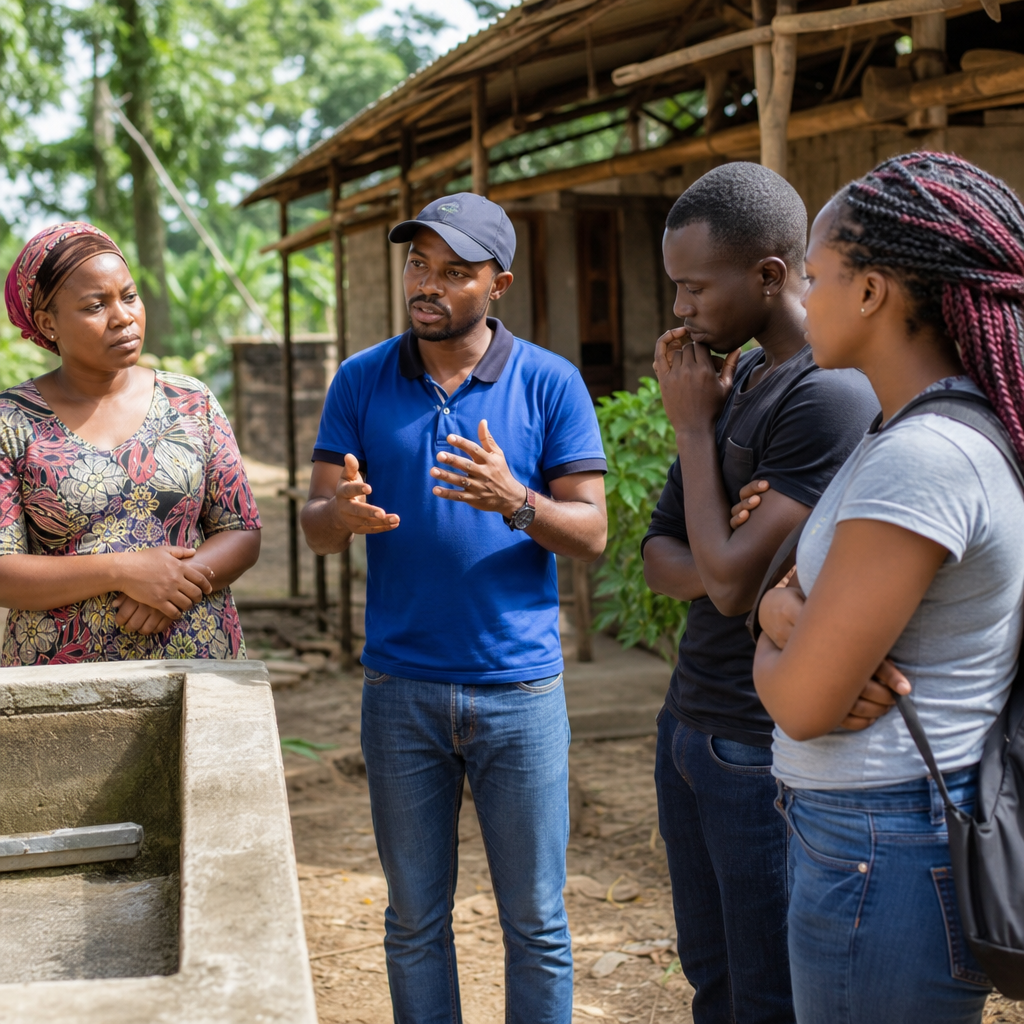
Community leaders are often the deciding factor between sanitation programs that stall on paper and sanitation programs that change daily life. In work across villages, informal settlements, schools, and municipal neighborhoods, I have seen the same pattern repeatedly: toilets, waste systems, and hygiene campaigns succeed when respected local figures translate public health goals into community action. “Educating for change” in sanitation means more than sharing posters or holding a one-time workshop. It is the ongoing process of building understanding, trust, habits, and local accountability so people adopt safer hygiene practices, use sanitation facilities correctly, maintain them, and demand better services from authorities. Community leaders act as champions because they carry social influence, local knowledge, and the credibility needed to move sanitation from an outside project to a shared norm.
This matters because sanitation is both an infrastructure issue and a behavior issue. The World Health Organization and UNICEF Joint Monitoring Programme consistently link inadequate sanitation with diarrheal disease, child stunting, parasitic infections, lost school attendance, and reduced productivity. Even where facilities exist, poor maintenance, unsafe fecal sludge disposal, handwashing gaps, and stigma around discussing toilets or menstruation can undermine outcomes. Education closes that gap, but education only works when it is relevant, repeated, and led by people the community recognizes. That is why this hub article focuses on how community leaders educate for change: by shaping norms, organizing participation, correcting misinformation, supporting inclusive access, and connecting households to lasting sanitation improvements. For any community engagement and education strategy, leadership is not an optional add-on; it is the delivery mechanism.
Why community leaders matter in sanitation behavior change
Community leaders matter because sanitation decisions are social before they are technical. A household may know that open defecation is unsafe, yet continue the practice if neighbors do the same, if shared toilets feel insecure, or if cleaning responsibilities are disputed. Leaders help shift these dynamics by making safe sanitation visible, expected, and discussable. In practice, “community leader” includes elected officials, faith leaders, teachers, health volunteers, youth organizers, women’s group coordinators, landlords, traditional authorities, and respected business owners. Each reaches a different audience, and the most effective sanitation education campaigns map these influence networks before launching messages.
When I have helped design local outreach, the breakthrough rarely came from the best printed materials. It came when a ward chairperson publicly committed to ending drain dumping, when an imam included cleanliness in Friday remarks, or when a school principal organized parent demonstrations on handwashing station maintenance. These leaders lowered resistance because they connected sanitation to dignity, child health, neighborhood pride, and practical problem solving. They also provided something external campaign teams often lack: continuity. A leader remains present after the consultant leaves, which is essential because behavior change requires reinforcement over months, not days.
Effective leaders also translate technical language into plain terms. Instead of “fecal-oral transmission pathways,” they explain how germs from unsafe waste handling reach drinking water, food, hands, and children’s play areas. Instead of vague appeals to cleanliness, they show why toilet pit emptying, soap use, menstrual hygiene management, and safe wastewater disposal protect the entire settlement. That translation function is one of the strongest predictors of whether sanitation education produces measurable adoption.
What educating for change looks like on the ground
Educating for change in sanitation is a structured process with several linked goals: awareness, motivation, practical skills, social reinforcement, and accountability. Awareness answers basic questions such as why sanitation matters, how disease spreads, and what services or technologies are available. Motivation connects sanitation to values people already hold, including child safety, privacy, status, convenience, and respect for shared spaces. Practical skills cover toilet use, cleaning schedules, handwashing technique, menstrual hygiene, waste segregation where relevant, and how to report maintenance failures. Social reinforcement comes from repeated public signals that safe sanitation is normal. Accountability ensures households, institutions, service providers, and local government all do their part.
On the ground, this can include courtyard meetings, school sanitation clubs, market demonstrations, home visits, street theater, faith-based messaging, radio call-in segments, and neighborhood clean-up campaigns linked to clear sanitation goals. The strongest programs do not rely on a single channel. They combine interpersonal communication, public commitments, and practical demonstrations. For example, if a settlement introduces communal toilets, education should cover user fees, cleaning rosters, child access, accessibility needs, lighting, complaint reporting, and who empties pits or tanks safely. Without that detail, communities are given infrastructure without the social operating system that keeps it functional.
Good education is also dialogic, not one-directional. People need a space to raise concerns: Will a toilet smell? Who pays for repairs? Is shared sanitation safe for girls at night? What happens when pits fill? Leaders who invite these questions build trust because they acknowledge real barriers instead of assuming noncompliance is ignorance. In sanitation work, listening is often the first educational act.
Core roles leaders play from awareness to adoption
Community leaders champion sanitation through identifiable roles that can be planned, trained, and measured. The following table shows how those roles connect education to practical results.
| Leader role | What the leader does | Example in practice | Sanitation outcome |
|---|---|---|---|
| Norm setter | States publicly that safe toilet use and handwashing are expected behaviors | Village chief opens meetings with sanitation updates and recognizes clean compounds | Higher social acceptance of improved practices |
| Trusted educator | Explains risks and solutions in local language with culturally relevant examples | Community health worker demonstrates handwashing after child feces disposal | Better understanding of disease prevention |
| Mobilizer | Organizes households, schools, and groups around campaigns or maintenance days | Youth leader coordinates drain cleaning and toilet repair volunteers | Improved facility upkeep and participation |
| Connector | Links residents with municipalities, NGOs, desludging services, and funders | Ward committee negotiates regular fecal sludge collection with the town council | More reliable sanitation services |
| Monitor | Tracks usage, cleanliness, breakdowns, and exclusion issues | Women’s group documents which shared latrines lack locks or water | Faster corrective action and safer access |
This framework matters because leadership is not merely symbolic. It creates operational capacity. In one dense urban area, shared toilets had low use despite being recently built. After local landlords and women’s committee members took ownership of cleaning schedules, installed clearer rules, and reported faults weekly, usage increased and complaints about odor dropped sharply. The infrastructure was the same; leadership changed the service experience.
Leaders also influence adoption by modeling behavior. A school headteacher who inspects handwashing stations daily communicates urgency without saying a word. A pastor who ensures church toilets are clean and accessible makes sanitation visible as a standard of care. These examples are powerful because communities notice what leaders do consistently more than what they say once.
How to equip leaders to teach sanitation effectively
Not every respected person automatically becomes an effective sanitation educator. Training and support are essential. The best leader preparation starts with a simple baseline: what people currently know, believe, fear, and do. Knowledge-attitude-practice surveys, focus groups, facility audits, and routine health data can reveal whether the main problem is open defecation, poor maintenance, low handwashing compliance, menstrual stigma, unsafe child feces disposal, or weak service access. Training should respond to those realities rather than use generic messages.
In practical terms, leaders need five kinds of support. First, they need accurate technical content: disease transmission, toilet technology options, safe pit emptying, water requirements, cleaning protocols, and referral pathways for services. Second, they need communication skills, especially how to answer objections without shaming people. Third, they need inclusive facilitation skills so women, people with disabilities, renters, and adolescents are heard. Fourth, they need simple tools such as flipcharts, demonstration kits, reporting forms, and referral contacts. Fifth, they need follow-up coaching. A one-day training is rarely enough; refresher sessions and field mentoring make the difference.
I have found that role-play is one of the most effective methods. Ask a leader to respond to a father who says children are too young to use a toilet, a landlord who refuses maintenance, or a teenage girl who avoids school during menstruation because the latrines lack privacy. These scenarios build confidence and reveal where messages are unclear. Standardized checklists help too. For example, a leader visiting households can verify whether a toilet is functional, whether soap is present, whether child feces are disposed of safely, and whether the family knows who to contact when the pit fills. This turns education into a measurable support system instead of a vague awareness effort.
Inclusion, trust, and the barriers leaders must address
Sanitation education fails when it assumes one message works for everyone. Leaders must address barriers tied to gender, disability, age, income, tenancy, geography, and social exclusion. Women and girls often prioritize privacy, lighting, menstrual hygiene facilities, water availability, and security. Older adults may need handrails, shorter walking distances, or support during rainy seasons. People with disabilities may require ramps, wider doors, seating adaptations, tactile cues, or assistance protocols that preserve dignity. Renters may hesitate to invest in improvements they do not own. Households in flood-prone areas need technology choices suited to high water tables.
Trust is equally important. Communities have often seen projects announced and abandoned, toilets built without maintenance plans, or campaigns that blamed residents while ignoring municipal failures. Credible leaders do not overpromise. They explain what can change quickly, such as cleaning schedules and behavior practices, and what requires advocacy, such as sewer extensions or regular desludging contracts. This honesty strengthens participation because people can distinguish between immediate household actions and longer-term service improvements.
Language matters here. Shame-based sanitation messaging may produce short-term compliance, but it can also alienate vulnerable households and hide problems. More durable approaches focus on dignity, collective responsibility, and practical problem solving. If a family lacks money for a toilet upgrade, a strong leader connects them to microfinance, subsidy criteria, local masons, or shared solutions that meet safety standards. Education for change is not just telling people what they should do; it is helping them see a realistic path to doing it.
Measuring success and sustaining momentum
Sanitation education should be evaluated with outcome indicators, not attendance sheets alone. Useful measures include toilet usage rates, observed cleanliness, availability of soap and water, reduction in open defecation sites, safe child feces disposal, desludging frequency, school absenteeism related to poor sanitation, and user satisfaction, especially among women and people with disabilities. Local leaders can support monitoring through household check-ins, school audits, complaint logs, and public scoreboards. Digital tools such as KoboToolbox, DHIS2 integrations, or simple mobile reporting forms can help where capacity exists, but paper systems still work if responsibilities are clear.
Sustaining momentum requires embedding sanitation into routine community life. That means discussing it in council meetings, school assemblies, tenant forums, clinic outreach, and faith gatherings rather than treating it as a special campaign. Recognition also helps. Communities respond when clean compounds, well-managed shared toilets, and active volunteer groups are publicly acknowledged. Incentives do not need to be expensive; visibility and local pride are often enough.
The deepest lesson from sanitation education is that change lasts when leadership is distributed. One champion can start momentum, but systems endure when many actors share responsibility. If you are building a community engagement and education strategy, start by identifying trusted leaders, equipping them with clear tools, and connecting their influence to practical sanitation services. That is how educating for change becomes healthier households, safer schools, cleaner public spaces, and stronger community ownership over time.
Frequently Asked Questions
Why are community leaders so important to sanitation programs?
Community leaders often determine whether a sanitation initiative becomes a lasting community habit or remains an unfinished project. In many settings, residents may understand that better sanitation is beneficial, but they are far more likely to act when the message comes from someone they already trust and respect. That might be a village elder, a faith leader, a school head, a women’s group organizer, a youth representative, or an elected neighborhood official. These leaders know local beliefs, local power dynamics, and the practical barriers that affect daily behavior, so they can translate public health goals into language and actions that feel relevant instead of imposed.
They also help move sanitation from the level of infrastructure to the level of shared responsibility. A toilet block, drainage upgrade, handwashing station, or waste collection point only works well when people agree on how it will be used, maintained, funded, and monitored. Community leaders are often the people who can convene meetings, resolve conflicts, encourage participation, and build social accountability. They can explain why open dumping harms everyone, why clean latrines matter for dignity and safety, and why hygiene practices protect children, older adults, and the broader community.
Just as importantly, community leaders can give sanitation programs legitimacy. In places where residents have experienced broken promises, outside organizations may be viewed with caution. A respected local figure can bridge that trust gap. When leaders publicly support a sanitation effort, model the behaviors being promoted, and stay involved after the launch, people are more likely to participate consistently. That is why sanitation success so often depends not only on technical planning, but on trusted local leadership that turns policy into everyday action.
What does “educating for change” really mean in community sanitation work?
“Educating for change” means going beyond one-way information sharing and focusing on the kind of learning that leads to durable behavior change. In sanitation, it is rarely enough to distribute posters, hold a single workshop, or tell people what they should do. Real change happens when education helps people connect sanitation to issues they care deeply about, such as family health, children’s attendance at school, household dignity, women’s safety, neighborhood pride, and economic stability. Community leaders are especially effective in this role because they can frame sanitation not as an abstract public health topic, but as a practical community priority.
This kind of education is ongoing, participatory, and rooted in local realities. It involves listening as much as speaking. Leaders can ask why households are not using toilets, what makes waste disposal difficult, why handwashing facilities are not maintained, or what fears and misconceptions are circulating. Once those issues are clear, education can be tailored to address real concerns instead of generic assumptions. For example, if people worry about cost, leaders can help identify affordable options. If there are cultural beliefs tied to toilet sharing or child feces disposal, those can be discussed respectfully and directly. If services fail because no one understands maintenance responsibilities, leaders can help clarify roles.
“Educating for change” also includes reinforcement through everyday social influence. When leaders repeat key messages in meetings, schools, worship spaces, and neighborhood gatherings, sanitation becomes part of the community conversation. When they recognize households that adopt improved practices, involve young people in cleanup campaigns, or support women in decision-making about facility design, they help create a culture where healthy sanitation behaviors are visible and valued. In that sense, education is not a one-time event. It is a continuous process of building understanding, trust, ownership, and collective action.
How can community leaders encourage people to adopt better sanitation and hygiene habits?
Community leaders can encourage better sanitation and hygiene habits most effectively by combining example, communication, organization, and accountability. First, they can model the behaviors they want others to adopt. When respected local figures use improved toilets, support handwashing, speak openly about safe waste management, and prioritize cleanliness in public spaces, they signal that sanitation is not optional or embarrassing to discuss. Visible leadership helps normalize behaviors that might otherwise be ignored or resisted.
Second, leaders can communicate in ways that resonate locally. Technical health messages often become more powerful when linked to community values and daily experience. A leader might explain that poor drainage contributes to disease outbreaks, that unmanaged waste affects market activity, or that clean school toilets help girls attend classes more consistently. They can adapt the message for different groups, including parents, landlords, tenants, youth, schoolchildren, and business owners. This matters because sanitation challenges and motivations are not the same for everyone.
Third, effective leaders create opportunities for collective action. They can organize cleanup days, household visits, sanitation committees, school hygiene clubs, and regular community reviews. They can help identify maintenance responsibilities for shared toilets, establish local reporting systems for overflowing waste points, and coordinate with municipal service providers when infrastructure or collection schedules fail. These practical structures make behavior change easier to sustain because they reduce confusion and make expectations visible.
Finally, leaders can build gentle but meaningful accountability. In strong sanitation programs, the community knows what good practice looks like and who is responsible for what. Leaders can celebrate progress, encourage lagging households, mediate disputes over shared facilities, and keep sanitation on meeting agendas until it becomes routine rather than reactive. The goal is not punishment for its own sake, but a community norm in which safe sanitation and hygiene are understood as essential to everyone’s well-being.
What challenges do community leaders face when championing sanitation efforts?
Community leaders often face a combination of social, financial, logistical, and political challenges when they champion sanitation. One common barrier is resistance to behavior change. Even when the health benefits are clear, sanitation practices are shaped by long-standing habits, local beliefs, household economics, and social norms. Some residents may see improved sanitation as unnecessary, too expensive, or someone else’s responsibility. Others may support the idea in principle but struggle to act because of limited space, insecure land tenure, irregular water supply, or poor waste services. Leaders must work through these realities patiently and credibly.
Another major challenge is managing expectations. Communities are sometimes asked to “take ownership” of sanitation without being given the tools, funding, technical support, or public services needed to succeed. A local leader may be expected to mobilize residents around toilets, drainage, hygiene, or solid waste systems, while municipal collection is inconsistent or facilities are poorly designed from the outset. In these situations, leaders can lose credibility if they are seen as promoting solutions that do not function well in practice. That is why effective sanitation leadership requires not only local commitment, but also institutional support from governments, schools, NGOs, and service providers.
Leaders may also face internal community tensions. Disagreements can arise over who pays for maintenance, who is allowed to use shared facilities, where waste points should be located, or whose voices count in decision-making. Women, renters, young people, people with disabilities, and informal settlement residents are often excluded from planning even though they are deeply affected by sanitation conditions. Strong leaders have to navigate these tensions carefully and work to ensure that sanitation planning is inclusive, fair, and realistic.
Finally, there is the challenge of sustaining momentum. Sanitation enthusiasm is often highest during a campaign launch or construction phase, but long-term success depends on maintenance, follow-up, monitoring, and repeated engagement. Community leaders can become overstretched if too much depends on a few committed individuals. For sanitation programs to endure, leadership must be shared, local systems must be established, and support structures must continue long after the initial intervention.
How can sanitation programs better support community leaders and increase long-term success?
Sanitation programs can better support community leaders by treating them as core partners from the beginning, not as messengers brought in after decisions have already been made. Leaders should be involved in identifying sanitation problems, mapping barriers, selecting approaches, and designing communication strategies. When they help shape the program, they are better equipped to explain it, defend it, and adapt it to local conditions. Early involvement also helps programs avoid common mistakes, such as choosing unsuitable facility designs, overlooking vulnerable groups, or setting expectations that cannot be met.
Practical support is equally important. Community leaders need clear information, training, and tools if they are expected to guide behavior change and local coordination. This can include basic public health and sanitation education, facilitation skills, conflict resolution support, simple monitoring tools, referral pathways for broken infrastructure, and materials tailored to local language and literacy levels. Where possible, programs should also support leaders with realistic budgets, transportation allowances, or small operational resources so that community engagement does not depend entirely on unpaid personal effort.
Programs also increase long-term success when they build systems around leaders rather than placing the full burden on individual champions. That means forming sanitation committees, engaging schools and youth groups, partnering with women’s associations, connecting local leadership to municipal service departments, and establishing regular review mechanisms. Shared leadership creates continuity when one person moves away, changes roles, or loses capacity to stay involved. It also broadens ownership, making sanitation everyone’s concern instead of one leader’s project.
Most importantly, successful programs recognize that sanitation is both technical and social. Infrastructure matters, but trust, participation, and follow-through matter just as much. When community leaders are respected, equipped, and connected to functioning institutions, they can do what the best sanitation champions always do: turn public health goals into visible, practical changes in how people live, care for shared spaces