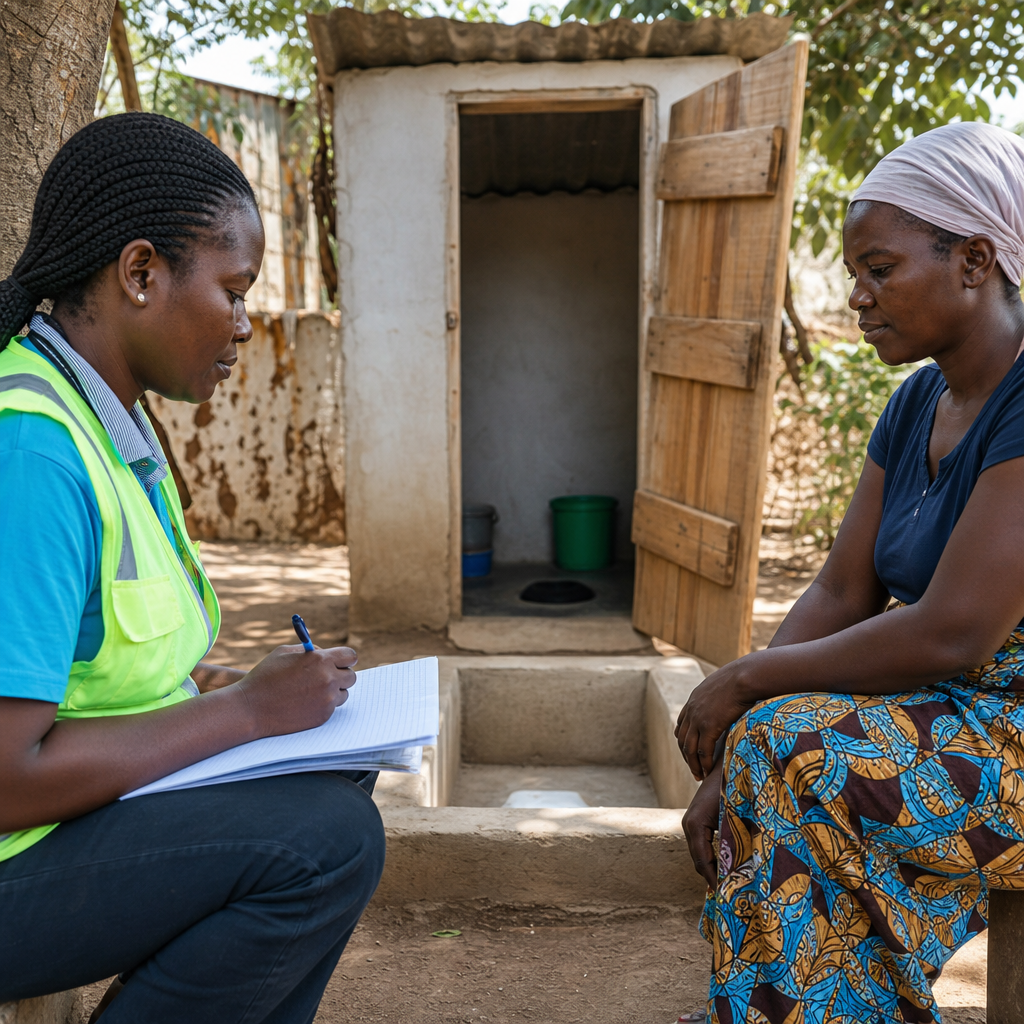
Community-based monitoring of sanitation initiatives turns residents from passive recipients of services into active stewards of local public health. In practical terms, it means community members help track whether toilets are used and maintained, whether fecal sludge is safely managed, whether handwashing stations function, and whether the most vulnerable households are being reached. Building community awareness is the foundation of this work because people only monitor what they understand, value, and believe they can influence. I have seen sanitation programs fail not because the technology was wrong, but because communities were asked to report problems without first being shown why indicators matter, how data will be used, and what changes can realistically follow. A strong awareness strategy links sanitation to daily realities: fewer diarrheal episodes, safer school attendance for girls, cleaner public spaces, lower desludging costs over time, and greater accountability from local authorities. As a hub topic under community engagement and education, community-based monitoring connects behavior change communication, local governance, inclusive participation, risk communication, and practical data collection. It matters because sanitation outcomes are not visible in the same way as roads or streetlights; many failures happen behind doors, underground, or downstream. Without informed local monitoring, broken systems can persist for months. With it, communities can detect service gaps early, prioritize repairs, and advocate with evidence rather than frustration. Effective monitoring is not surveillance. It is a structured, participatory process for noticing conditions, verifying them, discussing causes, and triggering action that improves sanitation services for everyone.
What community-based monitoring means in sanitation
Community-based monitoring in sanitation is a locally organized system for observing, recording, and reviewing sanitation conditions and service performance. It usually covers household sanitation access, toilet functionality, cleanliness, handwashing facilities, menstrual hygiene support, drainage conditions, solid waste interactions, and the emptying, transport, treatment, and disposal or reuse of fecal sludge. In rural programs, monitoring may focus on slippage after open defecation free certification, inclusion of hard-to-reach households, and seasonal risks such as flooding. In urban areas, it often includes shared toilets, public toilets, containment quality, and service reliability in dense settlements. The key point is that residents collect or validate information that decision-makers often miss.
To build awareness, start by clarifying the difference between outputs and outcomes. Counting toilets built is an output. Confirming that toilets are usable, safe, accessible, and consistently used is an outcome. Communities need this distinction because awareness campaigns often stop at construction milestones. In my work, the most productive monitoring groups learned to ask five direct questions: Is the facility there, does it work today, who can use it safely, where does waste go, and what happens when something breaks? Those questions shift attention from infrastructure alone to sustained service delivery. They also make sanitation visible as a public system rather than a private household matter.
Why building community awareness determines program success
Awareness is not a soft add-on. It shapes data quality, participation rates, and whether findings lead to action. When residents understand the health and financial consequences of poor sanitation, they are more willing to report accurately and consistently. For example, households may hide broken pits or overflow events if they think monitoring is a compliance exercise that could bring shame or penalties. They are more candid when they know the purpose is problem solving, resource allocation, and protection of children, older adults, and people with disabilities. Clear community awareness also reduces rumor. In several settlements, I have heard desludging complaints blamed on “bad toilets” when the actual issue was poor containment design combined with inaccessible lanes that prevented vacuum trucks from reaching homes.
Awareness also determines who participates. If communication relies on public meetings alone, women with unpaid care work, renters, migrants, and people living with disabilities are often underrepresented. Building community awareness requires multiple channels: school clubs, health volunteers, religious leaders, tenant groups, market associations, door-to-door outreach, and local radio. The goal is not simply to inform but to create shared ownership of sanitation indicators. Once people recognize why latrine cleanliness, soap availability, or emptying frequency matter, they can interpret problems and push for practical solutions instead of one-off cleanups.
Core indicators communities should monitor
Good community monitoring uses a limited set of indicators that residents can observe reliably. Too many indicators create fatigue and weak data. A balanced framework typically includes access, functionality, safety, inclusion, behavior, and service chain indicators. Access asks whether households have a toilet and whether schools, markets, and clinics have adequate facilities. Functionality checks whether doors lock, slabs are intact, pits or tanks are not overflowing, lighting works, water is available where relevant, and handwashing stations have soap. Safety includes child-friendly design, privacy, structural stability, and separation from water sources. Inclusion asks whether facilities are usable for people with limited mobility, older adults, menstruating girls, and tenants. Behavior looks at actual use, not just ownership. Service chain indicators examine emptying practices, transport, treatment, and final disposal.
| Indicator | What the community checks | Why it matters |
|---|---|---|
| Toilet functionality | Usable today, clean floor, intact slab, working door lock | Facilities that exist but cannot be used do not protect health |
| Handwashing readiness | Water and soap present near toilet or cooking area | Hand hygiene sharply reduces fecal-oral disease transmission |
| Inclusive access | Safe for children, older adults, menstruating users, disabled people | Unequal access creates hidden exposure and social exclusion |
| Containment safety | Pit or tank not leaking, not flooding, safely separated from wells | Poor containment contaminates groundwater and surrounding soil |
| Emptying and disposal | When full, who empties, where sludge goes, whether treatment exists | Unsafe fecal sludge management shifts risk downstream |
These indicators support community awareness because they are concrete. People can see a missing door latch, identify an inaccessible step, or verify whether soap is present. They also create strong internal linking opportunities across related subtopics such as behavior change, school sanitation, inclusive design, and fecal sludge management, making this hub useful for broader sanitation education.
How to organize a community monitoring system that people trust
Trust is built through transparent roles, simple tools, and predictable feedback loops. A workable structure usually includes community monitors, a local review group, service providers or sanitation workers, and a government focal point. Community monitors can be volunteers, health committee members, youth leaders, teachers, or residents elected by neighborhood clusters. They need short, practical training focused on observation, respectful interviewing, confidentiality, and referral procedures for urgent risks. The local review group should meet on a fixed schedule, often monthly, to discuss trends and agree on actions.
In strong programs, every indicator has an owner and a response path. If school toilets lack soap, the responsible party is not “the community” in general; it might be the school management committee. If public toilets are unsafe at night, the issue may belong to the market authority or municipal lighting unit. If pits are overflowing because emptying trucks cannot enter narrow lanes, the solution may involve transfer stations or smaller desludging equipment. Community awareness grows when residents see that reporting leads to named actions with deadlines. Without that loop, monitoring quickly becomes extractive and participation declines.
Technology can help, but it should follow process design, not replace it. Paper scorecards, wall charts, and WhatsApp groups can work as well as mobile data collection apps if the community understands the indicators and receives regular updates. Tools such as KoboToolbox, Open Data Kit, and simple GIS mapping are useful where capacity exists, yet the decisive factor is whether findings are discussed in plain language and acted upon locally.
Methods for building awareness before and during monitoring
Community awareness should be staged. Before monitoring begins, explain the sanitation chain from containment to treatment using familiar examples from the locality. Show how a toilet can appear acceptable while still polluting a nearby drain or shallow well. During implementation, reinforce awareness with visible routines: public scoreboards, school competitions, neighborhood mapping, household visits, and regular review meetings. In one settlement, a simple map marking blocked drainage points, damaged toilets, and handwashing stations changed the discussion from blame to planning because residents could literally see clusters of risk.
Use plain language and practical demonstrations. Rather than lecturing about pathogen pathways, demonstrate contamination risk with everyday scenarios: a child touching a dirty latch, floodwater entering a pit, or a tanker discharging sludge into an open field. Tie messages to specific actions residents can take, such as reporting cracked slabs, organizing cleaning rosters for shared toilets, or checking whether emptying operators dispose at approved sites. Awareness also improves when local champions explain what they have seen firsthand. Sanitation workers, nurses, school principals, and respected elders often carry more credibility than external facilitators.
Community awareness campaigns should avoid fear-based messaging. Fear may raise attention briefly, but sustained monitoring depends on efficacy. People stay engaged when they believe problems can be measured and solved. That is why the most effective campaigns pair risk information with clear response options, local contacts, and examples of improvements achieved through collective action.
Inclusion, accountability, and common pitfalls
Sanitation monitoring fails when it overlooks people who face the greatest barriers. Women and girls may prioritize privacy, menstrual hygiene, and nighttime safety. Renters may have little control over shared facilities. People with disabilities may face steps, narrow doors, or lack of handrails. Informal settlement residents may depend on pay-per-use toilets or unsafe dumping because formal services do not reach them. Community awareness must therefore include targeted listening sessions and disaggregated data, not just aggregate percentages. A neighborhood can report high sanitation coverage while still excluding key groups.
Accountability requires evidence and escalation pathways. Community scorecards, public dashboards, and social audits can make service gaps visible, but they only work when linked to budgets, service contracts, or local government review processes. I have seen communities produce excellent maps of overflowing pits that led nowhere because municipal departments were never formally engaged. By contrast, where review meetings included ward officials and service providers, even modest data triggered repairs, cleaning schedules, and revised desludging routes.
Common pitfalls are predictable. Volunteers burn out when monitoring is too frequent or too complex. Data quality drops when indicators are vague. Political capture can distort findings if local elites dominate committees. Public reporting can backfire if it humiliates households instead of addressing systemic causes. The fix is disciplined design: few indicators, clear ethics, broad representation, and regular validation. Community-based monitoring works best when it supports dignity, not blame.
Measuring results and sustaining momentum
Success should be measured at three levels: awareness, service performance, and institutional response. Awareness indicators include whether residents can name key sanitation risks, know where to report issues, and understand safe emptying and disposal. Service indicators include toilet functionality rates, soap availability, reduction in overflow events, school attendance impacts, and safe fecal sludge management practices. Institutional indicators include response time, budget allocations, contractor performance, and follow-through on agreed actions. Baselines matter. Without them, improvements are anecdotal and hard to defend in funding or policy discussions.
Long-term sustainability comes from embedding monitoring in existing community structures rather than treating it as a short campaign. Health committees, parent associations, water user groups, savings groups, and local councils can all host sanitation review processes if roles are defined clearly. Recognition also helps. Publicly acknowledging neighborhoods that improve cleanliness, functionality, or inclusive access can maintain momentum without turning sanitation into a punitive competition. The central benefit of community-based monitoring is not the form itself but the culture it creates: residents notice sanitation conditions earlier, discuss them more honestly, and act on evidence together.
Community-based monitoring of sanitation initiatives succeeds when awareness is built deliberately, indicators stay practical, and response systems are visible. Communities need to know what to watch, why it matters, and who can fix what they find. When that happens, monitoring strengthens public health, accountability, and local ownership at the same time. Use this hub as a starting point for your wider community engagement and education strategy, then connect it to deeper work on behavior change, inclusive sanitation, school WASH, and fecal sludge management. Start with a small, trusted monitoring group, choose a few high-value indicators, publish findings in plain language, and review results every month. Consistent local awareness is what turns sanitation projects into lasting sanitation services.
Frequently Asked Questions
What is community-based monitoring of sanitation initiatives?
Community-based monitoring of sanitation initiatives is a participatory approach in which local residents help track how well sanitation services, facilities, and behaviors are working in their own area. Instead of relying only on outside inspectors or project staff, communities take an active role in observing whether toilets are available, used consistently, cleaned regularly, and accessible to everyone, including children, older adults, people with disabilities, and low-income households. This type of monitoring also looks beyond the toilet itself to include handwashing stations, soap and water availability, drainage conditions, waste disposal practices, and whether fecal sludge is safely collected, transported, treated, and disposed of.
The main value of this approach is that it turns sanitation from a one-time infrastructure effort into an ongoing public health responsibility shared by the people most affected by it. Community members notice problems quickly because they live with the consequences every day. They can identify issues such as broken latrine doors, overflowing pits, missing soap, unsafe dumping, or neighborhoods being left out of services long before an external evaluator arrives. When residents understand what good sanitation looks like and why it matters, monitoring becomes more accurate, practical, and meaningful. In that sense, community awareness is the foundation of successful monitoring: people are far more likely to track, report, and act on sanitation conditions when they understand the health, dignity, and environmental implications involved.
Why is community awareness so important before asking people to monitor sanitation services?
Community awareness is essential because people can only monitor what they understand. If residents are not clear about what safe sanitation includes, they may focus only on whether a toilet exists and overlook equally important issues such as cleanliness, consistent use, handwashing behavior, containment quality, pit emptying safety, or whether waste is entering drains and water sources. Awareness-building helps the community recognize the full sanitation chain, from access and use to maintenance and safe fecal sludge management. It also helps people understand how poor sanitation contributes to diarrhea, parasitic infections, malnutrition, school absenteeism, lost income, and broader environmental contamination.
Awareness also creates ownership. When people see sanitation as a shared public health issue rather than a government-only responsibility, they are more willing to participate in reporting problems, attending meetings, reviewing data, and encouraging behavior change. It reduces the risk of monitoring becoming a box-ticking exercise and instead makes it a tool for local action. Just as importantly, awareness helps establish common standards. Communities need to know what indicators matter, what “safe” and “functional” really mean, and why vulnerable households must be included. With that foundation in place, monitoring is more consistent, more credible, and far more likely to lead to improvements that last.
What indicators should communities monitor in sanitation initiatives?
Communities should monitor a balanced mix of access, functionality, use, maintenance, safety, and inclusion indicators. At a basic level, this includes whether households and public institutions have toilets, whether those toilets are usable, and whether they are being used by all intended members. Functionality indicators often cover structural condition, privacy, lighting, locks, ventilation, and whether the facility is safe for women, children, and people with disabilities. Hygiene-related indicators are also critical, especially the presence of handwashing stations, water, soap or ash, and evidence that these stations are functional rather than merely installed.
Effective community-based monitoring should also include what happens after waste enters the toilet. This means tracking whether pits or tanks are overflowing, whether fecal sludge is emptied safely, and whether transport and disposal practices protect people and the environment. Inclusion indicators are especially important because sanitation progress can look strong on paper while still excluding informal settlements, remote households, renters, people with disabilities, or families unable to pay service fees. Communities may also monitor school and clinic sanitation conditions, complaint resolution times, waste-related flooding, and seasonal issues that affect access or facility performance. The best monitoring systems are simple enough for residents to use consistently, but detailed enough to reveal whether sanitation services are truly safe, equitable, and sustainable.
How can community-based monitoring improve sanitation outcomes in the long term?
Community-based monitoring improves long-term sanitation outcomes by creating a continuous feedback loop between service conditions, community experience, and local decision-making. When residents routinely gather and discuss information, problems are identified earlier and addressed faster. A blocked toilet, missing handwashing supplies, or unsafe sludge disposal practice can be reported before it becomes a serious health risk. This kind of local vigilance helps protect investments, because facilities are more likely to be maintained when their condition is regularly visible to the people who depend on them. It also supports behavior change by reinforcing that sanitation is not just about construction, but about consistent use, cleanliness, safety, and accountability.
Over time, the process strengthens trust and governance as well. Community-generated evidence can help local leaders prioritize repairs, improve budgets, target underserved areas, and hold providers accountable for poor performance. Because residents are involved directly, the data often reflects realities that formal systems miss, especially in marginalized neighborhoods. Long-term success also comes from the social effects of participation: people become more confident in raising concerns, comparing progress, and demanding equitable service delivery. When monitoring results are shared transparently and linked to action plans, sanitation initiatives become more responsive and resilient. In practical terms, this means better facility upkeep, safer waste management, stronger hygiene habits, and more durable public health gains.
What challenges can arise in community-based sanitation monitoring, and how can they be addressed?
Several challenges can affect community-based sanitation monitoring, but most can be managed with thoughtful design and support. One common issue is uneven participation. In many communities, the same individuals attend meetings and report issues, while women, youth, renters, people with disabilities, or the poorest households may be underrepresented. That can distort findings and hide important service gaps. Another challenge is data quality. If indicators are unclear or too technical, residents may collect inconsistent information or focus only on visible infrastructure rather than safe management practices. Fatigue can also become a problem if communities are asked to monitor regularly but see little action in response to what they report.
These barriers can be addressed by keeping the system simple, inclusive, and action-oriented. Communities need clear training, practical tools, and a shared understanding of what they are monitoring and why. Roles should be distributed broadly, with deliberate efforts to include groups whose sanitation needs are often overlooked. Indicators should be realistic and easy to verify, and reporting processes should feed directly into meetings, service provider engagement, or local government follow-up. Transparency matters greatly: when people see that their observations lead to repairs, better targeting, or stronger services, participation remains strong. It is also helpful to combine community monitoring with technical oversight from health officers, sanitation specialists, or local authorities. That partnership ensures local knowledge is respected while maintaining standards, improving accuracy, and increasing the chances that monitoring will lead to lasting sanitation improvements.