Building capacity for sustainable sanitation governance starts with people, not pipes. Communities can receive new toilets, treatment units, or desludging trucks and still fail to achieve safe sanitation if local institutions cannot plan, finance, regulate, monitor, and improve services over time. In practice, sustainable sanitation governance means the rules, relationships, skills, and resources that keep sanitation services functioning equitably, safely, and affordably from household containment to treatment and reuse or disposal. Capacity building is the deliberate process of strengthening those abilities across residents, utilities, municipalities, civil society groups, schools, health workers, regulators, and private operators.
This matters because sanitation is a public health service, an environmental protection function, and a governance challenge at once. The World Health Organization and UNICEF Joint Monitoring Programme distinguishes between safely managed sanitation and basic access for a reason: infrastructure alone does not guarantee fecal waste is contained, emptied, transported, treated, and managed without exposing people or ecosystems. I have seen projects with strong construction budgets stall within two years because no one owned maintenance schedules, no ward committee knew how to track complaints, and no municipal office had current data on containment types or emptying demand. By contrast, places that invest in participation and learning build systems that survive leadership turnover, budget pressure, climate shocks, and population growth.
For a hub page under community engagement and education, fostering participation and learning is the core task. Participation means residents, user groups, workers, and local leaders help define problems, choose priorities, monitor performance, and hold providers accountable. Learning means institutions gather evidence, reflect on what works, adapt procedures, and transfer knowledge so improvements become routine instead of one-off successes. When these two functions are weak, sanitation governance becomes top-down, fragmented, and reactive. When they are strong, communities gain voice, authorities gain legitimacy, and service outcomes improve.
Why participation and learning are the foundation of sanitation governance
Participation and learning are often treated as soft activities added after technical planning, yet they are operational necessities. Sanitation involves behaviors inside homes, collective decisions about public space, local enforcement, cost recovery, and trust in service providers. No engineering design can replace those governance functions. A well-designed fecal sludge treatment plant still depends on haulage operators choosing legal discharge points, municipal staff checking permits, and households understanding why scheduled desludging reduces long-term costs and health risks.
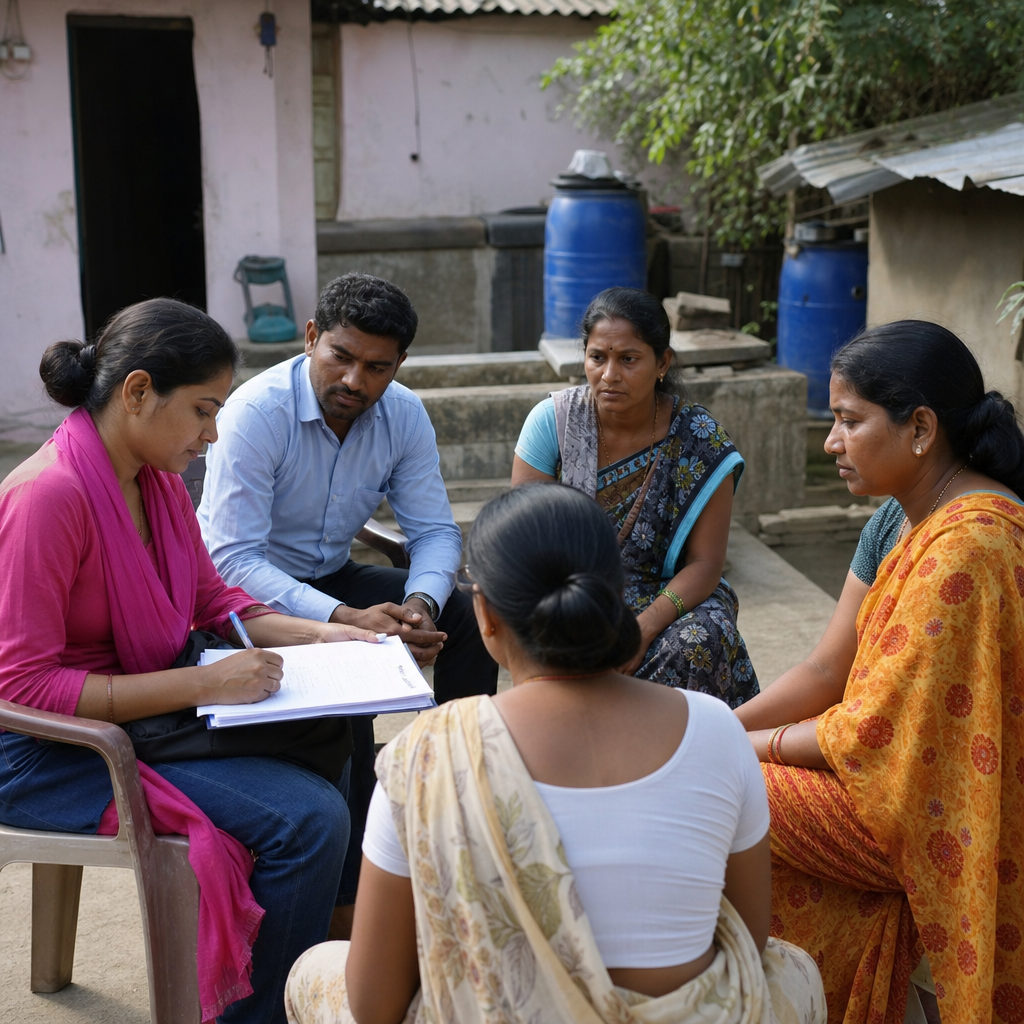
In my experience working with local sanitation programs, participation improves decisions in three specific ways. First, it reveals constraints that are invisible in office-based planning, such as high water tables, landlord-tenant conflicts, safety concerns for women and girls, or the fact that informal settlements may rely on shared facilities with unclear cleaning responsibilities. Second, it increases compliance because people are more likely to follow rules they helped shape. Third, it surfaces local knowledge, including trusted messengers, community-based financing habits, and practical maintenance routines that can make or break service uptake.
Learning matters just as much because sanitation systems change. Migration, flooding patterns, market prices for emptying, and treatment costs can shift quickly. Municipal teams need mechanisms to review data, compare neighborhoods, test new outreach methods, and update service standards. This is why strong governance rarely comes from a single campaign. It emerges from repeated cycles of planning, implementation, feedback, and correction. Communities that institutionalize these cycles are better positioned to reach citywide inclusive sanitation goals and to align with public health, environmental, and climate resilience objectives.
Who needs capacity, and what capacity actually includes
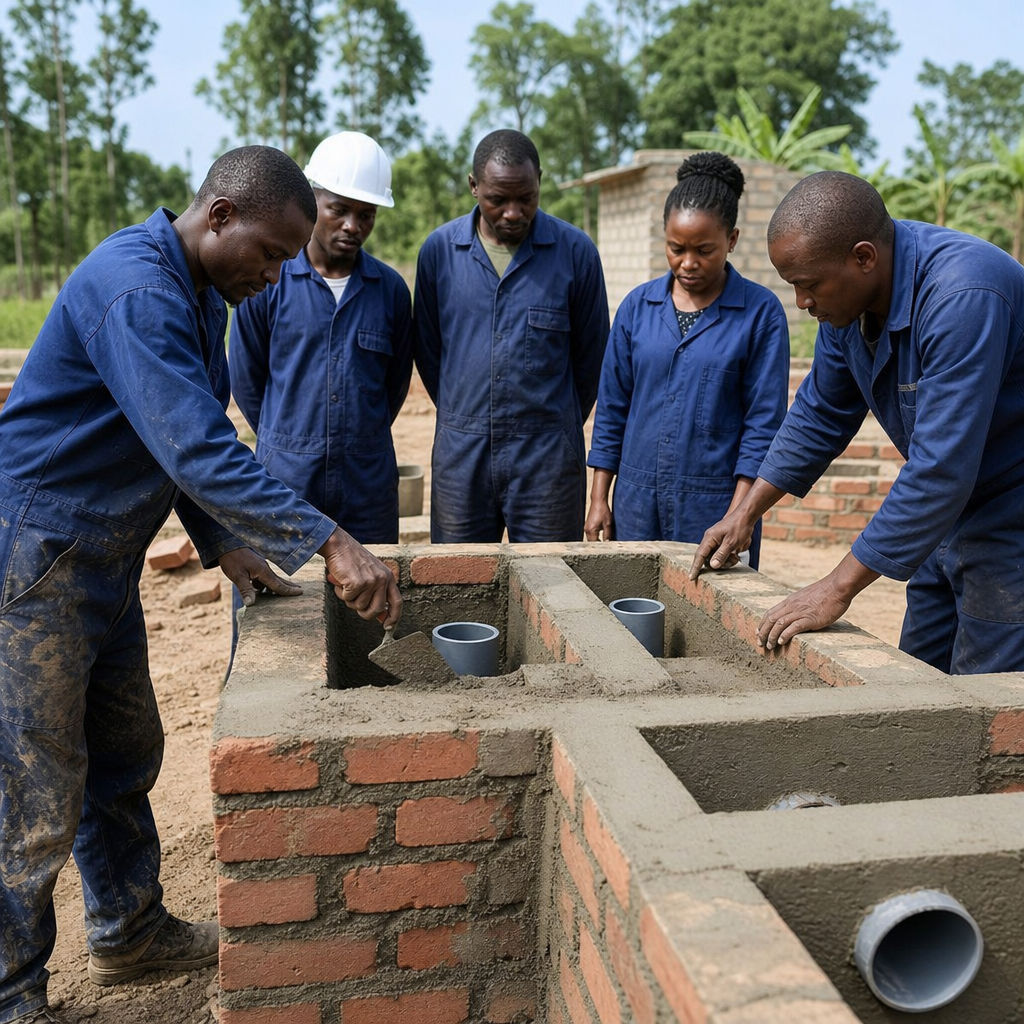
Capacity building for sustainable sanitation governance is not limited to training municipal officers. It spans multiple actors with different roles and incentives. Households need practical knowledge on safe containment, pit or tank maintenance, hygiene, user fees, and complaint channels. Community leaders need facilitation skills, conflict resolution methods, and enough technical literacy to explain service options accurately. Municipal departments need competence in planning, budgeting, procurement, bylaw enforcement, asset management, and data analysis. Utilities and private emptiers need customer service protocols, occupational health and safety procedures, route planning, and legal compliance. Schools, clinics, and community organizations need the ability to model good practice and relay feedback from vulnerable groups.
Capacity itself has several layers. Individual capacity includes knowledge and skills. Organizational capacity includes staffing structures, standard operating procedures, budgets, records, and supervision. System capacity includes policies, mandates, accountability lines, financing rules, and platforms for coordination. Many sanitation programs fail because they focus only on the individual layer. A workshop may teach staff how to inspect containment systems, but if no inspection checklist is approved, no transport is budgeted, and no department has clear authority to issue notices, behavior does not change at scale.
A practical way to assess needs is to ask five questions. Who is responsible for each step of the sanitation service chain? What decisions do they need to make? What information and tools do they require? What incentives support or block good performance? How will learning be captured and shared? These questions prevent generic training plans and lead to targeted support tied to actual governance gaps.
Designing participation that is inclusive, credible, and useful
Effective participation is structured, not symbolic. Public meetings alone are not enough, because the most affected residents are often the least able to attend or speak freely. Inclusive sanitation governance requires deliberate outreach to women, renters, persons with disabilities, informal workers, older adults, adolescent girls, and residents of unserved settlements. It also requires timing, language, and formats that fit local realities. In one program, evening meetings increased attendance among market workers, while separate small-group sessions allowed women to discuss safety and menstrual hygiene concerns that never emerged in mixed forums.
Credible participation begins with clear decision points. Residents should know what is open for input, what is constrained by law or budget, and when feedback will influence outcomes. If communities are asked to rank service priorities, authorities should publish the results and explain how they informed plans. This closes the loop and prevents consultation fatigue. Useful participation also depends on accessible evidence. Simple maps of overflowing hotspots, blocked drains, desludging wait times, or school toilet functionality can turn abstract complaints into actionable planning inputs.
Methods should match the purpose. Community scorecards work well for tracking service quality over time. Focus groups help explore barriers faced by specific groups. Household surveys provide baseline and follow-up data. Participatory mapping is especially effective in dense settlements where official records are poor. Social audits can review spending and contract performance. Digital channels, including WhatsApp hotlines or SMS complaint systems, can widen access, but they should complement in-person engagement because connectivity and literacy vary.
| Participation method | Best use in sanitation governance | Key limitation |
|---|---|---|
| Community scorecard | Compare cleanliness, reliability, and responsiveness across facilities or neighborhoods | Needs regular facilitation and agreed indicators |
| Participatory mapping | Identify unsafe emptying routes, flood-prone toilets, and unserved clusters | Maps must be updated as settlements change |
| Household survey | Measure access, affordability, satisfaction, and containment types at scale | More costly and slower than rapid feedback tools |
| Public hearing | Review plans, tariffs, bylaws, or contractor performance in a visible forum | Often dominated by confident speakers unless moderated well |
| Digital complaint channel | Capture service failures quickly and create response records | Can exclude people without phones or digital confidence |
Building learning systems that turn feedback into better services
Learning systems are the bridge between participation and improved governance. The essential principle is simple: collect information, interpret it with the right people, decide on changes, test those changes, and document the results. In sanitation, this can be built into monthly municipal review meetings, ward-level service dashboards, utility performance reviews, or joint inspections involving health, engineering, and community representatives.
Good learning systems use a mix of quantitative and qualitative evidence. Quantitative data may include desludging response times, treatment plant inflow, toilet functionality in schools, complaint closure rates, budget execution, or the number of illegal dumping incidents. Qualitative evidence may include resident narratives about safety, reasons households delay emptying, or operator feedback on why routes are inefficient. Both matter. Numbers show patterns; lived experience explains causes.
Named tools can make learning more disciplined. A theory of change helps stakeholders link activities, outputs, and outcomes. RACI matrices clarify who is responsible, accountable, consulted, and informed. Key performance indicators should be few enough to manage but meaningful enough to influence decisions. For service improvement, Plan-Do-Study-Act cycles are highly effective: test a change in one ward, review results, adapt, then expand. Geographic information systems can reveal clusters of need, while mobile data collection tools such as KoboToolbox speed up field reporting and reduce transcription errors.
Documentation is often the missing step. When staff turnover occurs, undocumented lessons disappear. Standard operating procedures, after-action reviews, short learning briefs, and shared digital folders protect institutional memory. Municipalities that treat knowledge as an asset improve faster because each pilot, inspection round, or grievance case adds to a usable evidence base rather than vanishing with the individuals involved.
Strengthening local institutions, finance, and accountability
Participation and learning must be anchored in institutions that can act. That means clarifying mandates, assigning budgets, and creating accountability pathways. In many towns, sanitation responsibilities are split among health offices, engineering departments, environment units, utilities, and private operators. Without formal coordination, gaps appear. Pits fill but no emptier is licensed. A treatment plant exists but haulage fees discourage legal discharge. Schools report broken toilets but maintenance funds are trapped in unrelated budget lines.
A strong governance model identifies a lead authority, sets service standards, and defines interfaces across agencies. Memoranda of understanding can help, but bylaws, tariff decisions, and budget codes provide more durable authority. Financing should cover both hardware and governance functions. Community engagement, inspections, data management, and operator training are not optional extras; they are part of service delivery. Costed sanitation improvement plans are therefore essential. They should distinguish capital expenditure, operating expenditure, major maintenance, and behavior change or oversight costs.
Accountability works best when citizens and institutions can both see performance. Public dashboards, posted service charters, grievance logs, and annual sanitation reviews create visibility. Independent verification also adds credibility. Universities, civil society networks, or multi-stakeholder committees can review progress and challenge weak reporting. The goal is not blame. It is to create a culture where evidence triggers response. Where this happens, even modest budgets can produce steady gains because wasteful practices are identified early and corrective action becomes normal.
Practical implementation roadmap for communities and municipalities
A practical roadmap begins with a baseline. Map stakeholders, service levels, infrastructure condition, legal mandates, financing flows, and existing participation channels. Then conduct a capacity assessment at individual, organizational, and system levels. From there, set a limited number of priorities for the first year, such as creating a complaint system, training emptiers on safety and licensing, establishing ward sanitation committees, or introducing quarterly learning reviews. Sequencing matters. Trying to reform everything at once usually overwhelms local teams.
Next, co-create a participation plan. Define target groups, methods, timelines, facilitation roles, and feedback loops. Pair this with a learning agenda that specifies what questions the program needs to answer. Why are some households not using shared toilets? Which settlements face the highest flood-related overflow risk? Are tariff subsidies reaching low-income users? Once questions are explicit, monitoring becomes more relevant and less bureaucratic.
Implementation should include mentoring, not just classroom training. Joint field visits, peer exchanges between municipalities, operator coaching, and review of real cases build competence faster than presentations alone. In one town, a peer visit to a neighboring fecal sludge transfer station resolved years of debate because staff could see staffing patterns, fee collection, and traffic management in action. Finally, review progress at fixed intervals, publish results, and revise plans openly. Sustainable sanitation governance grows through visible, repeated improvement.
Building capacity for sustainable sanitation governance is ultimately the work of creating durable local problem-solving. The strongest sanitation systems are not the ones with the most impressive launch events or the largest construction packages. They are the ones where residents know how to influence decisions, front-line workers understand standards, municipal leaders use data, and institutions keep learning when conditions change. Participation gives sanitation governance legitimacy and practical intelligence. Learning gives it adaptability and staying power.
For communities and municipalities focused on fostering participation and learning, the priority is clear. Move beyond one-time awareness campaigns and isolated workshops. Build routines that connect citizen voice, operational evidence, and institutional response. Start with a baseline, clarify roles, create inclusive engagement channels, track a small set of useful indicators, and document what improves results. If this hub guides your next steps, use it to map the subtopics you need most: inclusive facilitation, behavior change, grievance systems, school engagement, operator training, monitoring frameworks, and local financing. Then turn those lessons into a standing practice, because safe sanitation depends on governance that learns with people, not just for them.
Frequently Asked Questions
What does sustainable sanitation governance actually mean?
Sustainable sanitation governance refers to the systems, institutions, and decision-making processes that keep sanitation services working safely and fairly over time. It goes far beyond installing toilets, treatment plants, or fecal sludge trucks. In practice, it includes the laws, regulations, budgets, operational responsibilities, accountability mechanisms, technical skills, and community relationships needed to ensure that sanitation services continue functioning from household containment through emptying, transport, treatment, reuse, or disposal. A sanitation system is only as strong as the institutions that oversee it.
This is why capacity building starts with people, not pipes. Communities may receive new infrastructure, but if local governments cannot plan service coverage, operators cannot maintain assets, regulators cannot enforce standards, and users cannot access affordable services, the system quickly breaks down. Sustainable governance creates the conditions for long-term performance: clear roles among agencies, reliable financing, data for monitoring, inclusive planning, and mechanisms for continuous improvement. It ensures sanitation is not treated as a one-time construction project, but as a public service that must be managed every day.
Why is institutional capacity so important for safe sanitation outcomes?
Institutional capacity is what turns sanitation infrastructure into sanitation service. Toilets and treatment facilities may exist physically, but without capable institutions, they often fail to protect public health or the environment. Local authorities need the ability to set priorities, develop realistic sanitation plans, allocate funds, contract service providers, monitor compliance, and respond to failures. Service providers need operational systems, trained staff, equipment management, financial controls, and customer service processes. Regulators need authority and data to enforce standards. When any of these elements are weak, sanitation chains become fragmented and unsafe.
Strong institutional capacity also matters because sanitation is inherently cross-sectoral. It touches public health, water, urban development, environment, education, housing, and social inclusion. That means governance must coordinate many actors with different mandates and incentives. Without institutional capacity, responsibilities become unclear, budgets are duplicated or neglected, and households—especially low-income and marginalized groups—are left with unsafe or unaffordable options. Building institutional capacity helps create a stable framework for equitable service delivery, better financial performance, improved oversight, and resilience in the face of urban growth, climate risks, and changing community needs.
What kinds of capacity need to be built for sustainable sanitation governance?
Capacity building for sustainable sanitation governance is multi-dimensional. It includes technical capacity, such as understanding sanitation technologies, fecal sludge management, treatment standards, asset maintenance, and occupational health and safety. It also includes managerial capacity: planning service expansion, coordinating agencies, managing contracts, supervising operators, maintaining records, and using performance data. Financial capacity is equally important, because sanitation systems need realistic tariffs, subsidies where appropriate, capital planning, revenue collection, expenditure tracking, and long-term budgeting. Legal and regulatory capacity is also essential so institutions can define service obligations, issue permits, enforce standards, and protect public and environmental health.
Just as important is adaptive and social capacity. Officials and practitioners need the skills to engage communities, include women and vulnerable groups in decision-making, communicate behavior change messages, resolve conflicts, and build trust across stakeholders. Governance capacity also includes political leadership, accountability systems, and the ability to make decisions based on evidence rather than short-term pressures. In many contexts, the most effective capacity-building efforts combine formal training with mentoring, peer learning, on-the-job support, performance reviews, and institutional reforms. The goal is not simply to train individuals, but to strengthen the organizations and relationships that make safe sanitation possible over time.
How can communities and local governments work together to improve sanitation governance?
Communities and local governments play different but complementary roles in sanitation governance, and lasting progress depends on collaboration between them. Local governments typically carry responsibility for planning, regulation, service coordination, budgeting, and public accountability. Communities contribute local knowledge, identify barriers to access, monitor service quality, and help shape solutions that are socially acceptable and practical. When these two sides work in partnership, sanitation programs are more likely to respond to real needs, address inequalities, and maintain support after initial investments are made.
Effective collaboration usually begins with structured participation rather than one-off consultation. This can include community representation in sanitation planning processes, neighborhood mapping of service gaps, public review of budgets and service targets, feedback channels for complaints, and local monitoring of service performance. Community-based organizations, women’s groups, and informal settlement leaders can be especially valuable in identifying underserved households and operational issues that formal systems might miss. At the same time, local governments must create transparent processes, communicate responsibilities clearly, and act on community input. Good sanitation governance is not just about hearing people; it is about incorporating their experience into planning, financing, regulation, and service improvement in a meaningful way.
What are the biggest barriers to building capacity for sustainable sanitation governance?
One of the biggest barriers is the tendency to prioritize visible infrastructure over less visible institutional strengthening. Donors, politicians, and even communities often focus on the immediate delivery of facilities, while governance systems such as regulation, staffing, maintenance planning, and monitoring receive less attention and funding. As a result, infrastructure is built faster than the institutions needed to operate and sustain it. Other major barriers include fragmented responsibilities across agencies, weak intergovernmental coordination, insufficient local budgets, limited technical expertise, high staff turnover, and poor data systems that make it difficult to track performance or identify service failures.
There are also deeper structural barriers. In some settings, sanitation has low political priority because its benefits are less visible than roads, water supply, or electricity. Informal settlements may be excluded from official planning, leaving vulnerable populations underserved. Tariff structures may be unrealistic, making services financially unsustainable, while weak enforcement allows unsafe emptying, dumping, or treatment practices to continue. Overcoming these barriers requires a long-term approach: clarifying institutional mandates, investing in staff development, strengthening financial systems, building reliable monitoring frameworks, and embedding sanitation within broader public health and urban governance agendas. Most importantly, it requires recognizing that sustainable sanitation is not achieved when assets are delivered, but when institutions can manage services equitably and effectively year after year.