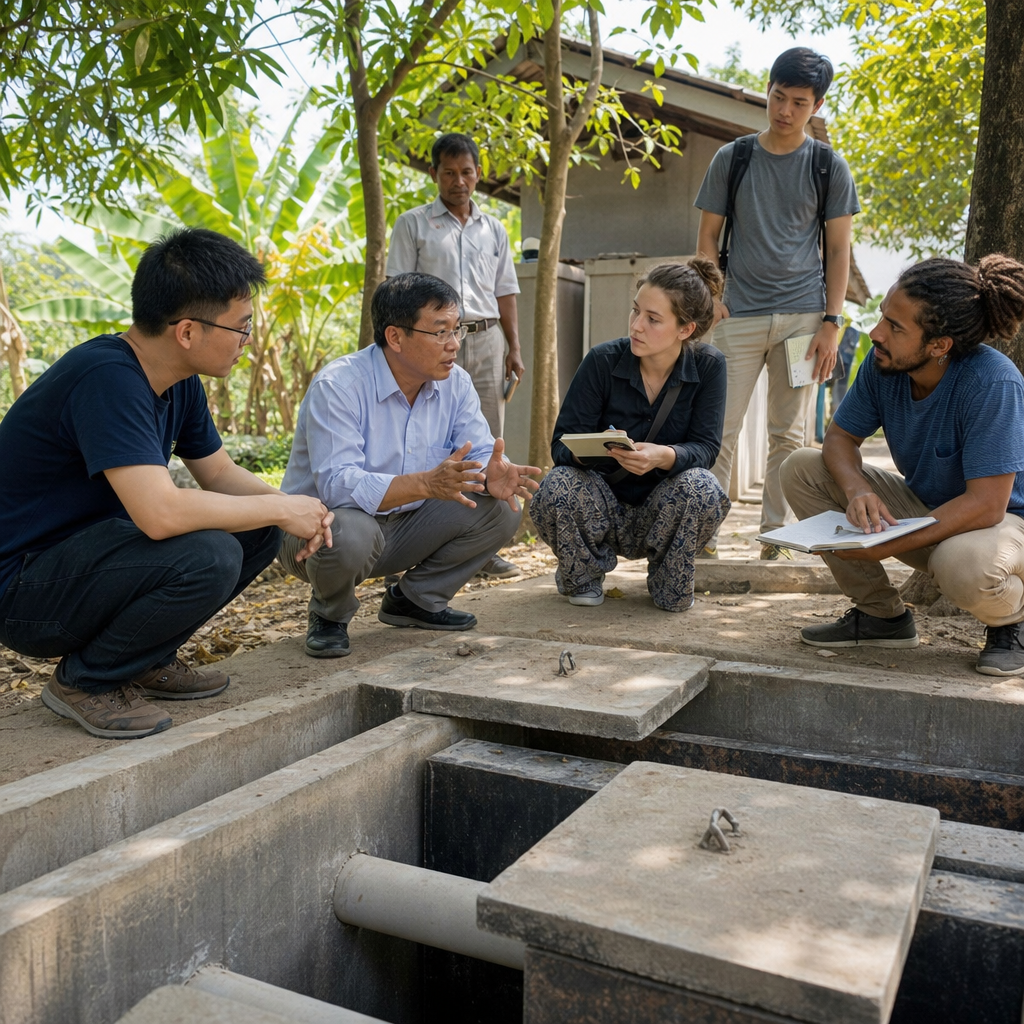
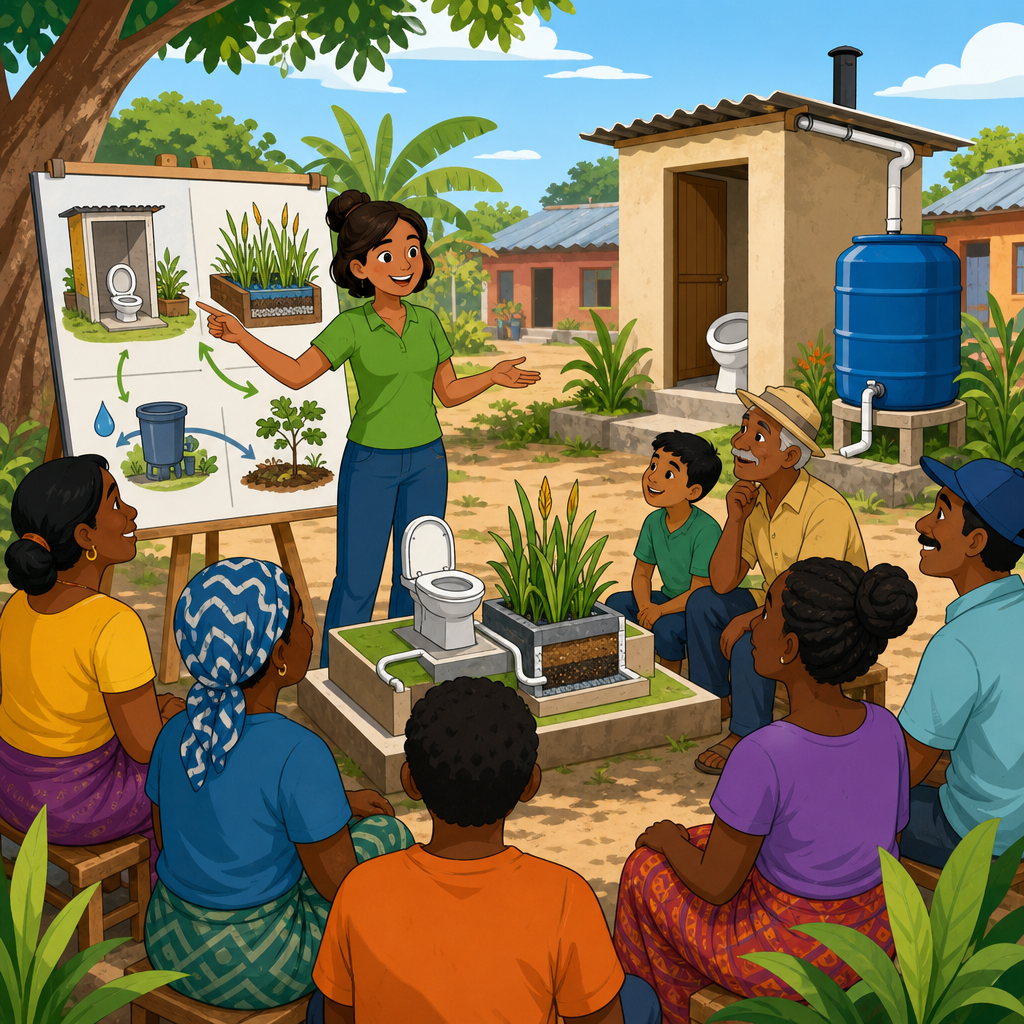
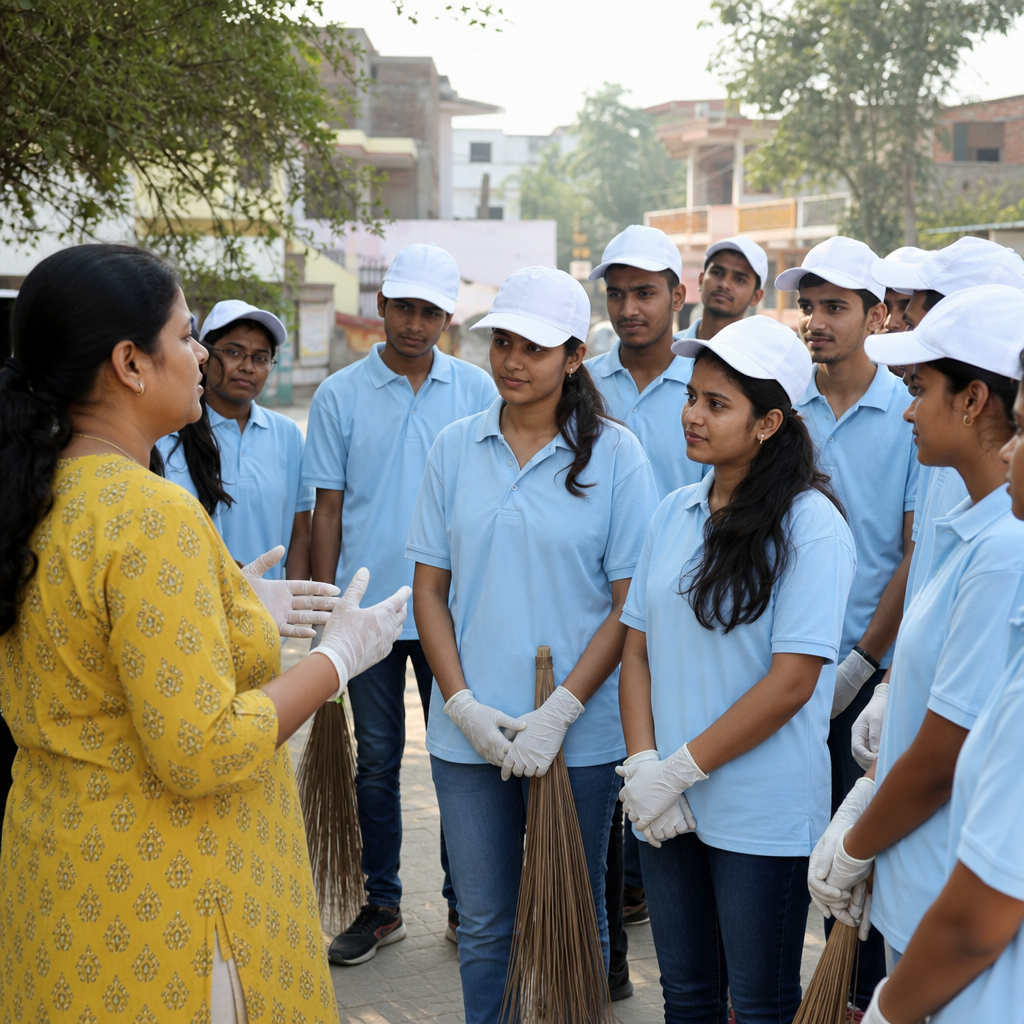
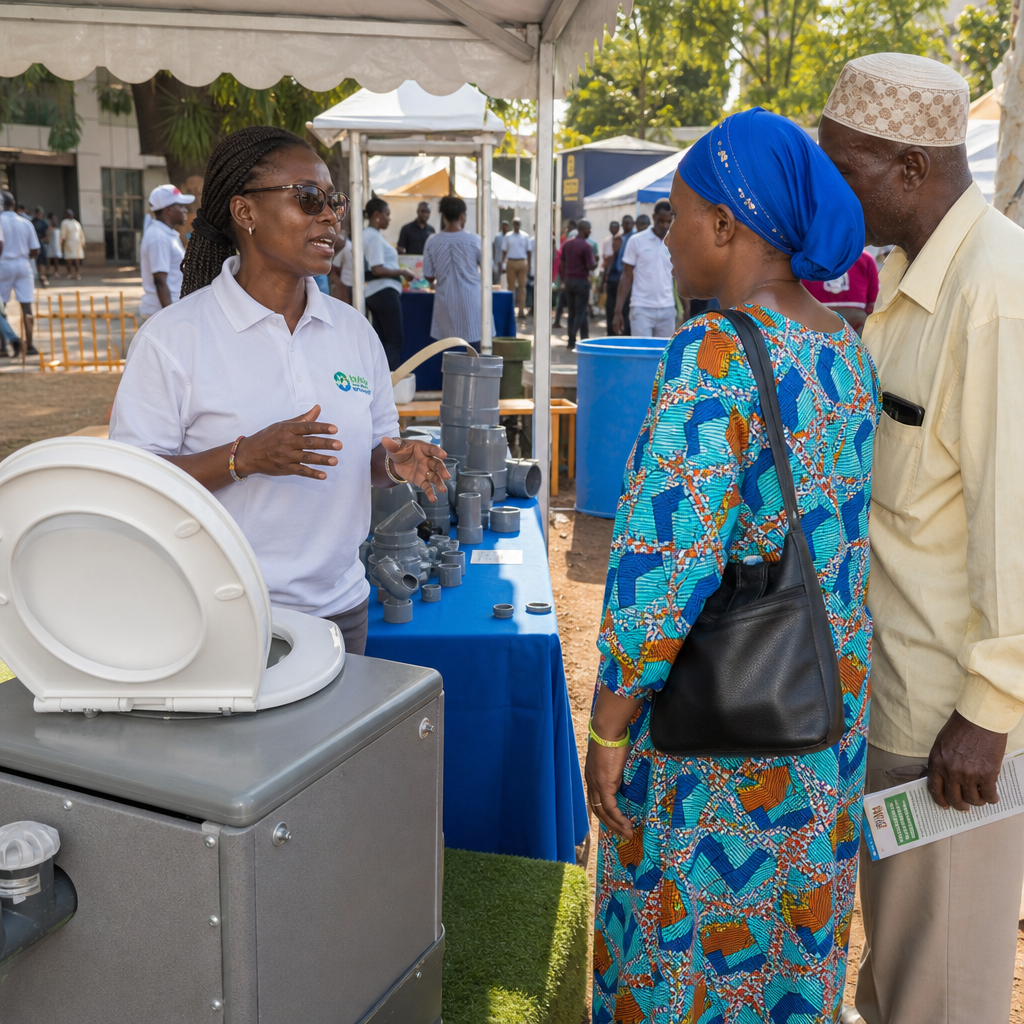
Interactive EcoSan exhibits for community engagement turn sanitation education from a poster on a wall into a lived experience that people can question, test, and remember. In this context, EcoSan means ecological sanitation: systems and practices that treat human waste as a resource stream, conserve water, reduce pollution, and support safer nutrient recovery when conditions, design, and governance allow it. Community engagement means residents, students, local leaders, health workers, and operators are not passive audiences; they participate, challenge assumptions, and connect sanitation decisions to daily life. Educating for change matters because sanitation behavior rarely shifts through information alone. In my work on community learning programs, the most effective exhibits have combined touchable models, clear risk communication, and locally relevant demonstrations that show how toilets, handwashing, waste treatment, and resource recovery affect health, dignity, cost, and the surrounding environment.
This hub article explains how interactive EcoSan exhibits can anchor a broader education strategy under community engagement and education. It covers what these exhibits are, why they work, which topics they should include, how to design them for different audiences, and how to measure results. It also positions this page as the central guide for Educating for Change, linking practical learning goals across schools, community centers, utilities, municipalities, and nonprofit campaigns. The core principle is simple: when people can see a urine-diverting toilet cross-section, compare treated and untreated water samples, track pathogen barriers, or calculate water savings themselves, abstract sanitation concepts become concrete. That clarity supports better household decisions, stronger public support for infrastructure, safer operations, and more informed conversations about circular sanitation systems.
Why Interactive EcoSan Exhibits Change Behavior Better Than Static Displays
Interactive exhibits work because they address the three barriers that repeatedly weaken sanitation education: low relevance, low retention, and low trust. A static display may explain fecal contamination pathways, but an interactive station that lets visitors trace contamination from toilet to drain to river using colored flow paths creates an immediate mental model. People retain what they manipulate. Public health educators have long used participatory methods for this reason, and sanitation programs that borrow from museum design, adult learning theory, and behavior change communication consistently perform better than lecture-only outreach.
In practice, the strongest exhibits answer the questions communities already have. Is EcoSan safe? Does it smell? Who empties it? What happens to urine and feces after collection? Will this save money compared with a flush toilet and septic tank? Can it work in flood-prone settlements or dense neighborhoods? Each question should be answered visually and directly. For example, a sealed transparent model can show the separation of urine and feces in a urine-diverting dry toilet, while a side panel explains moisture control, cover material, and vault management. Another station can compare water demand: a conventional six-liter flush used five times daily by a family of five requires far more water than a dry or low-flush alternative.
Trust increases when exhibits acknowledge limitations. EcoSan is not one product and it is not appropriate everywhere. Systems depend on user compliance, maintenance, safe handling, and enabling policy. Demonstrating tradeoffs openly helps communities believe the benefits. When I have seen residents spend time at exhibits that include both advantages and failure points, their questions become sharper and their support more durable. They are not being sold a device; they are being invited into an informed decision.
Core Topics Every Educating for Change Hub Should Cover
As a sub-pillar hub under community engagement and education, this page should organize EcoSan learning around a small number of recurring themes that connect to deeper articles and program materials. Those themes are sanitation and public health, water stewardship, nutrient recovery, climate resilience, user experience, operations and maintenance, inclusion, financing, and local governance. Together they create a complete picture of why ecological sanitation matters beyond the toilet itself.
Sanitation and public health should come first because communities usually engage when they understand exposure pathways. Exhibits should illustrate the fecal-oral route, the role of handwashing with soap, and the difference between containment, treatment, and reuse. Water stewardship is the next bridge topic. In water-stressed regions, showing how reduced flushing lowers demand makes EcoSan immediately relevant. Nutrient recovery then expands the discussion: nitrogen, phosphorus, and potassium in excreta can support agriculture when treatment and application are properly managed, although standards, crop restrictions, and storage protocols matter greatly.
Climate resilience deserves its own place because conventional sanitation often fails during floods, droughts, and power outages. Exhibits can compare system vulnerability and recovery time after extreme weather. User experience matters just as much as technical performance; if a toilet is difficult to clean, poorly ventilated, unsafe at night, or inaccessible to older adults, adoption will stall. Operations and maintenance should explain responsibilities, service chains, spare parts, and desludging or emptying schedules. Inclusion ensures the exhibits address menstrual health, disability access, child-friendly design, and cultural preferences. Financing and governance complete the picture by showing who pays, who regulates, and how community oversight affects long-term success.
Design Principles for Effective EcoSan Learning Spaces
The best interactive EcoSan exhibits are designed like decision tools rather than promotional booths. Start with the audience. Schoolchildren need tactile learning and simple cause-and-effect visuals. Municipal officials need lifecycle cost comparisons, land-use implications, and service chain diagrams. Farmers need clear guidance on treatment safety, storage duration, application methods, and legal restrictions. Frontline operators need maintenance procedures, hazard controls, and personal protective equipment messaging. One exhibit can serve all these groups if the information is layered from basic to advanced.
Physical design matters. Durable materials, washable surfaces, clear iconography, and multilingual labeling increase usefulness. Accessibility is nonnegotiable: provide readable text, high color contrast, seated viewing angles, and hands-on components that can be reached by children and wheelchair users. Odor-free demonstration units are essential; a poorly maintained sample toilet can undermine months of outreach. Good ventilation, supervised interaction, and regular cleaning protect both credibility and visitor safety.
Digital augmentation can deepen learning without replacing physical interaction. QR codes can connect visitors to maintenance guides, local service maps, school lesson plans, or municipal regulations. Short audio explanations help visitors with low literacy. Simple sensors can display water use, vault fill levels, or temperature in composting units. However, technology should support the story, not become the attraction. In lower-resource settings, mechanical models, flip panels, and low-cost sample kits often outperform touchscreens because they are easier to maintain and invite conversation instead of passive viewing.
| Exhibit element | What it teaches | Best audience | Practical example |
|---|---|---|---|
| Cutaway toilet model | How separation, containment, and ventilation work | Households, students | Transparent urine-diverting pedestal with labeled flow paths |
| Contamination pathway board | How pathogens move through water, hands, food, and surfaces | General public | Color-coded tokens tracing household waste to nearby drains and wells |
| Resource recovery station | Nutrient cycles and safe reuse principles | Farmers, cooperatives | Samples showing treated compost, storage timelines, and crop-use guidance |
| Cost comparison panel | Capital, operating, and water costs over time | Officials, landlords, households | Five-year comparison of flush, septic, and dry systems in one locality |
| Maintenance simulator | Cleaning, cover material use, emptying, and safety steps | Operators, caretakers | Hands-on checklist for routine inspection and corrective action |
What to Include in Specific Exhibit Modules
A complete EcoSan exhibit rarely succeeds as a single installation. It should be built as modules that can travel, scale, or be adapted for schools, clinics, libraries, market spaces, and town halls. The first module should explain why sanitation systems exist at all: to break disease transmission and protect water sources. Use a clear demonstration of pathogens versus indicators, and explain that visual cleanliness does not guarantee microbiological safety. This distinction is often the turning point in public understanding.
The second module should show sanitation options side by side. Compare urine-diverting dry toilets, composting toilets, pour-flush systems, septic tanks, container-based sanitation, and sewer-connected toilets. The goal is not to rank them universally but to show fit-for-context. Rocky terrain, high groundwater, informal settlements, or chronic drought each change what is feasible. A context board can ask visitors about water availability, soil conditions, flood risk, household size, and service access, then guide them toward likely options.
The third module should focus on safe operation. This includes handwashing, cleaning routines, moisture control, pest prevention, cover materials such as ash or sawdust where appropriate, vault rotation, and storage timelines. Here precision matters. For example, treatment and reuse guidance must align with local public health rules and international references such as the World Health Organization framework for safe wastewater, excreta, and greywater use. Broad claims about fertilizer value should never skip over treatment barriers, crop restrictions, and worker protection.
The fourth module should connect sanitation to livelihoods and municipal systems. Visitors need to see collection routes, treatment sites, quality assurance steps, and end-use markets if reuse is part of the model. In one successful town program, residents engaged far more seriously after seeing a map of who handled each stage and what standards applied at each transfer point. Once the invisible service chain became visible, complaints became more constructive and willingness to pay improved.
Adapting EcoSan Exhibits for Schools, Communities, and Decision-Makers
Different settings require different exhibit strategies. In schools, exhibits should support curriculum outcomes in science, health, and environmental studies. A lesson might ask students to calculate household water savings, identify contamination risks around the school grounds, or compare decomposition conditions in sealed containers. Students are powerful messengers; many sanitation improvements begin when children bring home practical questions about handwashing stations, toilet cleaning, or rainwater use.
In community spaces, the exhibit should be conversational and locally grounded. Use neighborhood maps, familiar prices, local languages, and examples from nearby households or institutions. If there is resistance, invite it. A staffed exhibit where people can raise concerns about smell, privacy, menstrual hygiene, or emptying is more persuasive than one-way messaging. In my experience, trust grows when facilitators use plain language and show maintenance tools, service contacts, and realistic budgets rather than idealized renderings.
For municipal officers, utility managers, and elected leaders, the emphasis shifts to policy and performance. These audiences want evidence on capital cost, land requirements, water demand, regulatory compliance, and service outcomes. Include case studies from cities or districts with similar density and climate. Show what failed as well as what worked. Officials understand risk; they respond to transparent discussion of enforcement, contracts, operator training, and monitoring. A good decision-maker exhibit functions almost like a briefing room, turning public education into infrastructure literacy.
Measuring Whether Exhibits Actually Drive Change
An exhibit is only valuable if it changes understanding, confidence, behavior, or decisions. Measurement should begin before installation with baseline surveys or interviews. Ask what visitors already believe about sanitation safety, water use, reuse, and system maintenance. Then track changes through short exit questions, observation, follow-up calls, and practical indicators such as attendance at training sessions, requests for household assessments, school hygiene improvements, or sign-ups for local sanitation services.
Use both leading and lagging indicators. Leading indicators include time spent at each station, questions asked, downloads of guidance materials, and facilitator notes on recurring misconceptions. Lagging indicators include toilet upgrades, reduction in visible open disposal, better cleaning schedules in public toilets, increased handwashing station functionality, or stronger municipal budget support for non-sewered sanitation. If resource recovery is part of the message, also monitor whether users follow storage and handling rules correctly. Knowledge without safe practice is not a successful outcome.
Qualitative feedback is especially important. People may understand the technical message yet remain unconvinced because of stigma, tenancy rules, lack of space, or unclear responsibility for maintenance. Good evaluation captures these barriers and feeds them back into exhibit redesign. The strongest programs treat exhibits as evolving tools. Labels are rewritten, visuals are simplified, myths are addressed more directly, and staff are trained to answer the same difficult questions with consistency and evidence.
Interactive EcoSan exhibits for community engagement are most effective when they function as the public learning engine for Educating for Change. They make sanitation visible, practical, and discussable. They help residents understand health protection, water savings, and resource recovery without hiding the operational discipline required for success. They give schools a hands-on teaching platform, communities a forum for informed dialogue, and decision-makers a clearer view of service options and tradeoffs. As the hub article in this subtopic, this page establishes the foundation for deeper resources on school programming, exhibit design, operator training, inclusive sanitation, reuse safety, and evaluation methods.
The main benefit is not simply awareness. It is better decisions made earlier and with less confusion: households choosing systems that fit their context, institutions improving maintenance before failure, and local governments communicating sanitation choices with more credibility. If you are building a community engagement and education program, start by mapping the questions your audience asks most often, then design one interactive exhibit module that answers them clearly, honestly, and locally. From there, expand into a full Educating for Change hub that turns sanitation knowledge into sustained community action.
Frequently Asked Questions
What are interactive EcoSan exhibits, and why do they matter for community engagement?
Interactive EcoSan exhibits are hands-on learning tools designed to help people understand ecological sanitation in practical, memorable ways. Instead of relying only on signs, lectures, or static displays, these exhibits invite participants to touch models, test ideas, follow waste and water flows, compare sanitation options, and ask questions in real time. In this setting, EcoSan refers to ecological sanitation systems and practices that aim to treat human waste as a resource stream, reduce water use, lower pollution risks, and support safer nutrient recovery where the technical, social, health, and governance conditions make that possible. The interactive format matters because sanitation is often misunderstood, sensitive, or invisible until something goes wrong. When community members can see how a urine-diverting toilet works, simulate treatment steps, explore safety barriers, or compare water use between technologies, abstract concepts become easier to trust and discuss. That creates stronger engagement from residents, students, local leaders, health workers, operators, and educators, and it helps move sanitation from a taboo topic to a shared public conversation about health, dignity, environment, and local problem-solving.
How do interactive exhibits help communities understand ecological sanitation better than traditional education materials?
Interactive exhibits improve understanding because they turn sanitation education into an experience rather than a one-way message. Traditional materials such as posters or pamphlets can introduce important facts, but they often struggle to show how systems function over time, what users are expected to do, and why proper operation and maintenance matter. Interactive EcoSan exhibits can demonstrate separation, storage, treatment, composting principles, safe handling practices, odor control, ventilation, water conservation, and nutrient cycling in ways that are visual and participatory. For example, a simple flow model can show where urine, feces, wash water, and treated outputs go, while a role-play station can help users think through household routines, cleaning practices, and common mistakes. This approach is especially valuable in community engagement because it welcomes questions, surfaces concerns early, and allows facilitators to correct myths immediately. It also supports different learning styles and literacy levels. People are more likely to remember what they have handled, discussed, and tested themselves, which can improve acceptance, more informed decision-making, and safer long-term use of EcoSan systems.
Who should be involved in designing and facilitating EcoSan exhibits for community engagement?
The strongest EcoSan exhibits are usually created and facilitated through collaboration rather than by a single organization working alone. Community engagement is most effective when residents, students, teachers, local leaders, sanitation workers, public health officials, engineers, operators, and community-based organizations all have a role in shaping the experience. Residents bring practical knowledge about local habits, concerns, cultural norms, affordability, and space constraints. Health workers can help ensure that messages about hygiene, exposure reduction, and safe handling are accurate and understandable. Technical experts can explain treatment pathways, system design, maintenance needs, and limitations without oversimplifying. Operators and service providers contribute essential insight into what works in real settings, including collection logistics, repairs, storage, training needs, and long-term management. Involving schools, youth groups, and women’s groups can also broaden participation and help make the exhibits more relevant to daily life. A well-designed exhibit should reflect local language, local sanitation realities, and local decision-making structures. When communities see their own priorities represented, the exhibit feels less like an outside campaign and more like a shared platform for learning and action.
What topics should an effective interactive EcoSan exhibit include?
An effective interactive EcoSan exhibit should go beyond promoting a technology and instead explain the full sanitation chain clearly and responsibly. Key topics include what ecological sanitation is, how different EcoSan systems work, what users need to do correctly, how water can be conserved, and how pollution can be reduced. It should also address hygiene practices, pathogen risks, treatment requirements, storage time, maintenance routines, odor and insect control, accessibility, inclusion, and the importance of trained operation and oversight. If nutrient recovery is discussed, the exhibit should explain that reuse is not automatic or risk-free; it depends on proper design, treatment, safe handling, local regulations, environmental conditions, and governance systems. Good exhibits also compare EcoSan with other sanitation options so visitors understand trade-offs in cost, maintenance, user behavior, land needs, and service requirements. Practical components such as maintenance checklists, troubleshooting scenarios, smell-free design features, cleaning demonstrations, and lifecycle diagrams can make the content far more useful. The goal is to provide a balanced, honest understanding that builds confidence where appropriate while also making clear that successful EcoSan depends on behavior, management, and institutional support as much as hardware.
How can communities measure whether interactive EcoSan exhibits are actually making a difference?
Communities can measure the impact of interactive EcoSan exhibits by looking at both learning outcomes and practical changes over time. A good starting point is to assess whether visitors leave with stronger understanding of key concepts such as source separation, water savings, safe handling, maintenance needs, and the conditions required for nutrient recovery. This can be done through simple before-and-after surveys, short quizzes, group discussions, or facilitator observations. It is also useful to track participation across different groups, including households, youth, local officials, school staff, and sanitation workers, to see whether the exhibit is reaching the broader community rather than only a narrow audience. Beyond knowledge, communities should examine behavior and system performance. Are more people using toilets correctly? Are maintenance routines improving? Are there fewer misunderstandings about odors, safety, or reuse? Are local leaders more willing to support budgets, training, or policies related to sanitation? Longer-term indicators may include better upkeep of facilities, stronger demand for training, improved acceptance of service models, and more informed public dialogue about sanitation choices. The most meaningful evaluation combines education metrics with operational and social indicators, because the real success of an EcoSan exhibit is not just that people enjoyed it, but that they better understand sanitation and can participate more confidently in decisions that affect community health and environmental outcomes.