Culturally adapted sanitation education programs help communities turn public health guidance into daily practice by aligning messages, teaching methods, and behavior change strategies with local language, beliefs, routines, and decision-making structures. In practical terms, sanitation education covers safe toilet use, handwashing with soap, menstrual hygiene support, child feces disposal, water handling, and the maintenance habits that keep facilities working over time. The culturally adapted part matters because people do not adopt sanitation behaviors simply because information exists; they act when advice fits their social reality, household economics, gender norms, and lived experience.
Across community engagement work, I have seen the same pattern repeatedly: technically sound sanitation campaigns fail when they sound imported, ignore power dynamics, or treat households as passive recipients. A poster that works in one district can fail in another because the examples are wrong, the imagery is offensive, or the advice conflicts with long-standing practices around privacy, purity, disability access, or caregiving. By contrast, programs built with community leaders, teachers, health workers, women’s groups, and youth tend to produce stronger uptake because they answer the real question people ask: how does this fit our lives?
This hub page on Educating for Change explains how culturally adapted sanitation education programs are designed, delivered, evaluated, and improved. It also connects the major components of the subtopic: audience research, message framing, school and community delivery channels, behavior change methods, inclusion, monitoring, and long-term ownership. If you want sanitation education that improves health outcomes, reduces open defecation, increases handwashing compliance, and protects infrastructure investment, adaptation is not optional. It is the operating principle that makes education credible, usable, and sustainable.
What culturally adapted sanitation education programs include
A culturally adapted sanitation education program is a structured effort to change sanitation knowledge, attitudes, social norms, and routine behaviors using content and delivery methods tailored to a specific population. The program may be led by a local government, school system, NGO, utility, clinic network, or community-based organization, but the core components are consistent. First, it defines target behaviors clearly: for example, every household member uses a latrine, caregivers dispose of child feces in a toilet, and students wash hands with soap after toilet use and before eating. Second, it identifies barriers and motivators through formative research rather than assumption. Third, it uses trusted communication channels, such as teachers, religious leaders, peer educators, village health committees, and radio presenters speaking in local languages.
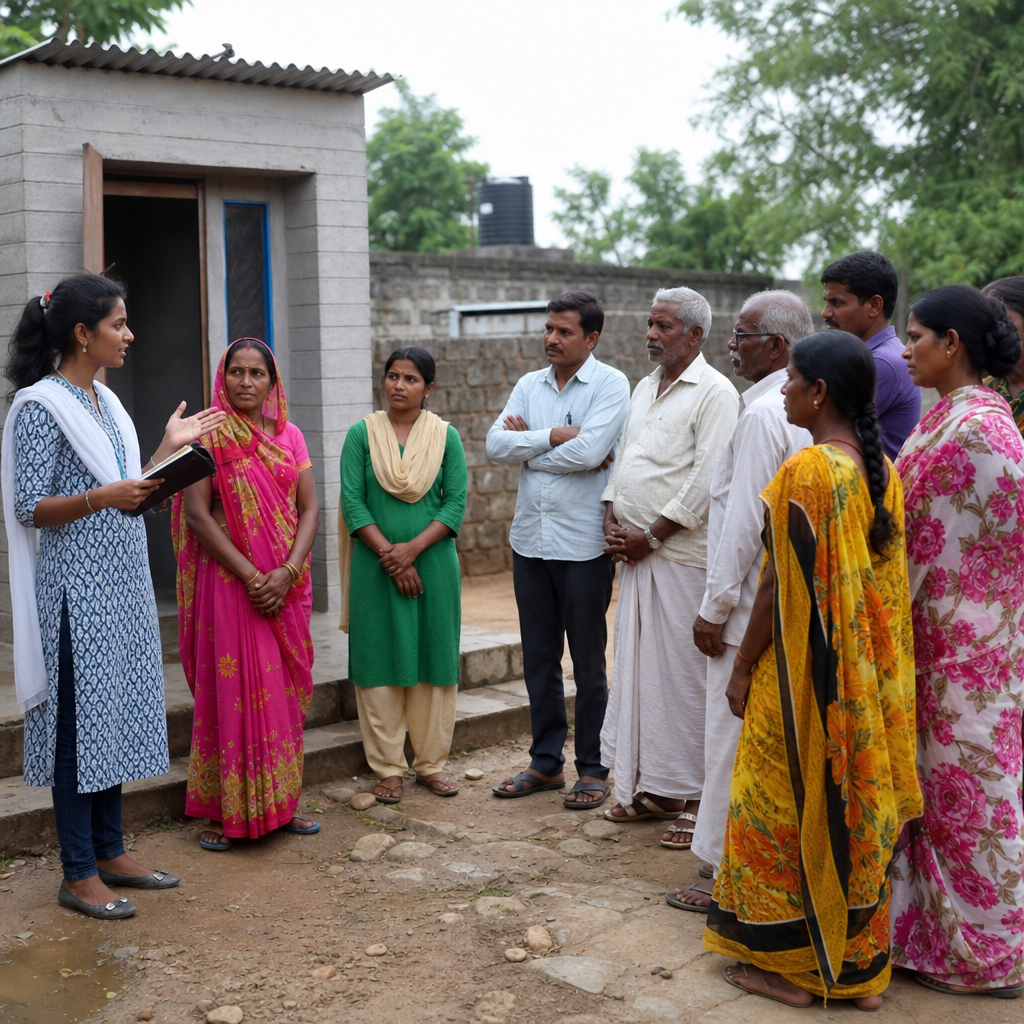
Effective programs also account for household roles. In many settings, women manage cleaning and child care, men control spending on repairs, landlords decide on facility upgrades, and elders influence what is considered acceptable. A generic lesson misses these distinctions. A culturally adapted approach might create separate discussion sessions for adolescent girls on menstrual waste disposal, community dialogues for fathers on financing latrine slabs, and practical demonstrations for caretakers of children under five on safe feces disposal. It may also use terms people actually use for toilets and hygiene rather than official vocabulary that feels distant or stigmatizing.
Because this is a hub article, it is useful to understand the full scope of Educating for Change. The subtopic includes sanitation behavior change communication, school sanitation curricula, participatory community-led learning, social and behavior change frameworks, hygiene promotion, communication materials design, training of facilitators, local language translation, inclusive outreach for people with disabilities, and program monitoring. A strong hub article must clarify how these pieces connect: education is not a one-off campaign but a system of repeated, context-sensitive reinforcement.
Why adaptation improves sanitation outcomes
Cultural adaptation improves sanitation outcomes because behavior is social, not merely informational. The World Health Organization and UNICEF Joint Monitoring Programme has long shown that sanitation progress depends not only on facility coverage but on use, maintenance, and safely managed service chains. Education influences each of these. When messages reflect local norms, people are more likely to remember them, discuss them, and act on them. When messages conflict with identity or routine, people often reject them even when they understand the health argument.
I have worked with teams that tested two versions of the same handwashing lesson. The standard version used clinical wording and stock photos. The adapted version used local sayings about caring for children, showed actual neighborhood handwashing stations, and addressed a common belief that visibly clean hands are safe enough. Recall and participation were dramatically better with the adapted lesson, but the more important result was practical: schools restocked soap more consistently because teachers felt the lesson belonged to them rather than to an external project.
Adaptation also improves equity. Standard sanitation education often excludes people with limited literacy, minority language speakers, migrants, informal settlement residents, and people with mobility, hearing, or visual impairments. If a campaign relies only on printed leaflets, it automatically narrows reach. If it assumes every household has a private toilet, it misses compound latrines and shared facilities. Good programs adapt for those realities. That may mean audio messaging, visual demonstrations, tactile teaching aids, sign language interpretation, or examples specific to shared sanitation management. Better adaptation produces better comprehension, and better comprehension raises the odds of lasting behavior change.
Core design principles for Educating for Change
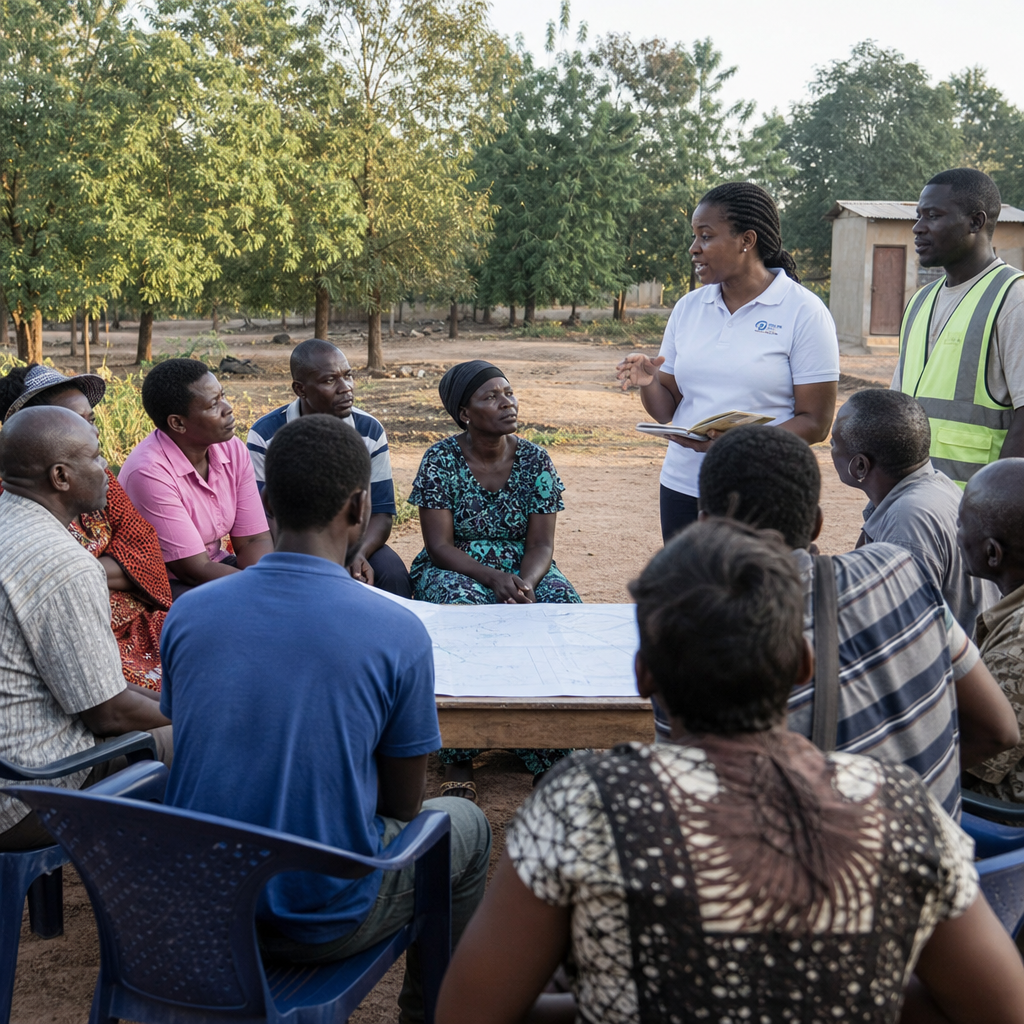
Design begins with formative assessment. Before writing materials, teams need baseline information on current behaviors, local terminology, seasonal pressures, power relations, and infrastructure constraints. Common methods include household surveys, focus group discussions, key informant interviews, transect walks, school observations, and barrier analysis. In sanitation work, direct observation often reveals gaps that self-report misses, such as nonfunctional locks, absent soap, full pits, poor lighting, or child potties left unemptied. These details matter because education cannot solve hardware failures, but it must address how people use imperfect systems.
Programs should then segment audiences instead of treating “the community” as a single group. Caregivers of toddlers need different guidance from schoolchildren. Landlords need different messages from tenants. Adolescent boys and girls may face different norms around privacy and facility cleanliness. Segmenting audiences improves message precision and avoids the common failure of broad campaigns that say little to anyone in particular.
| Program element | What strong adaptation looks like | Example |
|---|---|---|
| Language | Uses local terms and plain speech | Radio spots in the dominant home language, not only the official language |
| Messenger | Delivered by trusted figures | Female health volunteers leading sessions on child feces disposal |
| Setting | Matches where behavior occurs | School toilet demonstrations instead of classroom-only lectures |
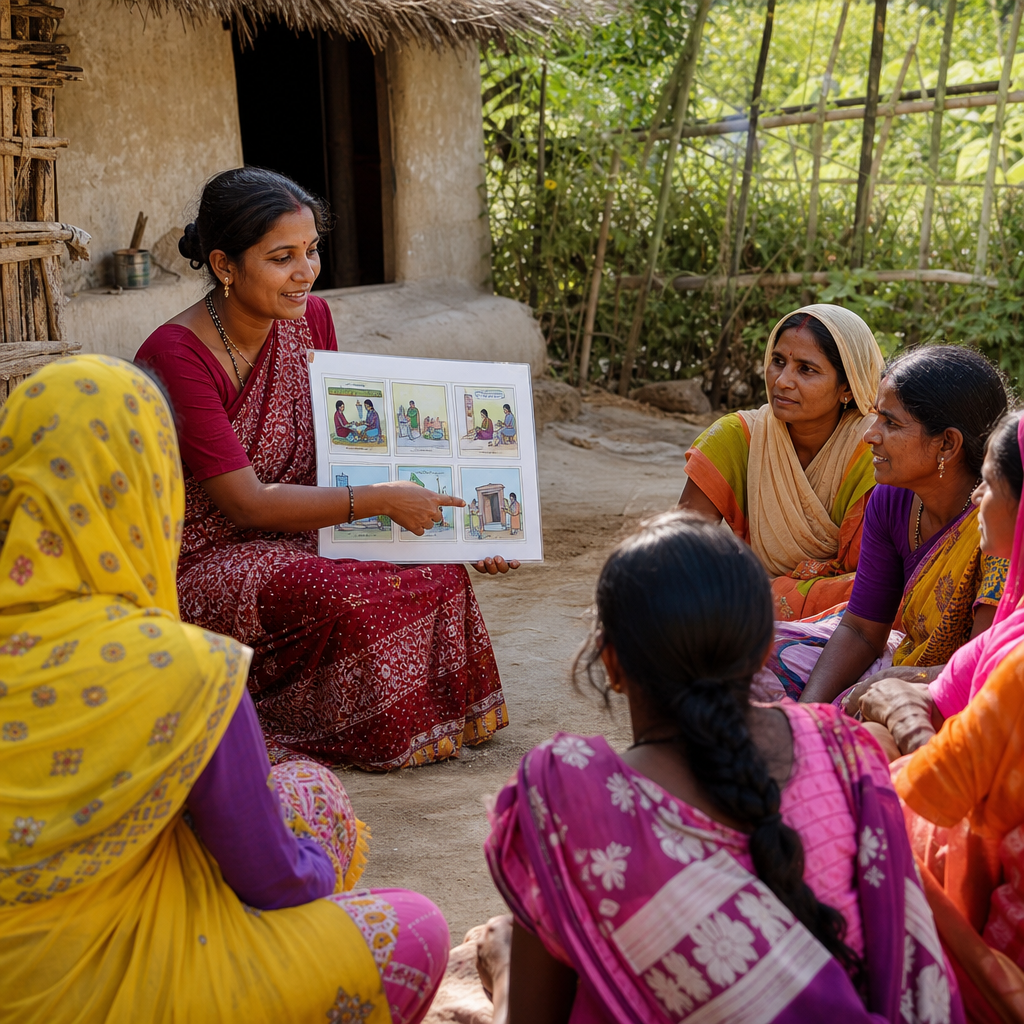
| Inclusion | Accounts for disability, literacy, and access barriers | Pictorial flipcharts and accessible meeting spaces |
| Reinforcement | Repeats messages across channels | Home visits, parent meetings, and wall prompts near handwashing stations |
Another principle is to link education to a behavior change model rather than relying on awareness alone. Programs often draw on COM-B, the Health Belief Model, Social Norms Theory, or behavior-centered design to identify whether the real issue is capability, opportunity, motivation, perceived risk, convenience, disgust, status, or habit. For example, if households already believe sanitation matters but lack nearby water for handwashing, motivation is not the binding constraint. Education should then focus on practical setup, such as low-cost tippy taps or shared maintenance schedules, instead of repeating disease facts people already know.
Delivery channels that work in communities and schools
Sanitation education is most effective when it uses multiple delivery channels that reinforce one another. Community meetings are useful for norm setting, but they rarely change routines by themselves. Home visits allow tailored coaching on toilet maintenance, child feces disposal, and handwashing station placement. Schools create early habits and can influence households when children bring messages home, especially if student clubs monitor cleanliness and handwashing supplies. Clinics and maternal health services can integrate sanitation counseling for caregivers of young children, a group central to diarrheal disease prevention.
In many programs, community health workers become the backbone of delivery because they combine trust, continuity, and local knowledge. However, they need practical tools and supervision. I have seen volunteer networks lose momentum when they received only one orientation and a stack of leaflets. Performance improved when supervisors used checklists, refresher trainings, and simple dashboards tracking home visits, soap availability, and latrine use indicators. Support systems matter because education quality drops quickly without coaching.
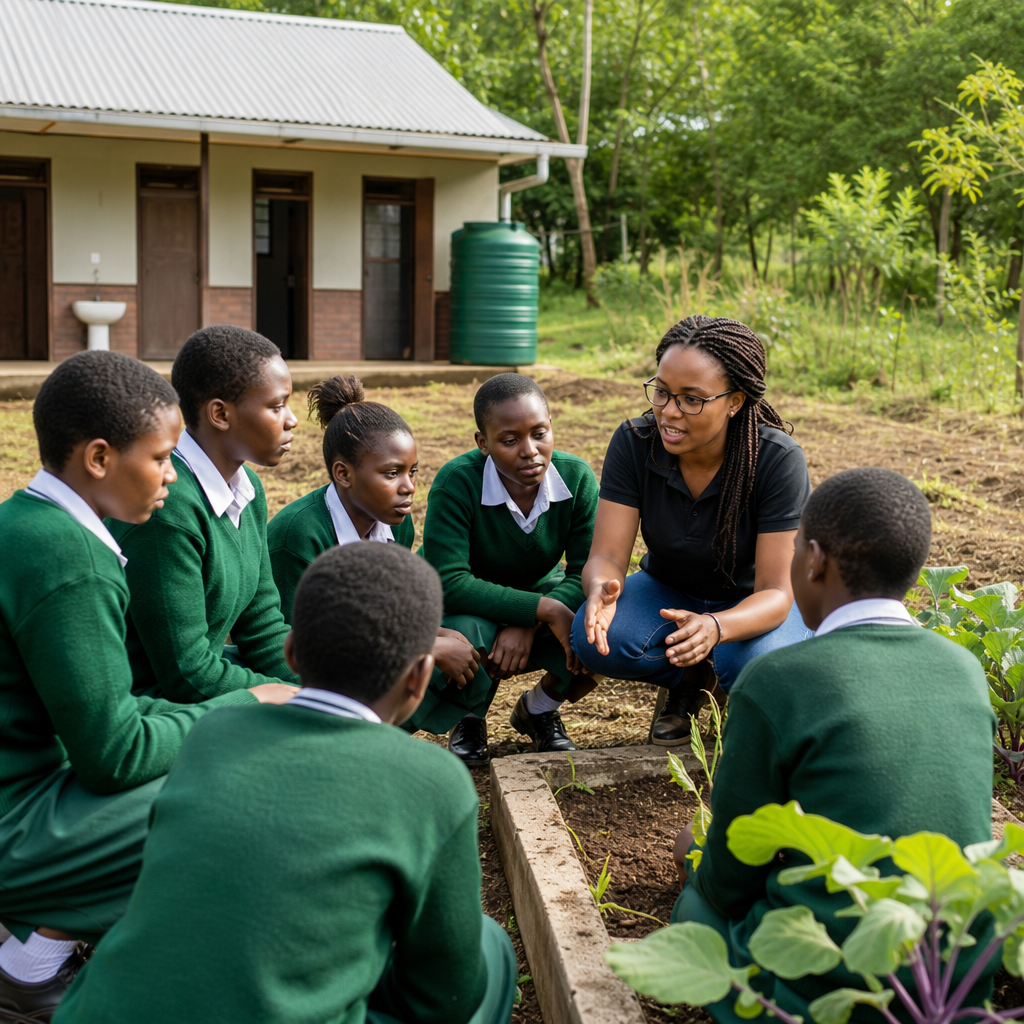
Schools deserve special attention within Educating for Change because they are both learning environments and service environments. A sanitation lesson about cleanliness is undermined if toilets are unsafe, dirty, or lacking privacy. The best school programs integrate software and hardware: age-appropriate lessons, teacher training, student participation, cleaning rosters, menstrual hygiene support, accessible stalls, and feedback mechanisms for repairs. UNICEF’s child-friendly school standards and many national WASH in Schools frameworks emphasize this integration for a reason. Students practice what the environment allows.
Inclusion, dignity, and the realities of daily life
Culturally adapted sanitation education programs must be designed around dignity, not just compliance. Privacy, safety, disability access, menstruation, caregiving burden, and stigma all affect whether people can act on sanitation messages. A woman who fears using a distant toilet at night needs a different solution from a household that lacks cleaning supplies. A child with mobility limitations may need a rail, a wider door, and direct instruction for caregivers. A migrant family may need messages delivered through employers or tenant associations rather than village structures. Inclusion means building content around actual use conditions.
Menstrual hygiene is a clear example of why adaptation matters. In some communities, girls avoid school toilets because disposal options are absent, boys tease users, or teachers skip the topic entirely. A generic sanitation campaign that ignores these factors will not improve attendance or dignity. An adapted program addresses terminology, privacy, disposal systems, pain management myths, and school rules. It trains teachers on respectful communication and ensures girls know where water, soap, and bins are available. When these details are handled well, sanitation education becomes immediately relevant rather than abstract.
Programs also need to recognize tradeoffs honestly. Households may understand the benefits of improved sanitation but prioritize food, rent, or school fees over repairs. Shared facilities may be the only feasible option in dense informal settlements. Water scarcity may limit cleaning frequency in dry seasons. Trustworthy education does not shame people for these constraints. It helps them identify practical improvements within their means while connecting them to broader service solutions where possible.
Measuring results and improving programs over time
Good sanitation education is measurable. The right indicators go beyond attendance at sessions and count what people actually do. Common measures include observed presence of soap and water at handwashing stations, latrine cleanliness scores, reported and verified toilet use, safe disposal of child feces, school absenteeism linked to sanitation conditions, and maintenance response times. For program managers, disaggregating data by gender, age, disability status, language group, and settlement type is essential because average performance can hide exclusion.
Evaluation should combine quantitative and qualitative evidence. Surveys can show whether handwashing stations are more common, but interviews explain why some households stopped maintaining them after the rainy season. Spot checks can document toilet functionality, while community scorecards reveal dissatisfaction with cleaning arrangements or safety concerns. In my experience, the most useful reviews happen quarterly, not only at project end, because they allow teams to revise scripts, retrain facilitators, or shift channels before poor habits harden.
This hub page should guide readers toward a practical standard: sanitation education succeeds when communities understand messages, see them as locally credible, have the means to act, and continue the behaviors after outside support declines. That requires adaptation, repetition, inclusive design, and ongoing measurement. If you are building a Community Engagement and Education strategy, start by mapping your audiences, testing your messages, and aligning education with the realities of daily sanitation use. Then use the related articles in this subtopic to deepen each component and turn learning into durable public health change.
Frequently Asked Questions
What are culturally adapted sanitation education programs?
Culturally adapted sanitation education programs are public health efforts designed to make sanitation guidance practical, trusted, and relevant within a specific community. Instead of delivering generic messages, these programs shape education around local language, social norms, household routines, religious or cultural beliefs, gender roles, and community decision-making structures. The goal is not simply to tell people what “good sanitation” looks like, but to help families and institutions integrate safe sanitation behaviors into everyday life in ways that feel realistic and respectful.
In practice, this often includes education on safe toilet use, consistent handwashing with soap, menstrual hygiene support, child feces disposal, safe water handling, and routine maintenance of sanitation facilities. A culturally adapted approach may use local stories, visual examples, demonstrations, songs, peer educators, or group discussions that reflect how the community learns best. It also considers who influences behavior, such as elders, teachers, women’s groups, youth leaders, landlords, religious leaders, or local health workers. By aligning sanitation education with how people actually live and make decisions, these programs are far more likely to lead to sustained behavior change and better public health outcomes.
Why is cultural adaptation so important in sanitation education?
Cultural adaptation matters because sanitation behaviors are deeply connected to habit, identity, privacy, dignity, family structure, and community expectations. Even the most accurate health guidance can fail if it ignores how people interpret cleanliness, who is responsible for water and sanitation tasks, what facilities are considered acceptable, or what barriers households face in daily life. A message about toilet use or handwashing may sound simple from a technical standpoint, but adoption often depends on whether the advice fits local routines, beliefs, and available resources.
For example, a sanitation campaign may promote handwashing at key times, but if the recommended setup is too expensive, poorly located, or inconsistent with household space constraints, families may not use it regularly. Similarly, menstrual hygiene education may fall short if it does not address local stigma, privacy concerns, disposal practices, or access to trusted supplies. Cultural adaptation improves communication by reducing misunderstanding and resistance while increasing trust, relevance, and participation. It helps communities see sanitation not as an external instruction imposed from outside, but as a practical set of actions that protect health, dignity, and wellbeing within their own social and cultural context.
What topics are usually included in a culturally adapted sanitation education program?
Most culturally adapted sanitation education programs cover a broad set of behaviors that influence household and community health. Common topics include proper toilet use, safe disposal of child feces, handwashing with soap after toilet use and before handling food, menstrual hygiene support, water collection and storage practices, cleaning routines for toilets and wash areas, and small but essential maintenance habits that keep sanitation facilities functional over time. In schools, health centers, and public spaces, programs may also include facility use etiquette, privacy considerations, waste management, and shared responsibility for upkeep.
What makes the program culturally adapted is not only the list of topics, but how they are taught. The content may be adjusted to reflect seasonal water scarcity, multigenerational households, local caregiving patterns, taboos around discussing bodily functions, or the realities of shared sanitation. Programs may also address who manages sanitation tasks in the home, how children learn hygiene behaviors, how menstruation is discussed, and how communities organize repair and cleaning responsibilities. Effective programs connect technical guidance to local life, helping people understand not just what to do, but how to do it consistently within their own environment and social structure.
How do these programs encourage long-term behavior change instead of short-term awareness?
Long-term behavior change happens when sanitation education goes beyond one-time awareness campaigns and focuses on repetition, relevance, support, and habit formation. Culturally adapted programs encourage lasting change by linking recommended behaviors to daily routines people already follow, such as meal preparation, school attendance, caregiving, prayer, market activity, or evening household chores. They often use practical demonstrations, household visits, peer learning, group problem-solving, and locally respected role models to reinforce behaviors over time rather than relying only on posters or lectures.
These programs also recognize that people need more than information. They need realistic solutions to barriers such as cost, distance to water, lack of privacy, broken facilities, unclear household responsibilities, or social stigma. A strong program may help families identify where to place a handwashing station, how to maintain a toilet affordably, how to support girls during menstruation, or how to organize shared cleaning in compounds or schools. Follow-up is critical. When educators return, check progress, answer questions, and celebrate small improvements, communities are more likely to sustain new practices. Lasting change comes from making sanitation behaviors easier, more acceptable, and more visibly beneficial in everyday life.
How can communities and organizations measure whether a culturally adapted sanitation education program is working?
Measuring success requires looking at more than attendance at training sessions or the number of materials distributed. A strong evaluation examines whether people understood the messages, whether they accepted them, and most importantly, whether behaviors actually changed over time. Organizations often track indicators such as regular toilet use, presence and use of handwashing stations with soap and water, safer child feces disposal, cleaner facilities, improved menstrual hygiene support, safer household water storage, and timely maintenance or repair of sanitation infrastructure. In schools and institutions, measurement may also include absenteeism related to sanitation barriers, cleanliness standards, and user satisfaction.
Because these are culturally adapted programs, qualitative feedback is especially important. Interviews, focus groups, observation, and community discussions can reveal whether messages felt respectful, whether the teaching methods matched local preferences, and whether different groups such as women, men, adolescents, caregivers, people with disabilities, and elders were able to participate meaningfully. Programs are most effective when they use this feedback to refine content and delivery. Success is not just improved knowledge; it is visible, sustained practice supported by community ownership, trust, and systems that keep sanitation habits and facilities functioning well after the initial education effort ends.