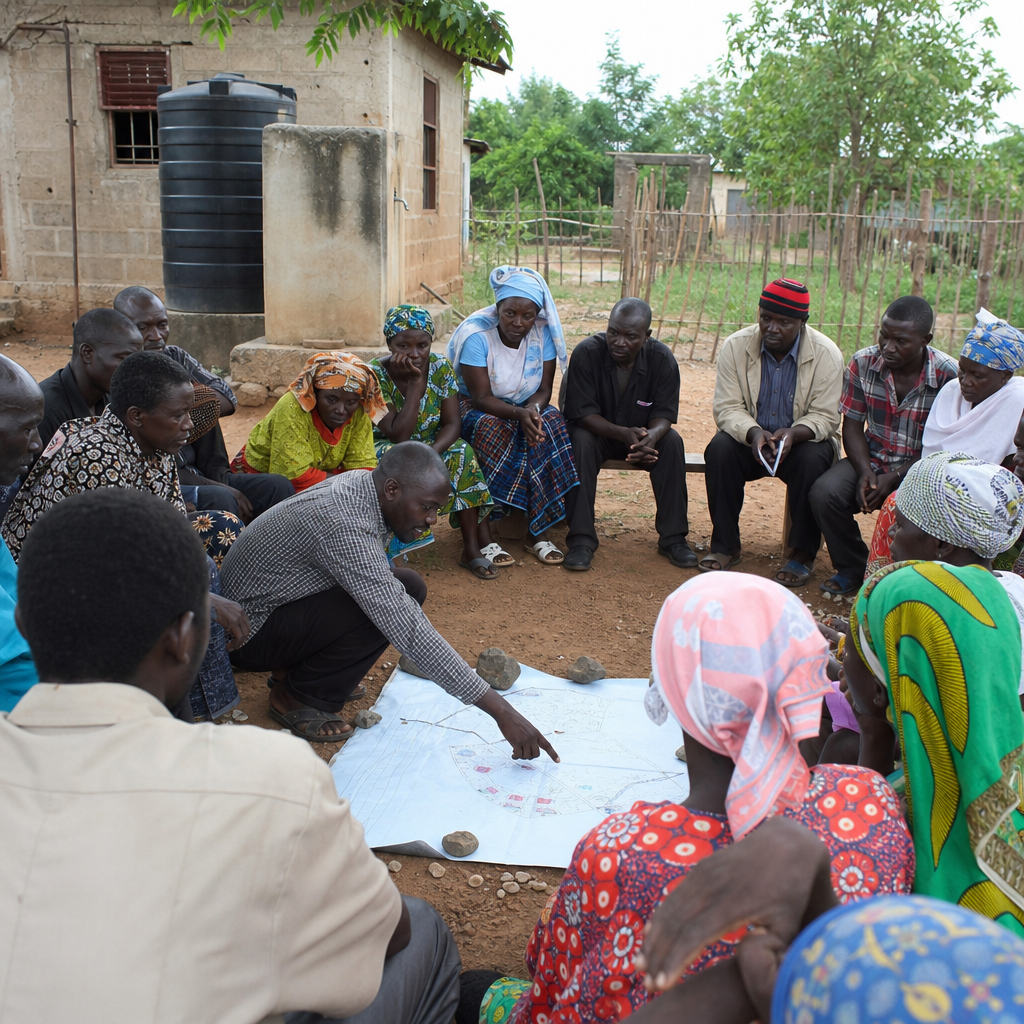
Effective communication strategies in sanitation projects determine whether infrastructure is accepted, used correctly, maintained locally, and sustained after external funding ends. In practice, I have seen technically sound sanitation systems fail because households were not consulted, health messages were vague, or community leaders were informed too late. Communication in this context means far more than distributing posters or delivering one-off hygiene talks. It includes listening, co-designing messages, building trust, addressing cultural norms, explaining service levels, clarifying responsibilities, and creating feedback channels that remain active throughout planning, construction, handover, and long-term operation.
Sanitation projects include household toilets, school sanitation, fecal sludge management, sewer connections, behavior change campaigns, menstrual health support, solid-liquid waste separation, and public hygiene promotion. Educating for change is the process of helping people understand why sanitation matters, what practices reduce health risk, how systems function, and what role each stakeholder plays. This matters because poor communication can undermine public health gains, increase open defecation, reduce toilet use, trigger resistance to tariffs, and damage confidence in local authorities. Strong communication, by contrast, improves adoption, equity, accountability, and measurable health outcomes.
Community engagement and education sit at the center of successful sanitation delivery because sanitation behavior is social, not just technical. People make decisions based on convenience, safety, status, privacy, trust, cost, religion, gender roles, and prior experience with government services. A communication strategy must therefore answer practical questions directly: Why should I change? What exactly should I do? How much will it cost? Who will empty the pit? Is the toilet safe for children? What happens during floods? What if water is scarce? The hub below explains the core communication strategies that turn sanitation projects into lasting community systems rather than short-lived construction programs.
Start with audience insight and participatory diagnosis
The first rule in sanitation communication is simple: do not begin with messaging; begin with diagnosis. Before developing materials, project teams need to understand current behaviors, local language, power structures, seasonal risks, settlement patterns, and sanitation service gaps. In fieldwork, this usually means a mix of household interviews, focus group discussions, transect walks, school visits, facility observation, and stakeholder mapping. A baseline should identify who lacks access, who influences decisions, and what barriers prevent adoption. Common barriers include affordability, land tenure insecurity, fear of pit collapse, odor concerns, disability access, and mistrust caused by previous abandoned projects.
Participatory methods improve both message quality and legitimacy. Tools used across rural and urban sanitation programs include community mapping, problem trees, barrier analysis, sanitation ladders, customer journey mapping, and KAP surveys measuring knowledge, attitudes, and practices. In dense settlements, I have found that informal landlords, masons, emptiers, women’s savings groups, schoolteachers, and religious leaders often shape uptake more than formal notices from municipal departments. Audience segmentation is essential. Tenants need different messages than homeowners; schools need different materials than market traders; desludging operators need operational and safety guidance rather than generic health slogans.
Good diagnosis also prevents moralizing. Communities usually know that poor sanitation is undesirable; what they need is a practical route to improvement that fits daily reality. A mother choosing open defecation for a toddler may be responding to toilet distance or safety concerns, not ignorance. A low-income tenant may not install a toilet because the landlord controls capital investment. When teams understand these constraints, communication becomes useful rather than judgmental. The educational aim is to make behavior change feel feasible, socially supported, and worthwhile.
Build clear messages that connect health, dignity, cost, and service
Once audience insight is established, messages should be specific, plain, and actionable. In sanitation projects, the strongest communication rarely relies on health fear alone. Diarrheal disease reduction is important, but people also respond to privacy, convenience, child safety, women’s dignity, status, odor reduction, environmental cleanliness, and predictable service. Effective messages link immediate benefits with concrete actions. For example: keep children’s feces out of the yard by using a potty and emptying it into a toilet; schedule pit emptying before overflow; wash hands with soap after toilet use and before food preparation; use the school toilet because it is maintained daily and stocked with water.
Message architecture should answer five questions: what is the problem, why it matters, what action is required, who is responsible, and how support is accessed. In utility-led sewer connection campaigns, successful scripts explain the connection process, required documents, cost structure, payment plans, and timeline. In rural sanitation programs, communication works better when households see sanitation options, prices, material lists, and maintenance expectations. Abstract phrases such as “improve hygiene” are too weak. Specific phrases such as “keep the slab clean, close the lid, and report a blocked outlet to the caretaker the same day” are much more effective.
Consistency matters across channels. Posters, radio spots, household visits, contractor briefings, school clubs, and municipal meetings should reinforce the same core points while adapting tone and detail for each audience. Technical accuracy is non-negotiable. If a twin-pit latrine can be safely emptied only after adequate resting time, communication must say so clearly. If a subsidized toilet still requires household co-payment, that cost must be transparent from the beginning. Trust drops quickly when sanitation messaging overpromises convenience, underestimates maintenance, or hides service limitations.
Use trusted messengers and local communication channels
People rarely change sanitation behavior because of a brochure alone; they change when information comes from someone credible, repeated across familiar settings, and reinforced by visible results. Trusted messengers differ by context. In some communities, health extension workers and community health volunteers are central. In others, ward officers, school principals, women’s group leaders, environmental health technicians, local masons, or faith leaders carry more influence. The communication plan should identify who is trusted for health information, who is trusted for money matters, and who is trusted for technical guidance.
Multi-channel communication is usually more effective than a single campaign medium. Door-to-door visits allow tailored problem solving and are especially useful when households have site-specific concerns about pit location, drainage, or child use. Community meetings build visibility and public commitment, though they must be scheduled at accessible times and not dominated by elites. Radio remains effective in many rural and peri-urban settings because it reaches people repeatedly at low cost. School-based communication can shift household practices when children receive memorable, practical lessons and facilities are functional enough to model good habits.
Digital channels are increasingly important, especially in urban service delivery. SMS reminders can notify households about desludging appointments, payment due dates, or sewer connection documentation. WhatsApp groups can help neighborhood committees coordinate cleaning rosters or share service updates. However, digital communication should complement, not replace, face-to-face engagement. Access, literacy, device ownership, and gendered phone control vary widely. The best systems combine local human contact with simple, repeated messaging through channels communities already use.
| Channel | Best use in sanitation projects | Main strength | Key limitation |
|---|---|---|---|
| Household visits | Tailored guidance on toilet adoption, use, and maintenance | Allows direct problem solving and trust building | Labor intensive and harder to scale quickly |
| Community meetings | Launching projects, discussing tariffs, defining roles | Creates public visibility and collective commitment | Can exclude quieter groups if facilitation is weak |
| Radio | Broad awareness and repeated hygiene reminders | Wide reach at relatively low cost | Limited ability to answer site-specific questions |
| Schools | Teaching handwashing, toilet use, menstrual health | Shapes habits early and influences families | Fails if facilities lack water, privacy, or cleaning |
| SMS or messaging apps | Service alerts, fee reminders, follow-up prompts | Fast, trackable, and inexpensive per message | Depends on phone access and readable language |
Design communication for inclusion, equity, and behavior change
Sanitation communication fails when it treats the public as a single audience. Inclusive strategy means addressing the needs of women, men, children, older people, tenants, people with disabilities, low-literacy households, informal workers, and marginalized groups who often face the highest sanitation risk. Gender-responsive communication is particularly important. Women and girls may prioritize privacy, menstrual hygiene management, nighttime safety, locks, lighting, water access, and disposal options. Men may influence spending decisions or construction timing. If messages ignore household decision dynamics, uptake slows even when awareness is high.
Accessibility should shape both content and format. Use local language, visual aids, demonstrations, and simple sequencing. In one school sanitation rollout, handwashing posters improved only after illustrations reflected the actual taps and soap stations children used every day. For people with disabilities, communication should explain accessible design features such as handrails, wider doors, transfer space, and stable paths. For low-literacy settings, flip charts, pictograms, and live demonstrations often outperform text-heavy materials. Inclusion also means meeting people where they are, including markets, clinics, schools, transport hubs, and tenant compounds.
Behavior change requires more than information transfer. Proven approaches draw on social norms, public commitment, cues, habit formation, and reinforcement. Households are more likely to sustain toilet use when they see neighbors doing the same, when facilities are easy to keep clean, and when community systems recognize positive practice. School programs are stronger when handwashing is tied to routine moments such as before meals and after toilet use. Incentives can help, but they should support intrinsic motivation and service reliability rather than create short-term compliance that fades when rewards end.
Communicate across the full project cycle and create feedback loops
Sanitation projects need communication before, during, and after construction. Pre-implementation communication should explain project scope, eligibility, timelines, likely disruptions, grievance channels, land or permitting requirements, and what households must do to participate. During construction, people need realistic updates about delays, road access changes, safety controls, and complaint resolution. After commissioning, communication shifts to use, cleaning, desludging, tariff payment, fault reporting, and governance. Many projects underinvest in this final stage, even though user understanding at handover strongly predicts long-term performance.
Feedback loops are the difference between broadcasting and real engagement. Every sanitation project should have a simple system for questions, complaints, and service correction. That system can include hotline numbers, caretaker logbooks, school sanitation committees, neighborhood focal points, QR-linked forms, or routine review meetings. What matters is response. If overflowing toilets are reported and ignored, communication credibility collapses. If complaints are logged, acknowledged, and resolved transparently, trust rises even when systems are imperfect. In utility settings, service dashboards and response-time targets can strengthen public accountability.
Monitoring communication effectiveness is equally important. Teams should track more than attendance at meetings. Useful indicators include recall of key messages, understanding of service terms, willingness to pay, toilet usage patterns, handwashing station presence, complaint rates, emptying requests, school absenteeism linked to poor facilities, and customer satisfaction. Short pulse surveys, spot checks, and qualitative interviews reveal whether education is translating into practice. When data shows misunderstanding, messages should be revised quickly. Communication is not a launch event; it is an adaptive management function.
Strengthen institutional trust through transparency and local capacity
Lasting sanitation improvement depends on whether communities trust the institutions behind the project. That trust is built through transparent communication about budgets, standards, responsibilities, and limitations. If a municipality is rolling out simplified sewerage, residents should know connection fees, expected maintenance, who owns which assets, and what level of service is guaranteed. If NGOs are providing temporary support for school toilet rehabilitation, schools should understand who will pay for cleaning supplies and repairs after the project closes. Clarity prevents the common post-project failure where everyone assumes someone else is responsible.
Local capacity building is part of communication, not separate from it. Caretakers need operation and maintenance guidance. Teachers need practical sanitation lesson plans. Community health workers need consistent talking points. Masons need training on approved designs, ventilation, slab integrity, and flood resilience. Desludging operators need occupational safety information aligned with recognized guidance such as WHO sanitation safety planning principles. When frontline actors understand both the technical system and the public-facing message, communities receive reliable information from every contact point.
Documented standards also improve trust. Communication should reference recognized design and safety norms, service protocols, and public health rationale in plain language. People are more willing to adopt unfamiliar systems when they can see that choices are not arbitrary. This is especially true for container-based sanitation, shared facilities, fecal sludge treatment, and reuse options, where public skepticism is understandable. Explain the treatment chain, risk controls, and user responsibilities clearly. Honest communication about tradeoffs does not weaken a project; it makes long-term acceptance more likely.
Effective communication strategies in sanitation projects combine diagnosis, clear messaging, trusted messengers, inclusion, lifecycle engagement, and transparent governance. Education for change works when it respects people’s lived constraints and gives them practical, credible steps they can act on. The most successful sanitation programs I have worked on did not treat communication as a poster campaign attached to engineering works. They treated it as core service delivery: listening before designing, answering questions directly, reinforcing good practice repeatedly, and correcting problems quickly when reality changed.
For a sub-pillar hub on community engagement and education, the central lesson is that sanitation behavior changes when communities are informed, involved, and able to influence the system around them. Every related topic, from school hygiene promotion to tariff communication, menstrual health education, tenant outreach, and fecal sludge service awareness, builds on this same foundation. Strong communication reduces misuse, increases willingness to participate, protects health gains, and strengthens the social contract between users and providers.
If you are planning or improving a sanitation project, audit your communication with the same rigor you apply to engineering design. Identify audiences, map barriers, simplify messages, choose trusted channels, build feedback loops, and measure whether people actually understand and use the service. Start there, and your sanitation investment is far more likely to deliver lasting change.
Frequently Asked Questions
Why is communication so important in sanitation projects?
Communication is critical in sanitation projects because technical design alone does not guarantee long-term success. A sanitation system may be well engineered, affordable, and physically accessible, but if households do not understand its purpose, do not trust the process, or were never consulted about their needs, adoption can remain low. Effective communication helps communities understand how a system works, why certain practices matter for health and safety, and what role they play in maintenance and oversight. It also builds the trust needed for people to use facilities consistently, raise concerns early, and participate in decisions that affect their daily lives.
In real project settings, communication shapes whether infrastructure is accepted, used correctly, maintained locally, and sustained after external support ends. Many sanitation failures are not caused by engineering flaws alone, but by weak engagement: messages that are too generic, leaders who are informed too late, or residents who feel solutions were imposed on them. Strong communication creates feedback loops, aligns expectations, reduces resistance, and makes it easier to adapt implementation when local realities differ from assumptions. In other words, communication is not an accessory to delivery; it is part of the delivery system itself.
What are the most effective communication strategies in sanitation projects?
The most effective communication strategies are participatory, consistent, and tailored to the local context. This usually begins with listening before messaging. Project teams need to understand local beliefs, sanitation habits, language preferences, gender dynamics, seasonal constraints, and past experiences with development programs. Once that foundation is clear, communication should move beyond one-way awareness campaigns and become an ongoing dialogue that includes community meetings, household visits, small-group discussions, demonstrations, school engagement, and regular check-ins with local leaders and user groups. People are far more likely to support and maintain sanitation systems when they feel heard and involved in shaping them.
Clarity and repetition also matter. Health and behavior messages should be practical, specific, and directly relevant to daily life. Rather than relying on vague instructions, effective communication explains what people need to do, when they need to do it, who is responsible, and what happens if problems arise. It is also important to use trusted channels and messengers, such as respected community leaders, health workers, teachers, women’s groups, and local technicians. Projects that combine technical explanation, behavior-change communication, community feedback mechanisms, and visible local leadership tend to perform much better than those that depend on posters or one-off training sessions alone.
How can sanitation projects communicate with communities in a way that builds trust and local ownership?
Trust and ownership are built when communication is transparent, respectful, and continuous from the earliest stages of the project. Communities should be engaged before major decisions are finalized, not after implementation plans are already fixed. That means discussing priorities, constraints, technology options, costs, responsibilities, timelines, and realistic outcomes in plain language. People need space to ask questions, challenge assumptions, and express concerns without feeling dismissed. When project teams are open about what they can and cannot provide, they reduce misunderstanding and create more credible relationships with local stakeholders.
Local ownership grows when communities have a meaningful role in planning, decision-making, and follow-up. This can include helping select sites, identifying vulnerable households, agreeing on maintenance systems, nominating local committees, and defining how repairs or user issues will be handled. Communication should also recognize that communities are not uniform. Women, men, children, elders, people with disabilities, tenants, and marginalized groups may all experience sanitation differently. Inclusive communication ensures that quieter voices are not excluded and that the final system reflects actual patterns of use. When people see their input reflected in project design and management, they are much more likely to protect infrastructure, use it correctly, and support it after outside funding ends.
What common communication mistakes cause sanitation projects to fail?
One of the most common mistakes is treating communication as a short-term awareness activity instead of a core project function. Teams may distribute materials, hold a launch event, or deliver hygiene talks, then assume understanding and community buy-in have been achieved. In reality, sanitation behavior and facility management require ongoing reinforcement, clarification, and dialogue. Another major mistake is failing to consult households early enough. When communities learn about decisions after plans are mostly complete, they may feel excluded, skeptical, or unwilling to cooperate, especially if the chosen solution does not align with local preferences, land realities, cultural practices, or maintenance capacity.
Other frequent problems include using vague health messages, relying on technical jargon, overlooking local power dynamics, and communicating only through formal leaders while missing key user groups. Projects can also struggle when responsibilities are poorly explained: residents may not know who cleans shared facilities, who reports blockages, who pays for repairs, or what safe usage looks like. In some cases, communication is too top-down and focuses on compliance rather than mutual problem-solving. These mistakes create confusion, weaken accountability, and reduce long-term use. Effective sanitation communication avoids these pitfalls by being early, specific, inclusive, repeated, and responsive to feedback.
How should project teams measure whether their sanitation communication is working?
Project teams should measure communication effectiveness by looking at both understanding and behavior, not just message delivery. It is not enough to count how many meetings were held, posters were distributed, or people attended training sessions. More useful indicators include whether households can explain how to use and maintain facilities correctly, whether community members know where to report problems, whether local committees are active, and whether key groups feel informed and represented. Surveys, focus group discussions, spot checks, household interviews, and observation of actual sanitation practices can provide a more accurate picture than attendance records alone.
It is also important to connect communication outcomes to longer-term project performance. If communication is effective, teams should typically see stronger facility uptake, more consistent use, fewer preventable misuse issues, quicker reporting of faults, better local maintenance participation, and greater confidence among community members in managing the system. Monitoring should be continuous so that messages and methods can be adjusted when misunderstanding or resistance appears. The strongest projects treat communication as something to test, measure, and improve throughout implementation and beyond handover. That approach helps ensure sanitation systems are not just installed, but understood, valued, and sustained.