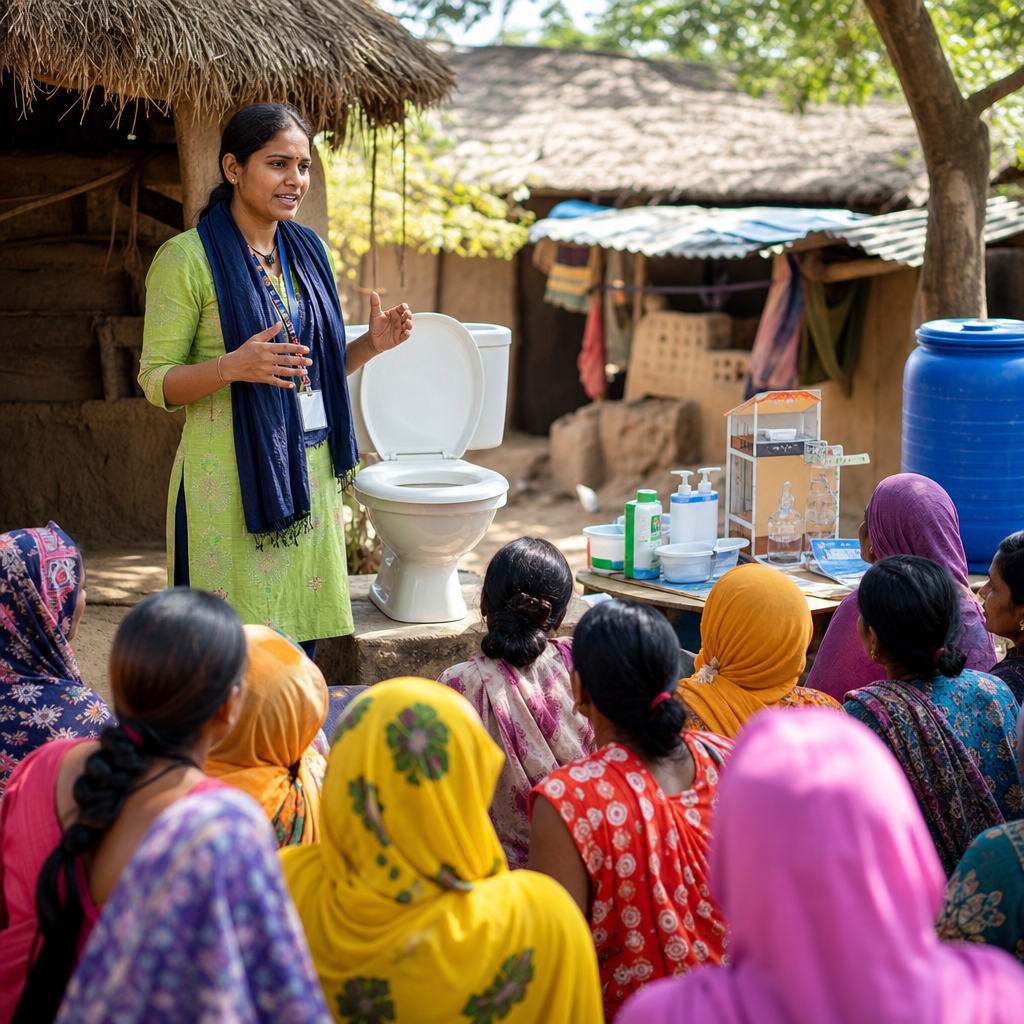
The economics of sanitation shapes public health, household finances, school attendance, local business growth, and the long-term resilience of entire communities. When people hear sanitation, they often think only about toilets or waste collection, but the term is broader: it includes safe containment, transport, treatment, disposal, and reuse of human waste, wastewater, and related hygiene practices. Educating community members about sanitation economics means showing, in practical terms, how better sanitation reduces disease, lowers medical spending, protects livelihoods, and creates measurable social returns. As a hub within community engagement and education, this article explains how to teach sanitation in ways that move people from awareness to action.
In community workshops I have led, the turning point rarely comes from technical diagrams alone. It comes when residents connect sanitation to daily costs: the clinic visit after a child gets diarrhea, wages lost during illness, unsafe water forcing higher household spending, or flooded drains damaging shops. Economic education makes sanitation tangible because it answers the question many people ask first: why should we invest scarce time and money here instead of somewhere else? The answer is direct. According to widely cited estimates from the World Health Organization and World Bank, poor sanitation imposes costs through healthcare expenses, reduced productivity, environmental damage, and impacts on tourism, education, and dignity. Good sanitation is not a sunk cost; it is a community asset with compounding returns.
Educating for change therefore requires more than distributing leaflets or repeating health slogans. It involves translating infrastructure, behavior, and policy into understandable household economics. Community members need to know the difference between capital expenditure and maintenance, between private benefits and public benefits, and between immediate costs and lifetime value. They also need clear guidance on what actions are realistic for renters, homeowners, landlords, schools, market associations, and local leaders. A strong sanitation education strategy recognizes that people adopt change when the message is credible, locally relevant, and tied to visible gains. This hub article maps the core ideas, methods, and teaching approaches that make sanitation economics understandable and persuasive.
Why sanitation education must start with economics
Health messaging alone often underperforms because it assumes people make decisions only on awareness. In practice, households weigh tradeoffs. A family deciding whether to upgrade a latrine may be choosing between sanitation, school fees, food prices, transport, and debt repayment. If educators ignore those tradeoffs, community outreach sounds detached from reality. Starting with economics does not mean reducing sanitation to money; it means explaining how money, time, risk, and quality of life are connected. For example, one improved toilet shared by several compound households may seem expensive upfront, yet it can reduce repeated spending on medicines, emergency pit emptying, and missed workdays over time.
Sanitation also produces what economists call externalities. One household’s unsafe waste disposal affects neighbors through water contamination, odors, vectors, and disease transmission. That is why sanitation education should explain both private and shared benefits. A household might ask, “Why should I pay if others do nothing?” The community answer is that coordinated improvement raises outcomes for everyone, while isolated action has limited impact. This is especially important in dense settlements, schools, markets, and informal urban areas where the consequences of poor sanitation spread quickly. Education that frames sanitation as a collective economic issue gives local committees and municipal actors a stronger basis for action.
Another reason economics matters is trust. Communities have seen projects fail because facilities were built without plans for operation and maintenance. Residents become skeptical when they hear promises without financing details. Effective educators explain the full service chain: construction, cleaning, desludging, drainage, treatment, fee collection, supervision, and accountability. They discuss affordability honestly and show what different service models cost. When people understand recurring costs, they are more likely to support realistic user fees, savings groups, or municipal subsidies. Economic literacy reduces suspicion because it replaces vague advocacy with transparent numbers and practical choices.
What community members need to understand about sanitation costs and benefits
Sanitation education works best when it breaks costs and benefits into categories people recognize from daily life. Direct household costs include toilet construction, connection charges, pit emptying, soap, water, menstrual hygiene supplies, and cleaning materials. Indirect costs include transport to distant facilities, time spent queuing, lost privacy, safety risks at night, and property damage from flooding or blocked drains. On the benefit side, families gain fewer illnesses, lower treatment costs, less time caregiving, improved school attendance, better tenant satisfaction, and higher property desirability. In market areas and transport hubs, better sanitation can also increase customer retention because people stay longer where facilities are clean and accessible.
Educators should distinguish short-term cash flow from long-term value. A sealed pit or septic upgrade may feel unaffordable in a single payment, but over several years it can be cheaper than repeated emergency solutions. I have found that simple side-by-side comparisons are effective, especially when built from local prices gathered from masons, emptiers, clinics, and water vendors. Residents trust examples that sound like their own neighborhood. The table below shows the kind of comparison that helps households and community groups evaluate options clearly.
| Sanitation option | Typical upfront cost profile | Common recurring costs | Main economic benefits | Key limitation to explain |
|---|---|---|---|---|
| Basic unimproved pit | Low | Frequent repairs, unsafe emptying, health-related costs | Lowest immediate entry cost | Higher long-run risks and neighborhood impacts |
| Improved lined pit latrine | Moderate | Periodic emptying, cleaning, minor maintenance | Better durability, lower collapse risk, cleaner use | Requires proper siting and service access |
| Septic system | High | Scheduled desludging, inspections, water use | Higher convenience and property value | Fails if poorly designed or never emptied |
| Simplified sewer connection | Moderate to high | User tariffs, occasional repairs | Reduced onsite management burden, strong public health gains | Depends on network quality and treatment capacity |
| Shared community facility | Shared capital burden | Cleaning staff, water, lighting, supervision | Useful where space or tenure limits household toilets | Needs management rules or quality declines quickly |
Community members also need to understand that not every benefit appears immediately in cash. Dignity, safety for women and girls, accessibility for older adults, and inclusion for people with disabilities are economic issues because they affect mobility, participation, and earning potential. If a girl misses school during menstruation due to inadequate facilities, the long-term cost is educational disruption. If a market porter avoids eating or drinking because toilets are unusable, productivity suffers. These examples make sanitation economics real because they connect infrastructure to human capability, not only disease prevention.
How to teach sanitation economics in ways people believe
The most effective sanitation education is local, interactive, and evidence-based. Start with community mapping. Ask residents where people defecate, where wastewater flows, which areas flood, where children play, and where clinics, wells, and food vendors are located. Then connect those places to financial consequences. A blocked drain is not just dirty; it can mean damaged inventory for traders, higher mosquito exposure, and road access problems for customers. A pit too close to a water source is not just a technical violation; it can increase spending on treatment, boiling fuel, or purchased water. Mapping turns abstract economics into visible neighborhood patterns.
Next, use household budgeting exercises. In group sessions, I often ask participants to estimate the monthly cost of one diarrheal episode, including transport, consultation, medicine, oral rehydration salts, missed work, and childcare. People are often surprised by the total. Once they see that poor sanitation already costs them money, preventive investment makes more sense. This approach is especially strong when educators invite local health workers, masons, emptiers, teachers, and landlords to validate the numbers. Cross-checking with recognized tools such as WASH cost frameworks, municipal tariff schedules, and clinic records strengthens credibility.
Story-based examples are equally important. A landlord may respond to a case showing lower tenant turnover after sanitation upgrades. A school committee may engage more with examples linking handwashing stations and improved toilets to attendance and concentration. A market association may care most about reputation, foot traffic, and cleaning contracts. Educating for change means tailoring the economic argument to the audience rather than repeating one script. The goal is not to manipulate; it is to match the message to the decision each group can actually make.
Finally, educators should present realistic financing paths. Telling people to “invest in sanitation” without explaining how creates frustration. Practical options include rotating savings groups, microfinance for household upgrades, landlord cost recovery through phased improvements, municipal co-financing, targeted subsidies for the poorest households, and output-based aid in service delivery. It is also important to discuss maintenance contracts and desludging schedules upfront. Communities lose confidence when facilities are built and then neglected. Education is credible when it includes the full life cycle, not just construction day.
Barriers, behavior change, and the role of trusted local leadership
Even when the economic case is strong, behavior does not change automatically. Common barriers include insecure land tenure, gender norms, lack of cash, weak enforcement, poor service access, and simple disbelief that collective action will hold. This is why trusted intermediaries matter. Religious leaders, teachers, community health workers, women’s groups, youth clubs, and market leaders can translate sanitation economics into social norms and practical commitments. When local leaders explain why user fees support cleaning staff or why scheduled emptying prevents higher emergency costs, the message carries more weight than a one-time campaign from outside.
Behavior change also depends on feedback loops. Communities need visible indicators that progress is real: cleaner paths, fewer overflowing pits, lower absenteeism, reduced clinic visits, functioning handwashing points, or more reliable fee collection. Public scoreboards, school sanitation clubs, compound-level cleaning rosters, and neighborhood review meetings help maintain momentum. In my experience, residents stay engaged when they can see both financial transparency and service performance. If a toilet block charges fees, people should know who manages the funds, what supplies were purchased, and how repairs are approved. Accountability is not separate from education; it is part of what makes education believable.
It is equally important to acknowledge limitations honestly. Sanitation improvements do not eliminate disease on their own if water quality, drainage, solid waste management, and hand hygiene remain poor. Shared toilets can be valuable, but only if cleaning and access are managed well. Sewer systems can deliver major gains, but they fail when treatment is inadequate or stormwater overwhelms networks. Balanced education builds trust because it avoids false promises. Community members are more likely to participate when educators explain what sanitation can solve, what it cannot solve alone, and where coordination with local government is essential.
Building a lasting community education hub for sanitation change
As a sub-pillar hub, educating for change should connect sanitation economics to every related topic in community engagement and education. That includes school-based learning, landlord and tenant communication, participatory budgeting, menstrual health education, disability-inclusive design, solid waste coordination, and local government accountability. The hub model works when each supporting article answers a specific question while reinforcing the same core principle: sanitation is a shared investment with household, neighborhood, and municipal returns. Internal connections across these topics help readers move from general understanding to targeted action.
The strongest community sanitation programs treat education as continuous, not episodic. They refresh messages seasonally before rains, update cost information as prices change, and use local data to show outcomes over time. They train facilitators to explain tradeoffs clearly, avoid jargon, and listen for what each audience values most. Above all, they respect the fact that people are not blank slates waiting for instructions. They already understand risk, scarcity, and compromise. Good sanitation education meets them there, adds evidence, and helps convert scattered concerns into coordinated decisions.
The key takeaway is simple: when community members understand the economics of sanitation, they are more likely to support and sustain change. Clear education reveals the hidden costs of inaction, the practical benefits of better systems, and the financing choices that make progress possible. Use this hub as the starting point for deeper learning across community engagement and education, then turn insight into a local plan with named responsibilities, realistic budgets, and measurable sanitation goals.
Frequently Asked Questions
1. What does “the economics of sanitation” actually mean for everyday community life?
The economics of sanitation refers to the real-world costs, savings, and long-term financial effects connected to how a community manages human waste, wastewater, and hygiene. It is not limited to building toilets. It includes safe containment, transport, treatment, disposal, and, where appropriate, reuse. For community members, this matters because sanitation affects household budgets, medical expenses, time use, school participation, worker productivity, property values, and even the success of local markets and businesses.
When sanitation systems are weak, families often pay in hidden ways. They may spend more on doctor visits, medicines, lost wages, missed school days, emergency water purchases, or repairs caused by contamination and flooding. In contrast, when sanitation is improved, many of those avoidable costs begin to shrink. A cleaner environment can reduce disease transmission, which means fewer sick days, lower healthcare spending, and more reliable income. This is why sanitation should be explained not only as a health issue, but also as an economic issue that touches nearly every part of daily life.
Educating community members on sanitation economics helps make the subject practical. People are more likely to support improvements when they understand the connection between sanitation and things they care about immediately: children staying in school, adults missing fewer workdays, cleaner public spaces, safer water sources, and stronger local businesses. In simple terms, sanitation is an investment in community stability. It protects people today while creating conditions for more sustainable growth in the future.
2. How does better sanitation save households and communities money over time?
Better sanitation saves money by reducing the many direct and indirect costs that come from poor waste management and unsafe hygiene conditions. The most obvious savings come from better health outcomes. When fewer people experience diarrheal disease, parasitic infections, skin conditions, or sanitation-related illnesses, households spend less on clinic visits, medications, transportation to health facilities, and caregiving. Parents also lose fewer work hours caring for sick children, which protects family income.
There are also important time savings. In some communities, people spend significant time finding safe places for open defecation, fetching extra water, or dealing with unreliable and unsafe sanitation facilities. Time lost in these activities has an economic value, even if it is not always counted in cash. When sanitation systems improve, that time can be redirected to farming, paid work, school attendance, childcare, or small business activity. For women and girls in particular, safer and more accessible sanitation can reduce time burdens and support greater participation in education and income-generating work.
At the community level, the savings grow even larger. Schools with reliable sanitation often see better attendance and fewer disruptions. Health centers can operate more effectively. Businesses benefit from cleaner surroundings, healthier staff, and more customer confidence. Local governments may also save money in the long run when they prevent outbreaks and environmental damage instead of responding to emergencies after contamination has already spread. The key educational message is that sanitation costs should be compared with the much larger costs of inaction. While infrastructure, maintenance, and education require investment, the financial losses caused by poor sanitation are often far greater over time.
3. Why is sanitation education so important if infrastructure is already being built?
Infrastructure is essential, but it does not automatically lead to safe sanitation outcomes unless people understand how to use, maintain, finance, and value it. A toilet, sewer connection, septic system, drainage channel, or treatment facility can only deliver benefits when community members know the full sanitation chain and the role each person plays in keeping it functional. Education turns infrastructure from a one-time construction project into a long-term public asset.
For example, if households do not know why regular pit emptying matters, or if they dispose of solid waste into drains and sanitation systems, infrastructure can fail quickly. If people believe sanitation is only a private concern rather than a shared community responsibility, contamination may still spread through water sources, public spaces, and neighborhoods. Education helps residents understand that sanitation is interconnected. One household’s unsafe practices can create costs for many others.
Sanitation education is also critical for informed financial decision-making. Community members need clear explanations of what different sanitation options cost upfront, what they cost to maintain, and what benefits they can expect over time. When people understand sanitation economics, they are better able to compare short-term expenses with long-term returns. This is especially important for encouraging consistent maintenance, fair user fees where appropriate, and support for services such as safe waste transport and treatment. In short, education builds ownership, accountability, and the practical knowledge needed to protect investments and maximize benefits.
4. In what ways does sanitation affect schools, work, and local economic growth?
Sanitation has a powerful influence on whether communities can learn, work, and grow productively. In schools, safe and accessible sanitation supports regular attendance, concentration, and dignity. Children are more likely to stay in class when toilets are clean, private, and functional, and when handwashing facilities are available. This is particularly important for girls, who may miss school more often when sanitation is inadequate or does not support menstrual hygiene needs. Over time, improved attendance contributes to better educational outcomes, which strengthens the future workforce and the economic prospects of the whole community.
In workplaces and informal economic settings such as markets, farms, transport hubs, and small shops, sanitation affects both productivity and reputation. Workers who are healthier miss fewer days and can perform more consistently. Customers are more likely to use businesses in clean, well-managed environments. Food vendors, local retailers, and service providers all benefit when sanitation reduces odors, visible waste, standing wastewater, and contamination risks. This creates a more attractive environment for commerce and can increase local income opportunities.
On a broader level, sanitation contributes to economic resilience. Communities with stronger sanitation systems are often better able to handle population growth, seasonal flooding, disease outbreaks, and environmental stress. They are less likely to face repeated disruptions that damage infrastructure, burden health services, or discourage investment. This is why sanitation should be viewed as foundational infrastructure, much like roads, electricity, and clean water. It supports human capital, protects public spaces, and creates conditions in which local economies can function more efficiently and sustainably.
5. How can community leaders effectively teach people about the value of sanitation investment?
Community leaders can teach sanitation economics most effectively by making the topic concrete, local, and relatable. Instead of discussing sanitation only in technical terms, they should connect it to daily concerns people already understand: the cost of medicine, the loss of wages when someone is sick, children missing school, damage to nearby water sources, and the burden of repeated cleanups after flooding or contamination. People respond best when they can clearly see how sanitation affects their finances, safety, and quality of life.
Using local examples is especially powerful. Leaders can show how poor drainage affects market activity, how inadequate toilet access impacts school attendance, or how unsafe waste disposal increases health expenses in a neighborhood. Comparing the cost of prevention with the cost of recurring illness and environmental damage helps residents understand that sanitation spending is not simply an expense, but a strategic investment. Community meetings, school programs, health outreach, demonstrations, and visual materials can all support this message when they are adapted to local language and experience.
It is also important for leaders to explain the full service chain clearly. Community members should understand that sanitation does not end when waste leaves the home. Safe transport, treatment, disposal, and responsible reuse all have economic importance. Leaders who present sanitation as a shared system rather than an individual household issue can build stronger participation and accountability. Finally, effective education should invite dialogue. When residents can ask questions about costs, maintenance, financing options, and expected benefits, they are more likely to trust the process and support long-term sanitation improvements that strengthen the entire community.