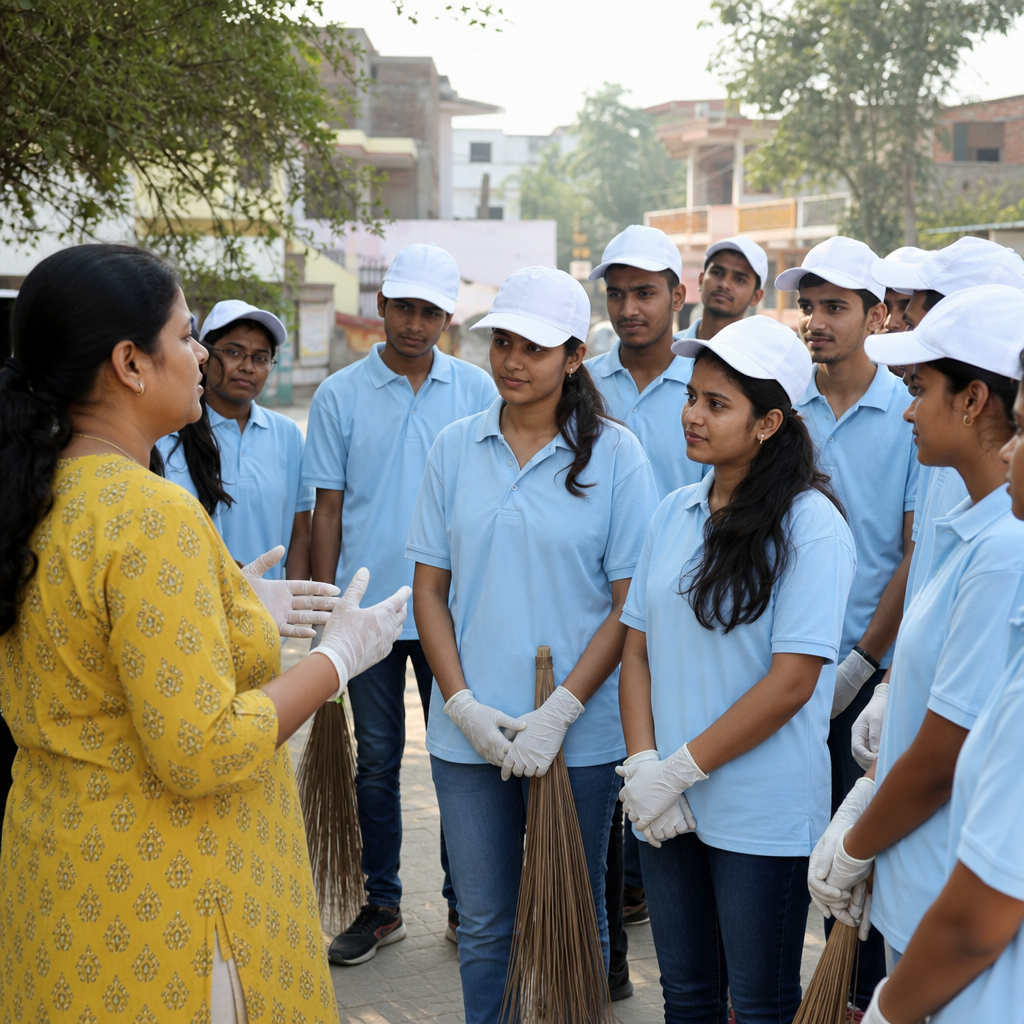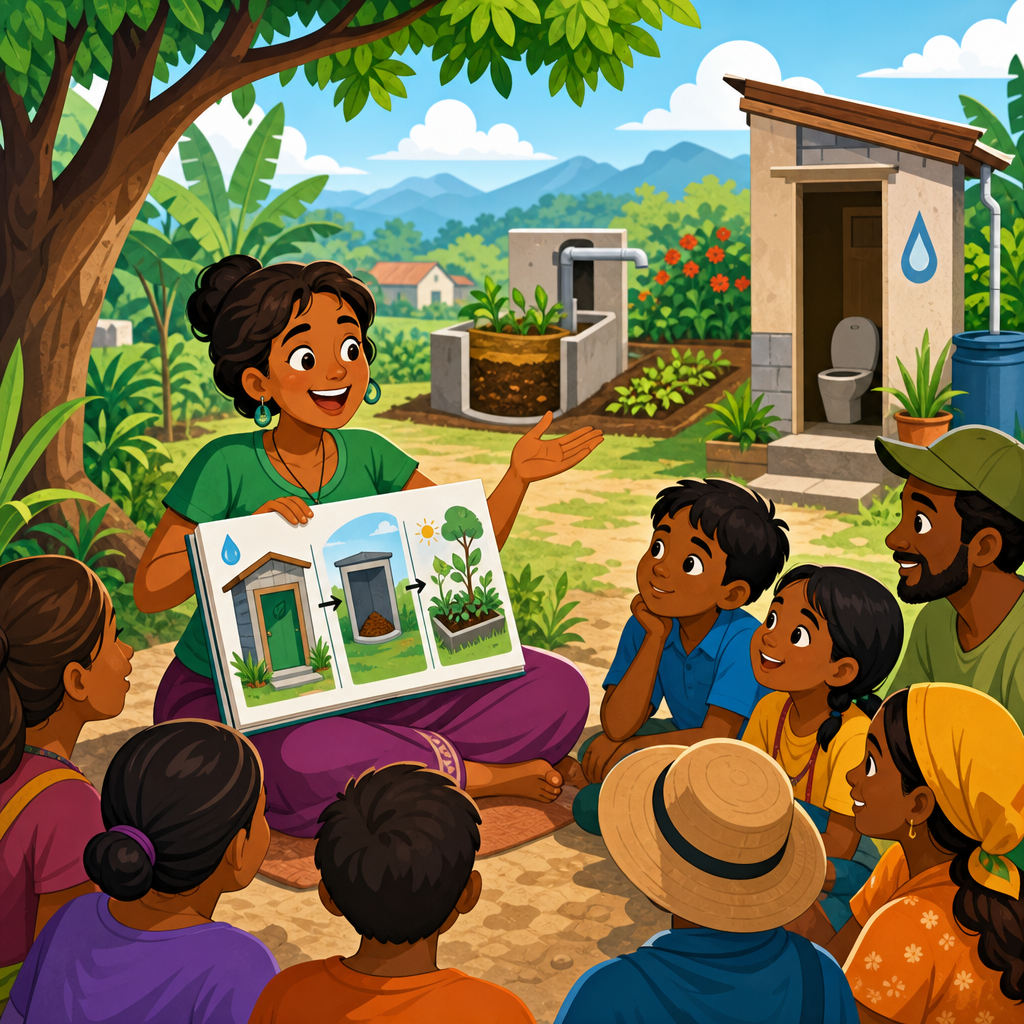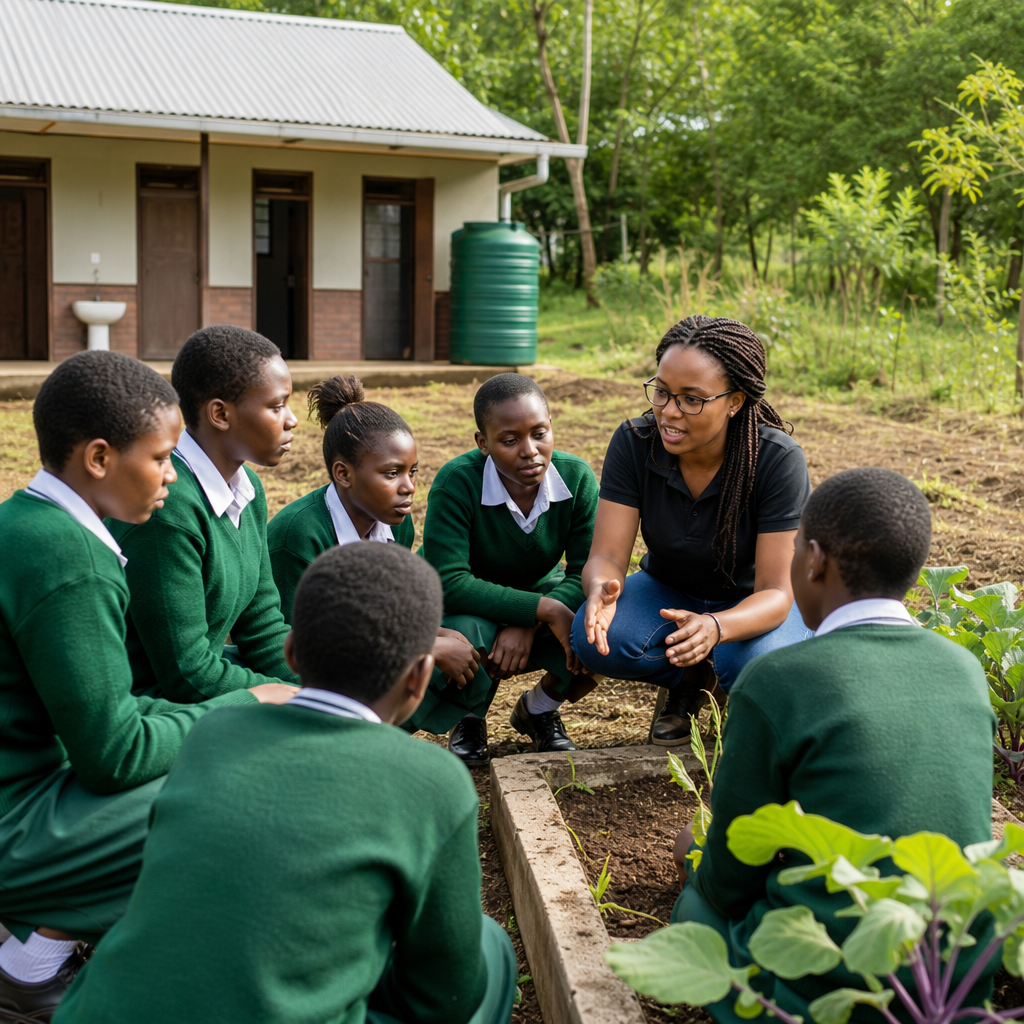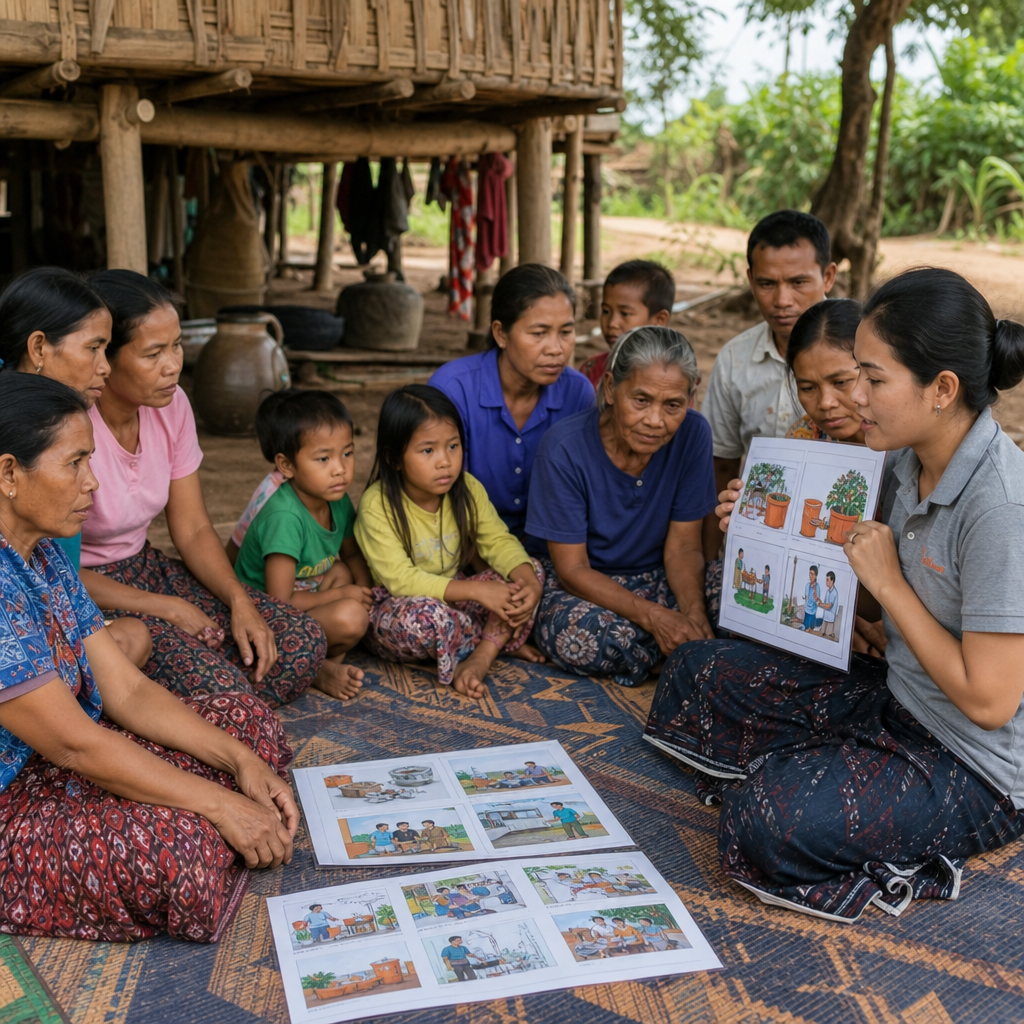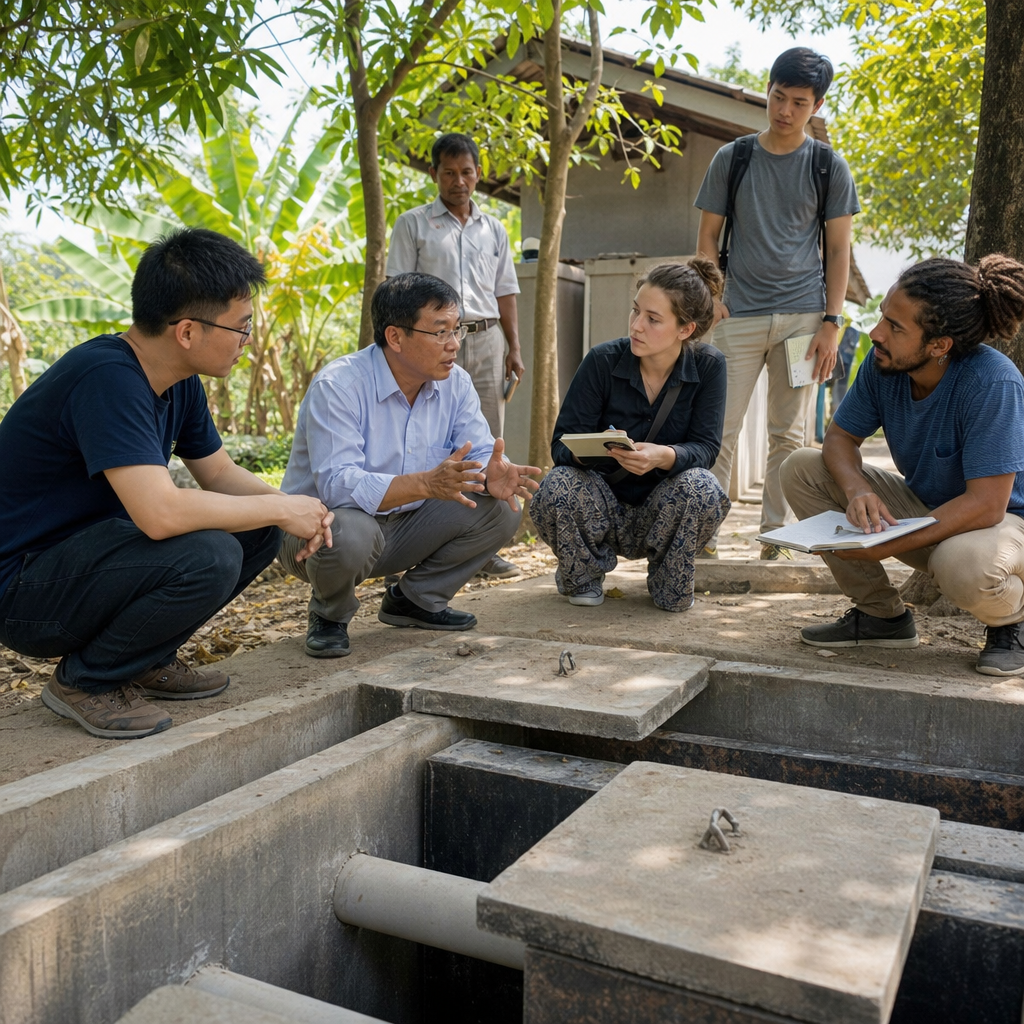
Collaborative EcoSan projects with universities turn sanitation systems into living classrooms where communities, students, and researchers solve practical environmental problems together. EcoSan, short for ecological sanitation, is an approach that treats human waste as a resource stream rather than only a disposal problem. In practice, that means designing toilets, treatment systems, reuse pathways, and education programs that protect health, recover nutrients, conserve water, and fit local social conditions. Universities are powerful partners because they bring technical expertise, long project timelines, laboratory capacity, and a steady flow of learners. Communities are equally essential because they understand land use, cultural norms, maintenance realities, and what people will actually adopt. When these groups work together, the result is stronger participation and deeper learning, not just better infrastructure.
I have seen the difference firsthand in university-linked sanitation initiatives: projects succeed when residents help define the problem, test the design, and monitor outcomes. They stall when institutions arrive with fixed assumptions and treat participation as a workshop checkbox. This hub article explains how collaborative EcoSan projects with universities foster participation and learning across the full project cycle. It defines the core partnership model, shows what universities and communities each contribute, outlines proven engagement methods, and highlights implementation, evaluation, and scaling lessons. If your goal is community engagement and education, this is the central framework: shared design, shared evidence, and shared ownership.
Why University Partnerships Matter in EcoSan
University partnerships matter because EcoSan sits at the intersection of engineering, public health, agriculture, behavior change, and governance. A urine-diverting dry toilet, for example, is not only a hardware choice. It affects pathogen risk management, nutrient recovery, user comfort, cleaning routines, odor control, and acceptance of reuse products. Universities can study these dimensions systematically. Faculty can guide site assessments, students can conduct household surveys, public health teams can track hygiene outcomes, and environmental scientists can analyze soil, water, and compost quality. This multidisciplinary capacity is difficult for community groups or municipalities to assemble alone.
At the same time, communities prevent academic projects from becoming abstract exercises. Residents know whether toilets flood during the rainy season, whether collection routes are feasible, whether tenants or landlords make sanitation decisions, and whether farmers trust biosolids or urine-based fertilizer. In one common pattern, a campus engineering team may propose a low-water system because it performs well in literature, while local users point out that privacy, menstrual hygiene management, or child-friendly features will determine adoption. The best collaborative EcoSan projects use this local intelligence early, before drawings are finalized or grants are spent.
These partnerships also create educational value beyond the sanitation system itself. Students learn participatory research, ethics, and maintenance realities. Community members gain technical literacy, confidence in decision-making, and access to university networks. Municipal officials can use the partnership as a neutral platform for piloting policy ideas. For a subtopic focused on fostering participation and learning, this is the key principle: the project is both an infrastructure intervention and an educational process.
Core Models for Fostering Participation and Learning
Most successful collaborative EcoSan projects with universities follow one of three models: co-design pilots, service-learning programs, or community-based participatory research. In co-design pilots, residents, campus teams, and often local government jointly define the sanitation challenge, compare technology options, and build a demonstration site. This model works well when the immediate goal is visible proof, such as testing container-based sanitation, composting toilets, or decentralized greywater reuse near schools or community centers.
Service-learning programs place students into structured field roles tied to coursework. Public health students may run hygiene promotion and user feedback sessions. Engineering students may map drainage, estimate loading rates, or prototype urine storage systems. Social science students may document household perceptions, gendered labor burdens, and governance barriers. The educational gain is high, but these programs need strong supervision. Without clear community agreements, student rotations can create fatigue for residents who repeatedly answer the same questions.
Community-based participatory research goes deeper. Here, community representatives help set research questions, approve methods, interpret findings, and decide how results are used. I consider this the strongest model for long-term legitimacy because it treats local participants as knowledge holders rather than data sources. It is especially effective when studying sensitive issues such as toilet use patterns, sanitation taboos, or willingness to reuse treated waste products.
| Model | Best Use | Main Strength | Main Risk |
|---|---|---|---|
| Co-design pilot | Testing a specific EcoSan technology | Visible results and rapid learning | Insufficient time for behavior change |
| Service-learning | Linking courses to fieldwork | Strong educational impact for students | Community fatigue from short student cycles |
| Participatory research | Building evidence and trust over time | Shared ownership of data and decisions | Slower setup and governance demands |
The right model depends on timeline, funding, and local readiness. Many mature programs combine all three: a pilot begins the work, service-learning supports implementation, and participatory research measures long-term outcomes.
Designing the Collaboration: Roles, Governance, and Trust
Effective collaboration starts with governance, not hardware. Before discussing toilet types or nutrient recovery, partners should agree on roles, decisions, timelines, and responsibilities for operations and maintenance. A basic memorandum of understanding can clarify who owns infrastructure, who pays for repairs, who handles safeguarding, who stores and shares data, and how community representatives participate in approvals. This matters because sanitation failures are rarely caused by design alone. They usually come from unclear accountability after construction.
Community advisory committees are one of the most practical tools I have used. A good committee includes women, youth, caretakers, teachers if the site is school-based, landowners if tenure is relevant, and local health workers. Their job is not symbolic consultation. They review proposed designs, identify social risks, and help set performance criteria. For example, a university may define success as nutrient capture efficiency, while residents prioritize odor, safety at night, and ease of cleaning. Both sets of criteria belong in the project brief.
Trust grows when universities are transparent about limits. If a pilot is funded for eighteen months, say so. If laboratory testing will be periodic rather than continuous, explain it. If reuse products must meet local regulations before distribution, put that on the table early. Communities are more likely to participate when expectations are realistic. Compensation also deserves direct treatment. Residents contributing time to surveys, maintenance trials, or governance meetings should not be expected to subsidize research indefinitely. Fair stipends, training certificates, employment pathways, or co-authorship on community-facing outputs are legitimate ways to recognize contributions.
Practical Engagement Methods That Increase Participation
Participation rises when engagement is practical, repeated, and tied to visible decisions. The most effective methods are sanitation walks, household interviews, user journey mapping, prototype demonstrations, and feedback loops that show what changed because people spoke up. Sanitation walks help mixed teams observe actual conditions: standing water, handwashing access, privacy barriers, and routes for waste collection. User journey mapping is especially useful for understanding the daily experience of children, elderly users, or people with disabilities, whose needs are often missed in standard engineering surveys.
Prototype demonstrations reduce fear of unfamiliar systems. A full-scale toilet mock-up, a sample urine-diversion pedestal, or a sealed compost chamber cross-section lets users comment on posture, cleaning, smell, and convenience before permanent installation. I have found that these demonstrations reveal issues no questionnaire captures. People may accept an idea in theory but reject it once they see the required maintenance steps or storage space.
Feedback loops are the difference between consultation and participation. After a workshop or survey, the university team should return with a simple summary: what we heard, what we changed, what remains constrained, and why. This can be posted at the site, discussed in a community meeting, or shared through local radio or messaging groups. When participants can trace their input to design changes, attendance and trust improve noticeably. This hub topic of fostering participation and learning depends on that visibility. People learn by seeing how evidence shapes decisions, and institutions learn by being accountable to users.
Learning Outcomes for Students, Faculty, and Communities
Collaborative EcoSan projects are unusually strong educational platforms because they combine technical content with civic practice. Students learn system thinking: excreta management links to watershed protection, food production, climate resilience, and public health. Engineering students can calculate nutrient flows, compare aerobic and anaerobic treatment pathways, and evaluate failure modes. Public health students can assess exposure routes using frameworks from the World Health Organization sanitation safety planning guidance. Education students can design community workshops that support hygiene literacy without sounding patronizing.
Faculty benefit as well. Real-world sites improve research relevance, produce richer datasets, and create opportunities for interdisciplinary teaching. A professor studying phosphorus recovery, for example, can test whether struvite precipitation or stored urine application is practical under local conditions rather than only under laboratory assumptions. Social scientists can study adoption, trust, stigma, and gendered labor in ways that directly inform design.
Communities gain more than infrastructure. Training on operation and maintenance, compost handling, water quality basics, and recordkeeping can create local sanitation stewards. In several university-linked projects globally, caretakers and youth groups have become the most reliable monitors of cleanliness, fill levels, and user compliance. These skills matter beyond one facility. They strengthen local capacity to engage municipalities, evaluate vendor claims, and participate in future environmental planning. That is why this hub belongs under community engagement and education: EcoSan collaboration works best when learning is mutual, structured, and continuous.
Implementation Challenges and How to Address Them
The biggest challenges are continuity, cultural fit, maintenance discipline, and evidence quality. Continuity suffers when academic calendars drive field presence. Community schedules do not pause because a semester ends. The solution is to build layered staffing: faculty oversight, year-round local coordinators, and documented handover procedures between student cohorts. Shared manuals, maintenance logs, and photo-based inspections reduce knowledge loss.
Cultural fit is equally decisive. Reuse of treated excreta can trigger concerns about purity, crop safety, religion, and social status. These concerns are not irrational; they are central adoption factors. Address them with direct discussion, exposure visits, and evidence from recognized standards. For pathogen reduction and safe reuse, project teams should align with national regulations where available and use established risk management approaches, including treatment validation, storage protocols, and restricted crop application when necessary.
Maintenance discipline often determines whether a pilot becomes a trusted local asset or a cautionary tale. Every system needs a maintenance plan with named people, frequencies, spare parts, and escalation steps. Odor complaints, blocked urine lines, poor cover material management, and handwashing stockouts must be treated as design and management issues, not user failure. Finally, evidence quality matters. If a project claims improved outcomes, it should define them clearly: reduced open defecation, lower water use, improved user satisfaction, safer sludge handling, or measurable nutrient recovery. Vague success claims weaken trust and make scaling harder.
Measuring Impact and Building a Scalable Hub
To function as a true hub for fostering participation and learning, a collaborative EcoSan program needs a measurement framework that captures both infrastructure performance and educational outcomes. Track technical indicators such as toilet uptime, diversion efficiency, compost temperature profiles where relevant, pathogen test results, handwashing availability, and maintenance response times. Pair these with participation indicators: meeting attendance, diversity of representation, number of community suggestions adopted, training completion rates, and repeat engagement over time. Then add learning metrics: student reflection quality, local knowledge gains, confidence in operating the system, and whether community members can explain safe use and reuse practices accurately.
Scaling does not mean copying a toilet design unchanged into new neighborhoods. It means transferring a collaborative method. The most scalable assets are playbooks, monitoring templates, procurement guides, maintenance checklists, ethics protocols, and case documentation that show what worked under specific conditions. Universities are well positioned to curate these resources and connect them to future articles on co-design methods, student engagement, sanitation behavior change, school-based demonstrations, and community monitoring. If you are building or improving a collaborative EcoSan initiative, start with a shared governance structure, invest in practical participation, and measure learning as carefully as engineering performance. That is how sanitation projects become lasting community education platforms, not short-lived pilots.
Done well, collaborative EcoSan projects with universities create cleaner environments, stronger local ownership, and better-trained future professionals at the same time. They work because they respect sanitation as both a technical system and a social practice. Communities contribute lived knowledge, universities contribute structured inquiry, and each side learns faster through partnership than it could alone. The most durable programs share decisions, document evidence, and plan for maintenance from day one. They also acknowledge tradeoffs honestly, especially around time, culture, and long-term management. Use this hub as your starting point for fostering participation and learning: map partners, define roles, test ideas visibly, and turn every project stage into a two-way educational process. Then build outward with confidence.
Frequently Asked Questions
1. What are collaborative EcoSan projects with universities, and why do they matter?
Collaborative EcoSan projects with universities are partnerships that bring together academic institutions, local communities, public agencies, nonprofits, and sometimes private-sector partners to design, test, improve, and teach ecological sanitation solutions. EcoSan, or ecological sanitation, treats human waste not simply as something to be discarded, but as a resource stream that can be safely managed to recover nutrients, conserve water, and support healthier environments. In a university collaboration, sanitation systems become living classrooms where students gain hands-on experience, researchers generate real-world evidence, and communities benefit from practical solutions tailored to local needs.
These projects matter because sanitation challenges are rarely solved by technology alone. They involve behavior, culture, public health, financing, maintenance, environmental conditions, and local governance. Universities can contribute technical expertise, laboratory capacity, monitoring tools, and interdisciplinary teams from engineering, public health, environmental science, agriculture, architecture, and social sciences. Communities contribute equally important knowledge about daily practices, local priorities, land use, affordability, climate realities, and what will actually work over time. When those forms of knowledge are combined, the result is usually a more durable and socially acceptable sanitation system.
They also matter because they create a pathway from theory to implementation. Instead of learning only from textbooks, students can help evaluate urine-diverting toilets, composting systems, decentralized treatment units, nutrient recovery methods, greywater reuse approaches, and hygiene education strategies in real conditions. That practical exposure improves education while producing measurable community benefits such as safer waste handling, reduced contamination, better water management, and new opportunities for resource recovery. In short, collaborative EcoSan projects matter because they turn sanitation into a shared platform for education, innovation, and local problem-solving.
2. How do universities and communities work together in an EcoSan project?
The strongest EcoSan partnerships begin with co-design rather than top-down planning. That means universities do not arrive with a fixed solution and ask the community to accept it. Instead, they start by listening. Faculty, students, and project partners typically work with local residents, school leaders, health workers, municipal officials, and community-based organizations to understand sanitation gaps, cultural expectations, space constraints, water availability, soil conditions, maintenance capacity, and public health concerns. This early stage is essential because an EcoSan system must fit the local social and environmental context if it is going to succeed.
From there, collaboration usually moves into joint planning and pilot development. A university may provide site assessments, engineering support, public health analysis, and environmental monitoring, while community members help identify suitable locations, user preferences, labor resources, and practical design needs. For example, a project may evaluate whether a urine-diverting dry toilet makes sense in a water-scarce area, whether composting outputs can be used in local agriculture, or whether a school-based sanitation system can double as a learning site for students and teachers. Communities often play a central role in setting priorities, reviewing design options, and deciding how operation and maintenance will be handled.
Implementation works best when responsibilities are clearly shared. Universities may lead technical training, data collection, safety protocols, and system performance evaluation. Community groups may lead local oversight, user education, maintenance scheduling, and communication with households. In many successful projects, the collaboration does not end once infrastructure is installed. Ongoing monitoring, feedback meetings, and adaptation are what make the system sustainable. If users encounter odor issues, maintenance challenges, or confusion about reuse practices, the project team can respond with updated training or design improvements. This continuous learning process is one of the biggest advantages of working with universities: the project evolves based on evidence and lived experience rather than being treated as a one-time construction effort.
3. What are the main benefits of EcoSan projects for students, researchers, and local communities?
For students, EcoSan collaborations offer rare hands-on learning opportunities that connect classroom concepts to real public health and environmental challenges. Students can participate in site assessments, stakeholder interviews, system design, lab testing, nutrient analysis, user surveys, maintenance planning, and impact evaluation. That kind of applied experience helps them understand not only sanitation technology, but also ethics, communication, participatory planning, and the realities of implementation. It prepares future engineers, health professionals, planners, and researchers to think more holistically about infrastructure and community development.
For researchers and universities, these projects create valuable opportunities to test ideas in real-world conditions. EcoSan systems must perform under diverse climate conditions, user patterns, and resource constraints, so field-based research is especially important. University teams can study pathogen reduction, nutrient recovery, water savings, user acceptance, system durability, cost-effectiveness, agricultural reuse potential, and behavior change outcomes. This helps build a stronger evidence base for decentralized sanitation and can inform policy, standards, and future project design. It also gives universities a meaningful way to align research with public service and community impact.
For communities, the benefits can be immediate and long term. A well-planned EcoSan project can improve sanitation access, reduce environmental contamination, conserve water, lower pressure on overstretched sewer systems, and create safer pathways for handling and reusing treated waste products. In agricultural settings, recovered nutrients may support soil improvement and reduce dependence on external fertilizers when safely processed and appropriately regulated. Communities also gain knowledge through training and participation, which can strengthen local ownership and make the system more resilient over time.
Just as important, collaborative projects can build trust and local capacity. When residents are treated as co-creators rather than passive recipients, they are more likely to support and maintain the system. Schools and universities can use the project as an educational tool, helping people better understand hygiene, environmental protection, nutrient cycling, and sustainable water use. The result is often bigger than a sanitation upgrade. It becomes a platform for community learning, environmental stewardship, and practical innovation.
4. What challenges do collaborative EcoSan projects face, and how can they be addressed?
Collaborative EcoSan projects can deliver strong results, but they also face challenges that need to be addressed early and honestly. One of the most common is social acceptance. Sanitation practices are deeply connected to culture, privacy, habit, and perceptions of cleanliness. If people are uncomfortable with source separation, compost handling, or nutrient reuse, even a technically sound system may struggle. The best response is not persuasion alone, but inclusive engagement. Demonstrations, site visits, user education, transparent safety protocols, and opportunities for feedback can help people understand how the system works and why it may benefit them.
Another major challenge is operation and maintenance. EcoSan systems are often more dependent on correct use and regular upkeep than conventional flush-and-forget systems. If maintenance responsibilities are unclear, if spare parts are unavailable, or if users are not trained properly, performance can decline quickly. Successful projects address this by defining roles from the beginning, budgeting for long-term maintenance, training local operators, and designing systems that match local capacity. Simplicity and maintainability are often more important than technical complexity.
Health and safety are also critical. Because EcoSan involves managing human waste for treatment and possible reuse, strict attention must be paid to pathogen reduction, safe storage, protective equipment, handling protocols, and compliance with local regulations. Universities can be especially helpful here by providing monitoring, testing, and evidence-based safety guidance. However, research goals should never outweigh community safety or practical usability. The project must be designed around protective public health standards and realistic local operating conditions.
Funding and continuity can also be difficult. University projects sometimes depend on grant cycles, academic calendars, or short-term student involvement, while communities need long-term reliability. To avoid gaps, strong partnerships usually include local institutions such as municipalities, schools, or community organizations that can carry the work forward after the initial pilot phase. Written agreements, local leadership development, and phased implementation plans can improve continuity. The most successful EcoSan collaborations recognize that sanitation is not a temporary experiment; it is an ongoing service that needs local ownership, stable support, and room to adapt over time.
5. What makes a university-linked EcoSan project successful over the long term?
Long-term success comes from designing the project as a shared system of infrastructure, education, governance, and trust. The technical component matters, of course, but durability depends just as much on whether the system fits local habits, whether users understand it, whether maintenance is realistic, and whether the community sees value in keeping it running. Successful projects are usually grounded in local priorities from the beginning. They solve a real sanitation need, align with available resources, and respect cultural expectations around privacy, cleanliness, and waste handling.
Another key factor is strong local ownership. University involvement can provide energy, technical depth, and innovation, but the community and local institutions must be positioned as long-term stewards. That means local people are trained not only to use the system, but to maintain it, explain it to others, identify problems, and participate in decision-making. When schools, cooperatives, municipal departments, or community organizations are directly involved, the project has a much better chance of continuing beyond the original research or funding window.
Monitoring and adaptation are also central to long-term performance. EcoSan projects work best when teams track both technical and social indicators: system reliability, user satisfaction, maintenance frequency, health outcomes, water savings, nutrient recovery, and environmental impact. Universities can help create strong monitoring frameworks, but