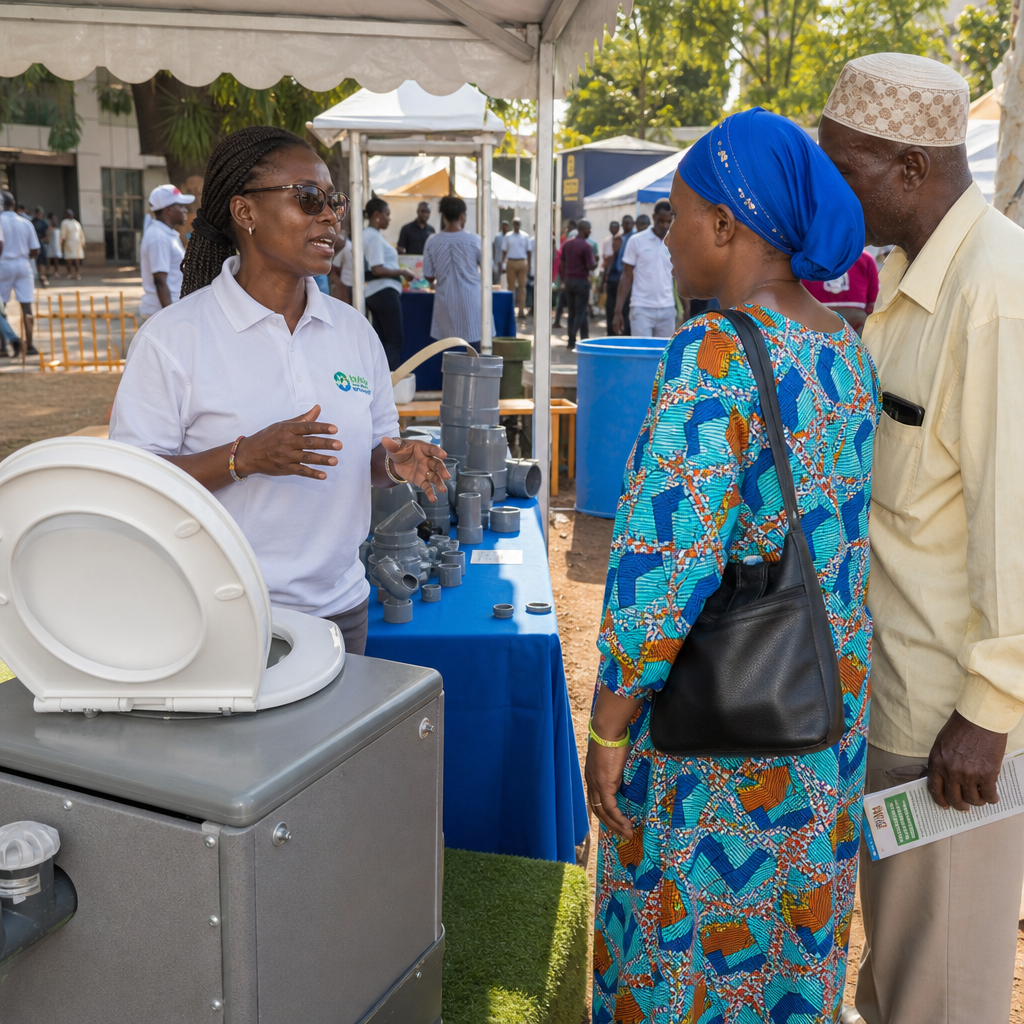
Public exhibitions and fairs on sanitation turn technical infrastructure into something people can see, question, and improve, which is why they are among the most effective tools in community engagement and education. In this context, sanitation includes safe toilet access, fecal sludge management, sewerage, drainage, handwashing facilities, menstrual hygiene support, solid waste interfaces, and the public health systems that keep human waste away from water, food, and living spaces. A public exhibition is usually a structured display of information, demonstrations, models, and activities in a civic venue, school, market, or transport hub. A sanitation fair is broader and more interactive, often combining exhibits with games, service sign-ups, live demonstrations, school participation, local business stalls, and government outreach.
I have worked on sanitation communication plans where infrastructure budgets were available but public understanding was weak, and the biggest lesson was simple: people support what they can visualize and discuss. When residents can inspect a model toilet, compare desludging schedules, test handwashing stations, or ask why drains fail during storms, sanitation stops being an abstract municipal promise and becomes a shared civic responsibility. That matters because sanitation outcomes depend on daily behavior, household decisions, landlord practices, school management, utility performance, and local government accountability.
Done well, public exhibitions and fairs on sanitation foster participation and learning at the same time. They help communities understand rights and responsibilities, help service providers explain standards and limitations, and help decision-makers hear concerns before small failures become health emergencies. They can also bridge a common gap in sanitation programs: engineers often focus on assets, while residents focus on convenience, safety, dignity, and cost. A strong hub strategy brings these perspectives together and links visitors to deeper resources on school sanitation, hygiene behavior change, inclusive design, fecal sludge management, and community monitoring.
Why sanitation exhibitions and fairs work
Public sanitation outreach works because it translates hidden systems into visible choices. Most people never see a treatment plant, a septic tank design standard, or the chain that connects a household toilet to transport, treatment, reuse, or disposal. Exhibitions make that chain legible. A cutaway tank model can explain why soak pits fail in flood-prone areas. A side-by-side display can show the difference between safely managed and unimproved sanitation. A live demonstration can show how soap and running water reduce contamination far more reliably than rinsing hands in a shared basin.
These events also create social proof. In communities where toilets are associated with status, expense, smell, or maintenance burdens, seeing neighbors, schools, masons, health workers, and local officials discussing practical solutions reduces hesitation. One market-day fair I helped review drew strong interest not from posters alone but from a scheduled septic maintenance clinic where households brought tank dimensions, photos, and emptying histories for advice. Participation increased because the event solved immediate problems. That is the central rule of effective sanitation engagement: information must connect to a decision someone can make now.
Sanitation fairs are particularly valuable in dense urban settlements, peri-urban growth areas, and rural districts with changing aspirations. In those settings, the barriers are rarely only technical. They include insecure tenure, landlord-tenant conflicts, unclear tariffs, gender safety concerns, disability access, seasonal flooding, and mistrust of government messaging. A fair allows multiple actors to appear in one place and answer questions in plain language. That is more persuasive than isolated awareness campaigns because residents can compare options, costs, and service pathways directly.
Core objectives for fostering participation and learning
A hub article on fostering participation and learning should make clear that sanitation exhibitions are not one-off publicity events. They are structured interventions with measurable objectives. The first objective is awareness: visitors need to understand disease transmission routes, service options, legal standards, and the consequences of poor waste management. The second is behavior support: events should help households adopt specific practices such as handwashing with soap, scheduled desludging, safe child feces disposal, menstrual hygiene management, and proper reporting of blocked drains or overflowing public toilets.
The third objective is participation in planning and oversight. Good fairs collect feedback through voting walls, mapped complaints, mini focus groups, or digital surveys. This is where community engagement becomes more than education. Residents identify where toilets are missing, which facilities feel unsafe at night, whether school latrines have water, and how often pits are emptied. The fourth objective is service uptake. A sanitation fair should make it easy to sign up for desludging alerts, apply for connection programs, learn subsidy eligibility, or meet certified pit emptiers, masons, public health inspectors, and disability advocates.
The fifth objective is trust building. Sanitation systems fail when users do not trust tariffs, operators, or maintenance promises. Transparent exhibitions can show service standards, response times, complaint channels, and budget priorities. They can also explain tradeoffs honestly. For example, container-based sanitation may be safer than informal pits in flood zones, but it depends on reliable collection. Sewer connections may offer convenience, but only where networks and treatment are functioning. Learning deepens when institutions present constraints and solutions together instead of promoting a single idealized model.
Designing an effective sanitation fair
An effective sanitation fair starts with audience segmentation. Schoolchildren, caregivers, landlords, informal settlement residents, traders, persons with disabilities, municipal staff, and local elected leaders do not need the same message or format. I have seen fairs fail because every booth repeated generic hygiene slogans while no one addressed drainage maintenance, shared toilet cleaning schedules, or where to call for legal desludging services. Planning should begin with priority questions: What decisions do visitors need to make? What misconceptions are common? What local services exist? Which barriers are financial, cultural, physical, or institutional?
Venue selection matters as much as content. A municipal hall may suit policy dialogue, but a transit hub or market often reaches more people who actually manage household sanitation decisions. Accessibility is nonnegotiable. Entrances, signage, aisles, seating, and demonstration units should accommodate wheelchair users, older adults, and caregivers with children. Language must match the community. In multilingual areas, exhibits should use short text, strong visuals, and staff who can translate technical concepts without distorting meaning.
Every fair needs a clear visitor journey. Start with a simple explanation of why sanitation matters, move into practical options and costs, then offer service sign-ups and feedback channels. Interactive exhibits outperform static posters. A drain gradient model can demonstrate why waste and stormwater management cannot be improvised. A glow-powder handwashing demonstration can reveal missed surfaces. A public toilet mock-up can show how lighting, locks, menstrual disposal bins, baby-changing shelves, and grab rails affect whether a facility is actually usable. When visitors can touch, compare, and ask, retention improves significantly.
| Exhibit type | Main learning goal | Best audience | Practical example |
|---|---|---|---|
| Toilet technology display | Compare options, costs, maintenance needs | Households, landlords, masons | Twin-pit versus septic tank models with lifecycle cost cards |
| Service desk | Convert interest into action | Residents, institutions, businesses | Desludging registration, connection inquiries, complaint logging |
| Health demonstration | Show contamination pathways and prevention | Children, caregivers, food vendors | Handwashing station with timed soap technique coaching |
| Inclusion mock-up | Demonstrate safe, dignified access | Schools, planners, facility managers | Accessible toilet with rails, turning radius, lighting, disposal bins |
| Community mapping wall | Gather local evidence for planning | All visitors | Pinpoint blocked drains, unsafe toilets, and missing facilities |
Program content that creates real learning
The most useful sanitation exhibitions answer concrete questions in direct terms. What toilet type suits high groundwater? How often should a septic tank be emptied? What should never be flushed? Why do school toilets fail even when they were newly built? What makes a public toilet safe for women and girls? How can a neighborhood reduce drain blockages before the rainy season? A hub page should orient visitors to these questions and connect them to more detailed subtopic resources.
For households, content should cover the full sanitation service chain, not only toilet construction. Many campaigns stop at installation, even though poor emptying and disposal can cancel the health benefits of a toilet. Explain containment, conveyance, treatment, and end use or disposal with local examples. If a city uses vacuum trucks and a designated treatment site, say so. If informal emptying is common and unsafe, explain the risks clearly and provide legal alternatives. Use realistic cost ranges, maintenance intervals, and warning signs of system failure.
For schools and community institutions, the learning agenda must include operations and maintenance. Toilets fail less often from design alone than from missing cleaning plans, broken locks, no water storage, absent consumables, and unclear responsibility. School-focused sanitation exhibits should address ratios, accessibility, menstrual hygiene support, child-friendly design, and handwashing station placement. UNICEF and WHO guidance consistently emphasizes that availability is not enough; usability, accessibility, privacy, and functionality determine health and attendance outcomes.
For local businesses and service providers, fairs can promote standards and market development. Certified emptiers, toilet builders, soap suppliers, menstrual product vendors, and water kiosk operators all influence sanitation behavior. Exhibitions can set quality expectations by displaying approved components, safe emptying procedures, and customer service commitments. This reduces the damage caused by poor workmanship and misleading claims. In practice, communities learn faster when they can compare providers openly and ask technical questions in front of peers.
Inclusion, safety, and cultural fit
Sanitation participation is weakest where events ignore dignity and difference. Women and girls may avoid public facilities that lack privacy, lighting, or menstrual disposal options. Persons with disabilities may be excluded by steps, narrow doors, heavy locks, or inaccessible handwashing points. Tenants may not invest in improvements if landlords control infrastructure. Migrant communities may mistrust official outreach if it is tied to penalties rather than service improvement. A fair that aims to foster participation and learning must surface these realities directly.
Cultural fit does not mean avoiding difficult topics. It means addressing them respectfully and concretely. In some communities, discussing feces openly is uncomfortable, so facilitators may begin with child health, flood impacts, or cleanliness before moving into technical details. In others, public conversation about menstruation has to be handled in smaller, moderated sessions. I have found that trust increases when organizers work through familiar intermediaries such as teachers, health volunteers, faith leaders, disabled persons organizations, and market associations, while still presenting evidence-based information consistently.
Safety is also operational. Crowd flow, clean demonstration units, safe water for handwashing, and child protection procedures matter. If the event includes pit emptying or sludge transport equipment displays, barriers and supervision are essential. Public health credibility depends on modeling good practice. Nothing undermines a sanitation fair faster than overflowing temporary toilets, no soap at sinks, or inaccessible complaint desks. The event itself should function as a demonstration of the standards it advocates.
Measuring outcomes and sustaining momentum
The value of public exhibitions and fairs on sanitation should be measured beyond attendance. Count visitors, but also track actions taken: service registrations, school commitments, landlord pledges, reported faults, drain-cleaning volunteers, and referrals to subsidy or financing programs. Use pre- and post-event questions to test learning on topics such as safe emptying intervals, handwashing steps, or what not to dispose in drains. Follow up after thirty, sixty, and ninety days to see whether expressed interest translated into changed behavior or service uptake.
Good sanitation engagement creates a feedback loop for future programming. Questions asked at booths reveal knowledge gaps. Complaint maps reveal infrastructure blind spots. Provider comparisons reveal affordability issues. These insights should shape related articles in the community engagement and education hub, including pieces on school campaigns, neighborhood monitoring, behavior change communication, and participatory planning. Internal pathways matter because people rarely learn everything at one event; they move from curiosity to understanding to action over time.
Long-term momentum depends on repetition and institutional ownership. Annual sanitation fairs tied to World Toilet Day, rainy season preparedness, school enrollment periods, or municipal budget consultations can keep the topic visible. Partnerships with utilities, health departments, NGOs, universities, and local entrepreneurs broaden credibility and resources. The strongest programs also document what worked: which exhibits attracted households, which facilitators handled sensitive questions well, which neighborhoods converted information into service demand, and which incentives increased turnout without distracting from learning.
Public exhibitions and fairs on sanitation are most effective when they treat residents as participants in a service system, not passive recipients of messages. They help people understand how sanitation protects health, dignity, safety, education, and local economies. They also give institutions a practical way to explain technologies, standards, tariffs, and limits while listening to lived experience. For a community engagement and education hub, this topic matters because it connects nearly every other subtopic: school sanitation, hygiene promotion, inclusive design, solid waste interfaces, drainage awareness, and citizen oversight.
The main benefit is not publicity. It is informed participation that leads to better decisions, stronger accountability, and more usable sanitation services. A well-designed fair shows the full service chain, answers common questions clearly, includes diverse users, and turns interest into action through sign-ups, referrals, and feedback tools. It also models the quality it promotes by being accessible, clean, safe, and organized. Communities learn best when sanitation is made visible, practical, and locally relevant.
If you are building this sub-pillar, use this page as the starting point for deeper content on outreach methods, school programs, facility inclusion, operations and maintenance education, and community monitoring. Then translate the guidance into a local event plan with clear objectives, partners, exhibits, and follow-up metrics. When public learning is structured well, sanitation improvements stop being isolated projects and become shared community progress.
Frequently Asked Questions
What are public exhibitions and fairs on sanitation, and why do they matter?
Public exhibitions and fairs on sanitation are community-facing events designed to make sanitation systems visible, understandable, and open to public discussion. Instead of treating sanitation as hidden infrastructure that only engineers, utility managers, or public officials think about, these events bring key topics into the open through demonstrations, displays, workshops, expert talks, school activities, and practical learning stations. They may cover safe toilet access, fecal sludge management, sewer networks, drainage, handwashing facilities, menstrual hygiene support, links to solid waste management, and the public health systems that prevent human waste from contaminating water, food, and living environments.
They matter because sanitation is often overlooked until something goes wrong. Flooded drains, unsafe toilets, open dumping, overflowing pits, or poor handwashing access can quickly create health risks, especially in dense communities. Exhibitions and fairs help people understand that sanitation is not just about toilets alone; it is about an entire chain of services, from access and use to collection, transport, treatment, reuse, and safe disposal. When the public can see models, ask questions, compare technologies, and hear directly from practitioners, sanitation becomes easier to understand and far more relevant to everyday life.
These events also build trust and accountability. Residents can learn what services exist, what standards should be expected, and who is responsible for maintenance and regulation. Local governments, utilities, nonprofit organizations, educators, and private service providers can use fairs to explain plans, gather feedback, and respond to concerns in a transparent setting. That exchange is especially valuable in communities where misconceptions, stigma, or low awareness prevent people from using services properly or advocating for improvements.
Most importantly, public sanitation exhibitions can motivate action. They turn abstract policy goals into practical, visible examples that people can relate to. A resident who sees how poor drainage contributes to contamination, or how proper handwashing reduces disease transmission, is more likely to support better infrastructure, adopt safer hygiene practices, and participate in community solutions.
What topics are usually covered at a sanitation exhibition or fair?
A well-designed sanitation exhibition or fair usually covers the full sanitation and hygiene ecosystem rather than focusing on a single issue. One major topic is safe toilet access, including the different types of toilets suitable for homes, schools, markets, workplaces, healthcare facilities, and public spaces. Visitors may see examples of water-based systems, improved pit latrines, container-based solutions, accessible toilet designs for people with disabilities, and child-friendly facilities. Organizers often explain how design, maintenance, privacy, lighting, ventilation, affordability, and safety all influence whether a toilet is truly usable.
Another core topic is fecal sludge and wastewater management. Many people understand sanitation only at the point of toilet use, but fairs can show what happens after waste leaves the toilet. Exhibits may explain pit emptying, septic tank maintenance, sewer connections, pumping stations, treatment plants, sludge drying, reuse options, and final disposal. This is critical because unsafe handling or untreated discharge can spread disease and damage local water sources even when toilets are present.
Drainage and stormwater management are also common themes, especially in urban and flood-prone areas. Poor drainage can mix with sewage, carry waste into streets and homes, and create breeding conditions for disease vectors. Public exhibitions often demonstrate how blocked drains, litter, and poor planning affect neighborhood health and resilience. Related to this is the interface with solid waste management, since unmanaged trash frequently clogs drains and undermines sanitation systems.
Handwashing and hygiene education typically play a central role as well. Demonstrations may show proper handwashing technique, the importance of soap and water at critical times, and practical handwashing station designs for schools, public events, and households. Menstrual hygiene support is another increasingly important topic, including access to private washing spaces, disposal systems, clean water, affordable products, and efforts to reduce stigma.
Many exhibitions also address inclusion, behavior change, climate resilience, and public health. That can include sanitation in informal settlements, gender-responsive facility design, emergency sanitation during disasters, school sanitation, infection prevention, and the links between sanitation and nutrition, dignity, safety, attendance at work or school, and environmental protection. The strongest fairs help visitors understand that sanitation is both a technical system and a human rights, health, and community development issue.
Who should attend a sanitation fair, and what can different groups gain from it?
Sanitation fairs are valuable for a very broad audience because sanitation affects everyone, even though people interact with it in different ways. Residents and families are among the most important participants. They can learn how to choose appropriate sanitation options, maintain toilets and septic systems correctly, reduce household health risks, improve handwashing practices, and understand what services or support programs are available locally. For many households, these events answer practical questions they may not know where else to ask.
Students, teachers, and school administrators also benefit greatly. Exhibitions can make sanitation education more engaging through live demonstrations, models, and hands-on learning. Schools can explore how sanitation affects attendance, concentration, menstrual health support, disability access, and infection prevention. Educators often gain materials and ideas they can continue using in classrooms long after the event ends.
Local government officials, planners, and public health staff can use these events to communicate policy, service plans, and standards while also hearing directly from the public about service gaps. That feedback is extremely useful. It can reveal where people face barriers such as cost, distance, lack of privacy, poor maintenance, unsafe conditions, or confusion about available services. Utilities and service providers can also benefit by explaining their work, correcting misconceptions, and building stronger relationships with the communities they serve.
Community-based organizations, health workers, women’s groups, youth leaders, and advocacy groups often gain a platform to share lived experience and highlight issues that formal planning sometimes misses. For example, they may raise concerns about safety for women using toilets at night, inaccessible facilities for older adults and people with disabilities, or the need for better hygiene facilities in markets and transport hubs. Businesses and social enterprises can also participate by presenting products and services, from toilet technologies to handwashing stations, waste collection tools, and menstrual hygiene solutions.
In short, the ideal sanitation fair is not just for technical experts. It is a meeting point where residents, institutions, government, and service providers learn from one another. Each group leaves with something different, but the shared outcome is a more informed public and a stronger foundation for practical improvements.
How do sanitation exhibitions improve community engagement and public education?
Sanitation exhibitions improve community engagement by turning complex systems into something people can directly observe and discuss. Many sanitation processes are hidden underground, behind walls, or managed far from where people live. That invisibility makes it difficult for communities to understand why infrastructure matters, what good service looks like, or how failures occur. Exhibitions bridge that gap by using physical models, diagrams, mock-ups, storytelling, demonstrations, and guided explanations that make technical information much easier to grasp.
They also create a rare space for two-way communication. In many settings, public information on sanitation is delivered one direction only, through posters, campaigns, or regulations. A fair allows people to ask specific questions, challenge assumptions, share local knowledge, and discuss practical obstacles. That matters because community engagement is strongest when people are treated as participants rather than passive recipients of information. Residents often know where drains flood first, which public toilets feel unsafe, where maintenance is inconsistent, or why a design does not fit local realities. Exhibitions can bring that knowledge into planning and decision-making.
Public education becomes more effective when it is visual, interactive, and relevant to daily life. A person may ignore a technical report, but they are far more likely to remember a live demonstration showing how contamination spreads from unsafe waste disposal to water and food, or how simple handwashing facilities can reduce disease transmission. Interactive learning is especially effective for children and young people, who can become strong advocates for hygiene and environmental health in their families and schools.
Another reason these events work well is that they can reduce stigma. Topics such as toilets, human waste, menstruation, and sludge management are often treated as embarrassing or taboo. When public fairs address them openly and professionally, they help normalize discussion and encourage more honest conversations about needs, risks, and solutions. This can be particularly important for menstrual hygiene support, disability access, and the safety and dignity of sanitation users.
Finally, exhibitions can help communities move from awareness to action. When people understand the sanitation chain, know the roles of institutions, and see practical solutions in context, they are better equipped to demand improvements, use services correctly, support maintenance, and participate in local initiatives. In that sense, these events are not only educational; they are catalysts for informed engagement, stronger accountability, and long-term behavior change.
What makes a public sanitation exhibition or fair successful?
A successful public sanitation exhibition or fair is clear, practical, inclusive, and strongly connected to local needs. The best events begin with a simple principle: people should leave understanding sanitation better than when they arrived, and they should know what actions, services, or decisions matter next. That means the content should be accurate and technically sound, but also presented in language and formats that non-specialists can easily understand. Complex infrastructure must be translated into clear public learning without oversimplifying the health and